With numerous clashes with police and individuals with mental illness, society is calling for great accountability from law enforcement in how the mentally ill are handled during arrests. A few options include better psychological training for officers as well as crisis intervention courses. Another option is also including certain calls to be answered by trained staff in social work or other mental illness training.
Better mental crisis training is important for first responders and police. Please also review AIHCP’s Crisis Intervention Program
The article, “Here’s What Happens When Social Workers, Not Police, Respond To Mental Health Crises” by Christina Jedra looks at the importance of evolving how law enforcement deals with mental health crisis calls. She states,
“A growing number of American cities are embracing another way: sending mental health first responders instead of police. The teams are made up of unarmed crisis workers, such as social workers and health care personnel, who advocates say are better equipped than police to handle cases that don’t involve violence or crime. ”
With many unneeded deaths, a more balanced response is needed from law enforcement when dealing with mental crisis calls. Better training in Crisis Intervention and mental illness are a start but special responders may also be needed for non violent calls to prevent escalation and possible death of others.
Please also review AIHCP’s Crisis Intervention Program and see if it matches your academic and professional goals. The program is online and independent study and open to qualified professionals seeking a four year certification in Crisis Intervention Counsleing.
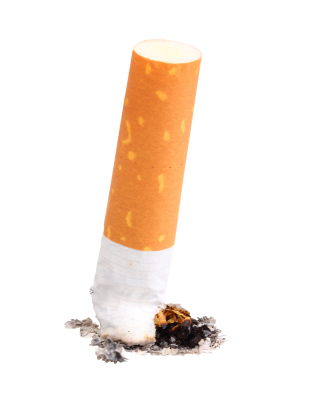
Hypnosis can help the subconscious mind find inner healing for the body. It can re channel brain pathways to help the brain suppress bad behaviors. It can help the intuitive right side of the brain find peace and affect the left side of the brain to make better decisions. It is through this rewiring and the plasticity of the brain that the body can eliminate bad habits. One example is smoking.
Hypnosis can help the brain rewire itself against smoking addiction. Please also review AIHCP’s Hypnotherapy Program
The article, “Can Hypnosis Get Me to Quit Smoking?” from Healthline looks at what hypnosis is and how it can better retrain the mind and brain to deal with bad habits. The article states,
“It’s no wonder why so many people want to quit smoking. A 2019 research review Trusted Source showed that it’s the top cause of preventable illness and death in the world. Stopping can improve your health, but for many people, quitting is a huge challenge. There are many methods and products for quitting smoking. One that gets a fair amount of attention is hypnosis. Some people credit hypnosis with helping them quit”
Addiction and bad habits can be difficult to beat. Using hypnosis and imagery in a meditative stance can help one find solutions and new ways of processing cravings and reactions to those cravings. Hypnosis helps one find that state.
Please also review AIHCP’s Hypnotherapy Program as well as AIHCP’s Substance Abuse Counseling Programs. The programs are online and independent study and open to qualified professionals seeking four year certifications in Hypnotherapy or Addiction Counseling Training.
Miscarriages are sometimes a forgotten grief. Parents suffer greatly who lose a child due to miscarriage. It is unseen, and sometimes unknown, so the ability to find support can be difficult. Both husband and wife share in the pain but many times the born children are left in the dark regarding the lost. Children need to be explanations if a miscarriage occurs.
Discussions with a child about a miscarriage are important. Please also review AIHCP’s Child and Adolescent Grief Counseling Certification
These explanations need to be age appropriate. They also need to ensure the child knows there is no blame for the loss but that sometimes these things can happen.
The article, “How To Talk To Kids About Miscarriage” by Jessica Zucker takes a closer look and on how to discuss the loss during miscarriage to children. She states,
“Much like conversations centering around divorce or a parent separation, it’s common for children to immediately blame themselves for a pregnancy or infant loss. This is primarily due to their cognitive development, which leave them centering themselves and/or only seeing things through their perspectives. So it’s vital that throughout the conversation, and perhaps even at the start, you remind your child that they are in no way responsible for any pregnancy outcome, especially one that ends in a loss. And, that it’s not the fault of the mom either.”
Please also review The American Academy of Grief’s Grief Counseling Program as well as its Child and Adolescent Grief Counseling Certification and see if they meet your professional and academic needs. The programs are online and independent study and open to qualified professionals seeking a four year certification in Grief Counseling.
Healthcare management is a key element in providing quality healthcare. Unfortunately, the United States and its healthcare system ranks very low in comparison to other industrialized nations. This has led to the necessity of utilizing healthcare managers to help provide better delivery of healthcare systems by a better understanding of healthcare data and its delivery, population health, competencies of professionals, and care coordination.
Better delivery and outcomes for healthcare are the product of good case management. Please also review AIHCP’s Healthcare Case Management Program
The article, “Managed Care-A Plan to the Future” by Patricia Kirkpatrick looks at the critical importance of Managed Care for the future of Healthcare in the United States. She states,
“Value-based care is here to stay. By developing specific competencies in quality, population health, care coordination, data analytics, governance and care delivery, MCOs can empower their workforces to meet the challenges and opportunities presented by this new model—and ultimately improve health care outcomes for all.”
Please also review the American Academy of Case Management’s Healthcare Case Management Certification and see if it meets your academic and professional goals. The program is online and independent study and open to qualified professionals seeking a four year certification in Case Management
When something bad happens to a friend or something bad happens in the news, it is natural to fear that it could possibly happen to you. This uncertainty may make one focus on losing a loved one although it is unlikely it could occur. This can create extreme anxiety and create the feeling of the potential loss.
Do you worry about potential loss and grief that has not occurred? Please also review AIHCP’s Grief Counseling Training Program and see if it meets your academic goals
In this fallen world, happiness is not complete. With everything gained, it will eventually be taken back. This is a reality of the world. However to become obsessed with things that probably will not occur traumatically or suddenly, can sullen the happiness one possesses in the present. The focus and fear on the future can bring grief that should not be actualized because nothing has occured.
The article, “Grief, Loss, and Intolerance of Uncertainty” from “What’s Your Grief” looks at this concept of Intolerance of Uncertainty. The article states,
“People very reasonably say to me – “The chances of that terrible thing happening are so low – why do you worry?” To which I usually respond, “Well, if it has to happen to someone, why shouldn’t it be me?” I’m not sure whether I’ve always taken such issue with the unknown, but I’m certain that being exposed to loss has exacerbated my fears. ”
Please also review AIHCP’s Grief Counseling Training Program and see if it matches your academic and professional goals. The program is online and independent study and open to qualified professionals seeking a four certification as a Grief Counselor
Adults can go throughout life with ADHD and not know they have ADHD. ADHD’s presence, however, can be causing havoc in their daily lives. Relationships and careers can be negatively affected by ADHD. This is why if one exhibits various symptoms, it is important they receive testing to verify if they have ADHD.
Adult ADHD could be affecting you! Please also review AIHCP’s ADHD Consulting Certification and see if it meets your academic and professional goals
The article, “Psychological Testing and Diagnosis of ADHD in Adults” from Healthline looks at why it is important for adults with ADHD to receive the help they need. The article states,
“Attention deficit hyperactivity disorder (ADHD) affects an estimated 2.5 percent of adults. It’s a mental health condition that leads to problems such as hyperactivity and impulsive behavior. Untreated ADHD can disrupt many aspects of your life, such as your employment and your relationships. Getting a proper diagnosis is the first step to getting treatment. Adults with ADHD often respond well to a combination of psychotherapy and medication.”
ADHD is not merely a child disorder but also one that can cause a multitude of problems for adults if left untreated. Please also review AIHCP’s ADHD Consulting Certification and see if it matches your academic and professional goals. The program is online and independent study and open to qualified professionals seeking a four year certification in ADHD Consulting.
Work is a necessity in life. However, it can cause unneeded stress. Work environments that are unhealthy physically and mentally can cause stress in many employees. Dangerous and high risk jobs, or jobs with unforgiving deadlines, or even jobs that are repetitiously boring leaving the employee with little input can all cause stress. Furthermore, some careers or jobs can also cause what is known as work depression. Work depression differs than work stress in that the reaction within the body and mind is a more constant state and does not release after the stressor is absent.
Are you depressed while at work? Please also review AIHCP’s Grief Counseling Certification
The article, “Work Depression: How to Take Care of Your Mental Health on the Job” from Healthline takes a closer look at work depression and its causes and how to better deal with it. The article states,
“If you feel depressed when working, you’re not alone. Sadness, anxiety, loss of motivation, difficulty concentrating, unexplained bouts of crying, and boredom are just a small sampling of the things you may be feeling if you’re experiencing depressive symptoms at work. Depression impacts over 17 million American adults each year.”
Please also review AIHCP’s Grief Counseling Certification and see if it matches your academic and professional goals. The program is online and independent study and open to qualified professionals seeking a four certification as a Grief Counselor.
If diabetic, stress is not good for your sugar. How so? Adrenaline when pumped into the system due to the body’s fight or flight response to stress, induces glucogen, which in turn extracts glucose from the cells for sugar to burn in a fight or flight situation. With modern life, the situation is rarely life or death but our body does not know that and only responds to stress as it has for millions of years. This creates from this domino effect, a higher blood sugar which is not burned for fight or flight but merely flows in your blood hence raising the sugar.
It is important to limit the damage the body’s stress response can do to the body and this is why Stress Management is so important. Limiting the stress response only to legitimate threats is important.
Extra worry can cause more stress which can raise blood sugar. Please also review AIHCP’s Stress Management Consulting Program
The article, “How Stress Is Connected to Diabetes” by Ashley Braun takes a closer look at this connection between diabetes and stress induced higher sugar numbers. She states,
“If you are wondering if stress is affecting your blood sugar levels, you can try comparing your stress levels to your blood sugar levels. One study recommended rating your perceived stress, try a scale of 1 to 10 (with 10 being the most stressed), and recording your blood sugar level.4 After a few weeks of this, you may be able to notice a trend in your stress and blood sugar.”
Please also review AIHCP’s Stress Management Consulting Program and see if it matches your academic and professional goals. The program is online and independent study and open to qualified professionals seeking a four year certification as a Stress Management Consultant.
Human beings worry everyday. They worry about global politics, national concerns, sports, domestic concerns at home, finances, family, health, weather, relationships, or the most simplistic interactions. Some worries are deeper and more critical to survival while others are very trivial in nature but if we let worries dominate life, then they can cause unneeded damage to the body.
The Serenity Prayer teaches one to let go and to control what can be controlled and to release what cannot be controlled. In understanding this basic ideal, one can releases oneself from the conscious reality of worry and focuses instead on productive reactions to legitimate concerns. Worry itself is the direct mental process of dealing with problems. It is essential because without it, important aspects of life would go untended to. Hence worry is a thinking process that is essential to life but like any function, it is when it misused or overused that issues arise.
Individuals worry all the time. Worry is part of life but it should not be an aspect that overwhelms the mind especially with worries that are insignificant or cannot be changed. Please also review AIHCP’s Stress Management Certification
Anxiety, an emotional response to worry, can cause immense physiological damage to the body. Anxiety is a dread of what may or may not happen. It is unfounded and based on numerous misconceptions or unreal expectations. 85 percent of bad things the mind can conjure, usually never happen. This worry that leads to unnatural state of anxiety is something that negatively affects the sympathetic nervous system. In addition to anxiety, the worries that surround one become stressors. Stress itself is a physical response to something and again activates the sympathetic nervous system, which in turn, activates such hormones as adrenaline that increases blood pressure and heart rate, as well as tightening muscles and closing down the digestive system to more fight or flight responses. These responses are good if truly in physical danger, but the mental stressors and worries of life usually do not require such an extreme reaction. If in a constant state of anxiety and stress, the body will begin to hurt itself through these responses.
This is why it is so important to worry over what truly matters most and when worrying, to worry well. Worrying over things that cannot be changed do not help to the situation. Worrying late at night, losing sleep, and becoming ill, do not help situations either, but individuals due to a variety of bad worrying habits, or mental ticks are unable to turn off bad worrying. In effect, they become sick from worrying. They do not possess the ability to shut down the sympathetic nervous system to find relaxation.
The Parasympathetic nervous system is the opposite of the Sympathetic. It lowers the heartrate, blood pressure, and relaxes the body’s muscles and permits better digestion. It is imperative to return to this type of operation and find new balance. Individuals with panic and anxiety disorders that explode with worry do not have the abilities to find that balance. Many times they turn to a variety of medications which only blanket the symptoms but once untaken, do nothing for the body to learn to balance
This is why it is so important to learn to worry well. In the MED300/SM550 course, the text and CD of Dr. Weil is utilized to teach individuals how to use meditation and visualization as a way to combat and cope with worry. Dr. Weil emphasizes that one needs to place worries in three different columns. Situations that can be changed, may be changed, and cannot be changed.
Worry should be proportionately applied to things that can be changed. Through identification of what one wishes to accomplish, one can then follow a plan of action, choosing the best options and how those options will be carried out. Affirmation of success is key as a follow through. Dr Weil encourages visualization as a technique in meditation to find a quiet and peaceful place where one can find an inner wisdom guide, which in actuality is one’s unbiased subconscious. Some individuals make this spiritual by prayer and speak with Christ or Mohammed or Buddha, while others relate to deceased parents. This inner wisdom can sometimes supply fresh insight into an issue that seemed difficult prior.
In reaching these states of meditation, Dr Weil believes in the importance of breathing as a source of helping the body again find balance with the Parasympathetic system. Focused, deep, longer breaths can help the body find balance and reduce the tension in the body. The focus on breath also can closely follow Dr. Benson’s Relaxation Response, which follows the same ideals of breath, focus words and muscle relaxation. While these steps follow religious guidelines, they also coincidentally open the body up to more tranquil states associated with the Parasympathetic system. This can reduce the effects of stress, anxiety and unneeded worry.
Proper breath work in meditation can help one return to a more balanced state with the Parasympathetic Nervous System. Please also review AIHCP’s Meditation Instructor Program.
Good breath work and meditation can be used to free the body from unchangeable worries and also be used to guide the mind to find resolutions for things that can be changed. It can also help the mind find ways to transform oneself to things that cannot be changed. Some worries cannot be altered but they can be accepted and the situation can be adjusted to. The worries that cannot find solutions should generate transformation. In doing so, worrying is then used the natural way it was intended through evolution as a way to help the body deal with problems.
Through analyzation of worry, proper breath work, meditation, visualization and affirmation, one is better equipped to free the body from the stress and anxiety of the Sympathetic Nervous System and allow it to rest but also to be better able to dismiss unneeded worry and focus on real solutions to real life issues.
If you worry too much, it may be time to try to utilize these techniques to minimize unnecessary problems and focus on real problems but in a productive way by retraining how you approach worrying itself.
Please also review AIHCP’s Meditation Instructor Program as well AIHCP’s Stress Management Certification Program and see if they match your academic and professional goals. The programs are online and independent study and open to qualified professionals seeking a four certification.
Quigong meditation deals with ways for the body to find self healing by removing negative energy through the meridians. It incorporates the basic elements of meditation with breathing and self visualization. Many find comfort in this type of self healing as it promotes over general health within the body by balancing good energy.
Quigong Meditation can help the body heal itself and promote overall health. Please also review AIHCP’s Meditation Instructor Certification
From a more Western perspective, the process of overall health from this type of meditation probably ties to its calming effect on the sympathetic nervous system.
The article, “Qigong Meditation Techniques: Benefits and How to Do It” from Healthline looks closer at this ancient Chinese Meditation technique. The article state,
“Qigong meditation is an ancient Chinese healing practice that combines controlled breathing, gentle movement, and meditation to promote good mental, physical, and spiritual health. Similar to tai chi, qigong meditation is believed to treat a variety of health conditions, including high blood pressure, heart disease, diabetes, chronic fatigue, insomnia, and leg and back pain, among others. Yet, research backing these claims is limited.”
Please also review AIHCP’s Meditation Instructor Certification and see if it matches your academic and professional goals. The program is online and independent study and open to qualified professionals seeking a four year certification in Meditation Instruction.