Anger Management Specialist Certification Article on Passive Anger via Silence

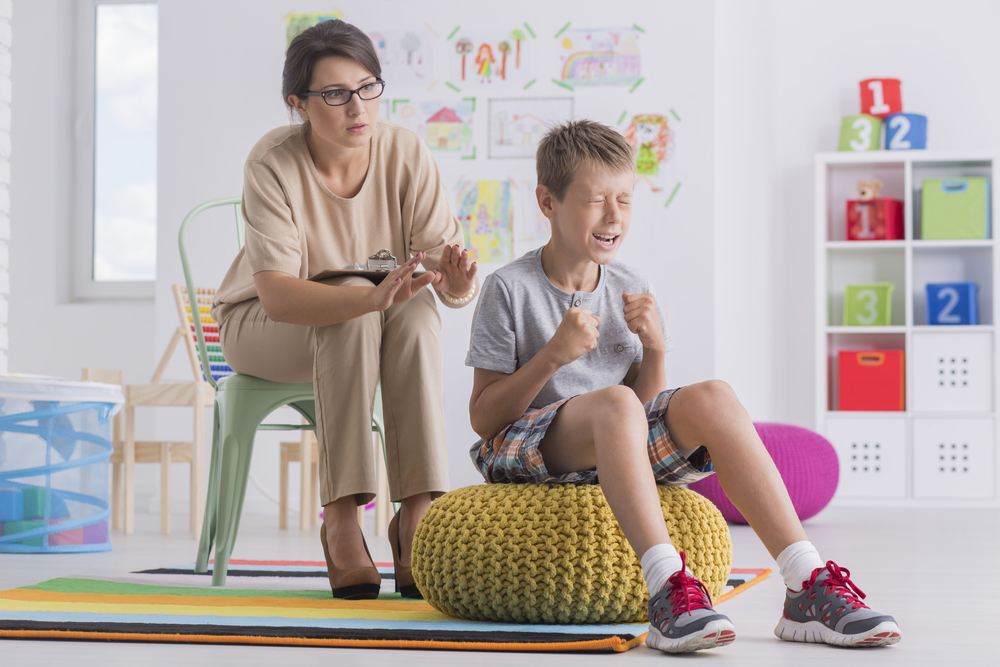
While many focus on aggressive anger in Anger Management, many times passive forms of anger and abuse or forgotten.  One such type of passive anger and abuse is referred to as silent treatment.  When used as a way to punish and control, it can be very abusive and a form of misusing the emotion of anger.

The silent treatment is a form of passive anger and emotional abuse. Please also review AIHCP’s Anger Management Specialist Program


The article, “Is Silent Treatment a Form of Abuse? Here’s What to Know’ by Kelly Burch looks how the use of ignoring and purposefully not speaking to another person is a form of abuse.  She states,

“When you think of abuse, your mind probably goes immediately to physical violence, yelling, or intimidation. But an abusive relationship can also be silent. Some people use silent treatment abuse to manipulate and control their loved ones. This is a form of emotional abuse.  It’s normal to not want to talk to someone when you are angry or frustrated. In most cases, this happens occasionally and blows over. However, if a person regularly uses the silent treatment to influence or control your behavior, they are being emotionally abusive. “

To read the entire article, please click here

Please also review AIHCP’s Anger Management Specialist Program and see if it meets your academic and professional goals.  The program is online and independent study and open to qualified professionals seeking a four year certification in Anger Management

Grief Counseling Certification Blog on the Necessity of Mourning

Grief is part of  life.  As long as love and loss exist, grief will exist.  The process of grief is an important part of growing and adjusting.  It is not something that is to be rushed, ignored, or not valued.  While it is an unpleasant part of life, the grieving process helps one heal and learn to live and adjust to the loss.  Grief does not go away but one learns to live with it and the body and the mind must go through the process of grieving to properly adjust.

Grieving is a natural part of life. Please also review AIHCP’s Grief Counseling Certification and see if it meets your goals


The article, “Feeling Pressure to Grow from Grief” from “What’s Your Grief” takes a closer look at the importance of the grieving process.  The article states,

“What can be missed is recognizing grief as a handbrake for the motion of life. It is an important and natural evolutionary force telling you to let yourself be, to sit, to grieve, to mourn. This leap to meaning can be an attempt to bypass the reality of loss.”

To review the entire article, please click here

Please also review AIHCP’s Grief Counseling Certification and see if it meets your academic and professional goals.  The program is online and independent study and open to qualified professionals seeking a four year certification in Grief Counseling.

Pet Loss Grief Support Program Blog on Sudden Pet Loss

Like any death, sudden deaths cause extreme distress for people.  Unexpected loss is always painful and can lead to complications.  The same sudden loss of a beloved pet can be a horrible experience.  If one’s dog is hit, or cat is killed, or horse breaks a leg, can be unexpected and painful moments in anyone’s life.  Such sudden death should not be downplayed but respected and heard.

Losing a pet suddenly can cause complicated grief. Please also review AIHCP’s Pet Loss Grief Support Program


The article, “When death comes suddenly to a pet” by Katie Burns looks at the sudden death of a pet.  She states,

“In other cases, a pet owner might have been managing a pet’s underlying condition, and the pet dies suddenly from a fatal progression of that condition. In Florida, other notable causes of sudden unexpected death—but not unexplained death—are drowning in pools and even death by alligator attack.”

To review the entire article, please click here

There are so many ways our beloved animals can die.  If sudden, it can cause intense trauma and these feelings should not be kept in.  Please also review AIHCP’s Pet Loss Grief Support Program and see if it meets your academic and professional goals.  The program is online and independent study and open to qualified professionals seeking a certification in Pet Loss Grief Support.

Grief Counseling Certification Blog on the Loss of War in Ukraine

War is the ultimate failure in dialogue.  Violence is never justified against another yet throughout history war has been used as a vehicle of violence against countless billions.  War in many cultures is seen as a punishment from above and a sign of sin.  The Horseman of War is one of the four riders of the Apocalypse spreading hate, violence and death in many of these cultures.  In others, war is attributed to the god of war.

Loss and grief from war is always extremely traumatic. It leaves death imprint and deep trauma to those who experience intense loss. Many suffer from PTSD. Please pray for Ukraine


Ultimately war comes from human beings because of greed, envy and hate.  It is an absence of reason and a cruel extension of diplomacy by force.  With it comes death, loss and suffering at a grand scale.  This is especially true for wars that disregard civilian life and human decency.   Ironically, war can be justified if for defense and it can also be carried out within a a code of conduct, but rarely does that matter, when even the “just” can fall to blood lust in battle.  War has no victors but only those who mourn the loss of life, property and future.

In Ukraine, war has again come to Europe.  Loss is everywhere at a traumatic level.   The loss is incomprehensible for the victims of the war.   The people and soldiers who experience the death and destruction are victims of war’s evil spell.   Many experience losses of children, spouses, parents, or pets.  Beyond the loss of family, many have lost their entire life savings, as well as future.  There is no house to return to due to the bombs, but only ash.  Within Ukraine there is also a loss of identity, where the nation itself fights for its very existence.

This type of death mark and traumatic loss will haunt the people of Ukraine for the rest of their lives, well beyond the calendar end of the war.   The scars, the trauma, the loss, and the horrendous destruction cannot be forgiven much less forgotten.   These poor souls who survive the physical pain will forever be haunted by the emotional and mental pain of this war.

The severe trauma of death imprint is one symptom which will cause a high level of PTSD within the general population.  The sound of the bombs and missiles, the rolling of tanks, and the sound of gunfire will haunt civilians and soldiers alike.  With no safe haven, these victims will suffer to come to grips with the unprocessed trauma that was witnessed in their own cities.  The death imprints of dead in the streets, bodies unburied, and the smell of the dead, will haunt adults and children alike.  The pure genocide of a town will imprint itself on the minds of so many.  Not only will the loss of loved ones and home be relived, but also the moment itself.

Furthermore, in any mass destruction, there will be a multitude of individuals who suffer from survivor guilt.  They will feel guilty they lived and a loved one did not, or they will regret what they did or did not.  This will haunt them as they relive the moments of the war.   For these civilians, the trauma may be far worst than for a soldier because war should never come to one’s home.

Total destruction of war leaves one asking why? The grief and loss of war is severe.  Please also review AIHCP’s Grief Counseling Certification


The mere thought of this also terrifies those from afar.  Mentally, most of Western Europe is witnessing the grief of refugees, while others witness the carnage on television.  This is creating a fear within the general population of earth of a potential great war, where what is occurring will happen throughout the world.  The anxiety and fear of a greater war ending in a nuclear holocaust between the West and Russia is awakening anxiety, anger, fear and grief.

This war is only to real not only for those who are suffering from it and fighting in it, but also those witnessing it from afar.  Seeing small children die, or civilian homes destroyed from missiles afar all awake a fear to everyone else.  Anyone with empathy can feel the pain but also the fear of sharing that experience.  Many are experiencing an anticipatory grief with fears of losing loved ones in a major conflict.  A once never conceived  idea of massive loss and pain is now potentially materializing for many people throughout the world.

This war will no doubt scar a generation.  Many will need counseling to deal with trauma, PTSD, and depression.  The type of loss and inhumane bombing taking place in Ukraine is not something one simply forgets.  It is not a type of loss that can be rationalized.  It is unnecessary and shocking.  It is an evil with no purpose perpetrating by an evil man.   This is the hardest type of loss for individuals to process.  The question of why and how?  Individuals will never fully understand why their lives have been torn away never to be the same.  Their lives are the things of nightmares.

Many from afar suffer anticipatory grief and the fear of nuclear holocaust.


These are the types of losses that war produces.  War creates such horrible and unimaginable loss of loved ones and homes and crimes against humanity that the human brain cannot fathom it.  The trauma is fragmented and never able to be processed in a healthy way.  Instead, the loss haunts and creates this horrible imprint upon those who experience it.

Grief Counselors and licensed counselors and other therapists will need to help individuals process the pain of loss well after the conclusion of this war.   This will be no easy task as many will remain depressed and numb to the cruel atrocities this war has created.  In addition to treating PTSD and depression, individuals will need treated for a variety of anxiety disorders and substance abuse issues that will result from attempting to escape the pain.   Crisis Counselors will have to help individuals find some hope, despite the horrible despair and suicidal ideas that may enter their minds.  How does one rebuild from this war?  The hopelessness will be very real in these souls and it will take well trained mental health care professionals to help these individuals find hope.

It will also take the rest of the world to give hope through time, prayers and financial donations to help rebuild lives.  Buildings can be rebuilt, but for others, loss of limbs, or loss of family cannot.  Some will never find the peace despite this aid but will have to learn to cope with the loss of a loved one, son, daughter, sibling, parent or dear friend, even a devout pet.

Please pray for Ukraine and peace in this world.


Please also review AIHCP’s Grief Counseling Certification and see if it meets your academic and professional goals.  The program is online and independent study and open to qualified professionals seeking a four year certification in Grief Counseling.

Stress Management Consulting Program Video on PTSD

Post Traumatic Stress Disorder is trauma that is not processed.  It is due to trauma that is so severe that it leaves an imprint that the brain at the moment is not able to process into long term memory.  As a result, it is unfragmented and haunts the person as if it never ends and continues to occur.

Please also review AIHCP’s Stress Management Consulting Program and see if it meets your academic and professional goals

AIHCP Certification Video on What is Certification

Certification is often a misused word.  License, degree and certification are different type of professional and academic awards.  It is important to understand how certification helps one’s professional career.

Please review AIHCP’s Certification Programs and see if they meet your professional goals and needs.  The programs are online and independent study and open to qualified professionals seeking four year certification in various professional fields in healthcare.

Pastoral Thanatology Program Blog and Spirituality in Healthcare

Some may question spirituality with a physician or in healthcare but when treating the totality of the person there is always some type of spirituality.  Healthcare professionals should not cross certain boundaries with personal faith but many individuals have spiritual needs and emotional pains.  It is important to be more holistic in treatment approach of the entire person.

Care of the sick or dying is more than medical treatment. Please also review AIHCP’s Pastoral Thanatology Program


The article, “Does spirituality belong at the doctor’s office?” by Jen Rose Smith looks closer at the issue of spirituality and the doctor’s office.  She states,

“Graham has defined spirituality as “our innate ability to connect — to connect to others, to our environment, to the transcendent mystery and to our true, deepest self.” Like Sweet, he said modern medicine’s focus on efficiency leaves out that broader view of patients’ well-being and their spiritual and religious needs during illness.”

To review the entire article, please click here

Many physicians and healthcare professionals struggle with the basic interaction beyond the medicine and hence miss the spiritual needs of their patients.

Please also review AIHCP’s Pastoral Thanatology Program and see if it meets your academic and professional goals.  The program is online and independent study and open to qualified professionals seeking a four year certification in Pastoral Thanatology.

Anger Management Certification Blog on Displaced Anger in Society

People are throwing their anger at the pandemic or world affairs or political unrest at a variety of other venues.  Whether at home or in traffic, the population is angry and has no place to channel it in a healthy fashion.  This anger is erupting within our society.

Displaced anger is finding places in everyday life. Please also review AIHCP’s Anger Management Certification


The article, “Apodaca: ‘Dysregulated anger’ has us erupting over the smaller things” by Patrice Apodaca looks closer at this displaced anger.  She states,

“People are throwing tantrums at school board meetings, and students are acting up even more than usual. Arguments are breaking out in grocery stores and restaurants over masks, vaccines, empty store shelves and long waits for meals to be delivered by overworked servers. Motorists are blowing a gasket when they see the prices at the pump. Traffic deaths are up, in part, authorities believe, because drivers are behaving more aggressively. Medical workers are regularly harassed and threatened, and flight attendants are forced to show far too many rude and unruly passengers just how secure and snug their seatbelts can get if they won’t voluntarily sit down and shut up.”

To read the entire article, please click here

Anger can spill into so many other facets of life.  It is important to understand the source and properly channel it.

Please also review AIHCP’s Anger Management Certification and see if it meets your academic and professional goals.  The program is online and independent study and open to qualified professionals seeking a four year certification as an Anger Management Consultant.

Pet Loss Grief Support Certification Blog on Prolonged Grief Disorder in Pet Loss

Prolonged grief disorder is a form of complicated grief.  The grief is not resolved.  While slightly different than depression, prolonged grief disorders disrupts the lives of individuals and prevents them from properly adjusting to the loss.   Pet owners can also face this type of disorder over the loss of a pet.

Pet loss can have complications for people in the grieving process. Please also review AIHCP’s Pet Loss Grief Support Certification


The article, “Can Bereaved Pet Owners Suffer Prolonged Grief Disorder?” by Hal Herzog, PhD, looks at how complication grief does not discriminate between pet loss and human loss.  He states,

“According to the DSM, prolonged grief disorder only occurs in response to “the death of a person who was close to the bereaved.” Bereaved pet owners are omitted. Yet, in a 2020 study of 395 functionally impaired bereaved pet owners published in the journal Psychiatry Research, Sherman Lee found that the patterns of their symptoms were the same as in individuals suffering prolonged grief disorder in response to the loss of a human companion.”

To review the entire article, please click here

Please also review AIHCP’s Pet Loss Grief Support Certification and see if it meets your academic and professional goals.  The program is online and independent study and open to qualified professionals seeking a four year certification in Pet Loss Grief Support.

Proper Meditation Techniques

Meditation is a great way to reduce stress and help overall health.  It is both spiritual as well as holistic from a health standpoint but it is important to understand how it works to properly apply it.  Meditation if properly practiced and applied can give numerous benefits to mind body and soul.

If meditation is spiritual, obviously the proper aim and understanding of it as an elevation to a spiritual realm is important but if just utilizing it for its secular benefits of mind and body is important if one wishes to receive its benefits.  This involves proper settings, focus, posture and breathing.  Without the ability to find quiet and peace, one will have a far more difficult time finding the ability to enter a more passive mind state.   Breathing is extremely important as well. Different types of breathing techniques help the body calm and be able to reduce stress and find the needed balance.  Hence it is extremely important to utilize good meditation form.

Proper meditation has many benefits to the mind body and soul. Please also review AIHCP’s Meditation Instructor Program and see if it meets your academic and professional goals.


The article, “What Is Meditation?” from Cleveland Clinic healthesssentials reviews the proper methods of utilizing meditation.   The article gives an indepth look at what meditation is and the many types one can utilize.  It also lists important techniques that ensure its effectiveness. The article states,

“If we’ve learned anything in the last few years, it’s that tending to our mental health is as important as taking care of our physical health. Regular exercise certainly gives us a brain and body boost, as does maintaining a healthy diet. But meditation is also becoming an increasingly popular way to nurture your whole self. ”

The article continues, “Meditation can feel daunting if you’ve never done it before. And some types of meditation aren’t easy to do on your own. For example, because guided imagery is always directed by someone else, Sherwin notes this type is “a little bit harder to do if you’re standing in line at the grocery store.”

To read the entire article, please click here

Commentary

Meditation is a practice in which an individual trains the mind or induces a mode of consciousness, either to realize some benefit or for the mind to simply acknowledge its content without becoming identified with that content. The term meditation refers to a broad variety of practices that includes techniques designed to promote relaxation, build internal energy or life force (qi, ki, prana, etc.) and develop compassion, love, patience, generosity and forgiveness.

In order to properly meditate, one must first find a comfortable position in which to sit or recline. Once settled, the individual must then focus their attention on their breath and allow their thoughts to flow in and out without judgement or attachment. It is important to maintain a sense of detachment from the thoughts as they come and go, otherwise the individual will become caught up in them and the meditation will be less effective.

Setting, posture and breathing

There are a few key things to keep in mind when setting up a space for meditation. First, it is important to find a place where you will not be disturbed. This means choosing a spot where you can sit comfortably without being interrupted. Second, it is helpful to have a straight back when meditating, so finding a chair or sitting on the floor with your back against a wall is ideal. Finally, it is important to focus on your breath and let go of all other thoughts.

Proper meditation posture is extremely important for achieving the optimal meditative state. The most important thing to remember is to keep the spine straight, as this allows for the free flow of energy. The head should be tilted slightly upward, with the chin parallel to the floor.   The spine should be straight, the shoulders relaxed, and the chin slightly tucked in. The hands can be placed palm up on the thighs or placed in a mudra. The legs should be crossed with the right ankle over the left knee. The eyes should be closed and focused on the third eye point.

Proper meditation breathing is an important aspect of the practice. The breath is a vehicle for the mind and the body to connect with the present moment. When we breathe deeply and slowly, it helps to calm the mind and bring our attention to the present moment.  The breath should be deep and smooth, without any pauses. Inhale and exhale evenly, and focus on the sensation of the breath.

Conclusion

In conclusion, proper meditation can be a very effective tool in managing stress and anxiety. However, it is important to find a method that works for you and to be consistent with your practice. Meditation is not a quick fix, but it can have lasting effects if you stick with it. It is essential though to properly practice it to achieve these effects.  With time and practice, one can better master the techniques to find the mental state of mind necessary to reduce stress and improve overall health.   If you’re looking to reduce stress and improve your overall wellbeing, give meditation a try.

Please also review AIHCP’s Meditation Instructor Program and see if it meets your goals.  The program is online and independent study and open to qualified professionals seeking a four year certification as a Meditation Instructor.  Once the core courses are completed, qualified professionals can earn the four year certification.  As a certified Meditation Instructor, individuals can help others learn the health benefits of meditation while also incorporating proper techniques in breathing and form for their students.


Additional Resources

“How to Meditate”. Mindful.  Access here

“28 Best Meditation Techniques for Beginners to Learn”. Leslie Riopel. Nov 29th, 2019. PositivePsychology.com.  Access here

“5 Meditation Techniques to Get You Started”. Elizabeth Scott, PhD. March 25th, 2020. Verywellmind. Access here

“What’s the Best Meditation Technique for You?”. Nora Isaacs.  February 17th, 2012.  Yoga Journal.  Access here