Addiction is a powerful thing even during normal times. Isolation and quarantine can make addiction even harder. Lack of social support, counseling and being around other people can make one turn towards addicting things. Instead of connection, the person returns to addiction.
Self isolation is very difficult when dealing with addiction. Please also review our Substance Abuse Counseling Program to learn how to become certified
The article, “Managing Addiction Recovery During Self-Isolation” from Cleveland Clinic Health Essentials takes a closer look how one can manage addiction during self-isolation. The article states,
Managing addiction recovery can be difficult at any time but the recent coronavirus pandemic has made doing so even harder. Besides affecting in-person meetings and appointments, current quarantine rules have also put extra strain on those struggling with recovery. But that doesn’t mean any efforts are hopeless. Understanding what triggers can add stress to your situation can make dealing with current circumstances easier. And it’s also important to know how many ways you can still receive the support you need.
Identifying triggers is a key part of managing oneself during self isolation. Being able to ward off the feelings of need is also key. This is easier said then done but the article above hopes to give a few ways to make it less difficult. If you would like to become certified in Substance Abuse Counseling and would like to help others, please review AIHCP’s program and see if it matches your academic and professional goals.
Usually war, disaster or tragedy unite, but the COVID 19 pandemic has managed to divide the country. On one side there are citizens who are obeying restrictions and social distancing and on the other side, there are individuals who are openly defying the restrictions. This dangerous mentality adds to the division that display political fault lines simply by wearing a mask or not wearing one. This also fuels an already uneasy political landscape between Trump and the Democratic Party, and for that matter most mainstream individuals. The response to the disaster has only enraged more as everyone looks to point the finger.
Covid19 pandemic has led to political divide instead of unity against the virus. Some minority groups see the fight against the virus as a campaign against their rights. This has led to political anger between maskers and non maskers
This unrest and fear across the nation has led to increase signs of political anger. Protests and armed open carry as a sign of intimidation towards others who support science and the medical field is perplexing. While the shut downs have hurt everyone economically, the irrational response of anger out of fear has engulfed the nation. Individuals demanding their rights over the inconvenience of regulations imposed by the the state are becoming more and more angry. They are channeling their anger of not wearing mask into a political movement against state control and a secret agenda.
Others in response are becoming increasingly angry with the absurdity of not wearing a mask or questioning the apparent danger of the virus. This has led to conflicts and showdowns between maskers and non maskers. Without good leadership in Washington, which is constantly sending mixed signals, individuals are becoming even more angry.
It is unfortunate that political divide and anger has even poured into the medical and scientific realms where safety against the virus is now questioned. As this continues, individuals must keep their calm. Wear the masks, keep distance and do not allow anger to overwhelm oneself when seeing someone who blatantly disregards safety due to their misdirected and unsound anger. Two angry minds do not solve the problem.
Protests against the economic shutdown are spread across the country. This fueling of anger from the political field makes fighting the virus more difficult
However, fear has not only engulfed the social sphere but also home life. Again where families should come together, one is discovering cases of domestic violence. New schedules, unemployment frustration, cabin fever, and enforcing pandemic rules are a stress on families. Many families are also gripped with fear and that fear can turn into outbursts. This is even a more dangerous situation in households where domestic violence is already an ingredient of everyday life.
Overall, many Americans are acting calm outside and inside their homes, but as a nation, we collectively must remain calm. One cannot allow fear of the virus, anger over the situation and stress of new guidelines to lead to conflict and confrontation. It is far easier to become emotional but if everyone follows the guidelines, ignores the fringe minority, and works together as a family and community then this crisis will slowly go away.
Homes in quarantine with a history of domestic violence also face anger issues.
Wearing masks, washing hands, and social distancing can help protect families from infection. If everyone tries their best, then spread can be minimized. As the country starts to re-open, new challenges will emerge and new cases, but everyone must not allow fear, stress and outside noise distract them from the task at hand. This is going to be a long war on the virus and if the correct mindset is adopted, we can limit fear, reduce false expectations and face challenges with a sound mind.
Anger is something we do not need added to the already volatile situation. Frustration over the situation is understandable but we cannot allow that frustration to turn into an anger that makes one become enemies with one another or take political agendas over science and medical advice.
While dealing with these issues, please also review our Anger Management Consulting Certification Program. The program is great for individuals who deal with anger issues or professionals seeking to become certified in the area of Anger Management. Qualified professionals can become certified and the program is online and independent study. The program leads to a four year certification which can be renewed every four years.
Please also review our Anger Management Consulting Certification Program and see if it meets your professional and academic needs
In the meantime, remember to stay calm, follow medical advice, and face the crisis one day at a time. That is the best way to deal with the anger that is surrounding everyone due to this crisis without allowing it to enrage yourself.
Losing a pet, especially a dog is a big loss. People should not feel guilty in sharing their grief. The loss can be as painful as losing a family member and should not be shelved away or not discussed as secondary to a human life. This type of disenfranchisement can hurt individuals grieving their pet or dog. It does not permit them to grieve and discuss the loss and how it has affected their lives. It is important to recognize pet loss in a person’s life.
Losing a pet, cat or dog is a big loss. It is like losing family. Please also review our Pet Loss Grief Counseling Certification and see if it meets your professional goals
The article, “My Beloved Dog Just Died. I Don’t Know How To Grieve Without Feeling Guilty.” by Ann Gorewitz discusses her grief and guilt for grieving her pet. She states,
“Our pets’ lives have value ― they matter! ― even though society often trivializes our relationships with them. And though I feel like I’m not supposed to grieve Cassie’s death as intensely or profoundly as I do ― especially during a pandemic when so many other truly awful things are happening ― her life and the loss of it is momentous to me, and maybe more so because of COVID-19.”
Children with ADHD sometimes need medication but medication can hold a myriad of side effects as well as a life long dependency on a pill. Modifications and coping strategies can limit the need for medication or remove it. It may not be the first step but it can lead to improved outcomes over time and remove the need for medication.
Before medication, various modifications should be done to see if a child can cope with medications. Please also review our ADHD Consulting Program
The article, “The question of medication: Life modifications might be an option for children with ADHD” by Ed Condran looks at modifications for children in regards to ADHD. He states,
“There is no doubt some children need medication to quell their impulses and home them in on schoolwork, but why is it that comparable countries around the world have far fewer children on ADHD medication? What should parents do when they suspect their children’s lack of attention could be a problem in school? Before visiting a physician, parents should take a look at their child’s actions and environment. Examine their diet, activity and sleeping patterns. If a child is exhausted, it impacts their attention span”
Hence beyond coping strategies, there can be a variety of ways one can learn to reduce the behavior. To read the complete article, please click here
Please also review AIHCP’s ADHD Consulting program for professionals seeking certification. The program is online and independent study.
It is a matter of luck for many that some may drink alcohol and never become addicted. For many it is a matter of a genetic predisposition. Some can simply put down a drink and never have one again without any physical symptoms. Others while not physically addicted can become mentally addicted through habit and the ability to walk away is likened to walking away from a bad habit. When we see individuals, physically addicted or not, drink, we still can determine if one drink is too much or not. One does not need to be addicted to misuse a drug, but for some, when can we truly state it is an addiction?
What separates a fun night out from addictive behavior? Please also review our Addiction Counseling Training Program
Like a computer game, or gambling, drugs can be addictive to our behavior, beyond just the physical addiction. One out of habit needs to drink. Whether its always after work, or to go to a night club, if one cannot abstain from a drink, then it is a sign of some dependency, either physically, mentally, or out of bad habit. For some it takes less time, but those who face greater addictions, it can be a big issue.
Hence defining what is an addiction for one and not the other can be difficult. Many people exist in the state of need but only need in certain situations. This still can pose an issue, even if it is only here and there. It is also an issue, if one is not enough.
The article, “Alcohol Use: When is it an Addiction?” from the South Florida Reporter states,
“The problem starts when we’re unable to control our urge to drink, even if it doesn’t present a threat to our social life, work, or health status. This is where we need to make a clear distinction between alcohol use, abuse, and alcoholism, which are related but not the same issues. Alcohol abuse is a disorder when a person can’t stop drinking even if it causes problems at home or at work. Alcohol abusers are prone to drinking and driving, even if they are aware of the dangers of such behavior.”
While there are so many clear cut definitions of alcohol abuse and addiction, it is sometimes the more subtle ones that tilt between social norm and addiction. To read the entire article, please click here
Please also review our Addiction Counseling Training Program. The online and independent study program and help train professionals to help others face substance abuse and addictive behavior.
Chronic care for those recovering from heart failure need a variety of social aspects that go well beyond the office visit at the clinic. Care involves also touching base with family care givers and the promotion of better healthy lifestyles and a fulfillment of diet and medical plans necessary to recovery. Case Management plays a big role in watching the overall recovery effort and helping the chronic condition become better.
Care beyond the clinic for heart failure patients is important. Better diet and follow through on medical plan are also key. Please also review our Healthcare Case Management Program
The article, “Chronic Care Must Account for SDOH Needs, Family Caregivers” by Sara Heath states,
“Nearly 6.5 million people across the country have been diagnosed with heart failure, a disease that can be manageable with medications for some time but hinge on an ideal set of living circumstances to help the patient thrive. Central to that are the social determinants of health, or social factors that affect a patient’s ability to achieve wellness, and family caregivers. Both factor deeply into the patient journey and demand more attention going forward, AHA wrote in its two policy statements.”
Please also review the American Academy of Case Management and its Healthcare Case Management Certification and see if it matches your academic and professional goals.
Depression can have many origins. It is deeper than mere loss but a prolonged and unhealthy response to loss, or no loss at all. Depression can be triggered by an event or loss but it can also merely exist within someone due to chemical and biological factors, or psychological factors.
One may find themselves in deep depression and should seek help. Medical professionals, clinical counselors with specialties in grief counseling can also help. Others who are only certified in grief counseling can direct depressed individuals to proper professional care.
Depression can have many origins that are external and internal. Please also review our Grief Counseling Certification program and see if it meets your professional goals
The article, “Four Types of Depression” looks at the various types of why people can be depressed. Dr John Cottone takes a closer look in his article and explains these types of depression. He states,
“Virtually everyone has some experience with depression; however, the term “depression” has so many different meanings that confusion and invalidation often result when laypersons talk about their experiences. To address this problem, I have created a simple schema, based on my work with patients and my own personal experiences, to help people understand each other better when talking about depression. ”
Hence depression is a multi layered phenomenon that sometimes has a cause and other times has no direct correlation with an event but only self. To read the entire article, please click here
ADHD can cause mass spending. It can keep a person moving mentally into a spending spree where certain things are considered needed. The person keeps spending and cannot settle. This can cause a problem in a marriage, as well as for the budget of anyone. In quarantine and times of pandemic, this can also be difficult to curb ADHD tendencies to want to buy and order online.
The article, “How to Spend Less When the ADHD Brain Wants More, More, More” by Linda Roggli looks at how to train the brain to relax on the spending. She states,
“Without the structure of regular hours at a job or with the distraction of children who are home trying to e-learn, many of us have lost our ADHD compass. Strategies that once worked no longer do. When we are “floating,” our impulsivity goes wild. ”
Controlling urges and following steps can help reduce ADHD induced spending. To read the entire article, please click here
ADHD can lead to compulsive spending, especially during quarantine. Please also review our ADHD Consulting Certification and see if it meets your professional goals
Please also review our ADHD Consulting Certification and see if it meets your professional goals.
Like EFT, Hypnotherapy is a non evasive way to heal oneself. Hypnotherapy, like EFT, is usually administered through a healthcare professional or someone with high certification credentials. Hypnosis can help heal may traumas, but also help others face fears or quit bad habits. Hypnosis can help the brain overcome many obstacles.
Hypnotherapy is becoming more main stream and is a useful tool for many people in healing. Please also review our Clinical Hypnotherapy Certification
The article, “HARNESSING THE HEALING POWER OF HYPNOTHERAPY” by Victoria Cristie reviews the numerous ways Hypnotherapy can help individuals heal. She states,
“Many people still associate hypnosis with dated Vegas magic shows, and while Chisholm agrees that there’s some enduring skepticism around hypnosis in the medical field, it’s becoming a more common recommendation for drug-free pain management. “I’m very privileged to work with wonderful nurses and physicians who are open to [hypnosis] because they’ve seen it be effective,” she says. “They’re very supportive because they want what’s best for the patient.”
As hypnotherapy enters more and more into the mainstream, its benefits will help millions overcome pain, trauma and fears. If you would like to read the entire article, please click here
Hypnotherapy is an excellent certification for healthcare and behavioral health professionals. Please review AIHCP’s Clinical Hypnotherapy Certification and see if it meets your professional goals.
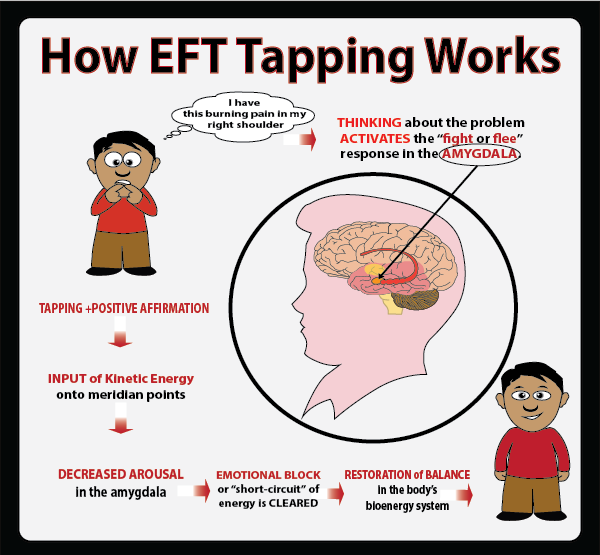
The Emotional Freedom Technique is a new and exciting practice used by many counselors to help people overcome grief, past trauma, and emotional pain. Its concept correlates with meridian points in the body. It requires self manipulation of those points while guided by a certified professional in EFT. It allows one to work out negative energy associated with trauma.
Does EFT work? Studies show it to be very effective. Please also review AIHCP’s EFT Training Certification and see if it meets your goals
The article, “What You Need to Know About EFT Tapping” by Megan Falk states,
“The therapeutic tool combines elements from ancient Chinese acupressure and modern psychology, but can tapping your fingertips on your head and torso really relieve stress and anxiety?”
The article looks to answer this question with study based success. It also reviews the various ways it works and how to do it. To read the entire article please click here
For those who have not tried EFT, it may be the alternative option that finally helps one overcome the inner trauma. Please also review AIHCP’s EFT Training Certification and see if it matches your academic and professional goals. The program is designed to certify professionals but the initial course can also teach those merely interested in learning more and how to utilize it EFT for themselves.