PTSD is unprocessed trauma due to a horrific event. Learning to finally face that trauma and move forward is an important step. Learning to process and again learn to trust and have productive relationships are important. Please also review AIHCP’s Stress Management Program and see if it meets your academic and professional goals.
The death of a pet is a pivotal moment in life, no matter how many previous cats or dogs have passed prior. Each relationship is unique and special and each ending to that relationship is equally painful. Saying good bye to any friend or family member is difficult and that is why saying goodbye to a pet is equally difficult. For many, pets are family. This is not odd or weird but a reality and completely normal. Animals have pure souls of love and devotion and teach humanity many times the most loyalty. It is then of no surprise that the loss of a pet can be a very painful moment for someone.
Each pet is unique and loved. Please also review AIHCP’s Pet Loss Grief Support Certification
The article, “Lessons from loss: healing after a beloved pet dies” by Elsic Lynn Parini looks at the lessons we learn and the healing we experience after the loss of a pet. The article states,
“In the case of two of my six cats they fell asleep on my heart and that’s when I fell in love in a very big way,” Glauber remembered of his own adoption experiences. “I now have the immense responsibility for this being… And then, all of a sudden, there’s the opposite feeling: ‘Oh no, man is it going to be hard to say goodbye to this creature.’ You can’t have the one without knowing the other will come… In our wildest fantasy, no being we love should ever die, but we know that is not true. The courage to grieve is the courage to love.”
Please also review AIHCP’s Pet Loss Grief Support Certification and see if it matches your academic and professional goals. The program is online and independent study and open to qualified professionals seeking a four year certification in Pet Loss Grief Support.
One of the worst places to become angry is at work. It not only is unprofessional but it can lead to multiple problems with management, co-workers and career. It can also lead to harassment charges and other investigations. Hence it is extremely important to remain calm and focused while on the job.
Anger in the workplace is counterproductive and detrimental to morale. Please also review AIHCP’s Anger Management Certification
Non hostile work environments are key to successful business and teams need to be on the same page and not in conflict. Learning to create more harmony at work can help many individuals work better together and increase production. Anger Management is an important tool at work, as well as Stress Management to control anger impulses that disrupt work.
The article, “The Worst Place to Get Angry” by Naveed Saleh, PhD looks closer at the dysfunction anger at work can cause and how to prevent it. He states,
“Problematic anger can lead to major workplace disruption and negatively impact individual performances. Researchers have found that these effects are particularly salient in high-risk occupations, where prolonged and unhealthy anger festers. Examples of these professions include police, military, and firefighters.”
Please also review AIHCP’s Anger Management Certification and see if it meets your academic and professional goals. The program is online and independent study and open to qualified professionals seeking a four year certification in Anger Management Consulting.
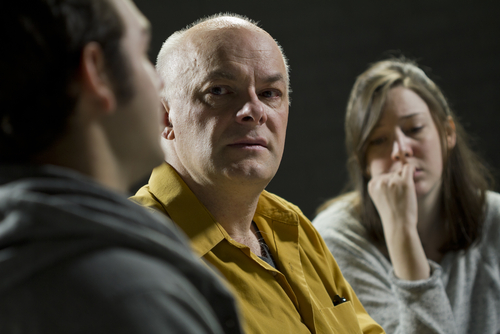
Support groups of any type can help an individual overcome many past traumas. The collective sharing of trauma can help mutual members heal and learn from each other. Individuals with any type of mental or emotional trauma sometimes find the social outlet of support groups to be beneficial. These groups can be from basic human loss to more complicated issues as PTSD and other trauma. Individuals seeking support group help should already be somewhat past the initial shock of loss. In other cases, they should not be a danger to themselves or others. Support groups should be narrowed to their most basic needs to have the most maximum benefit. Please also review AIHCP’s Grief Counseling Certification.
Support groups provide an excellent opportunity for the bereaved to be introduced to like wounded individuals. It counters the isolation and shaming within society and opens a new door of acceptance and sharing. Groups provide emotional, spiritual and physical support in a safe and trusting environment. Furthermore, groups allow individuals to explore their feelings but also to help others. If one is emotionally ready and able, support groups can be the final touch of healing to help a person adjust to the loss and continue in a healthy fashion on their grief journey. You can learn more about organizing Grief Support Groups through AIHCP’s Grief Counseling Certification Program.
Bereavement support groups are an excellent vehicle to help others deal and cope better with grief. Please also review AIHCP’s Grief Counseling Certification
The first step in facilitating a support group is to discover the group that one wants to reach. Many independent programs are sometimes founded by an individual who shares a similar loss and wishes to not only help one’s own self but others. Some families of school shootings, will start groups in memory of a lost loved one as a way of continuing one’s name. Other established societies or institutions will create groups and assign trained professionals to guide the groups.
Groups can be led by one person but it is really important to have a reliable co leader who shares similar values and understands the importance of the maintaining group structure. In addition to leadership, most groups are held within the organization premises, but independent groups may meet in public places such as churches, schools or libraries. It is important to find a spot that is quiet enough to allow privacy and a sense of the sacred. Lighting and sometimes music can be employed. An area that has the necessary academic tools is also important. White boards and other educational tools should be part of any group’s resources to explore issues of grief.
The group should be no more than 12 as to avoid overwhelming the leader and not permitting enough time to help each individual. It is also important to pre-screen potential group members to discover if they are ready for group support. Some members may be reluctant to join and are being forced, while others may not be ready to join a social group to discuss loss. Still others may require personal counseling due to deeper trauma that a group cannot help heal properly.
Within the group it is also critical to establish rules to each member. Meetings should be close ended with a start and end time and regular weekly or monthly cycle of meetings. In addition if utilizing online meetings to supplement or replace physical meetings, it is important to keep the same structure of start and close and maintain routine. Issues of privacy may arise and it is important upon utilizing various online resources that individuals partake knowing the critical element of privacy and be in a closed off room from the noise of their respective homes.
Other ground rules should include the importance of confidentiality. What is said within the group cannot be shared with others outside the group. It is critical to build this sense of community and trust. It is important to share one’s grief account, but it is also important that other people may resist. It is critical not to force others to share until they are ready. Likewise, for those who choose to share, it is important to set up time designations for each to talk to prevent the more out going from monopolizing the time. While it is good to help others, it is also important for group members to understand that advice is only to be given unless requested by another member. In addition, interruptions must be avoided and forewarned as unacceptable behavior.
It is to be understood within the group that grief is unique to each. It is important to understand that grief is part of life and not a disease. Finally it is important to emphasize that there is no true recovery in grief but it is an ongoing process. Communication and sharing grief is a life time commitment.
Most grief support groups are close ended, education based and open discussion. These three elements are key to their functioning. The educational element is key in teaching the individuals about the science of grief and how grief works in the body but the open discussion allows for the more subjective element to emerge. Most grief groups have texts, materials, and home work assignments, especially journals. Individuals are encouraged to write and share, as well as bring pictures, and other key objects of the loved one on certain days to share. Evaluations are also utilized on the final day.
Individuals who are looking to promote a grief support group who do not have an institution’s support, can find multiple ways to advertise their group. Word of mouth, online chat, facebook pages, posters and flyers, email lists of professional leaders, local free media and direct communication with professionals within the field can help individuals discover your group.
So far, we have discussed the basics of the group itself, but leadership will determine the success of the group. The leaders ability to be a companion in grief but also an educator in the field. Education, experience, and commitment to helping the bereaved is key for ultimate success. Excellent programs do not bloom over night but are the product of meticulous planning. Every meeting should be flexible but have a plan and topic.
First, the leader must possess some basic qualities. Without these qualities, even the best presented material will come across as uncaring and superficial.
A leader must possess empathy. The ability to perceive another’s experience and communicate it back. It allows the person to feel the other in an emotional sense and allow one to truly understand the feelings of another. A leader must also possess respect. Everyone in the group must be respected as special and unique and have inherent value. Finally, a leader needs to present himself or herself as genuine. They must be sincere in their teaching, listening and companioning.
Communication skills are key in this respect. Certain counselors and teachers learn various nuances of the trade through time and practice, but the skills of being a good listener can be learned over time. The ability to enter into communication and value the person is the first key. Listening can take the form in many ways. Attention and attending to each person one at time is the first key. In this paraphrasing can be a key skill to help others. This not only ensures one correctly hears, but also ensures the other person hears what they are saying. Clarification of issues is also key to clear up any confusing issues. Furthermore perception checking can be a key tool in addressing the individual and allows them to reflect and respond. Sometimes, leaders will needmake observations regarding an individual, and other times, a leader may need to provide some type of acknowledgement. From a group setting, a leader must also help others focus on topics, provide necessary information and help others stay on course. When problems occur, it is always best to deal with at the end of the meeting. Any leader will face various issues in a meeting ranging from the nature of sadness itself or problem members. Learning how to cope through these issues is a key development in any leader. There are a variety of skills that make a support group leader a good leader and learning more about communication and ways to help others be heard and open, are key to support groups.
Grief Support Group Leaders need to have various skills and values to succeed. Please also review AIHCP’s Grief Counseling Certification
Any group goes through phases of growth. A good leader will be able to identify the growth. The first phase is the warm up phase. In this phase, the group is feeling each other out. Individuals are trying to see if others think like themselves. Other personalities are emerging and whether to trust remains a question. It is important in these early meetings to give time for individuals to get to know each other and share small stories. These boundaries are further explored in the second phase and following meetings. Individuals tentatively begin to test the water and explore boundaries within the group. They should also begin to start seeing themselves as part of a group.
As the group develops and becomes closer, there is a deeper exploration phase. The work of grief begins to take shape. Instead of why, individuals are helping each other work through the grief. Following this phase, is the most important phase of a commitment to continued growth and healing. Others will take active interest if another member is absent in this phase. The final phase is preparation for ending the group. For some, this can be a loss in itself but it must become something of accomplishment. Others within this phase can share information, numbers and continue to form friendships beyond the group itself.
In any social event, there is a social psychology that is played out. Within a group of any type, these things will be played out. It is important for the leader to respect uniqueness of individuals but also guide the overall theme of the group to work through grief. A successful leader understands the nature of grief but also possesses the qualities to help others through grief. The group can become a great healing device is properly led. Preparation and commitment are the keys.
If you would like to learn more about AIHCP’s Grief Counseling Certification, then please review AIHCP’s Grief Counseling Program and see if it matches your academic and professional goals. The program is online and independent study and open to qualified professionals seeking a four year certification in Grief Counseling.
Source: The Understanding Your Grief Support Group Guide: Starting and Leading Bereavement Support Group by Alan D Wolfelt, PhD
Post Traumatic Stress Disorder is caused by a severe trauma that continues to haunt and trigger the past emotion as present. It is unfragmented elements of a moment so bad that it is not fully processed into long term memory. Therapy helps properly process this material to long term memory so it can be properly understand by the person as the past. One still lives with the scars of the past but are able to in a healthy way process and understand it.
Please also review AIHCP’s Stress Management Consulting Certification and see if it meets your academic and professional goals. The program is online and independent study and open to qualified professionals seeking a four year certification in Stress Management Training
Christianity and evolution seem like two words that should be forever at odds. Initially, maybe rightfully so, since evolution was atheistically supported and militant against Christianity and faith itself. The empirical process with its many benefits to life brought with it a disdain for the spiritual. This initial distrust of faith and religion, hence made evolution and Christianity natural enemies. Evolution as a tool of the atheist to explain the origin of the world without God became a powerful theory against religion. Please also review AIHCP’s Christian Counseling Certification
How did creation come about? Is Theistic Evolution acceptable to the Christian faith or must everyone adhere to literal interpretations of Genesis?
Yet, truth is truth, whether discovered through atheistic eyes or devout eyes. As time proceeded, science showed the earth was very old. Carbon dating illustrated a far more ancient world than previously thought. The study of the cosmos showed how far stars are and how long light takes to reach a certain point, again showing a greater age to creation itself. As biology advanced, adaptation and how organisms change over time, especially with virus and bacteria opened new ideas how larger organisms could also change over time. Please also review AIHCP’s Christian Counseling Courses
The idea of adaptation, older earth and an older cosmos seemed to challenge Scripture and old prejudices of the origin of evolution persisted in church circles. Furthermore, misunderstandings regarding evolution itself, as well as how Scripture is to be interpreted continued to cause a divide. Eventually, many mainstream Christian denominations became more open to evolution as a theistic mechanism void of its discoverer’s atheistic views years prior.
The only discord that exists to this day regarding Christian teaching and evolution is in fundamentalist circles who still suspect atheism within the theory. These individuals many times also do not understand the deeper science of evolution. In addition, fundamentalists tend to only interpret scripture to their own literal interpretations.
In this short essay, we will discuss the nature of theistic evolution and the dangers of always seeing scripture from a literal interpretation. Obviously, science is not at odds with faith, for both reason and truth both point to God. It is hence important that rationale beings who utilize faith, also understand the science of evolution from a theistic standpoint before dismissing it merely as an atheistic fairytale.
As Christians, we first and foremost stand against the concept of atheistic evolution. Atheistic evolution proposes the ridiculous idea that life happened by chance or the ridiculous notion that nothing became something. Obviously, those familiar with St Thomas Aquinas understand that every effect has a cause. The first cause, the uncaused cause, which infinite within itself and not forever regressing, is God. If God is a entity, a force, or whichever, does not matter, but the author of the universe must be acknowledged. This is the basis for theistic evolution. God caused the big bang, His infinite love for life, planted the seed necessary to create life in that moment of for the universe. The design was laid out among the chaos. Ironically, even Genesis points out to the darkness and disorder.
An idea of theistic evolution and God does coexist with the idea of theistic evolution. In now way is it not plausible that God could create this way. What matters from Scripture, is acknowledgement that God created life and the cosmos. The story in Genesis if taken literal can lead down a path of many concepts that do not correlate with science. However, if properly understood and interpreted, Genesis is not at odds with theistic evolution.
Genesis is not necessarily a historic narrative like modern history books. It teaches a historic moment or series of historic moments. It proclaims creation and most importantly the creation of humanity. It speaks of how humanity fell and needed a Redeemer. These are all facts, but it does so in analogical fashion. I avoid the word myth here because Modernism looks to reduce Genesis to a myth. Analogy is far different. Symbolism is far different. It still respects the history of Adam and Eve as true human beings, but how the story is told and how it illustrates a truth about them. It is not accounted like a modern journal but through a deeper language that was handed down. It does not dismiss the event as non historical like myth which only looks for a deeper meaning, but retains the historical reality of the event but in described differently.
When Scripture is interpreted only literally in every sense, then many contradictions can occur with science. The books of the Bible while only pertaining to one author, the Holy Spirit, nevertheless are written by different people. Within this school of talents, are also different ways of telling stories. Some stories are historical, some are psalms, some are laws, some are prophecy, and others are lessons. We must be clear to understand the form of the book within the Bible being read to understand its meaning, intent, style and audience of the time.
From this, one can see how literal interpretation of Genesis can create an unneeded confrontation with Theistic Evolution. However, when one discovers Genesis teaches creation, but leaves out the science, one can then learn to incorporate both together. “Humani Generis” by Pope Pius XII in the 1950s, helped lay a bridge between theistic evolution and Genesis. While he stated at the time, one can choose to follow theistic evolution or pure creationism, he pointed out that Christians could adhere to theistic evolution in good conscience. He however, warned against modernism which would look refer to Adam as mythical, or Adam as a tribe, or that the soul of Adam evolved from matter.
The other larger issue in fundamentalist camps is a misunderstanding of evolution. Evolution is not something that happens over night. The fossil record has confidently portrayed a world where adaptations occur within creatures. Adaptation is merely extreme genes that do best in a certain environment that are passed down to future generations. Individuals without these particular genes designed for better survival pass away. Hence, the gene that is best adaptive to a given environment continues to develop and be handed down. This leads to gradual change over time. While it is impossible to see massive change in human years, we see these changes in the fossil record, and we also see them in microbiology where generations upon generations can mutate and adapt within years instead of millions of years.
So, this does not mean something magically changes and becomes something new, but it is a natural change within a species due to time and environmental changes that forces certain genetic qualities to pass away and new ones arise in others. It is God’s long term design to allow a species to propagate and survive.
Another huge misconception in evolution is that humanity evolved from apes and monkeys. The truth is that both apes and monkeys share similarities to human beings and are closely related from a physical standpoint, but they are not humanity’s ancestors but merely a sharer of a common ancestor. These lines break off into what are today monkeys and apes and humanoids.
One may then naturally ask, since Genesis, although not literal, being historical speaks of only 2 human beings. Science actually shows that humanity genetic pool goes back to a pair but the idea that humanity evolved through a series of tribes on a global scale is incompatible. Many atheistic evolutionists contend this to be true, but Christians who believe in Adam and Eve, contend that Adam and Eve were the first conscious human beings to be endowed with a human soul in the image of God. Other cousins of humanity may have possessed human qualities and great intelligence, but without God’s blessing, no one could possess what Adam and Eve possessed.
Adam as a special creation was granted a reprieve from this world of suffering. He was granted an unfallen status. Whether this paradise was a place or a state of being, he existed without suffering until he betrayed God through his choice to follow the will of himself and Satan. Upon this, he was again thrust into the world that science has shown us to be temporal reality.
Did Adam and Eve’s children cohabitate with other humanoids of the time? This is very possible and may apply to the verse in Scripture referring to the children of God sleeping with the children of man. This was seen as something wrong, but it would pass upon these lesser humanoids, the gift of Adam, a human soul. Nevertheless, we know that the great Flood would forever change global geography and also the history of humanity.
The cosmos dictates a much older existence of the universe. Please also review AIHCP’s Christian Counseling Certification
How about dinosaurs? Again, the temporal age and Adam’s special status in Eden show a historical separation in the fossil record but this does not mean that in the time frame of creation, dinosaurs and other creatures did not exist prior to Adam. Genesis states Adam and humanity were created last. Hence a series of animals could have existed well prior to Adam. Either due to extinction or they evolved, they would not all exist at the same time humanity existed. Many fundamentalists try to state dinosaurs existed side by side with humanity. While other odd creatures may have existed during the writing of Scripture, as the fossil record indicates, the idea of classical dinosaurs existed side by side with humanity is far fetched.
So, yes, with evolution and with scripture, come many subjects of reflection. Some aspects are issues due to stubborn literal interpretation of Genesis, but other things must be clearly reflected upon with a biblical understanding and not merely a scientific mind that pretends Genesis does not exist.
This is not to dismiss those who choose to hold on a more literal meaning and creationist account. This is one’s own choice. One needs to be aware of the issues this creates from a philosophical and scientific standpoint. It does not damage one’s faith but it can lead to one demonizing others who hold to an equally valuable ideal about creation that does not distort Scripture. There needs to be mutual respect on any disagreements concerning this issue among Christians. Ultimately, in the end, all of these secrets will be revealed to humanity by Christ.
With so much reliable information about the age of the cosmos, earth and the fossil record, I find it very convincing that evolution was the vehicle that God utilized to bring about life. If one returns to the Bible and Genesis and looks for clues, one can begin to find that the two can co-exist if understood analogically.
Please also review AIHCP’s Christian Counseling Certification and see if it matches your academic and professional goals. The program is online and independent study and open to qualified professionals seeking a four year certification as a Christian Counselor.
Parents are only human and become angry with their children. Moms can lose their cool and yell and displace anger towards their kids. These are not uncommon occurrences, so how can moms remain calm and set good examples even on the most frustrating day? Please also review AIHCP’s Anger Management Consulting Program
How can parents better control their anger with their kids? Please also review AIHCP’s Anger Management Consulting Program
Please also review AIHCP’s Anger Management Consulting Program and see if it matches your academic and professional goals. The program is online and independent study and open to qualified professionals seeking a four year certification in Anger Management Consulting.
Life after a divorce can be very difficult. Not only is the heart grieving the loss of a loved one but also the loss of a marriage. With the loss of a marriage comes a myriad of secondary losses and secondary headaches that can lead to immense grief and intense anger. Understanding divorce and how to better cope can be an important part in rebuilding one’s life. Please also review AIHCP’s Grief Counseling Certification
Divorce is a loss that has additional secondary losses. Please also review AIHCP’s Grief Counseling Certification
The article, “Life After Divorce: How You Can Start Again” from Cleveland Clinic’s Healthessentials looks closer on how one can slowly start to rebuild after divorce. The article states,
“Whether it’s rife with conflict or not, divorce is rarely easy. When you’re ending a marriage, you may struggle to move on with your life. But you can successfully work through the emotions and start a new life after divorce, says clinical social worker specialist Karen Tucker, LISW-S, ACSW. “You may feel rejected, angry, profoundly hurt or out of control. It’s also possible that you’ll feel relieved and hopeful,” Tucker says. “It’s important to pay attention to your emotions and to get help when you need it.”
Please also review AIHCP’s Grief Counseling Certification, as well as AIHCP’s Anger Management Program and see if they meet your academic and professional goals. The programs are online and independent study and open to qualified professionals seeking these types of certifications.
Meditation can help someone find relaxation before sleep. Sleep meditation is a great tool to try to help someone who has insomnia or sleep issues. Meditation naturally relaxes and while many utilize meditation to stay in a awake state but relaxed, certain types of meditation can also be utilized for sleep purposes. Please also review AIHCP’s Meditation Instructor Program
Meditation can help one find better sleep. Please also review AIHCP’s Meditation Instructor Program
The article, “How To Add Sleep Meditation to Your Bedtime Routine” by Audrey Noble looks how Meditation Apps can help someone find better sleep. She states,
“When dealing with insomnia in general, Dr. Conroy says that one strategy is to set aside a winddown time one hour before bed. During this one hour, she says you can decide to meditate. This can include guided meditations found through an app or YouTube. ”
Please also review AIHCP’s Meditation Instructor Program and see if it meets your academic and professional goals The program is online and independent study and is open to qualified professionals seeking a four year certification as a Meditation Instructor.
Individuals with Major Depressive Disorder have more to deal with other issues than just the symptoms. There are numerous steps and follow ups and other administrative issues to deal with even before they can receive treatment itself. It can take a little time before everything is set up and a plan of action is ready to be utilized. Numerous obstacles can make it difficult for some to even get a proper diagnosis and treatment. This is unfortunate situation for many suffering with depression. Please also review AIHCP’s Grief Counseling Certification
Administrative and insurance issues can cause lack of treatment for many suffering from depression. Please also review AIHCP’s Grief Counseling Certification
The article, “Top 8 Issues in Major Depressive Disorder” by Sidney Zisook takes a closer look at issues regarding diagnosis and the process of dealing with depression from a professional standpoint. She states,
“In summary, while there has been an explosion of knowledge in the neuroscientific basis of mental disorders, genomics, neuroimaging and neuropsychology, there remains considerable room for growth in the way we provide equitable access to evidence-based treatments; define and diagnose MDD; create evidence-informed first- and next-step, personalized treatment decisions; conceptualize TRD and consider replacing or supplementing it with DTD; develop novel interventions that provide options for better tolerated, more effective, more sustainable treatments; and more effectively train future clinicians to competently employ a broader spectrum of evidence-based treatments than the current norm; and shift the culture of medicine to one that prioritizes optimizing our own wellness and mental health.”
Please also review AIHCP’s Grief Counseling Certification and see if it matches your academic and professional goals. The program is online and independent study and open to qualified professionals seeking a four year certification in Grief Counseling