Challenges Facing New Nurses during the COVID-19 Crisis

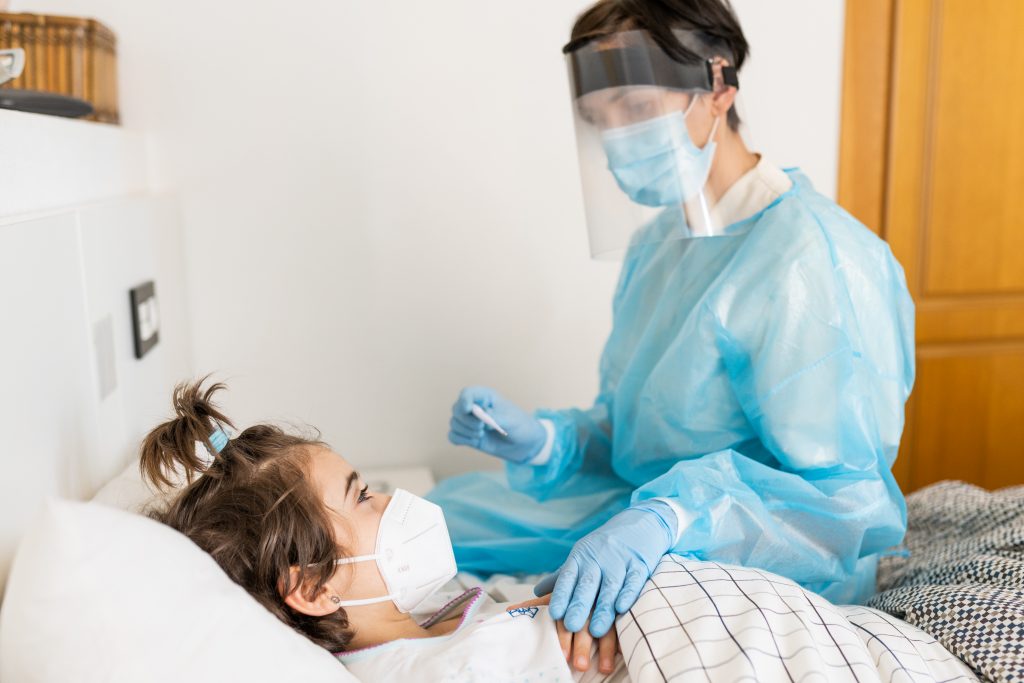
Doctor examining a little girl with a stethoscope at home.

Written By Lucy Peters

If you are new to nursing and you have recently started working at a hospital or health center, then without a doubt you have thought about what a big challenge the start of your working life will be. A recent survey by the American Nurses Association of 32,000 nurses showed that a vast majority (87%) of nurses are afraid of going to work and 36% have had to care for COVID-19 patients without adequate PPE. What are the biggest challenges facing new nurses, and what steps can be taken to ensure they stay safe during COVID-19 and future pandemics?

A Need for Greater Preparedness

As stated by Forbes, the COVID-19 pandemic has highlighted the importance of integrating more public health emergency preparedness and response (PHEPR) content into nursing curricula. Previous crises had already highlighted the need for training in this area, but previous attacks (such as the 2001 Anthrax attack) were more short-lived and did not affect either the health system or the global economy to the extent that COVID-19 is. Offering post-graduate emergency preparedness and conducting emergency drills can help nurses be more prepared for public health emergencies.

Better PPE Provisions

In late May, a survey conducted by the National Nurses United (NNU) found that a majority of respondents said they were having to reuse protective equipment meant for single use. One third also said that their employer expected them to rely on their personal sick leave, vacation days, or paid time off if they were to become infected with the virus. A separate study released by the California Nurses Association also showed high PPE reuse rates. Clearly, the need for reliable protective equipment is an issue affecting new as well as more experienced nurses. Other protective measures that should be adopted include creating separate treatment zones for persons attending emergency due to COVID-like symptoms and having strict isolation plans for infected patients.

Increased Pay Opportunities

Nurse.org reports that some high-need areas are offering sign-on bonuses for nurses. Learning institutions are also making it easier for people to enter the profession — for instance, by offering nursing qualifications in one year to those who have a Bachelor’s degree in another field. Accelerated programs appeal to millennials studying medicine since many are concerned about college debt and/or the amount of time required to complete standard college degrees. Younger students are keen on newer approaches to medicine (including telemedicine) and they are meaning-driven rather than salary-driven. However, many are already shouldering debt from former college courses, meaning that searching out better pay has become a necessary priority for many.

The Benefits of Starting Nursing during the Pandemic

Despite all the challenges, some nurses who have started in the profession during the pandemic have reported a great sense of achievement and joy at making a positive difference to the lives of so many. Working at a time in which staff shortages and long working hours have become the norm in many hospitals also puts their skills and commitment to the test. Even seasoned nurses have reported feeling overwhelmed at times yet they have also reported a great sense of achievement as they observe patients heal and obtain their release from the hospital.

Nurses who have just graduated or who are completing accelerated programs to start working during the pandemic have many challenges ahead. Although some states seem to have passed the worst of the pandemic, others are still struggling with issues such as PPEs and long working hours. Nurses are here to heal, but not to be martyrs because of a lack of equipment and safety measures. Without a doubt, COVID-19 has only highlighted the importance of preparing health teams for future health crises of a grand scale.


Please also review AIHCP’s  Health Care Life Coach Program and see if it matches your academic and professional goals.  The program in online and independent study and open to qualified professionals seeking a health care life coach program


Certified Grief Counselor Article on Grief Counseling

Grief Counseling is more needed than it is used unfortunately.  Many people drift away and allow pain and loss to negatively affect them.  They sometimes do more damage by hiding grief.  Grief Counseling is for basic loss.  It can help one heal and cope better with loss and prevent pathological later reactions to grief.  Certified grief counselors can play key roles in helping others deal with basic grief loss.

Learn more how to become a certified grief counselor by reviewing AIHCP’s Grief Counseling Training Program and see if it meets your professional goals.


The article, “Demystifying Grief Counseling: Five FAQs” from Whats Your Grief looks at the importance of grief counseling.  The article states,

“First, we want to clarify what we mean by ‘grief counseling’. When we use the terms ‘grief counseling’, we’re using it to mean any type of one-on-one, couples, or family therapy, provided by a licensed counselor, to someone(s) who experienced a significant loss. Ideally, the counselor will have experience and expertise related to grief and bereavement, though their backgrounds will vary. ”

It is important to realize that licensed counselors can provide more indepth counseling beyond basic loss.  Many licensed counselors are also grief certified.  Qualified professionals who are not licensed can provide basic grief support but not beyond the basic elements of loss.  To read the entire article, please click here

Please also review AIHCP’s Grief Counseling Training for certified grief counselors.  The program is open to qualified professionals who are looking for an online and independent study program


Stress Management Consulting Program Article and Stress Triggers in Leadership

Triggers can set anyone off. Emotional, financial, social and personal triggers stem from stress and if in the right time and moment can result in a person losing control.  Stress builds up and it is important to control stress by identifying triggers.  This is important for both Stress Management and Anger Management.  They go hand and hand together.

Stress triggers in business life can become overwhelming at times. Please also review our Stress Management Consulting Program


The article, “Managing Triggers Under Stress” by Jen Lofgren looks at how executives and other business leaders can handle stress.  She states,

“We all face varying degrees of stress from different sources in our daily lives. As much as we try, we are not always able to prevent the stress in our personal life from affecting our professional life, and vice versa. As you move up in your career into senior management and executive leadership, you may feel added pressures in your role, and the way you deal with stress can have a wider impact on the people around you.”

To review the entire article, please click here

Please also review AIHCP’s Stress Management Consulting Program and see if it matches your academic and professional goals.  The program is online and independent study and open to qualified professionals.

Legal Nurse Consulting Program Article on Malpractice Cases

A malpractice is a terrible thing to have happen.  The injury or pain caused can be overbearing and in some cases life altering.  The process of dealing with a malpractice enters its final phase during legal proceedings.  In this part, attorneys, legal nurse consultants and other experts explore the case and see its merits.

A Legal Nurse Consultant can help aid in a malpractice case. Please also review AIHCPs Legal Nurse Consulting Program


The article,  “What You Should Expect During A Medical Malpractice Settlement Case Hearing” from LegalDesire.com looks at what to expect during this period.  The article states,

“Medical malpractice is when a doctor or a healthcare facility causes an injury to a patient through negligent practice of their standard procedures. Ask a lawyer, and  they will say that medical malpractice takes place when there is a violation of the recognized “standard of care”, which is the kind of care that is carried out by all medical professionals “under the same or similar circumstances”.

To read the entire article, please click here

Please also review the American College of Legal Nurse Consulting and how it can help qualified professionals become trained in the procedure of legal nursing.  The Legal Nurse Consulting Program is online and independent study.


Revamping The Old: Cleaning And Sanitation In “The New Normal” Of Healthcare

hospital bed

Written By Lucy Peters

Nearly 600 healthcare workers in the US have died from COVID-19, according to Lost on The Frontline. The study, conducted by the Guardian and Kaiser Health News, includes doctors, nurses, paramedics and other essential hospital staff like cleaning crews, administrators and special care caregivers. The pandemic has certainly made an impact on travel and how people live their daily lives. Another thing it will have a lasting impact upon is the concept of cleanliness in healthcare.

Hospital Cleaning Staff Gear

It is generally thought that Personal Protective Equipment (PPE) is necessary to keep doctors, nurses and paramedics safe from COVID-19. However, it is now clear that it is no longer sufficient to keep a hospital in working order. Hospital cleaners who enter the premises must also have additional gear like an FFP2 mask, gloves, gown, face shields, and secure working boots, according to a study published by the Turkish Journal of Medical Sciences.

As cleaning crews often pass through different rooms and halls of hospitals, they must be duly protected from the transmission to enable them to keep rooms and areas sanitized. Beyond safety gear, their cleaning tools must have validated removal ratings that are certified from third-party laboratories. This is to ensure that their cleaning tools are actually doing their job rather than unknowingly spreading the virus around the hospital.

The Necessity Of Professional Sanitation Services

While hospitals do have their own sanitation staff, they may not be enough to ensure complete disinfection of surfaces, walls, hallways and bedding. There may simply be too much to do for regular cleaning crews to take on the load. As such, the presence and necessity of professional cleaning crews will increase in the immediate future. Professional crews possess heavy-duty cleaning equipment like steam machines that are 99.99% effective in removing germs and bacteria over a wide array of surfaces. The study, conducted by Michael Cazaban and others, established that a steam vapor system significantly eradicates S. capitis and other organisms from sensitive hospital areas.

Additional Cleanliness Protocols For Healthcare Workers

Gone are the days when healthcare professionals could simply perform hand-washing, take off any infectious gloves, and head on home. Now, it is advisable that healthcare professionals take spare clothing to wear separately and keep any work clothes and shoes in a separate plastic container, according to the Minnesota Department of Health. They found that excessive use of harder chemicals to wash clothes or bedding is unnecessary. Regular detergent is fine – as long as the laundry is done immediately prior to coming into any contact with any family members. The habit of wiping down surfaces of any vehicles used to go home with sanitation wipes must also be normalized.

This pandemic is effectively ushering new health protocols and stringent cleanliness requirements that will remain in place for the foreseeable future. While they may seem excessive, they are critical to maintaining the integrity and safety of healthcare workers everywhere. After all, it is they that are in the front lines fighting a virus that continues to threaten the human population.


Please also review AIHCP’s Nursing Management Program and see if it matches your academic and professional goals.  The program in online and independent study and open to qualified professionals.


Healthcare Case Management Certification Article on Care Management Aspects

Care Management has a variety of functions, from disease management to utilization management. These management techniques help increase patient outcome and reduce cost.  Case Management is hence a key part of the healthcare system and something many companies and facilities invest thousands of dollars in.  This is especially the case in training healthcare professionals in healthcare management

There are many elements to successful healthcare case management. Please also review AIHCP’s Healthcare Case Management Certification


The article, “What We Talk About When We Talk About Care Management” by Leah Marcotte and Joshua Liao looks at healthcare management strategies.  They state,

“Emphasis on care management has become ubiquitous in the era of value-based payment. At the vanguard of the movement, policy makers such as Medicare have emphasized care management via a variety of initiatives, ranging from payment models that encourage longitudinal care management1 to billing codes that reimburse clinicians for coordinating the care of patients who have chronic conditions”

To read the entire article, please click here

Please also review AIHCP’s Healthcare Case Management Program.  The program is designed to help train professionals in the area of case management.  Care and case management are key ingredients to healthcare and AIHCP’s programs continue to be essential in training professionals in Care Management.


Clinical Hypnotherapy Certification Article on Hypnosis and Mindfulness

Hypnotherapy has many benefits.  Reducing anxiety is definitely one of the benefits of hypnotherapy.  Mindfulness and hypnotherapy have shown to reduce stress and anxiety and help individuals find peace.

Clinical Hypnosis and mindfulness can help alleviate stress and anxiety. Please also review AIHCP’s Clinical Hypnotherapy Certification


The article, “Brief Mindful Hypnotherapy Shown to Ease Stress & Anxiety” by Traci Pederson looks closer at the benefits of mindfulness and hypnotherapy and its use against stress and anxiety.  She states,

“Mindful hypnotherapy — a new treatment combining mindfulness with hypnotherapy — shows significant promise for alleviating stress, according to a pilot study at Baylor University in Texas.”

The article goes on to explain the benefits of this combination.  To read the entire article, please click here

Please also review AIHCP’s Clinical Hypnotherapy Certification.  The program is online and independent study.  Qualified professionals can earn a four year certification after completing the five modules.  Please review and see if the Hypnotherapy training program meets your academic and professional goals.


Stress Management Consulting Program Article on SM Strategies

Reducing and managing stress is a key way to better health and more productivity.  Stress Management Consultants can help individuals face stress and deal with in better ways.  Fortunately there are numerous stress management technique and strategies available for individuals to utilize.

There are a variety of Stress Management Strategies to employ in dealing with stress. Please review the article and also the Stress Management Consulting Program


The article, “16 Stress Management Activities and Worksheets to Help Clients Beat Stress” by Jeremy Sutton from the PositivePsychology.com looks at 16 different stress management activities available to individuals to cope with stress.  He states,

“There should be no excuse to hide from stress or become overwhelmed by it.  By using tools for coping and taking control, we can see stress as something natural that can invigorate and motivate us to overcome both the planned and the unexpected. These activities we shared will definitely help you manage stress. ”

Please review the article to learn more about these activities by clicking here

Please also review AIHCP’s Stress Management Consulting Program and see how it matches with your academic and professional goals in becoming a Stress Management Consultant

Hypnotherapy Certification Program Article on Hypnotherapy and Anxiety

Hypnosis is known to help with many issues.  Anxiety is no exception.  Anxiety can be reduced through multiple stress management and meditation applications, but hypnotherapy can also play a key role in reducing anxiety.  Many are turning to hypnosis and hypnotherapy to face anxiety and find solace and peace.

How can Hypnotherapy help train your mind to react to anxiety? Please also review AIHCP’s Hypnotherapy Certification Program


The article, “This is what hypnotherapy could do for your anxiety levels” by Grace Walsh looks at how hypnotherapy and hypnosis can help individuals with anxiety find peace.  The article states,

“What hypnotherapy does is it looks to almost upgrade somebody’s thinking about something and more importantly, how somebody reacts to something. With anxiety, it’s mainly about accepting that we cannot change what is happening around us. We have no control over that but we can find a way to control how we react to it and if we do that, it takes us out of a continual flight or fight response.”

Hypnotherapy hence plays a major role in helping one’s thinking process in how one reacts to anxiety and stress.  To read the entire article, please click here

Please also review AIHCP’s Hypnotherapy Certification Program to learn more on how to help others benefit from hypnotherapy and as well, learn to use it for oneself.  Please review the program and see if it matches your academic and professional goals.


Spiritual Counseling Program Article on Science and Prayer

Prayer while spiritual in nature encompasses the entirety of the human person.  Body, mind and soul is engaged with a higher being.  It is only reasonable then that empirical and definable psychological benefits can be observed from those who pray versus those who do not pray.  Prayer has many mental benefits that go beyond a mere spiritual reality.  Prayer strengthens the mind because it places faith in a higher being.  It allows one to be less stressed, less worried, and feel that there is order in the chaos.  The re-assurance of prayer, the confidence it instills, and the peace it can give to stress, are all huge benefits to the spiritual community.

What are the empirical measurable aspects of prayer in regards to emotional and mental well being? Please also review our Spiritual Counseling Program


The article, “The psychological benefits of prayer: What science says about the mind-soul connection” by Kristen Rogers looks at what science observes regarding the emotional and mental states of spiritual people.  The article states,

“Science is about testing observable relationships, processes and mechanisms,” Masters said. “But almost by definition, prayer, as operationalized in these studies, invokes involvement of God or a higher being, something outside the boundaries of natural phenomenon, which science cannot really study. Science can, however, study the outcomes of the belief in God rather than the existence — such a study might ask whether people who believe strongly in God report a better quality of life than people who do not believe in God.”

To read the entire article, please click here

Please also review both our Spiritual Counseling Program, as well as our Christian Counseling Program and see if they match your academic and professional goals.