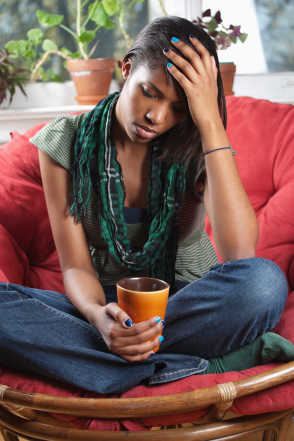
Teenage years can be confusing. Bodily changes, emotional swings, and mental challenges all come upon the teen at once. With all of these changes, comes life changes and new adaptations to Highschool and early adulthood. These things can lead teens to be very moldable and sensitive to others and peer pressure. With these changes, teens can have low self esteem and poor body image if they are not encouraged and complimented. These poor images can later in life also re-emerge in depression in adult life.
Teens can have poor body images which can lead to depression now and later in life. Please also review AIHCP’s Child and Adolescent Grief Counseling Program
The article, “Teens with negative body image may experience depression as adults, study finds” by Kristen Rogers looks at this connection. She states,
“Adolescence is fraught with stressful changes, and the developing body can be one of those challenges, especially if a teen’s body doesn’t meet society’s — or that teen’s — standards. Negative body image can threaten mental health, according to new research that found teenagers who were dissatisfied with their bodies tended to experience depression as adults.”
Please also review AIHCP’s Child and Adolescent Grief Counseling Program. The program is online and independent study and open to qualified grief counselors who are seeking a sub specialty area in child grief.
Stress plays havoc on health, social life and work. Ultimately it is a killer. For these reasons, it is essential to respond to stress. Without a fight or flight response for many everyday situations, one needs a way to help the body escape the situation or cope with the situation in a healthy fashion. In doing, so there are four types of interventions that can take place in dealing with stress.
Interventions to stress or in many ways we look to fight it within a civil and acceptable way. Since we cannot like our ancestors flee or fight a situation, we do not want to internalize stress and damage our bodies. It is important to look at each stress and see what type of intervention is the best way to deal with it.
Stress kills. It is important to utilize stress interventions in life. Please also review AIHCP’s Stress Management Consulting Program
Life change interventions are one important way to fight stress. It may involve changing how we handle things via organization to a complete restructuring of a career. The changes may be minor, or may be major depending on the level of the stress. Some stressors are internal while others are external. Some we have more control over while others we cannot control. Our life changes all hinge upon that in how severe we can alter a life style. Some changes may alter the extremity of the stress, while others may limit the duration of the stress. Some life changes seek to avoid the stress or limit the stressor’s affect on one’s life. Ultimately, the life change depends on the person’s situation and the stress. Each person is different and what stresses some, may not stress others. Hence the life change is subjective in many cases.
Does one change a career completely, or make smaller changes within the paradigm of the work itself. Hence these changes are based on the person’s individual needs and their ability to deal with the stress.
Not all stresses require outward life changes, but can be managed other ways. One way include perception. How one perceives things ultimately shapes one’s world outlook on life. One can be a glass is half empty person or a glass is half full person. If one perceives a stressor as something that will destroy them, then it will cause a great amount of worry, but if one sees such stressors as challenges or ways to improve oneself, then this outlook totally changes the stress reaction within the person. One may lose a job and see new opportunities, while others may see the loss of income and fear of unemployment. Again, it ultimately lies within the person’s perception. The ability to alter one’s perception to stress is a key way to manage it and make situations better.
Another intervention against stress is emotional response. We can help our emotional responses to stress through a variety of interventions. One includes meditation. Meditation is correlated with many health benefits. Individuals who meditate regularly overall have better health and are able to refresh themselves against stress. Besides meditation, biofeedback is a helpful tool. Biofeedback looks at how our body responds to certain stimuli and understanding what our body does when affected by stress. Most of these functions are subconscious, such as our breathing and heartbeat. Individuals can identify stress and how the body responds and use techniques to control heartbeat and breathing to reduce the damage of stress. There are a multitude of other ways one can emotionally reduce the power of stress in one’s lives. Utilizing these methods can help one deal with a life situation that cannot be altered or changed.
Working out is a great way to respond to stress in a “fight” type response. It allows your body to remove the negative stress responses that are internally taking place in the body
Equal to emotional release, physical and physiological methods of reducing stress are critical to health. These interventions and responses tie deeply with the fight response. Physical response to stress in the gym can be very beneficial. One can lift weights, punch a bag or run to escape the reality of stress. The body responds well to exercise not just for health but also mental health. Endorphins are released that help the body overcome stress damage to the organs. Those in high stress fields, should consider a regular exercise regiment to cope with the daily stresses of life.
Stress interventions are key to good health. Stress kills and one must be able to alleviate the responses of the body through a variety of coping strategies. These strategies can help one cope with stress and increase good health.
Please also review AIHCP’s Stress Management Consulting Program and see if it meets your standards. Qualified professionals can earn a four year certification through AIHCP’s independent study and online program in Stress Management.
Virtual schooling during the pandemic has been difficult for many families. The adjustments of learning online and parents taking a more active role in the education of their children is a big shift, especially for working families. Add the stress of computer glitches and other parental duties supervising their children’s progress plus the need of day care possibly, then one can see the numerous issues that can arise. If one adds any learning disabilities, such as ADHD, then the situation is even worst.
Remote learning and teaching an ADHD child may be difficult for some parents. Please also review AIHCP’s ADHD Consulting Certification
The article, “Children with ADHD Adjust to Different Schooling” by Ryan Schmelz looks at some of the challenges. He states,
“The organization Children and Adults with Attention-Deficit/Hyperactivity Disorder or CHADD, and educational therapist Shari Gent, M.S., NCED released several takeaways from asking ADHD students about remote learning, including the need for time to socialize and take breaks from sitting, a regular schedule with teacher interactions, having a parent or adult present for younger students, recording sessions, and minimizing the number of platforms students and families need to learn. ”
Homeschooling families have been teaching through online programs and home for years. It may be worth taking a few tips from these families.
Please also review AIHCP’s ADHD Consulting Certification. Qualified professionals can earn a four year certification by passing the online and independent study courses.
Depression and anxiety during and after pregnancy is not uncommon for women. Many women suffer from this due to the many physical, emotional and mental changes that occur, especially the chemical changes within the body. It is not something to be ashamed of or not spoken but addressed.
Many women face depression during pregnancy. Please also review AIHCP’s Grief Counseling Certification
The article, “Addressing Taboo Topics: Anxiety and Depression During Pregnancy” by Elle Kehres looks at this issue that some women face during pregnancy. She states,
“Depression that occurs during pregnancy, or within a year after delivery, is called Perinatal Depression. While many women have a variety of mood symptoms in the aftermath of delivery, Kimmel said 80 percent of women feel Postpartum Blues or “Baby Blues” for a short time. However, these symptoms usually subside one to three weeks after delivery and should not be mistaken for Postpartum Depression.”
Please also review AIHCP’s Grief Counseling Certification. Qualified professionals can apply and earn a four year certification. The program is online and independent study.
Pet loss is a disenfranchised loss. This means many do not acknowledge it or give the loss or people experiencing the loss the respect and time it needs. People can be ridiculed or left behind in the grieving process because others place little value on the loss of a pet. Common phrases such as “its just a dog” or “at least it was not a family member” and “why are you still upset over a cat” are all insensitive comments, pet owners deal with.
The loss of a pet is a real loss that needs to be acknowledged and accepted.
Losing a pet is a very subjective experience though. To some, it may not be a big deal, while others it may be a life altering loss. Whether paws or fins, feathers or scales, the loss of a pet can be small or big to certain people. While we naturally conceive dogs, cats and horses as the most common losses, losing smaller pets can also be painful. While these smaller pets may not be able to form the emotional bond a dog can, certain individuals still form bonds. Maybe the fish was a last reminder of a departed spouse, or the small hamster was a gift of a departed parent. These attached meanings to smaller animals also play roles in how a person may subjectively grieve.
Still even so, one may have a fish for years upon years and live a very lonely life. The loss of that simple fish, albeit, it is unable to reciprocally return love, still represents a major aspect of that person’s life. So we cannot limit loss or dismiss it. We must acknowledge it and respect it.
Is there a chance of pathological reaction to a loss of a smaller pet that is out of touch to reality? It is possible, but there is a chance for pathological reaction to any loss, whether human or otherwise. So it is important to acknowledge even the smallest loss and reassess the person’s progress through it. Normally a loss of a hamster, or fish, may take a few days or week, but again, to some, this pet may have extra intrinsic value based on the person’s subjective situation.
Obviously, the wagging of a tail and bark to greet you at home will normally have greater loss reaction. The loss of a dog, cat or horse USUALLY affects a person longer than a loss of a small pet, as a fish, or hamster. These losses have a more reciprocal bond because of the animal’s higher intelligence. AGAIN, this does not mean we can assume based on reciprocity of love and intelligence of an animal that a loss will be less or more, but it does give one a general consensus that most individuals will grieve the loss of these pets more than a smaller creature of less intelligence and emotional capacity to bond with a person.
A loss of a cat, dog or horse can be as painful as losing a family member for some. A lonely old person may grieve the loss of a cat more than a family member he never sees. A family may grieve the loss of a family dog that played a part in all activities. These are not just mere animals but beloved friends and family that may not be human but beloved nonetheless. Many see these pets as their children and the loss can hurt as much as losing a child.
To some, the loss of a pet is like losing family. Please also review AIHCP’s Pet Loss Grief Support Program
Grief Counselors need to teach and educate that pet loss is a real loss. They need to help others and show sympathy to those who will not receive it from others over the loss. They need to acknowledge the loss of their clients pet loss and help them cope through it. These losses are not to be minimized or lessened or ignored, but to be acknowledged and accepted as true and impactful losses
If you would like to learn more about Pet Loss then please review AICHP’S Pet Loss Grief Support Program and see if it matches your academic and professional goals. The program is online and independent study and open to qualified professionals.
Sedentary life is unhealthy. Yet, many Americans have job positions where sitting is a big part of their job. With constant sitting, infused exercise is critical to good health. Finding time to walk and have the necessary amount of steps for a day to keep blood levels and heart and lung health optimal is necessary. Sometimes a percent can be in the office itself, with times to stretch and walk around but the implementation of exercise after work is critical for those who have sitting jobs.
Exercise is critically important for those in sitting jobs. Please also review AIHCP’s Healthcare Life Coaching Certification
The article, “11 Minutes of Exercise a Day May Help Counter the Effects of Sitting” by Gretchen Reynolds takes a closer look at how exercise can counter the ill effects of sitting all day. She states,
“Walking for at least 11 minutes a day could lessen the undesirable health consequences of sitting for hours and hours, according to a helpful new study of the ways in which both inactivity and exercise influence how long we live. The study, which relied on objective data from tens of thousands of people about how they spent their days, found that those who were the most sedentary faced a high risk of dying young, but if people got up and moved, they slashed that threat substantially, even if they did not move much”
Please also review AIHCP’s Healthcare Life Coaching Certification. Qualified professionals can apply and see the program meets their academic and professional goals. The program is online and independent study.
Hypnotherapy can help with a variety of issues that people face. It can help with sleep disorders, bad habits as well as ailments. The power of the mind and the ability of the subconscious to self heal is something very subjective to the person’s own physiological self. If done properly, some individuals can find the rewards of hypnotherapy.
Hypnosis can help with a variety of ailments. Please also review AIHCP’s Clinical Hypnotherapy Certification
The article, “Can hypnotherapy root away your ailments?” from TimesofIndia looks closer at hypnotherapy and self healing. The article states,
“Can you seek help from within to get rid of your bad habits, inner conflicts, alleviate stress levels and health issues? As strange as it may seem, hypnotherapy may be the answer to your questions.”
Hypnosis and hypnotherapy can be used for a multitude of reasons and in many cases is someone’s last attempt to find a solution to an issue. It has been proven to be successful and is worth an effort. It is inexpensive and safe.
Please also review AIHCP’s Clinical Hypnotherapy Certification. Qualified professionals can learn how to become certified in this field and help others utilize hypnotherapy for their overall health. AIHCP’s Hypnotherapy program is online and independent study.
Up until the 1950s, living with a disability was considered incompatible with continued medical practice. Yet nearly 50% of Americans with visual impairments are still not in the labor force today, according to the Journal of Visual Impairment and Blindness. But with major advancements in medical technology, patient care has reached a point where physicians can now consult a patient and prescribe medications online, without the need for physical interaction. As a result, this helps professionals gain the advantage of erasing the stigma of individuals with visual disabilities and build their careers.
Physicians With Visual Impairment
There have been cases of doctors having a visual impairment and still managing to achieve their dreams of becoming certified physicians. One example is David Hartman, who was diagnosed with retinal detachment and glaucoma in childhood. Through perseverance, he graduated from medical school and became a board-certified psychiatrist. His work on the addiction recovery field was rewarded in 2019 at the National Conference on Addiction Disorders. Although he faced numerous difficulties in building his career, he developed certain programs for patients as the chief of adult outpatient psychiatry in Carillon Clinic in Virginia. His work has inspired movies and literature that proves that blindness and other disabilities cannot stop someone from building a promising career.
Different Paths In The Medical Field
There are numerous programs and specializations that can be accessed by individuals with visual impairment. If one decides to pursue a career in medicine, specializations in psychiatry and psychology are the most suitable due to a reliance on speech and understanding rather than a keen eye for physical symptoms and immediate action in emergencies. This is heavily advantageous for the physician, as the patient is not made aware of the disabilities they may have, prompting them to return and not be worried to seek counsel.
Understanding The Potential Risks
These are trying times for those with blindness or visual impairment who have frequently relied on the sense of touch. With the recent coronavirus compromising the sense of mobility and independence for many, those living with blindness are at a higher risk of infection. Healthcare employees must follow extra safety measures to protect against diseases, such as keeping your body and daily eye care items sanitized at all times.
Perseverance Is Key
Each step will be difficult when it comes to achieving your goals and dealing with visual impairment. But this shouldn’t discourage anyone from building a promising medical career. Having a stable support system and a workplace that is strictly against discrimination is also important in defining one’s career, as there will always be challenges for those living with a disability.
Vision loss can be extremely frustrating to come to terms with, but it does not make a person incapable of doing the same things as their non-visually impaired peers. Having a successful medical career while living with a visual impairment is always possible when you have the proper mindset to overcome any obstacles along the way.
Please also review AIHCP’s Health Care Life Coaching Program and see if it matches your academic and professional goals. The program in online and independent study and open to qualified professionals seeking a Health Care Life Coaching Program
Interesting look at the lack of collective grief in some areas of the nation over the immense loss from COVID. While some areas collectively understand the grief the nation is facing, other areas do not. Collective grief is important as a nation when disaster strikes, to identify loss and come together.
The pandemic and its damage to society does not equal the collective outcry of grief that it should so far. Please also review AIHCP’s Grief Counseling Certification
The article, “More Than 250,000 Are Dead. Why Is There So Little Collective Grief?” by Corrine and Erik Ofgang look at the number of dead due to COVID and ask why society is not grieving enough over this in the USA. They state,
“A large portion of the population believes the falsehoods that the virus is a hoax or the numbers of dead are inflated, and grief itself has become politicized with some worrying that too much focus on rising death counts will discourage economic recovery. But these factors alone can’t explain the lack of collective response.”
With lack of many visuals of the death, society may not also be recognizing the dangers. To read the entire article, please click here
Please also review The American Academy of Grief Counseling’s Grief Counseling Certification and see if it meets your academic and professional goals.
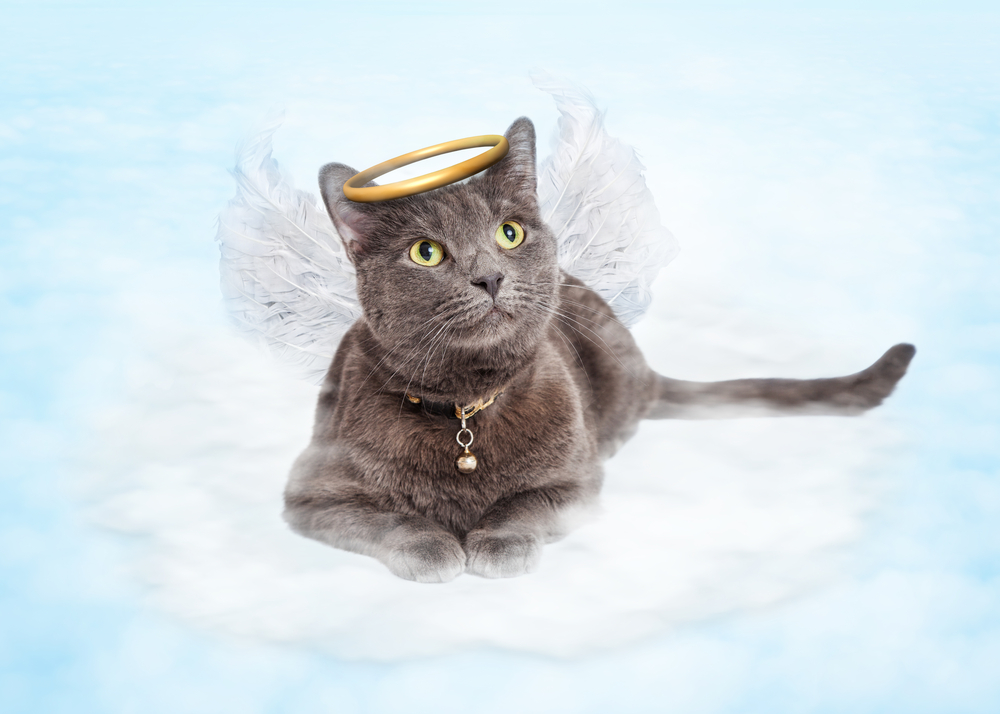
Saying farewell to a pet is a difficult thing. It is a painful moment when you finally say goodbye to a loved one. In saying farewell, it should be done like anyone else we love. Rituals and traditions can help ease the pain.
Saying farewell to a pet is a critical part of the grieving process. Please also review AIHCP’s Pet Loss Grief Counseling Program
The article, “How to farewell your pet if you can’t be there when they die” by Rachel Edwards discusses how one can ease the pain of losing a pet through ritual and tradition. She states,
“Linda Michie is a registered counsellor for people experiencing the gamut of life — including the death of pets. She says many people feel guilty if they are not able to be with their pets at the end, thinking they should be there right to the last moment. “I remind them that they gave their pets such a great life and that without great love there is no great loss,” she says. Linda works with people to find a solution to not being able to be present for a pet’s death. These are her suggestions.”








 Written by Lucy Peters