Teaching children restraint with their anger is a basic parenting objective. It is critical to show children how to behave and control emotion so that they can interact socially with others. There are sometimes signs to watch for that may indicate deeper anger issues that will require stronger attention. Please also review AIHCP’s Anger Management Certification
Children need to learn to control anger at an early age. Please also review AIHCP’s Anger Management Certification
Please also review AIHCP’s Anger Management Consulting Program and see if it matches your academic and professional goals. The program is online and independent study and open to qualified professionals seeking a four year certification in Anger Management.
The loss of a child is the worst loss and a parent’s worst fear. It is unnatural for a parent to bury a child hence it also carries a deeper pain than merely losing an older family member. The loss of a child is a life long wound that haunts the parents for the rest of their lives. It is of no wonder then that many complicated forms of grief develop within parents who lose a child. Please also review AIHCP’s Grief Counseling Certification
The worst loss for a person is to experience the loss of a child. Please also review AIHCP’s Grief Counseling Certification
The article, “How to Deal with the Grief of Losing a Child” by Melissa Porrey takes a closer look at the pain of losing a child. She states,
“The loss of a child is unimaginable. Whether anticipated or unexpected, the pain that follows the death of a child is likely to feel overwhelming and endless. With time, healthy coping tools, and help from loved ones and professionals, the worst parts of grief will eventually pass. This article will provide an overview of common grief reactions, options for seeking help, and ways to cope.”
Please also review AIHCP’s Grief Counseling Certification and see if it matches your academic and professional goals. The program is online and independent study and open to qualified professionals seeking a four year certification in grief counseling.
Difficult people are part of life. Unfortunately sometimes they can become a big problem in the workplace. One needs to learn how to manage anger when dealing with difficult people and allow one to lower oneself to their level.
Please also review AIHCP’s Anger Management Consulting Program and see if it meets your academic and professional goals. The program is online and independent study and open to qualified professionals seeking a four year certification
Essential oils have meet many health needs for individuals. Through scent and application, they can enter into the blood stream and help with a variety of issues one may be dealing with. From stress to nausea, to anything in between, essential oils can be excellent complimentary health tools for an individual. Please also review AIHCP’s Integrative and Holistic Healthcare Specialist Program
Essential oils can have many health benefits. Please also review AIHCP’s Integrative and Holistic Healthcare Specialist Program
The article, “7 Potential Health Benefits of Essential Oils” by Lauren Bedosky looks at some benefits of essential oils. She states,
“Essential oils are bottled plant extracts. They’re made by steaming or pressing plants to trap the compounds responsible for their fragrance, according to John Hopkins Medicine. More importantly, their unique aromas have been employed in healing practices for thousands of years and may have healing properties.”
Whenever utilizing complimentary and alternative health modules, it is important to consult a primary physician or other trained healthcare professional. It is important to ensure the proper methods are being applied and are not in competition with other medications.
Please also review AIHCP’s Integrative and Holistic Healthcare Specialist Program and see if it meets your academic and professional goals. The program is online and independent study and open to healthcare professionals seeking a four year certification in Holistic Health and Holistic Nursing.
When a dog or any type of pet dies, many retain the ashes and put their pet in a urn. This is a way to keep the pet’s spirit close and within and also a way for the grieving to commemorate and honor their deceased pet. It gives a sense of finality but also a sense of presence and peace. Please also review AIHCP’s Pet Loss Grief Support Program
Keeping the ashes of a pet is a way to remember and honor the pet. Please also review AIHCP’s Pet Loss Grief Support Program
The article, “The Moment a Dog’s Ashes Turn into a Pet: ‘Never Truly Leave Us’” by Jeff Salle looks at this moment and the power of spreading or keeping the ashes. He states,
“It’s never easy to lose a pet. Bereavement of our beloved pets can have the same psychological impact as bereavement of other family members. Biscuit’s owners, who own a 12-year-old German Shepherd and Collie mix named Biscuit, captured a magical moment while scattering her ashes that has wowed the internet and given the grieving owners new hope.”
To read the entire article, please click here
Some find solace in releasing ashes at a pet’s favorite place, or keeping the ashes with them, but whatever the way, what matters most is how it helps one honor the pet and grieve in a healthy way.
Please also review AIHCP’s Pet Loss Grief Support Program and see if it meets your academic and professional goals. The program is online and independent study and open to qualified professionals seeking a four year certification in Pet Loss Grief Support Counseling.
Miscarriages are a common grief for couples. Many times this type of loss is not spoken about or dismissed. Yet the loss still bears a painful sting of losing a child, albeit, not yet born. The prospect of parenthood, the connection and excitement being stripped away can cause immense grief for an expecting couple. Please also review AIHCP’s Grief Counseling Certification
Miscarriage grief and loss sometimes goes unnoticed to others. Please also review AIHCP’s Grief Counseling Certification
The article, “Miscarriage Grief: How to Cope with the Emotional Pain” by Hilary Lebow takes a closer look at this type of loss. She states,
“Grieving for your pregnancy, your baby, and all that came with the experience is an intimate and unique process. You may experience intense emotions, or you could feel numb and detached. You may not even be sure how you feel or should react. These are all natural ways to cope with a significant loss. How a miscarriage affects you depends on many factors, including your circumstances, support, and emotional resources.”
Please also review AIHCP’s Grief Counseling Certification and see if it meets your academic and professional needs and goals. The program is online and independent study and open to qualified professionals seeking a four year certification in Grief Counseling.
In sports there are expectations by players and fans alike. When those expectations are not met there is a sense of loss. Grief is common in sports. Noone likes to lose a game and while it builds character there can be some sadness. Too much sadness or extreme emotional distress are signs of deeper issues
Please also review AIHCP’s Grief Counseling Certification and see if it meets your academic and professional goals. The program is online and independent study and open to qualified professionals seeking a four year certification in Grief Counseling
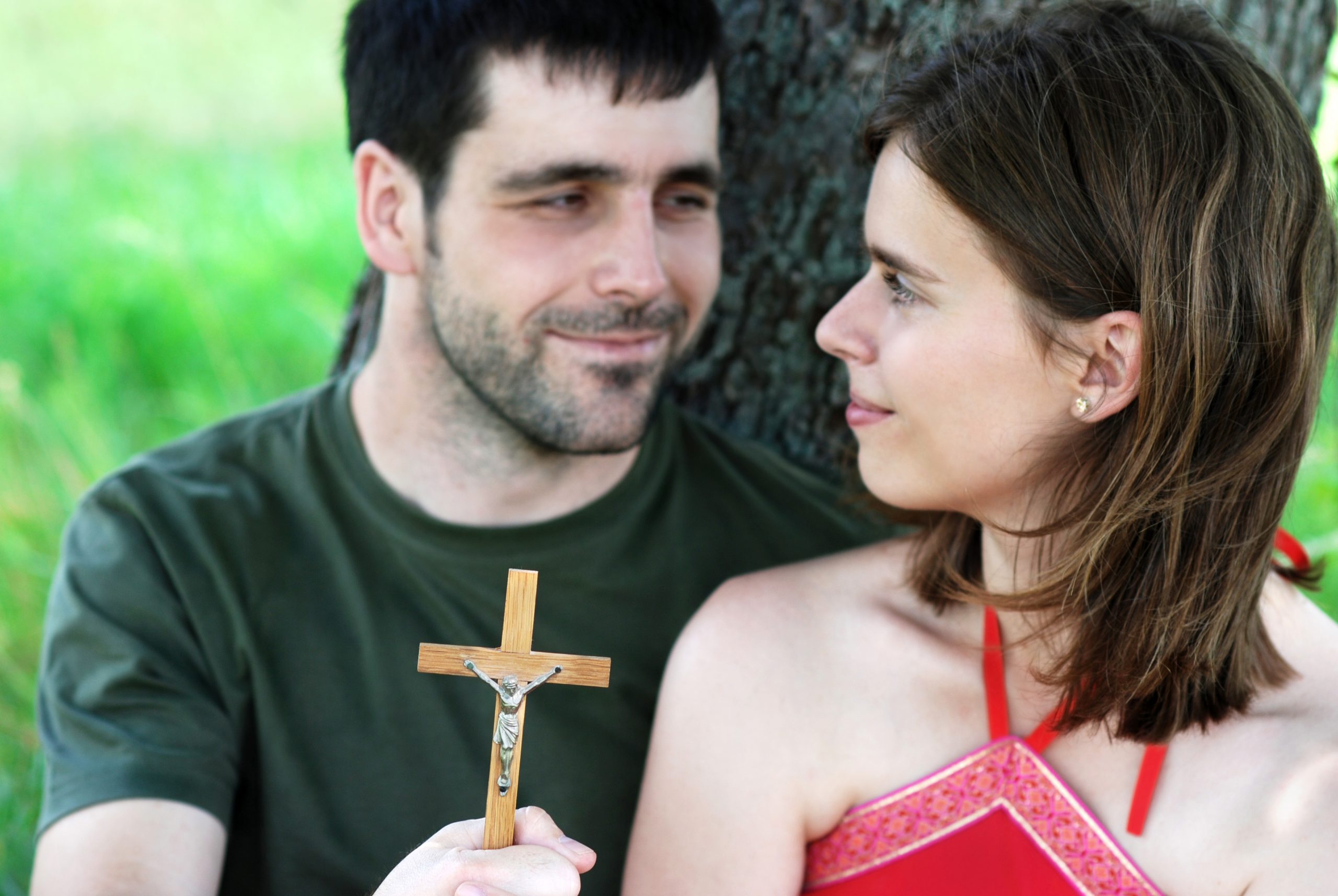
Marriage is the foundation stone of society. Through the social contract, couples come together and bring forth future generations within the bounds of society. Strong family units produce strong individuals in the society who can benefit society with their unique talents. Please also review AIHCP’s Christian Counseling Certification
God elevated this union beyond the natural order to a supernatural contract and oath to each other. He sanctified it in the Garden of Eden and elevated it through the words of Christ that the union can never be broken unless fear of adultery. Scripture proclaims, a man shall leave his mother and take on another and both will become one and in the epistles, Paul teaches that the love between husband and wife is like that of Christ and the Church. Christian Counseling can help others deal with divorce better.
Christian marriage is a spiritual vow that transcends the natural contract of marriage.
With such strong words from Christ, scripture, and Paul, the foundations for Christian marriage were laid. Within Catholic and Orthodox circles, it was a sacrament, while in Protestant circles it was in the very least a sacred obligation. Society has attempted to weaken this natural and supernatural building rock of society. Divorce, same sex marriage, and polygamy all look to weaken the institution and society itself. The attempt to separate the supernatural element instilled by God to a merely natural contract is on display.
With the readiness of divorce, infidelity plays no small penalty for the secular mind. Divorce rips apart family units and leaves many children left without strong guidance to help create a better society. The attack on the family has already begun and continues to rage.
In the midst of such chaos, the Christian Counselor is left with many divorced Christians and individuals seeking solace and wholeness. Not only do these individuals suffer from the initial loss of a spouse, but they also suffer from a variety of secondary losses, including children, pets, possessions, income and new integration into new life styles.
Divorce sometimes is a reality to the Christian, albeit an unwanted one. Many Christians may feel marked and ashamed with such titles within their own community and family structure. They may feel as if they failed in some way. Other Christians may remarry and feel as if black sheep for taking upon another spouse. In Catholic and Orthodox churches, remarriage without annulment is forbidden. This leads to a whole new type of ministry. Hence, the divorced and those who decide to remarry within Christianity represent a large group of the displaced within the faith. While in Protestantism, remarriage is permissible for due reason of adultery, it still creates issues with blended homes and still the over all loss of the original marriage.
Within Catholicism and Orthodoxy, the words of Christ echo strongly that no-one may ever remarry. The exception clause within Matthew is not regarded as a license to remarry. Only in Matthew is it mentioned and it never again is mentioned in the Epistles. Many biblical scholars look at the interpretation, translation and the fact it was targeted to only the Jewish community to mean something different. This leaves the Catholic and Orthodox church with many remarried couples that can become a pastoral concern.
Christian Counselors need to understand their plight. Pope Francis recently wrote at length the pastoral concerns of these “black sheep”. While many may marry as if they are dating, there are some who have unjustly been dealt. Pope Francis pointed this out in his encyclical on the “Joy of Love” where he looks at the emergency pastoral issue within the Catholic Church. He asked some very critical questions regarding the fate of these couples. While remaining faithful to Christ’s words, he still pondered about those who remarry due to abuse, or those who were left with nothing after a spouse totally rejected them. He also looked at the annulments that were not properly administered due to finance or local corruption within the tribunal.
Francis pointed out that many couples who remarried have moved on to a second relationship and now have grandchildren from this union. They have remained faithful, albeit, outside the grace of the sacrament. Pastorally, how does one deal with such families? Each situation requires careful and deliberate reflection between confessor and couple with the highest regards for the Eucharist.
It is important to note for those not familiar with Catholic doctrine that an annulment is based on theology that centers around a vow. A vow is a free choice with knowledge and understanding of the commitment. When a vow is exchanged between a man and woman it is seen as binding when conditions certain conditions are met. If certain conditions or secrets or distress are later discovered, then a marriage can be seen as never existing. One example includes being forced to marry someone and not possessing complete autonomy in the decision. Another example is a secret regarding the individual. Maybe the individual was cheating before the vow and had no intention of remaining faithful. Maybe the person lied about being baptized. Maybe the person hid a past life of murder, abuse and other criminal activity. Maybe the person lied about ability to have children or desire to have children. The primary point is the issue is an “a priori” problem that was unknown before the vow. Fortunately, many more annulments are issued more than once before within the Church. Investigations can discover these things.
However, after the fact offenses or failures of a spouse do not fall under the guise of an annulment. Infidelity that is not planned or a simple mistake does not invalidate a vow. This does not mean one cannot civilly divorce, but within the interpretation of the Gospels, one cannot remarry afterwards, or they would as Christ points out, find themselves in adultery. Many divorce for simpler reasons such as family or finance. The generation of divorce is a replacement generation not a fix it generation.
Within Protestant theology, one may remarry over grave reasons, but this has even led to individuals thinking if they commit a grave offense, then they can become freed from a contract. Many Protestant circles even with their exception clause have become more liberal in permitting divorce within their congregations.
These issues have led to more divorce within Christianity and has created a large pastoral issue for both Catholic and Protestant circles. While the world mirrors a secular version of marriage, it is up to Christian communities to commit to the values of Christ regarding marriage. It is up to Christian communities to promote the permanence of the Christian vow.
Prayer is essential for any couple. Please also review AIHCP’s Christian Counseling Certification
Prior to marriage, Christian Counselors, pastors and family can help young couples discover the importance of marriage and the serious nature of the vow. Pre-Cana is also an excellent way to learn about family issues from other couples, as well as teach young couples the unglamorous aspects of marriage. Learning to prayer together and attend liturgy and service together is an important step in engagement. The young couple needs to investigate and learn about each other. They need to realize that marriage is also a spiritual vocation that is not about just this world, but helping each other to reach the next world. It is a joint vocational marriage to hold each accountable to Christ.
Prayer and God must remain in the family for it to succeed. The modern war on the family has attempted to strip Christ from marriage. It important then that Christians re-introduce Christ to marriage and share the beauty of Christian marriage to the world.
Please also review AIHCP’s Christian Counseling Certification and see if it matches your academic and professional goals. The program is online and independent study and open to qualified professionals seeking a four year certification in Christian Counseling.
The odds of other alien life in an infinite universe should be very high. Sentient life while less common, should still be well represented. Scientists and theorists have calculated mathematical probabilities of life and all points to it, but why has humanity yet to experience an encounter? Has it already happened but is forgotten? Is it a secret? Or, is it simply a filtering effect where the probabilities of life becoming sentient did not work out on other worlds like on Earth? Yet, still, is it merely too large of a universe for sentient civilizations to ever meet?
Theologically, Christianity is open to the notion of other life because one cannot limit God in His grand plan, but how would other life fit into the narrative of humanity? The video below looks at some theological questions that could arise.
Discipleship is a key element in Christianity. Jesus calls all to take up their cross and follow Him. Originally Jesus chose the 12 and the other close followers. All were considered disciples but only the 12 were consider apostles with a special mission to guide the Church. Yet each had a unique discipleship and calling, whether of the 12 or merely a close follower. As Christians today, we also have a unique discipleship and calling. We are called to bear witness but to also utilize our special talents given to us by the Holy Spirit to share the Gospel and build the Mystical Body of Christ. Please also review AIHCP’s Christian Counseling Certification
Jesus calls us to make new disciples and followers. Please also review AIHCP’s Christian Counseling Certification
The article, “How Did Jesus ‘Make Disciples’?” by David Mathis looks closer at the process of discipleship then and today. He states,
“Jesus, the Master, had called them to follow him, and for more than three years, in setting after setting, in private homes and in the midst of great crowds, walking long journeys between towns and enjoying unhurried meals — one conversation at a time, one day at a time — Jesus had discipled them. Christ himself showed them the Christian life, inside and out, in public teaching and private prayer. Now they too were to make disciples.”
Please also review AIHCP’s Christian Counseling Certification and see if it meets your academic and professional goals. The program is online and independent study and open to qualified professionals seeking a four year certification.