Those in the fields of stress management, grief counseling, or trauma informed care whether clinical or non-clinical are very familiar with the power of stress, loss and trauma on people. Part of existence is facing struggle and adversity. Stressors and losses, as well as trauma, negatively affect people and force them to adjust, adapt and show resiliency. Obviously, when facing a difficult loss or going through a terrible time, or even witnessing something traumatic, the mind and body reacts. This does not denote pathology but a temporary adjustment to the things, or events that occurred. It would be unnatural not to be sad or unhappy or distressed when bad things occur. It is when these things overcome one’s biology, mind and social support systems that they become unnatural. Instead of finding adjustment, one remains unadjusted through a series of biological or psychological issues that remain persistent. So while not all stress is bad, and while everyone faces loss, and not everyone faces PSTD despite severe trauma, there are cases when pathology and disorder occur that transcends the normal window of reaction in terms of severity and extreme. In these cases, individuals face biological as well as mental problems in adjusting to the issue at hand. This short blog will examine how stressors, loss and trauma can cause disorders as well as the listed disorders in the DSM-V-TR.
Please also review AIHCP’s numerous healthcare certifications for nurses as well as behavioral health professionals, including Stress Management Consulting Certification, Grief Counseling and Trauma Informed Care.
Stress, Loss and Trauma
Stress itself is not bad. It is part of life. It pushes one to face adversity and overcome it. Without the push, one would become complacent and not feel the need to improve or provide. Eustress is a term that reflects this reality (Barlow, et al. 2023). Every organism faces stress and stressors. Hans Selye, the Father of Stress Management and the effects of stress on people, pointed out that is sustained stress that gradually breaks down an organism. He listed the first phase of alarm to the stressor, the second phase as resistance to it, and finally the third phase, if resistance failed, which resulted in exhaustion (Barlow, et al. 2023). When an organism reaches a state of exhaustion, it then has biologically, psychologically and socially reached all limits to resist the stressor resulting in disease, breakdown or even death. Chronic stress usually kills over time not immediately but there can be cases when shock and trauma are so great as to cause massive strokes or heart attacks in already vulnerable populations.
Loss is a stressor in itself but loss in itself is not a pathology. Losses in life can range from the smallest things to the most important things. One can lose a job, a relationship, a pet, a parent, or spouse or even a child. These losses, like stressors, vary in degree and intensity based upon numerous subjective elements of the agent or person. For most, losses are tied to love and because of love, there is a sorrow and pain tied to any disconnection. This requires a time to heal and readjust but within normal parameters. It should not impair a person’s ability to live life. When a person is unable to adjust and the severity and length of the sadness overtakes oneself, then a disorder develops.
While everyone experiences stress and loss, traumatic events do not occur to everyone but a high portion of the population does experience them. Like any stressor, trauma while objectively seen as severe can be subjective in how a person responds. The event itself, the experience of the person and its effects play a key role in how a person responds to a particular trauma. When a trauma response activates within a person, which is natural reaction to any extreme event, the response is meant to be temporary for the moment. The survival response in the moment exists in the moment. However, when the survival response becomes a default mode of existence, then disorders such as PTSD emerge.
Mind and Body Response
When stressors or losses or trauma present itself, the body responds. The autonomic nervous systems activates the sympathetic nervous system and one enters into a state of fight, flight, freeze or fawn (Barlow, et al. 2023). The danger part of the brain, the amygdala works closely with the hippocampus and hypothalamus to prepare the body for these modes of survival. The hypothalamic-pituitary adrenocortical axis (HPA) prepares the body for fight or flight or fawn or freeze by inducing states of hyperarousal or hypoarousal to face the threat via injection of cortisol and norepinephrine into the blood stream (Barlow, et al., 2023). This tightens muscles, redirects blood to the core of the body, raises blood pressure, and heightens the person to the moment to react. After the event passes, the body returns to a calmer mode within the parasympathetic system.
When individuals are traumatized, they are unable to turn off this reaction and face a variety of issues. Long term, this can cause numerous health issues, such as hypertension, coronary issues, immune deficiencies, cancer, chronic pain and chronic fatigue (Barlow, et al., 2023).
Types of Stress and Trauma Disorders
The DSM-V-TR lists a variety of disorders directly tied to stressors, losses and trauma. They are listed in the DSM-V-TR under the chapter “Trauma-and Stressor-Related Disorders”. The manual states that those who are exposed to traumatic or severe stressful events exhibit in some cases a phenotype which is tied closely to anxiety or fear based issues (2022). In addition, these encounters lead to anhedonic and dysphoric symptoms.
Among the disorders listed, the DSM-V-TR lists Reactive Attachment Disorder (RAD), Disinhibited Social Engagement Disorder, Posttramatic Stress Disorder, Acute Stress Disorder, Adjustment Disorders and Prolonged Grief Disorder (2022).
Attachment Disorders
In regards to attachment disorders, children who experience poor caregiving at a young age develop various reactionary disorders to other caregivers which if left untreated can hinder social relationships in adulthood. This includes RAD which makes it difficult for children to form connections with others (McRay, et al., 2016). Types of attachment behaviors can be avoidant, anxious or disorganized. Each has its own characteristic which hinders a persons ability to foster proper relationships with others (McRay, et al., 2016). AIHCP offers more information about attachment disorders in other blogs that you can review at the bottom.
PTSD
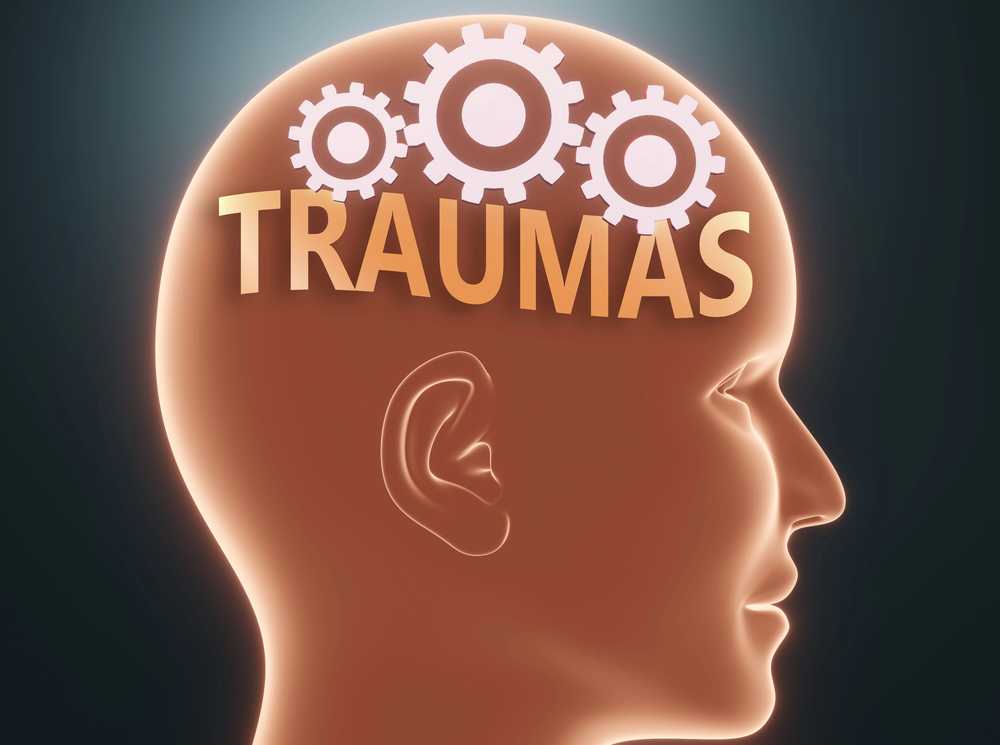
In regards to traumatic response, the DSM-V-TR lists a a long list of criteria and symptoms for PTSD. It states that one must be exposed to actual or threatened death, serious injury or sexual assault in one of the following ways.
- Directly experiencing the event in person or as it occurred in others
- Learning that an event happened to a family member or close friend
- Experiencing the event or exposure to these events repeatedly
In addition, the DSM-V-TR states that the presence of at least one intrusive symptom associated with the event must manifest as
- Recurrent or involuntary or intrusive memories of event
- Distressing and recurrent dreams
- Dissociative reactions like flashbacks
- Intense or prolonged psychological distress
- Psychological reactions to external or internal cues that trigger a response
In addition, the person avoids persons, place, stimuli or things that remind them of the event to the point of impairment. They avoid past activities, portray lack of interest and diminished interest with others or the ability to experience positive emotions. The person is also negatively effected in cognitions and moods through inability to remember certain parts of the event, persistent or exaggerated beliefs about oneself or the world or meaning of life due to the event, as well persistent or distorted cognitions about the cause or consequences surrounding the event (APA, DSM-V-TR, 2022). The person will also experience issues associated with their autonomic nervous system. The sympathetic and parasympathetic nervous systems are overworked and experience hypervigilance, exaggerated responses, sleep disturbances, as well as problems with concentration (APA, DSM-V-TR, 2022). PTSD can be specified with either depersonalization, or the separation and detachment from self, or derealization or the feelings that the world around them is unreal. These symptoms must manifest for longer than a month.
Acute Stress Disorder
Acute stress disorder shares many of the similar diagnosis criteria as PTSD, but it is far less severe and lasts from day 3 to 1 month with symptoms diminishing within that time frame (APA, DSM-V-TR, 2022).
Prolonged Grief Disorder
When grief becomes complicated, it can lead to depression, prolong grief disorder or a mixture. The key difference is the locus of the melancholy is due to a targeted and specific loss (APA, DSM-V-TR, 2022). The grief itself is intense and severe and lingers, hampering a person’s ability to function in life. The duration for diagnosis is 12 months after the loss, 6 months for children (APA, DSM-V-TR, 2022). Unlike normal grief, it fails to adjust and is accompanied by intense yearning and longing for the deceased with an abnormal level of preoccupation with the loss. It includes identify disruption, continued shock and disbelief of the loss, intense emotional pain, difficulty with reintegration into life, emotional numbness, a feeling of meaningless and an intense loneliness (APA, DSM-V-TR, 2022). Of course, many of these feelings are felt within the first days, weeks and months of a loss, as well as sometimes on memorial days of the loss. This is why the 12 month deadline is so important before any type of diagnosis.
Adjustment Disorders
Adjustment disorders are tied to life stressors and losses. They illustrate behaviors or emotions that are in response to an identifiable stressor such as a loss, divorce, or loss job. The marked distress is not proportionate to the severity or intensity of the stressor (APA, DSM-V, TR, 2022). It is important to rule out natural loss, prolonged grief, as well as other cultural beliefs that can affect how people react to stress. These adjustment disorders exist within 3 months of the initial stressor
Primary Treatments
Treatment of anxiety and depression or trauma is best met with psychotherapy. No particular psychotherapy has been proven clinically to be superior or with better results as others but usually a combination of psychodynamic, behavioral and human centered counseling therapeis are key in helping individuals face their issues. Cognitive Behavioral Therapy is very helpful in helping individuals face distorted thinking and form better behaviors. Exposure therapies also exist for cases of trauma to help heal the limbic and sympathetic nervous systems. Included in this is the practice of Eye Movement Desensitization Reprocessing or EMDR. Holistic treatments that focus on meditation, breathwork and hypnosis can help the subconscious heal as well. Medication wise, numerous SSRIs, limited use of Benzodiazepines, and anti-psychotics can be utilized (McRay, et al, 2016).
Conclusion

Helping individuals with stress, anxiety, loss and trauma is part of life. In a world where bad things happen, individuals are forced to face terrible things. Some are minor, while some can overwhelm, and still, some that overwhelm can cause pathological disorders. The diathesis for disorder is based off many subjective issues ranging from biological to psychological to social to cultural and spiritual. In many cases, these life issues can be faced in a non-clinical fashion but when disorders arise, clinical help is required. It is important to remember when working in these fields to remain within the scope of one’s practice.
Please also review AIHCP’s Stress Management, Trauma Informed Care and Grief Counseling Programs.
Additional Blogs
Attachment Disorders: Access here
Complications in Grieving. Access here
Trauma Informed Care on PTSD/C-PTSD. Access here
References
American Psychiatric Association. (2022). Diagnostic and statistical manual of mental disorder” DSM-5-TR (5th ed., text revision). American Psychiatric Association Publishing.
Barlow, D.H., Durand, V.M., & Hofmann, S.G. (2023). Psychopathology. An integrative approach to mental disorder (9th ed.). Cengage Learning
McRay, B.W., Yarhouse, M.A., Butman, R.E., & Kiple, C. (2016). Modern psychopathologies: A comprehensive Christian appraisal. (2nd, ed.) IVP Academic
Additional Resources
Acute Stress Disorder. My Cleveland Clinic. Access here
Blain, T. 2025). An Overview of Trauma and Stressor-Related Disorders. Very Well Mind. Access here
Sherrell, Z. (2024). Types of stress disorders. Medical News Today. Access here