Hypnosis has a multitude of benefits for individuals looking to better themselves. From ceasing bad habits to losing weight, hypnosis can help. In particular, hypnosis can help individuals lose weight by reinforcing discipline and training the mind to better resist urges.
Can self hypnosis help someone with weight loss? Please also review AIHCP’s Hypnotherapy Certification
The article, “Self-Hypnosis for Weight Loss: Can It Help?” from Healthline looks at how self hypnosis can aid an individual possibly lose weight. The article states,
“Hypnotherapy alone probably won’t deliver dramatic weight loss results, but there’s evidence it can help alter the beliefs and emotional connections that interfere with your ability to modify your diet and exercise routines effectively.”
Please also review AIHCP’s Hypnotherapy Certification and see if it matches your academic and professional goals. The program is online and independent study and intended for qualified professionals seeking a four year certification in Hypnotherapy. Hypnosis has a variety of benefits and being able to help others utilize this alternative therapy is an excellent resource for healthcare and behavioral health professionals.
On multiple occasions, individuals seek to rush through the grieving process hoping to eradicate the pain and emotion. They look to reach the finish line of a incorrect timeline set by others. They feel grief has an expiration time and must be resolved. In many ways, they view grief as a pathological parasite that is preventing them from healing. While grief is an adapting period to loss and pain, there is no set time table for complete. In reality, noone truly recovers from grief or loss, if one did, then the loss would have little value.
Closure to a loss is something that is not a prerequisite to moving on. Please also review AIHCP’s Grief Counseling Certification
Recovery from grief is a myth. Adjustment is the only reality. There is healthy adjustment and pathological un-adjustment, but ultimately, grief remains part of the human condition. Hence if one does not achieve closure to loss, that is fine. It is OK to not to find the perfect closure to a loss. In fact, it is quite normal not find closure to something we lost. It is the price of love not to be OK with losing someone special but we learn to adjust and manage that loss.
The article, “Closure Isn’t a Thing in Grief and That’s Okay” from Whats Your Grief presents an excellent review regarding grief and closure. The article states,
“There are a handful of reasons why people expect closure in grief. For much of our history, grief theory models have given people the impression that grief follows a set of stages or tasks. So, many people think grief is a finite process with a beginning and an end.”
With so many tasks, or steps, it is easy to misunderstand the science of grief. It is easy to think their is an end, but these tasks and steps are only guidelines presented that are truly not a system that all follow or must follow but merely are a collection of ideas regarding grief and how individuals face grief. Grief is messy and it bounces all over. These guidelines are merely guidelines to outline how one can find a healthy adaptation not necessarily an elimination of all emotion over the loss.
Please also review AIHCP’s Grief Counseling Certification and see if it matches your academic and professional goals. The program is online and independent study and open to qualified professionals seeking a four year certification in Grief Counseling.
Losing sight of the opioid problem in the United States would be a great error considering the damage it causes to homes. The pandemic has taken much attention away from other issues, but as it continues and others are forced into isolation, substance abuse continues to rise even at a faster rate.
Opioid abuse continues to be a growing concern and issue during the pandemic. Please also review AIHCP’s Substance Abuse Counseling Training
Thea article, “4 Reasons Why the Opioid Crisis Still Needs Our Attention” by Phil Walls looks at the problem and why society still needs to remain vigilant regarding opioid abuse. He states,
“There’s some evidence that issues related to the pandemic environment, including treatment delays and increased social isolation, may be contributing to an uptick in misuse. But there are other developments in the health care, pharmaceutical and workers’ compensation industries affecting both opioid usage and the parties responsible for paying for it.”
Please also review AIHCP’s Substance Abuse Counseling Training Program and see if it meets and matches your academic and professional goals. The program is online and independent study and open to qualified professionals seeking a four year certification in Substance Abuse Counseling.
A certification in Substance Abuse Counseling does not necessarily require a license in counseling especially if someone is working at a center under professional guidance or is utilizing it as a pastor and minister.
Over aggression is a sign sometimes for deeper issues. Personality disorders, trauma, oppositional defiance and manic episodes can all emerge through aggression.
Aggression has many deeper causes with mental health. Please also review AIHCP’s Anger Management Consulting Program
The article, “Aggression is a Sign of Many Mental Health Conditions ” by Marie Miguel looks at how aggression can sometimes be a a sign of a far deeper issue. She states,
“Aggression can be an intense feeling and a hard one to manage. It’s challenging for the person who’s aggressive and frightening for the individuals around them. A person who struggles with aggression may feel out of control. They may be worried they will lose their temper and get verbally aggressive or even physically violent. The reality is that aggression isn’t something that stands alone. People with aggressive behavior are suffering from a variety of different mental health issues.”
Diagnosing why one is struggling with anger and aggression is critical not only to mental health but also in maintaining relationships and careers.
Please also review the Anger Management Consulting Program offered by AIHCP and see if it meets your academic and professional goals. The program is online and independent study and is designed for qualified professionals seeking a four year Anger Management Consulting Program.
The importance of sleep can never be minimized. All living creatures sleep. Some mammals such as the Brown Bat, sleep up to 18 hours a day, while the Giraffe sleeps an hour in a half. Humans in their prime need at least 8 hours a day. Sleep is so crucial that without it, an animal would die.
Sleep not only repairs and rests the overall body, but it also repairs the brain and cleanses it. During REM sleep especially, the brain’s memories are sorted out. Issues, problems and other stresses are handled at the subconscious level to allow the brain to be ready for a new day of activity. It is hence critical to receive enough sleep to not only repair the body but also to help with stress.
Sleep and relaxation are essential for good health. Please also review AIHCP’s Stress Management Consulting Program
Without sleep, we cannot cope with stress. The brain must be given its rest to recuperate and refresh itself. Like any computer, restart is essential. A fresh mind can better categorize stress and respond to stress. This is one of the biggest reasons why sleep is so critical to any type of recovery from stress, grief or trauma.
The article, “How poor sleep and high stress levels make you less healthy” by Mercey Livingston looks at the poor health consequences of high stress and low sleep. She states,
“Addressing poor sleep and high or chronic stress levels is key to maintaining high HRV and in turn, good overall health. If you struggle from insomnia, sleep apnea, or have trouble falling or staying asleep, see your doctor and talk to them about getting checked out for any underlying health problems or if you need to seek testing and treatment for sleep disorders. ”
Please also review AIHCP’s Stress Management Consulting Program and see if it matches your academic and professional goals. The program is online and independent study and open to qualified professionals seeking a four year certification in Stress Management Consulting.
Stress is usually most found at work. While stress varies from job to job and person to person, each job presents it own unique challenges and hence stresses. It is critical to understand the types of stress that a workplace produces. Some stresses come with the inherent nature of the job while other stresses emerge from inter personal relationships on the job. Other stresses are due to management and the job tasks. Some job tasks are made more stressful due to time constraints, lack of necessary equipment or lack of adequate personnel. Other stresses emerge from lack of employee challenge or input. Burnout, lack of time for oneself and over working are a result.
Workplace stress is a combination of many factors. Please also review AIHCP’s Stress Management Consulting Program
The article, “How To Get To The Core Of Your Work Stress” by Jessica LaMarre reviews sources of stress found in the work place. She states,
“What I learned is that the root cause of our stress is the suppressing or repressing of our stress response. Bottom line: We are not listening to our body’s response to stress. We are not listening to ourselves! It’s not just a stress problem, it’s a disconnection problem. Which is not a surprise, as we have kids, significant others, employers, customers, etc. all demanding our time. So, we don’t take any time for ourselves. We may feel the stress in our body or sense it in our irritation or frustration, but we suppress it or repress it because we have too much going on – and who has time to slow down, right?”
Stress can kill. The stress response of the body is not meant to be a permanent reality. Furthermore the stress response is not one that is best for existence inside an office. Considering fight or flight is not an option for most jobs, many have to internalize stress. It is essential then to learn to cope and better respond to stress.
Please also review AIHCP’s Stress Management Consulting Program and see if it matches your academic and professional goals. The program is online and independent study and open to qualified professionals seeking a four year certification as a Stress Management Consultant.
ADHD can be a difficult problem for many adults. It is always present and can interfere with home, work, and relationships. It is important to identify it and understand how to cope with it.
ADHD can be a troublesome problem for adults. Please also review AIHCP’s ADHD Consulting Program and see if it meets you academic and professional goals.
The article, “My ADHD is Like Curious George — Only More Nefarious” by Max Darwin looks at ADHD from the perspective of the analogy of a monkey on one’s back. He states,
“To help me see the ADHD, I came up with a visual aid – of ADHD as a monkey on my back. Not a nice monkey from a nature documentary. This is a mischievous monkey who will pick my pockets and steal everything if I leave the window open. He’s so nimble that I never feel his physical presence, yet he’s constantly tapping me on the shoulder or putting his hands in front of my eyes to prevent me from seeing the full picture”
Please also review AIHC’s ADHD Consulting Program and see if it matches your academic and professional goals. The program is online and independent study and open to qualified professionals seeking a four year certification in ADHD Consulting.
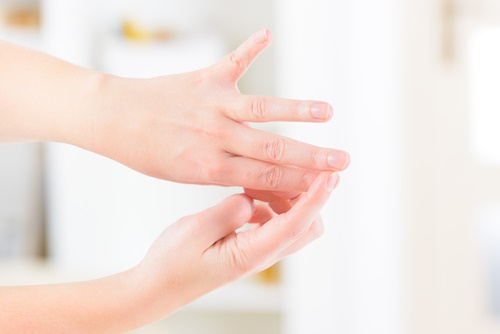
The Emotional Freedom Technique is utilized to help individuals overcome past trauma by hitting with one’s finger various points on the body, similar to acupuncture points, in the effort to move negative energy from the body. EFT as it is commonly referred to has been seen to be very effective for many people. However, like any technique, it must be utilized properly.
Are you properly using EFT? Please also review AIHCP’s EFT Training Program
The article, “Tapping” Is A Quick Way To Squash Stress — But Avoid These 3 Mistakes ” by Marianna Giokas looks at some common errors individuals make when using EFT. She states,
“Other novice tappers might start off with a “problem” or negative statement but still fail to achieve great results. This could be because they are not being specific enough. The more specific we are in defining our issue and getting in touch with what is bothering us, the better EFT works.”
With many possible errors, it is important to follow the process of EFT properly to enhance the power it has to remove negative energy and trauma. Please also review AIHCP’s EFT Training Program and see if it matches your academic and professional goals. The program is online and independent study and open to qualified professionals seeking a four year certification in EFT.
Meditation has beneficial effects on overall mental health and physical health. The physiological effects are closely related to the relaxation response it triggers in the body. This response naturally lowers blood pressure, breathing and other functions of the body.
Eastern Meditation although spiritual in origin has many physical and mental benefits. Please also review AIHCP’s Meditation Instructor Program
The article, “The Science Behind Meditation” by Jennifer Wallis looks at the effects meditation has on brain waves, heart beats, blood pressure and breathing. She states in the article,
“According to a study by Harvard University, the physiologic benefits of meditation – in this instance the relaxing form of transcendental meditation – relate to quieting the sympathetic nervous system and the activation of the parasympathetic branch – otherwise known as ‘rest and digest’. Medical studies have shown that individuals who practice transcendental meditation daily had lower blood levels of epinephrine, norepinephrine, and cortisol”
From originally a spiritual discipline of the East, science has discover that meditation has many benefits physically. The spiritual needs of Eastern Meditation required the quiet of the body. This purpose had dual benefits to those of those Eastern faiths. For Westerners and those of a secular nature, meditation can supply a healthy option to control blood pressure, heart issues and other problems related to stress.
Please also review AIHCP’s Meditation Instructor Program and see if it matches your academic and professional goals.
It is bad enough when a pandemic causes enormous stress on employees, whether working in the office under safety guidelines or working through the obstacles of home, but it when the basic stresses of the job bury employees, it can even become worse. Employers need to be able to identify issues for employees by making work and the work place as least stressful as possible. Much of this has to do with how employers interact with their employees and respect them, as well as supplying them with the supplies and time they need to succeed.
Employers need to be able to identify frustration and keep the work place conducive for employees. Please also review AIHCP’s Anger Management Program
The article, “How to deal with frustrated employees” by Nurhurda Sayed looks at how employees can help frustrated employees succeed. The article states,
“So what can leaders do to manage these angry employees? If a blow out happens during a meeting, Micha suggested that leaders give some extra attention to the worker and say, “hey, I would like to know more about the root cause of your emotions. I’m happy to hear you out”. This personal conversation can be held after the team meeting and you can still retain a professional tone during the chat.”
Please also review both AIHCP’s Stress Management and Anger Management Program and see if they match your academic and professional goals. The programs are online and independent study and open to qualified professionals seeking four year certifications in both Stress Management and Anger Management