Meditation and Mindfulness in the Corporate World

Meditation enhances thought and ability within brain.  Brain cognition, alertness and ability to concentrate and be creative are all offshoots from meditation and mindfulness.  When one is tired or stressed or unfocused, one’s ability to be productive and creative in art, school or work are all greatly lessened.  This is why businesses are investing so much time and money into helping keep their employees less stressed and more focused through meditation.  Businesses are employing Meditative Instructors and professionals to help their business personal be more productive and creative in the work place.

Mindfulness in the work place can reduce stress and increase employee productivity. Please review AIHCP’s Meditation Instructor Certification


Meditation Instructors are employed to help large corporations train employees in meditation and also integrate meditation programs onsite for employees to better find focus and the ability to channel creativity leading to better productive outputs.  The article, “Mindfulness and Meditation: Enhancing Employee Wellbeing” from the Corporate Wellness Magazine offers numerous reasons why employers and businesses are utilizing mindfulness and meditation for their employees.  Businesses are associating and correlating mental wellness and wellbeing with better employee outcomes.  A more peaceful employee and happy employee is by far more productive and creative than a stressed employee.  The article points out,

“Investing in mindfulness and meditation practices for employees can significantly improve their wellbeing, resulting in a healthier, more productive, and more engaged workforce. By offering training, creating dedicated spaces, and encouraging regular practice, employers can foster a culture of mindfulness that supports employee success.”

“Mindfulness and Meditation: Enhancing Employee Wellbeing”. Corporate Wellness Magazine.

To read the entire article, please click here

Commentary

Employees who practice mindfulness are better equipped employees to handle stress and issues at the work place.  They are better equipped to handle stress and become more resilient to issues and perform better with deadlines and multiple tasks.  In addition, employees are able to focus and problem solves at a higher level.  Emotional intelligence rises within the employee office and permits them to better face issues with calmness and logically approaches.  Besides increased productivity and other emotional benefits, happier employees work harder and less likely to call off and dismiss assignments.  They are more proud of their work and look to accomplish goals as a team.

Meditation Instructors can help incorporate these values and strategies into the corporate system itself, from the small office to the large corporation that spreads out across the world.  They can help implement mindfulness themes in meetings and also utilize it in everyday issues on the office floor.  Furthermore, they can be applied and implemented at larger levels via live seminars and zoom meetings for those unable to attend.  The benefits of mindfulness are too powerful to ignore for any corporation or business.

Mindfulness is the practice of focusing your attention on the present moment, without judgment. It is a simple concept, but it can be difficult to achieve in our fast-paced world. Mindfulness in business involves applying this concept to the workplace. It means being fully present and engaged in your work, without distractions or worries about the past or future.

Mindfulness is not a new concept, but it has gained popularity in recent years. Many successful business leaders, such as Steve Jobs and Arianna Huffington, have publicly endorsed the benefits of mindfulness in their work. Research has also shown that mindfulness can improve productivity, creativity, and decision-making.

The Science Behind Mindfulness and Meditation

The practice of mindfulness and meditation has been shown to have a positive impact on the brain. Studies have shown that regular meditation practice can increase gray matter in areas of the brain associated with memory, empathy, and emotional regulation.

Meditation has also been shown to reduce activity in the amygdala, the part of the brain responsible for the fight-or-flight response. This means that regular meditation practice can decrease stress and anxiety levels.

In addition, mindfulness and meditation have been shown to increase activity in the prefrontal cortex, the part of the brain responsible for executive functions such as decision-making and problem-solving. This means that regular meditation practice can improve focus, attention, and cognitive flexibility.

Benefits of Mindfulness in the Workplace

There are many benefits of mindfulness in the workplace. Here are some of the most significant ones:

1. Reduced Stress and Anxiety

Meditation in the work place can reduce stress and anxiety.


Stress and anxiety are common in the workplace and can have a negative impact on employee productivity and well-being. Mindfulness and meditation can help reduce stress and anxiety levels, leading to a more relaxed and focused workforce.

2. Improved Creativity and Innovation

Mindfulness can help employees become more creative and productive in the workplace


Mindfulness and meditation have been shown to increase creativity and innovation. This is because when we are fully present and focused, we are more likely to come up with new and innovative ideas.

3. Better Decision-Making

Mindfulness and meditation can improve decision-making by increasing focus and attention. When we are fully present, we are more likely to make thoughtful and informed decisions.

4. Improved Relationships

Mindfulness and meditation can also improve interpersonal relationships in the workplace. When we are more present and empathetic, we are better able to communicate and connect with our colleagues.

How Mindfulness Can Boost Corporate Success

Mindfulness can boost corporate success in many ways. Here are some of the most significant ones:

1. Increased Productivity

Mindful employees are more productive because they are able to focus their attention on the task at hand. This means that they are less likely to be distracted by outside stimuli, such as emails or social media.

2. Improved Employee Retention

Mindfulness can also improve employee retention rates. When employees feel valued and supported, they are more likely to stay with a company long-term. Mindfulness training programs can help create a positive and supportive workplace culture.

3. Enhanced Innovation

Mindfulness can also enhance innovation in the workplace. When employees are more focused and present, they are more likely to come up with new and innovative ideas.

4. Improved Customer Satisfaction

Mindfulness can also improve customer satisfaction. When employees are more present and engaged in their work, they are better able to meet the needs of their customers.

Mindfulness Practices for Busy Professionals

Work and long hours can decrease productivity. It is important to implement stress reduction and mindfulness techniques to maximize creativity, time and productivity

Incorporating mindfulness into your daily routine doesn’t have to be time-consuming or difficult. Here are some simple mindfulness practices that busy professionals can use to improve their focus and reduce stress:

1. Mindful Breathing

Take a few moments each day to focus on your breath. Close your eyes and take slow, deep breaths, focusing on the sensation of the air entering and leaving your body.

2. Mindful Walking

Take a short walk during your lunch break and focus on the sensation of your feet touching the ground. Pay attention to your surroundings and the sensations in your body.

3. Mindful Eating

Take a few moments before a meal to focus on the food you are about to eat. Notice the colors, textures, and smells of the food. Take your time eating and savor each bite.

Mindfulness Techniques for Stress Reduction

Stress is a common problem in the workplace, but mindfulness can help reduce stress levels. Here are some mindfulness techniques that can help:

1. Body Scan

Lie down or sit comfortably and focus on each part of your body, starting from your toes and working your way up to your head. Notice any tension or discomfort and breathe into those areas.

2. Visualization

Close your eyes and visualize a peaceful scene, such as a beach or a forest. Imagine yourself in that scene and focus on the sounds, smells, and sensations.

3. Gratitude Practice

Take a few moments each day to focus on something you are grateful for. This can help shift your focus from stress and anxiety to positive emotions.

Mindful Leadership and Its Impact on Corporate Culture

Meditation and mindfulness can help leadership and employees work together and achieve more goals


Mindful leadership involves leading with intention, empathy, and compassion. When leaders practice mindfulness, they are better able to connect with their employees and create a positive workplace culture.

Mindful leaders are also more likely to make thoughtful and informed decisions, leading to better outcomes for the company. In addition, mindful leaders are better able to manage stress and anxiety, leading to a more relaxed and focused workforce.

Certified Meditation Instructors can play a key role in helping businesses find the proper plan for their company.

Mindfulness Training Programs for Businesses

Many businesses are now offering mindfulness training programs for their employees. These programs can help employees learn practical mindfulness techniques and incorporate them into their daily routines.

Mindfulness training programs can also help create a positive and supportive workplace culture, leading to improved employee retention rates and better overall corporate success.  Many meditation professionals also look for certifications to help enhance their resume.  AIHCP offers a four year certification for qualified professionals seeking a Meditation Instructor Certification.

Case Studies of Companies That Have Successfully Implemented Mindfulness Practices

Many companies have successfully implemented mindfulness practices in their workplace. Here are some examples:

1. Google

Google offers mindfulness training programs for its employees, including meditation classes and a course called “Search Inside Yourself,” which teaches mindfulness and emotional intelligence.

2. Aetna

Aetna, a health insurance company, offers mindfulness programs for its employees, including yoga classes and meditation sessions. The company has reported improved employee productivity and reduced healthcare costs as a result.

3. General Mills

General Mills, a food company, offers a mindfulness program called “Mindful Leadership.” The program includes mindfulness training for executives and managers, and has led to improved employee engagement and better decision-making.

Conclusion and Next Steps to Incorporate Mindfulness in Your Business

Meditation instructors can help implement meditation mindfulness plans for corporations and businesses


Mindfulness can have a significant impact on your business success. By incorporating mindfulness practices into your daily routine and offering mindfulness training programs for your employees, you can improve productivity, reduce stress, and create a positive workplace culture.

If you’re interested in incorporating mindfulness into your business, start by practicing some of the mindfulness techniques discussed in this article. Consider offering mindfulness training programs for your employees and leading by example by practicing mindful leadership. With time and practice, you can create a more mindful and successful workplace.

For those looking to help train work forces, please review AIHCP’s Meditation Instructor Certification.  Qualified professionals can earn a four year certification in Meditation Instruction from AIHCP and apply their knowledge to training work forces.  The program is online and independent study and open to qualified professionals.  Please review and see if the program in Meditation Instruction meets your academic and professional goals.

Additional Resources

“Six Proven Benefits Of Meditation In The Workplace”. Laura Sage. August 3rd, 2020.  Forbes.  Access here

“Increasing Mindfulness In The Workplace”. Yolanda Lau. October 5th, 2020.  Forbes.  Access here

“Mindfulness at Work: Create Calm & Focus in the Workplace”. Heather Craig. March 9th, 2019. Access here

“How to Be More Mindful at Work”. David Gelles.  New York Times. Access here

Finding the Right Integrative and Holistic Healthcare Professional for You

Integrative health is becoming more and more popular with various holistic therapies and herbs available for individuals to utilize.  It is very important though for individuals who wish to use holistic and integrative practices, therapies and medicines to consult a healthcare professional to ensure things interact properly and safely.  Dosing, interactions with other medications and safety for particular individuals are key in determining if something is right for a particular individual.  This is is why it is important to find the right Holistic and Integrative Healthcare Specialist to help guide oneself and even work in unison with one’s primary healthcare provider.

Learn more about becoming a certified Holistic and Integrative Healthcare Specialist with AIHCP’s online certification program for qualified professionals


The article, “5 Things to Know When Selecting an Integrative Healthcare Provider” by Lauren Bedosky looks at important aspects one should review in finding the guidance of a Holistic and Integrative Healthcare Specialist.  She states,

“Complementary and integrative medicine practitioners often provide services and therapies in conventional healthcare settings such as hospitals and clinics. Practitioners can also be found in private practice and at wellness centers. Unfortunately, finding a qualified complementary and integrative medicine practitioner to provide safe and effective care isn’t always easy. But it’s essential to choose carefully, as some complementary therapies may have adverse effects if performed incorrectly.”

“5 Things to Know When Selecting an Integrative Healthcare Provider”.  Lauren Bedosky.  April 17th, 2023. EveryDayHealth.

To review the entire article, please click here

Commentary

Due to the numerous possible complications and wrong directions one can take with integrative care, it is hence a prerequisite for good health to have proper guidance from a holistic and integrative healthcare specialist.


Introduction to Holistic and Integrative Health Practitioners

Healthcare professionals trained in Holistic and Integrative practices can help guide individuals in a safe and informative way with alternative care


Integrative health practitioners are professionals who use a holistic approach to wellness. They look at the whole person, not just their symptoms, and aim to address the root cause of health issues. Integrative health practitioners combine conventional medicine with alternative and complementary therapies to help their patients achieve optimal wellness. They focus on prevention and education, empowering patients to take control of their health.

What is Holistic and  Integrative Health and How Does it Differ from Conventional Medicine?

Integrative health is a patient-centered, holistic approach to wellness that combines conventional medicine with alternative and complementary therapies. Integrative health practitioners look at the whole person, not just their symptoms, and aim to address the root cause of health issues. They focus on prevention and education, empowering patients to take control of their health.

Conventional medicine, on the other hand, typically focuses on treating symptoms rather than addressing the root cause of health issues. It tends to rely heavily on pharmaceuticals and other medical interventions. While conventional medicine can be effective in treating acute conditions, it often falls short when it comes to chronic conditions and overall wellness.

Benefits of Working with an Holistic and Integrative Health Practitioner

Working with an integrative health practitioner can have many benefits. Here are just a few:

Holistic Approach

Integrative health practitioners take a holistic approach to wellness. They look at the whole person, including their physical, emotional, and spiritual health, and aim to address the root cause of health issues. This can lead to a more comprehensive and effective treatment plan.

Personalized Care

Integrative health practitioners provide personalized care. They take the time to get to know their patients, their health history, and their goals for wellness. This allows them to tailor their treatment plan to each individual.

Emphasis on Prevention

Integrative health practitioners focus on prevention and education. They work with their patients to identify risk factors and develop strategies to prevent illness and maintain optimal wellness.

Reduced Reliance on Pharmaceuticals

Integrative health practitioners aim to reduce their patients’ reliance on pharmaceuticals. They use a variety of alternative and complementary therapies, such as acupuncture, massage, and herbal medicine, to help their patients achieve optimal wellness.

Improved Quality of Life

Working with an integrative health practitioner can improve your quality of life. By addressing the root cause of health issues and developing a comprehensive treatment plan, they can help you feel better and live a healthier, more fulfilling life.

How to Choose the Right Holistic and  Integrative Health Practitioner

Choosing the right integrative health practitioner is an important decision. Here are some tips to help you find the right practitioner for you:

Credentials and Experience

Look for a practitioner who is licensed, certified, or registered in their field. They should also have experience working with patients with your specific health concerns.

Philosophy and Approach

Find a practitioner whose philosophy and approach align with your own. Do they take a holistic approach to wellness? Do they focus on prevention and education? Do they use a variety of alternative and complementary therapies?

Communication and Rapport

It’s important to find a practitioner with whom you feel comfortable communicating. Look for someone who listens to your concerns, answers your questions, and explains things in a way that you can understand.

Referrals and Reviews

Ask for referrals from friends, family, or other healthcare professionals. You can also look for reviews online to get an idea of what other patients have experienced.

Holistic and Integrative Health Practitioner Techniques and Treatments

There are numerous safe and effective therapies and medications one can utilize for numerous chronic conditions. Holistic and Integrative Healthcare Specialists can help find what is best for you


Integrative health practitioners use a variety of techniques and treatments to help their patients achieve optimal wellness. Here are some examples:

Acupuncture

Acupuncture is a traditional Chinese medicine technique that involves inserting thin needles into specific points on the body. It is used to treat a variety of conditions, including pain, anxiety, and digestive issues.

Massage

Massage therapy involves manipulating the muscles and soft tissues of the body to promote relaxation and alleviate pain. It is often used to treat stress, tension, and musculoskeletal conditions.

Herbal Medicine

Herbal medicine involves using plant-based remedies to treat a variety of conditions. It can be used to alleviate symptoms, boost the immune system, and promote overall wellness.

Mind-Body Therapies

Mind-body therapies, such as meditation and yoga, aim to promote relaxation, reduce stress, and improve overall wellness. They can also be used to treat a variety of conditions, such as anxiety and depression.

Examples of Conditions Treated by Integrative Health Practitioners

Integrative health practitioners can treat a wide range of conditions, including:

Chronic Pain

Integrative health practitioners can help manage chronic pain through acupuncture, massage, and other therapies.

Anxiety and Depression

Integrative health practitioners can help alleviate symptoms of anxiety and depression through mind-body therapies, such as meditation and yoga, as well as herbal medicine and other treatments.

Digestive Issues

Integrative health practitioners can help treat digestive issues, such as irritable bowel syndrome (IBS) and acid reflux, through dietary changes, herbal medicine, and other therapies.

Autoimmune Disorders

Integrative health practitioners can help manage autoimmune disorders, such as rheumatoid arthritis and lupus, through dietary changes, supplements, and other therapies.

Holistic and Integrative Health Practitioner vs Other Healthcare Professionals

Integrative health practitioners differ from other healthcare professionals, such as medical doctors and naturopathic doctors, in their approach to wellness. While medical doctors tend to focus on treating symptoms and rely heavily on pharmaceuticals, integrative health practitioners take a holistic approach and use a variety of alternative and complementary therapies. Naturopathic doctors also take a holistic approach, but they focus more on natural remedies and may not use conventional medicine.

Integrative Health Practitioner Success Stories

Integrative health practitioners have helped many patients achieve optimal wellness. Here are a few success stories:

Chronic Pain

A patient with chronic back pain had tried many conventional treatments without success. After working with an integrative health practitioner, who used a combination of acupuncture, massage, and herbal medicine, the patient experienced significant pain relief and improved mobility.

Anxiety and Depression

A patient with anxiety and depression had been taking medication for many years with limited success. After working with an integrative health practitioner, who used mind-body therapies and herbal medicine, the patient was able to reduce their medication and experienced significant improvement in their symptoms.

Digestive Issues

A patient with IBS had tried many conventional treatments without success. After working with an integrative health practitioner, who used dietary changes and herbal medicine, the patient experienced significant improvement in their symptoms and was able to reduce their reliance on medication.

Holistic and Integrative Health Practitioner Resources

There are many resources available to help you find an integrative health practitioner, including:

Professional Associations

Please review AIHCP’s certification program in Holistic and Integrative Healthcare and see if it meets your academic and professional goals


Professional associations, such as the American Association of Integrative Medicine and the Integrative Health Policy Consortium, can provide information on integrative health practitioners in your area.

Also look for individuals who may be certified with AIHCP and its Holistic and Integrative Healthcare Specialist Program.

Referral Services

Referral services, such as the National Certification Commission for Acupuncture and Oriental Medicine and the American Massage Therapy Association, can help you find integrative health practitioners who are licensed, certified, or registered in their field.

Online Directories

Online directories, such as HealthProfs and Zocdoc, allow you to search for integrative health practitioners by location, specialty, and insurance coverage.

Conclusion

Working with an integrative health practitioner can have many benefits, including a holistic approach to wellness, personalized care, emphasis on prevention, reduced reliance on pharmaceuticals, and improved quality of life. When choosing an integrative health practitioner, look for someone with credentials and experience, whose philosophy and approach align with your own, with whom you feel comfortable communicating, and who has positive reviews and referrals. Integrative health practitioners use a variety of techniques and treatments to help their patients achieve optimal wellness, and they can treat a wide range of conditions, from chronic pain to autoimmune disorders. Resources are available to help you find the right integrative health practitioner for you.

AIHCP offers a four year certification for qualified professionals seeking a certification in Holistic and Integrative Healthcare.   The program is online and independent study and open to qualified professionals.  Please review and see if it matches your academic and professional goals and needs.


Middle Age and Change Video

Change is a part of loss.  Any loss of something incurs the debt of change and adjustment.  Aging is no different.  After adolescence, midlife is a difficult time for many men and women. The loss of youth itself can play a large role in anxiety and loss.  Greying hairs, loss of hair, wrinkles, gained weight, and lack of past athleticism can cause grief and sadness.  In addition, reflection on missed goals, lost opportunities and failures in life can play a impactful role on how one views oneself.  Still, even more so, lost of family and new family roles can terrify some individuals.

Change occurs in middle-age and how one copes means the most. Please also review AIHCP’s Grief Counseling Certification


These shocks and adjustments can lead to negative coping where individuals revert to immature behaviors, utilize drugs, avoid responsibilities, purchase lavish things or pay for expensive surgical procedures.  Positive coping reflects and adjusts in a mature fashion.  It may look to accomplish goals that were abandoned or re-calculate where one is in life.  It may also help individuals better appreciate what one has or even reflect on the advantages of middle age over early 20s.

Please also review AIHCP’s Grief Counseling Certification and see if it meets your academic and professional goals.  The program is online and independent study and open to qualified professionals seeking a four year certification in grief counseling


Please review the video below

Christian Echo Meditation

Christian Echo Meditation is something I sometimes utilize especially during Lent and when I wish to connect to Jesus during His passion. To my knowledge, I have not seen the concept in any recent publications, but it may very well exist as a practice with some of the saints and mystics.   Hence I labeled it as “Echo” because the meditation, prayer and communication is an echo from the “present” throughout time.  Echo meditation transcends time and in some ways allows one’s thoughts to become in essence a “time traveler”.  One is able to send prayers in a precise moment in history for a struggling saint, or to offer Jesus Christ condolences in the exact moment of His grief.

Through the Incarnation, Divinity entered into the temporal realm. Please also review AIHCP’s Christian Counseling Certification


For this to work, one must cease to think 3 dimensionally and realize how God recognizes time itself.   Christian philosophy teaches that God exists outside of time.  Classic Thomistic Metaphysics teaches that time is a creation of God and God does not adhere to a linear existence.   Unlike Modernist philosophers who place God and time side by side, Christian philosophy emphasizes the eternal nature of the Holy Trinity.  God exists in the moment encompassing past, present and future.  Creation, on the contrary, is confined to the existence of a linear process involving past, present and future.

The moment the Incarnation occurred, God entered into time.  The Hypostatic Union or the fusing of the Second Person’s Divine Nature with Jesus Christ’s Human Nature, placed the Logos within the time constraint of creation.   As Divine, Jesus Christ was eternal, but as human, Jesus Christ was also subject to past, present and future.  The Humanity of Jesus Christ permitted Him to love humanity within a reciprocal relationship as opposed to a relationship with an immutable Being unaffected in a personal way.  Christ’s Human Nature hence permitted a mutual relationship between Creator and creation that involved a reciprocal sharing of emotion.

Remember, God as Divine loves, but He is also immutable and in a perfect state of existence.  Hence, the change from one lesser state to another is impossible.  Aquinas again teaches that God is immutable.   This means God cannot change.  God exists within a perfect state of being.  He cannot change because anything altered would incur He was not already at the most perfect form of existence because He is God.

This begs the question how much can a Divine Being exist within a reciprocal relationship? Can a Divine Being share reciprocal emotional feelings that entail a relationship with temporal beings?  Can a Divine Being feel slighted or emotional betrayed by a temporal being?  The answer is no. God is not moved by appetites as human beings.   In such a way He has an impassibility that could make Him appear void of emotion.  While a Divine Being is perfectly formed and loves perfectly, the translation can become lost when interconnected with broken temporal creation; The issue is on the receiving end, not the Divine end.  This is why some Modernist doctrines attempted to derail God’s immutable qualities and subject Him to time and interaction at a reciprocal level but these concessions damaged the idea of a Divine nature far more than it helped solve the emotional connection between Perfect Creator and imperfect creation.

The answer to the problem was Jesus Christ.  Jesus Christ as a human being permitted the reciprocal relationship and His Divinity retained the immutable essence of a Divine Being.  Jesus Christ and the Hypostatic Union did not only solve the problem of humanity’s redemption, but also permitted God to love humanity in a reciprocal relationship.  Of course Modernists could never accept the notion of a human also being Divine and rejected the Incarnation, but that is different discussion for another day.

What is relevant for the purpose of Echo Meditation is that Jesus Christ permitted Divinity to co-exist also within temporal time.  Jesus Christ’s Divinity is hence a beacon in time to His temporal life that can be contacted at any moment in prayer.  While in traditional meditation, one focuses on the life Christ LIVED on earth, Echo Meditation focuses on the life Jesus is LIVING on earth.  In traditional meditation, one reflects on the past life of Christ and converses with the Risen Lord, in Echo Meditation, one does not reflect but lives and converses with Christ while He is alive and on Earth.

Utilizing the Divinity of Christ as a beacon, since Christ’s Divinity is eternal and senses past, present and future at once, one can speak to Christ’s humanity as well while He toiled on Earth.  Jesus can hence hear one’s thoughts and prayers 2000 years in future while He carries out His Father’s will.  Why is this important and how can Echo Meditation play a key role in one’s relationship with Christ?

In Echo Meditation one does not reflect but experiences with Christ His Passion


Like all instruments, different types of instruments have different functions.  Meditation and prayer also have different functions at different times.  Echo Meditation is to enhance one’s relationship with Christ in other ways than mere past reflection.  It permits one to walk with Christ and be there for Christ.  It is a meditation of service and adoration.  As Simon of Cyrene was so blessed to help Our Lord carry His cross, in Echo Meditation, one can also be present in Christ’s life.  One is able to whisper the echoes of our love to Christ in the moments of His life.  During Christ’s horrible desolation in the garden, one can remain with Him during His dark hour of prayer and whisper through time, words of love and encouragement.   During Christ’s Passion, one can console our Lord as He is physically whipped, beaten, abused and nailed to the cross.  Furthermore, one can stand at the cross and whisper through time, one’s love and words of encouragement to Christ and stay with Him the three hours He hangs from the cross.

Echo Meditation is in essence a meditation of discipleship and service.  It is a meditation of sojourning where one can walk with Christ in His daily life and actually share in the moment as if a disciple.  This does not dismiss reflective meditation and talking to our Lord in the present moment as He is Risen because again different meditations are meant for different goals and needs. Sometimes, however it is a beautiful thing to  actually whisper and echo one’s sentiments to Christ as He lives His daily life.  It is a way one can share the burden and comfort Christ’s humanity through His 33 year life on Earth.  What better gift can one give the Lord, than to encourage His Humanity with praise and adoration during His earthly ministry when so many failed to understand or walked away?  One can be voice of worship when others dismissed Him.  One can be a voice of reparation when others were a voice of blasphemy.   Our Lord, in that moment, can literally hear one’s support, adoration and love.  One’s discipleship can be present while He lived.

Those with stigmata are literally sharing in the present the same suffering of Christ. The boundary of time no longer exists


I believe the miracle of the Stigmata is a manifestation of this deep connection not only with the Risen Lord but also the Lord when He existed on Earth.  The Stigmata or sharing of Christ’s Wounds, experienced by such saints as St. Francis and St. Padre Pio miraculously displayed the wounds of Christ’s hands or feet. The nailed hands of Christ and the wounds were pieced upon these saints as a sign of solidarity and shared suffering.  These were not wounds of the Risen Christ, but wounds shared with the suffering Christ.  In this way, there is a historical connection that spans thousands of years between Christ and these souls.  This connection was current and a literal sharING.

In Catholic theology, the Mass is also seen to be a portal connecting past and present in one moment.  The Mass is seen as the same sacrifice of Calgary and since Christ’s blood paid the ransom of all sin past, present and future, eternally, then the sacrifice itself is an eternal sacrifice that is one and ongoing.  In Catholic theology, The Mass opens the veil of time and allows its participants not to reflect on the death of Christ but to experience the same event but in an un-bloody manner.  While not all Christians may adhere to this theology, it does point towards an idea that time and eternity can meet in prayer.

While this special connection in Echo Meditation can only occur with Jesus Christ since He is Divine as well as human, one can still offer prayers for things that have already occurred. Since God is eternal, one can pray for the comfort of the Blessed Virgin during Christ’s crucifixion, or one can pray for a favorite martyr or saint during their arrest and persecution.  One can pray for graces to be afforded to someone in time of spiritual trouble who lived 300 years ago.  Those prayers through their echo are seen by God in His eternal state and applied to the past itself.  In one account, Padre Pio was once asked by others during prayer, who he was praying for, and Padre Pio responded, he was praying at the death bed of his great grandfather.   The confused asked how could prayers aid one who has passed so long ago, and Padre Pio explained in similar fashion that prayers are eternal and can applied to any time or period.

Past, present and future, the triumphant, militant and suffering all are united in time through the Mystical Body of Christ


St. Paul introduced to the Church the concept of the Mystical Body of Christ.  The beauty of the Mystical Body of Christ, with Christ as its Head, as both Divine and Human, connects all souls, past, present and future in one love and one community.  The souls Triumphant in Heaven, the souls Suffering, and the souls Militant on Earth can all help each other through prayer and mutual love.  Through Christ and His Divinity prayers can be offered for each other throughout one’s temporal life and existence.   The Souls in Heaven can watch over the Souls Militant on Earth, but the Souls Militant can offer prayers that transcend time for even those that came before oneself.  In addition, all souls can pray for the Souls Suffering that they too may share in the life of Christ.

All are connected in time through the Eternal God and all are part of the Mystical Body of Christ, whether as part of His Church on Earth, or currently (as perceived by temporal time) with Him in Eternity.  Humanity’s temporal existence is not forever and the process of time as known on Earth will one day fade to the eternity one shares with Jesus Christ.  Through this intimate connection of the God-Man, the Mystical Body of Christ can cheat the laws of temporality with prayers that transcend time and allow oneself to even walk with Christ in His most difficult moments.  This is the purpose of Echo Meditation.

To learn more about Christian Meditation , please also review AIHCP’s Christian Counseling Certification and see if it meets your academic and professional goals.  The program is online and independent study and open to qualified professionals seeking a four year certification


Dealing with Pet Loss Grief and How to Help Others.

By – James M. Katz, BA

As a pet owner, losing a beloved furry friend can be one of the most heart-wrenching experiences. The emotional toll of pet loss grief is often underestimated, leaving many pet owners feeling alone and overwhelmed. In this article, I will discuss the emotional toll of pet loss grief, the symptoms, coping mechanisms, dealing with guilt and regrets, navigating through the pain, support groups and resources, helping children cope, memorializing your pet, and finding closure to move forward.

Introduction to Pet Loss Grief

When a pet dies, it can feel like losing a family member. The emotional bond between a pet and its owner is strong, and the loss can be devastating. Pet loss grief is a normal and natural response to losing a pet. It is important to recognize and acknowledge the intense feelings that come with pet loss grief.

The article below goes in depth into how long people normally grieve as well as techniques you can use for yourself and others. It was especially impressive how to singled out a key point. Dealing with the loss of a pet is no different than grieving over the loss of a family member.

In one 2019 study, researchers found that 25% of owners ‘took between 3 and 12 months to accept the loss of their pet, 50% between 12 and 19 months, and 25% took between 2 and 6 years, to recover’.
Clearly, more of us are struggling than we might care to recognise. So, we spoke to grief and bereavement expert, Lianna Champ, about the best ways to remove the stigma and tackle this strangely taboo issue.
With over 40 years’ experience and a practical guide, How to Grieve like a Champ, under her belt, Lianna is an expert in how to deal with loss of any kind, including your pets. This is what she told us.

Full Article Here 

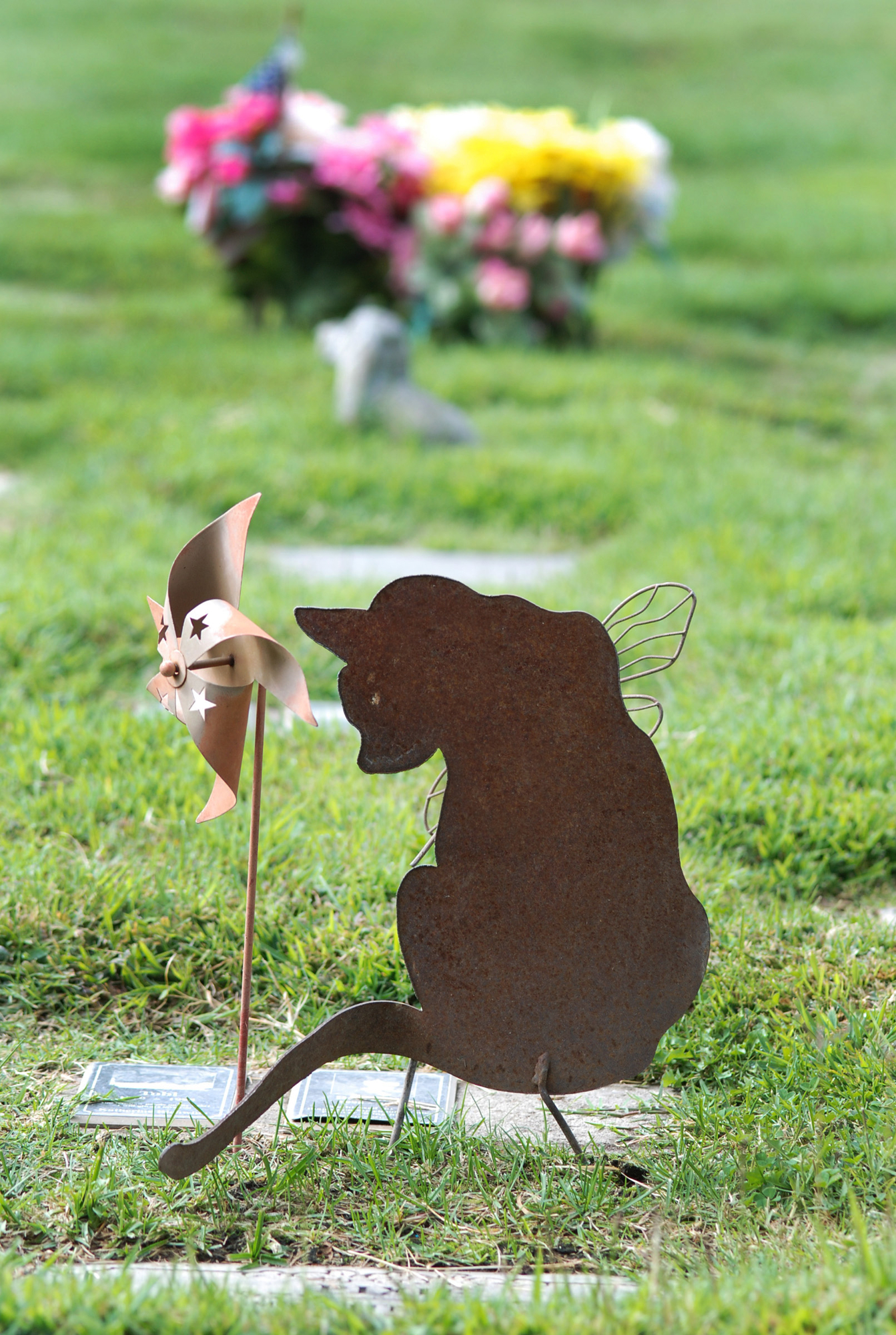
Commentary:Cat memorial marker in a pet cemetery.

Understanding Pet Loss Grief: The Emotional Toll

Pet loss grief can be a complicated and intense emotional process. It is a unique experience for each pet owner, as every relationship with a pet is different. The loss of a pet can trigger a range of emotions, including sadness, anger, guilt, and loneliness. It is common to feel like a part of yourself is missing, and you may find yourself constantly thinking about your pet.

Pet loss grief can also impact physical health. It is not uncommon for pet owners to experience physical symptoms such as loss of appetite, insomnia, and fatigue. The emotional toll of pet loss grief can make it difficult to function in daily life, and it is important to take care of yourself during this time.

Symptoms of Pet Loss Grief

Pet loss grief can manifest in a variety of ways. Some common symptoms include:

• Intense sadness and crying
• Feelings of guilt and regret
• Anger and frustration
• Anxiety and depression
• Difficulty concentrating or making decisions
• Loss of appetite or overeating
• Insomnia or oversleeping

It is important to recognize that these symptoms are a normal part of the grieving process. It is okay to feel a wide range of emotions, and it is important to give yourself permission to grieve.

Coping Mechanisms for Pet Loss Grief

Coping with pet loss grief can be challenging, but there are many ways to navigate through the pain. One of the most important things you can do is to allow yourself to feel the emotions that come with grief. It is okay to cry, be angry, and feel sad.

Talking to others about your grief can also be helpful. Friends and family members may be able to offer comfort and support during this difficult time. Writing in a journal or participating in creative activities such as drawing or painting can also provide an outlet for expressing emotions.
Self-care is also important during the grieving process. Taking care of your physical health by getting enough sleep, eating well, and exercising can help improve your mental health. It is also important to be patient with yourself and to allow yourself time to grieve.

Dealing with Guilt and Regrets After Pet Loss

Many pet owners experience guilt and regrets after the loss of a pet. You may find yourself questioning whether you did enough for your pet or if you made the right decisions regarding their care. It is important to remember that you did the best you could with the information and resources available to you at the time.

It can be helpful to write down your feelings of guilt and regrets and to discuss them with a trusted friend or family member. Talking through these feelings can help you gain perspective and find peace with your decisions.

Navigating Through the Pain of Pet Loss Grief

Navigating through the pain of pet loss grief is a process that takes time. It is important to be patient with yourself and to allow yourself to grieve. It is okay to seek professional help if you are struggling to cope with the loss of your pet. Therapy can provide a safe and supportive environment to process your emotions and work through the grieving process.

Support Groups and Resources for Pet Loss Grief

There are many support groups and resources available for pet owners who are grieving the loss of a pet. These resources can provide comfort and support during a difficult time. Some resources include:

• Pet loss hotlines
• Online support groups
• Grief counseling
• Pet loss books and literature
• Pet loss memorial services

Helping Children Cope with Pet Loss Grief

Losing a pet can be especially difficult for children. It is important to talk to children about the loss of their pet in an age-appropriate way. Encouraging children to express their emotions and providing a safe space for them to grieve can be helpful.

It can also be helpful to involve children in memorializing their pet. Creating a memorial or planting a tree in memory of their pet can provide a sense of closure and comfort.

Memorializing Your Pet

Memorializing your pet can be a meaningful way to honor their memory. There are many ways to memorialize your pet, including:

• Creating a photo album or scrapbook
• Planting a tree or garden in memory of your pet
• Donating to an animal charity in memory of your pet
• Creating a memorial plaque or stone for your pet’s grave

Moving Forward After Pet Loss: Finding Closure

Finding closure after the loss of a pet can be a long and difficult process. It is important to take the time to grieve and to allow yourself to feel the emotions that come with pet loss grief.

Creating a memorial for your pet can provide a sense of closure and comfort. It is also important to remember the happy times you shared with your pet and to celebrate their life.

Conclusion

Losing a pet can be one of the most difficult experiences a pet owner can face. The emotional toll of pet loss grief can be intense and overwhelming. It is important to recognize and acknowledge the feelings that come with pet loss grief and to allow yourself to grieve.

Coping mechanisms such as talking to others, self-care, and seeking professional help can be helpful during the grieving process. Memorializing your pet can also provide a sense of closure and comfort. Remembering the happy times you shared with your pet can help you find peace and move forward after pet loss grief.

If you are a good listener and have excellent people skills then you might be interested in training to become a pet loss grief counselor. We offer a full program designed to teach you techniques designed to help others deal with the loss of their pets. For details please follow this link.

References:

Helpguide.org: Guide to Pet Loss

Cleveland Clinic: Loss of a Pet

Additional Resources:

Online Survey as Empathic Bridging for the Disenfranchised Grief of Pet Loss. OMEGA – Journal of Death and Dying, Packman, W., Carmack, B. J., Katz, R., Carlos, F., Field, N. P., & Landers, C. (2014).  69(4), 333–356.
Access link here 

Veterinary social work: Practice within veterinary settings, Journal of Human Behavior in the Social Environment, T. Melissa Holcombe, Elizabeth B. Strand, William R. Nugent & Zenithson Y. Ng (2016)  26:1, 69-80, DOI: 10.1080/10911359.2015.1059170
Access link here 

Older women’s experiences of companion animal death: impacts on well-being and aging-in-place. Wilson, D.M., Underwood, L., Carr, E. et al.  BMC Geriatr 21, 470 (2021). https://doi.org/10.1186/s12877-021-02410-8
Access link here 

Pet Loss: Understanding Disenfranchised Grief, Memorial Use, and Posttraumatic Growth, Breeanna Spain, Lisel O’Dwyer & Stephen Moston (2019)  Anthrozoös, 32:4, 555-568, DOI: 10.1080/08927936.2019.1621545
Access link here 

Healthy Spirituality

One of the most common neglected health aspects of oneself is spiritual health.  Like many things unseen, it is often neglected, but like many unseen things, they can cause the most damage to oneself overall happiness and health.  Spirituality especially is important since it is the soul that is eternal.  The temporal body is temporary and will one day again rise, but in its current fallen state, its needs should always come second to the soul.

Healthy spirituality within is critical to spreading the Gospel. Please also review AIHCP’s Christian Counseling Certification


Like unhealthy roots to a tree, the soul nourishes the overall life of the body and mind.  When a soul is dark, life itself is dark.  Guided by the impulses of the flesh and self, one can very easily become dark within and have a very unhealthy spiritual life.  Even those who prayer and monitor their own spiritual life can become victim poor health.  Whether is poor spiritual hygiene, gross neglect, or viceful choices, the soul that is unkept is a danger to eternal life.

Commentary

Delzell’s article hits the spot for one of the first thing that needs to be examined and that is whether or not one is a Christian in name only.  Does one merely adhere to rituals but never live the faith? Is one’s faith part of one’s life in every aspect?  Does one live a secular life only without any regard to God’s law?  There is always a call to action in Christian life.

Another important element touched by Delzell is one righteous in Christ or self righteous?  Many individuals are Pharisaical in their Christian life.  They judge others and find themselves to be great because they are Christian and someone else is not.  They hold others to standards that they themselves cannot hold and care more about their social look in the church than their private Christian life.

Numerous Pharisaical Christians condemn others, justify their superiority because of the title Christian and feel all must bend their knee to Christian ideals.  All to common, they also mix politics with faith and create a nationalized blend of Christianity that discriminates and hates others.  In many ways, like the Pharisees before them, they would crucify Jesus, Himself, if He stood up to their hypocrisy.

Spiritual Sloth

Spiritual neglect to the soul can take the form in sloth where spiritual hygiene prevents the soul from growing in the grace of the Holy Spirit


Spiritual health is also determined by spiritual life.  It is of no wonder then that after pride and Pharisaical ideals, spiritual sloth is a killer to spiritual life.  The habitual life style of spiritual sloth is likened to poor hygiene.  One’s soul does not receive the cleaning and the grace it needs due to poor spiritual hygiene.  Laziness in prayer, refusal to go to Mass or service, closing oneself to Scripture, or avoiding the Sacraments are all examples of spiritual sloth.  The soul requires grace and through the prayer, fasting, and sharing the faith, the soul awakens and is cleaned by the grace of the Holy Spirit.

Spiritual Barreness

Some individuals enter into deep spiritual isolation and desolation. They are tempted by the materialism and atheism of the world.  They may be spiritually injured due to trauma, or loss of a loved one and have lost there way.  They seek God but cannot hear Him.  They may be angry, or depressed but they feel no spiritual life.  While in some cases, desolation can bring one closer to God over time, it can also for some lead them away.  The individual loses hope.  They fall into despair.

Others question their faith when prayers are not answered.  They either become angry God would not answer a prayer, or feel their prayer was not good enough.  Their childlike faith views faith as a contract not a covenant.  It fails to see the role of suffering and offering up one’s cross.

Poor Conscience

Others possess a poor internal compass.  The conscience itself which guides individuals towards God’s law naturally is distorted.  It is either erroneous, or poorly formed.  This lax conscience does not sting the soul when wrong is committed, either due to apathy or ignorance.  Some consciences are hyper vigilant or scrupulous in nature and can haunt a person into believing every action is a sin.  Properly formed consciences are key to a good spiritual life.

Spiritual Imbalance

Individuals can also suffer from a spiritual imbalance in life.  In Christianity, spirituality and religious life balance the person as a whole.  Spirituality is the daily personalized and internal element of spiritual life.  It is meditation, Scripture, reflection and prayer.  Religious life is ritual outside one’s personal space.  It is proclaiming the victory of Christ in public and socially with other believers.

Both need to be balanced in order for one find Christ and share Christ.

Christian Guidance

Good spiritual health requires spiritual food from Scripture and the Sacraments which are given through the Holy Spirit and forever fueled by Christ’s death on the cross


Whether secularized, proud, slothful, barren, childlike or a broken conscience, individuals can find Christ.  Like the properly planted mustard seed, it can grow and bear fruit if on good soil.  It is a battle of constant maintenance.  It involves an active prayer life, spirituality, a social religious life, Christian action, and reception of God’s Word and the sacraments.  Only through grace can good actions find any merit or be guided properly.  The Holy Spirit has granted individuals many venues for grace through the death of Christ.  It is important to utilize these sources to live a more full Christian life.

Furthermore, examination of conscience is key.  During Lent, one is especially able with the community of the faithful to celebrate the season of reflection and rectify certain vices, habits, or issues one may have with God.

Christian Counselors, Christian Mentors, Spiritual Advisors can all play key roles in helping one in Christian spirituality and life.  They can be a friend, parent, or member of the clergy.  They are someone with spiritual knowledge and practice that can help one grow in spiritual growth, discern life and share the Gospel.

Beyond becoming closer to Christ, spirituality also encompasses many religions and traditions.  Religious and spiritual mindsets can play very important roles in mental and physical health as well.  Religious principles can guide and anchor oneself when storms arise in life.  They can be a source of calm and peace.  It is also wise to turn to the saints and their numerous writings on spirituality and spiritual life.  Many of their thoughts and ideas can help many struggling Christians.

Christian Counseling

If you would like to help others in their spiritual quest from a Christian world view, then please review AIHCP’s Christian Counseling Certification and see if it matches your academic and professional goals.  The program is online and independent study and open to qualified professionals seeking a four year certification.


Additional Resources

“What Is Conscience?”. Joe Carter. March 4th, 2014. The Gospel Coalition.  Access here

“The Spiritual Side of Sloth”. BeliefNet.  Access here

Consolation and Desolation. Vinita Hampton Wright. Ignatian Spirituality. Access here


Ambiguous Grief

Ambiguous Grief is a loss that cannot find closure.  It often involves dealing with someone in coma, possesses a mental disorder that prevents them from living a fulfilling life, or cases of abduction, missing children, missing pets, or soldiers lost at war.  The person is unable to find closure in processing the type of loss.  Some give up hope because holding on hurts too much, while others never surrender.  Numerous emotions erupt in this type of loss. Individuals may be enraged or feel guilty.

Ambiguous grief and the pain of not knowing prevents closure. Please also review AIHCP’s Grief Counseling Certification


Some look to find meaning in the loss through social activism and helping others find closure.  Overall, it is a grief ripe with complications that haunts the person the rest of his or her life.  It is good to allow those who wish to hold on to hope to continue within realism, while others who need to let it go, to finally let it go.  Depression is very common with this type of loss so in many cases extensive counseling and support is needed.

Please also review AIHCP’s Grief Counseling Certification and see if it matches your academic and professional goals.  The program is online and independent study and open to qualified professionals seeking a four year certification


Please review the video below

Emotional Freedom Technique / EFT : How Does It Work?

By – James M. Katz, BA

Have you ever heard of the Emotional Freedom Technique / EFT or remote energy healing? These two practices may seem like new-age concepts to some, but they have been around for centuries. EFT, or Emotional Freedom Technique, is a type of energy psychology that involves tapping on specific points on the body to release emotional blockages. It is said to help with a wide range of issues, from anxiety and depression to physical pain and chronic illness.

Remote energy healing, on the other hand, is a form of healing that can be done from a distance. It is based on the idea that everything in the universe is connected through energy, and that energy can be manipulated for healing purposes. Practitioners of remote energy healing use various techniques to send positive energy to a person, even if they are not physically present.

In the article below, it goes into detail what remote energy healing really is. It explains how we are energy and how it can be used to benefit us. It differs from EFT. Emotional Freedom Technique much like acupuncture taps energy points to help release negative energy and promote balance.

“Every experience we encounter can leave an energetic impression on our biofield, and because the body has a natural ability to heal itself, we are able to brush most things off. But often, too much of the same stimulus—like everyday stress or traumatic events—can alter our natural way of being. We build defenses to adapt to our environment, getting further away from our purest expression, and our unique frequency gets distorted. Energy work seeks to remove that disruption in your energy and move you closer to re-alignment.

REMOTE ENERGY HEALING: Does It Actually Work? By POOSH. POOSH: Soul, April 2023.

 Full Article Here

Commentary: Businessman practicing EFT or emotional freedom technique - tapping on the karate chop point

What is EFT?

EFT is based on the principles of acupuncture, but instead of using needles, it involves tapping on specific points on the body. These points are located on the meridian lines, which are the channels through which energy flows in the body. By tapping on these points, EFT is said to help release emotional blockages and balance the body’s energy.

The tapping is done while focusing on a specific issue, such as anxiety or pain. While tapping, the person repeats a statement that acknowledges the issue and affirms their self-acceptance. This is said to help release the emotional charge associated with the issue and lead to a sense of calm and peace.

Understanding Remote Energy Healing

Remote energy healing is based on the idea that everything in the universe is made up of energy, including our bodies. When our energy is out of balance, it can lead to physical, emotional, and mental health problems. Remote energy healing works by sending positive energy to a person, even if they are not physically present.

There are many different techniques used in remote energy healing, including Reiki, Quantum Touch, and Pranic Healing. Practitioners of remote energy healing believe that by sending positive energy to a person, they can help balance their energy and promote healing.

The Science behind the Emotional Freedom Technique and Remote Energy Healing

While EFT and remote energy healing may seem like mystical practices, there is actually scientific evidence to support their effectiveness. Studies have shown that EFT can help reduce symptoms of anxiety, depression, PTSD, and chronic pain. One study even found that EFT was more effective than cognitive-behavioral therapy for reducing symptoms of depression.

Similarly, studies have shown that remote energy healing can have a positive effect on physical and emotional health. One study found that patients who received remote energy healing had a significant reduction in pain and anxiety compared to those who did not receive the treatment.

While the exact mechanisms behind EFT and remote energy healing are not fully understood, some theories suggest that they work by promoting the relaxation response in the body. This response is associated with a decrease in stress hormones and an increase in feel-good hormones like serotonin and dopamine.

The Benefits of the Emotional Freedom Technique and Remote Energy Healing

The benefits of EFT and remote energy healing are vast and varied. Some of the most commonly reported benefits of EFT include:

  • Reduced symptoms of anxiety and depression
  • Improved sleep
  • Reduced physical pain
  • Increased sense of well-being
  • Improved relationships

Similarly, some of the benefits of remote energy healing include:

  • Reduced stress and anxiety
  • Improved mood
  • Increased energy and vitality
  • Improved immune system function
  • Faster recovery from illness and injury

How EFT and Remote Energy Healing Work Together

EFT and remote energy healing can be used together to promote even greater healing. One way this is done is by using EFT to release emotional blockages that may be contributing to physical health problems. For example, if a person is experiencing chronic pain, EFT can be used to release any emotional trauma that may be contributing to the pain.

Once the emotional blockages have been released, remote energy healing can be used to promote physical healing. By sending positive energy to the affected area, the body’s natural healing processes can be activated, leading to faster recovery.

The Role of Emotions in EFT and Remote Energy Healing

Emotions play a crucial role in both EFT and remote energy healing. In EFT, the tapping is done while focusing on a specific emotion or issue. By acknowledging and accepting the emotion, it can be released, leading to a sense of calm and peace.

Similarly, remote energy healing works by balancing the body’s energy, which can be disrupted by negative emotions. By promoting positive emotions like love and gratitude, remote energy healing can help balance the body’s energy and promote healing.

Techniques for Practicing EFT and Remote Energy Healing

While EFT and remote energy healing are best done with the guidance of a trained practitioner, there are techniques that can be done at home. For EFT, there are many online resources and videos that can guide you through the tapping process. It is important to focus on a specific issue and to repeat a positive affirmation while tapping.

For remote energy healing, there are many different techniques that can be used, including visualization, meditation, and prayer. It is important to find a technique that resonates with you and to practice it regularly.

EFT and Remote Energy Healing Research and Studies

There is a growing body of research on EFT and remote energy healing, with many studies showing promising results. However, more research is needed to fully understand the mechanisms behind these practices and to determine their effectiveness for different health conditions.

Finding an EFT and Remote Energy Healing Practitioner

If you are interested in trying EFT or remote energy healing, it is important to find a trained practitioner who can guide you through the process. Look for someone who is certified and has experience working with your specific health condition.

Conclusion

EFT and remote energy healing are two practices that have been around for centuries and are gaining popularity in the modern world. While they may seem like mystical concepts, there is scientific evidence to support their effectiveness. By tapping into the body’s energy and promoting positive emotions, these practices can help promote healing and improve overall well-being. If you are interested in trying EFT or remote energy healing, be sure to find a trained practitioner who can guide you through the process.

If you are interested in learning more about the Emotional Freedom Technique (EFT) then you should review our online video seminar here 

References:

Healthline.com Remote Energy Healing

Wikipedia Energy Healing

Additional Resources:

Energy Healing and Pain: A Review of the Literature. Holistic Nursing Practice. Fazzino, Dolores L. DNP, RN, FNP-BC, CRNFA et al. 24(2):p 79-88, March 2010. | DOI: 10.1097/HNP.0b013e3181d39718

Access link here  

Consciousness Energy Healing Treatment Based Herbomineral Formulation: A Safe and Effective Approach for Skin Health. Jagdish Singh et al. American Journal of Pharmacology and Phytotherapy > 2017 > 2 > 1 > 1 – 10

Access link here 

A Consideration of the Perspectives of Healing Practitioners on Research Into Energy Healing. Sara L. Warber, MD et al 2015;4(suppl):72-78. DOI: 10.7453/ gahmj.2015.014.suppl

Access link here 

Emotional Freedom Techniques for Anxiety: A Systematic Review With Meta-analysis. The Journal of Nervous and Mental Disease.  Clond, Morgan PhD. et al. 204(5):p 388-395, May 2016. | DOI: 10.1097/NMD.0000000000000483

Access link here 


Attachment Disorders and Grief

Human beings are social creatures by nature.  They need care and nurturing in their infancy to properly form bonds with caregivers.  These bonds teach security and help bolster individuals and their social development with others they meet.  Future intimate relationships and friendships are dependent upon initial bonds.  Healthy and secure bonds with the primary caregiver translate to healthier social interaction in the future.

John Bowlby, famous psychoanalyst, worked extensively in the area of attachment.  His attachment theory today remains a benchmark for understanding individuals who suffer various attachment disorders stemming from their infancy and early childhood.

Infants need trust and security in forming early bonds. Please also review AIHCP’s Grief Counseling Certification


The article, “What Is an Attachment Disorder?” by Amy Morin examines the various types of attachment disorders.  The article discusses the origins of attachment disorders, the types, and how they manifest during childhood and later in life.  Morin states,

“An attachment disorder is a condition that affects mood or behavior and makes it difficult for people to form and maintain relationships with others. These conditions usually begin in early childhood, but attachment issues may also persist into adulthood.  Attachment issues are not an official diagnosis, but people use the term to refer to an insecure attachment style in adults. Adults with insecure attachment styles may express avoidance or ambivalence in relationships or behave in disorganized or inconsistent ways.”

“What Is an Attachment Disorder?”. Amy Morin. November 14th, 2022. VeryWellMind

To read the entire article, please click here

Commentary

Attachment disorders can play havoc with individual’s future relationships and how they form future bonds.  It is so critical to give little children the love and nurture they need.  When a child’s needs are not met, they can lose trust.  Without trust, the child is becomes untrusting and unable to trust other caregivers or form other bonds.  Bowlby noticed this in his observations of little babies that were cared for when they cried or were hungry as opposed to babies that were left to cry by their parents or their needs were not met.  This created unhealthy bonds with the caregiver and proceeded forward.  What should have been a healthy bond that is trusting and secure, the child exhibited lack of trust and various insecurities.

Clinical Attachment Disorders

The Diagnostic and Statistical Manuel of Mental Disorders recognizes two distinct types of attachment disorders.  They both are due to lack of care and needs met at a young age and both exhibit insecurity and lack of trust but they manifest differently.  The first is Disinhibited Social Engagement Disorder in which the child and later the adult exhibit problems forming true and lasting relationships with others but will look to form superficial bonds that are not permanent.  In children, this is displayed with a lack of shyness around strangers or other adults.  In teen years, they may outwardly form relationships but they are unable to find connection with others and true meaning.  This obviously can lead to many superficial issues.

Children can form avoidant or anxious type disorders when healthy bonds are not formed.


The second type of attachment disorder is Reactive Attachment Disorder.  The child and later adult are unable to form new bonds with anyone.  They are quiet, untrusting of caregivers, and avoidant of forming new relationships.  Many are unable to form the necessary connection to have any type of meaningful relationships.  They in turn will jump from relationship to relationship without having any true connection or meaning.

Characteristics of Attachment Disorders

Insecure attachment disorders form due to the lack of security that most children receive at an early age.  Without the security and love, the child grows into new relationships with serious trust issues.  Anxious-Insecure Attachment is the labeled term.    The child exhibits with the primary caregiver a very needy and clingy relationship that pushes for and craves attention but due to the lack of emotional support leads to the numerous issues of mistrust and anxiety in adult relationships.  Anxiety apart from a partner develops and a range of issues can erupt within the relationship itself.  These individuals can become very possessive and clingy in a relationship.

The other spectrum involves Avoidant-Insecure.  This behavior as opposed to clingy and anxious behavior looks to avoid.  These types of children avoid future relationships with adults and as adults, themselves, have a difficult time ever forming permanent bonds with another person.  As children they will look for others to meet needs and form superficial bonds.  They will become unhealthy independent of others.  In future relationships, they can elusive or afraid to commit.

There are also a variety of Disorganized-Insecure attachments where rage or emotion overtake individuals or chaotic anxiety.

The Importance of Secure Attachment

Obviously life is about relationships and social bonds.  A secure attachment permits trust. In turn a healthy attachment permits one to be trusting, open, available, sensitive, responding and accepting to others.  Those without form bonds that are clouded in emotional rage, distrust, anxiety and avoidance.

Unhealthy bonds carry into adulthood and Anxious-Insecure or Avoidant-Insecure disorders can manifest in men and women


In grief and loss, attachment is key.  The greater the attachment, the greater the loss and adjustment.  Individuals who have healthy relationships grieve the loss but with less complications due to emotional barriers that prevented the relationship from being more healthy.  If a parent passes, an adult who has a attachment disorder may have conflicting emotions regarding the loss and not process the loss the same way as a person with a healthy relationship and bond.  The sting of grief is still great within a normal bond and could still due to other implications become complicated, but unhealthy attachments can bring other emotional baggage.  Grief Counselors who are not licensed need to recognize possible attachment disorders and refer individuals to licensed counselors who can better help them with the complications of the loss.

Helping Children with Attachment Disorders

Beyond therapy from a licensed counselor, children can benefit from consistency, schedule and establishing boundaries.  It is important to discuss emotions and how one feels.  The goal is to help the child feel some sort of security with guaranteed promises and actions to meet the needs that were not met before.

Conclusion

Forming secure bonds with a young infant and toddler is key to helping the child develop future healthy relationships


Individuals who due to lack of care in infancy and young childhood will experience avoidant behaviors or anxious behaviors in future relationships.  They will have difficulty forming healthy bonds with others.  Grieving the loss of others can also become more complicated when attachment disorders are present.

Please also review AIHCP’s Grief Counseling Certification and see if it meets your academic and professional goals.  The program is online and independent study and open to qualified professionals seeking a four year certification in grief counseling.

Additional Resources

“4 Types of Attachment Disorders”. March 23, 2017. The Holy Mess. Access here

“Types of Attachment Styles and What They Mean”. Rhona Lewis. September 25th, 2022. Healthline. Access here

“What Is Reactive Attachment Disorder?”. Amy Morin. October 11th, 2021. VeryWellMind. Access here

“Attachment” Psychology Today Staff. Psychology Today.  Access here

Holistic Approaches with Exercise for Depression

If one is dealing with grief or loss it can be a difficult time to balance oneself emotionally.  Adapting to loss can take a long time.  Unfortunately, complications in the grieving process can occur which can lead to depression.  Clinical Counselors can help individuals deal with depression however sometimes medication are required to help balance the brain during depression.  Many prefer healthy coping strategies or herbal remedies.

Exercise can help against depression but it can be difficult to start when depression itself causes fatigue. However studies show exercise has an extremely positive effect against depression for those who are able to utilize it


One successful strategy is exercise. Exercise has an ability to release endorphins that elevate one’s mood and grant a higher sense of self and accomplishment.  Of course the biggest problem is motivation to work out or exercise while depressed but for those who are able to find the ability to exercise, will find rewards during depression.  Exercise has been shown to be more effective for individuals dealing with depression.  The article, “Move Your Mind: Exercise Outperforms Medication for Depression and Anxiety” by Ben Singh, Carol Maher,  and Jacinta Brinsley from University of South Australia reviews the benefits of exercise to cope with depression over various medications.  The article states,

“Exercise is believed to impact mental health through multiple pathways, and with short and long-term effects. Immediately after exercise, endorphins and dopamine are released in the brain. In the short term, this helps boost mood and buffer stress. Long term, the release of neurotransmitters in response to exercise promotes changes in the brain that help with mood and cognition, decrease inflammation, and boost immune function, which all influence our brain function and mental health.”

“Move Your Mind: Exercise Outperforms Medication for Depression and Anxiety”. Ben Singh, Carol Maher,  and Jacinta Brinsley. April 11th, 2023. SciTechDaily.

To review the entire article, please click here

Commentary

Holistic and Integrative Health Care Specialists look for alternative and other ways to help individuals face mental and physical issues from a more natural standpoint.  Grief Counselors also look to help individuals cope with grief through support and advice. The simplicity of exercise alone can play a key role in a grief counseling plan as a well as a holistic perspective in dealing with loss and if worst depression.

A Closer Look at Grief and Exercise in Holistic and Integrative Practices


Depression is a complex mental health condition that affects millions of people worldwide. It can be caused by a variety of factors, including genetics, trauma, and environmental stressors. Symptoms of depression can include persistent feelings of sadness, loss of interest in activities, changes in appetite and sleep patterns, and difficulty concentrating.

While depression is often treated with medication and therapy, these methods may not be enough for some individuals. That’s where a holistic approach comes in. Rather than simply addressing the symptoms of depression, a holistic approach takes into account the whole person and aims to treat the root cause of the problem.

The Limitations of Traditional Treatment

Traditional treatment methods for depression can be effective, but they often only address one aspect of the problem. Medication, for example, can help alleviate symptoms of depression, but it doesn’t address the underlying causes of the condition. Similarly, therapy can be helpful in providing coping mechanisms and support, but it may not be enough to fully address the problem.

That’s why a holistic approach that considers the whole person is so important. By addressing all aspects of the problem – physical, mental, and emotional – a holistic approach can be more effective in treating depression.

What is a Holistic Approach to Depression?

A holistic approach to depression is one that takes into account the whole person – mind, body, and spirit. Rather than simply treating the symptoms of depression, a holistic approach aims to treat the root cause of the problem. This can include addressing physical health issues, such as poor nutrition or lack of exercise, as well as emotional and spiritual issues.

A holistic approach to depression may include a variety of different treatments, such as therapy, medication, and alternative therapies like acupuncture or massage. The goal is to create a comprehensive treatment plan that addresses all aspects of the problem.

The Importance of Exercise for Mental Health

Exercise has a large impact on mental health. Please also review AIHCP’s Holistic and Integrative Healthcare Specialist Certification


Exercise is a powerful tool in the fight against depression. Research has shown that regular exercise can be just as effective as medication in treating mild to moderate depression. Exercise releases endorphins, which are natural mood-boosters, and can help reduce stress and anxiety.

In addition, exercise can have a positive impact on self-esteem and confidence, both of which can be negatively affected by depression. By incorporating exercise into a depression treatment plan, individuals can improve their overall mental health and well-being.

How Exercise Affects the Brain and Body

Exercise has a powerful impact on both the brain and body. Physically, exercise can help improve cardiovascular health, increase muscle strength and flexibility, and improve overall physical fitness. Mentally, exercise can help reduce stress and anxiety, improve mood, and increase cognitive function.

Research has also shown that exercise can help promote the growth of new brain cells, which can help improve cognitive function and reduce the risk of cognitive decline. By incorporating regular exercise into a depression treatment plan, individuals can improve both their physical and mental health.

The Benefits of Incorporating Exercise into Your Depression Treatment Plan

Incorporating exercise into a depression treatment plan can have a number of benefits. First and foremost, exercise can help improve mood and reduce symptoms of depression. In addition, exercise can help improve overall physical health and well-being, which can have a positive impact on mental health.

Regular exercise can also help individuals develop a sense of routine and structure, which can be helpful in managing depression. Exercise can provide a sense of accomplishment and can help improve self-esteem and confidence.

Types of Exercises Recommended for Depression

There are a variety of different types of exercise that can be effective in treating depression. Aerobic exercise, such as running or cycling, can be particularly effective in reducing symptoms of depression. Yoga and other mind-body practices can also be helpful in reducing stress and anxiety.

Strength training, such as weightlifting, can help improve overall physical fitness and can have a positive impact on mental health as well. Finding an exercise routine that you enjoy and can stick to is key in incorporating exercise into a depression treatment plan.

Incorporating Other Holistic Practices into Your Routine

In addition to exercise, there are a variety of other holistic practices that can be helpful in treating depression. These can include therapy, meditation, acupuncture, massage, and more. By incorporating a variety of different practices into a depression treatment plan, individuals can address all aspects of the problem and improve overall health and well-being.

Additional Resources for Holistic Depression Treatment

If you’re interested in a more holistic approach to depression treatment, there are a variety of resources available. Talk to your doctor or mental health professional about incorporating exercise and other holistic practices into your treatment plan. You can also look for local support groups or classes that focus on holistic health and wellness.

Conclusion: Taking a Holistic, Whole-Person Approach to Depression

Please also review AIHCP’s Grief Counseling Certification Program, as well as its Holistic and Integrative Healthcare Specialist Certification


Depression is a complex condition that requires a comprehensive treatment plan. While traditional treatment methods can be effective, they often only address one aspect of the problem. By incorporating exercise and other holistic practices into a depression treatment plan, individuals can address all aspects of the problem and improve overall health and well-being.

It’s important to remember that there is no one-size-fits-all approach to depression treatment. What works for one person may not work for another. That’s why it’s important to work with your doctor or mental health professional to develop a personalized treatment plan that addresses your unique needs and circumstances.

If you’re struggling with depression, know that there is hope. By taking a holistic, whole-person approach to treatment, you can improve your mental, physical, and emotional health and live a happier, healthier life.

Please also review AIHCP’s Holistic and Integrative Healthcare Specialist Program as well as AIHCP’s Grief Counseling Certification.  The program is online and independent study and open to qualified professionals.  Please review and see if the programs meet your academic and professional goals.