Behavioral and Mental Health Certifications: Signs of Trauma in the Population

Trauma is part of life.  Bad things occur and for some the bad things are more horrific and imprinting upon the person.  Estimates themselves reflect this.  It is calculated that 70 percent of all human beings will experience some type of trauma that is beyond the basic losses and pains of this temporal world.  In addition, 75 percent of children will experience some type of adverse childhood experience (ACE) that can negatively effect their emotional, mental, social and physical development.

While natural disaster trauma and collective social traumas leave deep marks on human beings, it is the violent and mystifying actions of evil at the hands of other human beings that leave the most devastating marks on the soul.  Wars, genocides, human trafficking, sexual abuse, rape, shootings as well as being witness to horrific murders and abusive events can all leave a horrible imprint on a person, whether child or adult.  While the event itself plays a key role, amazingly some individuals can process trauma and not linger with the effects of prolonged pain or PTSD.  This does not make those succumb to trauma weak, or cowardly, but illustrates the reality that trauma is not just about the horrific event but also the subjective experience and the lingering effects following it.  One’s genetic makeup, the social constructs and support around them, individual character and resiliency, as well as genetic and mental makeup due to past history can all play roles in how one may digest and cope trauma as opposed to another.

Victims need their trauma identified so they can heal. Please also review AIHCP’s Trauma informed care program and other behavioral health certifications

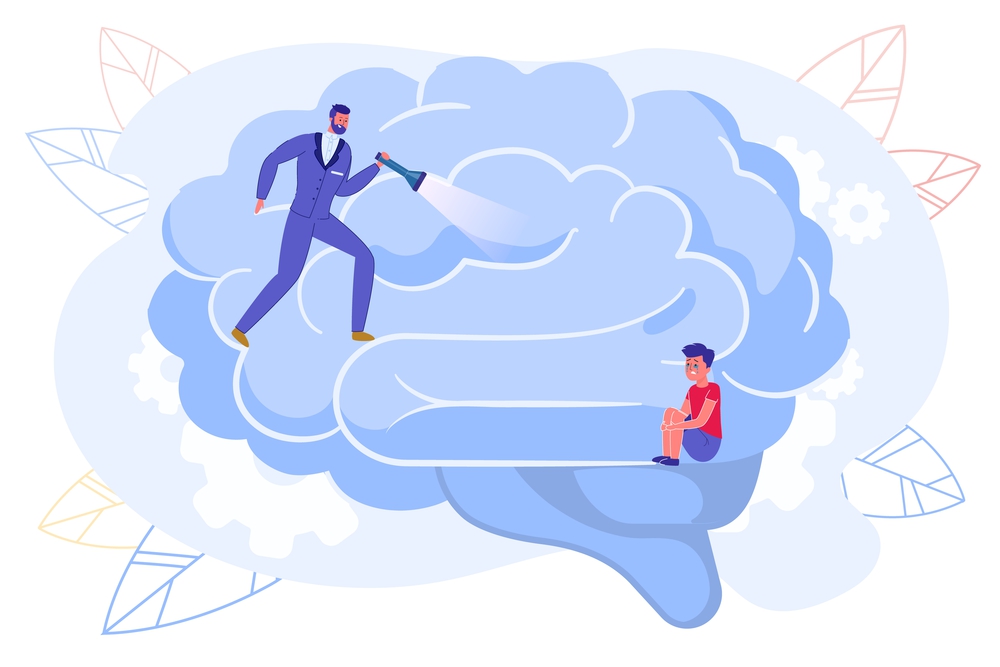
In states of crisis, a person suffers from disequilibrium and de-stabilization of self.  The brain loses ability to handle the current situation because it overwhelms one’s coping mechanism.  This leads to emotional distress and inability to cope.  One is unable to think or act clearly.  Those who experience severe trauma in the acute moment of it usually experience this overwhelming leaving them in the aftermath confused, lost and emotional unstable.  The purpose of crisis intervention and emotional triage via emotional and psychological first aid are essential in these moments to help the person find equilibrium as well as stabilization but the efforts of long term trauma care and counseling falls under trauma informed care.

Within the population there is a high level of individuals suffering from long term trauma and PTSD.  It is important for mental health and healthcare professionals to understand the signs of trauma and be better equipped to help those experiencing it in the present as well as those suffering from the past lingering effects.

Please also review AIHCP’s Trauma Informed Care, as well as Crisis Intervention and other behavioral and mental health certifications.  Qualified professionals can utilize these certifications within the scope of their practice to better help those in pastoral or clinical settings of needed care.

Trauma Signs

Flight, Flee, Freeze or Fawn

The most common reactions to trauma include fight, flight, freeze or fawn (Compton, 2024 p. 105-107).  The latter two have been added over the years and are equally important.  In understanding human survival, these mechanisms are key in helping an individual make it through a life threatening situation.  How a a person responds or does not respond does not equate to inadequacy or cowardice or acceptance of an event, but relates to numerous subconscious immediate decisions in a given situation based on subjective experiences within the person’s life.  These particular reactions also play key roles in later trauma recovery because individuals may question, feel guilty or be ashamed of particular reactions.

When the body experiences a threat, the brain and body activate the sympathetic nervous system.  This system releases cortisol into the blood stream and other hormones to help prepare the body for danger.  The heart rate rises, blood flow increases and muscles tighten to help the body fend off the threat.  In this moment of extreme stress, the brain mixed with multiple emotional responses decides to fight off the situation, flee the situation, or in some cases, shuts down the body to freeze.  This is seen in nature as well.  Animals will fight back, flee or sometimes freeze in utter fear in hopes of being left alone.  In human beings, many of the same thoughts race through the mind.  With emotion, comes intellectual thoughts based on our subjective history and experience.  Can I fight this threat, if not, can I flee or avoid it, or should I freeze and hope.  Many times in horror movies, we see the later.  We scream at the television for the actor or actress to run or move, but the person is so terrified, he or she shows no resistance to the killer, slasher or monster.  This response of freeze is referred to tonic immobility and it tied to the body’s psychological attempt to detach from reality and the danger since it has accepted fight of flight as an impossible option (Compton, 2024, p. 106).  Hence some women who are raped, may completely freeze and the body shuts down while the brain experiences the fear and trauma.  During this shutdown, some psychologists use other terms to explain this sensation of immobility.  During the intense moments of fright of the trauma, the body may flag itself into immobility.  During this intense freeze or flagging, ironically the sympathetic nervous system and its reaction releases itself to the parasympathetic system which returns blood back to the core of the body, eases muscle tension, and the body becomes almost frozen.  Frozen in fright, the mental brain looks to shut down or dissociate from the trauma. In these cases, many victims may not even feel physical pain, see as clearly, or hear but they remain frozen and in some cases, even dissociate to the point of almost feeling as if out of the body and looking downward.  In addition, since the trauma is so intense, the body’s coping mechanism looks to detach and many details of the assault or trauma or not properly logged.  Instead, the emotional part of the brain takes over.  This is also why sometimes details of survivors in regards to trauma may be not be as precise as law enforcement sometimes may wish.  Finally, beyond this freezing, fright and flagging, occurs the final defense mechanism of the body which involves faint.  In this, the body shuts down consciousness to the horrible ideal.
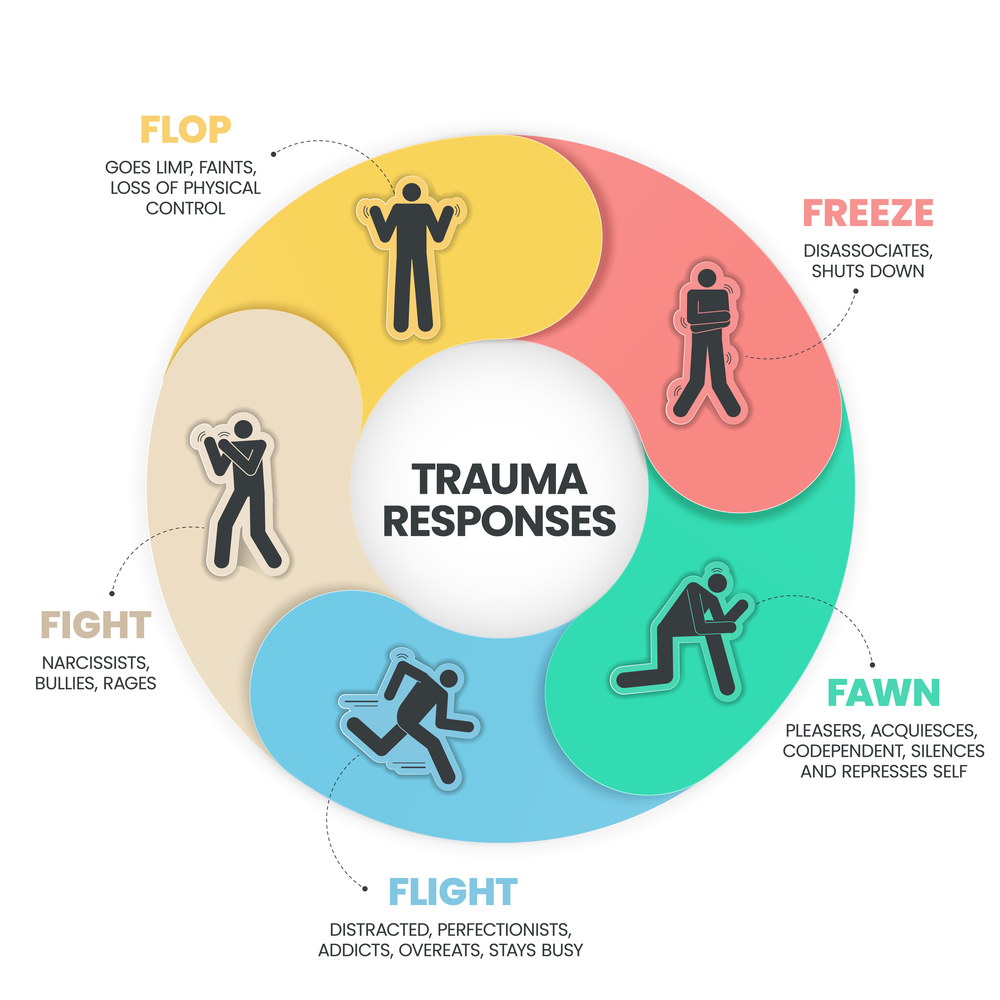
Fight, flight, freeze or fawn responses to survival situations.

In regards to fawn, victims in an attempt to survive will work with the assailant and not resist but attempt to be be accepting of the situation.  Children, and again women in assault cases, many times to survive will use this last option as a way in hopes of reducing the pain inflicted.  Without escape or any hope, they succumb to the wishes of the assailant whether it involves laughing with them, or taking drugs with them, or pretending to enjoy, or partake to avoid physical injury.  According to Compton, this response is completely unique to humans as a way to escape a situation in hopes of making it less worst and later survive (2024, p. 107).  Some victims may consider the price of cooperating better than the price of being beaten and killed if they attempt to resist.  Sometimes, pending on the psychopath or assailant, this may work in reducing injuries, while in some cases, the perpetrator injures or kills regardless.  However, within the subjective mind of the victim, the call to fawn or not fawn is gamble that is made in the heat of the moment.

What later plays a role in prolonged and unresolved trauma for survivors are the cognitive distortions that can result from whichever action one chose.  Those who did not fight back or flee, but froze may be hard on themselves and feel they could have saved themselves if they had just acted.  A woman who did not flee a rapist, or a soldier who froze in an attack may all suffer deep remorse or regret for their actions.  Yet, their responses were not so much conscious but related to inner wiring of how they would respond in this particular situation.  The trauma was so powerful, they were forced to detach from the utter horrific nature of the event.  Equally if not more harmful cognitive distortions can emerge with those who utilize fawning as a way to survive.   They display shame and guilt and even to some extent may think they partook in it voluntarily.  A woman may feel shame in laughing or accepting drugs during a rape and even doubt her victimhood but the reality is the woman entered into a survival mechanism to limit harm to self (Compton, 2024, p. 107).  Counselors need to affirm the fears these individuals feel, listen with empathy and without judgement the reactions in the moment and help cognitively realign the experience with reality of “having to do what you had to do to survive”.  The survivor needs vindicated in the choices made to keep him/her alive in a horrific moment no person should have to endure.

Intrusions
PTSD causes many forms of intrusions on victims/survivors. Please also review AIHCP’s Trauma Informed Care Program

In addition to trauma responses and their linger effects, individuals, especially those with PTSD, suffer from intrusions.   Intrusions, flashbacks, or nightmares can be triggered by simple scents, sights, sounds, or places.  Due to the fact the horrific trauma imprinted upon the emotional part of the brain within the amygdala, the emotions and sounds of the moments became associated with the event.  Hence even a simple backfire of a car can send an Iraq or Afghanistan veteran into a flashback on a city street.  Due to the trauma, many of the normal reasoning functions of the pre-frontal cortex associated with the memory were never properly filed within the brain and processed as a healthy moment in time.  Instead, the memory is raw and unprocessed as closely tied to the emotional responses of the day of trauma.  In turn, a sight, scent, taste, or sound closely associated with that traumatic event can trigger a response that intrudes into the mind and takes the person away from the present.  Severity of these responses vary in flashbacks but some can completely cause dissociation from the present.  The person will enter into a flashback where they are no longer present.  Some individuals may lose hours of the day or merely minutes pending on severity.  Others will be haunted by unresolved nightmares that place the survivor back in the traumatic situation.  Counselors who work with trauma survivors or individuals they suspect of past trauma will be able to identify these key signs of abuse or unresolved issues.

Hyperarousal or hypervigilance

One key sign of trauma is hyperarousal or hypervigilance.  Many who suffer from trauma have a heightened sense of awareness of certain places or people.  This heightened awareness activates a survivor’s sympathetic nervous system and leaves them in a state of watching or preparing for the worst.  A retired soldier may watch various entrances of all escape routes or doorways even when at a simple dinner with his wife and children.   A rape victim may be terrified to walk by an alley.  School shooting survivors may during class time also experience issues returning to school or walking into the building.   Due to the hypervigilance and the imprinted trauma, ones arousal level is so high that the thinking part of the brain cannot differentiate between the traumatic historic event and current situations that pose no threat.  In addition, many completely seek shelter and protection from the public eye and seek isolation to cope with their states of hyperarousal.  The person hence becomes disconnected from the present, hyper-focuses on non-existent threats, and is in a state of fear or anxiety within normal situations (Compton, 2024, p.108-109).  Counselors will need to employ various emotional regulation strategies, ground techniques, exposure and EDMR therapies, or cognitive behavioral to help the person gain control of these rampant emotional memories and flashbacks.

Changed World Views and Attitudes of Survivors 

Hyperarousal and lack of emotional regulation are signs of past trauma. Please also review AIHCP’s behavioral health certifications

Due to this new altered sense, even when not hyper aroused, the past trauma can reshape and damage previous held world views (Compton, 2024. p, 2009).   Traumatic events can alter the view that the world is a safe place.  Unlike many individuals in rural areas, those who frequently experience inner city violence will definitely frame a different world view from childhood onward, especially children who were never able to experience safety and security.   For those who lived the American dream, those who suddenly become victim or witness to school shooting, or experience a violent crime suddenly may come to new realities that may make them challenge their worldview, faith, God, and moral framework how the world operates.  Some may become cynical, others hopeless, some angry and vindictive, others may look to over-protect others because they see danger everywhere.

World views and previous held ideas lead to different reactions to situations and life itself.  Some of the key points according to Compton include a lack of safety and a sense of vulnerability that did not previously exist.  In addition, Compton lists a lack of trust.  This lack of trust may be towards the power of God, or the power of local government to protect oneself. Many may feel forsaken and left to fend for oneself in this state of despair.  Also, Compton lists esteem and defectiveness that follows trauma.  Trauma survivors can exhibit negative views about themselves and doubt their worthiness to be loved after the event, or are not deserving of a good and productive post trauma life.  Others may also alter views on others and stereotype races, religions, cultures and others that are associated with the trauma itself.  Through this, the person is filled with anger, suspicion and bitterness towards other people who may share the same skin color or faith of the perpetrator.   Compton points out that other survivors may exhibit unnecessary power and control over others or situations in an attempt to prevent the trauma from occurring again.    This type of survivor may be a person who lives in constant hyperarousal and promises that what occurred will never happen again to the point of compulsion driven by anxiety.  This leads to controlling even smaller aspects of life and relationships.  Some may even feel erroneously partial responsible for the trauma and will look at any cost to control all aspects to avoid the same outcome.  Finally, Compton lists that intimacy and how future trauma survivors respond to others and relationships can be altered.  Children who experience trauma at a young age will have different attachment disorders based on trauma ranging from anxious relationship, to avoidant ones, while adults who are reshaped by trauma may experience difficulties with intimacy.  A wife who was raped may be unable to have intercourse with her husband because of the violation of the sexual act in her rape.  The movements or act may activate a flashback or cause intense emotional pain.  Some who are not in a relationship may seek isolation and avoid attachment and at the expense of genuine human connection, forfeit future relationships due to the traumatic event (2024. p. 109-113).

Long Term Mental and Physical Signs

Trauma damages the entirety of the human person.  Untreated trauma looks to numb and escape the pains through various maladaptive ways.  Whether it is isolation, avoidance, or control measures, the person still exhibits the pains of trauma.  Because of this, many associated with trauma become alcoholics or drug addicts hopes of numbing the pain and escaping the memories.  These short term tricks however only further damage the mind and body with addiction and all the legal, financial, social, mental and physical troubles associated with it.  In addition, many mentally may attempt to numb psychic pain with physical pain and self harm themselves or even idealize suicide to escape the pain.  Others may utilize sex or gambling or other unhealthy way habits. Hence, those who are associated with long term and unresolved trauma are tied to depression, anxiety, physical injuries, substance abuse, and sexually transmitted diseases (Compton, 2024, p. 116).

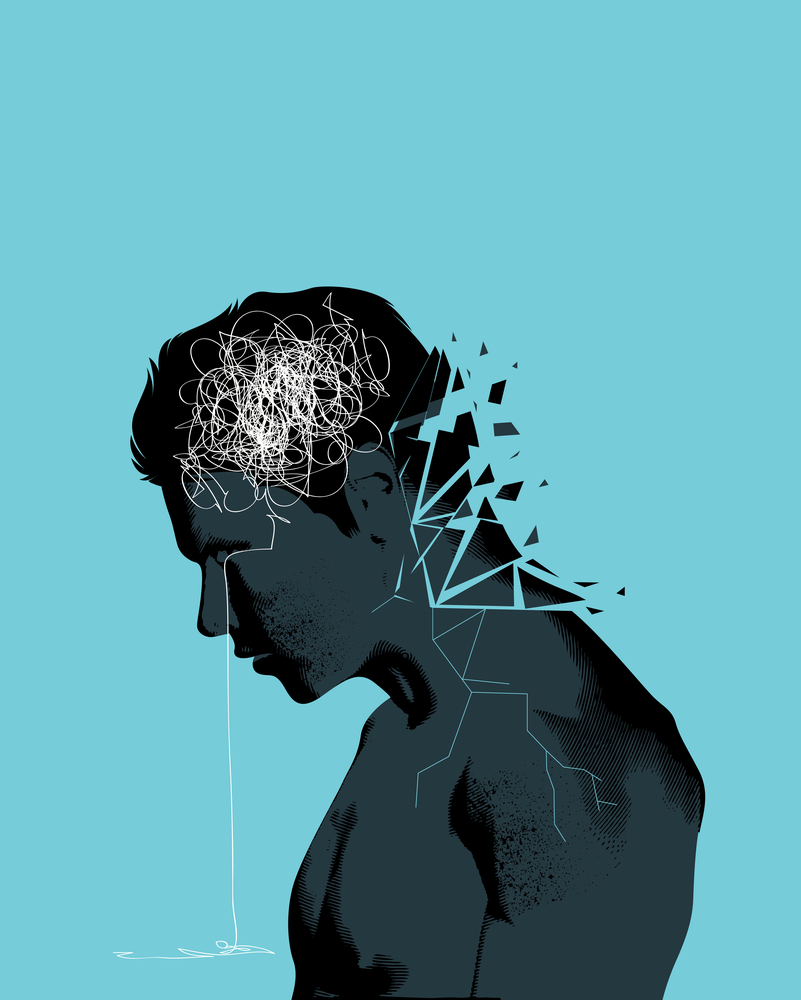
Long term trauma can negative effects socially, mentally, emotionally, and physically on a person.

Physically, those who deal with long term trauma even if they avoid maladaptive practices find themselves in a constant state of hyperarousal and the activation of the sympathetic nervous system.  Like chronic stress, the continual state of alert has negative effects on the body, especially the cardiovascular system.  Due to the constant stress, trauma survivors or life long victims of trauma find themselves with many  digestive diseases, migraines and sleep issues.  This leads to immune issues related to chronic inflammation throughout the body (Compton, 2024. p. 116-117).  These physical issues to lead to social issues with work, education and advancement, leaving many life long trauma survivors in perilous situations beyond their trauma itself.  This all has reflections on every aspect of their life and choices which can also affect other individuals negatively.  When those suffer from a singular and isolated trauma, as opposed to a communal trauma, many times the individual never finds affirmation, connection, or support.  These individuals, without healing, slowly rot from the vine and deteriorate.  Many fall under the rug and find themselves homeless, or imprisoned for petty crimes.  Others develop more severe mental illness and can lash out at others within the community.

Hence, it is a communal issue to identify trauma signs and help individuals find the help and aid they need to heal.  Counselors can look for these long term mental, physical, emotional and social signs of long term trauma to better help individuals find healing via trauma informed care.

Conclusion

When signs of trauma and abuse or missed initially, or permitted to fester, the wholeness and dignity of the person erodes.  Whether it is a life long series of traumas or adverse childhood experiences, or one horrible life altering event, trauma victims/survivors need help to heal.  While some individuals are resilient due to numerous and multiple subjective factors, others through no fault, fall victim to PTSD or trauma induced wounds.  These individuals if not helped are unable to cope in productive ways and can harm themselves, others, relationships or ruin their own careers.  This overflows into society and without a empathetic and compassionate approach to help these individuals, then society as a whole suffers.  Trauma Informed Care looks to identify many of the signs listed above and better help and equip individuals to find healing and healthy coping mechanisms to heal and overcome trauma.  Trauma may leave a scar but it does not need to be a destructive event in the person’s life that destroys everything the person is.  Instead, human beings can heal, create new neuropathways, find meaning in horror and create positive outcomes out of the darkness.

Please also review AIHCP’s Mental and Behavioral Health Certifications

Please also review AIHCP’s Trauma Informed Care Program, as well as its many behavioral and mental health certifications for human service workers, both clinical and pastoral, as well as healthcare professionals who seek to help and make a difference for those who have experienced trauma.

Additional Blogs

Sexual Assault.  Click here

Domestic Violence.  Click here

Crisis Intervention in Acute Mental Crisis. Click here

Crisis Intervention Assessment.  Click here

Trauma During Counseling.  Click here

Resource

Compton, L & Patterson, T. (2024) . “Skills for Safeguarding: A Guide for Preventing Abuse and Fostering Healing in the Church”. Academic

Additional Resources

“Trauma and Violence”. SAMHSA.  Access here

“Identifying Trauma” Center on Child Wellbeing and Trauma.  Access here

Aten, J. (2020). “How to Identify and Find Help for Trauma”. Psychology Today.  Access here

“Recognizing the Effects of Abuse-Related Trauma”. CAMH.  Access here
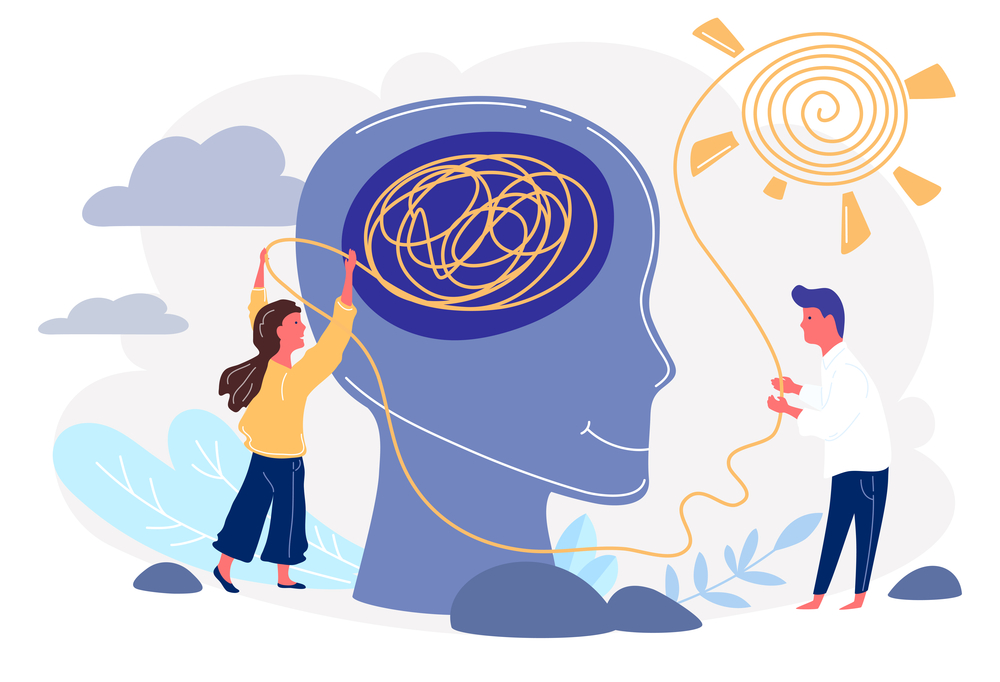


What is Trauma Informed Care?

Trauma is part of life.  As long one exists, trauma can occur.   Treating trauma acutely on the scene is important in crisis and mental health, but also recognizing it within a client or patient who has experienced it is key.   Being trauma informed and trauma aware can bring day light to many existing problems and prevent many future ones.  Mental health professionals must hence be trauma cognizant and alert for clues and possible issues within a client or patient.

Trauma informed care looks to help others that may have fallen through the cracks and never received trauma care. Please also review AIHCP’s Mental and behavioral health certifications

Again, the true reality is everyone grieves and loses someone or something.  The chance of one of those incidents to cause trauma at least once to some level in someone’s life is around 80 percent.  So understanding the fine line between experiencing something sad, or even bad, and how that translates subjectively to trauma is important since such a high percentage of people within the population will experience some type of traumatic reaction.  Identifying and helping individuals who are dealing with trauma can be a beautiful healing moment.

Please also review AIHCP’s Crisis Intervention Program, as well as its Trauma Informed Care Programs in 2026 for both clinical as well as pastoral disciplines.  Bear in mind, helping others with trauma and processing it, is not merely a clinical purpose, but it can fall into non clinical and pastoral settings.  So, it is important to help individuals face trauma within one’s scope of professional practice.  While this may be limiting for some, such as pastors or chaplains within the scope of their mental health training, other licensed professionals in social work, counseling or psychiatric nursing can help treat trauma at a much deeper level.  AIHCP’s certifications in behavioral health are aimed at giving professionals within all scopes of mental  health additional knowledge and skills to help those in trauma to process and identify it.  The idea of recognizing trauma across  a life span has only been recently introduced into the DSM-V.  This has opened the floodgates for many professionals to become certified within this field or utilize it within their practice.

What is Trauma

A person enters a state of crisis when something overwhelms his/her abilities to cope and handle the situation.  It de-stabilizes and disorientates them.  Like crisis, trauma is a severe stressful and impactful event in life that imprints itself upon the person.  Sometimes it is so horrible, the person is not even able to properly store it within the mind resulting later in PTSD.  Different levels of trauma exist.  In the article, “Advanced Method-Trauma Informed Framework” from SAMHSA (Substance Abuse and Mental Health Service Administration), the individual who suffers from trauma experiences what is referred to the 3 “E”s of trauma care.  The includes the event itself, the experience of it and the effects of it.

Trauma informed care looks to actively identify and recognize trauma in clients and be equipped to help those client heal from trauma across a life span

Within the event, what was the triggering occurrence that caused the initial trauma in a person’s life.  This is very subjective in nature.  What may negatively impact one person, may not hurt someone else based on numerous subjective, cultural, religious, emotional, mental and social support systems that make up the person’s ability to handle a crisis or horrible situation.  While an event may objectively be horrible, some individuals are able to recover and show resiliency to it and trauma is minimal or non existent.  Some soldiers can return home from war without trauma, while others cannot escape the trauma.   So while the event may be objectively dark, such as a tornado destroying one’s home, an individual may still respond to that event without long term trauma as opposed to someone else.

The experience of event is the second key element.  This is far more subjective in nature and determines if the individual will suffer trauma.  The experience at the mental, emotional, or physical level is so intense, it overtakes the individual to the point that the persons experience of the event is traumatic acutely as well as long term.  This again points back to a person’s emotional and mental build to particular events in life.  A person’s history, a person’s interior resiliency, or a person’s support systems can all play key roles in how a person handles a crisis or how a traumatic event imprints upon a person.  This in no way dismisses a person who experiences trauma as weaker than others because everyone is susceptible to trauma–it just matters what is one’s tipping point.

The effects of trauma play the third key element.  The effects of a traumatic event can be short term or long term.  They can be affect all aspects of the person.    Effects can include inability to cope with life and everyday stressors, or trust others, social withdraw and issues, or loss of purpose and life meaning, or properly utilize the cognitive process.  It can result in maladaptive coping practices, as well as manifest with symptoms associated with PTSD that include hyper vigilance, avoidance, dissociation, nightmares or emotional numbing.

Trauma across a life span and trauma informed care recognizes the imprint of trauma on human life and seeks to see if any trauma still lingers or was never discovered or at least discussed that may be haunting a client throughout his or her life.

SAMHSA and the Four “R”s and Key Assumptions in Trauma and Informed Care

SAMHSA’s article, “Advanced Method-Trauma Informed Framework” gives a detailed account about qualities and key assumptions in presenting a concise commitment to treating trauma across a life span and helping agencies, as well as individual practitioners a better way to proceed forward in creating a practice that gravitates around trauma informed care.  The four R’s are essential in addressing trauma within any agency.  A program or organization first needs to realize the impact of trauma as a universal human phenomenon that requires treatment in life.  Secondly, counselors, or agencies need to recognize the signs and symptoms of trauma that are either acute or manifesting across the span of one’s life time.  In many cases, one may have been living with trauma undetected through professional services or lack of visit.  Counselors need to be aware that some new clients may have trauma from ages ago that was never treated.  The agency or organization then needs to have the ability to respond to the needs of the client via fully integrated knowledge, training, policies and procedures to help the person.  Finally, the agency owes to to any client to resist re-traumatization of the person.

Trauma informed care realizes the existence of trauma and looks to recognize the symptoms of it within the population it looks to treat.

A trauma informed approach according to SAMHSA also applies six key principles to its application.  First and foremost, safety is key when working with trauma patients.  The client must feel safe physically, emotionally and mentally and the environment must facilitate that aura of safety.  Second, the agency and counselors or social workers need to present its operations in an open and trustworthy fashion.  Third, peer support is a key element in any healing.  Peer support or trauma survivors can supply their stories or support to others walking the healing journey.  Fourth, the entirety of the agency all plays a role in the healing process.  The entire agency has a clear and mutually defined role in application of trauma support.  Fifth, both staff and clients are given empowerment.  The client is able to share in the process of healing via choice and decisions in plans of action.  The staff as well is given empowerment via support of from the administration as well as the tools necessary to do their work.  The final principle involves removal of any bias based on culturally, religious or gender issues when dealing with and helping individuals deal with trauma.  In doing so, staff recognizes the trauma that can exist within certain groups and how that can manifest within individuals.


SAMHSA and Implementing a Trauma Informed Approach

Trauma informed care is an organizational decision that transforms the organization or agency or individual social worker or counselors paradigm of working with individuals.  To be successfully implemented, it takes more than principles and good philosophies but a pragmatic process that involves multiple levels of preparation, policies, training, finances and feed back.  SAMHSA lists ten core implementation domains that are essential to help agencies properly support individuals suffering from trauma.

Trauma informed care requires an organizational commitment from the counselor to the administration itself to ensure implementation of it at all levels

First, governance and leadership is essential.  There needs to be a conscious choice to implement trauma informed care and establish leadership and management of its implementation to oversee and work with peers and staff in that effort.  Second, the agency needs written policies established that outline the new mission as well as a blue print for procedure.  Third, the organization needs to create a physical environment that mirrors a safe harbor for the type of work trauma counseling requires.  Individuals must feel safe, secure and able to trust without fear of embarrassment, guilt, or repercussion of their story. Fourth, there needs to be within the agency an engagement and involvement across multiple lines of individuals not only between counselor and client, but also within the organization itself and the process of helping individuals through trauma at all levels.  In addition, fifth, an agency needs to be equipped with cross sector collaborations with other agencies at the local or state level that can help facilitate healing.  Sixth, the agency needs to utilize the best empirically and scientifically proven principles in screening, assessment and treatment.  Seventh, training and workforce development is essential to ensure counselors have the education and continuing education necessary in trauma informed care.  Education and training workshops are key in maintaining up to date skills and knowledge in helping others.  The training, however, is not just shared with counselors and social workers, but also at lower levels within staff in how to deal with trauma and understand the nature of trauma with potential patients who enter the actual facility.   Eighth, as with all training, monitoring and quality assurance is essential to confirm that principles, policies, procedures and trainings are carried out properly within the whole of the organization.   This involves trauma informed principles that are incorporated into hiring, supervision, evaluation of staff, as well as working with staff and their own vicarious trauma and self care needs.  Ninth, agencies obviously need the necessary financial budget to transform the facility to support the need of trauma clients, as well as paying for the necessary trainings.  Finally, evaluation and feed back is essential in how the mission is being carried out.  This involves evaluation from top to bottom and taking feed back from everyone to ensure the implementation of the program is successful or if needs any adjustments.


Conclusion

Many individuals unfortunately lack proper trauma care.  The initial trauma is untreated, or the trauma is allowed to persist without proper care.  Individuals feel like they become a number without a real advocate.  Many feel the pain of having to re-tell their story over and over without any true treatment.   Others feel they labeled and may flee any treatment, while others who seek treatment may not have access to quality care in trauma or not have access to it.  Hence many individuals feel as if they are unseen or not heard, or feel unrecognized within their social group and the traumas they collectively face.

Treating trauma is a social issue. Please also review AIHCP’s Behavioral Health Certifications

Trauma informed care looks to acknowledge the reality of trauma in life for individuals within all cultural, social, religious and ethnic groups.  It looks to implement mental health plans to help individuals heal from trauma and become healthy members of society.  The need for trauma informed care and spotting trauma is essential in our society.  So many suffer from trauma and when left untreated, these individuals can become a danger to themselves or others.  Recognizing the necessity of trauma informed care is an answer to our mental health crisis itself.

AIHCP recognizes this important issue and offers a variety of mental health certifications, including in 2026, a trauma informed care certification for healthcare professionals.  Please review AIHCP’s multiple certifications in behavioral health, as well as its Grief Counseling, Crisis Counseling, Stress Management and Anger Management programs.


Additional Blog

Sexual and Physical Abuse: Click here

Resource

SAMHSA. “Advanced Method-Trauma Informed Framework”. Access here

Additional Resources

AAP. “What is Trauma-Informed Care?” Access here

“Why Trauma-Informed Care Matters” Health Essentials.  Cleveland Clinic. Access here

“What is Trauma-Informed Care?”. University of Buffalo.  Access here


Psychological Recovery After Crisis

Psychological recovery after a trauma and crisis event can take weeks, months, or even years depending on the damage of the event to the person’s mental, emotional, physical, financial and social modes of existence.  For some, pro long grief, or depression, or PTSD can become long term symptoms that require professional mental health services and long term care.  For some, the acute phase of crisis hovers over the person and the person requires assistance to again find firm grounding.  Most require basic psychological recovery that involves identifying the primary issues and needs of the person post disaster or traumatic event.  Many people are resilient and may not suffer long term mental issues, but most still require help and aid.  The National Child Traumatic Stress Network created an excellent CE course that discusses Psychological Recovery.   Much of the information supplied is based on general psychological and professional application but the Network did an excellent job of organizing it.   Bear in mind, like Psychological First Aid, Psychological Recovery services are not necessarily supplied by clinical licensed counselors or social workers, but can be given through unlicensed professionals who work in Human Services.  Low tier entry level professionals with some academic and professional training can handle numerous cases that do no have pathology and help coach and teach individuals with basic mental health techniques to recover from acute crisis.  This is the primary aim of Psychological Recovery within the area of Crisis Intervention.  It looks to help individuals after traumatic event to find the resources and skills to move forward weeks or months after an event.  It is less about pathology but more so about building resiliency and promoting teaching skills that can be taught by anyone in pastoral or unlicensed settings to help individuals grow after the event.

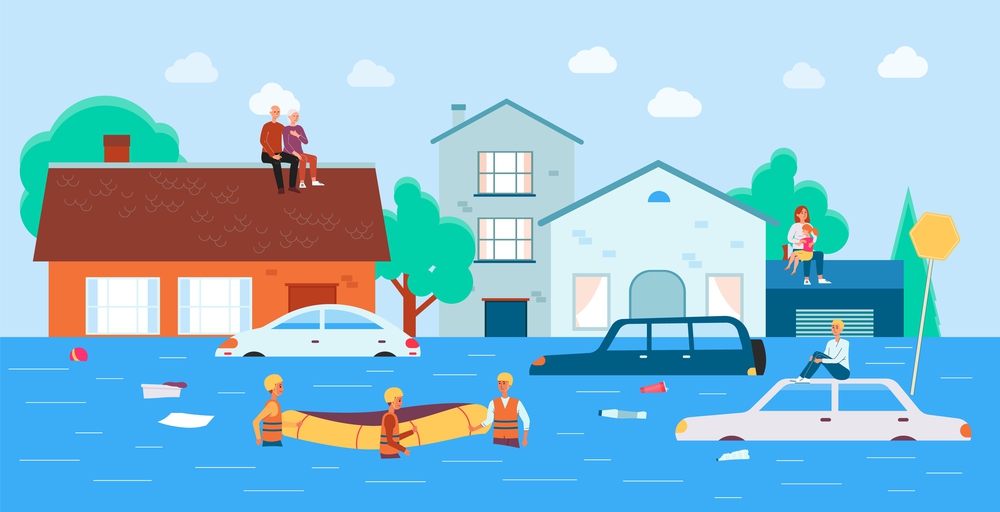
Individuals who survive a disaster or crisis need help sometimes refocusing and rebuilding with the help of crisis intervention workers

Helping individuals recover from a disaster or any traumatic event is key to a person’s resiliency to rebuild after the ashes and trauma.  According to the Network, it looks to protect mental health and maintain it, enhance abilities to address needs, teach skills to solve problems and prevent maladaptive coping by encouraging positive coping.  Like in Psychological First Aid, it focuses on the safety, calmness, self efficacy and connectedness the person possesses.  Does the person feel safe after the event?  Is the person calm and not exhibiting nervousness, or PTSD?  Does the person portray self resiliency and ability to cope?  Is the person connected to family or friends or have access to public and community resources?   These are important questions and are essential when meeting with a client who is a victim of a disaster.  Within any meeting though, it is important for the Crisis Intervention worker to understand nothing is a quick fix.  There will be multiple issues and each session represents a chance to help the person meet their needs.  It is not a mental health treatment but instead a mental coaching to help individuals get their lives back.  Hence each session should teach a particular skill, make a plan and receive reports how those plans work.


The National Child Traumatic Stress Network lays out various skills that are essential to help individuals get their lives back.  Within the critical phase of information gathering, the Crisis Intervention worker needs to identify current needs of an individual, prioritize them and make a plan of action.  Involved with this are skills that are taught to help meet each need and how to carry out that skill in everyday life.  Upon completion of skill utilization, the client reports back a week a later with how things have improved or not improved.  Upon this, plans can be troubleshot or retuned as well as other skills evaluated.  It is important when implementing plans and teaching skills not to overload an already stressed person.  Among some of the most important skills to help individuals includes rebuilding healthy connections, managing emotional reactions, promoting healthy thinking, encouraging positive activities and building problem skills.  The Network presents in-depth modules on all five basic skills that help train crisis intervention workers better help individuals manage crisis and issues.

Bear in mind, when in crisis intervention, one may be helping individuals with a myriad of problems from what appears small to large.  Some may be more emotionally distraught, physically hurt or others may be financially hurt, or still others may have lost a home.  Others may have temporary problems that are causing current stress, while others may have longer lingering issues that take more time to fix.  Some may be elderly with particular issues related to age, medication, or connection with others, while others may be children or adolescents who are suffering from trauma of the event, or even having issues reconnecting at school.  The combination of possible issues and problems faced by survivors of disaster or experienced trauma and crisis are endless and each one requires attention and rapport with the client.  We will take a closer look at the 5 helping skills emphasized by the Network.

Crisis Intervention workers help survivors formulate plans and develop skills that foster resiliency and rebuilding

One of the most basic and important skills in counseling is problem solving.  We have discussed in numerous blogs the importance of basic problem solving skills in counseling and how to implement them.  In Crisis Intervention work, problem solving while simple in theory is difficult in application because problems are very real and affect people in real life.  They just do not go away or vanish but have real affects on a person’s whole self and how they function.  Problems are not so much objectively the issue, but more so, how the person subjectively views them.  If the stressors of the problem seem overwhelming, then the Crisis Intervention worker needs to help the person discover the tools to make it less daunting.  With any problems, it is important to identify and label them.  This helps organize the issue and see how it is effecting the situation.  When discussing, it is important to weed out problems that are not the problem of the person or problems that the person cannot control.  In addition, it is important to set goals to counter the problem and brainstorm together some options to achieve that goal.  Together, best solutions are chosen and then they are implemented.  Upon return visit, crisis intervention worker and the survivor can discuss what worked, what did not and overall trouble shoot and analyze why something worked or did not work.  Ultimately it is important to instill hope into the person and grant them again power and control over the situation so that they can again become resilient forces in their own life.

Another skill, according to the Network, is rebuilding healthy connections.  Individuals or survivors after a crisis such as a hurricane or tornado or earthquake can lose many things in life including a home.  Those who are displaced need connections to find firm ground again.  It is hence important to help survivors review their connections and make a connection tree listing individuals they know and what each person means to them.  The crisis intervention worker can then help the person identify best suited individuals that can offer immediate help while also crossing off those who are unable to help or may not be the best influence in the given moment.  Helping the person reconnect with these resources can help individuals possibly find transportation, a place to temporarily stay, or find emotional support.  Sometimes, these connections may not be immediate but could also be fellow survivors or even agencies that can better alleviate the situation.

The Network also discusses the importance of the skill of managing emotions.  Numerous individuals after trauma have negative reactions and affective responses to triggers that may remind them about the disaster or traumatic event.  For example, a boy who experienced a tornado, may begin to feel uneasy, nervous, or fearful when a strong wind blows outside.  This can trigger a memory associated with strong winds of the tornado.  Or a small child may become fearful if the lights go out because the lights went out when the hurricane struck before.  The mind associates and ties together negative events with circumstances that by themselves are quite innocent.  This can trigger a response.  Of course, in PTSD, this trigger is far more extensive due to trauma and the inability of the brain to properly process and file the memory but many after an acute crisis experience initial negative affective responses to neutral occurrences that happened during the disaster.  It is important for the crisis worker to help these individuals label the emotions they feel with the trigger and cognitively reframe the situation.  This types of CBT can help individuals re-understand the emotion and where it is coming from and better react when the similar triggers appear.  In addition, sometimes, individuals may need to utilize meditation, breathing, or other grounding techniques to help calm themselves when a trigger appears that reminds them of the disaster.  For most survivors, overtime, the trigger becomes more and more numb as one perceives no negative consequences tied to the howl of the wind or lights going out.  In the meantime, it is important to help especially children how to cope, react and deal with triggers associated with disaster.

After a disaster, individuals need help forming proper connections and identifying necessary resources to help them again firm ground

While emotions can need managed, thoughts can also be an issue.  While some may deal with affective issues, others may walk away from the disaster with cognitive distortions and negative thinking.  The Network proposes instilling in individuals healthy thinking.  Healthy thinking is also a cognitive process where not only emotions are reanalyzed but also thoughts.  Healthy thinking looks at negative thoughts associated with the event. Many survivors may have negative thoughts about how they acted, what they did or did not do, or who they are blaming for the crisis.  These thoughts can derail the healing process because the thoughts are tied with anger, shame, guilt, or sadness.  Sometimes, the thoughts are totally untrue but perceived as true to the person.  Crisis Intervention workers need to weed through the multiple thoughts the person may have about the event and their participation in it.  Some may feel it is their fault, or if they did this or that, it would not have been so bad, or others may feel ashamed for not doing more.  It is important to identify unhealthy and untrue thoughts about the event and analyze them and reframe them with the reality of the situation.  This can help the person move forward and focus on more healthy thoughts that are conducive for the future.  Instead of thoughts of despair, thoughts are transformed into thoughts of hope that will focus on fixing the situation in the present instead of lamenting about it in the past.

The final skill that can be important for some individuals is helping them again live a normal life through positive activities that again give joy.  This does not mean one immediately celebrates after a house is destroyed but it means gradually, individuals plan to give self care, or find connections or positive things to do that take the mind off the trauma and event.  Many times children are also distraught because regular events no longer occur after the disaster due to limitations of recovery.  Helping children find a regular routine is key but also giving them, and oneself even, joy is also key.  As rebuilding one’s life continues, it is important to not only find silver linings and hope, but again to do something that was once fun, or even do something different.  Whether it is family game night, or going out to eat, or taking a brisk walk, or working less and spending more time with the family, it is important to find time to again live.  Crisis Intervention workers can help survivors find the importance in this and help them identify and schedule something within the week, even if one thing, to do within their means.

Conclusion

The National Child Traumatic Stress Network offers a various CE courses that can help those in Crisis.  AIHCP also offers a Crisis Intervention Specialist Certification and individual CE courses.  It is important to be trained, even at lower tier levels, to help survivors, victims and individuals in crisis again find firm ground. Not all cases will involve drastic mental health counseling or involve PTSD, but many will be merely individuals trying to find themselves again after a disaster with multiple basic needs and concerns but who are overwhelmed with the event and secondary stressors.  Crisis Intervention workers, counselors, social workers, chaplains and other Human Service Professionals can help individuals again find joy in life and the resiliency to rebuild what was lost.

Crisis Intervention helps individuals find balance. Please review AIHCP’s Crisis Intervention Specialist Certification

Please review AIHCP’s Crisis Intervention Specialist Certification.  Upon completion of the seven core courses, one can apply for certification.  The program is online and independent study with mentorship as needed and open to qualified professionals seeking a four year certification.


Additional Resources

The National Child Traumatic Stress Network.  Access here

Swaim, E (2022). “7 Reminders to Carry with You on Your Trauma Recovery Journey”.  Healthline.  Access here

“Resources on trauma and healing, including a guide inspired by ‘The Color Purple’”. APA.  Access here

“Recovering Emotionally After a Disaster”. American Red Cross.  Access here


What is Dissociation?

Exploring the Mind: Understanding the Phenomenon of Dissociation

Dissociation is a complex psychological phenomenon that involves a disconnection from reality, often as a coping mechanism for overwhelming stress or trauma. This article explores the various aspects of dissociation, including its impact on the mind-body connection, spiritual awakening, and healing. By delving into the spiritual aspect of dissociation and its linkages to personal growth, we aim to gain a deeper understanding of this intriguing phenomenon.
Key Takeaways
Dissociation is a mental response to triggers of past trauma. It reacts as a self defense mechanism but can be dangerous and cause injury if in public.


  • Dissociation is a coping mechanism for overwhelming stress or trauma, leading to disconnection from reality.
  • Dissociation can act as a catalyst for spiritual awakening, prompting individuals to question their reality and seek answers beyond the physical world.
  • Dissociation can create an opportunity for individuals to release past traumas and access a deeper sense of self.
  • There is a complex and intricate link between dissociation and spiritual insights, leading to personal growth and transformation.

Understanding Dissociation

What Is Dissociation?

Dissociation is a psychological coping mechanism that activates when an individual is faced with overwhelming stress or trauma. It represents a disconnection from reality, often resulting in disruptions to memory, emotions, and identity.

Common symptoms of dissociation include:

  • Feeling as though one is in a trance or daydream
  • Memory loss or difficulty with recall
  • A sense of detachment from oneself or the environment
  • Emotional numbness or being overwhelmed
  • Loss of control over emotions
  • Sensory disconnection, such as impaired touch or vision

Dissociation serves as a protective barrier, allowing individuals to distance themselves from distressing experiences. While it can be a temporary refuge, persistent dissociative states may require professional intervention to address underlying issues and restore a sense of reality.

Grounding Oneself

One who experiences dissociation may sometimes try to calm oneself due to the manifested trigger.  There are multiple ways one can seek grounding techniques to keep oneself from dissociating from reality.  Part of grounding can include touching something in the present moment, such as the soft side of a chair, or rubbing one’s feet against the carpet.   This type of physical grounding is only one strategy, others also include mental grounding where one utilizes mentally stimulating thoughts such as counting, recalling memories, or other visual affects.  Emotional grounding can also be employed with breathing exercises.

It is important to try to ground oneself when dissociation occurs. While it can help one deal with triggers, it can be very dangerous if in an active area. One could fall or hurt, or cause an accident.


It is sometimes extremely important to be able to ground oneself because sometimes if one dissociates, one can harm oneself or others due to lack of attention to driving, or moving around in public.  This can lead to accidents, falling, or injuring oneself.

If experiencing these types of issues, contact a mental health professional.

Manifestation of Dissociation

Dissociation is a complex phenomenon that presents itself in various forms, often as a psychological defense mechanism in response to trauma. Symptoms can range from mild detachment to severe disconnection from reality, impacting an individual’s daily functioning and sense of self.

  • Feeling as though one is in a trance or daydream
  • Experiencing memory loss or difficulty with recall
  • Sensing a detachment from oneself or surroundings
  • Encountering overwhelming emotions or emotional numbness
  • Challenges in controlling emotions
  • Disconnection from sensory experiences, such as touch or sight

Dissociation serves as a coping strategy, allowing individuals to distance themselves from extreme stress or traumatic events. This disconnection can be both protective and disruptive, altering one’s perception of reality and interaction with the world.

While the manifestations of dissociation are diverse, they often signal an underlying need for healing and support. Recognizing these signs is the first step towards understanding and addressing the root causes of dissociative experiences.

In addition, the manifestation of this state can lead to isolation, addictions and other ways to help cope with it.  It is important to recognize it and seek counseling and help to prevent it from possibly harming oneself.

Types of Dissociative States

Dissociative states are complex phenomena that can be categorized into three primary types: depersonalization, derealization, and dissociative amnesia. Depersonalization involves a sense of detachment from oneself, often described as feeling like an outside observer of one’s own body or thoughts. Derealization is characterized by a feeling of unreality or detachment from the environment, making the world seem foggy or dreamlike. Lastly, dissociative amnesia pertains to gaps in memory for personal information, sometimes specific to traumatic events.

  • Depersonalization: Detachment from self
  • Derealization: Detachment from environment
  • Dissociative Amnesia: Memory gaps

Each type of dissociative state represents a unique way in which the mind copes with stress or trauma. While they can be unsettling, understanding these states is crucial for effective treatment and personal growth.

It’s important to recognize that these states can occur independently or concurrently, and their manifestation can vary greatly among individuals. The experience of dissociation can be transient or part of a more chronic condition, such as dissociative identity disorder. Identifying the type of dissociative state is a critical step in addressing the underlying issues and moving towards healing.

Dissociative states can include according to the DSM-5 various levels of severity.  It can include an amnesia state that is simple to complex, a de-attachment state from self or environment or multiple personalities in its most severe form.

Dissociation and the Mind-Body Connection

Impact on Consciousness

Dissociation profoundly affects the landscape of consciousness, often leading to a disruption in the normal integration of thoughts, feelings, and experiences. The alteration in consciousness can range from mild detachment to a more severe disconnection from reality.

  • The default mode network, often associated with self-referential thoughts, is impacted during dissociative states.
  • Studies using fMRI have shown changes in the prefrontal parietal network, which is crucial for attention and working memory.
  • Consciousness supporting networks, including the anterior and posterior cortex, exhibit distinct patterns during dissociative episodes.

Dissociation challenges our understanding of consciousness, revealing the intricate workings of the mind and the delicate balance that sustains our sense of self and reality.

The neural correlates of consciousness, such as the default mode network and the prefrontal parietal network, are key areas of study to unravel the mysteries of dissociation. By examining the changes in these networks, researchers can gain insights into the mechanisms that underlie altered states of consciousness.

Spiritual Awakening

Spiritual awakening is often described as a profound shift in consciousness, where one experiences a deep connection with the essence of being and a recognition of a more expansive reality. It is a transformative journey that can lead to a profound understanding of oneself and the universe.

  • A shift in one’s perspective on life
  • Detachment from material possessions and ego
  • Increased compassion and empathy towards others
  • A feeling of oneness with the universe
  • A deepened sense of intuition and spiritual connection

While the path to spiritual awakening can be enlightening, it may also bring about challenges such as feelings of alienation or difficulty integrating experiences into everyday life. Nonetheless, the journey is often seen as a pivotal moment in personal growth and self-discovery.

The process of awakening can be spontaneous or induced by practices like meditation. It is marked by a series of internal changes:

  1. A reevaluation of personal values and beliefs
  2. An enhanced awareness of life’s interconnectedness
  3. A pursuit of deeper meaning and purpose beyond the self

The concept of dissociation, often perceived as a detachment from reality, can paradoxically serve as a bridge to personal growth. Dissociation provides a unique space for reflection and self-exploration, allowing individuals to step back from the immediacy of their experiences and view their lives from a new perspective. This detachment can lead to a deeper understanding of one’s self and the challenges faced, fostering a sense of competence and efficacy.

In the realm of personal development, dissociation can be a catalyst for change, offering an opportunity to reassess one’s goals and values without the interference of external pressures.

The process of personal growth through dissociation can be outlined in the following steps:

  • Recognizing the occurrence of dissociative states.
  • Understanding the triggers and underlying emotions.
  • Utilizing the reflective space provided by dissociation to gain insights.
  • Integrating these insights into daily life to foster resilience and adaptability.

This transformative journey can lead to an increase in intrinsic motivation, self-directed learning, and ultimately, a more profound sense of self-realization.

Healing and Transformation

Releasing Past Traumas

Dissociation can awaken us to deeper issues that are not healed. Please also review AIHCP’s Mental Health Certifications for qualified professionals


Dissociation offers a unique pathway for individuals to confront and release past traumas, paving the way to rediscover a more authentic self. This process often involves delving into the unconscious mind, where unresolved emotions and memories reside. By accessing these hidden parts of the psyche, one can begin the journey of healing and transformation.

Dissociation can serve as a bridge to personal growth, allowing for a re-examination of beliefs and identity. It is in this introspective space that many find the strength to let go of the pain that has held them back.

To facilitate this healing, certain practices can be adopted:

  • Breathwork: Engage in breathing exercises to help regulate emotions and achieve a sense of calm.
  • Creative expression: Utilize art, music, or writing as outlets for emotional release and self-discovery.
  • Mindfulness: Practice being present in the moment to reconnect with oneself and the environment.

While the journey through dissociation can be disorienting, it ultimately can lead to a profound spiritual awakening and a renewed search for meaning and purpose in life.

Accessing Deeper Self

In the journey of healing and transformation, dissociation can serve as a gateway to accessing deeper levels of the self. This process often involves delving into the unconscious mind, where dormant emotions and memories reside. By confronting and releasing these suppressed elements, individuals may experience a profound shift in their sense of identity and consciousness.

  • Exploration of beliefs and identity questioning
  • Release of past traumas
  • Unlocking of unconscious pathways
  • Potential for spiritual awakening

The act of accessing one’s deeper self is not just about self-discovery; it’s about reconstructing the very fabric of one’s being from the inside out.

As individuals navigate through this transformative phase, they may find themselves on the precipice of a spiritual awakening. The sense of emptiness that once pervaded their existence begins to fill with a newfound purpose and connection to something greater. This spiritual dimension adds a rich layer to the healing process, offering a sense of wholeness that transcends the individual experience.

Treatment

While coping involves grounding exercises, the best way to overcome and limit the dissociation is facing the trauma and understanding the triggers.  Treatments include medications such as anti-psychotics, anxiety reducing medications, anti depressants and sleep aids.  Counseling can also help. Individuals can go through cognitive behavioral therapy to better understand and react to the issue when it occurs.  One can also better learn to manage emotional reactions to triggers.  EDMR can also help de-sensitive individuals to the triggers by discussing and visualizing them in a safe place with a trained mental health professional.

Conclusion

In conclusion, the phenomenon of dissociation is a complex and multifaceted coping mechanism that the brain initiates in response to overwhelming stress or trauma. It manifests in various forms, affecting memory, emotions, and identity. The three types of dissociative states, depersonalization, derealization, and dissociative amnesia, present unique challenges for individuals experiencing dissociation. Additionally, dissociation may trigger spiritual awakening, leading individuals to question their reality and seek answers beyond the physical world. This exploration of dissociation and its potential connection to spiritual awakening provides valuable insights into the intricate workings of the human mind and the profound impact of coping mechanisms on personal growth and transformation. It is also important to understand ways to cope with it but also treat it to prevent serious injury or further pathological onset.  While it can help us identify past trauma, it must also be identified and worked on to prevent further issues.

Please also review AIHCP’s Mental Health Certifications for qualified professionals.


Please also review AIHCP’s Grief Counseling, Crisis Intervention and other mental health certification programs.  Licensed professional counselors or human service professionals can enhance their professional expertise with AIHCP’s certifications.  The programs are online and independent study and open to qualified professionals.

Frequently Asked Questions

What is dissociation and how does it manifest?

Dissociation refers to a coping mechanism that the brain initiates when dealing with overwhelming stress or anxiety, leading to disconnection from reality. It can manifest in various forms, such as problems with memory, emotions, and identity.

What are the types of dissociative states?

There are three types of dissociative states, including depersonalization, derealization, and dissociative amnesia. Depersonalization: A person feels disconnected from themselves, as if they are watching themselves from a distance.

How does dissociation impact consciousness?

Dissociation causes a split between an individual’s mind and body. In a dissociative episode, an individual might feel like they are watching themselves from a distance, leading to a sense of detachment from their surroundings.

Is dissociation linked to spiritual awakening?

Yes, dissociation can act as a catalyst for spiritual awakening, prompting individuals to question their reality and seek answers that extend beyond the physical world.

How can dissociation lead to personal growth?

Dissociation can create an opportunity for individuals to explore their beliefs and question their identity. This self-reflection can lead to a spiritual awakening as the individual begins to search for meaning and purpose.

What is the relationship between dissociation and reality?

Dissociation is often a response to traumatic experiences, leading individuals to disconnect from reality as a coping mechanism. It can be characterized by feelings of being detached or disoriented and can lead to conditions like dissociative identity disorder.

How can spiritual insights help heal trauma-induced dissociation?

Spiritual insights can broaden one’s consciousness and deepen one’s understanding of life’s interconnectedness, potentially aiding in the healing of trauma-induced dissociation.

What are ways to practice spiritual growth while dissociating?

Embracing spiritual awakening, seeking meaning and purpose, and accessing deeper levels of consciousness are ways to practice spiritual growth while dissociating.

Additional Resources

“How to Stop Dissociating | 17 Grounding & Coping Strategies”. Access here

“What Happens When You Dissociate?”. Pugle, M. (2023).  Very Well Health.  Access here

“Dissociation”. Psychology Today.  Access here

“Dissociative Disorders”. Mayo Clinic.  Access here

Trauma and Intimacy Video

Intimacy is something that is very delicate in life.  Humans choose very few to become intimate with and it involves a central ideal of trust.  When that trust is destroyed through trauma, either by the said person or through a stranger via a violent sexual act, then becoming intimate again can become a long journey.  The fears and scars due to trauma prevent the individual from opening up again and hence healing.

Please also review AIHCP’s Grief Counseling Certification and see if it meets your academic and professional goals.  The program is online and independent study and open to qualified professionals seeking a four year certification in Grief Counseling.


Please review the video below

Grief Counseling Certification Video on Nightmares and Unresolved Trauma

Trauma if it is not faced consciously will re-emerge in the subconscious.  Nightmares can bring back past trauma in an attempt to understand and face the eluded issue.  Due to disassociated mental material, trauma is trapped in the brain and not stored as a long term memory properly.  Due to this, the trauma memory becomes a rogue thought within the brain.  It haunts the individual through PTSD.  Grief Counseling can help.

Only till the trauma is resolved, faced and understood, can one begin to heal from the event.  Nightmares surrounding the trauma manifest as a way to face it but in an incomplete way.  The nightmares at first are more vivid and true to the event but overtime can become more symbolic.  The only way to overcome the nightmares is to face the trauma when awake.  Counselors can also help individuals who are facing nightmares with strategies to minimize the nightmare and prepare the mind for a more peaceful sleep.  Ultimately though, one has to be put in the work when awake to eventually overcome the haunting past traumatic event.

Please also review AIHCP’s Stress Management, Crisis Intervention and Grief Counseling Certifications.  The programs all deal with trauma in some aspects.  They are all online and independent study and open to qualified professionals seeking a four year certification.

Stress Management Consulting Blog on Happiness, Meaning and Self Esteem

During recover from severe trauma, the person must be able to reconnect the dreadful event with his or her life story.  The injured person must understand the event as a chapter that has meaning to one’s life and connect it to the present and how to cultivate the future.

As one progresses in their treatment of processing the traumatic memories, one will need to create future chapters that are not defined by the evil of the trauma, but are defined by growth from it.  The present and future need to find happiness, meaning and self esteem in order to self sustain any recovery and help the person integrate back into society.

Individuals suffering from trauma and PTSD have a difficult time finding happiness, meaning and self esteem in their lives. Please also review AIHCP’s Stress Management Consulting Program and Grief Counseling Program


Happiness can be subjective in regards to what makes one smile, but at the most inner most level, it is universal.  Happiness when misplaced in material things can never lead to true happiness, but values and beliefs and love and family can all have more long lasting meaning to sustaining happiness and leading one to it.   One who has suffered severe trauma may have difficulty defining oneself or finding love and connection with the world, so it is important to understand how again to be happy.  Obviously placing one’s faith in the most elements of happiness is critical.  Far too many who even suffer no trauma, still choose false idols of happiness.  They place their love in things over people, self over family, and in ideas that die with time instead of live eternally.

Some common traits of those who experience some relevance of true happiness can be found in those who possess a healthy self esteem and peace of mind.  These individuals cultivate virtue and love within themselves and with others.  They have healthier experiences with social interactions and bonds that form from these interactions.  Most hold a belief in something greater than than themselves.  Most find this in faith and religion, but any type of objective code that binds one beyond oneself, gives a person purpose and meaning.

Happy individuals usually also possess a mastery of their life.  They have believable goals, moderate ambitions, and mastery of their schedule and how things are accomplished.  They are not in chaos but order.  Furthermore, they possess an optimistic outlook on life that is not always defined by success but by self and self worth.   Unfortunately, like a thief in the night, grief and loss can occur.  Even the happiest person can be robbed of everything, even beyond family, virtue and love.  Grief is the price of love in this temporal world.  With that truly happy individuals will deal with pain and sorrow and trauma but they will ultimately have the meaning and self esteem to guide themselves through the journey of grief and adapt and adjust to the loss.

Happy individuals are not always happy or content but they are not constantly dragged down with hate, blame, bitterness and helplessness.  They may deal with trauma but eventually again find the light at the end of the tunnel.  Some may require help but ultimately, their spirit may be hurt, but never killed.

Individuals who experience trauma or PTSD may not be able to find happiness in their life.  They may not have the skills or the trauma was so great, it paralyzed their spirit.  As those who experienced trauma reawaken, they need to work towards re-involvement into society and hobbies.  They need to form and organize a plan.  They need to stop worrying as much and become more optimistic and find value in life itself.

This centers around having meaning.  Without meaning, something is useless.  So it is imperative for those recovering from trauma to again find meaning to life.  What meaning or direction can they decipher from the horrific event they witnessed or were apart of?  How can this event give them meaning forward?  How can the person move forward from it and do new things?  Victor Frankyl during his days in the Nazi concentration camp found meaning in survival and a deeper sense of justice that would one day come.  He found meaning in the smaller things that reflected goodness that existed among the evil.

A deep core to meaning usually involves having a commitment to something higher than oneself.  Whether it be a philosophy, or a faith, one can anchor oneself despite any waves of the ocean of life.  No matter what occurs, even it temporarily numbs, one is able to find course due to meaning.  This moral compass can find true north in the most terrific storms.  Many individuals are stripped of meaning at a young age because of trauma.  They are unable to again find meaning.

It is important then to create self esteem.  This may be difficult for someone who has been stripped of all dignity, but through therapy and work on self, one again can start to find value in oneself and separate oneself from the trauma.  In finding self esteem, one can find meaning and happiness again.

Self esteem looks at value in self.  It correlates with the numerous qualities that happy people experience.  At its core, one sees intrinsic value in self, unconditional worth, the experience of love and growth in life.

Self esteem is realistic in self.  It is based in truth, even in imperfections.   It is appreciative of one’s good qualities and ignites positivity in oneself.  It does not create a false arrogance or deception but sees all as equally beautiful in different ways.

Furthermore, self esteem is able to separate the value of one’s core from externals.  Bad things that happen or mistakes are not the core of one’s soul.  One may have had bad things accidentally occur, but that does not make oneself a bad person.  Instead of “BECAUSE” of that, I am “THEREFORE ” this or that, the mind sees that  “EVEN THOUGH” this occurred, “NEVERTHELESS” I am still me.  The EVEN THOUGH/NEVERTHELESS logic separates someone from the incident.  It does not make the person a product of the incident.  This slight change of words creates an entirely different person.

Trauma victims need to cultivate self esteem. Please also review AIHCP’s Stress Management Consulting Program


Individuals with good self esteem are able to see their core self absent of bad events.  They are able to truthfully see the bad and good, but not define oneself by any bad, but only work on the good.  They are able to put this optimistic energy into change.

Again, when things go astray, they do not see these things as permanent but temporary.  They do not define lack of success as themselves.  They do not look to be better or less than anyone and they are more likely to see someone different due to position not necessarily more or less innate worth.

Trauma can destroy self worth.  It can make one feel horrible one self and equate oneself to the trauma.  One cannot differentiate between core and accidentals.  One hence is always feeling less and inadequate.  This can lead to competition with others, or fear of being in the open due to fear of failure.  It can cause mistrust and bitterness and envy.  It can force one to deny any meaning in life but trauma and the product of that trauma.

Happiness, meaning and self esteem are key to functioning individuals.  Trauma can take it temporarily or permanently for some.  It is important to anchor oneself to something more than the event.  To anchor oneself even to something more than this world can ever take.  We live in a valley of tears and bad things happen to good people, but there is good too and light that can be found.  Those who are able to find meaning and self esteem and value in something greater are better able to navigate and cope with trauma during life.

Counselors can help others learn these skills and cultivate these values.

Please also review AIHCP’s Grief Counseling Program, as well as AIHCP’s Stress Management Consulting Program and Crisis Intervention Program.  The programs are online and self paced and open to qualified professionals seeking a four year certification in Stress Management Consulting, Grief Counseling or Crisis Counseling.


SOURCE

The Post Traumatic Stress Disorder Sourcebook: A Guide to Healing, Recovery and Growth by Glenn R. Schiraldi, PhD

Stress Management Certification Blog on Guilt and Trauma

Guilt is a necessary emotion.  When anchored with a good conscience, it provokes truth and justice when wrong is committed.  It prevents future wrong doing in some cases and helps guide the person to proper moral outcome.   It is hence sometimes good to feel guilt.  If one lacks guilt in appropriate circumstances, it is a sign of a deeper and more sinister moral flaw.   Sociopaths are incapable of guilt and can commit the most grievous offenses without any sense of emotional wrong doing.

Victims can carry disproportionate grief. Please also review AIHCP’s Stress Management Consulting Certification


For the more tender hearted and as well as those who experience trauma, guilt can sometimes become excessive and over play its reach.  It can become a pathological agent that prevents proper healing.  When guilt is not properly processed and understood according to reality, it can then continue to haunt a person and prevent emotional healing.   Guilt must be processed.  If due to trauma it becomes part of dissociative material, then it can linger.  It needs to find resolution, where appropriate sorrow is displayed and a chance for change and growth occur.  When guilt is stunted, either not accepted or over felt, then it can keep a person stuck in the past.

With trauma, guilt is usually not proportionate and a variety of distortions exist.  These distortions continue to exist when individuals keep trauma to themselves and do not face it.  This is why dialogue is so critical to healing.  It allows the wound to bleed and also the opportunity to discuss falsehoods regarding the traumatic event hence allowing integration of the memory.

Most distortions create an imbalance of guilt.  Either the person blames oneself 100 percent or finds no blame at all.  Associated with this are usually feelings that one does not deserve to live or survivor guilt.  In addition, many individuals feel the guilt is critical to show they still care and that they must punish themselves and repeat the pain.  Multiple reasons incur this guilt.  Many believe they are guilty because they were afraid, or found relief.  Others find guilt in having to kill, making a mistake, finding enjoyment in the event, wanting to die, or expressing extreme hatred.  Others find guilt in their actions in not being able to save others, not taking precautions, freezing under pressure, not stopping the abuse, or not saying “I love you” one last time.

Many things can haunt a person who experienced trauma.  Depending on the trauma and event, they can differ, but they all carry a haunting voice that judges what one felt, did not feel, did, or did not do.  Distortions to the event can amplify the sorrow the person experiences.

Dialogue is obvious the first step in unlocking guilt.  Various cognitive therapies look to identify guilt and then properly ascertain legitimacy of it.  This involves discussing with a therapist the event itself and verbalizing the details.  The patient then must attribute the level of what they think was their fault in a numerical percentage.  Following this, the therapist challenges the events and asks probing questions of who else may be at fault.   The guilt is then re-assessed and a recalculation occurs in which proportionate percentages of guilt are discovered to be less.  This process can be repeated weekly to illustrate to the victim and patient that the guilt attributed is far from fair.

Also, the therapist can help the victim distinguish between the emotion of concern versus guilt, as well as shame and guilt.  Many equate these emotions with guilt.  The sexual victim may equate shame with guilt.  In doing so, one can then start to attack the various distortions of guilt.

It is also important to help the patient understand their decision under pressure.  Normal decision making under peaceful situations are quite different than decisions under duress.  Fight or flight mechanisms can erupt and many lose rationality.  So it is good to point out that one does not think the same way under trauma as if not.  A therapist can also help the patient look at the choices that were available, the time constraints, all the information at the time and the intent of the outcome.

Another important way to help one see the past is to have the person play the role of two.  As if an advisor or friend, to respond to one’s own criticism.  By separating oneself from the event, and counseling one as if a friend, one can then begin to see the overall picture.  So many therapists recommend patients play a two role therapy of talking and then responding as two different individuals.

It is important to properly process guilt in trauma. Please also review AIHCP’s Stress Management Consulting Program


In addition, various rituals can help.  Spiritual visualization of healing, as well as finding forgiveness through a higher power.

Through this, one is better able to properly rank their guilt and true proportionate role in the traumatic event.  The person can then understand the situation, move on from it and process it.  Through this, the victim can be better prepared for the future and understand the role he or she played.

Of course, various therapies help individuals with PTSD and trauma better recollect the situation and process any negative emotions.  EFT, Rewind Techniques, TIR and EMOR are all way therapists can better help an individual relate to the emotions and events of a particular trauma.  They can also help the person cognitively restructure the event appropriately to reality.  Removing inappropriate guilt is obviously an important step.

Please also review AIHCP’s Grief Counseling Program, as well as Stress Management Program and Crisis Intervention Program.  All programs are helpful in teaching professionals to guide others through trauma.   The programs are online and independent study and open to qualified professionals seeking a four year certification.


Sources:

“The Post Traumatic Stress Disorder Sourcebook: A Guide to Healing, Recovery and Growth” by Glenn Schiraldi, PhD


Grief Counseling Training Article on Trauma and Depression

Depression can have an acute cause or no general cause at all but merely set in but there are connections with depression and acute trauma.  Trauma or severe loss or experience can negatively affect a person and cause a severe grief reaction resulting in depression.

Severe trauma can cause depression. Please also review AIHCP’s Grief Counseling Training and see if it meets your academic and professional goals


The article, “Trauma and Depression: What to Know” by Stephanie Wright takes a closer look at trauma and depression.  She states,

“Depression can be both a direct and indirect consequence of trauma. However, not all depression is caused by trauma — other factors that cause depression include genetics, environment, and other medical conditions. Facing trauma and depression at once can be overwhelming. However, many people live happy and fulfilled lives with treatment and the support of others.”

To review the entire article, please click here

Please also review AIHCP’s Grief Counseling Training and see if it meets your academic and professional goals.  The program is online and independent study and open to qualified professionals seeking a four year certification in Grief Counseling.