Palliative care helps individuals face life threatening illnesses with compassion and care. Hospice helps those who are terminal. Both can give the comforts of home during an illness or near death. Is dying at home overrated or is it truly better?
Dying at home is a luxury not all have. Please also review our pastoral thanatology program and see if it meets your academic needs
The article, “Is Dying at Home Overrated?” by Jon Han looks at this question in detail. He states,
“It is emotionally and intellectually compelling that patients should die in their own homes, surrounded by loved ones in a comfortable, familiar environment. For patients dying of end-stage disease, be it cancer, heart disease or something else, even the best hospitals are unlikely to be able to “fix” the underlying problem.”
Dying at home has many benefits if possible. It can give the emotional and spiritual needs a person needs. Please review our Pastoral Thanatology Program and see if it meets your educational and professional needs.
Divorce naturally creates loss and grief. Grief is a natural bi product of divorce and adjusting to this type of loss can take years. While numerous stresses can occur, some divorces can create complicated grief reactions. In these cases, extra help and counseling is needed.
Divorce always leads to some type of grief. Sometimes it can more serious than other times. Please also review our Grief Counseling Training Program
The article, “Grieving After Divorce Is Normal, But This Kind Of Grief Isn’t” by Karen Finn discusses when grief and divorce can go terribly wrong. The article states,
“After all, divorce is the end of a way of life and of your dreams. It makes sense that you’d feel sad about it, mourn who you were in your married life and are no more, and be grief-stricken that all of your plans for a happily-ever-after have come to a screeching halt.”
To learn more about divorce and how to help individuals through it, review the entire article by clicking here
Divorce is never easy. A trained Grief Counselor can help. Please review our Grief Counseling Training Program to see if it meets your academic and professional goals.
A stillborn birth is a terrible experience for the parents. Still in the shuffle of loss and pain, other family members are also forgotten. Potential grandparents suffer the loss very hard as well. Grand parents share in the lives of their children and seeing their adult children lose a child and also be denied a grandchild is also very painful.
Grandparents also suffer the loss of a grandchild due to stillborn. Please also review our Grief Counseling Certification and see if it meets your academic needs
The article, “When a baby is stillborn, grandparents are hit with ‘two lots of grief’. Here’s how we can help” by Beth Daley states,
“Six babies are stillborn every day in Australia. This significant loss affects parents for years to come, often the rest of their lives. However, stillbirth also affects many others, including grandparents.”
Grandparents definitely have much to suffer when they lose a grandchild. They have to not only mourn themselves but also be there for their children. To read the entire article, please click here
Child grieving is unique and different than adult grieving. Child grief is multi dimensional based on the child’s age and maturity. Children grieve differently and understand reality and death and loss differently. Due to this, it is critical to discuss loss with children and expose them to the reality of it in a good way.
It is important to understand children and how they grieve. Please also review our Child and Adolescent Grief Counseling Program
The article, “How to Help a Child Cope With Grief” by Jen Chesak looks deeper into how one can better discuss loss and grief with children. She states,
“Let’s be real. Grief is tough enough for adults — even though we understand that death is an inescapable part of life. The loss of a loved one is never easy, regardless of our age. That’s why when it comes to explaining grief to kids, we can get a big knot in our throat.”
To learn more about child grief and loss and to read the entire article, please click here
Stress and eating can go hand and hand. Many people cope with stress in different ways. Eating can be a very unhealthy way to deal with stress if it is consistent and in large amounts. It can deviate one from regular exercise and lead to bad dietary habits.
Does stress lead you to unhealthy eating habits? Please also review our Stress Management Consulting Program and see if it meets your academic needs
The article, “Stress-eating: Five strategies to slow down” by Kelly Bilodeau states,
“Weight gain has many underlying causes but one of the most common is something we all experience: stress. Whether it’s the, mild temporary kind caused by a traffic jam or major and chronic, triggered by a traumatic life event — stress is no friend to your waistline”
To learn more about stress and eating, please review the article by clicking here
Please also review our Stress Management Consulting Program, as well as our Holistic Nurse program and see if they match your academic and professional goals.
Health Insurance can be expensive. Families spend millions each year in America on health insurance.
Cost of health insurance for a family is a big concern. Please also review our Healthcare Case Management program
The article, “Here’s how much a family with good health insurance spent last year” Megan Cerullo looks at annual averages for families and how much they pay.
The article states,
“The millions of Americans who have health insurance through their jobs are often viewed as fortunate, shielded from soaring medical costs as well as financial calamity if serious illness strikes. But the cost of those undeniable benefits is climbing—and fast.”
Health insurance is a big issue for many families. It dominates elections and is a pivotal issue. How much a family pays is a big issue. Please also review our Healthcare certifications especially in Healthcare Case Management and see if it meets your academic and professional needs.
The loss of a pet is a big deal. Dogs, cats and horses are like family. As the issue becomes larger, professionals are asking if a person should receive bereavement day for the loss of dog or cat or horse. While many do not receive days for aunts or uncles, but only parents or children, employers should consider giving someone a day to grieve the death of a pet. This is best for the business and the mindset of the griever.
People need time to grieve the loss of a pet. Please also review our Pet Loss Grief Counseling Program
The article, “Should employees be allowed bereavement leave when a pet dies?” by Kate Palmer states,
“Currently, there is no legal requirement for employers to allow their employees any time off work when their pet dies and, currently, no right to any form of bereavement leave at all. Permitting time off for employees in times of bereavement is down to the discretion of their employer and it is perfectly acceptable for them to refuse such a request.”
Good article on how addiction and the brain works. The process of addiction and how it alters the brain is a complex process. Drugs themselves inhibit the ability of neurotransmitters to work properly. It also negatively affects dopamine outputs. Through rehab and new coping strategies these things can be reversed but addiction in the brain is a powerful thing to overcome.
Addiction can alter brain chemistry. Please also review our Substance Abuse Practitioner program
The article, “Addicted Brain: Dopamine and Substance Abuse” by Eric Hamilton states,
“People suffering from addiction are not always eager to go to rehab centers to treat their addiction. They may feel insecure, scared of judgments or just not motivated enough. Naturally, it’s hard to admit that their problem is that serious.”
Learning disabilities are a big issue for families and schools. Many children suffer from some type of learning disability. In fact, one in every five children have some type of learning disability from Dyslexia to Attention Deficit Hyperactive Disorder or ADHD. (1)
Learning Disabilities affect thousands of children and adults
Learning disabilities vary. The most prominent learning disability is Dyslexia or other forms of it in reading, writing and math. 39 percent of the learning disability population have some sort of Dyslexia, Dysgraphia or Dyscalculia. The second leading group comprises around 15 percent with dyspraxis or motor control and Attention Deficit. Roughly the same amount suffer from speech impairments. Around 10 percent are Autistic and the final percentages deal with emotional and other deeper intellectual issues. (2)
In response, schools create a variety of individual education programs but only 1 in 16 public school students with special needs receive the attention they need. 2.3 million students or 5 percent of the public population partakes in some type of IEP, while over 900,000 are enrolled in other health impairments. Hence it is important to understand these learning issues and help the children receive the help and aid they need to succeed.
With many perceptions on learning disabilities still not accurate enough within the general public, issues can arise when children are not properly care for. Most students with learning disabilities are bullied and misunderstood. This results in poorer academic success. In 2011, over 30 percent were held back a grade, and around 50 percent faced expulsion. Due to the bullying and lack of understanding by both parents and teachers, these numbers remain high. (3)
Parents themselves find themselves conflicted. One third of parents do not feel they can handle a child with a learning disability. Another third, understands the disability but feel they cannot properly help the child. Another third feel they can help their child and remain optimistic. (4)
If not helped, these children are three times more likely to drop out of school and two times more likely to be jobless. (5)
Parents and teachers need to become more proactive and aware as well. Unfortunately 33 percent of teachers feel children with learning disabilities are just lazy. 43 percent of parents say they would not want others to even know of their child’s issue and 48 percent believe their child will outgrow the disability. (6)
These alarming trends lead to chaos in the child’s life. The child does not receive the specialized education and treatment he needs. The child needs help not only from parents and teachers but also experts in the learning disability to help guide the child. In order to combat this, society needs more awareness. Awareness needs to be raised about disabilities beyond even the more basic issues. Secondly, parents need to be more proactive in learning about the issue and addressing it with the appropriate parties. Third, schools need to ensure that teachers are better equipped to handle special needs and have some type of minimal training in identifying it. Finally, schools need to have the appropriate programs necessary to help these children with specialized programs. While there are some programs, there needs to be more to meet the ever growing needs of these children in the public school systems.
Students who do not receive help with learning disabilities quickly fall behind in school and eventually life
In identifying these issues, many teachers, as well as school counselors, look to specialize in special education. Some already have a primary background in these studies during their undergraduate and graduate studies and others may seek various certifications to enhance their knowledge in these backgrounds. Clinical counselors, as well as teachers and school counselors are looking at ways to be more educated in helping students deal with learning disabilities.
ADHD
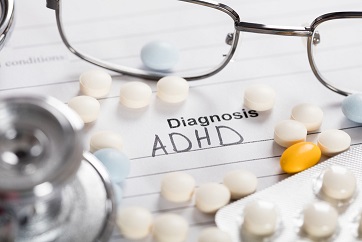
One specialized area of concern deals with Attention Deficit Hyperactive Disorder. This disorder as noted deals with around 15 percent of the student population. The student is unable to focus for long periods of time and may also exhibit problems sitting still. In some cases, it is only attention, but in other cases, both lack of concentration and inability to remain calm can be present in ADHD.
In regards to ADHD, inattention is one key symptom. In looking at these symptoms, the child may be disorganized, lack focus, make careless mistakes, forget tasks consistently, and can become easily distracted. (7)
ADHD also can affect hyperactivity. The child may have a hard time sitting in a seat for a long period of time. Furthermore the child will need to get up and feel the need to walk around. In other cases, the child may feel the need to climb around things he or she should not be around. Also excessive talking is a sign of this hyperactivity. (8)
Learning to help children cope with ADHD is essential for their success.
ADHD also affects impulse. Impulsivity includes impatience, not thinking things through before acting, The child may have a hard time waiting his turn to speak, interrupt others, answer a question before finishing the question, or start conversations at inappropriate times. (9)
While hyperactivity can diminish, inattentiveness can last into adulthood and cause a variety of adult issues. It is important to treat ADHD. Some coping strategies can be employed with a counseling professional and later implemented at home and in school. Sometimes coping strategies are enough, while in some other cases, medication is recommended to help curb the problem.
ADHD is a big issue and requires professionals in the school setting as well the clinical to diagnose it and help cope. While licensed professional counselors working with doctors are the primary treatment venue, non licensed personal can also become certified in ADHD Consulting and help parents and teachers cope with the issue. Many behavioral issues can be addressed.
ADHD Consulting Program
The American Institute of Health Care Professionals offers an online, independent study program for professionals seeking certification in ADHD Consulting. It is open to licensed professional counselors, as well non licensed counselors or even educators. The primary purpose of the certification is to help school counselors and other educators have a stronger understanding of ADHD and how to help students through behavioral coping strategies deal with ADHD. By working with parents and the child, better outcomes can be possibly found and if necessary, direction to licensed professional counselors or medical professionals who can prescribe the necessary medication.
Please review our ADHD Consultant Program and see if it matches your academic and professional goals. Counselors and educators are great candidates.
If you are a licensed professional counselor seeking a certification in ADHD Consulting, or a non licensed counselor or educator, you may wish to consider earning this certification and utilizing it in your professional career. The certification is good for four years and can be renewed. After completing the required courses for those with no ADHD educational background, one can then apply for certification within the organization.
Please consider and review the ADHD Consulting Program and see if it matches your academic and professional goals.
Losing a pet is traumatic but is there a line to be drawn before it becomes too abnormal? For instance, losing a dog or cat is questioned by some as not a true loss. Obviously this loss is subjective to the person who loss the animal but it is clear dogs, cats and even horses are companions. They are more like family to many and to some, all they have. Can it be taken farther to include mice, or fish? This is a difficult question when something crosses the line as a pathology and not recognizing the reality of grief in the person. The grief definitely needs respected but what are the lines that should be drawn in regards to abnormal reactions? Individuals can form unhealthy bonds, but those bonds still exist and need respected.
Is pet loss grief limited to only dogs, cats and horses or should more extreme forms of loss be accepted? Please also review our Pet Loss Grief Counseling Program
The article, “Why I’m Mourning The Death Of My Hedgehog As Much As Any Dog Or Cat” by Gark Mavigan looks at why grief can be over any type of loss and should be respected. He states.
“Vicky and I had cried enough tears to make a small island out of Northern California’s favorite whitewashed Mexican food chain. We’d only been married a few months, so this was our tragedy honeymoon, our first time facing loss head-on as a team.
“Do you think she’s in heaven? Or hedgie heaven?” I tried to eke a smile out of Vicky’s puffed-up face, though I was legitimately curious.”
Again, grieving over loss is a normal thing. One can grieve over the loss of any pet. The subjective connection is the key. Whether that connection is healthy or not is not the concern initially of the grief counselor, but helping the person adjust to the loss in a proportionate way. It is not so much that certain losses are greater or less, but first acknowledging one’s loss and helping one through it.