Teens can have serious issues with anger. It is a difficult time of change both physically and emotionally. Anger needs to be controlled and parents need to be able to guide their teens through anger and emotion.
Helping children learn to control anger is key part of parenting. Please also review our Anger Management Training
Anger if not controlled can become a big issue for teens. It is also important to learn to control anger as they grow into young adults. Please also review our Anger Management Certification and see if it meets your academic and professional goals.
Hypnotherapy is an excellent way to treat anxiety. Many individuals need to learn how to calm oneself and hypnosis is an excellent way to calm and teach one subconsciously to handle anxiety. Anxiety can be a big problem for many and it can cripple many individuals. Hypnotherapy can play a big role in helping people.
Hypnotherapy can play a large role in helping people with anxiety. Please also review our Hypnotherapy Training Program
The article, “How Hypnotherapy Eases Anxiety” from “healthessentials” of Cleveland Clinic looks at how hypnotherapy is an excellent way to help with anxiety. The article states,
“There are a number of excellent treatments for anxiety but one that deserves a fresh, new look is hypnotherapy. While the presence of the word “hypnosis” may trigger skepticism in the minds of some potential patients, hypnotherapy is a safe, guided experience that involves intense concentration, and focused attention to gain insight regarding how past experiences, emotions and traumas play a large role in creating behavioral patterns.”
With hypnotherapy as an alternative method to treat anxiety and becoming more mainstream, it is definitely an option for anxiety. Please also review our Hypnotherapy Certification program and see if it meets your academic needs.
With so many articles and so much information on meditation saturating the market, it is pretty much well known that meditation can help with almost anything. Meditation then of no surprise can also help with better sleep habits. Sleep is essential to good health and meditation can help one find better optimal health.
Lack of sleep can flood into our daily life. Meditation can help find better sleeping habits. Please also review our Meditation Instructor Program
The article, “A Guide to Sleep and Meditation” by Josh Hurst looks deeper into meditation and how it can help with sleep. He states,
“While there are varying medications and traditional therapies available to treat this disorder, a natural remedy worth trying is meditation. Scientific studies have confirmed that the right meditation practices can be effective treatments for stress-induced insomnia. In this guide, we cover a few options.”
The article goes on to list numerous ways how meditation can help with sleep and how to find better sleeping habits. To read the entire article, please click here
Sleep is so critical to good health and good overall daily performance in life. Meditation and other alternative therapies can help one find the sleep they so desperately need. Please also review AIHCP’s Meditation Instructor Program and see if it matches your academic and professional goals.
Depression is a mental state but like so many mental states, it can affect our physical state as well. The body and mind are tied together and stress, anxiety, and depression can negatively affect one’s overall health. Depression has many negative side effects over time and it is important to understand how depression affects physical health and why it is important to get help.
Depression is a serious condition that not only affects the mental side of us but also the physical. Please also review our Grief Counseling Training program and see if it meets your academic and professional goals
The article, “Sick from Depression? It’s Not All in Your Head” by the health experts at Healthline discusses how depression can negatively affect the body. The article states,
“Depression isn’t just in your head. It can affect your entire life, body and all. If you think you’re depressed just remember: You’re not alone. There are tons of resources that will help your mind and body feel better soon”
Depression can play a dangerous role in one’s physical health in almost every system of our body. It is important to remember that depression is a serious mental condition. It does not mean you are weak or that it is all in your head. It is important to treat depression as any other illness. Your mental but also your physical well being depend on it
Please also review AIHCP’s Grief Counseling Training Program and see if it meets your academic and professional goals.
One of the most difficult challenge during the pandemic is helping the bereaved find the help they need. Grief Counseling and other mental health aides became suddenly unavailable for many who needed the counseling and care. The bereaved, those with mental illness, or substance abuse found themselves without the outside world and coping mechanisms. Furthermore, those experiencing loss were left without the normal social norms to cope with grief. Funerals were no longer public and many were left without the social support they needed to grieve a loss. Others grieved the loss of normalcy in life.
The pandemic has prevented traditional ways of counseling the bereaved to be utilized.
The amount of loss during the pandemic from human life to simply losing a job cannot be underestimated. Individuals grieved major losses but also minor losses. Many felt ashamed to grieve the loss of simpler things when others lost jobs or even family members. Those who did lose loved ones were left without outlets to express their loss. Many became disenfranchised with their losses. Others became anxious in the uncertainty, lack of leadership, and unorganized response by government to the pandemic. These anxieties also left many concerned and grieving.
In these uncertain times, things became available through other forms of connection. Teleconferences with counselors became a new norm. Telegrief services to help others manage their grief became extremely important and still are extremely important. These services allow individuals to find validation in their grief when other social norms are not available.
With so much widespread grief, it was critical to be able to help isolated individuals and family units ways to express their losses, whether large or small, and telegrief and telecounseling became excellent ways to give isolated individuals the help they needed to express grief and find the help they needed.
This also opened new venues for grief counselors who may before had been tied to only one geographical location or area. Grief Counselors can help individuals across the nation through skype or other online media services. They can provide the professional grief counseling care needed to help individuals express their grief. Those suffering from mental disorders or substance abuse issues are also able to find the much needed help they need from licensed professional counselors.
During the pandemic, many grievers are unable to find validation of their loss. They are left alone. Telegrief and the ability to contact individuals via skype or other forms of media have helped those experiencing loss find help
So while the pandemic created new problems for the grieving it also created new solutions and allowed technology to present answers to existing issues.
It is still important as the pandemic continues for those experiencing loss to seek help. There are still thousands losing family members to COVID19. They face situations where funeral arrangements become far more difficult to procure in public due to local restrictions. Others are grieving loss of income and job or a standard of life they once enjoyed. The simple loss of a dinner in public or the ability to go to the store without a mask is a hardship for many. It is important not to degrade the small things during this collective loss. It is important to acknowledge all losses and not to feel guilty over it.
Grief Counselors and licensed counselors can both help grievers through telegrief services find the help and guidance they need to confront these losses and move forward in the future recovery. It is critical that noone is left behind in grief when the economy and public spheres become completely open again. The only way for full recovery is to have mentally healthy individuals who can cope with the grief and the loss caused by the pandemic.
When helping those affected by COVID19, it is important for grief counselors to identify the loss and not marginalize it. If it is not a smaller loss but a major loss, it is important for grief counselors to realize that collectively, the entire family may be dealing with the same loss and dealing with it in different ways.
Grief Counselors in school settings need to identify that many children are grieving the loss of a normal life. Many are experiencing family losses, change in qualify life at home due to parent’s job loss, as well as other ways of life. It is important to try to validate children’s losses and allow them to express. It is also important for families at home who face the losses to receive the education and information needed to cope. This also has to be presented in a safe way that reduces the risk of transmission of the virus. Many remote presentations may be needed in sharing information.
Whether children or adults, it is scary time. Grief and loss and uncertainty tie the nation together in one anxious know. It is critical to help stabilize uncertain situations with solid plans that identify the issues, look for temporary solutions and promise eventual returns to normalcy.
The pandemic has forced behavioral healthcare providers as well as healthcare in general to look outside the box. Utilizing technology and applying good grief theory to the problems presented by the pandemic, grief counselors can help the grieving find the coping strategies, guidance and hope they need.
Even though the pandemic is still in its winter stages, there is a future. It is essential that grief counselors help the bereaved recover so society as a whole can recover. Please also review AIHCP’s Grief Counseling Certification
If you would like to learn more about grief counseling training or would like to become a certified grief counselor, then please review The American Academy of Grief’s, Grief Counseling Certification and see if it meets your academic and professional goals.
It is well known stress is a silent killer. Stress in nature can start disease and death within an organism. Stress can also gradually erode a human being’s overall health if not controlled or maintained. Prolong stress is not healthy for the body or mind.
Long term stress can lead to serious health issues. Please also review AIHCP’s Stress Management Consulting Certification
The article, “Stress, the silent threat” Michael van Soest explores how stress can damage the body. He states,
“Studies have shown that one to three adults suffer from the effects of unmanaged stress. Many of us don’t even realize how stressed we actually are; often becoming accustomed to being tense, so we think of it as normal. It damages our health, our work, our relationships. It destroys families, businesses, and lives. It costs companies staggering amounts every year in health costs, absenteeism, and poor performance. In fact, stress built up over a long period can reduce our ability to regenerate, which means less energy and tolerance to combat daily stress.”
Stress and its negative effects over long term can permeate into every aspect of life. If not coped with or handled, it can lead to later serious health issues.
Pastors, Priests, Ministers and Pastoral Caregivers can all face burnout. It is human nature to burnout if over worked, or bombarded with other needs. It is important to also care for oneself and ensure enough sleep, rest and spiritual retreat is given. It is also important to identify signs of burnout and how to properly deal with it. God’s grace can go a long way but our human bodies need an occasional spiritual and physical retreat.
Many pastors, minister or priests face burnout but keep pushing themselves. Please also review our Christian Counseling Training Program
Pastors need time to heal. They also need their own spiritual advisors to help guide them through it.
It is important for parents to teach their children at a young age to control their emotions and anger. Anger and uncontrolled emotion can ruin lives. Hence it is critical for children to learn anger management skills at a young age. Children cannot be permitted to express uncontrolled emotion without consequences and guidance.
Teaching children to control anger is a key parenting step. Please also review our Anger Management Consulting Certification
The article, “Anger Management: Helping You and Your Kids Stay in Control” by Eugene Beresin looks at how parents can better help their kids control their anger. He states,
“Here are some ways kids and parents can manage anger. These skills need to be tailored to the age of your child, and for everyone, they require practice on a regular basis.”
Learning to control anger is a skill that is necessary for social interaction. Teaching kids how to properly manage anger is a top priority in parenting.
Around 30% of physicians experience chronic physical illness and pain, with 82% experiencing concomitant chronic mental concerns, according to a study of 248 physicians conducted by the University of Ottawa. As such, there needs to be some changes occurring in the field of medicine — especially when it comes to the concept of chronic pain management. So, to this end, what are a few different ways that healthcare professionals can manage chronic pain?
Chronic Pain-Specific Medication
A study conducted by the University of Colorado Denver School of Medicine found that healthcare practitioners limit or avoid controlled pain medications due to their practice guidelines and regulations. Despite this, the discomfort that comes with chronic pain can become so debilitating that they achieve relief through chronic pain-specific medication that’s over the counter or prescribed, such as Oxycodone, Ibuprofen and Morphine. But for doctors who are not comfortable relying on medication, thankfully, there are other options to pursue.
Alternative Care
Chronic pain affects a substantial number of nurses. A study by Gaziantep University found that 84.2% of nurses experience chronic lower back pain of moderate severity. Instead of using any medication, they have found that turning to alternative care like chiropractic adjustment and acupuncture provide relief. Those that undergo chiropractic adjustments reported in a JAMA Open Network’s published study that after six sessions, they have less pain intensity, higher satisfaction in their care, less disability, and more mobility.
Physical Therapy And Exercise
Medical professionals are constantly in motion, and chronic pain hinders this. The pain may also cause a lack of physical activity that opens the gates to other health issues. As such, physical activity is necessary. Aerobic exercises are an effective way to treat chronic pain, according to a study conducted by the Thurston Arthritis Research Center. They found that walking or stationary cycling are moderate impact activities that relieve pain.
Psychiatric Support
Chronic pain is an emotional and mental battle, according to Linda Girgis, MD. She shared her story of being a practicing doctor that got into an accident that left her with a displaced, comminuted proximal humerus fracture. This event effectively made her a chronic pain patient for the rest of her natural life. She soon realized that chronic pain takes a rather strong emotional and mental toll, as the pain made her normal activities no longer possible, and her patients did not care about her pain — only the inconvenience her condition had caused them.
This is precisely why the study conducted by the Department of Psychiatry of George Washington University found that psychological interventions for chronic pain are necessary. Psychiatric support for medical professionals that suffer from chronic pain can help them recalibrate their perspectives and process their pain in a safe and healthy environment.
Living with chronic pain can feel like a continuous battle—especially for the very professionals that are tasked with looking after the health of others. This is why there need to be further studies on managing pain and improving the way the topic of chronic pain in healthcare professionals is addressed. As soon as there is an established way to fully heal the healers from their chronic pain, the better the field of healthcare will be as a whole.
Please also review AIHCP’s Holistic and Integrative Health Care Program and see if it matches your academic and professional goals. The program in online and independent study and open to qualified professionals.
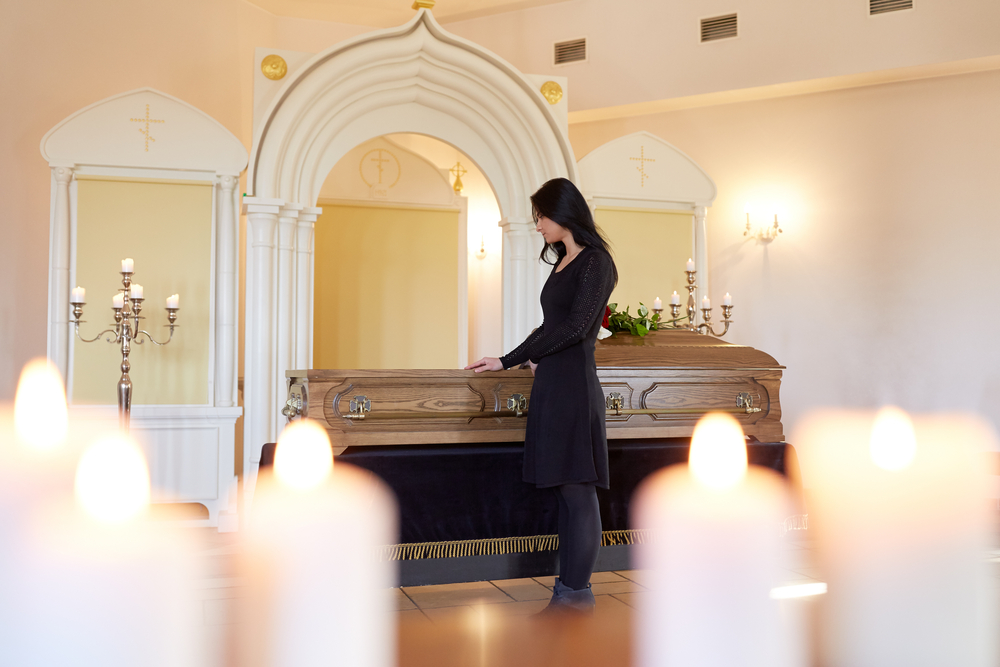
Funeral Directors face new challenges with grief during COVID. Families who lose loved ones to COVID are unable to properly grieve. Funerals are limited and public condolences are prohibited in many cases. In addition, many families feel disenfranchised due to the stimga of COVID and the issues surrounding it.
Grieving and funerals during COVID face challenges for the bereaved to properly express themselves. Please also review our Funeral Associate Certification
The article from “Whats Your Grief”, “5 Ways Funeral Directors Can Help Families When A Death Is Disenfranchised” looks at in-depth regarding this issue. The article states,
“Recently, the world has been focused on deaths from COVID-19. And these deaths certainly have the potential to be experienced as disenfranchised. Notice I say “potential to be experienced as disenfranchised”. It’s important to note that disenfranchised grief is a subjective experience. People want, need, and receive different things from family, friends, and community. And it’s not a guarantee that everyone who experiences a particular type of loss will feel stigmatized or a lack of support and validation.”
COVID has made grieving our dead difficult for not only those who die of it but for funerals in general. Funeral Directors are faced with a new challenge of helping others express grief and find closure without traditional norms. Please also review our Funeral Associate Certification and see if it matches your academic and professional goals.







 Written By Lucy Peters