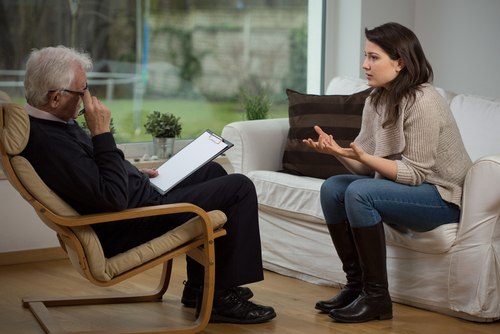
Drug addiction is a horrible disease that individuals endure. Those addicted go through many symptoms and withdraws when dealing with drugs. These symptoms can be physical, mental and emotional. Substance Abuse Counselors and licensed counselors can help individuals face addiction and learn how to cope with the issues that surround it.
Addiction causes mental, emotional and physical havoc on the person. Please also review AIHCP’s Substance Abuse Counseling Program
The article, “What Is Drug Addiction?” by Laura Dowart looks closer at the physical and mental symptoms surrounding addiction. She states,
“The American Society of Addiction Medicine (ASAM) defines drug addiction as “a treatable, chronic medical disease involving complex interactions among brain circuits, genetics, the environment, and an individual’s life experiences.” People with drug addictions continue to use drugs compulsively despite the harmful consequences. Drug addiction can lead to serious health consequences and even death. However, it’s preventable and treatable.”
Steps are the newest gimmick in regulating how healthy one is. How many step apps are on phones and help engage and challenge the person to walk so many steps a day. 10k was one of the first goals, but how many steps a day do you really need?
How many steps a day do you need to take to be healthy? Please also review AIHCP’s Healthcare Life Coaching Certification
The article, “The Last Word: Do You Really Need to Take 10,000 Steps a Day?” by Lauren Bedosky takes a closer look at how many steps are needed to be healthy and what one should aim for. She states,
“The origin of this standard is a little murky. But researchers believe the number can be traced back to 1965, when a Japanese company made a pedometer named Manpo-kei,or “10,000 steps meter” in English. As Shawn Arent, PhD, CSCS, professor and chair of the department of exercise science and director of the sport and science lab at the University of South Carolina in Columbia, explains, the rationale behind 10,000 steps was more about marketing than science.”
Please also review AIHCP’s Healthcare Life Coaching Certification and see if it meets your academic and professional goals. The program is online and independent study and open to qualified professionals seeking a four year certification as a life coach.
Stress kills. This short phrase is as true as any words. Stress primarily affects the blood vessels and the heart through cortisone and its increases in the body. When this hormone is utilized for fight or flight, it is good but when chronic stress constantly applies it to the body, then the heart suffers. Long term and chronic stress weakens the body and heart. It is thus very important to reduce chronic stress through health stress management strategies to reduce long term damage. Stress Management can help an individual eliminate unneeded stress in one’s daily life and live a healthier life.
Stress can have negative health impacts on the heart. Please also review AIHCP’s Stress Management Consulting Certification
The article, “Stress May Be Your Heart’s Worst Enemy” by Rachel Ruiz from the New York Times looks closer how stress can harm the heart. She states,
“But has your doctor also asked about the level of stress in your life? Chronic psychological stress, recent studies indicate, may be as important — and possibly more important — to the health of your heart than the traditional cardiac risk factors. In fact, in people with less-than-healthy hearts, mental stress trumps physical stress as a potential precipitant of fatal and nonfatal heart attacks and other cardiovascular events, according to the latest report.”
“Stress May Be Your Heart’s Worst Enemy”. Rachel Ruiz. New York Times
Stress is a phenomenon that results from the interaction between an individual and their environment which produces psychological and physiological responses to perceived threats or challenges. This process is further exacerbated by the imbalance between the demands of the environment and the individual’s ability to cope with such demands, thus resulting in a psychobiological response. Through this process, stress can manifest through physical, cognitive, emotional, behavioral, and other related changes depending on how an individual interprets and responds to perceived stressors.
Stressors can range from work, school or home. They can build up over time when not properly managed. It is hence critically important to identify stressors in one’s life and see how to reduce their impact on daily life. Various Stress Management strategies can be employed to help individuals deal with stressors on a daily basis.
Stress and Your Heart
Stress has been linked to a variety of adverse health effects, including heart disease. Physiologically, stress can trigger the release of hormones such as cortisol and adrenaline which can lead to increased blood pressure, vasoconstriction, and an elevated heart rate. Furthermore, the chronic activation of the sympathetic-adrenal medullary system associated with stress has been shown to increase oxidative stress and inflammation in the body, leading to increased risk for cardiovascular diseases such as coronary artery disease.
Stress has a significant impact on cardiovascular functioning in both the short- and long-term. Prolonged stress can lead to an increase in sympathetic nervous system activity, leading to higher heart rate, blood pressure, and levels of cortisol–all of which are associated with deleterious effects on cardiac health. Additionally, chronic stress can lead to neurohormonal changes that can cause structural changes to the cardiovascular system.
Knowing these dangers, it is critical to protect one’s heart and avoid unneeded stress and practice healthier anti-stress strategies.
Stress Management
Stress management and heart health are intrinsically interlinked, with the ability to effectively manage stress being a key factor in mitigating risk factors associated with cardiovascular disease. The physiological processes associated with stress can result in an increase of cortisol levels, which then leads to increased inflammation and arterial plaque. In addition, elevated cortisol levels often contribute to unhealthy lifestyle choices such as smoking or overeating which can then compound the risk for cardiovascular-related issues.
Stress Management techniques can play a key role in reducing chronic stress and hence help with overall heart health
Through stress management, individuals can lessen the release of cortisol and reverse to the para sympathetic nervous system.
Stress management techniques are an essential component of effective psychological and overall health. These techniques comprise a variety of approaches for alleviating stress, including cognitive restructuring, relaxation training, mindfulness meditation, and other forms of psychotherapy. Cognitive restructuring is a form of psychotherapy that promotes changing the way one thinks about particular situations in order to modify their emotional responses. Relaxation training typically involves techniques such as deep breathing, progressive muscle relaxation, biofeedback, guided imagery, music appreciation and yoga.
Conclusion
In conclusion, stress is a major contributing factor to physical and mental health problems, including heart health. It is important to become aware of how daily stressors can affect your overall wellbeing and take measures to reduce its impact. This may involve creating healthy lifestyle habits such as regular exercise, adequate sleep, healthy eating and relaxation techniques. Additionally, it is beneficial to reach out for professional help when needed. By making positive changes in our lives, we can significantly improve our stress level and heart health. Stress management is extremely important for improved heart health. Stress can have a profound effect on the body and its systems, including the cardiovascular system. Research has shown that managing stress can reduce risk of cardiovascular disease and improve overall heart health. Simple strategies such as regular exercise, mindful meditation, and healthy lifestyle habits can help to manage stress levels and protect your heart.
Please also review AIHCP’s Stress Management Consulting Certification and see if it meets your academic and professional needs and goals. The program is online and independent study and open to qualified professionals seeking a four year certification in Stress Management. Through use of stress management techniques, many individuals can better maintain a healthy heart by avoiding chronic stress in life.
Additional Resources
“Stress and Heart Health”. June 21st, 2022. American Heart Association. Access here
“Risk Factors for Heart Disease: Don’t Underestimate Stress”. John Hopkins Medicine. Access here
“Stress and your heart”. December 1st, 2013. Harvard Health Publishing. Access here
The differences between a coach and a therapist and likewise a certified only counselor and a licensed counselor is important. Obviously a licensed therapist can become certified as a coach or certified counselor in a particular field, but many professionals may be only certified and a coach but not licensed. Licensed professionals can supply treatment for trauma that is beyond basic healing. They deal with the past and pathological issues that result from trauma. Coaches deal more with natural loss or help with the present and future. It is important to know yourself and what you need in choosing merely a certified professional or a licensed or licensed/certified professional.
Do you need a certified only professional or a licensed professional in counseling? Please also review AIHCP’s Life Coach Program
The article, “How To Know If You Need A Coach Or A Therapist: 6 Differences To Consider” by Stephanie Catahan looks closer at the differences between a coach and therapist. She states,
“Maybe you’ve noticed an increase in people talking about therapy and coaching. Your partner has a therapist to manage their anxiety. Your neighbor has a coach to sharpen her leadership skills. Maybe you yourself are trying to decide whether to hire a therapist or a coach to guide you through stress management of becoming a new parent or another kind of major life transition, but you don’t know where to start. Although therapy and coaching might come up in the same conversation, there are important key factors to consider before deciding whether to work with a coach or therapist.”
Please also review AIHCP’s Healthcare Life Coach Program and see if it meets your academic and professional goals. The program is online and independent study and open to qualified professionals seeking a four year certification as a Life Coach.
Many lead executives have an image to keep for leadership and the image of the company. They must present themselves professionally and be the face of the company. It is because of this, many who need help with addiction avoid seeking help. They try to keep up appearances while neglecting the importance of help with any type of addiction they may be facing.
Many executives hide substance abuse. Please also review AIHCP’s Substance Abuse Counseling Certification
The article, “What Discourages Addicted Executives From Seeking Help?” by Arnold Washton looks closer at why executives do not seek the help they need. He states,
“Contrary to common stereotypes, high-functioning executives and professionals – including physicians, attorneys, corporate executives, and others – are just as prone to developing serious alcohol and drug problems as people in many other socioeconomic groups and life circumstances. However, one important difference is that executives and professionals are frequently better able to keep their addiction hidden from view because they have the resources needed to maintain a high level of functioning or at least the outward appearance of doing so that camouflages the chaos in their personal lives.”
Please also review AIHCP’s Substance Abuse Counseling Certification and see if it meets your professional and academic needs. The program is online and independent study and open to qualified professionals seeking a four year certification in Substance Abuse Counseling
Fasting is key element of Christianity. It is a sign of remorse and penance but also self sacrifice. In the terms of Christ, it was sacrifice and preparing Himself for ministry.
Please also review AIHCP’s Christian Counseling Certification and see if it meets your academic and professional goals. The program is online and independent study and open to qualified professionals seeking a four year certification as a Christian Counselor.
The origins of the Gospels are important to Christianity. The writer, the history of the text and the literary styles help one understand the books themselves. The Gospels are forever inspired by the Holy Spirit but are also written by men and went through the process of their talents and collection of resources.
Please also review AIHCP’s Christian Counseling Certification and see if it meets your academic and professional goals. The program is online and independent study and open to qualified professionals seeking a four year certification as a Christian Counselor
Bad memories or hauntings can be difficult while grieving. Any type of memory can bring one back to the loss. Grief Monsters are these type of memories that resurface and if not confronted or properly understood can cause big problems.
Please also review AIHCP’s Grief Counseling Certification and see if it meets your academic and professional goals. The program is online and independent study and open to qualified professionals seeking a four year certification as a Grief Counselor.
Fandom to individuals or sports teams is a big part of American society. One forms close ties to public figures or actors or for one’s sports team. Whether football, baseball, basketball or hockey, or professional or college levels, individuals form tight bonds with their teams. They became entranced by the teams record, status, players, and play close attention to every move and play. In addition, individuals invest heavily financially in tickets, or sports clothes, pennants, or mugs. Family gatherings around sporting events become very important and the value of a particular team becomes identical to family tradition, history and local area. The team represents the person and his or her background. In many ways, it can become very personal.
Due to this type of bond that involves investment of self, the team is not merely an outside agent but part of the individual. While the person may not play the game, suffer the loss, or earn the win, the individual does mentally and emotionally share every play and outcome. This can lead to the pain of loss and grief when the team loses or suffers. It is a pain that is real because it involves the person’s life itself as well. The day or week may be greatly affected by a loss.
It is OK to experience sadness when your team loses but it has to be proportionate. Please also review AIHCP’s Grief Counseling Training
The degree of the loss and adjustment however determines the healthy response versus the pathological response. A healthy individual who finds great joy in sports has a greater connection than someone who sees it only as minor entertainment. The bond to the team hence will create a natural response of grief due to loss. If a team loses or is re-located, a true pain can set in that is personal. However, how one adjusts and is able to respond to life itself after the loss determines if the response is normal or pathological. If one feels low or bummed out, it is quite natural to feel this way for a couple days, but if one enters into a depressed state for weeks and is unable to interact or find interest in life, then the connection and the loss itself is pathological.
Fans can be fanatical. It is OK to have fun and it is definitely normal for the passionate fan to feel grief and sadness over loss. However, when that loss becomes so empowering that it prevents the person from enjoying life outside of sports, or prevents them from existing in the world, then one should seek counseling help and re-evaluate the bonds one has with the particular team.
Too many times, one sees violence at sporting events. This type of deep passion is associated with unhealthy bonds with the team. It involves associating the team with oneself so deeply, that anyone else becomes the enemy. Loss hence becomes extremely painful for these individuals and can negatively affect their life.
Sports is fun. It is good and for those who have deeper bonds to a team due to family history, community or identity, then one should find great pride in that, but one should not allow it to become disproportionate and cause massive depression or violent moods. One will suffer the grief of loss more than a regular outsider, if one is bonded with a team, and that is OK. The joy of having such a connection enhances the entertainment and value, but one needs to prevent such attachments from becoming pathological.
Please also review AIHCP’s Grief Counseling Training Program and see if it meets your academic and professional goals. The program is online and independent study and open to qualified professionals seeking a four year certification in Grief Counseling.
One of the first family losses a child experiences is the loss of a grandparent. This loss has ripples throughout the family dynamic and resets many traditions.
First it is twofold. It affects not only grandchild, but the parents as well who have lost their own parent. A twofold grief that manifests itself on two generations can be difficult within a home as parents and children grieve the loss. The intensity will depend on the bonds and closeness between individuals but for many losing a grandparent is a significant loss. For some, a grandparent is like a parent. Others they are nevertheless important figures in one’s raising and development. Some play more key and active roles in their grandchildren’s daily life. This will have an affect on the person and his or her loss.
Losing a grandparent is usually a person’s first serious meeting with death. Please also review AIHCP’s Grief Counseling Program
The death of a grandparent can occur very young or for those blessed, later in life. The time, place and details surrounding the loss can all affect the loss as well. One who loses a grandparent unexpectedly as opposed to over a long terminal illness will experience the loss differently. Classically, most will experience a loss of a grandparent due to terminal illness and be around their teen to 20s, but for those who fall outside those parameters will all experience different types of reaction to loss.
Secondary losses and exposure to grief maybe for the first time manifest. The person may have difficult process understanding loss and the shock it causes. For many, close relatives were always immune to death and dying but suddenly, the death of a grandparent can shock a grandchild into understanding the reality of death. This may come with difficulty especially since it is the first real experience with death. Life will change because of this loss. Family dinners, or holiday traditions will change. This can be difficult to process especially when this is the first experience with death and the person has to come to grips with the change in life.
Grandparent bonds can be very strong for many. Please also review AIHCP’s Grief Counseling Certification
Death is very terrifying but it is part of life. Losing a grandparent reminds individuals of the reality of death for the first time in many cases. It teaches one how to grieve the loss of someone close and how grief feels throughout its many phases. It is a great pain but also a teaching moment that will later prepare one for the death of parents, spouses and close friends. Pain is part of this fallen world and it is sad that losses to those we love occur, but grandparents represent the usually the first loss in life that has real meaning.
If you would like to learn more about Grief Counseling Training and how to help others, then please review AIHCP’s Grief Counseling Certification Program and see if it meets your academic and professional goals. The program is online and independent study and open to qualified professionals seeking a four year certification as a Grief Counselor.