It is a matter of luck for many that some may drink alcohol and never become addicted. For many it is a matter of a genetic predisposition. Some can simply put down a drink and never have one again without any physical symptoms. Others while not physically addicted can become mentally addicted through habit and the ability to walk away is likened to walking away from a bad habit. When we see individuals, physically addicted or not, drink, we still can determine if one drink is too much or not. One does not need to be addicted to misuse a drug, but for some, when can we truly state it is an addiction?
What separates a fun night out from addictive behavior? Please also review our Addiction Counseling Training Program
Like a computer game, or gambling, drugs can be addictive to our behavior, beyond just the physical addiction. One out of habit needs to drink. Whether its always after work, or to go to a night club, if one cannot abstain from a drink, then it is a sign of some dependency, either physically, mentally, or out of bad habit. For some it takes less time, but those who face greater addictions, it can be a big issue.
Hence defining what is an addiction for one and not the other can be difficult. Many people exist in the state of need but only need in certain situations. This still can pose an issue, even if it is only here and there. It is also an issue, if one is not enough.
The article, “Alcohol Use: When is it an Addiction?” from the South Florida Reporter states,
“The problem starts when we’re unable to control our urge to drink, even if it doesn’t present a threat to our social life, work, or health status. This is where we need to make a clear distinction between alcohol use, abuse, and alcoholism, which are related but not the same issues. Alcohol abuse is a disorder when a person can’t stop drinking even if it causes problems at home or at work. Alcohol abusers are prone to drinking and driving, even if they are aware of the dangers of such behavior.”
While there are so many clear cut definitions of alcohol abuse and addiction, it is sometimes the more subtle ones that tilt between social norm and addiction. To read the entire article, please click here
Please also review our Addiction Counseling Training Program. The online and independent study program and help train professionals to help others face substance abuse and addictive behavior.
Chronic care for those recovering from heart failure need a variety of social aspects that go well beyond the office visit at the clinic. Care involves also touching base with family care givers and the promotion of better healthy lifestyles and a fulfillment of diet and medical plans necessary to recovery. Case Management plays a big role in watching the overall recovery effort and helping the chronic condition become better.
Care beyond the clinic for heart failure patients is important. Better diet and follow through on medical plan are also key. Please also review our Healthcare Case Management Program
The article, “Chronic Care Must Account for SDOH Needs, Family Caregivers” by Sara Heath states,
“Nearly 6.5 million people across the country have been diagnosed with heart failure, a disease that can be manageable with medications for some time but hinge on an ideal set of living circumstances to help the patient thrive. Central to that are the social determinants of health, or social factors that affect a patient’s ability to achieve wellness, and family caregivers. Both factor deeply into the patient journey and demand more attention going forward, AHA wrote in its two policy statements.”
Please also review the American Academy of Case Management and its Healthcare Case Management Certification and see if it matches your academic and professional goals.
Depression can have many origins. It is deeper than mere loss but a prolonged and unhealthy response to loss, or no loss at all. Depression can be triggered by an event or loss but it can also merely exist within someone due to chemical and biological factors, or psychological factors.
One may find themselves in deep depression and should seek help. Medical professionals, clinical counselors with specialties in grief counseling can also help. Others who are only certified in grief counseling can direct depressed individuals to proper professional care.
Depression can have many origins that are external and internal. Please also review our Grief Counseling Certification program and see if it meets your professional goals
The article, “Four Types of Depression” looks at the various types of why people can be depressed. Dr John Cottone takes a closer look in his article and explains these types of depression. He states,
“Virtually everyone has some experience with depression; however, the term “depression” has so many different meanings that confusion and invalidation often result when laypersons talk about their experiences. To address this problem, I have created a simple schema, based on my work with patients and my own personal experiences, to help people understand each other better when talking about depression. ”
Hence depression is a multi layered phenomenon that sometimes has a cause and other times has no direct correlation with an event but only self. To read the entire article, please click here
ADHD can cause mass spending. It can keep a person moving mentally into a spending spree where certain things are considered needed. The person keeps spending and cannot settle. This can cause a problem in a marriage, as well as for the budget of anyone. In quarantine and times of pandemic, this can also be difficult to curb ADHD tendencies to want to buy and order online.
The article, “How to Spend Less When the ADHD Brain Wants More, More, More” by Linda Roggli looks at how to train the brain to relax on the spending. She states,
“Without the structure of regular hours at a job or with the distraction of children who are home trying to e-learn, many of us have lost our ADHD compass. Strategies that once worked no longer do. When we are “floating,” our impulsivity goes wild. ”
Controlling urges and following steps can help reduce ADHD induced spending. To read the entire article, please click here
ADHD can lead to compulsive spending, especially during quarantine. Please also review our ADHD Consulting Certification and see if it meets your professional goals
Please also review our ADHD Consulting Certification and see if it meets your professional goals.
Like EFT, Hypnotherapy is a non evasive way to heal oneself. Hypnotherapy, like EFT, is usually administered through a healthcare professional or someone with high certification credentials. Hypnosis can help heal may traumas, but also help others face fears or quit bad habits. Hypnosis can help the brain overcome many obstacles.
Hypnotherapy is becoming more main stream and is a useful tool for many people in healing. Please also review our Clinical Hypnotherapy Certification
The article, “HARNESSING THE HEALING POWER OF HYPNOTHERAPY” by Victoria Cristie reviews the numerous ways Hypnotherapy can help individuals heal. She states,
“Many people still associate hypnosis with dated Vegas magic shows, and while Chisholm agrees that there’s some enduring skepticism around hypnosis in the medical field, it’s becoming a more common recommendation for drug-free pain management. “I’m very privileged to work with wonderful nurses and physicians who are open to [hypnosis] because they’ve seen it be effective,” she says. “They’re very supportive because they want what’s best for the patient.”
As hypnotherapy enters more and more into the mainstream, its benefits will help millions overcome pain, trauma and fears. If you would like to read the entire article, please click here
Hypnotherapy is an excellent certification for healthcare and behavioral health professionals. Please review AIHCP’s Clinical Hypnotherapy Certification and see if it meets your professional goals.
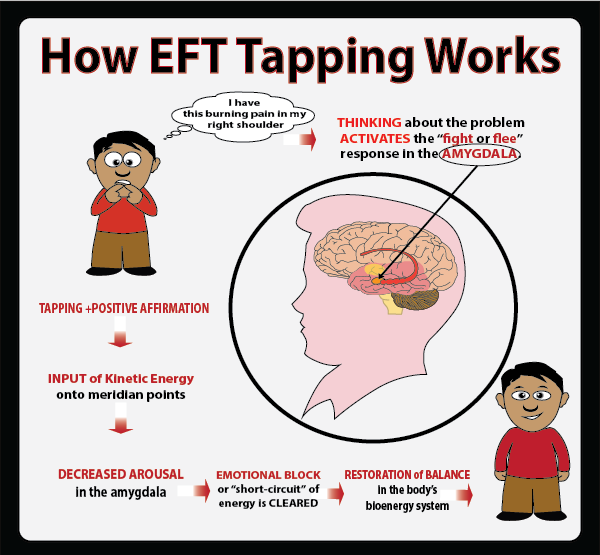
The Emotional Freedom Technique is a new and exciting practice used by many counselors to help people overcome grief, past trauma, and emotional pain. Its concept correlates with meridian points in the body. It requires self manipulation of those points while guided by a certified professional in EFT. It allows one to work out negative energy associated with trauma.
Does EFT work? Studies show it to be very effective. Please also review AIHCP’s EFT Training Certification and see if it meets your goals
The article, “What You Need to Know About EFT Tapping” by Megan Falk states,
“The therapeutic tool combines elements from ancient Chinese acupressure and modern psychology, but can tapping your fingertips on your head and torso really relieve stress and anxiety?”
The article looks to answer this question with study based success. It also reviews the various ways it works and how to do it. To read the entire article please click here
For those who have not tried EFT, it may be the alternative option that finally helps one overcome the inner trauma. Please also review AIHCP’s EFT Training Certification and see if it matches your academic and professional goals. The program is designed to certify professionals but the initial course can also teach those merely interested in learning more and how to utilize it EFT for themselves.
Chris Haws is a certified Grief Counselor through the American Academy of Grief Counseling. Below is an article from Telegrief.com. In it, Chris discusses the true nature of grief and the reality that it does not simply go away but is something we have to work with and live with for the rest of our lives. He offers some helpful ideas on dealing with the reality of Grief.
Talking Grief
By Chris Haws
Not many of us reach middle age without having encountered at least one gentle reminder of our mortality. A beloved uncle, an old school friend, or even a favorite celebrity …… news of their passing makes us sad, and may even make us pause for a moment. But the world doesn’t stop turning and the birds don’t stop singing.
Up close, however, bereavement can be a very different story. The death of a spouse, a sibling, a parent or a child can be so devastating that it feels as if your world has come to a grinding halt and that your entire existence has been turned inside out. Your mind is in a fog, you can’t sleep, you can’t eat, your heart aches and you feel as if you’ve been kicked by a mule. You’re experiencing acute grief and it hurts. That’s not too surprising, since all of those unwelcome sensations are the natural consequence of your mind and your body trying to cope with the shock of your loss. Indeed, neuroscientists and endocrinologists have identified dozens of different brain regions, neural pathways and hormonal reactions to account for all of these unpleasant physical feelings. But the good news is that not only are they entirely natural and predictable, (so you aren’t going mad), but they also won’t last forever.
But we’re not just talking about physical feelings here, are we? Bereavement is not the same as a scraped knee or a bruised thumb, both of which can mend themselves in a relatively short period of time. Acute grief is a profound malady of body and mind (and, some would add, soul) that needs gentle, compassionate, sustained treatment and care …… and it can take a while.
Chris Haws points out that grief is not something that magically heals over a week but is something that is much deeper than a simple cut or bruise
It’s important to remember that there is no pre-ordained schedule or time limit for grief, any more than there is a “checklist” of stages to be ticked off. It’s unfortunate that the popular press will sometimes regurgitate the so-called “Five Stages of Grief”, as if they were commonly agreed medical fact. They are not, and it’s worth noting that when Dr Elisabeth Kübler-Ross first identified the five emotions of denial, anger, bargaining, depression, and acceptance in her work at the University of Chicago Medical School in 1969, she was referring specifically to the emotions of terminally ill patients who had been told that they had only a few months to live – and not to the emotions of people who were grieving the loss of someone else. Subsequent research has failed to identify any pre-ordained stages or timetables in the grieving process and it is now commonly accepted that everyone grieves in their own way and in their own time. But while counselors no longer talk about stages of grief, we have identified a number of different categories of grief, and that list is long, and growing. Dr Kübler-Ross’s subjects were suffering from what is now known as Anticipatory Grief. Other categories include Complicated Grief, Disenfranchised Grief, Chronic Grief, Cumulative Grief, and almost a dozen more. They each have their own particular characteristics, but the task facing a grief counselor is generally the same for each.
Firstly, people have to be reassured that while their physical symptoms are distressing and painful, they are also typical and temporary. Bereavement is as profound an emotional shock to the system as a major injury and it will take time to heal. In many ways grieving can be likened to PTSD, or post-traumatic stress disorder, and the treatment protocols can be similar too. People also need to be reassured that it’s not only “OK” to express their grief – by occasionally bursting into tears, for example – but that talking through their raw feelings with others can be an important part of the healing process. Of course, not everyone is very good at dealing with someone who is grieving, and even the most well-meaning friend can sometimes say unhelpful, or even hurtful, things. And that’s when grief counselors can really make a difference. We’re trained not only to guide people through the acute phase of their grief, but to also help them integrate that grief into what will become their new reality.
Chris Haws points out that while certified grief counselors as well as licensed counselors can help one through the initial phase of acute grief, the greater challenge is helping one incorporate the loss into one’s new reality
And that acceptance of the concept of a new reality lies at the heart of integrated grief. By definition, a bereavement is always irreversible no matter how much we might wish it could be otherwise. So as grief counselors, we spend a lot of time encouraging people to avoid traveling down the “coulda / shoulda” pathways, or retreading “what if’s” and “if only’s”. Wishing for a different history is entirely understandable, we all do it in our everyday lives, but in the context of grief it is ultimately not very helpful or productive. A major part of our job as counselors, therefore, is to gently steer the focus of our clients’ energy away from their loss and the more painful aspects of their immediate past, such as their loved one’s unexpected accident or illness, towards a future that can celebrate the happy times that they and their departed enjoyed together .
A future that can – and will – be full of laughter, joy and meaning again.
Chris Haws is a British born Psychologist and Counselor based in Northwest DC who specializes in bereavement and grief, substance abuse and recovery, and personal development and mindfulness. For over three decades, his writing has appeared in print, radio and TV around the world. He is the founder of “Telegrief” and can be contacted at telegrief.com
Also be sure to review our Grief Counseling Program and see if it meets your academic and professional goals.
It is a misconception that depression cannot affect men. Men like to hide their emotion due to social norms. These social norms can be damaging to the mental health of many men. The tough image of men do not cry is something engraved in society. Hence crying or depression is a sign of weakness in modern society. These norms need broken and it needs to be understand all human beings can suffer from depression.
Men also need consoling and support in depression. Please also review our Grief Counseling Training Program
The article, “Depression can affect men, too” by Vince Faust states,
Men with depressive illnesses do not all experience the same symptoms. The severity, frequency and duration of symptoms will vary depending on the individual and his particular illness. There is no single known cause of depression. Depression is caused from a combination of genetic, biochemical, environmental and psychological factors.
It is important to recognize depression in both men and women and help individuals find the help they need Certified Grief Counselors can help identify depression and lead clients to the places they need for help. Please also review AIHCP’s Grief Counseling Training program and see if it meets your academic and professional goals.
Managing money, like many things, can become difficult with ADHD. ADHD can create an uncomfortable urge to continue to upgrade or add to something. It can make one unsettled. ADHD can hence become a major issue for adults who try to save money or spend more money.
ADHD can make you everyone at once, including your bank account. Please also review our ADHD Consulting Training program
The article, “Managing finances when you have ADHD” from MONEYSENSE reviews ways to better save money despite the ADHD urges. The article states,
“To break that down, we all have something called executive function: That’s a function of the brain that allows us to review and think about the decisions we are making, and create a strategy for seeing those decisions through. Now, people like me, who have ADHD—we don’t have as much control over that executive function. And what that looks like from the outside is impulsive and erratic behaviour, which can have financial consequences.”
ADHD can cause havoc with impulses and it is no wonder that financial issues can follow adults with ADHD. To read the entire article, please click here
Please also review our ADHD Consulting training program. Qualified professionals will be able to help those with ADHD face everyday decisions. Please review and see if the program meets your academic and professional goals.
A malpractice can be a life altering thing. Some people are forever disabled or lose abilities they once had. Others seek justice for the deceased who died due to malpractice. While medical professionals work hard, mistakes can happen. When true and legitimate mistakes happen, justice is demanded for the patient. It is important to work with the proper malpractice attorney and seek their aide. Legal Nurse Consultants also supply their expertise on a malpractice team and can help push your case.
Please also review our Legal Nurse Consulting Program and see if it meets your academic and professional goals.
If you also are a nurse looking to enter into the legal nursing field, then please review the Legal Nurse Consulting Program and see if it meets your academic and professional goals.