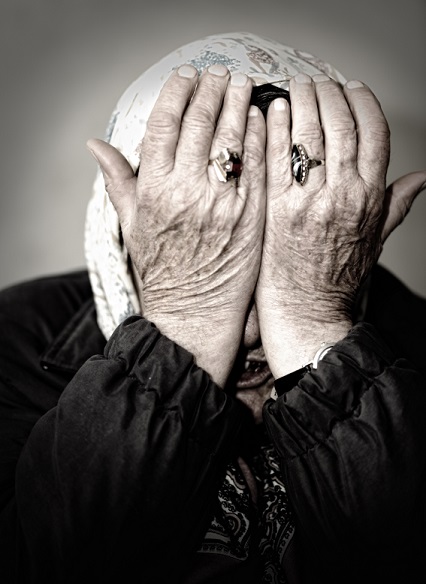
Alternative practices and holistic remedies usually treat causes more than symptoms. In many ways they are also more preventive but in some cases can be utilized for treatment. With all the confusion of what alternative or holistic medicine to use, it is important to coordinate any additional alternative practices or medicines with your primary care giver. It is also important to discuss with a Holistic Interactive Practitioner about what medications are best and which ones should not be used with each other. Nurses make excellent potential Holistic caregivers.
Please review the program and see if it meets your academic and professional goals.
The article, “Treating the Causes, Not the Symptoms” by Sheila Julson states,
“Complementary (also called integrative) medicine is when a non-mainstream practice is used in conjunction with conventional medicine. Alternative medicine uses non-mainstream practices in place of conventional medicine. They’re often referred to together as Complementary and Alternative Medicine (CAM) and have a similar objective: to find and treat the underlying causes of health problems rather than to just address symptoms.”
Stress is a natural part of life. Stress occurs daily but its universal impact is a subjective experience. Many people succumb to stress and allow it to affect them while some are able to deal with stress and minimize its effects. Some individuals respond as an extrovert, while others allow stress to eat them within as an introvert. Some respond with rage, while others enter into isolation and depression.
Stress can originate from our daily schedule and the nature of one’s life. If one understands his or her position in life and what comes with it, these natural stresses come less as a surprise. Someone who commutes to New York City everyday, naturally expects the stress of heavy traffic and road rage scenarios. While the stress is real and present, its effect is determined by the individual’s outlook on life and what he or she expects for that day. The stress of this traffic can build over time but someone who has developed stress coping strategies can more effectively deal with the traffic and minimize its impact on daily life.
One can expect certain stresses on a daily and weekly life but how we handle unexpected stress and multiple stressors is key as well
The same is true for an individual who may work in a office. One should expect numerous phone calls interrupting assignments, as well as multiple deadlines and potentially obnoxious co-workers. These stresses while unpleasant are nevertheless expected stresses. An individual who identifies stressors that are indigenous to one’s daily life will more successfully navigate the day and cope with the stresses that may confront them.
Likewise is the nature of one’s vocation in life. Parents experience different stresses that single people never can imagine. Parents are not only concerned with meeting the expectations of what need done in their own personal lives, but also must be concerned with the child’s needs. Whether that stress is a crying baby, ensuring the children arrive at school, or take children to extracurricular activities, parents understand that certain stresses manifest throughout the day. These potential stresses are certainly not foreign ideas that can emerge throughout the day but are sometimes expected or not entirely a surprise if they do occur.
Natural stresses that are part of one’s daily life are balanced to some extent. They are expected. One knows what to expect on Monday through Friday and what particular challenges come with those days. The balancing act of coping with those stresses in a mild way and still managing the day is a very precarious balance though. The degree of the stress or an unexpected stress can totally unravel one’s neatly planned day. One may plan on heavy traffic on their way to the commute, but not be prepared for a fender bender. One may be ready for the challenge to have all the children arrive to school on time, but not be ready to receive a call a from a teacher that your child skipped class or misbehaved. These issues can unravel one already dealing with the everyday notion of stress.
One can identify stressors that are common and have a plan but when unexpected stressors occur, they can induce a panic, rage, or break down. In addition to unplanned stress, multiple stressors can also play a role. One may be fine with a rude honk from behind in traffic, but later, not be so fine with the person who cuts in front, or even later, the person at work who parks in one’s favorite spot. Simply then add a spilled coffee on one’s favorite shirt and a lack of emotional control could emerge. Certain singular stresses may be manageable but for many, multiple stressors, merely build up to a volcanic eruption.
So while individuals deal with natural stressors, they must also learn to deal with unexpected stressors and multiple stressors at once. While one can expect certain stress to exist naturally within one’s day, one must be also able to cope with the unexpected and multiple issues that may appear uninvited on one’s schedule.
Life has order but it always does not keep to order. This may be very difficult for an OCD person to accept but plans change. One needs to have a plan, a set daily, weekly and monthly schedule, but stress, life itself and issues arise that deviate from anyone’s plan. One can estimate what type of stress or difficulty may occur with a given project, day, or week, but to truly cope with stress, one must be ready to deviate from the path planned if necessary.
While life has general guideline, one can never plan completely without a few bumps and stresses in life. How one handles those detours is the key to living a physical and emotional healthy life
This goes beyond basic Anger Management and Stress Management which identifies issues that arise and teach trained responses to them, but goes a step even farther back basic recognition, and teaches expectations of not only the expected but unexpected as well. One must be flexible in response and able to cope with new unexpected stressors in a better and healthy way.
Of course emotion is a key. Emotion can be irrational and it can over react to stressors and various imperfections within one’s personality can emerge. One truly must learn to know oneself, if one wishes to handle stress and anger on a given day. This goes beyond expecting what stress goes with a day. It goes beyond realizing that plans rarely go to plan. It is even more than realizing that somedays are just bad days filled with multiple stresses at once. It entails, one honestly examining one’s personality and identifying emotional responses to past stress and where personality defects exist within oneself.
This examination of self asks questions regarding oneself. It asks if one is patient, if one is kind, if one is mature, if one is reserved as opposed to impatience, rudeness, immaturity and anger. How we cope truly defines oneself. One naturally likes to see the best of oneself. One who rises to the occasion, controls emotion, and has intelligent responses to situations that are managed by reason not emotion, but this is not always the case.
A person who possesses these traits and is able to handle anger and stress is not only trained but also disciplined. It probably did not occur by accident or over night, but was a skill that was painfully worked on everyday. It was a virtue forged in fire, perfected over numerous falls and conscious restraint in stressful and angry situations. Training one’s will and mind to respond a certain way that is not immature, rash, or angry is a difficult task.
So while it does ensue identifying stressors, preparation and expectation of the unexpected, it also revolves around spiritual and mental betterment. It involves a conscious decision to change one’s response and emotional self to life situations. It is a new spiritual outlook on life that accepts stress, not just daily stress, but every type of cross that may fall upon oneself. It is a universal reaction to every situation that surrounds itself with patience, understanding, and kindness.
So Stress Management and Anger Management is more than just a few sessions of recorded response but is also a re-awakening of self to the world and how it works. It is an acceptance of the temporal reality and how one is going to allow that reality to shape oneself. One can go about as a crazed and AN unhealthy maniac reacting to stress in unhealthy and unsocial ways, or one can start to see the world in a less selfish way that puts others first and emphasizes vocation of life and giving back whatever troubles may occur from it.
Stress Management is more than a few key responses but also a change in life outlook. It is a spiritual awakening about the reality of life. Please also review our Stress Management Consulting Program
This giving back can be a spiritual one where everything is given to God, or for non religious, a giving back to society and its betterment. If one is able to turn stress and how one reacts to it into a more positive spin, where one overcomes it and is able to make society better, or for religious and spiritually minded, offering to God, then one can truly start to see that all stress is natural to this world and no plan is concrete. The plan that matters most is God or the universe’s plan and how one properly plays one’s role.
If one submits to the universal plan of life and starts seeing one’s unique role in the bigger picture, one can become more aware of reality and how stressors are merely noises taking one away from the bigger picture. One needs to deal with stressors effectively. In dealing effectively, one will experience a more calm, healthy, and quiet life.
Please also feel free to review AIHCP’s numerous certification programs in Stress Management Consulting, Anger Management Consulting and Spiritual, as well Christian Counseling Certifications. These training programs can help anyone receive the training, and also information, to live and teach others a less stressful and angry way of living life.
Grief is a natural reaction. It is not considered a pathology. Grief however can become pathological and complicated. Extreme trauma can be an ingredient to possibly cause complicated and traumatic grief. These types of grief can emerge later and cause long term problems.
Traumatic grief is unexpected and is beyond basic mourning but deals with complicated survival reactions. Please also review our Grief Counseling Program
Grief hence has the ability to become complicated due to the nature of the loss, the nature of the person grieving and surrounding circumstances.
The article, “Grief vs. Traumatic Grief” by “Odelya Gertel Kraybill Ph.D.” looks at how unexpected loss can contribute to traumatic grief. She states,
“Traumatic grief, that is, the grief that accompanies loss that is unexpected, is different. Such a loss triggers post-trauma survival mechanisms in addition to the mourning of whatever was unexpectedly lost.”
After a miscarriage so many emotions can erupt. For some relief but with that relief possibly guilt. Some may also mourn the loss and feel extreme sadness and anger. These emotions are natural with such a close loss to one’s self. Miscarriage loss is something that is many times swept to the side but is indeed a big loss with multiple emotions that can interact in strange ways.
Miscarriage is a big loss for many women. Numerous emotions surround it. Please also review our Grief Counseling Certification
The article, “After a Miscarriage, Grief, Anger, Envy, Relief and Guilt” by Jessica Grose stated,
“October is pregnancy and infant loss awareness month, and if your family has experienced any kind of loss, we are here for you. Miscarriage is common — as many as 15 percent of known pregnancies end in a first-trimester loss.”
Dealing with grief especially after the loss of a child in womb or out is a difficult thing to deal with. Sometimes grief counseling is needed to help others overcome these type of miscarriage losses. Please also review our Grief Counseling Certification
Grief not only affects our brain and mind but also affects our body. Grief overtime can cause physical conditions and increase stress induced diseases. This is why it is so important to deal with grief effectively to prevent long term complications.
Grief can have multiple negative effects on the body. Please also review our Grief Counseling Training Program
The article, “9 Physical Symptoms Of Grief You Should Know” by JR Thorpe states,
“Grief can be a thoroughly flattening experience. You don’t feel like getting out of bed, you cry all the time, and you can’t foresee a time when you’ll feel better. However, while the psychological effects of grief can be devastating, the physical symptoms of grief can be just as powerful, and you may not be prepared for them.”
Grief definitely can negatively affect one’s physical health so it is critical to deal with grief in a healthy fashion. Please also review AIHCP’s Grief Counseling Training Program
Grief is pivotal, central and important emotion in human life. It is forever tied to the fallen human condition and deeply connected to the emotion of love. Grief is more than just a sentient emotion but an emotion felt in many animals as well. Hence grief is beyond intellect but also instinctive and evolutionary.
Individuals do consciously grieve and understand the loss but grief also is a natural reaction to loss at the most simple level. Grief as a formula is simply put love plus loss equals grief. Love is a binding emotion. Love ties one to another person or thing. Through value of the possessed and habit of possessing, anything that removes that love or thing causes discomfort. This discomfort is grief.
Grief is a healthy and natural reaction to loss. It helps one adjust to loss and adjust to the change that comes with losing something or someone we love
The grief reaction to loss varies and is correlated to the value of the loved person or thing. If something has little value, then the loss is inconsequential. If something or someone has great value in in one’s life, then the loss is very consequential. Some losses can be small and insignificant while other losses can be life altering. The greater the loss, the greater the grief.
The loss may be objective or subjective in value according to the person. Someone who was raised by his or her grandparents will grieve the loss of a grandparent more than someone who only saw his or her grandparents once a year. Loss can also be subjective in that is may seem odd to others. For example, some may find it extremely odd to mourn the loss of a pet, while pet owners would disagree completely. Again the subjective value is key in understanding the loss reaction.
While grief in many ways is abides by universal standards and reactions, one must also realize that the reactions within this wide norm differs extremely. So while grief is universal it is still unique.
Grief as stated is not only a conscious pain but also a unconscious reaction. The grave importance of grief is to help the person or animal adjust to the loss. The adjustment process is a long mourning period where one learns how to cope without the person or thing. Most non complicated grief reactions to significant loss lasts six months to a year before it becomes labeled as pathological or complicated. This does not guarantee that grief goes away within a set time, but it does illustrate that new coping strategies are incorporated into the person’s life to better deal with the loss on a day to day basis.
Grief allows one’s mental self to heal. It permits the body to mourn and adjust to loss. Long ago this natural adjustment and self healing was considered a pathology in itself but psychology now teaches that grief is an important transitional ingredient in healing. It should not be dismissed or rejected but fully accepted as a normal and healthy reaction to loss. Seeing grief as something bad or unhealthy is a dangerous view to hold. Grief instead is the body reacting to loss and learning to adjust to that loss in a more healthy way. Complete adjustment is a simple lie. This is the price of love. Anything worth loving is never worth forgetting or missing but grieving allows our mind to heal and learn to exist differently.
Grief hence has a very important function in healing but grief is also a social sign to others. In animals especially, signs of grief permits other members of the community to help the grieving animal to recover. The same social signs of grief, tears, crying and emotional withdraw signify to family and friends that one needs help. Grieving hence serves a signal to the community to help those who are sad or depressed. It is a social subconscious distress symbol to family and friends.
Grief because of this is not something bad. Losing something or someone is bad but the reaction to it is not bad. If there was no reaction to loss, then one would be merely a non sentient creature merely existing from meal to meal. Instead, the reaction to loss not only serves as a healthy reaction to loss that leads to recovery, but it is also a sentient reaction to something or someone that was very special.
It allows one to heal and alert others of distress but it forever reminds one the value of what was lost. It never allows one to forget the beloved and the love that was shared. This grief becomes part of who we are the moment we enter into love or deep communion with another human being. If one did not grieve, then what value is that relationship? Grieving is important in identifying what mattered most and not allowing what mattered most to be ever forgotten.
Grieving in its later stages, pushes individuals to healthy coping measures where acute depression is replaced with action. Memoralizing and living a certain way in honor of the beloved becomes healthy and conducive expressions of grief. In national losses, social action for better laws or prevention of future loss are a result of healthy coping produced through grief. Grief hence is an important emotion in being human and living a healthy human life.
Avoiding grief can lead to complications. We need to accept grief and realize it is price of love. Please also review our Grief Counselor Program
Suffering and loss are products of an imperfect world. Those of faith pray and hope that the next world will have no suffering and loss. They pray that grief will only be a necessary emotion in the temporal world and not the after life. In this, those of faith can cope even better than those of no faith. The reality regardless of faith though is that one must escape and embrace grief while in this world if they wish to cope and live a healthy life.
Certified grief counselors can help individuals cope with grief and embrace it a healthy way. Change is never an easy thing but through help, one can utilize grief to better adjust and adapt to loss. The American Academy of Grief Counseling offers a comprehensive program in Grief Counseling. Certified grief counselors learn the basics of grieving and are trained to help others. Beyond the basic Grief Counseling certification, members and qualified professionals can also specialize in Child and Adolescent Grief Counseling, Pet Loss Grief Support, and Christian Grief Counseling.
The programs are online and independent study. After completion of the online program, one can become certified for four years. If you are interested in learning more about the American Academy of Grief Counseling’s certification program then please review the program and see if it matches your academic and professional goals. Once certified as a Grief Counselor, you can then become able to help others face grief in a healthy and natural way.
Substance Abuse Recovery is more than just mental toughness and hard work but for many, faith plays a key role in recovering. Faith can help one overcome many obstacles and give someone a constant to hold onto.
Faith can play a key role in substance abuse recovery. Please also review our Substance Abuse Counseling Certification program to see if it meets your needs
Good article on the importance of funding palliative care and assisting life and dealing with suffering than ending life through assisted suicide. Pastoral Care is about preserving life and helping others find comfort in the end of life.
Pastoral Care never endorses assisted suicide but looks for helping others overcome. Please also review our Pastoral Thanatlogy Certification
The article, “Catholic Medical Association: fund palliative care, not assisted suicide” by JD Flynn states,
“Palliative care involves medical care and pain management for the symptoms of those suffering from a serious illness, and refraining from taking actions that directly take the life of the patient, as opposed to the practices of assisted suicide and euthanasia.”
Meditation is an important spiritual tool for individuals. It is a form of deeper prayer for others and a source of handling stress and keeping a clear mind. While meditation has secular uses as well as spiritual, one can never truly divorce meditation from its religious and spiritual roots.
Many may utilize secular forms of meditation for business and stress reduction, or even for health purposes, but the spiritual roots of both Eastern and Western meditation always circle back to its spiritual roots. As a religious and spiritual tool, meditation hopes to clear the mind from temporal reality and help individuals find the divine. In the East, that type of divine union is absorption, but in the West, that type of union is relationship.
Meditation, especially Eastern forms of it, has become utilized in the secular and business world
While the final ends of Eastern and Western meditation may differ, they both nonetheless share in a spiritual opening to the divine. Eastern forms of meditation utilize various techniques in meditation to free the mind from the body and open itself to the divine. Hindu and Buddhist meditation is centered on escaping the false reality of the world and discovering the true reality of the divine. The purpose is to again find union with the divine. (1)
In Hinduism, the soul is separated from the divine, like a spark from the fire. In this separation, the soul through meditation seeks to find closer union with God on earth. God is not so much seen as a being but more a sense of all being. Through a series of reincarnations, the soul finally is able to become re absorbed into the divine. In Buddhism, the state of nothingness is the ultimate goal, or Nirvana. In this, the soul escapes suffering. (2)
In all of these cases, meditation serves as a tool to better prepare the soul for the divine. Eastern meditation utilizes many physical exercises to remove one’s mind from the temporal reality. it is critical to escape the temporal reality when meditating. Disturbances or lack of focus on the divine, prevents this type of union. In Eastern Meditation, the soul is opened to another reality. Certain techniques are utilized to open the soul and allow it to attract the divine.
This type of Eastern Meditation is the primary type of meditation used in the Western secular world. Many of these practices, yoga, reiki, and forms of meditation are simply used for their physical and mental applications in the secular world. Businesses executives and those in bad health due to stress, look to these practices only for productivity and good health with little need for the spiritual overtones that accompany it.
Ultimately Eastern meditation is very spiritual and has spiritual ends
As a Meditation Instructor, one may teach the spirituality behind meditation, but in many cases, Meditation Instructors utilize the practice to teach executives and those seeking better health. Ultimately whether meditation is a spiritual practice or simply a secular practice depends upon the individual and what they are seeking from it. Meditation Instructors can help either in the quest to utilize meditation in the spiritual life or the health field.
Christian meditation differs greatly. While, it seeks to find the divine, it seeks a relationship with a Being, not a state of being that one can be absorbed into. Christian meditation while it can reduce stress, however, does not have as much secular application as Eastern meditation. Christian meditation is always extremely spiritual and not something that one would find being conducted in a studio or in an executive business environment.
Christian meditation is more seen as only spiritual and connected to the religion of Christianity. Its aims are to unite one with God in a relationship. it is a deeper form of vocal prayer. Like Eastern meditation, Christian meditation seeks to escape the noise of the temporal world, but it is not totally necessary to find deep dialogue with God. Instead of utilizing breathing postures and trances, Christian meditation focuses on scripture and the life of Christ.
Meditation or communication with God starts with simply talking to God and gradually finding deeper communication. Some forms of meditation can lead one to deeper states of communication where God speaks to one’s heart, and in more extreme cases, union can become deeper through more extraordinary spiritual encounters.
St Teresa of Avila, speaks of deeper union with God through meditation. She speaks of various mansions one can enter into dialogue with God. Of the seven mansions she lists, the first four are the lowest, with the final three dealing with a deeper union. Many utilize meditation to find these deeper relationship with God. The first mansions acknowledge God and have relationship but the relationship is still tainted with the world. The final three are seen as engagement with God. Where the soul detaches more and more from the world and seeks God as its final end. (3)
Unlike Eastern religions, there is no reincarnation in Christianity and the seeking of a more perfect union on earth with God before the afterlife is crucial. Living a good life and becoming closer to God prepares the soul for Heaven. Hence meditation is very important for the more enlightened soul that sees beyond the temporal illusions.
Temporal illusion is a key theme in both traditions. In the East, temporal reality is an illusion or Maya, while in the West, reality is not an illusion, but the ideals offered are illusions. The false ideals that this world offers is the illusion that Christians must escape. This idea is similar in many ways. Meditation is the key to escape the lies of this world. It elevates the soul to a greater cause beyond the physical senses. It is a communication with a higher essence although the type of essence and the relationship with that essence differs.
Christian meditation is based on relationship with God and focuses on the life of Christ and the Word of God
Christians for the most part despite the similar theme and purpose of meditation find Eastern themes to be of a spiritual danger. Christians do not condone the methodology or attempts of divinization sought after in Eastern Meditation. It finds many of the practices also to be harmful to spiritual well being in how one opens one soul to the spiritual realms. Christian meditation is closed and focused only to one Being, not a collection that may exist within the state of being.
The Meditation Instructor Program at AIHCP is more designed towards Eastern applications of meditation. It aims more for health and well being but also incorporates the spiritual teaching. The program is not designed towards Christian meditation, but there are a few courses that are focused on Christian meditation. These courses on St Teresa of Avila and St Ignatius are excellent courses for anyone interested in Meditation or individuals within the Christian Counseling Program seeking additional coursework.
If you are interested in meditation and would like to become a certified Meditation Instructor, then please review the program and see if it meets your professional and academic goals.
Losing a child is the greatest loss a parent can face. How the child dies can make the loss even more unbearable. The loss of a child through suicide is even a greater loss. Many parents need emotional and professional support in dealing with such a loss.
The loss of a child through suicide may be one of the most painful losses. Please also review our Grief Counseling Training
The article, “How do you live after your child commits suicide & you never saw it coming? A grieving parent reflects” by Linda Collins explores this painful grief. She recounts from a book about such sad tales.
“Victoria was their only child. Three years after the incident occurred, Collins recounts her 17-year-old daughter’s suicide in this book, weaving in her daughter’s diary entries, personal memories and accounts from the people in her life.”
The article offers an excellent book for others to investigate and read. If you would like to read the entire article, please click here
Please also review our Grief Counseling Training and see if it meets your academic and professional needs.