Meditation Instructor Training Article on Relaxation Response and Insomnia

The Relaxation Response reverses the negative effects of the sympathetic nervous system which prepares the body for the flight or fight response.  The body during stress infuses the body with an increase of adrenaline and other hormones which raise blood pressure, increase heart rate, increase breathing and tighten muscles for reaction.  These effects are not good long term, nor are they needed for modern day stress at home or in the office or on the work floor.  The Relaxation Response reverses these issues.  Meditation Instructors can also help one learn how to elicit this response.

Studies have also shown, when combined with the Faith Factor, the response can also help with a myriad of health and mental issues.  The Faith Factor, or belief in anything, is key to eliciting greater benefit from the Relaxation Response.  Again, understand, that any attempt to improve health without discussion with a primary physician is not safe.  The Relaxation Response can help, but it should never completely replace medications without physician approval.  Many of the natural reactions within the body from the Relaxation Response and Meditation follow many of the same principles of medications used to decrease anxiety but without the side effects.  So in time, with physician approval, many medications may possibly be reduced.
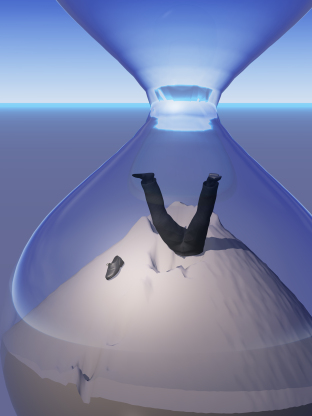
One can become overwhelmed with the problems of the day. These problems can haunt us at night and prevent us from sleeping. Meditation Instructors can help one learn the Relaxation Response to help one find sleep


One problem many have is insomnia and this is the primary focus of this short blog in regards to how the Relaxation Response and a trained Meditation Instructor can help with the inability to sleep.

The anxiety cycle plays havoc on the mind and hence also the body.  Only until the anxiety cycle is broken can the mind find peace.  This is one of the biggest problems with the inability to sleep.  Individuals are bombarded with intrusive thoughts or worries from the day.  They prevent the body from calming and instead create a cycle of anxiety which induces stress and the stress response upon the body.  The reality is many intrusive thoughts or problems cannot be resolved late at night nor does the body have the capability without rest to properly deal with these issues.  Many of these issues seem less important upon waking and the worry of the previous night merely clouds the mind the next day.

Individuals turn to medication to try to overcome the anxiety cycle.  They look for over the counter medications that relax the body.  The Relaxation Response, however, elicits the same mechanisms within the body.  It breaks the anxiety cycle and ushers in the soothing effects of peace and relaxation without the side effects.  When using the Relaxation Response to illicit sleep the aim is quite different than using this meditation during the day.  Its aim is not so much to produce a meditative response but a sleeping response.  In this reality, the brain waves will not be the same as if meditating during the day, but will in fact, merely fade into sleep into meditative trance.  This is fine but is a different end.


The Faith Factor is also important in delivering the ultimate responses one may be seeking.  If one merely routinely utilizes this response in a mundane and insincere way, then the results will be not as beneficial.  It will become mechanical in nature and more of a chore.   Instead, be utilizing one’s faith, the response becomes stronger.  Due to this, Christian, Muslim, Jew, Hindu, Buddhist, or even atheist can utilize this faith factor by choosing the repetitive word to focus on one’s tradition.  All traditions universally tap into the Relaxation Response via the power of faith.  For an atheist or non religious, that word may be about family, country or self.  It still can elicit the response if the word and motive means something to the person.  Likewise, if the word chosen is too Eastern, then a Christian may feel stressed using that term and be counter productive.  Instead, it is important to turn the meditation into a prayer as well to enhance the natural response of the body.

In regards to insomnia, or any other ailment, a passive mind is required during meditation.   While your focus, desire and goal is sleep, your passive mind remains open to merely the meditation.  Some may consider this counter productive, but the moment one starts to think about ” Why am I not asleep” or “How long will this take”, then one creates a new anxiety cycle which reduces the ability of the body to relax and internally heal.  So with illness, or insomnia, to curtail the maximum results of desired results, we must in some way not desire it but allow the flow of peace to do its thing.  The moment, one focuses more on performance outcome over the process itself, then the ability to fall asleep becomes harder to achieve.

The Relaxation Response can help prepare the body for sleep. Please also review AIHCP’s Meditation Instructor Program


In utilizing the Relaxation Response, one should follow the basic guidelines.  First, find a quiet place.  In regards to insomnia, this is your bed.  Sound makers, or any natural sounds that are not distracting can help one find a natural pace.  Second, close one’s eyes and began to reduce muscle tension.  Focus on parts of your body and work your way systematically, such as starting from a toe to the next toe and up the foot to up the leg.  Stretch and allow the body to naturally relax.  Third, start to breath in and out.  This step actually can be used while your reducing muscle tension.  Fourth, focus on your word, usually a word associated with religious or personal conviction.  The word or phrase should be short enough to match the rhythm of your breathing.  If Jewish, the word could be Shalom, if Islamic, the word could be Allah, or if non religious, one could utilize word that motivates oneself.   Christian usually choose the name of Jesus, or a short phrase from Scripture.  This word is meant to keep focus.

When distracting thoughts enter the mind, do not deliberately toss them out but slowly, dismiss them.  It is natural to lose focus.  While trying to sleep, the distractions and problems will attempt to re-enter.  When they do, merely return to your focus word while keeping track of your breathing.  Do not worry if you are doing something wrong.   This leads to the important fourth part, the passive attitude.  One cannot actively beyond the focus word, try to control the process.  Instead one must remain passive and allow the body’s response to take over.  If meditating during the day, this is meant to recharge the body and sleep is not intended, but when utilizing it to find sleep, one should merely allow the peace to lead to sleep. One can fall asleep in this regard in prayer.  This is not the ideal intention, and is why religious traditions have imposed postures for prayer that are relaxing but not sleep inducing, but realize, we are utilizing the Relaxation Response and meditative prayer to fall asleep.  We have turned something natural into prayer itself which is beautiful.

Distracting thoughts should be peacefully and passively dismissed by focusing on a focus word or mantra.


In following these steps and practicing them, one may be better able to relax the body, elicit relaxation, and if spiritual praise God, while also gently falling asleep without the need of medication.  If you would like to learn more about the Relaxation Response, please review Herbert Benson’s two classic works on the Relaxation Response.  Also if you would like to help others, please then review AIHCP’s Meditation Instructor Training Program and see if it meets your academic and professional goals.  The program is online and independent study and open to qualified professionals seeking a four year certification as  Meditation Instructor.

ADHD Consulting Article on ADHD Diagnosis

ADHD affects many children and adults.  Identifying it is a critical part in learning how to live with it and have a productive life.  Diagnosis though is a long and complicated process.  There are numerous tests and screenings that help pin point if one has it or if it is severe or mild.

Early diagnosis of ADHD is important. Please also review AIHCP’s ADHD Consulting Training


The article, “How ADHD Is Diagnosed” by Lauren Krouse takes a closer look how ADHD is diagnosed and and tested.  She states,

“A healthcare provider can confirm an ADHD diagnosis with an in-depth interview and physical exam. However, diagnostic criteria vary slightly depending on whether the patient is an adult or a child.:

There are various steps and procedures for adults and children in diagnosing ADHD. To learn more and to read the entire article, please click here

With 5 percent of children and 2.5 percent of adults diagnosed with ADHD, it is important to learn if you or your child has it.  If you suspect, take action and get the help that is needed.  Please also review AIHCP’s ADHD Consulting Training and see if it meets your academic and professional goals.  The program is online and independent study and open to qualified professionals seeking a four year certification in ADHD Consulting.


Grief Counseling Certification Article on Pandemic and Grief

The pandemic has bore itself upon millions of people.  It is wearing on so many.  So many losses, both deeply personal but also secondary in nature, but the overall cloud upon the planet has also created a general grief.  Many individuals are feeling a general apathy due to the pandemic and that is only  natural.

Over time, the sea of grief and its grey skies during thee pandemic can seem to great to bear but there is always hope. Please also review AIHCP’s Grief Counseling Certification and help others


The article, “What you’re feeling is grief” by Nylah Burton looks at how many are having a difficult time coping and responding to so much grief.  The article states,

“These conditions, combined with the duration of the pandemic, are causing many people to struggle with the loss of their “resilience muscle,” says Sherry Cormier, a psychologist and bereavement specialist who authored the book Sweet Sorrow: Finding Enduring Wholeness after Loss and Grief. “Back in March, we had a lot of zest. We thought we could get through this and rise to the challenge. But the longer this goes on, the climb gets harder and harder,” Cormier says. “We are definitely in a mental health epidemic.”

To read the entire article, please click here

With death, personal losses, loss of income and loss of social interaction, basic coping is becoming not enough for many people.  The general cloud of apathy and mental issues that come with a pandemic are beginning to take root.

Please also review AIHCP’s Grief Counseling Certification and see if it matches your professional and academic goals.  The program is online and independent study and open to qualified professionals seeking a four year certification in Grief Counseling

Grief Counseling Training Article on Season Depression

Certain times of the year can cause seasonal depression or SAD.  Usually it is during the Winter months that most face a type of seasonal depression.  The shorter days, lack of outside air and the inability to do more things due to the weather can contribute to this condition.

Seasonal depression coincides usually with the Winter months. Please also review AIHCP’s Grief Counseling Training


The article, “How to Recognize and Address Seasonal Depression” Ashley Abramson looks deeper at seasonal depression and how to address it.  She states,

“A distinct, seasonal pattern is key to recognizing S.A.D., feeling normal during spring and summer, then dwindling in energy and mood as days get shorter — almost like you want to hibernate. If you have a family member with S.A.D., you might be more likely to develop it, and Dr. Desan said the disorder is three times more common in women.”

To read the entire article, please click here

Seasonal depression is something that can ruin the hidden joys of the Winter season and also push a person into a type of hibernation that robs the body of a more physical routine.  It is important to identify and find help if necessary.  Please also review AIHCP’s Grief Counseling Training and see if it meets your academic and professional goals.  The program is online and independent study and open to qualified professionals seeking a four year certification in Grief Counseling.


Holistic and Integrative Healthcare Specialist Article on Depression and Herbal Supplements

Many individuals fear the negative effects of medication when dealing with depression.  Some may need it but others through coping and potentially herbal supplements can overcome.  This is obviously something that is decided between a patient and a doctor.

There are a variety of herbal supplements that can help with depression. Be sure to consult your doctor for any treatments. Please also review AIHCP’s Holistic and Integrative Healthcare Specialist Program


Certain herbs though do have the potential to help with depression and are worth looking into under the direction of a physician.

The article, “11 Herbs and Supplements to Help Fight Depression” from Healthline looks at a few herbs and supplements that may help you.  The article states,

“Depressive disorders are treated with medication and psychotherapy. Lifestyle modifications, including making dietary changes and taking certain supplements, may also help people with depression. For example, research shows that specific vitamins, minerals, herbs, and other compounds may be particularly effective at improving depressive symptoms.”

To read the entire article and see the complete list, please click here

Please also review AIHCP’s Grief Counseling Certification as well as AIHCP’s Holistic and Integrative Healthcare Specialist Program and see if they match with your academic and professional goals. The programs are open to qualified professionals seeking a four year certification in those fields.


Stress Management Consulting Program Article on Stress and Clutter

Cleanliness and order makes someone feel good about him or herself.  It allows the mind not to be consumed with things that need done.  It fortifies accomplishment and pride.

When things are messy, it is easier to be stress.  One has no place to escape stress.  When order is in balance, one can retreat to something beautiful and in order and find possibly find peace.

Stress breeds in disorganization. Order is important. Please also review AIHCP’s Stress Management Consulting Program


The article, “De-stress by decluttering” Judi Hopson looks at the benefits of decluttering when stressed and how it can not only create order but also take one’s mind off stressful things.  She states,

” You’ll feel more in control of your life. Sorting through just one room, and organizing it well, will make you feel you’re on top of things. Sure, it takes discipline to do this. But, you’ll feel your power to focus and your self-respect growing.”

To read the entire article, please click here

Decluttering a house has many benefits but reducing stress and creating a more conducive environment is important.  To learn more about Stress Management Consulting, please review AIHCP’s Stress Management Consulting Program and see if it matches your academic and professional goals.  The program is online and independent study and open to qualified professionals seeking a four year certification in Stress Management Consulting.

Anger Management Training Program Article on Controlling Anger at Work

Anger can become a big issue at work.  It is important to keep work safe and not intimidating to others as well as protect oneself.  Anger however rarely listens to reason and it is important to be able to control anger, understand it and not allow it to interfere at work.

Anger at work is a big social problem. Please also review AIHCP’s Anger Management Training Program


The article, “How to manage your anger and frustration at work” by Nurhurda Syed explains why it is important to control anger at work and how to better cope with it.  The article states,

“It’s a difficult time to be a leader and it’s okay if things are starting to get to you, professionally or personally. The best way to manage your anger or frustration at work is through some self-awareness and honesty, said Maria Micha, a clinical mental health counsellor, psychiatrist and corporate trainer. If you feel like you’re losing grip of a situation at work, take the time to reflect on your life and the issues you’re handling.”

To read the entire article, please click here

Please also review AIHCP’s Anger Management Training Program and see if it matches your academic and professional goals.  The program is online and independent study and open to qualified professionals seeking a four year certification in Anger Management.


Meditation Instructor Program Article on Faith Factor and Healing

Many religious traditions believe that one through meditation can cause a positive disturbance into the cosmos and tap into the natural healing energy.  Some cultures call this Chi.  While this is only an Eastern belief, meditation from a secular point of view can also elicit responses through the Relaxation Response to help heal the body.  In fact, whichever religious tradition, the utilization of meditation within the particular creed seems to all cause the Relaxation Response.

In previous blogs and articles, we know that the Relaxation Response is the opposite of the Fight or Flight Response.  The Relaxation Response reverses the blood pressure, higher heart rate, and heavier breathing caused by the sympathetic nervous system in time of physical need, or stress.  Adrenaline is pumped into the body during physical emergencies to enable the body to better react to the issue at hand, however, this response is more damaging when responding to only emotional and mental stresses of the modern world.  Hence, anxiety and stress can cause an array of physical ailments to the heart and blood pressure.

The relaxation response is able to reverse the physical reactions of the Fight or Flight response in the body. It is able to undo the higher blood pressure, heart rate and respiration induced by this response. Please also review AIHCP’s Stress Management Consulting Program


The ability of the mind via meditation and breathing to induce the Relaxation Response is key to healing.  It is only doubled when combined with the faith factor.  Positive vibes and beliefs through meditation and even basic mindset can produce within the body multiple cures over minor issues and also maintain optimal health.  Likewise, negative beliefs and lack of faith can lead to physical ailments.  The mind body connection is real and the ability to control the negative responses of the body to stress as well as produce healthier mental images, is key to overall health.

Does this mean one should never go to the doctor but only procure a healthy mindset?  Definitely not, but Herbert Benson in “Beyond the Relaxation Response” believes that a healthy mindset and faith factor tied to meditation can procure within the Relaxation Response a more general bill of health, as well as better responses to illness.  He reviews the importance of the placebo effect for both positive and negative results.

Meditation is an excellent way to overcome stress and its consequences. Please also review AIHCP’s Meditation Instructor Program and see if it meets your academic and professional goals


One can see through studies and throughout history, the power of the mind in helping someone recover from an illness, likewise, the power of the mind to produce illness.  Meditation and the Relaxation Response with a strong faith factor reveals that many individuals are able to control negative responses from the Sympathetic Response system and maintain better health in part by preventing illness  as well as aiding the body heal itself.  A person with a positive mindset and faith factor has a better chance of healing or overcoming a major operation and illness than one with a negative.

Part of this is the placebo effect of the medication.  Many medications are strengthened by the belief of the person.  Furthermore, a strong trust in the physician who is optimistic can help trigger a better faith factor which can help a patient recover faster.  In many cases, medications produce more side effects than good, and the faith factor and optimistic view is strong enough to help someone.   It is important to know if the medication one is on is completely necessary for health and wellness.

The faith factor is just a religious ideal but one that places faith in something, whether it be God, medication, a physician or one’s own ability to heal.  It is a critical element in self healing and overall mental, emotional and physical health.  Through the studies on meditation, we clearly see a connection between mind and body and vice versa.  The mind has an ability to control many of our responses, including heartbeat and blood pressure, it also has the ability to aid the body in recovery with positive imagery.  This is not a cure all.  While mental positive images can help, they cannot overcome certain obstacles or devastating disease or injury, but they can help the body recover and maintain itself.

It is important to procure this type of positive attitude and with a strong faith factor, coupled with meditation and the triggering of the Relaxation Response, one can better achieve better health and a more peaceful life in response to stress and anxiety.

Anxiety looks to tear into the body causing a brutal cycle where the body is forced to respond to a physical threat that is not present.  By eliminating this cycle through the Relaxation Response, one is able to lower breathing, heart rate and blood pressure and allow the body to relax from the hormonal onslaught.  Remember, it is about how we view stress, cope with it, and our overall outlook on life that helps prepare us to handle these stresses.  Through meditation we are able to heal the body from stress and prepare it to handle it later.

The Relaxation Response is the physical result of various religious traditions. A positive faith factor can help reduce the negative consequences of stress but also help the body heal itself over time


For purposes of the review, the steps are simple.  Find a quiet place, focus on breathing, find an object or mental image to dwell upon, use a mantra or prayer to stay on path and avoid distractions and maintain a passive mind.  These steps are part of almost every religious tradition.  While religious traditions may have different spiritual ends, they all through meditation induce a particular physical reaction which is beneficial to the body.  That response is the Relaxation Response.

If you would like to learn more, please review Herbert Benson’s revolutionary work on meditation.   If you would like to earn a certification in Meditation Instruction, then please review AIHCP’s Meditation Instructor Program and see if it meets your academic and professional goals.  The program is online and independent study and open to qualified professionals seeking a four year certification in Meditation Instruction.

Also, feel free to review AIHCP’s Stress Management Consulting Program which also closely ties to meditation and its uses as a way to monitor and overcome stress.


Meditation Instructor Program Article on Relaxation Response and Healing

Stress and anger facilitates the “Flight or Fight” response in our bodies.  While temporarily good, if the physical reactions within the body continue over time or are not properly channeled, then damage to the body can occur.  Elevated heart beat and higher blood pressure are all temporary necessary results to deal with situations but in the modern world, stresses cannot be dealt with by fight or flight but must be managed.

The relaxation response can not only cope with the effects of stress but also help with healing. Please also review AIHCP’s Meditation Instructor Program and see if it meets your academic needs.


The Relaxation Response is the opposite reaction within the body, where a pre stress state is restored to the body.  It lowers the heart rate, lowers blood pressure and creates a more tranquil setting which is beneficial to the body.  Recent studies through bio feed back have proven to shown that one can facilitate these responses through a variety of meditation practices or techniques.  Meditation, in particular, Eastern meditation has shown to be able to elicit the relaxation response.

The Relaxation Response requires a quiet or peaceful setting and environment.  It requires a passive mindset.  It also requires an object of focus and a repeating phrase, mantra, or word to retain that focus.  Through this peaceful and gradual process, studies have shown that the relaxation response can be found.  It is far different than a mere sleep process, but various active brain waves continue to function as well as the state that reduces stress.  This is different than sleep and its critical importance at the REM phase and its own special health benefits.  The two states have different health aims and different purposes.

The Relaxation Response can be elicited from a variety of religious traditions.  It can be Christian in end or Eastern.  World religions seem to share in this common trait of producing this universal mental state within individuals who practice it.  However, non religious can also benefit from it and enter into with out any religious overtones.

What is incredible is that the human mind has the capability to alter change to the body.  It can, seen through biofeedback, produce changes in heart beat and pressure through meditation.  In some more extraordinary cases, Tibetan Monks were able to even alter body temperatures.   With this in mind, the power of the mind to alter subconscious responses is an important study within meditation and its battle with stress.

Meditation can put mind over matter in many ways. Please also review AIHCP’s Meditation Instructor Program


The faith factor and the ability of the mind to alter minor realities in health and healing is extraordinary.  Not just altering bio rhythms within the body to reduce the effects of stress, but to also help heal.  Placebo effects, whether positive or negative can play huge roles in individual’s health or lack of.   The simple positive belief of the person in something or someone and that shared encouragement can play a key role in healing.  Meditation can also open these amazing benefits of self healing.  Again, the mind can play a pivotal role in helping the body heal itself by believing it.

If you would like to learn more about Meditation, stress reduction and the Relaxation Response, then please review AIHCP’s Meditation Instructor Program and see if it matches your academic and professional goals.  The program is online and independent study and open to qualified professionals seeking a four year certification as a Meditation Instructor.


ADHD Consulting Certification Program Article on ADHD and Adult Symptoms

Attention Deficit Hyperactive Disorder or ADHD has many different symptoms.  Different individuals manifest different elements.  The symptoms are disruptive at varying degrees for different individuals.  Adults can especially have negative social consequences due to their ADHD.  Learning to overcome symptoms of ADHD is critical for adults who may never have known they had ADHD.

Identifying ADHD in adults is important for a better professional life. Please also review AIHCP’s ADHD Consulting Certification


The article, “10 Signs of ADHD in Adults—& Why Its So Important to Spot, According to an Expert Who Has It Herself” by Dara Katz takes a closer look at ADHD in adults and why it is so critical for adults to seek help if they have ADHD.  She states,

“You’ve heard about ADHD in children, and you even recognize how important it is for kids’ and their families to spot and acknowledge it so they can better thrive in play, school and home. But what about undiagnosed ADHD in adults? Judy Katz, a pediatric occupational therapist in Chicago, has not only worked with families to support the subtle yet complex lives of kids with sensory processing issues and ADHD for years, but she herself has ADHD—and she only recognized it in adulthood.”

To read the entire article, please click here

Please also review AIHCP’s ADHD Consulting Certification Program and see if it meets your academic and professional goals.  The ADHD Consulting Program is online and independent study and open to qualified professionals seeking a four year certification in this field.