Calming oneself down is an important skill in stress management and anger management. The body when angered or stressed produces hormones in the body to prepare it for fight or flight. When prolonged, or unnecessary over long period of times, this can harm the body. It is important and critical to be able to calm the body.
Learning to calm oneself is a key coping skill in life. Please also review AIHCP’s Stress Management Consulting Program and see if it meets your goals
The article, “How to Calm Down: Ways to Relax Your Body and Mind” by Heather Jones takes a closer look at how to calm the body down through a variety of practices and methods. She states,
“Stress can cause muscles to tighten, sometimes leading to discomfort or pain. These tense muscles then tell the body that it’s stressed, creating a cycle. Muscle relaxation can stop this cyclical response by relieving muscle tension and overall anxiety. It may even help you to fall asleep more easily.Progressive muscle relaxation is a technique used for this purpose. To do progressive muscle relaxation:”
Please also review AIHCP’s Stress Management Consulting Program and see if it meets your academic and professional needs and goals. The program is online and independent study and open to qualified professionals seeking a four year certification in Stress Management.
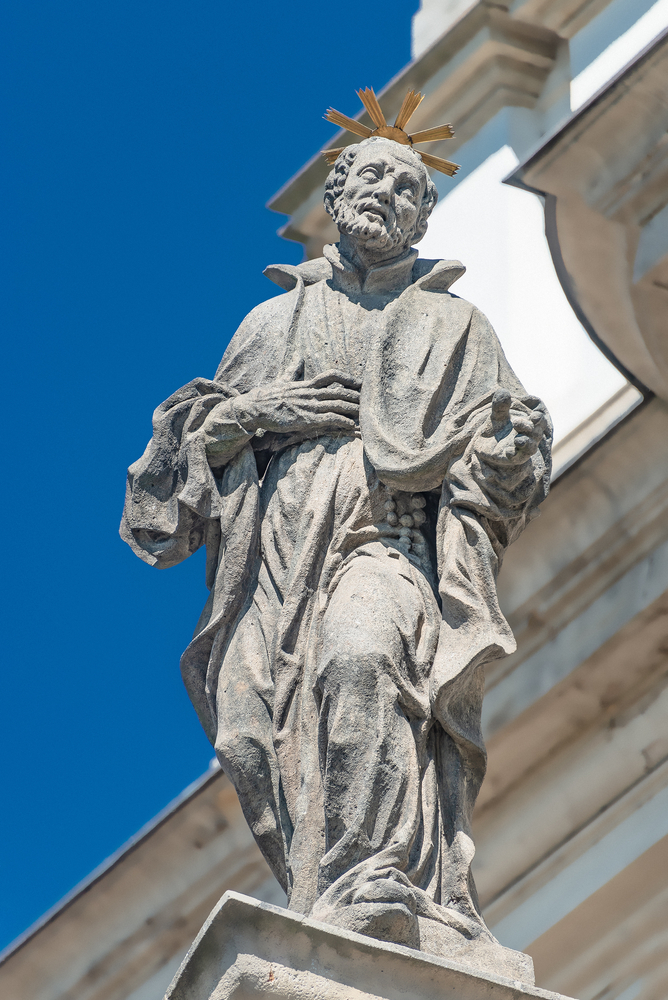
The spiritual masterpiece of St Ignatius Loyola is his spiritual exercises. The purpose of the exercises were to not only prepare future Jesuits but also lay people to come closer to Christ. St Ignatius was Christocentric in his theology and philosophy. As a past injured soldier, he saw the world as a battlefront between two standards. The standard and banner of Christ and the standard and banner of Satan. Individuals must choose their banner and follow accordingly.
The Spiritual Exercises are intended to help one learn more about Christ and to become closer to Him. They are intended to help individuals form a personal relationship with Christ in the truest sense but also supply tools to grow closer to imitate Christ. It is the purpose to transform the Christian into a soldier for Christ, who gives up his or her will and surrenders to God. This is accomplished with numerous meditations, rules and ideas on virtue and faith.
The Spiritual Exercises are a guide to help Christians in this world. They help Christians not only form a better union with Christ, but help the conscience better follow Christ. Discernment, elections or decisions, examination of conscience, imitation of Christ, and guided visual meditation are all important elements in the four week journey of spiritual transformation. Found within these helpful guides are beautiful prayers, scriptural references and deep visual and mental meditations on the life of Christ. The Second through Fourth week actually guide the Christian through the life of Christ, emphasizing important principles and values a Christian must master in order to become more like Christ. Ultimately, it is a invitation to Christ and a personal experience with Him.
The Spiritual Exercises of St Ignatius Loyola help Christians fall in greater love with Christ and become soldiers of Christ. Please also review AIHCP’s Christian Counseling Certification
The first week focuses on the examination of conscience. It presents the person before Christ as a sinner in need of redemption. St. Ignatius asks the person to reflect on ones general sins and in particular, a singular sin of most concern. He then instructs the individual to monitor success and failures of this particular vice throughout the day and week. He instructs the person to give thanksgiving to God for the chance of redemption, the knowledge to correct and find pardon for one’s sin.
St Ignatius points out the nature of sin via the tongue and action, the sins of the angels and the sins of Adam. He calls for one to consider the greatness of God and the nothingness of the sinner and how sin is a cause of loss of friendship with God, robbing the soul of grace, peace of heart and true liberty. He implores the soul to consider the torments of Hell and the eternal separation of God, but begs the person to also see the lack of love one exhibits via sin towards God. For one to denounce the malice of sin, its deformity and in oneself, the folly, ingratitude and audacity to offend the Creator.
St Ignatius in the Exercises utilizes visual mediation as a key component of prayer and asks the soul to visualize images of the Prodigal Son, contemplations on one’s death scene, or one’s own judgment. He encourages one to see him or herself before God as judge and Satan as the accuser and how one would reflect on one’s life.
It is critical within the first week for one to find contrition before entering into the mysteries of Christ and His life.
The Second Week introduces the soul to the early and hidden life of Christ. It begins with the meditation on the Incarnation and the importance of the Trinity. In true Ignatian form, it calls for one to envision oneself within the scriptural story. Utilizing all form of senses to experience the event. In the house of Nazareth, St Ignatius encourages the soul to witness Mary saying yes to the Incarnation and to focus on the state of humanity, the will of God to repair humanity and how it would be accomplished through Mary and Jesus.
In the same fashion, St Ignatius invites one to recall the events of Christ’s birth and His early years. In doing so, St Ignatius helps the soul find the hidden values of such events. In the birth of Christ, St. Ignatius reminds one to recall the humility, poverty and suffering of Christ’s birth and through Christ’s hidden life, Christ’s obedience and labor.
The Spiritual Exercises again ask who are we to follow, the Banner of Christ or the Banner of Satan? What standard? And if so, how do we follow Christ perfectly? Among those who answer the call to be saved, converted and sanctified, Ignatius asks which type are you personally?
Some respond like a sick person, who recognizes the medication but refuses to take, while others only take partial what is needed, and finally like those who take all the medication needed. This analogy serves as a basis for how much is the soul responding to Christ’s call. An individual who answers must accept the entire law of God and with indifference of fear or shame fulfill the will of God for God’s glory. Ultimately, the highest answer to imitate Christ in poverty and virtue.
He concludes this week with discussions on discernment and election. How to know what choices are best in one’s life. AIHCP has a done a separate blog and video on this as well.
The Third Week of the Spiritual Exercises introduces on to the suffering of Christ and His passion. It proceeds from the Last Supper, Agony, and brutal crucifixion. Again, St Ignatius utilizes the same visual meditation techniques on presenting oneself at the foot of the cross or at the table of the supper. In Christ’s suffering, St. Ignatius points out Christ as victim who suffers for friends, sacrificing life and honor. St Ignatius also reminds the soul to imitate Christ as a model, in His submission to the will of the Father, His charity and act of love for friends, His humility and the grievous sight of sin that demanded penance and sacrifice from Christ.
The Fourth Week of the Spiritual Exercises excites the soul to resurrect with Christ and focus on the story of the Resurrection, post apparitions and life in heaven with Christ. He speaks of the joys of Heaven with no illness, sorrow, separations from God, temptations or sin. He emphasizes the trueness of love. He reminds the soul that love is work not just words. Christ requires reciprocity of love and His love lavishly gives. He asks so little but our love in return.
The Spiritual Exercises help one learn more about examination of conscience, discernment and guidance in Christian life. Christian Counselors can better mentor others through the Exercises
The purpose again of the Exercises is to bring one closer to Christ and present some important spiritual tools to help one achieve that. Discernment, elections of choice, examination of conscience, understanding the Standard of Christ, and meditation on the mysteries of Christ are all crucial in developing a strong Christian spiritual life. One through the exercises not only becomes more in love with Christ but can also become a true soldier of Christ.
Please also review AIHCP’s Christian Counseling Certification and see if it matches your academic and professional goals. The program is online and independent study and open to qualified professionals seeking a four year certification as a Christian Counselor.
Christian Counselors can benefit immensely from the Spiritual Exercises in their own life but also help other souls come closer to Christ. The skills in helping others mentor through discernment, examination of conscience, helping others through scruples, and how to better meditate on Sacred Scripture are immense aids to any Christian Counselor trying to guide another soul closer to Christ.
Sources
The Spiritual Exercises of St Ignatius Loyola: With Points for Personal Prayers from Jesuit Spiritual Masters-Fr Sean Salai, S.J
Writing and journaling is very therapeutic, especially with grief. One is able to express oneself without others present and also allows one to better understand one’s own sorrow and grief. Writing is an excellent coping tool for those grieving.
Journaling about grief can help one cope better with loss. Please also review AIHCP’s Grief Counseling Training Program and see if it meets your goals
The article, “How to understand your grief through writing” by Beth Daly takes a closer look at how writing can help a grieving individuals. She states,
“Reading or writing about grief is not for the faint-hearted. Like all writing, it’s best not to edit too early. Let the work rest and come back to it when ready. Save that first raw draft and create a new version when you feel you’ve moved on to another, more objective stage.”
Please also review AIHCP’s Grief Counseling Training Program and see if it meets your academic and professional goals. The program is online and independent study and open to qualified professionals seeking a four year certification in grief counseling.
Divorce can be crippling to many. The heartbreak can devastate a person. The secondary losses of comfort and security are also immense as a person is displaced and thrown into a world of chaos. Divorce is one of the more stressful and sad events anyone can go through and it is important to know who to talk to and how to better cope during this chaotic time
The grief of divorce has many layers. Please also review AIHCPs’ Grief Counseling Certification and see if it meets your goals
The article, “Understanding Gray Divorce and the Grieving Process” by Carol Hughes and Bruce Fredenburg look deeper at the pain and stress of divorce. Their article states,
“Specific to divorcing couples is the work of University of Virginia psychologist Robert Emery, who differentiates grieving an irrevocable loss like death from grieving a revocable loss like divorce, in which the possibility of reconciliation remains for the former spouses and their children. Based on his case observations and research, he developed a theory of grief in divorce that describes a cycle of grief for the divorcing couple. ”
Please also review AIHCP’s Grief Counseling Certification and see if it meets your academic and professional goals. The program is online and independent study and open to qualified professionals seeking a four year certification as a grief counselor.
No matter how well a healthcare professional trains, studies and prepares, there is always a chance for a malpractice suite against them. Some may be well deserving, but many others may be victims of vindictive or confused individuals. So despite, the years of study, the high student loans incurred and hard work building a practice, one must always be prepared for the inevitable malpractice. This is why healthcare professionals have such high malpractice insurance rates and why costs are so high everywhere. A healthcare professional must always be ready. Any patient could be the next case against oneself.
The reality is throughout a 40 year career, most physicians spend 11 percent or 50.7 months of their time resolving malpractice cases. In fact, by age 65, low risk practices have a 75 percent chance of litigation against them, while high risk practices have a 99 percent chance. With these numbers, it is imperative to be prepared and to have an understanding how the malpractice process works.
Being served a lawsuit can be very stressful. It is important to be prepared for such things. Please also review AIHCP’s Legal Nurse Consulting Program and see if it matches your academic and professional goals
If served the dreaded letter of suite against one’s practice, it may seem unnerving. One may question what one did or did not do, or wonder how this could ever happen. Good physicians may feel hurt or betrayed or misunderstood. While these feelings are natural, it is important to follow the process of defense. One’s reputation and practice is on the line and one needs to protect this at all costs.
The first step is to contact one’s medical malpractice carrier. This should be done immediately. Within this structure, is yourself, the claim professional and your defense attorney.
The second step is to build a defense. Building the defense is key and one might be surprised to discover that a malpractice attorney already has some insight into what is occurring. It is important to supply the defense attorney with all the necessary information on the case, the patient and notes regarding the case.
Third, realize that the case will take time. Usually cases can last anywhere from 2 to 5 years. Furthermore, the case probably is originating from a patient or service rendered a few years prior. There will be periods of activity but also periods of inactivity, so remain calm and continue to supply excellent care to your patients. Rest assured, your malpractice attorney is on top of things. If need be, contact him or her if questions or worries arise.
Fourth, it is important to understand the strategy of the plaintiff. You will not be able to explain to them what occurred and those explanations are best left for trial. It is important to not only know one’s own strategies but also the other side’s strategies. Be well versed on their own experts and opinions on procedure. This will heighten your own defense.
Fifth, become fully engaged in your own defense. It is critical to study your own dispositions, possible questions and expertise on procedure. Coaching may be needed. Coaches can help one better at trial during disposition. Stress Management may also be necessary. It is a very stressful period and it is important to remain calm prior and during trial.
Ultimately, malpractice cases eventually occur and one needs to be prepared when they do. By being calm, knowledgeable, and professional throughout the process, one can overcome most cases that have no basis or legal ground. One can protect oneself by keeping good records, following good standards and by giving the best care one can possibly provide. Communication and good social interaction with patients is key in forming good bonds with patient and caregiver and this can go a long way in preventing foolish and unnecessary claims from occurring. Bedside manner does go a long way, especially for a good physician with good skills. Individuals are more receptive to physicians who take time to talk and build a friendship. Good doctors who explain and care can limit unnecessary confusion and bitterness for something that is not their fault.
m
If you would like to learn more, please review our blog.
If you would like to learn more about Legal Nurse Consulting, then please review the program and see if it meets your academic and professional goals. The program is online and independent study and open to qualified professionals seeking a four year certification as a Legal Nurse Consultant.
By completing the four core courses, one can proceed to a four year certification.
Sources
The Doctor’s Company, “You’ve Been Served: Lawsuit Survival Tips for Physicians”. Please click here
Anger is part of the grieving process. Kubler Ross lists it after denial as a basic response to dying and loss. Anger must be channeled in a positive way though with grief. When great social losses occur due to injustice, anger can be productive in the grieving process to about bringing change
Please also review AIHCP’s Grief Counseling Program and see if it meets your academic and professional goals. The program is online and independent study and open to qualified professionals seeking a four year certification in Grief Counseling
Marriage is an important building block for society. It is critical to the formation of families and social values. From a spiritual view, it even has greater value, as a way man and wife come together and promote the faith of Christ. Christian marriage hence is twofold, for social as well as spiritual formation of future generations.
Please also review AIHCP’s Christian Counseling Certification and see if it meets your academic and professional goals. The program is online and independent study and open to qualified professionals seeking a four year certification in Christian Counseling.
Losing a spouse can be very painful. The sense of the loss can vary depending on duration of relationship, state of the relationship and the bond itself. For many, losing a spouse can create a deep void of pain and create multiple secondary losses as well
Please also review AIHCP’s Grief Counseling Certification and see if it matches your academic and professional goals. The program is online and independent study and open to qualified professionals seeking a four year certification in Grief Counseling
They say the only certain things in this life are death and taxes. Death is a guarantee at the moment of birth and becomes ironically part of living itself. It plays a key role in our life span in this temporal world. Yet, it is the most feared and avoided topic despite its central importance to our life itself. Thanatology attempts to understand the nature of death and dying itself and attempts to explain the science and philosophy of death. Grief Counseling tries to help us adjust to the process of dying or the death of another. Together, they can help an individual better discuss, deal and cope with this very natural life event.
Traditionally, death has many characteristics. Lack of respiration, lack of pulse and heartbeat, zero response to stimuli, lowered body temperature, stiffness of the body and bodily bloating are all signs of death. The Harvard Criteria lists death as something that leaves the individual unresponsive to stimuli, no movement or breathing and no reflexes. Furthermore it notes that there is no longer any circulation of blood to the brain and a flat EEG exists.
What constitutes a state of death? Please also review AIHCP’s Grief Counseling Certification
Death hence has it characteristics and permanence once a certain time period of such lack of activity exists. While the fear of not being dead and buried may have existed long ago, today’s science clearly delineates the boundaries of alive and dead. Death though is more than a physical event, but is also for many a spiritual event. It is an event that leads to a new birth in spiritual beliefs and is more than just merely the end of physical activity. While spirituality and death may not have empirical evidence to support it, the belief itself is wide held throughout humanity. It can also be said, while it cannot be empirically proven, life after death, it is also said it cannot be disproven.
The dying process leads to death and is more than a physical journey but also a spiritual and emotional one for the dying as well as their loved ones. The biggest question to ask is when does dying begin? Philosophically one can say, dying begins the day we are born, but health studies require a more definitive definition that denotes a direct and acute movement towards death itself. While one may be dying, sometimes, one may not even know the event is occurring. This is why recognition of the facts is essential to officially declare one is dying. The facts need to be communicated and realized for the psychological, emotional and spiritual elements to enter into the equation. When nothing else can be done to prevent the acute event, one officially realizes they are dying and will die due to a particular thing.
The expression and communication of dying to another is something that healthcare professionals have recently been hoping to improve in regards to delivery of the news. In the past, the dreaded news has been expressed coldly and sometimes abruptly. As an event of failure to the medical world, the person was left to process the information without guidance or compassion. Today, those in Pastoral Thanatology, look to help the dying die with dignity but also understanding and compassion. Hospice prepares the dying for the ultimate end, looking to reduce pain and prepare one emotionally and spiritually for death.
Physicians and healthcare providers though can better communicate death to their patients. Sharing smaller facts and gauging responses are key, as well, and not overwhelming the dying and their family at first. Explanations and time to educate are key, despite the discomfort of such bad news. Allowing pauses and questions and time to process is key, but also respecting denial. Being there and giving the time is key. Another important element is not to stretch the truth, but to be completely honest, but in that honesty, again, find the time to listen and not mechanically leave the scene after such heartbreaking news. Many healthcare professionals are not trained in explaining death and are only trained in the mechanics of what is occurring physically, while dismissing the emotional and mental aspects of death.
Once one is faced with dying and accepts the outcome, certain questions become obvious to the dying. Certain trajectories manifest to the dying that map out their final days. The biggest are certainty and time. How long does one have and what to expect in the final months, days or hours. Some trajectories are quick, others linger, and others occur unexpectedly. These aspects can greatly change how one prepares for death.
Death comes for all. How we prepare depends on multiple factors. Please also review AIHCP’s Pastoral Thanatology Program
Obviously each trajectory has their benefits and disadvantages. Preparation in death can allow one to put all business aside, but leaves one to the mental long anguish of knowing the end is coming. Quick deaths can reduce this anxiety but leave one with very little time to prepare financially, spiritually and emotionally.
The long mental process of accepting death was best laid out by Elisabeth Kubler Ross. Kubler Ross worked with the dying and found they responded in a five stages to death. Namely, denial, anger, sadness, bargaining and acceptance. Each phase while not always ordered, showed the emotional response of most people to the news of death itself. The news can be so terrifying that one may react in a variety of ways trying to control what one cannot control. The ultimate end is acceptance because death is guaranteed for all.
Charles Corr also pointed out the reaction to the news of death. At the epicenter is the physical reality of dying, followed by the psychological reaction, followed by the social reactions and finally the spiritual reactions. As the wave of the news spreads, the dying story encompasses all aspects of the person’s existence.
Buddhist stages of death are more spiritual. They see various stages of loss of sensation, to visions, to nothingness itself. In Christianity, death is seen as the result of sin. It is a punishment and the severing of soul and body, but it is temporary, and the body one day is restored to the soul. It is important to understand the spirituality of the individual who is dying and to help them fulfill any incomplete spiritual exercises before death. This gives comfort to the dying.
How death eventually takes the person is something very intimate and seen by family and healthcare workers. While it can be painful, it is sometimes very peaceful, as the body surrenders to death. While many may never have it, it is everyone’s hope to experience a happy and peaceful death surrounded by love. This is the most anyone can ask for as this dreaded but important part of our life occurs. One needs to be prepared and think about this event. It should not be disregarded as morbid, but seen as an important part of life. The thought of dying well is something we should all smile towards when that day comes.
If you would like to learn more about Grief Counseling and Pastoral Thanatology, then please review AIHCP’s Grief Counseling Certification and Pastoral Thanatology Certification. The programs are online and independent study and open to qualified professionals seeking four year certifications in these disciplines.
Please also review
“Death, Dying and Human Society”by David Kastenbaum
Miscarriages are unseen tragedy to many eyes. For many, it is swept under the rug never to be spoken again or told to others. For others, it may be dismissed or devalued in regards to the hierarchy of losses. Still others may suffer alone, or others may be neglected. The harsh reality though is that it is a real and scaring loss that must be acknowledged and understood.
Unfortunately, many never find the help they need to deal with this type of loss. Others are dismissed. Disenfranchisement occurs because the child was not born and never seen. Others may lessen the value of the unborn child to an infant. Downplaying is very detrimental to healing in this regard. Furthermore, others may shift the grief away and utilize various cliches. For instance, one may say to the grieving, “well you can try again”, or “better luck next time”. This type of statement devalues the loss of the child that died and the present pain of the parents.
Sometimes, as well, only the mother will receive the support. Fathers, siblings, and grandparents may be neglected in their grief of the loss. It is hence essential to acknowledge the loss and discuss with all connected to the pregnancy. Secrecy, quiet and downplaying are not the answers.
Losing a child can have numerous consequences. Following a miscarriage, the woman will undergo physical and hormonal changes, as well as psychological effects. Loss of concentration, appetite and trouble sleeping can occur. A feeling of depression and loss can follow with various emotions of sadness, anger and even guilt. Some women feel an unearned guilt that they did not do enough to prevent the miscarriage. Others may feel angry at the unfair nature of not being able to carry a pregnancy and have a child.
A miscarriage is a difficult loss in life. Please also review AIHCP’s Grief Counseling Certification
Some families may suffer at different levels. A family trying to conceive and with no children may grieve differently than a family with many children. Other miscarriages may be far more painful due to the progression and time of the miscarriage. Some miscarriages can occur without the woman knowing she was even pregnant, while other miscarriages can occur well farther into the pregnancy and also require medical attention. Other times, the loss and pain may be correlated with spiritual beliefs regarding life itself.
Again, for a young teen girl, a miscarriage despite the trauma may be a relief. Although all life is beautiful, the thought of a young motherhood and the responsibilities with it incurred great fear and the miscarriage indirectly freed the young person from such things.
So, as one can see, how the loss is perceived, the surrounding details and the beliefs of the person can all play huge roles in grief factor of a miscarriage as well. In general though, those parents who are expecting, do not fall into this periphery categories and will suffer to some extent, some type of feeling of loss. For many, the potential of what could have been can haunt the parents. Mothers Day or Fathers Day can be vivid reminders of what could have occurred for those hoping to become parents.
It is important not to internalize and keep the loss a secret. Couples should discuss, and single women should find individuals they can confidently speak to. Some may require support groups or grief counseling to help process the loss itself.
For some parents, although no funeral is possible, a memory service can sometimes be performed, as well as possibly naming the child. Those from more religious backgrounds, may feel security knowing their child is in Heaven and looking down upon them. Others may merely process the loss, learn to understand the meaning of it and move forward looking to become pregnant again.
It is also important for the woman to care for herself after a miscarriage. Beyond the mental and psychological loss, a woman may need time to rest and allow her body to re-adjust to post pregnancy status.
Ultimately, it is important to realize that miscarriages are a common loss for individuals and couples for the most part receive improper care and counseling. Miscarriages are sometimes hidden and become a unresolved and disenfranchised grief. It is important to help others through the pain and loss of miscarriage. It is important to recognize the loss and give value to the loss. It is important to find meaning in the miscarriage and to understand one’s life plan and how the miscarriage falls into that plan.
If you would like to learn more about grief itself and the nature of loss, then please review The American Academy of Grief Counseling’s, Grief Counseling Certification Program and see if it meets your academic and professional goals. The program is online and independent study and open to qualified professionals seeking a four year certification in Grief Counseling.