Most clinicians think about prior authorization at intake. In behavioral health, the more common problem shows up later. The authorization approves a set number of sessions or units over a set date range, treatment continues, and at some point the care being delivered is no longer covered by an active approval. Nobody notices until the claims come back denied.
In our audit of 61,400 claims from January 2025 to June 2026, missing or invalid prior authorization caused 17% of denials. This article explains how behavioral health authorizations are structured, why they lapse in the middle of treatment, what clinicians can document to support continued care, and how new federal rules change the timelines for some payers.
How behavioral health authorizations are structured
An outpatient behavioral health authorization usually approves three things together: a service or level of care, a number of sessions or units, and a date range. An approval might cover 12 psychotherapy sessions between March 1 and May 31, or a set number of hours per week of a structured program. Higher levels of care, such as intensive outpatient or partial hospitalization programs, are often approved for shorter periods and reviewed more often.
Continued care after the approval runs out typically goes through concurrent review. The payer looks at the clinical record and decides whether further treatment at the same level of care is medically necessary. If it is, a new authorization is issued with its own units and dates.
Behavioral health coverage also adds a routing question. Many health plans carve out mental health and substance use benefits to a separate behavioral health organization, which handles both authorizations and claims. An authorization requested from the medical plan instead of the carve-out vendor does not protect the claim. In our audit, claims sent to the medical plan instead of the behavioral health carve-out caused 12% of behavioral health denials.
Why authorizations lapse in the middle of treatment
A lapse rarely comes from one missed step. It usually comes from a change that nobody connected to the authorization:
Session frequency increased. A client moves from weekly to twice-weekly sessions during a crisis, and the approved sessions run out weeks before the end date.
The date range ended first. Sessions were missed or rescheduled, and the approval expired with units still unused.
The level of care changed. A step up to an intensive program, or a step down to standard outpatient care, usually needs its own approval.
The coverage changed. A new plan year, an employer plan change or a Medicaid redetermination means the old approval no longer applies.
The treating clinician changed. Some payers tie an approval to a specific rendering provider, so a handoff inside the same practice can leave sessions uncovered.
The pattern is clearest in services billed by the unit. In applied behavior analysis, authorization unit overruns caused 29% of ABA denials in our audit. The same mechanics apply to any service where the approval counts units and the schedule can change faster than the approval does.
Outside behavioral health the pattern repeats: lapsed biologic re-authorizations caused 31% of GI infusion denials.
Figure 1. Authorization-related share of denials in each setting. Source: Luxen claim audit, 61,400 claims, Jan 2025 to Jun 2026.
What the timing looks like in practice
The window for requesting a renewal is shorter than it looks, because the payer’s review takes time. In our client data, ABA re-authorizations took a median 12 business days, about two and a half calendar weeks.
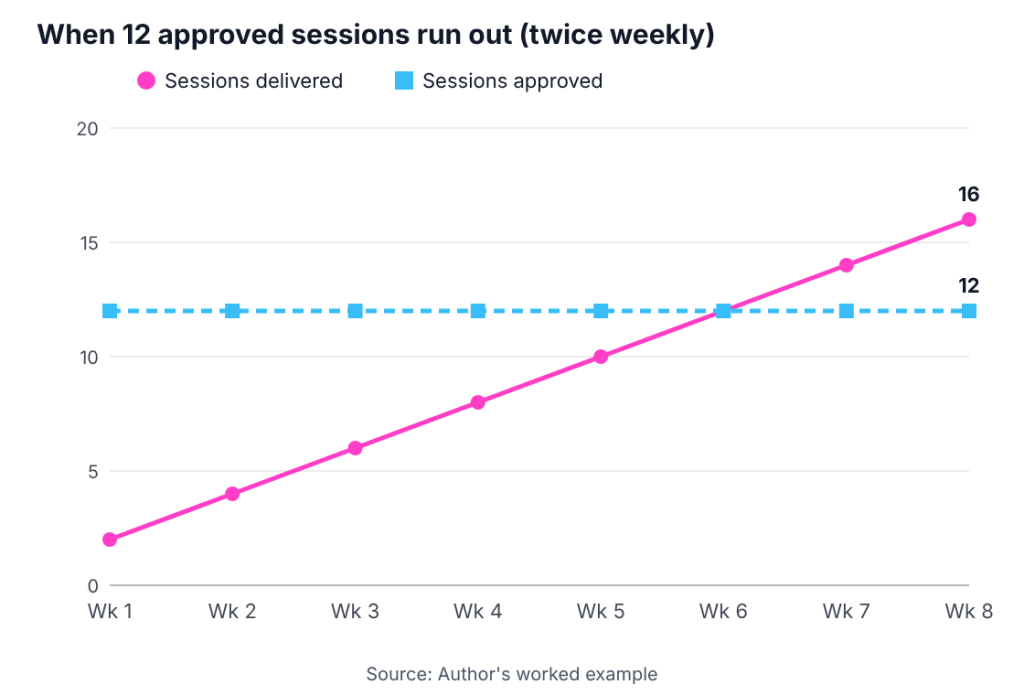
Take a client approved for 12 sessions who moves to twice-weekly sessions. The 12 sessions are used up in 6 weeks. If the renewal takes 12 business days to come back, the request has to go in early in week 4, after about 7 sessions, for the new approval to be in place before session 13. A practice that waits until the last approved session to submit will deliver four or five sessions with no active approval behind them.
Figure 2. When 12 approved sessions run out, with a client seen twice weekly. Source: author’s worked example.
This is why a fixed trigger works better than memory. Many practices request renewal when a set share of units has been used, or a set number of weeks before the end date, whichever comes first, with the trigger adjusted for each payer’s turnaround.
What clinicians can document to support continued care
Concurrent review decisions are made from the record, so the clinician’s notes carry most of the weight. Reviewers generally look for:
The current diagnosis and how symptoms present now, not only at intake.
Measurable progress toward treatment plan goals, including results from standardized measures where the clinician uses them, such as the PHQ-9 or GAD-7.
The reason continued treatment at this level of care is needed, including risk factors and what is likely to happen if care stops.
An updated treatment plan with goals, frequency and expected duration.
A discharge or step-down plan that shows where treatment is heading.
Notes that repeat the intake picture, or that describe sessions without linking them to goals, make medical necessity harder to show. The reviewer needs to see why care is still needed now.
How federal rules changed authorization timelines in 2026
The CMS Interoperability and Prior Authorization Final Rule (CMS-0057-F) set decision deadlines for several types of payers starting January 1, 2026. Medicare Advantage organizations, state Medicaid and CHIP fee-for-service programs, Medicaid managed care plans and CHIP managed care entities must decide expedited requests within 72 hours and standard requests within seven calendar days. They must also give a specific reason when they deny a prior authorization request, and publicly report prior authorization metrics each year, starting March 31, 2026.
The rule does not cover employer-sponsored commercial plans or Qualified Health Plans on the Federally Facilitated Exchanges, and its provisions do not apply to drugs. For commercial plans, turnaround times still depend on the plan and on state law, so renewal triggers need to allow for longer reviews.
What happens when an authorization lapses anyway
Sessions delivered without an active approval are usually denied. Some payers allow a retroactive authorization request within a short window, and a denied claim can be appealed with the clinical record that supports medical necessity. Both depend on acting quickly.
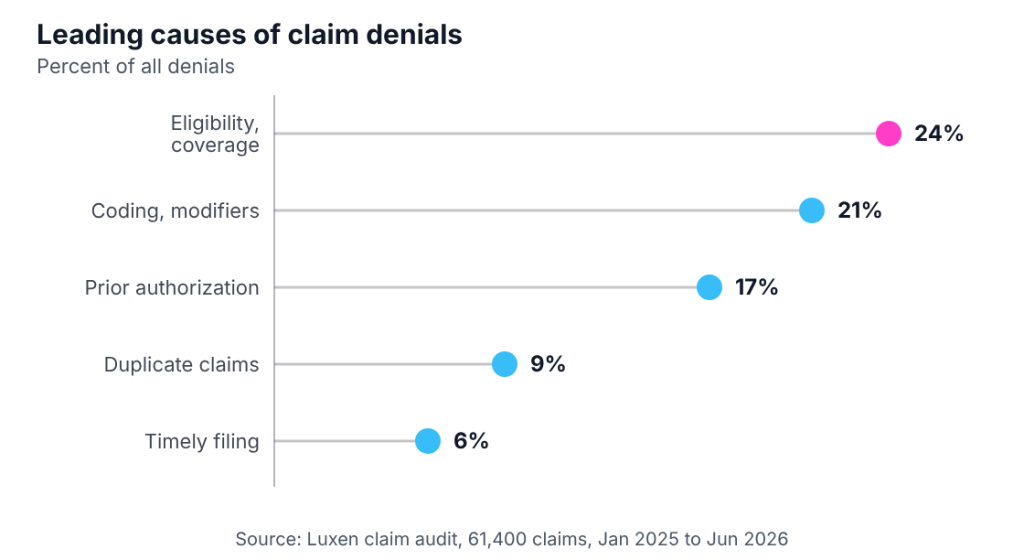
Across our audit, the leading causes of denials were eligibility and coverage errors (24%), coding and modifier errors (21%), missing or invalid prior authorization (17%), duplicate claims (9%) and timely filing (6%).
Figure 3. Leading causes of claim denials, as a percent of all denials. Source: Luxen claim audit, 61,400 claims, Jan 2025 to Jun 2026.
Delay makes recovery much less likely. Timely filing caused 6% of denials, and only 4% of those were recovered. In our billing reviews, 19% of denied claims were never reworked or appealed. We have written separately about reading denial reasons and deciding which claims to appeal.
Who should own authorization tracking
Authorization lapses often fall between roles. The clinician knows the treatment plan has changed, the front desk schedules the sessions, and the billing team sees the denial weeks later. In our survey of 286 practice managers, 42% said nobody owns denial follow-up full time, and practice managers estimated 11 staff hours a week on insurance calls and portal checks.
A shared tracker closes most of the gap. At a minimum it should hold:
Field
Why it matters
Payer and authorizing entity
Confirms the request went to the carve-out vendor if one manages the benefit
Service or level of care
A change in level of care usually needs a new approval
Units approved and units used
Shows how fast the approval is being used, session by session
Start and end dates
Catches approvals that expire before the units run out
Rendering clinician
Flags handoffs for payers that tie approvals to a provider
Renewal trigger date
The date the next request goes in, based on the payer’s turnaround
A checklist for clinicians
Check the active authorization before changing session frequency or level of care.
Tell whoever tracks authorizations when the treatment plan changes.
Keep progress notes tied to treatment plan goals, with current symptoms and measures.
Update the treatment plan before each concurrent review, not after.
Confirm whether a carve-out vendor manages the client’s behavioral health benefit.
Flag any handoff to another clinician for an authorization check.
An authorization lapse is usually a timing problem rather than a clinical one. When the record shows why care is still needed and the renewal goes in early enough for the payer’s review, treatment can continue without a gap in coverage.
About the data
Luxen claim audit: 61,400 claims audited, Jan 2025 to Jun 2026. Luxen client data: 38 client practices, Jan 2024 to Jun 2026. Luxen billing reviews: 410 practice billing reviews, Jan 2025 to Jun 2026. Luxen Practice Manager Survey 2026: 286 practice managers, March 2026.
About the author
Authored by Shivam Pujara, founder of Luxen
Shivam Pujara is the founder of Luxen, a US medical billing and revenue cycle company that works with outpatient practices, including behavioral health and addiction treatment programs. More of Luxen’s work on behavioral health billing is on the Luxen site.
References
Centers for Medicare & Medicaid Services. CMS Interoperability and Prior Authorization Final Rule (CMS-0057-F) fact sheet. cms.gov.
Luxen claim audit, client data, billing reviews and Practice Manager Survey 2026, as described under About the data.
Please also review AIHCP’s Case Management Certification program and our CE courses as well, to see if they meet your academic and professional goals. These programs are online and independent study and open to qualified professionals seeking a four year certification
You can do everything you’re supposed to do and still not know whether anyone has looked at the whole picture.
They had the physical. They got the bloodwork. Maybe they saw a cardiologist, scheduled the mammogram, had a skin check, and finally followed through on that referral from last year. Ask what all those appointments added up to, though, and the answer may be harder to find.
The trouble usually isn’t a complete lack of care. It’s that the care happened in pieces. Different offices saw different parts of the story, at different times, in different systems.
That can leave a patient with plenty of medical activity but no obvious plan.
When separate appointments stop adding up
Specialists are part of good care. The problem is that each specialist is working from a narrower part of the record, while primary care may not have every result in front of them.
Sometimes the patient ends up filling the gaps, repeating the history at each visit and trying to remember which office has which result.
Picture a fairly common sequence. A primary care doctor notices something in routine bloodwork and recommends additional testing. The test is performed at an outside facility. A specialist reviews one part of it three weeks later. Another result lands in a patient portal without much context. By the next primary care visit, several people may have touched the case, but the information can still be sitting in separate records.
For someone who has trouble fitting several appointments into a workweek, a comprehensive executive physical can put imaging, lab work, physical testing, and physician review into a single visit. The useful part isn’t simply doing more tests in less time. It’s having the results considered together rather than arriving as disconnected pieces over several months.
AHRQ has documented how communication problems in outpatient care can create safety issues. Its work onpatient safety in ambulatory care covers practical risks around referrals, medication information, test results, and follow-up when several people are involved in the same patient’s care.
AIHCP’s overview of thehealth care delivery system also shows how many parts sit behind a single visit. Records, referrals, facilities, payment, and follow-up all have to connect well enough for the next clinician to know what has already happened.
The problems are often small enough that they don’t look important at first. A medication list is outdated in one chart. A specialist asks for a scan the patient assumed had already been sent. Two doctors order similar blood tests because neither can see the other’s recent results. A referral is placed, but no appointment is ever made.
One missed handoff probably won’t unravel a person’s preventive care. Several of them can.
More testing can create its own kind of confusion
One response to fragmented care is to order more tests, hoping a larger set of results will provide a clearer answer.
More testing can help in the right situation, but it can also leave the patient with a larger pile of results that still need interpretation.
Screening also depends heavily on the person being screened. TheU.S. Preventive Services Task Force changes recommendations based on age, sex, smoking history, pregnancy status, and other risk factors, so the same test may be appropriate for one patient and unnecessary for another.
Consider two 48-year-olds. One has a family history of early heart disease, rising blood pressure, and metabolic markers that have been moving in the wrong direction. The other has none of those issues but is overdue for routine cancer screening. Giving both the same giant checklist of tests may look thorough, but it doesn’t necessarily make either person’s care more thoughtful.
The reverse happens too. Someone gets a basic lab panel, sees mostly normal numbers, and takes that as evidence that everything important has been covered. An age-appropriate screening may still be overdue, or a follow-up recommended last year may never have been scheduled.
A test has limited value if nobody reviews what it changes about the patient’s care.
One result rarely settles the question by itself. A mildly abnormal number that has been stable for years may be less concerning than a result still inside the reference range but moving quickly. Medications, symptoms, family history, weight changes, earlier imaging, and new diagnoses all affect how a clinician interprets the number.
That is easier to judge when the clinician can see the previous results and the surrounding history instead of opening one portal at a time.
Otherwise, the patient may leave with a long list of results but no clear sense of what needs attention.
The six-month follow-up is often more important than the February physical
Say a patient has a routine physical in February and their cholesterol is higher than it was last year. The doctor suggests a few changes and asks for another lab test in six months.
Life moves on.
In April, the patient goes to urgent care for something unrelated. In June, a cardiologist gets involved because of family history. August comes around, but the repeat test isn’t on anyone’s calendar. The patient assumes the cardiologist is watching the issue. The cardiologist thought primary care was handling it. Primary care is waiting for the patient to schedule the lab.
There was no dramatic failure. Nobody ignored an emergency. A fairly ordinary follow-up simply fell into the space between offices.
By itself, that missed repeat test may not seem serious, but it means the original plan was never completed.
AHRQ definescare coordination around organizing care and sharing information among the people involved. In practice, that can be as basic as checking whether a referral happened, reading the specialist’s note, confirming repeat labs were completed, and deciding which clinician is responsible for follow-up.
AIHCP’s discussion ofcase management and utilization review deals with similar questions from a professional perspective. Completing the appointment is only part of the job. Someone still needs to check what came out of it, whether another step is due, and who is meant to handle it.
Patients feel the difference immediately.
“Your labs look mostly fine” isn’t much of a plan.
“Your blood pressure looks good, your cholesterol needs another check in September, and you’re still due for the screening we discussed last year” is something a person can act on.
The second conversation doesn’t require more technology or a more expensive test. It requires someone to keep track of the unfinished business.
Patients shouldn’t have to coordinate everything themselves
Being an engaged patient helps. In practice, that may mean carrying an updated medication list, knowing the important parts of your family history, keeping major reports handy, and asking what needs to happen after the visit.
But patients shouldn’t have to chase every record, referral, and result themselves just to keep the process moving.
With several clinicians involved, the administrative work adds up quickly. One portal holds the lab work. One office asks for the actual scan instead of the written report. Another needs the name and dose of a prescription from a different system. A referral may also sit in limbo until the patient notices that no one ever called.
Most people are managing this on top of work and family. A nonurgent lab or referral can disappear from the to-do list for months.
That is often how a six-month follow-up turns into a twelve-month one.
Better coordination doesn’t depend on every provider using the same software. Smaller workflow choices can close plenty of gaps. Schedule repeat testing before the patient leaves. Confirm that an outside report reached the chart. Before ordering a repeat test, check the recent record first. If a specialist is involved, the patient should also know whether that office or primary care is supposed to follow the result.
The last minute of the visit matters more than it sounds. “Come back if anything changes” doesn’t tell a patient whether anyone is expecting a repeat test, a call, or a return appointment. “Repeat this in six months, and our office will review the result with you” gives them a date, an action, and a clear owner.
AIHCP’s discussion ofhealthcare resource management is relevant here because wasted resources are not limited to budgets or staffing. Repeated tests, missing reports, and avoidable calls also use clinician time and patient time without necessarily improving care.
Care will still be spread across different places. A primary care office may use an outside lab, a hospital may handle imaging, and a specialist may keep a separate record. The practical question is whether the next clinician can see enough of that history to avoid starting over.
The patient shouldn’t have to rebuild that history from memory at every appointment.
Wrap-up takeaway
Preventive care starts to lose value when each appointment is treated as a separate event. Sometimes the test was done, but the result never made it back to the clinician who was supposed to act on it. Follow-up deserves as much attention as the screening itself. Patients can help by keeping copies of important reports and asking who is responsible for the next step, but the system still needs to do its share of the tracking. If several doctors are involved, it should be clear which office is watching each unresolved issue. Today, pull up your last physical or specialist note and check whether any repeat lab, referral, or screening was recommended without a date or a named person responsible for following it.
Author’s Bio
Ryan Harris writes about preventive health, longevity, and the changing role of diagnostics in modern healthcare. His work looks at how earlier risk detection, better health data, and more comprehensive assessments can help people make more informed decisions about their long-term health.
The search for a missing air ambulance drew widespread news coverage over the weekend. A medical crew was reportedly transporting a patient and a family member from Bermuda to Boston when the plane went missing off the coast of Nantucket Island.
The unfortunate incident has left many questions unanswered, including how an aircraft could disappear moments after losing contact with air traffic control.
And the 800-pound gorilla that hospital case managers are wondering about: transporting patients is a complicated web of safety and protocol. Where were the weak spots?
Answers remain vague, but that doesn’t discount the fact that medical transportation is a complex system that becomes even more intricate when the hospital is states away.
The Growing Need for Medical Transport
An aging population, rising rates of chronic illness, and a push to reduce missed medical appointments are part of the demand.
They’re also why the U.S. non-emergency medical transportation (NEMT) market is expected to grow to $13.43 billion by 2031, according to Research and Markets data.
NEMT providers serve Medicaid beneficiaries and patients in need of transportation to medical facilities for regular appointments and check-ups. Ambulance services, wheelchair assistance, stretcher services, flight services, and courier services are included.
However, working in healthcare gives us a bird’s-eye view of the challenges. Hospital case managers are probably the ones to witness this firsthand.
Inflation and operating costs leave many providers feeling squeezed, particularly in rural regions. The industry continues to face hurdles related to administrative complexity, broker dependencies, and compliance.
But we’re seeing some improvement. Strategy & Stats reports that collaborations among hospitals, private air medical transport companies, and insurers are improving coordination of patient transfer services and increasing access to air transportation services.
When Specialist Care Crosses State Lines
Interstate medical transportation isn’t as cut-and-dry as transporting a patient and being done with it. Well, that’s what the general public thinks.
When it comes to medical transportation between states, providers must navigate a patchwork of federal rules, insurance policies, and operational scopes. There’s no single universal long-distance law dealing with interstate patient transport.
Hospital case managers and discharge planners usually handle the logistics of long-distance hospital transport. Discharge planning alone requires mountains of admin work. ACC Medlink suggests enlisting a professional, reliable transport partner that can provide documentation support.
The Role of Case Managers in Patient Transfers
Nurse case managers are the unsung busy bees working behind the scenes. You ensure a patient’s transfer is safe, smooth, and continuous across care settings.
You evaluate the patient’s physical status, monitor vital signs, and decide whether the patient is stable enough for movement.
Probably your most underestimated role is advocating for your patient. You explain the inner workings of transferring them from one hospital to another facility and provide a vital link between them and their care team.
“During the 1960s and in subsequent decades, a growing patient rights movement embraced the importance of informed consent for honoring patients’ autonomy. Patient advocates arose as an important voice in this movement by educating patients about their rights and helping them participate more fully in decisions about their healthcare.” – Jennifer Schlinger, Clinical Associate Professor of Social Work, via The Conversation.
Access Barriers
Delayed care will remain a moot point as long as access to medical transport is only reserved for those who can afford it.
A 2024 review published in the Journal of Transport & Health paints a multifaceted picture. People in rural communities have to travel long distances to access healthcare services. The link between distance and/or travel time and healthcare service access hasn’t always been clear.
The research looked at how distance and travel time affect access to healthcare for people living in rural and remote areas of developed countries. It found that travel time may be a better measure of healthcare access than distance, particularly for people living outside major cities.
FAQs
What is medical transportation between states?
Medical transportation between states refers to moving a patient across state lines to access healthcare. Depending on the patient’s condition, this can involve ground ambulances, non-emergency medical transportation, wheelchair or stretcher services, or medical flights.
Who arranges interstate medical transportation?
Hospital case managers, discharge planners, and healthcare teams often coordinate patient transfers. They may need to assess the patient’s medical needs, communicate with the receiving facility, arrange transportation, and ensure the necessary documentation is in place.
Why might a patient need to travel to another state for medical care?
Patients may need to cross state lines when specialized treatment is unavailable locally. This can include specialist consultations, advanced procedures, rehabilitation, transplant services, or treatment at a facility with specific expertise.
Is medical transportation between states covered by insurance?
Interstate medical transportation coverage depends on the patient’s insurance plan, medical needs, and the type of transportation required. Medicaid and private insurers may have specific eligibility and authorization requirements, so patients and care teams should confirm coverage before arranging transportation.
Medical Transportation: Key Stats
Stat
What it Tells Us
$13.43 billion
Projected value of the U.S. non-emergency medical transportation market by 2031
Travel time vs. distance
Research suggests travel time may provide a better picture of healthcare access than distance alone
Cross-state transfers
Interstate transfers can involve coordination between hospitals, insurers, transport providers, and healthcare professionals
Multiple transport options
NEMT can include ambulances, wheelchair transport, stretcher services, medical flights, and courier services
Getting Patients There Is Part of the Care
Healthcare doesn’t end when a patient leaves one hospital. Transporting them to the next facility is just as important. We may not know what happened on that fateful air ambulance flight.
But we do know it doesn’t define the NEMT industry. Yes, challenges remain top of mind, yet every case manager’s goal is to get patients from point A to point B with as few complications as possible.
Author bio
Writer by day, dream catcher by night. Marchelle Abrahams cut her teeth in the infancy of the internet when the dial-up sound of the modem was more than a soundbite at a rave. Not a Millennial and not a Boomer, Marchelle is an in-betweener, making her a special breed of human. As a qualified journalist, Marchelle believes her superpower is stringing a few words together and people reading them.
Please also review AIHCP’s Case Management Certification program and our CE courses as well, to see if they meet your academic and professional goals. These programs are online and independent study and open to qualified professionals seeking a four year certification
A typical day for Oklahoma City case manager Joe Aitson involves getting people placed in evidence-based treatment programs.
His life could have gone in a completely different direction. Describing his former “criminal mentality,” Aitson tells NPR that his introduction to drugs started when he was a teenager.
Thanks to his recovery, Aitson has found meaning in his addiction. Now he uses his lived experience to help others navigate an already complicated system.
The recovery navigator knows that finding addiction treatment should not be overwhelming and leave you defeated. And yet, for many patients and families, that’s exactly what happens.
Searching in a moment of urgency, they make decisions on the fly. When every website claims to offer “comprehensive care,” it becomes hard to tell what’s real and what’s marketing fluff.
That’s where individuals like Joe Aitson take their roles as case managers seriously. They act not as a coordinator, but as a filter. An advocate. And sometimes the only line of defense between a patient and a bad placement.
A case manager’s role is rarely small. Done well, it can change the entire trajectory of someone’s recovery.
The System Patients Are Walking Into
Most patients don’t enter treatment with a reasonable understanding of how the system works. They’re trying to solve an immediate problem. Stop using. Stabilize. Get help. The details come later, if at all.
The treatment landscape is crowded. Some programs are solid and clinically grounded. Others are not. Investigative journalist and author Shoshona Walter shared firsthand accounts in her book Rehab: An American Scandal.
In it, she points out the same issues over again: aggressive marketing, unclear pricing, and admissions processes that are more like sales calls than clinical assessments.
Then there are policy gaps. A recent opinion piece by Helen King discusses how some states still lag in protecting patients from questionable insurance practices.
In simple terms, patients are being asked to make high-stakes decisions in a system that isn’t always transparent.
Why Case Management Carries So Much Weight
Case management comprises coordination. In addiction care, it provides protection.
Case managers ensure that the right level of care is provided to the patients. They also keep an eye on key factors such as housing, employment, mental health, and family dynamics.
That sounds straightforward. But it takes work to slow things down in an environment built around speed.
Red Flags That Should Be Watched
Sometimes, the warning signs manifest early. The problem is spotting them too late, and only after a placement is made.
The Sales Pitch
Patients are told what they want to hear. A quick admission. Promises of tailored care without a proper assessment.
Now that’s a problem.
Legitimate addiction treatment centers should understand the patient, not fill a bed.
Letting the Amenities Be the Hero
While comfort is important, there are more things to take care of. When the focus is on “resort-style living” and “five-star amenities”, that’s when you ask what’s happening clinically behind the scenes. Treatment is not the same as a comfortable stay.
Billing That Doesn’t Add Up
Some programs rely heavily on frequent testing or extended stays with little justification. Patients don’t always see this directly. It does, however, show up in how care is structured.
Weak Discharge Planning
What happens after treatment is not an afterthought. It’s part of the treatment. Programs that lack a path forward leave patients exposed at a vulnerable point in their lives.
What Case Managers Can Do
Avoiding bad programs is one part of the job. The other is actively steering patients toward reputable rehab centers.
Start With a Real Assessment
This sounds basic, and yet it’s frequently rushed.
A solid assessment looks beyond substance use. It includes mental health, living situation, employment, and support systems. Without context, it’s easy to match a patient to the wrong level of care.
Programs that take this seriously tend to build more effective treatment plans.
Focus on Evidence, Not Promises
Holistic. Comprehensive. Personalized. Some of it is meaningful. Some of it is not.
Case managers should concentrate on a facility’s track record. Southern California has consistently ranked among the most successful rehab hubs. It also has the highest concentration of treatment facilities. Malibu, Orange County, and the Coachella Valley are home totrusted treatment programs in Southern California. Look for:
Access to medication-assisted treatment when appropriate
Individual therapy
Mental health support
Structured relapse prevention
South Shores Recovery says that trusted addiction treatment programs offer medically supervised detox programs alongside inpatient rehab.
Check Who is Delivering the Care
Patients should have access to licensed counselors, social workers, and medical professionals. A rotating cast of minimally trained staff is not the same thing.
Outcomes tend to improve when multidisciplinary teams are involved because they look beyond the presenting problem.
Ask Direct Questions
And expect direct answers:
How often does the patient meet with a clinician?
How is progress measured during the treatment process?
It’s easy for organizations to create dependency. A good case manager does the opposite.
The goal is not to complete a program. It’s to help the patient function outside of it. That includes practical things (housing, work, daily structure) that don’t always get enough attention.
The Case Management Society of America emphasizes these factors as a move toward independence as a core responsibility.
FAQs
1. What is the clearest sign of a predatory treatment program?
A sales-driven intake process without a proper clinical assessment is one of the strongest warning signs.
2. How can case managers verify a program’s quality?
Reviewing staff credentials is the first step. Case managers should also ask for detailed treatment schedules. Additionally, they must confirm the use of evidence-based therapies.
3. What should happen after treatment ends?
Patients should leave with an aftercare plan that includes housing, support services, and ongoing recovery resources.
Key Findings
Finding
Source
Coordinated care improves outcomes in substance use treatment
NCBI Bookshelf
Case management improves service access and continuity of care
Rural Health Information Hub
Some states still lack protections against predatory insurance practices
Opinion piece on PennLive
Long-term recovery is strongly tied to social and economic stability
The New Republic
Addressing Bigger Issues
Some challenges are unfortunately bigger than treatment programs. These include problems around access to medication-assisted treatment and long-term recovery support.
There are a few crucial questions that need to be answered. What if people were paid to stop using drugs? It also discussed financial stability and incentives for recovery outcomes.
Case managers cannot fix systemic issues alone, but they can advocate for resources that support recovery beyond treatment.
Author bio
Writer by day, dream catcher by night. Marchelle Abrahams cut her teeth during the infancy of the internet when the dial-up sound of the modem was more than a soundbite at a rave. Not a Millennial and not a Boomer, Marchelle is an in-betweener, making her a special breed of human. As a qualified journalist, Marchelle believes her superpower is stringing a few words together and people reading them. That, and the ability to take her kids on with her unique brand of gnarly comebacks.
Please also review AIHCP’s Case Management Certification program and our CE courses as well, to see if they meet your academic and professional goals. These programs are online and independent study and open to qualified professionals seeking a four year certification
Please also review AIHCP’s Case Management Education Program
In today’s healthcare, checking patient case management plans is important to make sure people get the best care for their specific needs. This guide will explain the many parts involved in looking at these plans, which are important for arranging various healthcare services. A careful evaluation is necessary not just for better patient results but also for using healthcare resources more effectively, leading to a more streamlined system. The guide will discuss aspects like patient satisfaction, following treatment guidelines, and teamwork among healthcare providers, giving a broad perspective on evaluation methods. By knowing the key ideas and good practices for assessing case management plans, healthcare workers can make smarter choices that improve service delivery and raise the quality of care for patients. This introduction prepares for a more in-depth look at the key factors in evaluating effective patient care strategies.
In healthcare, patient case management plans are structured ways to organize and improve patient care. These plans identify the specific needs of patients and connect services from different healthcare providers, ensuring a thorough approach to treatment. By encouraging teamwork among various specialists, these plans not only boost care quality but also lead to better patient results and satisfaction. Creating effective patient case management plans is important, as shown by initiatives in a review of state progress on medical home programs, which stress the importance of strategies for getting primary care providers involved (Buxbaum J et al., 2011). Furthermore, data from ten states indicate that using a medical home model can greatly enhance care quality and manage costs, highlighting the importance of structured case management in making healthcare more efficient (Takach M et al., 2009).
B. Importance of Evaluation in Healthcare
In the changing world of healthcare, the need for evaluation is very important, especially regarding patient case management plans. Good evaluation processes improve the quality of care and help find gaps and areas that need work, leading to better patient results. The Advancing Care Coordination & Telehealth Deployment (ACT) Programme shows that knowing what stakeholders think—like managers, frontline staff, and patients—can greatly affect healthcare delivery. By understanding differences in these views, organizations can adjust their evaluation methods to better meet patient needs and expectations, which can improve participation and compliance in healthcare programs (Baroni et al., 2015). Moreover, using evaluation technologies like the MAESTRO model for Enterprise Application Integration (EAI) can help make better decisions, allowing healthcare organizations to pursue effective case management strategies (Irani et al., 2008). This well-rounded approach to evaluation is key for improving healthcare quality and refining case management methods.
C. Overview of the Essay Structure
When making a good essay structure, especially for a complex topic like looking at patient case management plans, a clear method is very important. The introduction should show the main idea and explain why this topic matters, stressing why careful evaluation is necessary in healthcare. After that, the body paragraphs need to explore different parts of case management, such as theories and real-world uses, while using data to back up arguments. For example, knowing the details of putting complex interventions into practice is important, as (Barratt et al., 2016) points out that we need new methods to meet today’s healthcare challenges. Also, using real-life examples can make the arguments stronger. The conclusion should wrap up the main points made in the essay, highlighting their significance for healthcare practices and future studies, providing a clear ending to the discussion about patient case management plans.
II. Key Components of Patient Case Management Plans
Good patient case management plans are important for coordinating care and improving health results, especially for patients who have complicated health needs. Key parts of these plans include thorough assessments, personalized goal setting, and regular reviews of patient progress and treatments. For example, parents of kids in the hospital often feel unprepared to handle their child’s care after they leave, which shows the need for organized support. A conversation guide based on theory has been created to help nurses prepare to support parents, stressing the importance of customized strategies for discharge planning and self-care (Gralton et al., 2017). Also, creating standardized databases, like all-payer claims databases, helps with better data gathering and analysis, making it easier to make informed choices and be transparent in managing patient care (Costello et al., 2015). These factors work together to improve the effectiveness and adaptability of patient case management plans, ensuring a complete approach to patient care.
A. Patient Assessment and Diagnosis
Good patient assessment and diagnosis are very important parts of complete case management plans. They directly affect how patients do and how satisfied they are. This process starts with collecting a lot of data, which includes medical history, psychological evaluation, and demographic details. This helps healthcare providers find out what specific patients need. Programs like the Advancing Care Coordination & Telehealth Deployment (ACT) Programme show that it is important to understand what both managers and frontline staff think, which often doesn’t match with what patients experience (Baroni et al., 2015). This mismatch can create gaps in care, highlighting the need for clear communication and shared duties between healthcare workers and patients. Also, having a specific contact person in healthcare settings is very helpful for keeping care continuous and encouraging following treatment plans. In the end, understanding the complicated nature of patient views and the organizational structures that affect these interactions is very important for improving how patient assessment and diagnosis work in case management (Devine et al., 2020).
B. Goal Setting and Care Planning
Setting goals and planning care are very important for improving patient outcomes in case management. As healthcare workers work to make discharge processes better, having clear and measurable goals helps parents of hospitalized children get ready for managing care when they go home. A study showed that many parents do not feel ready to handle their child’s ongoing care, which points to the need for well-structured interventions, like a guided conversation tool based on comprehensive approaches such as the Individual and Family Self-Management Theory and Tanner’s Model of Clinical Judgment (Gralton et al., 2017). Additionally, using care coordination and telehealth services highlights how crucial teamwork is among healthcare providers to make sure patients stick to their care plans, showing that successfully managing care is a shared responsibility between providers and patients (Baroni et al., 2015). In the end, combining these methods improves care planning and boosts the overall effectiveness of patient management approaches.
C. Implementation of Interventions
Doing interventions is important for good patient case management plans, especially when moving care from the hospital to the home. Parents of sick kids in the hospital often feel unready for self-care after going home, so making structured interventions to help them gain needed skills is important. Making a conversation guide based on theories like the Individual and Family Self-Management Theory and the Teach-Back method is a new way to meet these needs and improve nursing practice (Gralton et al., 2017). Also, big projects like the Advancing Care Coordination & Telehealth Deployment (ACT) Programme show that successful implementation needs not just thorough training for healthcare workers but also an understanding of patient views and how organizations work (Baroni et al., 2015). So, careful evaluation of these interventions is crucial to improve methods and achieve better patient results in complicated healthcare situations.
III. Evaluation Methods for Case Management Plans
Please also review AIHCP’s Case Management Courses that lead to a four year certification
A thorough review of case management plans is important to make sure they meet patient needs and improve health results. This involves looking at different parts, such as how care is coordinated and how patients are involved. Learning from successful programs like the medical home model provides useful information for improving case management. For example, as noted, ten states have adopted best practices to enhance coordinated care in Medicaid and Children’s Health Insurance Programs, leading to better quality and cost control (Takach M et al., 2009). Additionally, the development of accountable care organizations shows what has been learned from working with insurers, highlighting key factors for success in delivering care (Aricca D Citters V et al., 2012). By using these evaluation techniques, healthcare workers can improve case management plans, which will increase patient satisfaction and lead to better health results.
A. Quantitative Evaluation Techniques
In looking at patient case management plans, quantitative evaluation methods are important for checking how well care is given and how resources are used. These methods help gather numerical data, which allows those involved to look at results like patient compliance, happiness, and health improvements. For example, findings from case studies such as the ACT programme show the need to understand how patients, managers, and healthcare workers feel, pointing out how the structure of organizations affects user experiences (Baroni et al., 2015). Also, using a mix of surveys and performance analysis, shown in projects at Bond University Library, shows how quantitative methods can help improve practices and spark new ideas (Abbott et al., 2006). This combination of data-focused evaluation encourages ongoing improvement, which is key for bettering patient care and refining management approaches in healthcare.
B. Qualitative Evaluation Techniques
When looking at patient case management plans, qualitative evaluation methods provide important insights that go beyond just numbers. These techniques focus on understanding patient experiences and the details of healthcare delivery. Through in-depth interviews and focus groups, evaluators can collect rich, personal data that show how patients view their care and how well management strategies work. For example, in health master plans, thorough situational analyses are crucial for breaking down the political, economic, and social factors that affect health outcomes, as mentioned in (Kalainathan R et al., 2025). Also, using artificial intelligence in diet planning highlights the necessity for qualitative evaluations to understand individual patient needs and preferences, which is key for creating effective healthcare interventions, as noted in (Kim DW et al., 2024). By using these qualitative methods, healthcare professionals can make sure that patient case management plans are responsive, fair, and genuinely represent the communities they support.
C. Use of Patient Feedback in Evaluation
Involving patient feedback in checking case management plans is very important for improving care quality and making sure services focus on patients. This feedback is a key source of understanding patients’ experiences, helping healthcare providers spot what they do well and what needs betterment in their care processes. For example, parents of kids in the hospital often say they do not feel ready to handle care after leaving, which points to a significant gap that could be fixed with organized approaches (Gralton et al., 2017). By creating strong feedback methods, like surveys and focus groups, healthcare systems can regularly gather and study this information, resulting in practical changes in how they operate. Also, setting up standard ways to include feedback in ongoing reviews can build a culture of openness and continuous advancement, ultimately promoting better decision-making and improving care results, as seen with programs like the All-Payer Claims Database (Costello et al., 2015). By focusing on patient input, case management plans can change to better address the ever-changing needs of patients and their families.
IV. Challenges in Evaluating Patient Case Management Plans
Evaluating patient case management plans faces many challenges that make the assessment process harder and can hinder providing optimal care. A major issue is the absence of standardized tools and frameworks to measure how well these plans work. For example, differences in health literacy among patients can cause variations in how well they engage with case management strategies, which affects the outcomes. Moreover, parents of hospitalized children often say they feel unready for self-management after discharge, especially when dealing with chronic conditions, showing that current methods may not adequately prepare families for ongoing care needs (Gralton et al., 2017). Additionally, having a common clinical information system is important for ensuring continuity and coordination in managing chronic diseases, but its use can vary, which limits teamwork among healthcare professionals (McCarthy D et al., 2008). Tackling these challenges is crucial to improve how we evaluate case management plans and enhance patient outcomes.
A. Variability in Patient Needs and Outcomes
Differences in patient requirements and results are very important for making good case management plans. These differences can come from many things, like demographic variations, existing health issues, and different levels of understanding health information. For example, a patient who has a long-term illness might need a special approach that looks at not just their medical needs, but also their mental and social situations. A thorough assessment of these various needs helps to enhance health results, supported by guidelines that stress the importance of personalized care plans. The ESC/EAS Guidelines suggest that healthcare professionals should carefully consider each patient’s specific health situation and involve them in decisions about their care. Therefore, acknowledging and addressing these differences is crucial for health professionals to develop and carry out effective management plans that lead to the best possible patient results, while also meeting the ethical and professional standards set forth in the guidelines (Vahanian A et al., 2021)(François Mach et al., 2019).
B. Resource Limitations in Healthcare Settings
Resource limits in healthcare can badly affect how well patient case management plans work, usually resulting in lower care quality and higher overall costs. Money issues can make it hard to get needed medical resources, which impacts patient results and how efficiently care is given. For example, healthcare places might have trouble hiring enough staff or making detailed care plans that meet different patient needs, especially in areas where resources are already low. The effectiveness of care is often judged using methods that look at patient outcomes and how resources are used, highlighting the need to tackle these limits ((N/A, 2010)). Moreover, efforts to improve community nursing practice need to consider the connections among different health systems, as seen in projects that support case management models ((Gray et al., 2010)). By recognizing and dealing with these resource issues, healthcare providers can enhance patient care and results.
C. Ethical Considerations in Evaluation
In the area of healthcare evaluation, ethical factors are very important to make sure that patient case management plans are both useful and kind. The focus on ethical evaluation is based on the ideas of helping others, avoiding harm, respecting patient choice, and fairness. These ideas help healthcare workers make decisions. For example, using complete geriatric assessments to look at oncogeriatric patients highlights the need to consider the special needs and situations of older adults. This leads to more personalized treatment methods that can improve results (Lampugnale et al., 2017). Additionally, the high rates of readmission for behavioral health patients point to underlying problems that require ethical examination, especially concerning access to helpful resources and how organizational rules affect patient well-being (Sekhon et al., 2023). By incorporating ethical principles into evaluation methods, healthcare providers can better handle complicated clinical situations while respecting the dignity and rights of patients.
V. Conclusion
AIHCP offers a four year certification in case management for qualified professionals
In summary, looking at patient case management plans requires a broad approach that focuses on getting the right diagnosis, thorough assessment, and personalized care strategies. For example, in case studies like the misdiagnosis of a college athlete with heterotopic ossification, having detailed medical histories is essential for good patient results (Cage et al., 2019). Also, using new techniques like sensory modulation can improve patient involvement and decrease the need for forceful methods (Hoque et al., 2016). Bringing these parts together highlights the need for ongoing education and flexibility in healthcare environments, promoting teamwork and smart decision-making. Overall, a well-organized case management plan deals with patients’ immediate health issues and empowers them by improving therapy relationships, customized strategies, and a focus on overall well-being, leading to lasting recovery and success in clinical practice.
A. Summary of Key Points
In summarizing the main points of a complete guide to evaluating patient case management plans, it is important to stress the need for teamwork among healthcare providers. Good case management depends a lot on forming accountable care organizations. This is shown by the progress seen by a medical group and an independent practice association during the Brookings-Dartmouth ACO Pilot Program, which highlights the need for partnerships with insurers to get good results (Aricca D Citters V et al., 2012). Also, using the medical home model has shown it can improve care quality while keeping costs in check, especially in Medicaid and Children’s Health Insurance Programs in different states (Takach M et al., 2009). These results show that a mixed approach that focuses on coordinated care and accountability is key to improving patient management plans and achieving better health outcomes for various groups.
B. The Future of Patient Case Management Evaluation
As healthcare changes, the future of evaluation in patient case management will depend more on combining theories and practices based on evidence. This change requires attention to improving discharge steps, especially for families dealing with complicated health issues. By creating tools that help with self-management and readiness for care after discharge, healthcare workers can boost long-term results. For example, making a conversation guide based on theory for nurses seeks to address gaps in how ready parents feel, helping them as they move to home care (Gralton et al., 2017). Also, lessons from past discussions about effective policies on tobacco use show the need to adjust successful methods for wider use in case management (N/A, 2005). In the end, using new evaluation methods will give a clearer view of patient experiences, guiding best practices and improving the effectiveness of care plans for the future.
C. Final Thoughts on Improving Patient Care Through Effective Evaluation
In summary, the aim of better patient care through proper evaluation shows the need for systematic assessment in case management plans. By focusing on thorough evaluations, healthcare workers can find service delivery gaps, meet individual patient needs, and support ongoing improvement. A solid evaluation framework helps with evidence-based decision-making and allows healthcare teams to adjust strategies based on patient results. As stakeholders see the importance of patient-centered care, creating an environment where patients and caregivers can give feedback is very important. In the end, using strong evaluation methods in patient case management will result in more tailored care, better health outcomes, and higher patient satisfaction. This all-encompassing method not only improves the healthcare system but also renews the focus on keeping patient needs central to healthcare decisions.
Please also review AIHCP’s and the American Academy of Case Management’s Case Management Courses that lead to certification. The program is online and independent study and open to qualified healthcare professionals seeking a four year certification.
References:
Baroni, I., Barrett, D., Bescos, C., Buskens, et al. (2015). What does it take to make integrated care work? A ‘cookbook’ for large-scale deployment of coordinated care and telehealth.
Irani, Z, Khoumbati, K, Mantzana, V, Themistocleous, et al. (2008). Information systems and healthcare XXIV: Factors affecting the EAI adoption in the healthcare sector.
Abbott, Wendy Anne (2006). Persuasive evidence:Improving customer service through evidenced based librarianship.
Gralton, Karen, Johnson, Norah L., Kaul, Molly, Klingbeil, et al. (2017). Development of a Self‐Management Theory‐Guided Discharge Intervention for Parents of Hospitalized Children.
Douglas McCarthy, Kimberly Mueller (2008). The New York City Health and Hospitals Corporation: Transforming a Public Safety Net Delivery System to Achieve Higher Performance.
Alright, let’s dive into the world of CPAP therapy for sleep apnea. This isn’t your usual drab medical guide; we’re going to keep things lively and straightforward. Buckle up, because here’s everything you need to know about optimizing CPAP therapy with some practical, off-beat tips thrown in.
What Exactly is CPAP Therapy?
CPAP, or Continuous Positive Airway Pressure, is the superhero of sleep apnea treatments. It involves a nifty little machine that blows just enough air to keep your airways open while you snooze. Think of it as your personal night-time air supply keeping you breathing easy.
Now, if you’re wondering about the best travel CPAP machine or the best online CPAP supplier, we’ll get to that. These can make a huge difference, especially if you’re often on the go. Travel CPAPs are designed to be compact and efficient, making it easier to stick to your therapy even when you’re away from home.
Why Case Management is a Big Deal?
Sure, the CPAP machine is cool, but without proper case management, it’s just another gadget gathering dust. Good case management ensures that patients use their CPAP machines and get the most out of them. It’s all about personalized care, regular check-ins, and tackling any hiccups along the way. For instance, knowing what to do with old CPAP hoses can prevent unnecessary hassles and ensure you have the best equipment in top condition.
Kicking Things Off: The Initial Assessment
First things first: understanding what the patient needs. Here’s how we kick things off:
Picking the Perfect Mask: There’s a mask for everyone—whether you’re a nose breather, mouth breather, or somewhere in between. Nasal masks, full-face masks, nasal pillows—each has its vibe. Finding the right fit can make a world of difference.
Getting the Pressure Right: Setting the right air pressure is crucial. Some machines adjust automatically, which is super handy, but sometimes manual tweaking is needed to get it just right. And while we’re at it, let’s clear up some confusion between VPAP vs BiPAP. VPAP (Variable Positive Airway Pressure) and BiPAP (Bilevel Positive Airway Pressure) both offer two levels of pressure, but the key difference lies in their specific applications and adjustments. Knowing which one suits the patient’s needs can significantly impact the therapy’s success.
School’s in Session: Patient Education
Now, let’s talk about education. Patients need to know the ins and outs of CPAP therapy. Here’s the lowdown:
How CPAP Works: Break it down simply—CPAP keeps your airway open so you can breathe easily. No rocket science here.
Using and Maintaining the Gear: Show them how to use the machine, adjust the mask, and keep everything clean. A little maintenance goes a long way. Ever wondered how long does a 5 liter oxygen concentrator last? It’s the same principle here—understanding equipment longevity and proper care ensures optimal performance.
Troubleshooting Tips: Common issues like mask leaks or dry mouth? No biggie. Equip patients with quick fixes and hacks to keep things smooth.
Keeping Tabs: Follow-Ups and Monitoring
Regular check-ins are a must. Here’s how to stay on top of things:
Remote Monitoring Magic: Modern CPAP machines can send usage data to healthcare providers. It’s like having a sleep coach in your corner.
Routine Check-Ins: Schedule those follow-ups to tweak settings, answer questions, and keep patients on track.
Cheerleading for Compliance: Use apps and tools to remind patients to use their CPAP machines and track their progress.
Tackling the Mind Game: Psychological and Behavioral Barriers
Getting used to CPAP can be a mental game. Here’s how to play it:
Counseling and Support Groups: Sometimes, a little talking helps. Support groups and counselling can make a big difference.
Behavioural Tricks: Incorporate strategies like cognitive-behavioural therapy (CBT) to help patients stick to their therapy and develop better sleep habits.
Embracing the Tech: Advanced Tools and Gadgets
Tech can make CPAP therapy a whole lot cooler. Here’s what to look out for:
Smart CPAP Machines: These gadgets come with auto-titration, heated humidification, and even Bluetooth. They’re like the smart home devices of the CPAP world.
Mobile Apps: There are apps out there designed to support CPAP users, offering reminders, tips, and tracking features to keep patients engaged and informed.
Overcoming Common Hurdles
Even with the best setup, patients might encounter some bumps in the road. Addressing these proactively can make a huge difference.
Mask Fit Issues: Sometimes, even the perfect mask can start to feel uncomfortable. Encouraging patients to experiment with different styles or sizes can help them find the perfect fit.
Dryness and Discomfort: Using a humidifier or a heated tube can alleviate the dryness caused by the constant airflow, making the experience much more comfortable.
Pressure Sores and Skin Irritation: Pads and liners designed for CPAP masks can prevent these issues, making it easier for patients to wear their masks all night without discomfort.
Traveling with CPAP
For frequent travellers, CPAP therapy shouldn’t be a hindrance. Here’s how to keep up with therapy on the go:
Portable Machines: Invest in a travel-friendly CPAP machine. These are lighter, more compact, and often come with travel cases for easy packing.
Battery Packs: Look for battery packs compatible with CPAP machines. These are lifesavers, especially in places without reliable power sources.
Adapting to Different Settings: Educate patients on how to adjust their machines to different altitudes and environments to ensure optimal performance wherever they are.
Conclusion: Wrapping it Up
Optimizing CPAP therapy is all about personalized care, continuous support, and a touch of tech. By focusing on tailored solutions, educating patients, regular monitoring, and addressing both practical and psychological barriers, we can help sleep apnea patients live better, healthier lives. CPAP therapy doesn’t have to be a chore—it can be a seamless part of a good night’s sleep. So, let’s keep it practical, keep it real, and help everyone breathe a little easier.
With the right approach, CPAP therapy can transform from a nightly task to a vital part of a healthier, more restful lifestyle. Embrace the technology, support the patients, and watch the magic of good sleep unfold. By integrating these strategies into a comprehensive case management plan, healthcare providers can significantly enhance patient adherence and outcomes, leading to a better quality of life for those living with sleep apnea.
Some pro-pins you need to bookmark
Is My CPAP Machine Pressure Right?
Wondering if your CPAP machine is working its magic correctly? Think of it like Goldilocks – not too high, not too low, but just right. Your doc usually figures this out during a sleep study. Some fancy CPAP machines even auto-adjust the pressure based on your breathing. But if you’re waking up with a face full of air leaks, a mouth drier than the Sahara, or just plain uncomfortable, the pressure might be off. Before you start fiddling with settings, give your healthcare provider a shout to keep your therapy on track.
CPAP with a Cold – Yay or Nay?
Got the sniffles or a blocked nose? Keep that CPAP cranking! It’s your nighttime buddy, even when you’re under the weather. To make things comfy, hook up a humidifier to your CPAP – it’s like a spa day for your airways. Nasal sprays or decongestants can also be a big help. If your nose is totally out of commission, switch to a full-face mask that covers both your nose and mouth. You’ll keep the airflow going strong, no matter how stuffed up you feel.
CPAP Equipment – When to Ditch the Old Gear
Think of your CPAP gear like a pair of running shoes – it needs regular replacing to stay effective. Masks usually need a swap every 3-6 months, while cushions and nasal pillows are good for 1-3 months. Headgear and tubing should be replaced every 6-12 months. Filters? Check them monthly and replace every 1-3 months. Keep an eye out for wear and tear, and stick to the schedule from your doc or the manufacturer to keep things running smoothly.
Dealing with CPAP Mask Skin Irritation
Got CPAP mask irritation giving you grief? Let’s fix that. First, make sure your mask fits like a glove – not too tight, not too loose. Mask liners or pads can act as a buffer between your skin and the mask. Keep it clean! Wash your mask daily with mild soap and water to avoid grime buildup. If your skin’s still cranky, it might be time to try a different mask style or material. And of course, your healthcare provider is always there for personalized tips and tricks.
Author Name: Lauren N. Ray
Background: As a certified sleep therapist and CPAP machines expert with over a decade of experience, I employ advanced diagnostic tools and treatment methods to transform sleepless nights into restful slumbers, dedicating myself to promoting good sleep hygiene and helping individuals overcome sleep challenges to achieve better health
Please also review AIHCP’s Case Management Certification program and see if it meets your academic and professional goals. These programs are online and independent study and open to qualified professionals seeking a four year certification.
It is important to consider quality case management courses in an effort to enhance your medical career. Professional doctors and nurses will look to the training in order to provide quality health care to each individual patient. One of the problems with the training was the program was not available through traditional learning institutions. The programs were not part of an overall health care curriculum program. However, training is available through some powerful resources online. The training will break down how each individual case should be handled in terms of care. Obviously each patient will have their own need and will require a specific type of treatment. The right program will isolate the care which in turn gives the health care provider a strong understanding on the care of individual patients. The proper education and training will enhance your medical career and certification is available through the AACM Fellowship program.
For more information you might want to visit www.aihcp.org and press request information. They will inform you of their case management program and what you need to do to fulfill your educational goals. What are you waiting for? Take that first step in your new career today!
Case management courses can help you start an exciting new career.

 Written by Shivam Pujara,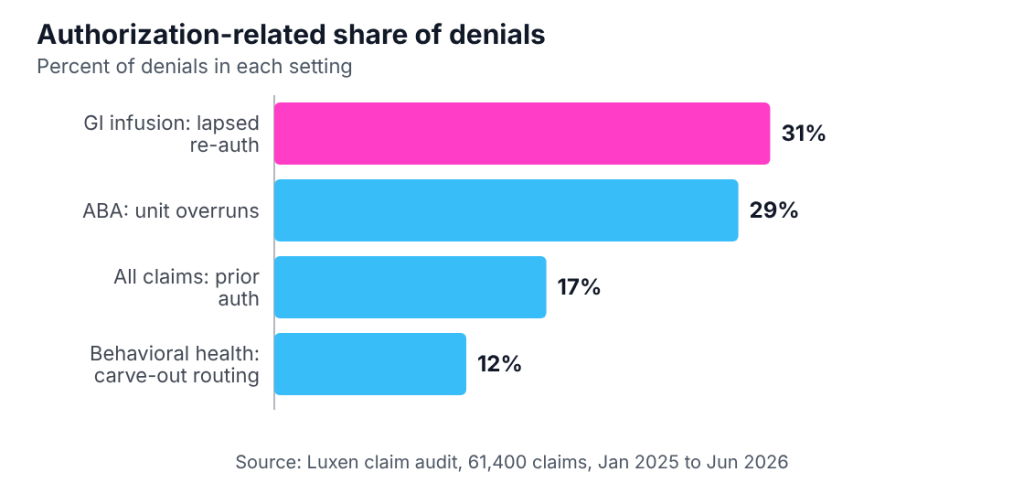


 Written by
  Written by


 Written by Lauren N. Ray
 Author Name: Lauren N. Ray