Many individuals deal with depression on a daily basis. They may not even know they are depressed and push through life. High functioning depression does not leave one bed ridden but parasitically wears the individual down on a daily basis. Like most depression, it may not have an acute reason or loss but merely manifests due to family history or past unresolved trauma. One however continues to function within society and fulfill social obligations.
Many individuals are depressed yet still high functioning. Please also review AIHCP’s Grief Counseling Training
The article, “Understanding High-Functioning Depression” by Sean Glover takes a closer look at High Functioning Depression. He states,
“High-functioning depression, also referred to as dysthymia, can be hard to spot. It doesn’t look like stereotypical depression. Unlike major depressive episodes, which are intense, debilitating, and time-limited, high-functioning depression is low-level, chronic, and doesn’t have a clear trigger. Its very existence can feel maddening.”
Please also review AIHCP’s Grief Counseling Training and see if it meets your academic and professional goals. The courses and program are independent study and online and open to qualified professionals seeking a four year certification in Grief Counseling.
Prolonged Grief Disorder is a complication in the grieving process that prevents the person from adjusting to the loss. It closely resembles depression but is slightly different and can cause as much mental and social turmoil in one’s life. Unlike depression, prolonged grief has a definite source.
Prolonged Grief disorder is a complication in the grief process. Please also review AIHCP’s Grief Counseling Certification
The article, “The pain of prolonged grief disorder” by Allison McCook looks at what Prolonged Grief Disorder entails and the conditions that must be met to be diagnosed with it. She states,
“Every human being will experience grief at some point in their lives — it’s a fundamental human experience. “I think it’s important to underscore that people are equipped to grieve, and for the most part people do it OK,” says Anthony Mancini, a psychological researcher at Pace University in Pleasantville, New York. But some mourners are not OK. When my mother died, I developed what’s known as prolonged grief disorder (PGD), a different sort of grief that psychologists are just beginning to acknowledge and understand. People with PGD — sometimes called “complicated grief” — aren’t just struggling to “get over it.” They have a defined disorder”
Complications in grief can occur and when they do, individuals sometimes need care and guidance from a licensed professional counselor.
Professional counselors can also become certified in Grief Counseling. AIHCP offers a four year certification in Grief Counseling for qualified professionals. The program is online and independent study.
Guilt is a necessary emotion. When anchored with a good conscience, it provokes truth and justice when wrong is committed. It prevents future wrong doing in some cases and helps guide the person to proper moral outcome. It is hence sometimes good to feel guilt. If one lacks guilt in appropriate circumstances, it is a sign of a deeper and more sinister moral flaw. Sociopaths are incapable of guilt and can commit the most grievous offenses without any sense of emotional wrong doing.
Victims can carry disproportionate grief. Please also review AIHCP’s Stress Management Consulting Certification
For the more tender hearted and as well as those who experience trauma, guilt can sometimes become excessive and over play its reach. It can become a pathological agent that prevents proper healing. When guilt is not properly processed and understood according to reality, it can then continue to haunt a person and prevent emotional healing. Guilt must be processed. If due to trauma it becomes part of dissociative material, then it can linger. It needs to find resolution, where appropriate sorrow is displayed and a chance for change and growth occur. When guilt is stunted, either not accepted or over felt, then it can keep a person stuck in the past.
With trauma, guilt is usually not proportionate and a variety of distortions exist. These distortions continue to exist when individuals keep trauma to themselves and do not face it. This is why dialogue is so critical to healing. It allows the wound to bleed and also the opportunity to discuss falsehoods regarding the traumatic event hence allowing integration of the memory.
Most distortions create an imbalance of guilt. Either the person blames oneself 100 percent or finds no blame at all. Associated with this are usually feelings that one does not deserve to live or survivor guilt. In addition, many individuals feel the guilt is critical to show they still care and that they must punish themselves and repeat the pain. Multiple reasons incur this guilt. Many believe they are guilty because they were afraid, or found relief. Others find guilt in having to kill, making a mistake, finding enjoyment in the event, wanting to die, or expressing extreme hatred. Others find guilt in their actions in not being able to save others, not taking precautions, freezing under pressure, not stopping the abuse, or not saying “I love you” one last time.
Many things can haunt a person who experienced trauma. Depending on the trauma and event, they can differ, but they all carry a haunting voice that judges what one felt, did not feel, did, or did not do. Distortions to the event can amplify the sorrow the person experiences.
Dialogue is obvious the first step in unlocking guilt. Various cognitive therapies look to identify guilt and then properly ascertain legitimacy of it. This involves discussing with a therapist the event itself and verbalizing the details. The patient then must attribute the level of what they think was their fault in a numerical percentage. Following this, the therapist challenges the events and asks probing questions of who else may be at fault. The guilt is then re-assessed and a recalculation occurs in which proportionate percentages of guilt are discovered to be less. This process can be repeated weekly to illustrate to the victim and patient that the guilt attributed is far from fair.
Also, the therapist can help the victim distinguish between the emotion of concern versus guilt, as well as shame and guilt. Many equate these emotions with guilt. The sexual victim may equate shame with guilt. In doing so, one can then start to attack the various distortions of guilt.
It is also important to help the patient understand their decision under pressure. Normal decision making under peaceful situations are quite different than decisions under duress. Fight or flight mechanisms can erupt and many lose rationality. So it is good to point out that one does not think the same way under trauma as if not. A therapist can also help the patient look at the choices that were available, the time constraints, all the information at the time and the intent of the outcome.
Another important way to help one see the past is to have the person play the role of two. As if an advisor or friend, to respond to one’s own criticism. By separating oneself from the event, and counseling one as if a friend, one can then begin to see the overall picture. So many therapists recommend patients play a two role therapy of talking and then responding as two different individuals.
It is important to properly process guilt in trauma. Please also review AIHCP’s Stress Management Consulting Program
In addition, various rituals can help. Spiritual visualization of healing, as well as finding forgiveness through a higher power.
Through this, one is better able to properly rank their guilt and true proportionate role in the traumatic event. The person can then understand the situation, move on from it and process it. Through this, the victim can be better prepared for the future and understand the role he or she played.
Of course, various therapies help individuals with PTSD and trauma better recollect the situation and process any negative emotions. EFT, Rewind Techniques, TIR and EMOR are all way therapists can better help an individual relate to the emotions and events of a particular trauma. They can also help the person cognitively restructure the event appropriately to reality. Removing inappropriate guilt is obviously an important step.
Please also review AIHCP’s Grief Counseling Program, as well as Stress Management Program and Crisis Intervention Program. All programs are helpful in teaching professionals to guide others through trauma. The programs are online and independent study and open to qualified professionals seeking a four year certification.
Sources:
“The Post Traumatic Stress Disorder Sourcebook: A Guide to Healing, Recovery and Growth” by Glenn Schiraldi, PhD
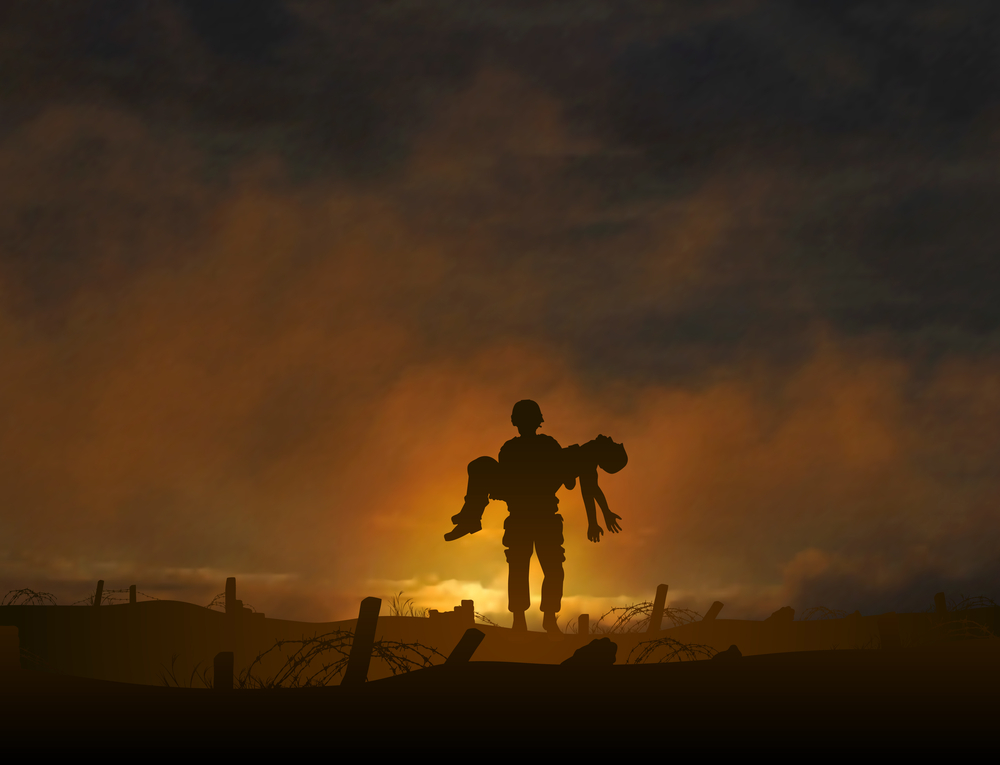
With war comes a type of traumatic loss than many experience. Whether soldier or civilian, the pain and loss is very traumatic. The losses can vary from loved ones to home to identity itself. They can long term consequences of depression, prolonged grief and PTSD. The losses are so severe that they can implant a death imprint on the very person.
Please also review AIHCP’s Grief Counseling Program and see if it meets your academic and professional goals. The program is online and independent study and open to qualified professionals seeking a four year certification in Grief Counseling.
Grief is part of life. As long as love and loss exist, grief will exist. The process of grief is an important part of growing and adjusting. It is not something that is to be rushed, ignored, or not valued. While it is an unpleasant part of life, the grieving process helps one heal and learn to live and adjust to the loss. Grief does not go away but one learns to live with it and the body and the mind must go through the process of grieving to properly adjust.
Grieving is a natural part of life. Please also review AIHCP’s Grief Counseling Certification and see if it meets your goals
The article, “Feeling Pressure to Grow from Grief” from “What’s Your Grief” takes a closer look at the importance of the grieving process. The article states,
“What can be missed is recognizing grief as a handbrake for the motion of life. It is an important and natural evolutionary force telling you to let yourself be, to sit, to grieve, to mourn. This leap to meaning can be an attempt to bypass the reality of loss.”
Please also review AIHCP’s Grief Counseling Certification and see if it meets your academic and professional goals. The program is online and independent study and open to qualified professionals seeking a four year certification in Grief Counseling.
War is the ultimate failure in dialogue. Violence is never justified against another yet throughout history war has been used as a vehicle of violence against countless billions. War in many cultures is seen as a punishment from above and a sign of sin. The Horseman of War is one of the four riders of the Apocalypse spreading hate, violence and death in many of these cultures. In others, war is attributed to the god of war.
Loss and grief from war is always extremely traumatic. It leaves death imprint and deep trauma to those who experience intense loss. Many suffer from PTSD. Please pray for Ukraine
Ultimately war comes from human beings because of greed, envy and hate. It is an absence of reason and a cruel extension of diplomacy by force. With it comes death, loss and suffering at a grand scale. This is especially true for wars that disregard civilian life and human decency. Ironically, war can be justified if for defense and it can also be carried out within a a code of conduct, but rarely does that matter, when even the “just” can fall to blood lust in battle. War has no victors but only those who mourn the loss of life, property and future.
In Ukraine, war has again come to Europe. Loss is everywhere at a traumatic level. The loss is incomprehensible for the victims of the war. The people and soldiers who experience the death and destruction are victims of war’s evil spell. Many experience losses of children, spouses, parents, or pets. Beyond the loss of family, many have lost their entire life savings, as well as future. There is no house to return to due to the bombs, but only ash. Within Ukraine there is also a loss of identity, where the nation itself fights for its very existence.
This type of death mark and traumatic loss will haunt the people of Ukraine for the rest of their lives, well beyond the calendar end of the war. The scars, the trauma, the loss, and the horrendous destruction cannot be forgiven much less forgotten. These poor souls who survive the physical pain will forever be haunted by the emotional and mental pain of this war.
The severe trauma of death imprint is one symptom which will cause a high level of PTSD within the general population. The sound of the bombs and missiles, the rolling of tanks, and the sound of gunfire will haunt civilians and soldiers alike. With no safe haven, these victims will suffer to come to grips with the unprocessed trauma that was witnessed in their own cities. The death imprints of dead in the streets, bodies unburied, and the smell of the dead, will haunt adults and children alike. The pure genocide of a town will imprint itself on the minds of so many. Not only will the loss of loved ones and home be relived, but also the moment itself.
Furthermore, in any mass destruction, there will be a multitude of individuals who suffer from survivor guilt. They will feel guilty they lived and a loved one did not, or they will regret what they did or did not. This will haunt them as they relive the moments of the war. For these civilians, the trauma may be far worst than for a soldier because war should never come to one’s home.
Total destruction of war leaves one asking why? The grief and loss of war is severe. Please also review AIHCP’s Grief Counseling Certification
The mere thought of this also terrifies those from afar. Mentally, most of Western Europe is witnessing the grief of refugees, while others witness the carnage on television. This is creating a fear within the general population of earth of a potential great war, where what is occurring will happen throughout the world. The anxiety and fear of a greater war ending in a nuclear holocaust between the West and Russia is awakening anxiety, anger, fear and grief.
This war is only to real not only for those who are suffering from it and fighting in it, but also those witnessing it from afar. Seeing small children die, or civilian homes destroyed from missiles afar all awake a fear to everyone else. Anyone with empathy can feel the pain but also the fear of sharing that experience. Many are experiencing an anticipatory grief with fears of losing loved ones in a major conflict. A once never conceived idea of massive loss and pain is now potentially materializing for many people throughout the world.
This war will no doubt scar a generation. Many will need counseling to deal with trauma, PTSD, and depression. The type of loss and inhumane bombing taking place in Ukraine is not something one simply forgets. It is not a type of loss that can be rationalized. It is unnecessary and shocking. It is an evil with no purpose perpetrating by an evil man. This is the hardest type of loss for individuals to process. The question of why and how? Individuals will never fully understand why their lives have been torn away never to be the same. Their lives are the things of nightmares.
Many from afar suffer anticipatory grief and the fear of nuclear holocaust.
These are the types of losses that war produces. War creates such horrible and unimaginable loss of loved ones and homes and crimes against humanity that the human brain cannot fathom it. The trauma is fragmented and never able to be processed in a healthy way. Instead, the loss haunts and creates this horrible imprint upon those who experience it.
Grief Counselors and licensed counselors and other therapists will need to help individuals process the pain of loss well after the conclusion of this war. This will be no easy task as many will remain depressed and numb to the cruel atrocities this war has created. In addition to treating PTSD and depression, individuals will need treated for a variety of anxiety disorders and substance abuse issues that will result from attempting to escape the pain. Crisis Counselors will have to help individuals find some hope, despite the horrible despair and suicidal ideas that may enter their minds. How does one rebuild from this war? The hopelessness will be very real in these souls and it will take well trained mental health care professionals to help these individuals find hope.
It will also take the rest of the world to give hope through time, prayers and financial donations to help rebuild lives. Buildings can be rebuilt, but for others, loss of limbs, or loss of family cannot. Some will never find the peace despite this aid but will have to learn to cope with the loss of a loved one, son, daughter, sibling, parent or dear friend, even a devout pet.
Please pray for Ukraine and peace in this world.
Please also review AIHCP’s Grief Counseling Certification and see if it meets your academic and professional goals. The program is online and independent study and open to qualified professionals seeking a four year certification in Grief Counseling.
Sadness and its social expressions as well as interior manifestations help the body react to loss and help the body find the interior and social aid it needs to adjust to that loss. So while many hate to be sad, it is an important step in resolving loss and becoming adjusted to the loss. Anything worth of value that is taken will always cause this reaction of sadness in loss.
Please also review AIHCP’s Grief Counseling Certification and see if it meets your academic and professional goals The program is online and independent study and open to qualified professionals seeking a four year certification as a grief counselor
When devastation occurs in nature, there is a sense of loss. When individuals lose natural resources, their is a collective and ecological grief. Some cases are more acute, while others represent a universal problem that affects all human beings on earth.
Please also review AIHCP’s Grief Counseling Certification Program and see if it meets your academic and professional goals
Acute levels of grief that persist and refuse to lessen in intensity are complications and not part of the normal grieving process. Obviously we think of depression, but there is also Prolonged Grief Disorder which is persists beyond 6 months of the loss. Individuals facing complications with grief, need to see a licensed therapist.
Prolonged Grief Disorder is a complication of grieving. Please also review AIHCP’s Grief Counseling Certification
The article, “What Everyone Should Understand About Prolonged Grief Disorder” by Deborah Seranl looks closer at this complication of grief. She states,
“Prolonged Grief Disorder will vary in intensity, but for children and adults, grief reactions occur most of the day, nearly every day. For children, the death which caused this experience must be 6 months or longer, and for an adult, 12 months or longer. Individuals who experience Prolonged Grief Disorder have significant distress in social, occupational, or other important areas of functioning. Emotional numbness, loneliness, identity disruptions (who am I without you) and a marked disbelief about the death leaves many feeling life is meaningless. ”
Please also review AIHCP’s Grief Counseling Certification and see if it matches your academic and professional goals. The program is online and independent study and open to qualified professionals seeking a four year certification in grief counseling.
Many individuals lose identity with grief. A loss limb, or a loss of a loved one that they identify with. A father or mother may no longer feel like a parent if they lost a child. Grief can transform one’s identify of self.
Please also review AIHCP’s Grief Counseling Program and see if it meets your needs. The Grief Counseling Training is online and independent study and open to qualified professionals.