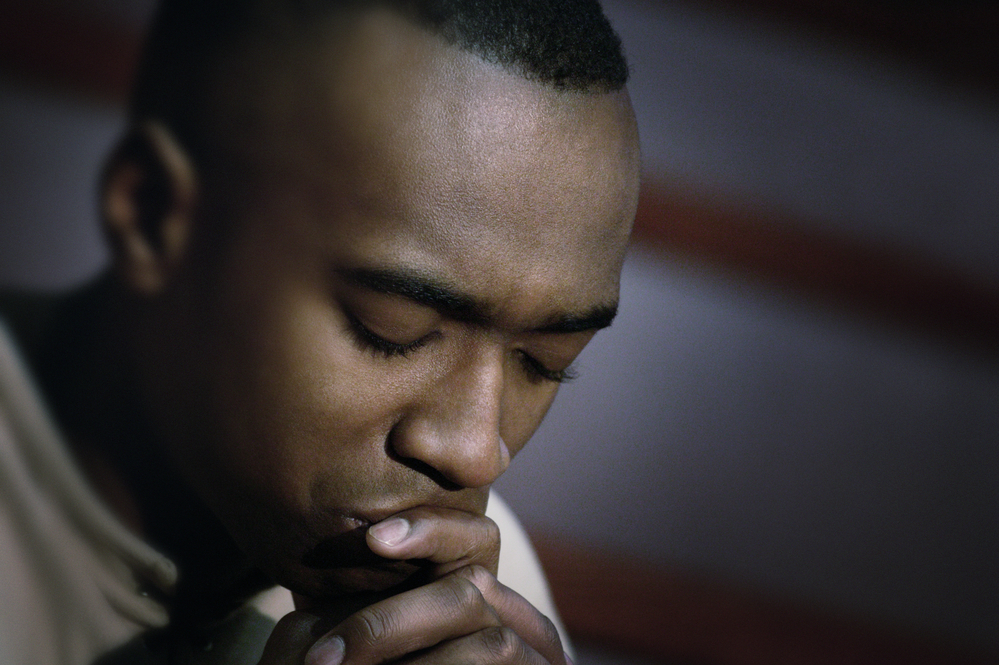
Mental Health Stigma

When someone is physically ill with symptoms one goes to one’s physician.   When someone is sick or ill, others do not consider it a handicap.  If one has diabetes, they do not discriminate or spread gossip in a negative way.  Yet, the moment someone has a mental health issue, various nicknames or prejudices emerge that the person is weak or even worst crazy.  Society has laid a stigma upon the idea of mental health as not a legitimate health issue and makes individuals ashamed of their condition or and feel foolish to seek help.

One can see it in social norms that demand men should never cry, or one should get tougher when it gets life gets rough.  No wonder there is a mental illness crisis in the United States with numerous mentally ill not receiving care and some even resorting to suicide or mass shootings.  While those who engage in anti social behavior are of the most smallest percentage of those facing mental issues, there are millions who suffer from unresolved trauma, depression, bi-polar, anxiety, ADHD, OCD and a host of other conditions.  If individuals would treat their mental health as their physical health, many would lead far more happier and productive lives.

Please also review AIHCP’s Grief Counseling Certification as well as AIHCP’s other multiple mental health certifications in Anger Management, Stress Management, Crisis Intervention and Substance Abuse Practitioner.   The programs are online and independent study and open to qualified professionals seeking a four year certification in any of the above programs.

Negative Coping

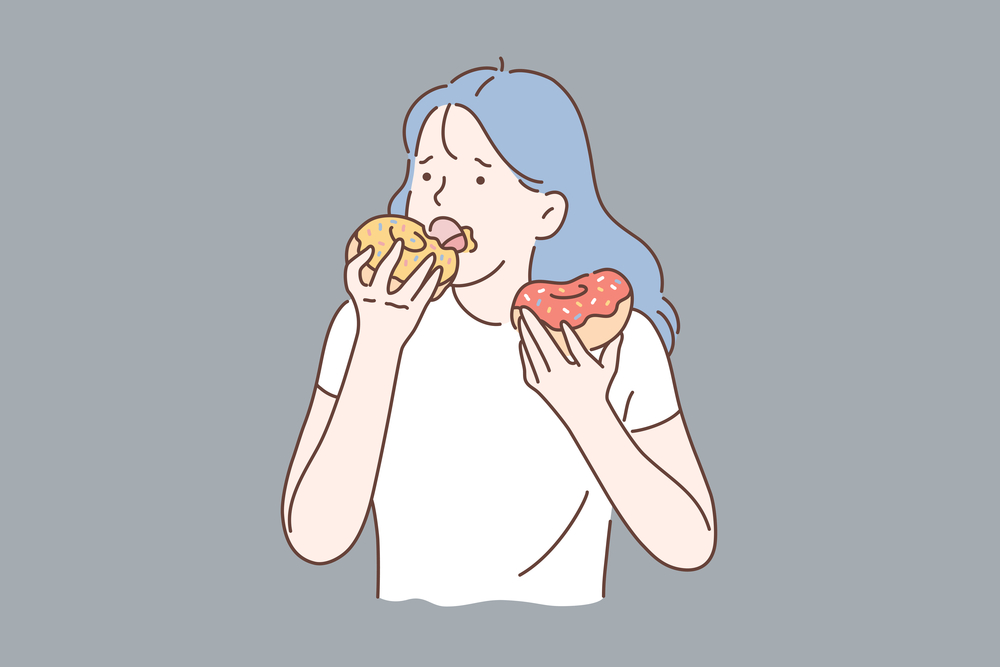
Negative coping can make grief worse than it is.  It can lead to later complications.  It is hence important to do grief work.  It is important to acknowledge the loss and work with it.  This may involve some bad days but it is working towards an adjustment of living without something or someone.  By avoiding the loss, or doing more uninhibited activities, or taking pills or drugs, one is ignoring the loss and problem.

Please also review AIHCP’s Grief Counseling Certification and see if it matches your academic and professional goals.  The program is online and independent study and open to qualified professionals seeking a four year certification in Grief Counseling

Attachment Disorder Video

Human bonds are very important since human beings are social.  When bonds are not formed properly in early childhood, the effects on the personality of an individual can be devastating.   Individuals can have difficulty forming healthy and trusting relationships with other individuals.  It can affect relationships and other social bonds with friends and family.

Some individuals may have inhibited or uninhibited attachment disorders which avoid intimacy or form superficial and fake relationships without substance.  Some may exhibit more avoidance while others may display an extreme anxiety with others.  This has tremendous affects on loss and grief as well because it forms complications when a person passes away.

The video below discusses the topic of attachment disorders in greater detail.  In the meantime, please also review AIHCP’s Grief Counseling Certification and see if it meets your academic and professional goals.  The program is online and independent study and open to qualified professionals seeking a four year certification in Grief Counseling.

Please review the video below

LGBTQ Diversity and Grief Video

Different minority groups share different social traumas and collective grief.  The LGBTQ community is no different in experiencing its own pain and suffering in the world.  The collective grief that is shared within the community when a night club is shot up not only resonates within their community but also causes trauma and fears of other hate crimes that can be perpetrated against them.

Individually, they face uphill battles within their families, churches and communities.  Many are discriminated against by family members or potential jobs.  Some lose parents or siblings over their identity.  Others face issues within their faith as moral questions take central stage.  Along with marriage rights and civil rights, the grief of having an alternative life style can be over bearing.

Please also review AIHCP’s Grief Diversity Certification.  The program is a sub certification for those already certified as Grief Counselors.  The program is online and independent study and open to qualified professionals looking to better meet the diverse grief experienced by minority groups.

Grief on the Brain

Grief effects the whole entirety of the human person.  The emotional aftershocks of a loss are so emotionally devastating that the after shocks rock the brain and in turn physically rattle the body.  Individuals who lose a person they loved hence experience a total reckoning as the body looks to readjust and recalibrate to the loss itself.  When this occurs, the brain itself is rewiring itself with neuro pathways to associate with the loss and initial unprocessed and raw feelings.  These raw feelings  surge from the amygdala and trigger a variety of neurochemicals within the brain that deal with the loss and pain of someone dying.

Grief and loss have a staggering effect on the brain. Please also review AIHCP’s Grief Counseling Certification


Like stress, the flight or fight response is activated which increases the heart rate, raises blood pressure and produces cortisol to deal with the stressful and painful trauma of losing someone.  This of course gives more free reign to the amygdala over the reasoning area of the pre-frontal cortex.  This is what leads to more emotional outbursts, less reason, less memory, and less concentration itself.  In reality, the brain and its entirety of parts is in some way responding to the loss itself.

The article, “How does grief affect the brain?” by Joe Phelan looks at the many issues associated with the brain’s reactions to loss and the after effects upon the human body.  The article is strongly based off Lisa Shulman, a Neurologist who studied extensively the effects of grief on the brain.  According to Shulman,

“The amygdala [the brain’s center for emotions], deep inside the primitive part of the brain, is always on the lookout for threats,” Shulman said. “When triggered, it sets off a cascade of events that put the entire body on high alert — the heart speeds up, breathing rate increases and blood circulation is increased to the muscles to prepare to fight or flee.”

“How does grief affect the brain?”. Joe Phelan. January 8th, 2023. Live Science

To read the entire article, please click here

Grief Work

Helping the brain heal is what grief work is all about.  Grief work helps re-create new neuro pathways that can associate other connections with the deceased that are not only associated with the death itself.   The brain, evolutionary, will long the absence of a loved one.  This is critical for survival, so naturally it takes time to create new neuro pathways that are beyond simply mourning and trying to find the one who is no longer present.  The yearning is a direct result of this and until adaptation manifests and new neuro pathways with new experiences are paved, then one remains in deep grief.

Rewiring one’s neuro pathways in relationship to the loss involves grief work and reconstructive narratives of one’s life


When Pro-Longed Grief occurs or more severe grief due to trauma, complications can occur which can keep the brain trapped in acute grief.  The unprocessed and raw emotional pain, similar to memories and sensations in PTSD, are not processed into long term memory.  This can lead to longer grieving periods until the information and memory is properly processed, stored and new neuro pathways allow for different connections with the deceased.

It is hence a sad tragedy when grief literally kills one of a broken heart.  When things are not processed, adjustments not made, the constant chronic state of fight or flight can produce extra stress on the heart and blood pressure itself.

Reworking Neuro Pathways

Meaning reconstruction is key in helping rework neuro pathways in the brain that associate the loss in a new perspective but also allow memory to properly be processed within the brain.  This helps prevent intense emotion that oscillate with more frequency and intensity in the early stages of the brain from continuing to do so many months later.  Meaning reconstruction also helps create a new narrative regarding the deceased, re-establishing a new relationship not found in the temporal world.  It also helps connect the loss with the present and future, as if chapters within a book.  The past chapters of the person’s life and the deep connection with parent or spouse are still integral parts, but those relationships are adjusted and understood in new ways of the person’s next chapters.

Ways to begin to carve out new neuro pathways include journaling and memorializing.  Through these two grief works, one is able to remember and honor.  The words on paper can help the person adjust and the new memorials can help them cherish the past but also strengthen the bond in its new form.  Grief work is tough but throughout, the brain begins to form new connections and grief leaves its acute stage and enters into a far less disruptive force.

Does this mean the loss goes away?  The sense of loss never leaves.  The connection in the brain and memories can trigger intense emotion, but these triggers are natural and not pathological as in cases of PTSD or depression.  As long as love once existed, then the loss will always have meaning and tears can emerge at a moment’s notice.  This is not bad but is the result of an emotional scar of losing someone very dear and special.  It is to many individuals a sign of their undying love and reminder of the value of the person no longer present.

Conclusion

To understand more about how grief effects the brain, please review AIHCP’s Grief Counseling Training


Grief has a profound effect on the soul, mind and body.  It takes time to adjust to it without ever truly healing. However, like all wounds, despite the scar, one heals.  Retraining the brain so one can again emotionally function is the aspect of grief work.  Adjustment is essential and new neuro pathways are key to that adjustment.  With so many false ideas about grief and myths regarding it, individuals can grasp in the chaos of loss longer than they need to.  Grief Counselors can help individuals suffering from the trauma of loss and help guide them through the difficult process.

Please also review The American Academy of Grief Counseling’s Grief Counseling Certification and see if it meets your academic and professional goals.  The program is online and independent study and open to qualified professionals seeking a four year certification in Grief Counseling.

Bibliography

“How does grief affect the brain?”. Joe Phelan. January 8th, 2023. Live Science

Additional Resources

“How your brain copes with grief, and why it takes time to heal”. Berly McCoy. December 20th, 2021. NPR. Access here

“How grief rewires the brain and can affect health – and what to do about it”. Michael Merschel,  March 10th, 2021.  The American Heart Association. Access here

“What Does Grief Do to Your Brain?”. Traci Pedersen. May 6th, 2022. Psych Central.  Access here
“How Grief Changes the Brain”. Sophia Dembllng. August 18th, 2022. Psychology Today. Access here


Grief Diversity within Different Minority Groups Video

People of color, minorities, and those not traditionally of European descent face unique struggles, traumas, losses and griefs.  These diverse groups include African Americans, Native Americans, Latinos, Asian Americans and historically in the past even Irish Americans in the 1800s.  Those who failed to fit the WASP mode have a unique cultural and diverse grief experience.  While America on paper was the land of the free and equality for all, the reality fell short for many peoples.  Slavery of African Americans and genocide against Native Americans are only but a few dark moments in American history against others.  While history cannot be rewritten it can be remembered.  While patriotism and love of country is critical, it does not mean patriotism is equal to nationalism and blind eyes to sins of one’s nation.

Individuals within minority groups face unique and collective grief from the past but also experience trauma collectively and sometimes individually in the present.  Police brutality, racial profiling and racially motivated shootings all can trigger a more hyper vigilance within minority communities and individuals.  As Grief Counselors it is important to see the scars of collective grief and how it imparts on various individuals within minority communities.

Please also review AIHCP’s Grief Diversity Program.  The program is for certified Grief Counselors looking to enhance their grief background and add additional certifications to their resume.  The program is online and independent study and opens many to the different types of grief and loss and history faced by minority communities.

Minority Grief and Grief Diversity

Minorities suffer a unique type of collective grief that is experienced through a shared history and shared present day struggle.  Whether African American, Latino, Asian, or Native American, minorities and cultures face unique persecutions in history that manifest within the individual consciousness.   The history and persecution of minorities in the United States is a black eye to this nation but through proper understanding and accountability, these past wrongs can be made to awaken the current generation to better future choices.

Minorities share a unique and collective grief. Please also review AIHCP’s Grief Diversity Certification


Unfortunately, racism and hatred still exist towards minorities.  Police brutality and inequality re-open old wounds and create a sense of loss within minority communities that create a sense of fear,  mistrust and grief within it’s members.  Grief Counselors need to understand this unique grief and the issues these minority groups face daily.

Please also review AIHCP’s Grief Diversity Certification.  The program is a supplemental certification for those who are already Grief Counselor certified and looking to enhance their understanding of grief and loss within diverse minority groups.  The program is online and independent study and open to qualified professionals.


Please review the video below

Grief Support Vs Clinical Grief Counseling

Grief care and support is a key element in mental health.  It is not a pathological treatment but a humane way to be there for another person.  This is why it is lay and pastoral in nature within church, chaplaincy, hospice, funeral, and other pastoral settings.  Many professionals help individuals deal with basic human loss and how to come to terms with it.  AIHCP certifies many individuals to help others in this adjustment to loss and how to understand the nature of grief and loss itself.

There is a large difference between grief support and clinical grief counseling. Please also review AIHCP’s Grief Counseling Program


AIHCP’s certifications also aid others who are clinical professionals who wish to obtain a Grief Counseling Certification.  However, licensed and clinical professionals are innately able to offer more than basic lay and pastoral grief counseling but can offer clinical counseling for grief that goes off the rails.  When grief becomes pro-longer, complicated or depression exists, clinical and licensed counselors are needed to help and aid.  Those who obtain certification in grief counseling but are only lay in nature cannot offer clinical assistance in grief itself.

It is important to understand these key differences between lay and pastoral grief counseling via grief support and licensed and clinical grief counseling itself.  This is one of the most numerous questions individuals ask when becoming grief certified.  They do not understand the differences between grief support and clinical grief counseling and what a certification in grief counseling permits them to perform.  Again the answer is simple, ones certification enhances understanding in the grieving process but the level at which one helps others is determined not by the certification but the professional status of the individual seeking certification

Please also review AIHCP’s Grief Counseling Certification and see if it matches your academic and professional goals.  The program is online and independent study and open to qualified professionals seeking a four year certification.


Please review the video below

Middle Age and Change Video

Change is a part of loss.  Any loss of something incurs the debt of change and adjustment.  Aging is no different.  After adolescence, midlife is a difficult time for many men and women. The loss of youth itself can play a large role in anxiety and loss.  Greying hairs, loss of hair, wrinkles, gained weight, and lack of past athleticism can cause grief and sadness.  In addition, reflection on missed goals, lost opportunities and failures in life can play a impactful role on how one views oneself.  Still, even more so, lost of family and new family roles can terrify some individuals.

Change occurs in middle-age and how one copes means the most. Please also review AIHCP’s Grief Counseling Certification


These shocks and adjustments can lead to negative coping where individuals revert to immature behaviors, utilize drugs, avoid responsibilities, purchase lavish things or pay for expensive surgical procedures.  Positive coping reflects and adjusts in a mature fashion.  It may look to accomplish goals that were abandoned or re-calculate where one is in life.  It may also help individuals better appreciate what one has or even reflect on the advantages of middle age over early 20s.

Please also review AIHCP’s Grief Counseling Certification and see if it meets your academic and professional goals.  The program is online and independent study and open to qualified professionals seeking a four year certification in grief counseling


Please review the video below

Ambiguous Grief

Ambiguous Grief is a loss that cannot find closure.  It often involves dealing with someone in coma, possesses a mental disorder that prevents them from living a fulfilling life, or cases of abduction, missing children, missing pets, or soldiers lost at war.  The person is unable to find closure in processing the type of loss.  Some give up hope because holding on hurts too much, while others never surrender.  Numerous emotions erupt in this type of loss. Individuals may be enraged or feel guilty.

Ambiguous grief and the pain of not knowing prevents closure. Please also review AIHCP’s Grief Counseling Certification


Some look to find meaning in the loss through social activism and helping others find closure.  Overall, it is a grief ripe with complications that haunts the person the rest of his or her life.  It is good to allow those who wish to hold on to hope to continue within realism, while others who need to let it go, to finally let it go.  Depression is very common with this type of loss so in many cases extensive counseling and support is needed.

Please also review AIHCP’s Grief Counseling Certification and see if it matches your academic and professional goals.  The program is online and independent study and open to qualified professionals seeking a four year certification


Please review the video below