Great video on an introduction to Trauma Informed Care. Please review AIHCP’s numerous behavioral health and healthcare certifications

Great video on an introduction to Trauma Informed Care. Please review AIHCP’s numerous behavioral health and healthcare certifications
Many times in counseling when discussing trauma, emotions can emerge tied to the unresolved trauma that can de-regulate a client/victim/survivor. Discussing issues of abuse, or loss, or traumatic memories whether current or in the past can cause individuals suffering from unresolved trauma to dissociate from the present, flashback to the past, or enter into states of emotional dysregulation. Licensed counselors who specialize in trauma care and crisis intervention have strong understandings to utilize techniques to help ground and contain negative emotions associated with trauma. Unlicensed mental health professionals in crisis response or even pastoral care may sometimes come across individuals who also need these same techniques due to acute crisis or trauma. It is hence important to understand how to help individuals suffering from PTSD, acute trauma, or unresolved trauma with the appropriate techniques to help victims or survivors find stabilization. This article will focus more on in session counseling and long term trauma care than immediate psychological first aid which is addressed in other blogs. Primarily, we will discuss the therapeutic relationship’s window of tolerance with a victim/survivor, how to expand this window, and review various techniques found in grounding and containment to help others find calm and peace.
Please also review AIHCP’s Trauma Informed Care Certification, as well as its Crisis Intervention program and also all of AIHCP’s Healthcare Certifications.
In counseling, individuals can experience emotional dysregulation due to unresolved past trauma. Simple triggers of retelling the story, to similar images in a room, or a familiar scent can reset a person and dissociate, flashback, or cause intense states of hyperarousal or hypoarousal. Compton explains that individuals can experience two types of dysregulation. In hyperarousal, the person becomes angry, anxious, hypervigilant, or impulsive (2024, p. 208). Compton points out that with hypoarousal the opposite occurs when the person experiences withdraw, numbness and lack of emotion even in some cases to a state of dissociation (2024. p. 209). In the fight or flight response, counselors will see anger and anxiety, but during the freeze response, counselors will see the shutdown. These are natural ways the body and brain responds to past trauma. The key is how easily can one’s system return to a state or emotional regulation when dealing with these triggers or reminders that cause emotions to emerge. Individuals in trauma can be stuck in a variety of phases, some may exist in a state where they feel no safety anywhere, others may exist in a state where safety may not be an issue but trust is totally lacking. It is the goal of the counselor through the therapeutic relationship to help victims again find phases of regained power, regained self esteem and eventually the phase where they can again reintegrate with society and form healthy relationships. It is within the Window of Tolerance of a person’s emotional state where this healing can occur.
The Window of Tolerance is term phrased by Ogden, Minton and Pain that refers to the optimal window of time between hyper and hypoarousal states in which a person can experience balance (Compton, 2024, p. 209). Within this period of time, therapeutic counseling can occur where the trauma can be discussed and better ways to cope can learned by the client. During this time as well, the reasoning part of the brain as opposed to the emotional part has more awareness to communicate, reason, learn and grow (Compton, 2024, p. 209). Counselors can help clients learn how to operate and heal within the window but also learn ways to expand this window in real world settings through a variety of skills. Counselors can help clients co-regulate their emotions within the window and expand it through supplying empathy, support, a safe and secure environment and also preventing re-trauma by limiting or eliminating potential triggers.
Counselors during this time through the therapeutic relationship can help with focusing on the needs of the client and being aware of discomfort or physical manifestations associated with mental discomfort. Compton points out that the term “interoception” best describes the ability of a counselor to have this type of awareness of what is happening inside someone based on what the body is displaying or doing in the moment (2024, p. 196). this is why watching for non-verbal cues is key in counseling during the selective attention skill of focusing. During this important window, counselors should engage their clients. By focusing, reflecting and providing context, counselors can help survivors understand their trauma better (2024, p. 197). In addition to engaging, counselors need to help clients process emotion and then help them reflect on it. The biggest part of processing is not only discussing it, understanding it, and reframing it but to also learn how to manage it.
Within trauma counseling, it is important to utilize the window of tolerance but it is also equally important to track the client’s body and behavior for signs of either hyperarousal or hypoarousal. It is also important to track oneself, since sometimes the stories and events relayed can even shock a counselor and cause deregulation within. It is important to note that most individuals exist within a normal operating existence of balance when viewing safety and conditions. The securing of safe environments and the scanning by the brain to ensure safety within a environment is referred to as neuroception. A person in a calm and secure state is not activating the sympathetic nervous system but is existing in normal state where the cognitive functions of the brain are operating. When the sympathetic nervous system strikes it can close down cognitive functioning and increase emotional responses. Fight, flight or freeze, or even fawn can emerge as reactions to this. Interesting enough in cases of hypoarousal, the parasympathetic system, the calming aspect of our nervous system, can deactivate an individual due to the intensity of the trauma or recalling the trauma. When working with survivors or victims, merely recalling traumatic events can cause a hyper or hypoarousal response. This can affect healing and reduce the window time tolerance to discuss the trauma with the cognitive functions operating.
Tracking emotions and signs is hence an important skill for a counselor in any session but even more so when helping individuals in intense grief, loss, crisis or intense trauma. In states of hyperarousal a person will display various physical and also behavioral symptoms. In essence the person cannot calm down. Clients in hyperarousal can display anxiety, irritability, panic or rage. They may have racing thoughts, or an inability to concentrate and may display signs of hypervigilance during the session. Physically they have increased heartrate, muscle tension, clenched jaw, closed fists, display sweating or have a racing heart rate. Behaviorally, they can display an overall restlessness which may be affecting their sleep and impulse control. They may fidget and move and express emotions easily during the session. This can lead outside the counseling room to regular life in feelings of being on edge, easily irritated, over-thinking social interactions, and feeling uneasy in social settings (Mindset Explained, 2025).
When tracking, a counselor also needs to track possible signs of hypoarousal. Hypoarousal can be induced by either the sympathetic or parasympathetic. It is usually tied to parasympathetic functions that relax the body but in these cases it shuts the body down as a self defense mechanism to the trauma or even thought of the past event. A person experiencing hypoarousal will display detachment, numbness and seem withdrawn and lacking motivation. Cognitively, they may be slow to speak and appear confused and lacking details about events. Physically they will seem lethargic and have a slower heart rate, display fatigue, or over relaxed muscle state. During a session, they may zone out or seem distracted. Behaviorally this can lead to intense isolation outside the counseling room. Many may have a hard time getting out of bed, or detach from loved ones, feel powerless and lose interest in things they like to do (Mindset Explained, 2025).
In both cases, counselors need to be aware of these signs but also know when to utilize activation strategies for hypoarousal or settling techniques for hyperarousal. In these cases, settling or activating becomes the choice a counselor needs to make. In states of hypoarousal activities that help the person activate the nervous system include helping the client begin to move, via stretching, or walking around can be a first good start. Other ways to activate include grounding techniques that are tied to touch and sense, such a the feeling of a cold object or ice cube, or the splash of water on the face. Other forms of breathwork, as well as cognitive activation through counting or labeling things in the room can also aid the client. Sometimes music can be helpful, or even the scent of a candle (Mindset Explained, 2025).
With hyperarousal, the concern is to settle, not activate. Hence, breathing exercises, ground techniques such as holding something, or touching something, as well as sensory and cognitive ways to help the person remain in the present. Progressive muscle relation techniques as well as guided meditation and visualization can help a person induce the parasympathetic system as well. We will discuss more types of ground and containment strategies later in this article. What is optimal is a stable state of being. Stable and emotionally regulated states allow the window of tolerance to be utilized in therapeutic sessions. Healthy states permit better focus, cognitive functions, stronger relationships, better sleep and better energy levels to cope with stressors and potential triggers (Mindset Explained, 2025).
One thing to consider and be aware of is that while helping others, counselors can also enter into various states of hyperarousal or hypoarousal. The term reciprocal defense mobilization is the mirroring of emotional states. While ideally the counselor is the co-regulator in a session providing energy, trust and security to the person, sometimes horrible stories or emotional breakdowns can affect the counselor. In fact, past trauma of the counselor can also be triggered in counseling. This type of vicarious trauma can have acute affects on the session but also long term affects and burnout for the counselor. If a counselor is affected via hyper or hypoarousal, the ability to listen, exercise empathy, or help the person heal can be at risk. Hence counselors may sometimes need to activate or settle themselves. It is harder though for a counselor to express these feelings or exhibit certain strategies while counseling and because of this counselors need to be able to subtly activate or settle themselves. In cases of hypoarousal, a counselor may notice one’s own signs of shutting down and look to activate by clenching one’s fist or hand or shifting or tapping one’s foot. A counselor can also discuss both parties standing up and stretching as a ploy to not only help the client but oneself. A break or a pause can be helpful for both client and counselor in these cases. During hyperarousal, a counselor can label, or count, or focus on one’s own breathing.
One should consider basic strategies to manage both hyperarousal and hypoarousal in daily life. In regards to hypo, utilize frequent exercise if possible, alone, if public gyms are unsettling. Utilize breathing and mindfulness, and create and stick to routines that give a sense of accomplishment and work on connecting with others, especially those who are closest. Even if a short phone call or text! For hyperarousal, one will utilize more grounding techniques in daily life which will be discussed below and also employ relaxation and meditation, as well as with creating a calmer environment with music, or scented candles (Echowave, 2025).
A person during counseling who becomes hyperarousal needs various help to manage his or her emotions within the session. These skills and techniques can help not only help them regulate and expand the window of tolerance in session but also be applied later to out of session in the world experiences. The two most common types of skills taught in counseling for individuals with unresolved trauma and PTSD are grounding and containment.

Grounding techniques can be sensory, cognitive or somatic in nature. In sensory grounding, the counselor utilizes the five senses to help a survivor find placement in the present. In regards to the sense of touch, it can be as a simple as feeling the feet on the ground or the soft touch of the couch on the finger tips. A counselor should help the survivor with calming words describing the sensation one feels as the fingers sway across the texture of the couch, or the firm feel of the foot against the hard floor. In some extreme cases, ice in a person’s hand can be used to help a person find the present. In all cases, the sense of touch should be used especially carefully when counselor or client come into contract via a tap on the shoulder or a hug because these things could possibly be a trigger to the prior abuse (Compton, 2024, p. 214). With sight, the counselor can direct the client to note anything in the room they see and what color it may be or details one may not have noticed before. The scent of smell can help calm through oils, incense or candles that can help a person find calm but again be aware of your client’s history and scents that could trigger him or her. With taste, sometimes, one can focus on a piece of candy available and the taste of it, or imagine a particular dessert. The counselor gently inputs into the mind these scenes to help the client find regulation (Compton, 2024, p. 212). From a cognitive approach, a counselor can have a client count from a higher number down to zero to exert awareness of the now or have the client name things within the room to help the person find connection to the present. From a somatic approach, breathing exercises can be employed to help grounding. In fact, breathing exercises are sometimes the first utilized to help a person calm. Deep breathing initiate the parasympathetic nervous system which reverses the affects of the fight or flight response. The deep inhale and exhaling can lower the heart rate and help a person find calmness. Usually the breathing is done with some type of visualization. One common theme is balloon breathing where the client is told to imagine a balloon inside oneself and as one inhales to imagine the balloon inflating and while exhaling to imagine the balloon deflating (Compton, 2024. p. 212). The breathing should be coming from the abdomen and not the chest since chest breathing is usually associated with anxiety. To ensure proper breathing, one can tell the client to put his or her hand on ones chest and stomach and see which part of the body is moving more. One can also utilize touching the shoulders to see if the shoulders are rising which is indicator of chest breathing.
While grounding helps a survivor find the present and remain engaged, containment skills can help clients learn to control uneasy emotions. The tool of containment helps clients break away from traumatic memories and feelings (Compton, 2024, p. 215). Containment tools include visualization and various expressive arts. Most of these tools are also utilized with breathing techniques and can be used in session as well as in the real world. When working with clients expressive arts are similar to play therapy with children. They can help a person find calm when discussing difficult issues. Compton references vertical regulation as way for the survivor to draw lines of different colors up and down a page while deep breathing. Other expressive arts include dance and music to help with hypoarousal to push energy into the person. Liturgical or spiritual music can be utilized if it provides the necessary calm, or secular music that the client enjoys (2024, p. 211). Creative writing is another expressive art used to contain emotion. In expressive writing, one can write a note to oneself, or a parent, or God, or anyone the client freely wishes to write too. The message can be a positive one that employs safety and security (2024, p. 212). Visualization and breathing remain one of the most used containment practices in sessions. With guided breathing and the visual scripts from the counselor, the client can visualize safe and secure places when facing trauma memories or uncontrolled emotions. One classic visualization technique is imagining the a container in which the client can put all the unwanted emotions into and cover with a lid. The counselor guides the client to understand that any intrusive thoughts at any time can be stored in this container, box, or chest when needed (Compton, 2024, p.216). The key is to discover a safe, secure and calm place. Many times counselors will lead a guided visualization of a place the client finds peaceful. Whether a cabin in the mountains, or a spot on the beach, the counselor can take the client back to that place or peaceful place in time. During which the client will close his or her eyes, breath deeply and follow the voice of the counselor describing the calm associated with these places and times. Butterfly hugs are also a tool that can be utilized during visualization in which the client is taught to hug oneself and allow their hands to tap their back in assurance and calmness (Compton, 2024, p. 217).
In all of these exercises, if the person is spiritual or religious, spiritual aspects and words can be utilized on a case by case basis to help the person find calm. For some, spirituality may be beneficial but for others who were exposed to spiritual abuse, it may not be warranted. If spirituality is accepted and desired, sometimes clients can breathe in with a statement about God and breathe out with a statement of safety, such as “God is good” and “I am safe”. In other cases, scriptural references that the client enjoys can be utilized from whatever sacred book he or she adheres to (Compton, 2024, p. 218).
In all cases, help the client be in control. The purpose it to help the client learn to regulate and being in control is key, especially when the survivor is not in session. In such cases, when introducing breathing techniques or new tools, instead of dictating, or saying “do this”, utilize phrases such as “would this be helpful to do this?”. This reduces distress and gives autonomy to the survivor who in many cases, if abused, was told what to do numerous times.

Many situations in counseling trauma victims/survivors require helping them to learn to regulate emotions. These skills are important both in session and out in the real world. In session, it helps extend the window of tolerance which then can be applied to real world situations. Skills in grounding and containment help clients with hyper/hypoarousal and maintain control and learn to deal with the symptoms of trauma in a positive fashion. These tools in counseling also allow for the discussion, reflection and processing of the unresolved trauma. It is important to remember that when treating trauma, it is a marathon not a sprint. These skills take time to implement and the body and mind need time to heal.
Please also review AIHCP’s Trauma Informed Care Program, as well as its many healthcare certifications in crisis intervention, grief counseling, stress management and Christian spiritual counseling. All programs are open to qualified healthcare and mental health professionals seeking four year certifications to utilize within the scope of their practice. The healthcare programs are online and independent study and have mentorship as needed.
Compton, L & Patterson, T (2024). “Skills for Safeguarding: A Guide to Preventing Abuse and Fostering Healing
“Hypo-Arousal and Hyper-Arousal: Nervous System Dysregulation”. (2025). Mindset Explained. Access here
“Feeling Hypo or Hyper Aroused How to Spot the Subtle Signs”. (2025). Echowave. Access here
PTSD-click here
Counseling Clients through Crisis, Danger and Harm-click
“13 Grounding Techniques for When You Feel Overwhelmed”. Cleveland Clinic. Access here
Schuldt, W. “Grounding Techniques”. Therapist Aid. Access here
Sutton, J. (2022). “7 Best Grounding Tools and Techniques to Manage Anxiety”. PositivePsychology.com. Access here
Caporuscio, J. (2024). “Step-by-step guide on grounding techniques”. Medical News Today. Access here
Gale, A. (2025). “Hyperarousal vs. Hypoarousal”. Carepatron. Access here
Alpern, P. (2025). “Is the freeze response a form of hyperarousal or hypoarousal?”. The Trauma Journal. Access here
“Feeling Hypo or Hyper Aroused How to Spot the Subtle Signs”.
In counseling, especially Trauma Informed Care counseling, counselors will not always discuss issues of the past. Trauma from the past can scar emotionally and create many present issues, but many crisis situations exist also in the present. Counselors or social workers or pastoral caregivers may discover clients that are in distress due to day to day threats and dangers. This creates a difficult situation for counselors to discern legal and ethical obligations to protect someone from harm versus situations that while potential dangerous are not imminent and require the empathetic and therapeutic relationship to resolve. New counselors have especially deeper concerns in this murky waters, while more seasoned counselors have a better understanding when and how to report, hospitalize or walk with a person in crisis that is facing danger or harm. In this blog article, we will review various situations and how to deal with them, as well as important concepts in the therapeutic relationship that can help respect the autonomy and dignity of the person while also protecting the person.

Please also review AIHCP’s multiple certification programs in mental and behavioral health, including programs in Crisis Intervention, Grief Counseling, Christian Counseling and Trauma Informed Care.
Cochran points out that wrong decisions in counseling can have drastic consequences in helping those in crisis. This means that following ethical and legal protocols are key, but assessing imminent danger and potential danger is a key skill. Furthermore, even if as a counselor, one prescribes and writes down a plan for one to follow, there is never guarantee a client will listen. Many refuse to listen, or if feel coerced into doing something, fail to completely fulfill it because they do not believe in the course of action (2021, p. 222). This is where not only discernment and assessment come into play but also understanding the dynamic role of the therapeutic relationship and how it can help a client in potential danger or even in some cases, imminent danger, a way to properly find safety without violating the person’s autonomy. It is far more purposeful to help a person not only escape crisis and danger but understand how to progress and continue to heal and find better ways to to avoid it in the future.
Within the therapeutic relationship, Cochran emphasizes instilling within the client self responsibility that preserves dignity and integrity of the client with less restrictive interventions (2021, p. 222). Why? Simply because this allows the person to own the situation, understand the danger, be proactive in finding safety and share in the decision making process for finding that safety or care. If this means convincing someone who is suicidal to admit oneself to a psych unit at a hospital, or help a person report an abuser, it is also best to guide and help the client make decisions with the counselor so the client can be fully on board. When clients doubt, or question, or feel forced, they many times abandon the course of action and this is why the therapeutic relationship is so critical in helping clients escape danger. Of course, unfortunately, there are cases where the client refuses to listen to reason, or refuses to report a crime, or puts oneself in harms way. This is when a counselor reluctantly must obey legal obligations as a licensed counselor to protect a client. Obviously these situations involve imminent danger, criminal activity, and a client unwilling to work with the counselor in a plan of action. In addition to trying to utilize the counseling relationship to foster the best plans, it is also critical for the counselor to employ unconditional positive regard for the client and not just merely hear the situation, but to accept the person and the feelings behind it. While one may be expressing self harm, or threat of being hurt by others, or hurting others, the counselor needs to employ empathy to help the person not only choose the best option but to also help the person heal. Instead of judging, the counselor needs to hear the pain to better help the person correct the story (Cochran, 2021, p. 223).
Cochran points out that these situations of imminent threat to a client are some of the most difficult ones for counselors (2021, p. 249). When dealing with suicidal clients, or domestic abuse victims, leave any counselors, much less new counselors feel a strong stress level when dealing with life and death. Cochran points out that one of the biggest fears is never being 100 percent sure. If a client completes a non-self harm agreement, a counselor can be left with a nervous feeling if the client will keep his or her word and not harm oneself. In addition, Cochran points out that many times, counselors can be preoccupied with liability. Rightfully so, liability is a key concern, and when necessary, legal actions need taken, but to focus solely on liability at the expense of the over-all situation and maintaining focus on the client, then larger errors can occur in the handling of a situation (2021, p. 252). In addition to rookie jitters, lack of self confidence or experience, many new counselors sometimes also fear coordination with other counselors and professionals. They may fear this may broach confidentiality but in many agencies, clients are seen by numerous other professionals and the seal of confidentiality is within the staff. In addition, many times, the discussions of imminent danger can be discussed with family, or other professionals due to legal laws (2021, p. 253-254). If within the therapeutic relationship, family or other professional’s opinions can be inserted into the session without taking control away from the client. These situations since they are so life altering sometimes need other minds and ideas and experiences to help provide the best outcome for the client. When the client is working with the team and following a plan, instead of fighting against it and being forced into something, then these are the best situations. Unfortunately sometimes, not all situations are ideal nor the existence of a therapeutic relationship’s existence.
Most situations of crisis that pose potential to imminent levels of harm include suicidal ideation, domestic violence and sexual abuse. It is always best to utilize a therapeutic relationship in fostering the best play of action as opposed to arbitrary decisions, albeit sometimes when clients refuse to accept themselves, drastic decisions that may not fix the problem long term, but at least protect the client short term must be applied.

In all situations, it is best to help clients make the plan and be part of it. Cochran points out that it may be tempting to take over and make it your plan for the client’s safety, but a counselor wants a client to have personal investment and ownership of a plan (2021, p. 225). In planning, Cochran also calls for these situations to specifics in each plans that looks at all pitfalls or “what ifs” to help a client navigate the dangers of the crisis. In addition, when a clients hint or speculate about things that may seem harmful, it is the duty of the counselor to error on the side of caution to broach the subject when necessary and even more so, say the words of “suicide”, or “abuse” if necessary to bring to the light the situation. If a counselor feels a dangerous situation was implied, it should be saved for the end of the session to counter, but within the next few minutes to redirect to what was said to have a clear understanding of the danger the client is facing (2021, p. 226).
The Situation of Suicidal Threats
Suicide is nothing to ignore. Many times, individuals dismiss these threats as attention seeking, or merely a state of momentary sadness. While sometimes they may be benign statements, counselors, nor anyone should ever under estimate a possible suicidal threat. Instead each needs to be taken seriously and with compassion and without judgement. Each statement needs confronted and completely understood to see if it is merely a statement, or a wish that has potential or imminent harm intended. Suicide assessment charts are common place in any counseling office. These guides help counselors assess and discern situations but also help counselors better work with those who feel this way.
Counselors when broaching the subject of suicide, need to identify a plan of the person. This plan entails why, when and how a person would kill oneself. By discussing the details of each plan, counselors and trauma informed care specialists can better ascertain if the risk is minimal and requires therapeutic counseling or if it does pose a true and valid threat. If it is a legitimate threat or desire, counselors need to determine the lethality of the plan. The how of one wishes to kill oneself can be very revealing. If one merely hopes to crash into a tree, or punch oneself, as opposed to shooting oneself, overdosing, or leaving a car running in a garage, then plans that involve less likely hood of death can be categorized as a lower risk level. However, if more lethal methods are described, then the plan needs to be taken far more seriously. Compounding the seriousness and lethality of the threat, counselors need to address if the means to carry out a plan is possible. If a client owns a gun, or has a script that he or she could overdose on, then the level of imminent threat becomes a reality.
Counselors, however, can look for other clues to see the mindset of a client. Clients may casually state I would like to kill myself, but it may hurt my family too much (Cochran, 2021, 229), or may state what would my baby do at home? These types of clues are good ways to open the mind of the client to the counselor to better assess and determine. In addition to preventative factors, counselors should look for future orientation (Cochran, 2021, p. 229). If a client speaks of chores, events, or work schedules in the next coming weeks, then it is a good sign of no imminent threat, but if clients dismiss schedules, or events, or show no care these things, then a more imminent harm conclusion is warranted. Another closely related clue to imminent threat is switch or sudden change in emotion about life. If a client suddenly cares nothing about family, hobbies, or sports, or whatever interest that anchored to his or her reality, then this is a sign of danger that a counselor should take seriously (Cochran, 2021, p. 229). In addition, a counselor should question the client on previous attempts of suicide. Those with previous attempts pose a more serious threat to themselves. Also, a counselor should discuss drug and alcohol abuse and the role it plays on inhibitions in regards to a person questioning life and whether to take it or not.
Through therapeutic counseling, the relationship in these conversations needs to end with some type of non-self harm contract. The contract should include a time table of security, as well as persons to call if one feels sad or depressed or intrusive thoughts of harming oneself appear. With this contract is safety planning, where the counselor attempts to receive from the client a promise of no self harm at least between sessions, as well as a call list of individuals that can help, as well as a promise to avoid substances that can limit inhibitions to prevent suicide (Cochran, 2021, p. 231). One of the most important aspects of a plan is also removing any means that may exist. If a person has access to a gun, then their is a promise to remove it, and if necessary facilitated through a family member. If prescription medications are available, then the scripts are removed from the home or access of the person.
Some plans may not be able to be completed merely between the word of a counselor and client. Some plans may need temporary hospitalization, or family intervention. It is best that these plans are accepted by the client. Hospitalization is important for individuals who cannot promise their own safety or commit to a plan. It is good during this plan to discuss how the process will occur and the potential costs. It may be helpful to to guide a client to the best facility to meet his or her needs. It is also best to include family in this decision but also to not be afraid to ask for professional peer advice. If a client is a threat to him or herself and refuses these measures, then unfortunately, the short term safety of the patient outweighs the therapeutic alliance (Cochran, 2021, p. 237). It is always the best to have a client on board. Good counseling and good relationships foster the trust for a client to follow the suggestion of a counselor he or she perceives as genuine and trustworthy. Unfortunately, many in mental health may only see a client once or twice or in an emergency situation and may be forced making the tough but right decision on the spot. It is however important to at least try to work with the client and empathetically guide them instead of stripping the person of all autonomy without conversation and empathy and respect.
Domestic Violence and Sexual Abuse
A client who discloses sexual abuse or domestic violence poses a real ethical issue for some counselors. A counselor is ordered to report crimes of physical or sexual abuse. How it is reported is another thing. When joined together with the client in reporting physical abuse or sexual assault, a victim can retain autonomy and healing. A victim may have a difficult time reporting in confidence this horrific trauma and may have conflicting feelings for the perpetrator, or remain in intense fear, or have shame about the story becoming public. It is imperative to reflect these concerns with empathy and non-judgement but also reflect the imminent danger and legal responsibilities of the situation. In previous blogs, we have discussed the importance of safety, security and trust in trauma informed care and this is especially important here.

Situations that do not denote reporting that lack physical violence or sexual assault can be more tricky. There is definitely potential for harm and it may be imminent but has yet occurred. In cases of emotional and verbal abuse, a very careful plan must be construed that utilizes the strengths of the therapeutic relationship. Cochran points out that many relationships in crisis that carry emotional and verbal dysfunction may be unhappy but not necessarily imminent to harm (2021, p. 248). It is important for counselors to understand the underlying causes for the dysfunction, approach ways to reduce triggers by both parties, as well as ways to help them manage emotions. Counselors should also seek to understand the past history of violence, if any physical violence occurred in the past to help ascertain the situation and its lethality. Counselors may also suggest avoidance of high risk activities that lower inhibitions. The use of drugs and drinking can correlate with violence. Finally, whether, verbal or physical, anger in the home can be detrimental to children. Special considerations need to be discussed regarding what children hear and what they feel regarding the uneasy tension (Cochran, 2021, p. 249).
If a situation does not warrant reporting yet has potential or imminent possible harm scenarios, a plan needs developed that guarantees the safety of the client. Discussions on how to remove oneself from the situation, de-escalate, who to call, or where to possibly stay should all be highlighted. Counselors are there in the therapeutic relationship to discuss the possible hardships and issues that surround all decisions (Cochran, 2021, p. 249).
In some cases, the counselor may speaking with the offender. This may occur in solo sessions or couple counseling-The offender who admits to verbal or emotional abuse or to past incidents. In this therapeutic setting, the counselor is to display unconditional positive regard despite any disgust or disapproval. The point is this client or person has come for help. They may at first make excuses but through empathy and good counseling skills, a person can start to see what he or she is doing is wrong in the situation. This involves patience and no judgement to help facilitate the change necessary internally for the person to seek reform instead of being told to do something. The counselor can help these individuals identify their own triggers, as well as circumstances, or situations that affect them. The counselor can also identify if the client had been abused in the past and how to help the person heal and not pass on the same abuse. Plans can involve identifying triggers, avoiding substances, and seeking the necessary help that may be beyond individual counseling sessions (Cochran, 2021, p. 243).
Counseling is not always about past trauma or issues that do not pertain to present potential or imminent harm. Counselors need to understand their legal obligations when presented to report crimes or potential harm to a client or others, but they can also employ the therapeutic relationship which understands the pain of the individual and the distress of the entirety of the situation. Sometimes this involves helping the person come to the conclusion that direct help beyond counseling is required, other times it may involve a plan for non imminent or criminal threats to a person’s safety. The counselor in the therapeutic relationship manages the crisis with empathy but also respects the dignity and autonomy of the individual in coming to logical conclusions and safety plans that protect the individual and others. When a client works with a plan instead of being coerced, then healing is more possible. Unfortunately, some clients who are victims of crimes, or are a harm to themselves that refuse to work with a counselor, must be hospitalized, or the situation reported despite the pain it causes. These are difficult times for counselors, especially new counselors. Hence, it is important to employ a health therapeutic relationship when applicable, assess situations, consult with other professional peers and make the best decision for the welfare of the client. It is not an immediate assessment but one that is made with many considerations, facts, and complications considered for the best outcome that respects the law but also safety of a client.

Always remember though
“The American Psychological Association (APA) offers ethical guidance through its “Ethical Principles of Psychologists and Code of Conduct.” Under these principles, therapists can disclose information without client consent if deemed necessary to protect the client or others from harm. This authorization for disclosure also extends to situations where the client has given permission, or when required by law, such as when providing professional services, seeking consultation from other professionals, or obtaining payment for services.” (Deibel, 2024).
Trauma Informed Care Specialists, those in crisis counseling, and any licensed mental and behavioral health professional, as well as healthcare professional can face these situations and must have a clear understanding what to do but also have the skills necessary to facilitate health client interaction that leads to joint conclusions when possible.
Please also review AIHCP’s multiple healthcare certifications and see which ones best meet your academic and professional goals.
Cochran, J & Cochran, N. (2021). “The Heart of Counseling: Practical Counseling Skills Through Therapeutic Relationships” 3rd Ed. Routledge
Suicide Assessment. Click here
Suicide Lethality. Click here
When Trauma Emerges in Counseling. Click here
Health Information Privacy. US Department of Health and Human Services. Access here
Barsky, A. (2023). “Duty to Protect and the “Red Flag” Option”. Psychology Today. Access here
“Guidelines for working with clients when there is a risk of serious harm to others” APS. Click here
Diebel, A. (2024). “What is a Therapist’s ‘Duty to Warn’ and Why is it so Important?” Grow Therapy. Click here
In recent years, the growing interest in mental health has prompted a significant examination of both herbal and pharmaceutical approaches to managing conditions such as depression and anxiety. This exploration is particularly relevant given the chronic nature of these disorders, where traditional medications may not always yield satisfactory outcomes for patients. With the rise of integrative medicine, there is an increasing recognition of the potential benefits derived from herbal remedies alongside conventional treatments. While herbal options may offer a path less traveled, they are not without risks; interactions between these remedies and pharmaceutical drugs must be carefully considered to ensure patient safety (Aiello et al., 2018). Furthermore, the role of dietary choices, such as the Mediterranean diet, can also contribute positively to mental health, highlighting the intricate relationship between nutrition, lifestyle, and well-being (Emerson et al., 2009). This essay will delve into these dimensions, evaluating their efficacy and applicability in treating depression and anxiety.

A. Definition of depression and anxiety
Understanding the definitions of depression and anxiety is crucial for comprehending their pervasive impact on mental health. Depression is characterized by persistent feelings of sadness, hopelessness, and a loss of interest or pleasure in activities once enjoyed, affecting daily functioning. Conversely, anxiety manifests as excessive worry or fear, often leading to physical symptoms such as increased heart rate, restlessness, and fatigue. Both conditions are deeply intertwined and can exacerbate one another, complicating diagnosis and treatment. Recent research has established the efficacy of certain herbal remedies, like saffron, in alleviating symptoms associated with these mental health disorders. In a study featuring teenagers with mild-to-moderate anxiety and depression, saffron extract (affron®) demonstrated significant improvements in internalizing symptoms, suggesting its potential as a complementary treatment option (Drummond et al., 2018). Further exploration into nonpharmacological approaches alongside traditional pharmaceuticals continues to be vital in addressing these prevalent mental health challenges (Swezey et al., 2018).
The landscape of treatment options for depression and anxiety encompasses both herbal and pharmaceutical interventions, reflecting a diverse approach to managing these pervasive conditions. Herbal treatments, such as St. Johns Wort and kava, have gained prominence due to their perceived efficacy and fewer side effects compared to traditional pharmaceuticals. Research indicates that these herbal remedies may offer relief by modulating neurotransmitter levels, thereby alleviating symptoms of mood disorders. Conversely, pharmaceutical drugs, including selective serotonin reuptake inhibitors (SSRIs) and benzodiazepines, are often prescribed for their established effectiveness in treating severe cases. However, concerns regarding potential adverse effects and long-term dependency have prompted interest in complementary therapies. The integration of nutritional supplements, like Pycnogenol, into treatment regimens could further enhance therapeutic outcomes by addressing underlying physiological imbalances (Emerson et al., 2009), (Ceulemans et al., 2017). Ultimately, a comprehensive treatment approach that combines both modalities may provide optimal relief for individuals suffering from depression and anxiety.
In utilizing these treatments, stress management consultants also can use a variety of calming techniques and therapies to help teach individuals to calm themselves in stressful situations, as well as grief counselors can help utilize other cognitive treatments to help individuals cope with grief.
Integrating both herbal and pharmaceutical approaches in the treatment of depression and anxiety is essential for a holistic understanding of patient care. The efficacy of traditional herbal remedies often lies not solely in their active constituents but also in the therapeutic experience associated with their use, as underscored by findings that highlight a hedonic placebo effect contributing to high satisfaction levels among users of traditional medicines (Costa-i-Font et al., 2012). Furthermore, advancements in pharmaceutical formulations, such as the development of Bacopa Naturosome, which illustrates the potential for enhancing the bioavailability of herbal extracts, demonstrate that a synergistic approach can lead to improved clinical outcomes (Bobde et al., 2016). Recognizing the complexities of both modalities allows healthcare providers to tailor interventions that resonate more effectively with patients, ultimately enhancing treatment satisfaction and outcomes in managing depression and anxiety. Thus, a comprehensive approach that values both systems is imperative for informed clinical practice.
An overview of pharmaceutical drugs used in treating depression and anxiety reveals a range of therapeutic options, each with unique mechanisms and effects. Selective serotonin reuptake inhibitors (SSRIs) and serotonin-norepinephrine reuptake inhibitors (SNRIs) are commonly prescribed due to their efficacy in enhancing neurotransmitter levels, which can alleviate common mood disorders. Furthermore, benzodiazepines and various sedative antidepressants serve as alternatives, particularly for rapid symptom relief. Despite their benefits, these drugs are not without drawbacks, including potential dependence and adverse side effects. Recent guidelines suggest incorporating cognitive-behavioral therapy (CBT) as a primary intervention, which may be supplemented with pharmacological options when necessary, especially in cases of treatment-resistant insomnia associated with anxiety and depression (Riemann D et al., 2023). Moreover, evolving research underscores the necessity for a comprehensive understanding of age factors in clinical trials, as studies often overlook older adults, thereby affecting treatment outcomes (Fiona E Lithander et al., 2020).

A. Commonly prescribed medications for depression and anxiety
The landscape of depression and anxiety treatment often prominently features pharmaceutical interventions, particularly selective serotonin reuptake inhibitors (SSRIs) and benzodiazepines. SSRIs, such as fluoxetine and sertraline, are commonly prescribed due to their efficacy in increasing serotonin levels in the brain, which can positively influence mood regulation. Common brand names include Prozac, Luvox, Zoloft, Lexapro, and Celaxa. Benzodiazepines, including drugs like diazepam and lorazepam, serve as anxiolytics, providing rapid relief from acute anxiety symptoms; however, their potential for dependence limits their long-term use. Common brand names include Xanax, Ativan and Valium. Recent studies highlight a concerning trend regarding the prescribing patterns of these medications, underscoring significant variances across different regions and patient demographics (Bjornsdottir et al., 2014). Furthermore, the rise of nootropics, aimed at cognitive enhancement, draws attention to the nuanced interplay between mental health and performance in contemporary society, suggesting a shift toward multifaceted approaches in managing depression and anxiety (Bersani et al., 2020). This evolving understanding emphasizes the importance of tailoring treatment plans to individual needs and contexts.

B. Mechanisms of action of pharmaceutical drugs
Understanding the mechanisms of action of pharmaceutical drugs is crucial for addressing depression and anxiety effectively. The majority of these drugs target neurotransmitter systems, primarily involving serotonin (5-HT), norepinephrine, and dopamine. For instance, selective serotonin reuptake inhibitors (SSRIs) enhance serotonergic activity by inhibiting the reabsorption of serotonin in the brain, thus increasing its availability and improving mood. This approach highlights the significance of neurotransmitter balance in mental health, where disruptions can lead to various mood disorders. However, the pharmacodynamics of these drugs remain complex, as evidenced by the varied responses observed among patients, necessitating ongoing research into more effective and tailored treatments. Moreover, the lack of approved pharmacological options for conditions such as tinnitus exposes the need for novel therapies. As noted, effective relief from symptoms is still a pressing challenge, underscoring the potential of advancements in pharmacotherapy to revolutionize treatment approaches (Bel Aén Elgoyhen et al., 2009), (Overy et al., 2013).
Benzodiazepines increase GABBA in the brain. By reducing Gamma-aminobutyric acid, a neurotransmitter that helps the efficiency of transmitting messages between neurons, the overall process is slowed through the increase of GABBA hence relaxing the mind. Some of the more common brand names include Xanax, Valium and Ativan. All have addictive qualities and have potential minor side effects. The dose and frequency is determined by a physician or prescribing mental health professional. It is imperative to discuss any herbal supplements with a provider if already taking a prescribed benzodiazepine.
C. Potential side effects and risks associated with pharmaceutical treatments
The growing reliance on pharmaceutical treatments for depression and anxiety raises significant concerns regarding potential side effects and risks associated with these medications. Many prescribed drugs can elicit adverse reactions, ranging from mild symptoms like drowsiness and headaches to more severe effects such as mood changes, anxiety, and substance dependence. For instance, the uncontrolled availability of certain medications has been linked to the induction of psychological symptoms, which may exacerbate existing conditions in vulnerable populations, particularly those with psychiatric disorders (Chillemi E et al., 2014). Furthermore, while complementary and alternative therapies are often sought for their perceived safety, they too can contain active ingredients that pose risks when combined with pharmaceutical treatments; thus, the safety and efficacy of both conventional and alternative options warrant careful evaluation within this context (Ekstein et al., 2014). Consequently, the assessment of side effects must be integral to the discourse on optimal treatment for mental health disorders.

The potential of side effects is always a possibility and that is why prescribers work with their patients starting with lower doses over the first weeks to see if any reactions exist. Sometimes, a different type of SSRI or Benzodiazepine is needed. While closer related, different types of generic names within the family can sometimes work for different individuals. In addition, these same reactions push many individuals to more herbal solutions. This is fine but it must be done with caution and guidance since many prescriptions are important or need to be gradually weaned off of to avoid withdraw. In addition, many other grief and anxiety related therapies and counseling techniques exist to help individuals cope. Whether or not someone needs pharmaceutical or herbal or merely treatment or a combination of all depends on the individual and the guidance of the mental health and primary physician teams.
The exploration of herbal remedies for depression and anxiety has gained significant traction in both clinical settings and popular belief systems. Among these remedies, Lavandula angustifolia, commonly known as lavender, has been shown to exhibit promising results. In a study involving patients receiving Citalopram, those who consumed a lavender infusion alongside their medication exhibited a notable decrease in depression scores after both four and eight weeks, suggesting its potential as an adjunct therapy (Asghari et al., 2013). The implications of such findings position herbal treatments as a viable complement to pharmaceuticals, particularly for individuals seeking holistic approaches to mental health. Additionally, the conversation surrounding nootropics emphasizes the cultural shift towards enhancing cognitive function and overall well-being, revealing an increasing interest in natural substances that may improve quality of life without the adverse effects often associated with conventional medications (Bersani et al., 2020). As research continues to unfold, the integration of herbal remedies into mainstream treatment protocols remains a promising avenue for further investigation.

The increasing prevalence of mental health disorders has spurred interest in popular herbal treatments, particularly for conditions such as depression and anxiety. Among these treatments, herbs like St. Johns Wort and valerian root have garnered significant attention for their therapeutic potential. St. Johns Wort, for instance, has been extensively studied for its ability to alleviate mild to moderate depression, with some research supporting its efficacy comparable to conventional antidepressants. In addition to St John’s Wort, is lavender, passion flower, chamomile, and other natural serotonin reuptake inhibitors. In regards to anxiety, Valerian root, known for its calming effects, is often utilized as a natural remedy for anxiety and insomnia, promoting improved sleep quality without the sedative side effects commonly associated with pharmaceutical alternatives. Furthermore, the anti-inflammatory properties of curcumin, a compound found in turmeric, suggest a broader role in addressing mood disorders linked to chronic inflammation, making it a compelling candidate for further study in the development of herbal treatments (Peng Y et al., 2021). In addition to valerian root, Understanding the abundance and biodiversity of these medicinal herbs is crucial for sustainable sourcing and effective drug development (Heinrich M et al., 2021)
B. Scientific evidence supporting herbal remedies
There’s a growing buzz around using herbal remedies to ease depression and anxiety. Interestingly, a rising amount of research is trying to back up whether they actually work and are safe to use. For example, lots of studies have looked at how well-known herbs might work, and some have found that particular plants contain active ingredients that can tweak the brain’s mood-regulating chemicals. That said, it’s important to be careful about jumping to conclusions. The research on many herbal treatments isn’t always solid or consistent. It’s really important to put these treatments under a microscope, especially because how the herbs are extracted and how much you use can change things. What’s more, even though some people swear by these remedies based on what they’ve seen, we often don’t have the scientific proof to say for sure that they work. More research is needed to figure out if they truly cause the improvements or if something else is going on (Ghosh et al., 2010), (Elliott et al., 2002). So, it’s best to keep an open mind when thinking about using herbal remedies alongside standard treatments.
Herbal treatments for things like depression and anxiety definitely call for some serious thought, especially when it comes to how safe and effective they really are. Sure, there are studies suggesting that certain herbal supplements, saffron, could help with mental health. But the thing is, how consistent are these results, really? Take, for example, a controlled trial where they saw some improvement in young people dealing with mild to moderate anxiety and depression. Even there, the researchers pointed out that what the kids said and what their parents noticed didn’t always line up, suggesting it might work differently for different people (Drummond et al., 2018). Then you’ve got a review looking at acupuncture and herbs for premenstrual syndrome. It showed some relief, but the studies themselves weren’t that big, and the methods used weren’t always top-notch, which makes you wonder if the results hold up in the long run, or apply to everyone (Kim DI et al., 2014). So, while herbal treatments might seem like a good option, we need to make sure we really nail down how safe they are, how well they actually work, and that we put them to the test in proper clinical trials.
When exploring treatments for depression and anxiety, it’s useful to compare herbal and pharmaceutical options, focusing on how well they work, how safe they are, and how patients feel about them. Medicines like SSRIs are clinically proven to help, but side effects can push people toward other options. Herbal remedies, like St. John’s Wort, are popular because they seem natural and have fewer side effects reported. It’s worth noting that Ginkgo biloba, for instance, comes up a lot when talking about possible benefits and drawbacks, so it’s good to be careful (Chillemi E et al., 2014). Additionally, some research suggests that acupuncture and herbal remedies can really help with things like premenstrual syndrome, hinting that these approaches could work for some people (Kim DI et al., 2014). So, while both ways have something to offer, more research would help us understand how they stack up against each other for mental health overall.
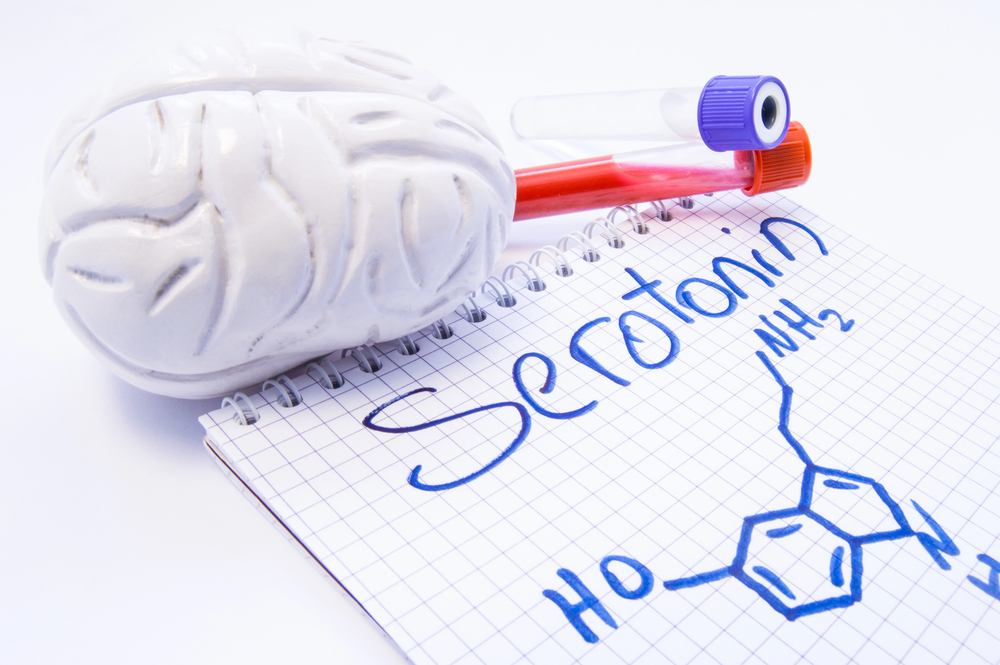
A. Effectiveness of herbal vs. pharmaceutical treatments
The discussion around how well herbal treatments work for depression and anxiety, when stacked up against pharmaceutical options, has really picked up steam in both the academic world and in clinical practice. Pharmaceutical drugs, which often come with side effects and the risk of dependency, are usually the go-to treatment. But herbal remedies, like St. John’s Wort and other plant-based therapies, have become alternatives people are considering. Studies seem to be showing that these herbal options could help ease symptoms, and maybe with fewer bad side effects, hinting at them being fairly safe. For example, one review pointed out that treatments like acupuncture and herbal medicine led to noticeable improvements in things like premenstrual syndrome, with more than half the people in the study saying their symptoms got better. This underlines how they might help with mood issues and stress-related symptoms (Kim DI et al., 2014). Plus, as integrative medicine becomes more popular, it’s super important to look at how herbal supplements and regular medications might interact, especially for groups like veterans, where other health problems might make treatment trickier (Aiello et al., 2018). So, taking a good look at and comparing these different treatment methods is key for creating well-rounded and effective ways to tackle mental health.
B. Patient preferences and accessibility issues
When we look at how patients feel about herbal versus pharmaceutical treatments for depression and anxiety, alongside how easy it is for them to get these treatments, it’s clear that how happy they are with their treatment really affects how well it works. A lot of people seem to like old-fashioned herbal medicines better, thinking they’re easier to get and fit better with what they believe. This might be because of something called the hedonic placebo effect, where just taking traditional medicines makes people feel better, even if there’s not a lot of scientific proof (Costa-i-Font et al., 2012). Also, getting access to treatments is a big deal. Patients often have trouble getting regular pharmaceutical drugs because they cost too much, aren’t available, or the healthcare system doesn’t work well. It’s really important to think about how people try to get healthy. Discussions at events like the 3rd Java International Nursing Conference highlight the need to consider patient experiences when treating them in clinics and in their communities (Nurmalia (Editor) et al., 2015).
C. Integration of both approaches in treatment plans
Combining herbal and pharmaceutical methods in depression and anxiety treatment is becoming a really important step forward in mental health. Healthcare providers can create full treatment plans that deal with both the symptoms and the root causes by mixing the power of regular medicines with the overall health benefits of herbal treatments. For example, patients might feel better emotionally when they use herbal medicines with their regular antidepressants, which can lead to a better life and easier management of side effects (Howard et al., 2015). This combined method not only makes the treatment options wider but also takes into account what patients like, helping them stick to their treatment plans. Plus, knowing things like a patient’s age, education, and how far their illness has progressed can help doctors choose the right herbal and pharmaceutical treatments, making sure the plans fit what each patient needs (Catalani et al., 2019). So, putting these two treatment types together looks like it could provide more useful and customized care in mental health.
Holistic nursing professionals can also guide individuals in properly utilizing in a safe way the integration of herbal remedies with pharmaceutical medications.
To conclude, combining herbal remedies with pharmaceutical drugs presents a potentially beneficial strategy for treating depression and anxiety, offering a more comprehensive approach to mental health care. Research has demonstrated, for example, that compounds such as curcumin possess notable anti-inflammatory effects, indicating a possible role in affecting mood disorders (Peng Y et al., 2021). This highlights the value of integrating both traditional and modern medical practices to potentially improve treatment effectiveness and patient results. Additionally, as emphasized in current guidelines, the importance of personalized treatment plans highlights the necessity of accounting for individual patient needs and preferences when managing these mental health issues (Sharon L Kolasinski et al., 2020). As clinicians and researchers further investigate the interactions between herbal treatments and conventional medications, a deeper understanding of these dynamics will probably result in improved care for depression and anxiety, leading to better overall mental well-being across various populations.

It is always important to consult a physician or mental health professional when supplementing herbal remedies with pharmaceutical ones. Sometimes, they share similar traits that can enhance the prescription in power and increase a desired effect, or another herb may counteract a different medical prescription. Ultimately, herbal remedies can serve as a long term supplement when used correctly and under care with less side effects but many require pharmaceutical treatments in more acute cases.
Please review AIHCP’s Stress Management Program, as well as its Holistic Nursing Program.
When we consider the main points about using both herbal remedies and prescribed drugs for depression and anxiety, we see that these two types of treatments affect each other in complicated ways. Lots of people use herbal medicines together with their prescriptions, especially older folks; numbers show that anywhere from about 5% to almost 90% do this (A Cherubini et al., 2017). Antidepressants are often taken with herbs like St. John’s Wort, which worries doctors because these combinations might cause problems, particularly with bleeding (A Cherubini et al., 2017). Also, even though we don’t have a lot of scientific proof that traditional medicine works well, people seem happy with it, maybe because of a strong placebo effect that makes them feel good. Because of all this, it’s important for doctors to really understand what their patients are doing to take care of themselves and to think about how helpful treatments are, both in terms of the process and the results.
Delving into both herbal and pharmaceutical approaches to tackle depression and anxiety carries weighty implications for what’s next in research and treatments. The latest breakthroughs in grasping how G protein-coupled receptors (GPCRs) work hint that we might be able to design drugs that are much better at targeting mental health issues (Yang D et al., 2021). On another front, looking at herbal remedies that have historically been used for breathing problems, especially during today’s health scares, has shown they could be helpful additions to treatment plans (Dâmaris Silveira et al., 2020). This blend of old herbal wisdom and new pharmaceuticals really drives home the point that we need thorough clinical trials to check if these combinations are both effective and safe. If we push for these combined methods, future research could really open doors to tailored treatments that improve how patients do overall, all while tackling the many-sided challenges of mental health more broadly.
To sum up, looking at both herbal remedies and pharmaceutical drugs in mental health care, you find a tricky mix that really needs some thought. Things are always changing in mental health, and both ways of treating it have their good points. For quite a few people dealing with depression and anxiety, pharmaceutical drugs have shown they can work well. On the other hand, herbal treatments might add some extra help, maybe without as many side effects as some of the drugs. Still, there’s a chance that drugs could interact with each other, especially for certain groups like veterans, who might have specific health concerns. That’s why it’s so important to tailor treatment to each person. (Aiello et al., 2018) Also, nootropics are becoming more popular, showing that people are really interested in boosting their brainpower, probably because society is pushing for better mental performance in demanding situations. (Bersani et al., 2020) So, when it comes down to it, the best way forward could be a whole-person approach that focuses on being safe, giving personalized care, and putting different methods together. This could really help folks who are having a hard time with their mental health.
Holistic Herbs Video- Access here
Pope, C (2023). “Benzodiazepines”. Drugs.com. Access here
“Benzodiazepines”. Medicine.net. Access here
Pope, C. (2023). “SSRI Drugs List” Drugs.com. Access here
Syed, P & Kubala, J. (2025). “6 Herbal Treatments That May Help Depression Symptoms”. Healthline. Access here
Empathy is big word in counseling. It is also foundational in how counselors and pastors help others heal. One of the biggest misnomers of counseling is the counselor fixes the person and details the agenda a person must follow to heal. This is farther from the truth. Emotional pain is not so easy to heal as if a recipe in a cook book. Instead it is a messy, usually not outlined path of progress and regress, emotions, and time. The counselor is more a beacon that guides than a drill sergeant who commands. Empathy is one of the key skills that serves as a way to help the client heal and become resilient. This does not mean that confrontation is not sometimes needed when maladaptive ideas and practices are destroying a client’s life but it does mean that empathy gives room for mutual sojourning and walking together in the feelings of the situation. This allows for self awareness and real conversion within the person instead of superficial direction and forced change that never lasts. So why counselors would on many occasions love to tell the client this is what the you need to do and how to do it, the science of psychology and counseling suggests otherwise.

In this short blog we will take a closer look at the role of empathy in the therapeutic counseling relationship. Please also review AIHCP’s Healthcare Certifications and see which ones best match your academic and professional goals.
Carl Rogers emphasized in counseling the critical importance of genuineness, empathy and unconditional positive regard. While these may seem like fluffy and soft terms that overlook right and wrong, they are critical to counseling in helping individuals discover right and wrong without scolding, admonishing, or ridiculing. Those in trauma or pain need a non-judgmental caring ear to listen and through that listening, foster change. The traumatized, mentally ill, and emotional unstable face a cold world already where they are marginalized, ridiculed, and judged. While abuse destroys human bonds, empathy can restore them. Counseling is a therapy that is not meant to make judgements but to help individuals discover healthy and good ways to heal. Instead of the dogmatic voice that says this is right or wrong (and it has a place), the counseling session looks to heal via listening and understanding and helping the person come to self actualization of the correct course. The counseling room is not the pulpit, but is a healing modality that looks to guide via a different route. Counseling understands empathy best produces change rather than lectures that only create more anger and disobedience and resistance. Ultimately empathy in counseling can lead a client to higher self-awareness, self experience and find a true joy in connecting and continuing the communication and connection with the counselor (Cochran, 2021, p. 64-67).
According to Cochran, empathy is not a thought process (2021, p. 56). Instead it is a natural connection with a person. It permits the counselor to feel what the other person feels. So when a gay man traumatically describes abuse at a young age, a counselor who is heterosexual does not see different sexual orientations, but the feeling of rejection and pain with their fellow human being. Likewise, a Caucasian counselor, can find empathy with a African American client who discusses the trauma of being racially profiled by the police. One does not need to share the event, or even agree with the client but they share the emotions felt by the client. This is the key difference between empathy and sympathy. Sympathy does not share in the feeling but it feels sorry for the person. Sympathy is good to have for someone but in counseling it is counter productive. Clients are not looking for someone to feel sorry for them but for someone to help them. They are looking for someone to feel what they feel and help them move forward. Empathy is hence walking with the person not just merely observing and offering condolences (Cochran, 2021, p. 57). Rogers states, empathy means to “sense the client’s private world as if it were your own but without ever losing the “as if” quality” (Cochran, 2021, p. 58). Of course, this does not mean, one who is empathetic must agree with the person’s choices, life styles or past actions, but it allows the counselor to help the person at a deep level to find healing and change.
This closely ties into Unconditional Positive Regard which is another key concept of Rogers which demands counselors fully accept the client in all their complete wholeness and shower them with unconditional understanding. Unconditional Positive Regard retains the autonomy of the client to learn how to change on their own terms. Rogers listed warmth, acceptance and prizing as three key elements of UPR. Warmth represents the care of the client and genuine empathy. It is the fertile soil that produces a an atmosphere of trust and disclosure. Acceptance is the ability of the counselor without bias to accept the immediate emotions of a person in counseling-whether illogical, angry, hateful, confused or resenting (Cochran, 2021, p. 103). Prizing involves raising the self esteem of the patient by accepting them with praise as they are but also highlighting their strengths and weaknesses in a honest and genuine way. Again, this type of emotional connection does not mean counselors accept statements, values, or actions of a client, but it does mean the regard is sincere and grants the client a sense of trust that if they make a mistake or trip and fall emotionally, there is no condition. When conditions are placed for approval, then the healing process becomes manufactured. It is through this type of positive regard that a client can flourish and heal because the client knows someone has their back in the good and the bad. This type of positive relationship in fact helps the client at an internal level look to become better intrinsically based not on reward but because it is the right thing to do. Once a client believe it is the right path without being told, then the client begins to truly transform and change. Through empathy, genuineness and employment of unconditional positive regard, the necessary emotional seeds can plant natural and self employed change at the guidance of a gentle counseling hand.
Sometimes the hardest part for empathy to flourish in a counseling relationship is the counselor. Whether lack of practicing it or lack of patience for its fruits to develop, the counselor is ultimately responsible for establishing a secure and trusting environment where difficult emotions can be felt and discussed. One element is the fear of letting go. Some counselors may feel the need to control and direct a session and conditionally expect certain behaviors and decisions. They lack an empathetic skillset to confront a client with an emotional situation. It is hence important for counselors sometimes to allow the session to develop as the client dictates and to attempt to understand the client by what is revealed.

In expressing empathy, counselors need to match emotions with tones, expressions, movements and words (Cochran, 2021., p. 79 to 80). Sometimes naming the emotion and restating it to a client can help reflection but also show empathetic listening. This is also true when expressing empathetic confrontation which looks to indirectly help a person reflect on a statement. When stating a statement about what the person is feeling, state in in a declarative statement, but if uncertain, express it in a tentative declarative tone that is open for correction. In these reflections, a counselor can also reflect themes in paraphrasing one’s feelings. Themes that keep appearing in a person’s story or how one feels can be expertly restated and paraphrased to an individual to again not only show the counselor is listening but also to emphasize. This can be done in a statement but also in an attempt to empathetically confront a particular feeling (Cochran, 2021, p. 81-82). Empathetic confrontation eliminates the fear to allow clients to be confronted with some of their own statements. Counselors should be prepared to be corrected at times, if they misstate what a client said, or if their tentative declaration is misspoken. In these cases, this should not be seen as an affront but for a better opportunity to understand and help heal. Most clients will not be offended by this but thankful the counselor is listening and trying to understand. This can open to further and deeper exploration of the topic. Of course, it is also good to use appropriate questions to better understand. The questions must be natural however and not in the probing nature that looks to pick. This can make a client feel as if he or she is being interrogated.
Within empathetic counseling, it is important as the counselor to avoid making assessment statements or make the client feel as if he or she is being assessed. In addition, the counselor should not have a surprise hidden agenda that the counselor hopes to reveal and have the client realize. This leads to an unnatural direction that is void of truly listening and feeling. Counselors should also avoid doing most of the speaking and talking in these types of sessions, as well as avoid “me too” or “must feel” statements that can assume or take away from the client’s expression of feelings (Cochran, 2021, p. 82).
Counselors hence need to be able to employ empathy in multiple ways. Compton lists numerous ways, counselors can better express empathy and utilize it in counseling. He suggests becoming attuned with the client. Through attunement the counselor resonates the feelings of the victim/survivor (2024, p. 181). In addition Compton emphasizes the importance of co-regulation where the counselor is better able to help the client manage emotions. This is accomplished through mirroring and reflecting back, modeling after the client’s tone and motions and checking in on the level of distress a victim/survivor is feeling (2024, p. 182). The counselor enters into a posture of curiosity that portrays a genuine desire to understand the client (Compton, 2024, p. 183). In helping with emotions, counselors can also via prizing help highlight strengths of clients and adopt a perspective that looks how those strengths helped them survive and continue to survive.
Counselors also need to practice humility with empathy. Humility realizes that not all the right answers or skills are found within oneself but to look to the client as well as other professionals to find the needed solutions. This leads to not becoming over defensive if one is wrong with assumption, as well as being humble before a person’s experience as well as a person’s cultural identity (Compton, 2024. p. 183-184). Through this humility, the counselor looks to empower the victim/survivor to take an active role in healing and working with the counselor to find it.
Counselors in empathy must also display patience. The healing process is not linear or fast. It takes time to help someone find healing. When in empathy, feelings are not rushed but felt as they truly are and experienced until resolution and healing is found. During this process, empathy shares in the small victories and joys of self actualization, self worth and healing as the person transforms (Compton, 2024. p. 185).
Of course in all empathy, one finds that all important circle of trust. Within that trust comes a no-judgement zone and unconditional positive regard. However, trust is earned. Individuals suffering from abuse and trauma may not trust at first and be wary of words and especially physical touch. Through time and patience, confidentiality will be restored but again, empathy demands to feel what the moment dictates and the state of being currently within the client (Compton, 2024, p. 187).
Empathy is critical to helping people change because it is not authoritarian or dogmatic. Counseling is a healing modality and through empathy, one heals but also is guided through an empathetic ear with unconditional positive regard and genuineness that permits the person to see him/herself and come to conclusions that are healthy and good for his/her feeling. Counselors must be willing to let go of control, face hard feelings, eliminate personal judgement and bias, and allow the person to learn about oneself as the sessions continue. This does not mean the counselor can disagree internally, or not confront negative thoughts and emotions in an empathetic way, but it does does mean it gives the client a driver seat in pushing forward in self discovery, healing and a future way of living. Counselors need to facilitate the environment for this by displaying certain skills of empathy, unconditional positive regard and genuineness as espoused by Carl Rogers to achieve these results. Ultimately empathy in every venue of care is essential. It not just a counseling issue but also in all venues of healthcare itself.
Please also review AIHCP’s Healthcare Certifications, especially in Crisis Intervention, Grief Counseling, Christian and Spiritual Counseling and Trauma Informed Care programs.
Counseling When Trauma Emerges- Click here
Rogerian Counseling- Click here
Cochran, J & Cochran, N. (2021). “The Heart of Counseling: Practical Counseling Skills Through Therapeutic Relationships” 3rd Ed. Routledge
Compton, L & Patterson, T (2024). “Skills for Safeguarding: A Guide to Preventing Abuse and Fostering Healing in the Church” Intervarsity Press.
The Role of Empathy in Effective Counselling. (2024). Mental Mastery. Access here
“Accurate Empathic Understanding: A Core Component of Client-Centered Counseling” (2024). Psychology Town. Access here
Sutton, J. (2021). “Unconditional Positive Regard: 17 Worksheets & Activities”. Positive Psychology. Access here
Cherry, K. (2024). “Unconditional Positive Regard in Psychology”. Very Well Mind. Access here
The mental health crisis in the world is not just due to mental pathologies but also equally due to trauma induced upon children. The World Health Organization estimates that 2 out of 3 children in the United States to 75 percent of children worldwide will experience some type of trauma before age 16 (Compton, 2024., p. 199). This can range from a variety of natural traumas but also human induced traumas and social settings that lead to Adverse Childhood Experiences or ACE. Aside from natural disasters or deaths of family members, many traumas include physical violence, sexual abuse, emotional abuse and neglect and communal levels of poverty, lack of resources, or communities with higher crime rates (Compton, 2024, p. 200). Other children may experiences war zones, terrorism, refugee life, human trafficking, or famine and disease.

Innocent minds that are exposed to the cruelty of life at an early age without care or guidance can lead to future mental crisis that lashes out against the world and society. While never justified, many of these injured individuals later injure others through crime, violence, shootings, and abuse. Broken creatures abused can sometimes fail to see a loving God, or fair world and see life as a competition of kill or be killed. Amazingly, many still become good people but nonetheless suffer from immeasurable emotional and mental pain that can cripple them from having a successful life in interacting and behaving with others.
The corruption of innocence is the purest form of evil. When littles ones are corrupted, one can only think of the verse from the Bible and the words of Jesus Christ, “Whoever causes one of these little ones who believe in me to sin, it would be better to him to have a great millstone fastened around his neck and drowned in the depth of the sea (Matt 18:6). I think whether Christian or Atheist, religious or secular, one can agree with these words and understand the importance of protecting children and helping them heal. The scars of trauma can cause future traumas to society, so it is important to understand the affects of trauma on children and how if left untreated can realign a child’s future into one of increased pain, maladaptive coping and social dysfunction.
Please also review AIHCP’s Mental and Behavioral Health Certifications, including its Trauma Informed Care Certification.
The innocence of children makes them more susceptible to abuse. In addition, their size and inability to defend themselves emotionally and physically also make them targets for further abuse or less able to defend themselves against various threats. Since children’s brains are still developing, trauma of any type can have greater long term negative effects on their development. Trauma and abuse can stunt social development because of the increased neuroplasticity of the child’s brain as compared to any other age, During this phase, the brain is forming new neuropathways and cognitively is learning and associating learning and new experiences with how one interacts and properly behaves. Neglect, trauma and abuse can alter proper pathways and instead create negative lasting impressions on the brain that reduce trust and the concept of safety, as well as mental health, relationships, and overall life schemas (Compton, 2024, p. 141).
The brain itself during developed can be damaged due to severe trauma in children. Trauma in children can negatively affect the brain’s ability to cooperate and communicate with other parts of the brain. Compton refers to this as Neural dis-integration (2024, p. 142). When trauma occurs the brain dis-integrates neural networks causing this lack of communication and cooperation which leaves some parts of the brain disrupted from certain important neurochemicals. This can also lead to various issues with the amygdala, hippocampus and other prefrontal cortex regions (Compton, 2024, p. 142). The longer chronic trauma remains, the more altered the child’s world view may become leading to less reasoning, learning and impulse control and replaced with distorted thinking and feelings about the world.
Children who respond to trauma exhibit the same responses adults experience when the sympathetic nervous system is activated. Children will fight, flight, freeze or fawn like anyone else but these reactions by children also exhibit within their daily lives. Children in chronic stress due to abuse or neglect will experience not only physical health issues but also cognitive and emotional issues. Children who display fight as a primary response will exhibit more aggressive, defiant or confrontational behavior in life. Children who display flight as a primary response will exhibit avoidance and escapism in life. Children who display freeze as a primary response will exhibit lack of lack of normal emotional responses or motor activity in life. Finally, children who display fawn will exhibit more appeasing and pleasing behaviors in life (Compton, 2024, p. 143).
Adverse childhood experiences and Positive childhood experiences play a large role in a person’s life and their future mental health. It also plays a large role in a person’s ability to form healthy attachment schemas in life. Adverse childhood experiences refer to events that affect a child’s life in a negative way. These adverse childhood experiences can be actual events but also deeper seeded social issues that act as roots to the trauma tree and its many branches and fruits. Adverse Community Environments or roots of the problem include multiple negative social issues such as poverty, discrimination, community disruption, lack of economic mobility and opportunity, poor housing and frequent exposure to social violence.
Braffenbrenner proposed various systems that play a large role around one’s development. The microsystem is a person or child’s immediate circle of family, friends, school, or for adults work. The next phase in the circle includes the exosystem which includes mass media, extended family, as well as local government. The macrosystem and next layer to the circle includes major economic, political and cultural issues. Finally, the most outward layer i the chronosystem of major changes and shifts in life which can be personal losses, or major national changes in life such as a pandemic or war. These shifts are predictable and unpredictable, as well as positive and negative. These systems can all affect other systems which in turn can affect the child or person.
In regards to positive childhood experiences, or PCE, the Hope National Research Center did substantial research on the effect of PCE in a person’s life. Obviously, a person with more positive events in childhood will have a more stable mental outlook in life. Even those with 1 to 2 positive experiences, according to the research, showed a 51 percent of better mental health outcomes. 3 to 5 positive experiences led to 75 percent better chance of good mental health, and 6 to 7 PCE illustrated over 90 percent better mental health. Even if one experienced 4 ACE or adverse childhood experiences, the presence of PCE balanced out less stability in the person’s mental health. Those with higher PCE in their childhood, move on to not only have better mental health, but also better academic scores, degrees, income and employment. Even more amazing is the fact that even individuals with very little ACE, but also very little PCE or none, grew up to have more mental health issues just due to the fact there was nothing positive as a child. This leads to the crucial importance of PCE laid out by the Hope National Research Center. Children need stability and positive experiences to balance out any bad but to also give them the tools they need to grow into healthy adults. This falls into place with healthy and stable relationships, environments, engagements in social developments, and emotional growth opportunities. In many ways, these correlates with Maslow’s Hierarchy of Needs and ensuring these basic needs are met for children to promote healthy emotional and mental health.
In essence, as caregivers, what we give our children is what our future will be.
A child void of unnecessary traumas and who is supported by loving caregivers during times of distress form a healthy worldview about life. There is trust and there is safety and there are resources available to overcome negative events. These secure attachment schemas leave the child with hope and as the child enters into adulthood, presents the child with the necessary beliefs and skills to form health and secure relationships. In addition, the child will have a healthier self worth of one’s value as a human being. This does not mean, the child’s life was perfect. No-one has a perfect and suffering free life, but the child was given support in the good and bad days physically, emotionally and mentally (Compton, 2024, p. 145).
Children who are neglected, abused, exposed to trauma and receive no support, care, or safety grow up with a very different view on life. Different attachment schemas develop from this neglect. Anxious attachment in children is one type schema that develops from lack of a safe and loving environment. Children with anxious attachment schemas possess a fear and uncertainty of how a caregiver will respond in a negative event. Due to lack of consistent love and care, these children experience a lack of self confidence. They may doubt their own abilities and became very dependent on others. Anxious attachment is closely associated with heightened anxiety to threats which in turn leads to children have exaggerated responses that deny the child the ability to soothe oneself (Compton, 2024, p. 146). This type of anxious disorder leads to a behavior that does not trust, nor is able to with confidence handle life long issues without dependence upon others. Children can exhibit this when stressors strike.

Another schema that can develop is the Avoidant attachment schema. This dismissive attitude is the opposite reaction of the Anxious attachment schema because it leaves the child to avoid all help from caregivers. It forges a unhealthy self reliance that fears intimacy and the words of others. These individuals are hesitant to ask for help and are skeptical of others intentions. In turn, they have a difficult time forming relationships and working with others. This prevents the child and later adult from forming meaningful and emotional relationships (Compton, 2024, p. 147).
Finally, some children develop a Disorganized attachment schema. Due to inconsistent and unpredictable caregiver outcomes, these children do not form a consistent reaction but present a disorganized reaction that at times can turn to someone and in other instances push someone away. This chaos results from the caregivers inconsistent approaches of giving security at one moment, then perhaps abuse in another moment. This type of chaos creates a very confused child with multiple internal conflicts. This leads to severe dysregulation and lack of emotional control. Many who develop Disorganized attachment are at higher risk for mental health issues such as anxiety, depression, PTSD, and ADHD (Compton, 2024, p. 147).
Fortunately, safe-guarders such as teachers, educators, counselors, pastors, or even friends can help reestablish healthier schemas. The brain can re-learn that security exists but this takes time, patience, and love. The relearning of healthier schemas is referred to as “earned-secure attachment” (Compton, 2024, p.148). Helpers can reinitiate the attachment cycle and help children heal. Calm caregivers can help children by hoping them co-regulate their emotions. The child can borrow and regulate from the safety and peace of a regulated adult (Compton, 2024, p. 148). Through this newly forged relationship, new trust and new secure schemas can re-emerge. This is by far not easy. The previous schemas are firmly planted but they can slowly give way to new ways of thought within the neuroplasticity of the brain and form new neuropathways with better experiences. It is important to note that individuals from trauma go through phases of reintegration. First they feel unsafe with the world. As security arises, they may start to feel safe but still trust no-one. Once trust and security is given, victims can begin to regain power, build self esteem and then finally reconnect in secure attachments.

Compton lists a few key elements that must be present in this re-scheming of a child’s worldview. Children should feel safety in the emotional connection with the counselor or pastor. They should feel a nurturing environment that accepts them. When the child feels unconditionally loved and also secure, then the child can begin to lower his/her defenses. Safety must also be experienced in guidance and discipline. Children should be able to express their emotions without fear of ridicule or scolding or judgement. Behavioral outbursts due to trauma need to be measured and understood as negative reactions to a traumatic event. Instead of discipline, the child needs to learn to express and emotionally regulate and communicate the distress. Instead, the counselor or new caregiver needs to communicate boundaries and the expected and consistent behavior associated with those boundaries. Boundaries that are given with consistency, empathy and love can help the child understand better appropriate and inappropriate reactions that he/she has developed due to bad attachment schemas. These types of boundaries lead to predictability. When establishing a new and healthy schema, the child needs to again find security in a consistent responses to situations. The inconsistent care is what caused the anxious and avoidant and disorganized schemas, so a consistent care plan can help a child feel security and what to expect in life. This consistency and predictability gives order and the order gives the child security. Finally, Compton emphasizes the importance of safety in play and connection. Children need to play. Play is a key part of their growth and where they also express themselves. Children need to understand they are safe when playing and able to grow in a safe environment. When such safety to play and feel secure is afforded on a consistent basis, the child is able to form more secure attachments (2024, P.149-152)>
The most criminal act is to steal a childhood from a child and rip away the innocence through abuse and trauma. Unfortunately, many children suffer from trauma worldwide without any loving or healing voice. Some may experience trauma at the hands of persons, others due to extreme poverty and crime, while others due to war and natural disaster. These traumas negatively effect the whole child. In turn, abused and traumatized children experience distorted schemas and views on life which included various mental and emotional issues that later creep into adult life. In regards to relational attachments, many children exhibit anxious, avoidant or disorganized patterns that negatively affect their socialization and trust. Without trust, safety, and predictability many children develop anxiety, depression, and PTSD. Fortunately, the human soul is resilient. Caregivers can reconnect with children and help them form new experiences by allowing them to lean on and borrow from their healthy regulated mind. In addition, new secure schemas can be reformed by providing safety, security, empathy, love, patience and forming boundaries and schedules that help the child heal and grow from past experiences.

Please also review AIHCP’s Behavioral Healthcare Certifications, as well as its Trauma Informed Care Certification.
Attachment Disorder: Click here
RAD: Click here
Trauma and Counseling: Click here
Compton, L & Patterson, T (2024). “Skills for Safeguarding: A Guide to Preventing Abuse and Fostering Healing in the Church”. Academic
“Understanding Childhood Trauma and Its Long-Term Impact”. (2025). American SPCC. Access here
Copley, L. (2024). “Childhood Trauma & Its Lifelong Impact: 12 Resources”. Positive Psychology. Access here
Morin, A.. (2023). “Understanding the Effects of Childhood Trauma” Very Well Mind. Access here
“Post-Traumatic Stress Disorder in Children” (2025). CDC. Access here
“Child Trauma” SAMHSA. Access here
Trauma is part of life. Bad things occur and for some the bad things are more horrific and imprinting upon the person. Estimates themselves reflect this. It is calculated that 70 percent of all human beings will experience some type of trauma that is beyond the basic losses and pains of this temporal world. In addition, 75 percent of children will experience some type of adverse childhood experience (ACE) that can negatively effect their emotional, mental, social and physical development.
While natural disaster trauma and collective social traumas leave deep marks on human beings, it is the violent and mystifying actions of evil at the hands of other human beings that leave the most devastating marks on the soul. Wars, genocides, human trafficking, sexual abuse, rape, shootings as well as being witness to horrific murders and abusive events can all leave a horrible imprint on a person, whether child or adult. While the event itself plays a key role, amazingly some individuals can process trauma and not linger with the effects of prolonged pain or PTSD. This does not make those succumb to trauma weak, or cowardly, but illustrates the reality that trauma is not just about the horrific event but also the subjective experience and the lingering effects following it. One’s genetic makeup, the social constructs and support around them, individual character and resiliency, as well as genetic and mental makeup due to past history can all play roles in how one may digest and cope trauma as opposed to another.

In states of crisis, a person suffers from disequilibrium and de-stabilization of self. The brain loses ability to handle the current situation because it overwhelms one’s coping mechanism. This leads to emotional distress and inability to cope. One is unable to think or act clearly. Those who experience severe trauma in the acute moment of it usually experience this overwhelming leaving them in the aftermath confused, lost and emotional unstable. The purpose of crisis intervention and emotional triage via emotional and psychological first aid are essential in these moments to help the person find equilibrium as well as stabilization but the efforts of long term trauma care and counseling falls under trauma informed care.
Within the population there is a high level of individuals suffering from long term trauma and PTSD. It is important for mental health and healthcare professionals to understand the signs of trauma and be better equipped to help those experiencing it in the present as well as those suffering from the past lingering effects.
Please also review AIHCP’s Trauma Informed Care, as well as Crisis Intervention and other behavioral and mental health certifications. Qualified professionals can utilize these certifications within the scope of their practice to better help those in pastoral or clinical settings of needed care.
Flight, Flee, Freeze or Fawn
The most common reactions to trauma include fight, flight, freeze or fawn (Compton, 2024 p. 105-107). The latter two have been added over the years and are equally important. In understanding human survival, these mechanisms are key in helping an individual make it through a life threatening situation. How a a person responds or does not respond does not equate to inadequacy or cowardice or acceptance of an event, but relates to numerous subconscious immediate decisions in a given situation based on subjective experiences within the person’s life. These particular reactions also play key roles in later trauma recovery because individuals may question, feel guilty or be ashamed of particular reactions.
When the body experiences a threat, the brain and body activate the sympathetic nervous system. This system releases cortisol into the blood stream and other hormones to help prepare the body for danger. The heart rate rises, blood flow increases and muscles tighten to help the body fend off the threat. In this moment of extreme stress, the brain mixed with multiple emotional responses decides to fight off the situation, flee the situation, or in some cases, shuts down the body to freeze. This is seen in nature as well. Animals will fight back, flee or sometimes freeze in utter fear in hopes of being left alone. In human beings, many of the same thoughts race through the mind. With emotion, comes intellectual thoughts based on our subjective history and experience. Can I fight this threat, if not, can I flee or avoid it, or should I freeze and hope. Many times in horror movies, we see the later. We scream at the television for the actor or actress to run or move, but the person is so terrified, he or she shows no resistance to the killer, slasher or monster. This response of freeze is referred to tonic immobility and it tied to the body’s psychological attempt to detach from reality and the danger since it has accepted fight of flight as an impossible option (Compton, 2024, p. 106). Hence some women who are raped, may completely freeze and the body shuts down while the brain experiences the fear and trauma. During this shutdown, some psychologists use other terms to explain this sensation of immobility. During the intense moments of fright of the trauma, the body may flag itself into immobility. During this intense freeze or flagging, ironically the sympathetic nervous system and its reaction releases itself to the parasympathetic system which returns blood back to the core of the body, eases muscle tension, and the body becomes almost frozen. Frozen in fright, the mental brain looks to shut down or dissociate from the trauma. In these cases, many victims may not even feel physical pain, see as clearly, or hear but they remain frozen and in some cases, even dissociate to the point of almost feeling as if out of the body and looking downward. In addition, since the trauma is so intense, the body’s coping mechanism looks to detach and many details of the assault or trauma or not properly logged. Instead, the emotional part of the brain takes over. This is also why sometimes details of survivors in regards to trauma may be not be as precise as law enforcement sometimes may wish. Finally, beyond this freezing, fright and flagging, occurs the final defense mechanism of the body which involves faint. In this, the body shuts down consciousness to the horrible ideal.
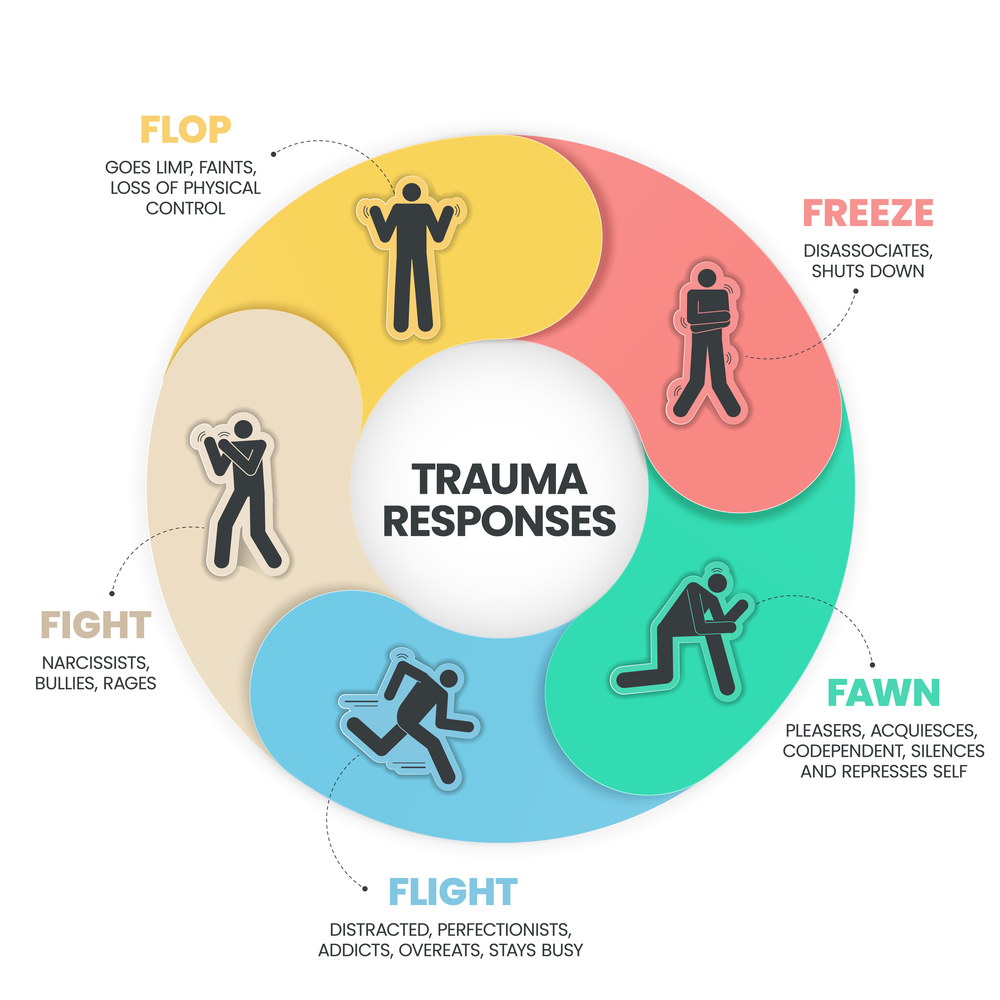
In regards to fawn, victims in an attempt to survive will work with the assailant and not resist but attempt to be be accepting of the situation. Children, and again women in assault cases, many times to survive will use this last option as a way in hopes of reducing the pain inflicted. Without escape or any hope, they succumb to the wishes of the assailant whether it involves laughing with them, or taking drugs with them, or pretending to enjoy, or partake to avoid physical injury. According to Compton, this response is completely unique to humans as a way to escape a situation in hopes of making it less worst and later survive (2024, p. 107). Some victims may consider the price of cooperating better than the price of being beaten and killed if they attempt to resist. Sometimes, pending on the psychopath or assailant, this may work in reducing injuries, while in some cases, the perpetrator injures or kills regardless. However, within the subjective mind of the victim, the call to fawn or not fawn is gamble that is made in the heat of the moment.
What later plays a role in prolonged and unresolved trauma for survivors are the cognitive distortions that can result from whichever action one chose. Those who did not fight back or flee, but froze may be hard on themselves and feel they could have saved themselves if they had just acted. A woman who did not flee a rapist, or a soldier who froze in an attack may all suffer deep remorse or regret for their actions. Yet, their responses were not so much conscious but related to inner wiring of how they would respond in this particular situation. The trauma was so powerful, they were forced to detach from the utter horrific nature of the event. Equally if not more harmful cognitive distortions can emerge with those who utilize fawning as a way to survive. They display shame and guilt and even to some extent may think they partook in it voluntarily. A woman may feel shame in laughing or accepting drugs during a rape and even doubt her victimhood but the reality is the woman entered into a survival mechanism to limit harm to self (Compton, 2024, p. 107). Counselors need to affirm the fears these individuals feel, listen with empathy and without judgement the reactions in the moment and help cognitively realign the experience with reality of “having to do what you had to do to survive”. The survivor needs vindicated in the choices made to keep him/her alive in a horrific moment no person should have to endure.
Intrusions
In addition to trauma responses and their linger effects, individuals, especially those with PTSD, suffer from intrusions. Intrusions, flashbacks, or nightmares can be triggered by simple scents, sights, sounds, or places. Due to the fact the horrific trauma imprinted upon the emotional part of the brain within the amygdala, the emotions and sounds of the moments became associated with the event. Hence even a simple backfire of a car can send an Iraq or Afghanistan veteran into a flashback on a city street. Due to the trauma, many of the normal reasoning functions of the pre-frontal cortex associated with the memory were never properly filed within the brain and processed as a healthy moment in time. Instead, the memory is raw and unprocessed as closely tied to the emotional responses of the day of trauma. In turn, a sight, scent, taste, or sound closely associated with that traumatic event can trigger a response that intrudes into the mind and takes the person away from the present. Severity of these responses vary in flashbacks but some can completely cause dissociation from the present. The person will enter into a flashback where they are no longer present. Some individuals may lose hours of the day or merely minutes pending on severity. Others will be haunted by unresolved nightmares that place the survivor back in the traumatic situation. Counselors who work with trauma survivors or individuals they suspect of past trauma will be able to identify these key signs of abuse or unresolved issues.
Hyperarousal or hypervigilance
One key sign of trauma is hyperarousal or hypervigilance. Many who suffer from trauma have a heightened sense of awareness of certain places or people. This heightened awareness activates a survivor’s sympathetic nervous system and leaves them in a state of watching or preparing for the worst. A retired soldier may watch various entrances of all escape routes or doorways even when at a simple dinner with his wife and children. A rape victim may be terrified to walk by an alley. School shooting survivors may during class time also experience issues returning to school or walking into the building. Due to the hypervigilance and the imprinted trauma, ones arousal level is so high that the thinking part of the brain cannot differentiate between the traumatic historic event and current situations that pose no threat. In addition, many completely seek shelter and protection from the public eye and seek isolation to cope with their states of hyperarousal. The person hence becomes disconnected from the present, hyper-focuses on non-existent threats, and is in a state of fear or anxiety within normal situations (Compton, 2024, p.108-109). Counselors will need to employ various emotional regulation strategies, ground techniques, exposure and EDMR therapies, or cognitive behavioral to help the person gain control of these rampant emotional memories and flashbacks.
Changed World Views and Attitudes of Survivors

Due to this new altered sense, even when not hyper aroused, the past trauma can reshape and damage previous held world views (Compton, 2024. p, 2009). Traumatic events can alter the view that the world is a safe place. Unlike many individuals in rural areas, those who frequently experience inner city violence will definitely frame a different world view from childhood onward, especially children who were never able to experience safety and security. For those who lived the American dream, those who suddenly become victim or witness to school shooting, or experience a violent crime suddenly may come to new realities that may make them challenge their worldview, faith, God, and moral framework how the world operates. Some may become cynical, others hopeless, some angry and vindictive, others may look to over-protect others because they see danger everywhere.
World views and previous held ideas lead to different reactions to situations and life itself. Some of the key points according to Compton include a lack of safety and a sense of vulnerability that did not previously exist. In addition, Compton lists a lack of trust. This lack of trust may be towards the power of God, or the power of local government to protect oneself. Many may feel forsaken and left to fend for oneself in this state of despair. Also, Compton lists esteem and defectiveness that follows trauma. Trauma survivors can exhibit negative views about themselves and doubt their worthiness to be loved after the event, or are not deserving of a good and productive post trauma life. Others may also alter views on others and stereotype races, religions, cultures and others that are associated with the trauma itself. Through this, the person is filled with anger, suspicion and bitterness towards other people who may share the same skin color or faith of the perpetrator. Compton points out that other survivors may exhibit unnecessary power and control over others or situations in an attempt to prevent the trauma from occurring again. This type of survivor may be a person who lives in constant hyperarousal and promises that what occurred will never happen again to the point of compulsion driven by anxiety. This leads to controlling even smaller aspects of life and relationships. Some may even feel erroneously partial responsible for the trauma and will look at any cost to control all aspects to avoid the same outcome. Finally, Compton lists that intimacy and how future trauma survivors respond to others and relationships can be altered. Children who experience trauma at a young age will have different attachment disorders based on trauma ranging from anxious relationship, to avoidant ones, while adults who are reshaped by trauma may experience difficulties with intimacy. A wife who was raped may be unable to have intercourse with her husband because of the violation of the sexual act in her rape. The movements or act may activate a flashback or cause intense emotional pain. Some who are not in a relationship may seek isolation and avoid attachment and at the expense of genuine human connection, forfeit future relationships due to the traumatic event (2024. p. 109-113).
Trauma damages the entirety of the human person. Untreated trauma looks to numb and escape the pains through various maladaptive ways. Whether it is isolation, avoidance, or control measures, the person still exhibits the pains of trauma. Because of this, many associated with trauma become alcoholics or drug addicts hopes of numbing the pain and escaping the memories. These short term tricks however only further damage the mind and body with addiction and all the legal, financial, social, mental and physical troubles associated with it. In addition, many mentally may attempt to numb psychic pain with physical pain and self harm themselves or even idealize suicide to escape the pain. Others may utilize sex or gambling or other unhealthy way habits. Hence, those who are associated with long term and unresolved trauma are tied to depression, anxiety, physical injuries, substance abuse, and sexually transmitted diseases (Compton, 2024, p. 116).

Physically, those who deal with long term trauma even if they avoid maladaptive practices find themselves in a constant state of hyperarousal and the activation of the sympathetic nervous system. Like chronic stress, the continual state of alert has negative effects on the body, especially the cardiovascular system. Due to the constant stress, trauma survivors or life long victims of trauma find themselves with many digestive diseases, migraines and sleep issues. This leads to immune issues related to chronic inflammation throughout the body (Compton, 2024. p. 116-117). These physical issues to lead to social issues with work, education and advancement, leaving many life long trauma survivors in perilous situations beyond their trauma itself. This all has reflections on every aspect of their life and choices which can also affect other individuals negatively. When those suffer from a singular and isolated trauma, as opposed to a communal trauma, many times the individual never finds affirmation, connection, or support. These individuals, without healing, slowly rot from the vine and deteriorate. Many fall under the rug and find themselves homeless, or imprisoned for petty crimes. Others develop more severe mental illness and can lash out at others within the community.
Hence, it is a communal issue to identify trauma signs and help individuals find the help and aid they need to heal. Counselors can look for these long term mental, physical, emotional and social signs of long term trauma to better help individuals find healing via trauma informed care.
When signs of trauma and abuse or missed initially, or permitted to fester, the wholeness and dignity of the person erodes. Whether it is a life long series of traumas or adverse childhood experiences, or one horrible life altering event, trauma victims/survivors need help to heal. While some individuals are resilient due to numerous and multiple subjective factors, others through no fault, fall victim to PTSD or trauma induced wounds. These individuals if not helped are unable to cope in productive ways and can harm themselves, others, relationships or ruin their own careers. This overflows into society and without a empathetic and compassionate approach to help these individuals, then society as a whole suffers. Trauma Informed Care looks to identify many of the signs listed above and better help and equip individuals to find healing and healthy coping mechanisms to heal and overcome trauma. Trauma may leave a scar but it does not need to be a destructive event in the person’s life that destroys everything the person is. Instead, human beings can heal, create new neuropathways, find meaning in horror and create positive outcomes out of the darkness.

Please also review AIHCP’s Trauma Informed Care Program, as well as its many behavioral and mental health certifications for human service workers, both clinical and pastoral, as well as healthcare professionals who seek to help and make a difference for those who have experienced trauma.
Sexual Assault. Click here
Domestic Violence. Click here
Crisis Intervention in Acute Mental Crisis. Click here
Crisis Intervention Assessment. Click here
Trauma During Counseling. Click here
Compton, L & Patterson, T. (2024) . “Skills for Safeguarding: A Guide for Preventing Abuse and Fostering Healing in the Church”. Academic
“Trauma and Violence”. SAMHSA. Access here
“Identifying Trauma” Center on Child Wellbeing and Trauma. Access here
Aten, J. (2020). “How to Identify and Find Help for Trauma”. Psychology Today. Access here
“Recognizing the Effects of Abuse-Related Trauma”. CAMH. Access here
Abusive predators seek the most vulnerable as their prey and strike when the opportunity best presents itself. Many targets are those who have already been targeted in the past. The scars and emotional trauma associated with initial abuse signal opportunity for the predator to strike a new victim who has already once been injured. Counselors in trauma need to be aware of the potential for someone who has been abused to be abused again. This is why the work of healing is so critical. Healing helps the person find wholeness again and find strength in everyday life to proceed in a healthy way that can better equip the victim/survivor to protect oneself from future abuse at anyone’s hands. In this short blog, we will look at the most vulnerable for re-victimization as well as the open wounds of unhealed trauma that present opportunities for predators and abuses to inflict more trauma on past victims.

Please also review AIHCP’s Trauma Informed Care Program, as well as its Crisis Intervention Certification and other Behavioral Health Certifications for qualified professionals seeking certification.
Naturally the marginalized, isolated, and injured populations present opportunistic targets for predators. As a predator in nature monitors the the herd of prey, it looks for members who seem and appear physically weaker or isolated or confused or who are already injured. Likewise, human predators and abusers look for those in society that are an easier target with less chance of fighting back physically or emotionally and as well those who mentally possess low self esteem and emotional disorders. This protects them and lowers the chance for reprisal or being apprehended. This is the nature of an abuser-cowardice and opportunistic.
Some populations that are natural targets for any type of abuse include children, the elderly, emotionally and mentally comprised and those with disabilities (Compton, 2024, p.124). Hence individuals within these categories present excellent targets by the abuser not only for initial abuse but also fall into re-victimization themselves. Counselors and safe-guarders need to be aware of these target populations and look to protect them from potential dangerous environments, especially ones with previous abuse history.
Ultimately lack of healing from the initial abuse makes someone a higher risk for re-victimization at the hands of abuser or predator. The lack of healing injures the very soul of the person and prevents them from integrating into society. Many enter into maladaptive coping strategies to numb the pain of the trauma or enter into unhealthy relationships due to low self esteem and again find themselves in the same patterns.
Compton points out that attachment deficits, emotion regulation disruptions and cognitive distortions play key roles in making victims susceptible to future abuse. Compton points out that children and others who have continually experienced abuse have been stripped healthy of attachments that non-abused individuals experience with family and caregivers. Instead of a loving and caring family that promises safety and security, abused individuals live in a world of uncertainty, terror and no safety. This drastically alters their ability to understand normal relations, much less form future healthy attachments with other people. Instead of finding secure bonds, many abused that never find healing, find themselves in the same situation with a different person. The individual ultimately expects abuse as a norm (2024, p. 125-126). Hence when approached or targeted, many abused are familiar with it. While they may seek to escape it or fear it, they do not respond as an un-abused person. Instead many either isolate, feel the re-traumatization, and become unwilling victims not understanding why or how to escape.

Compton also refers to emotional regulation disruptions. Like anyone with PTSD or trauma, unresolved trauma resides in the subconscious. It remains trapped in the emotional part of the brain, not properly filed within the intellectual part. The trauma is dis-fragmented and the horrible nature of the trauma continues to haunt a person. Hence when a person experiences a similar sound, or scent, or visual of the past trauma, the body responds emotionally without rationale into a fight, flight or freeze mode. This is a common state of hyperarousal that many with PTSD or trauma experience. The long term defensive mechanisms for this unhealed trauma results in isolation from other people, as well as numbing through alcohol or other drugs, as well as lashing out at others, Abusers target those who are isolated, friendless, or who are intoxicated or in need of drugs to numb their pain (2024, p. 127-128). in the mind of an abuser, an isolated individual has no-one for support and a drug user is far from reliable as a witness.
Finally, cognitive distortions can persist in the unhealed victim. Without counseling and cognitive therapies to correct incorrect perceptions of self, the abused develops an poor image of self and the value of one’s body. The very design of sexuality and its purpose can also be distorted. Victims reflect low self esteem, misuse of sex as a way to find instant gratification, or allow one’s body to be used by others. This can result in how a victim interacts with others, dresses, or expects to be touched or touches others (Compton, 2024, p. 128-129). These cognitive distortions, views of one’s body, or the misinformed nature of sex, open many unhealed victims to new abusers who can use these distortions to their advantage in luring the victim back into abuse.
It is easy as non-traumatized individuals to ask this question but if someone is injured through abuse or trauma, the whole self is injured. Until the whole self again finds healing, purpose and meaning and the issues of emotional, cognitive and bonds are corrected, then many never seek help or even report the initial abuse. In addition, those who seek help may feel intimidated, labeled, judged, or felt no-one will believe them.
Some may feel embarrassed over the abuse. During fight, flight or freeze, survivors make a choice in how to respond to the violence. Some individuals may fight, others may try to escape, or others my freeze in utter fear. We see this constantly in horror movies. As we shout at the television screen, for the person to fight back or run, we see some literally freeze. Maybe subconsciously an individual feels if they have a better chance of not fighting back and allowing the abuse to occur in hopes of survival as opposed to being kills in an attempted act of self defense. It is very hard to understand why some individuals fight, flight or freeze, but after traumatic events, the brain thinks back. There is survival guilt for some in war or shootings where the individual re-analyzes their reactions. This can lead to shame, or guilt or regret. Some in abuse, may feel they should have screamed, or fought back, while others lament the fact, that despite the abuse, in some cases, of sex, part of the physical engagement was pleasurable. This is especially true in the case of men who find themselves raped by women abusers. Others who are raped or molested may feel like a “whore” or if a man is assaulted by a man, feel as if their sexuality is now questioned and feel ashamed about being labeled a sexuality that they are not (Compton, 2024, p. 130-131).
Others may feel no-one will believe them and in some cases, authorities do not always believe. Parents may doubt a story of their child about a pastor or coach, or a church member may dismiss a report about a priest, or a police detective may question the details of an abuse story, but when help is not given, re-victimization can occur. One thing to remember, victims of severe trauma have fragmented memories. The brain is protecting the person from the trauma by fogging many of the details. Since the trauma is not properly filed and stored in the intellectual pre-frontal cortex of the brain, the emotional centers of the brain collect the trauma and revisit it through affective disturbances that involve similar sounds, sights, or scents. A similar cologne of an abuser can send a victim into a flash back of the horrible abuse, or a the backfire of a car can send a military veteran back to a war scene. Hence triggers play a key role, as well as intrusive memories, in taking the victim back to the initial trauma, while in regular conscious states, the victim may not recount completely every detail regarding the abuse. The details haunt, but the general story remains the same. This type of lack of detail can sometimes make others doubt a survivor/victim, but a trained professional should see the overwhelming evidence of trauma induced PTSD that reflects far greater evidence of abuse than mere details (Compton, 2024, p. 131-132)
When reporting never occurs, or when authorities do not believe victims, re-victimization usually occurs later in life. It is hence important to prevent future re-victimization to believe the abused. Counselors, pastors, and even friends need to believe and encourage disclosure and when legally required report the incidents to protect the victim. As a safeguarder and protector, one has the unique opportunity to help reconnect to a injured person and help them again find wholeness, meaning and justice (Compton, 2024, p. 133).

It is truly sad that anyone is a victim of any type of abuse in this world. It is especially horrific that individuals who find no healing continue to find themselves in a cycle of abuse at the hands of predators and abusers. It is important for behavioral healthcare and health providers, as well as pastoral caregivers, families and friends to recognize the signs the abuse, as well as to understand those who are potential victims for possible future abuse. This involves utilization of trauma informed care practices that encourage disclosure through safe environments, as well as transparency, empathy, trust, and the utilization of therapeutic skills to help the person again find healing and meaning.
Please also review AIHCP’s Trauma Informed Care Program as well as its many Behavioral Health Certifications
Authority and Abuse- Click here
Sexual Assault and Abuse- Click here
Compton, L & Patterson, T (2024). “Skills for Safeguarding: A Guide to Preventing Abuse and Fostering Healing in the Church”. Academic
Marie, S. (2024). “Abuse Survivors Can Be Revictimized — Here’s What You Should Know”. Healthline. Access here
Gillette, H. (2022). “Can Family Members Revictimize Sexual Abuse Survivors?”. PsychCentral. Access here
Patrick, W. (2022), “Why Some Sexual Assault Victims Are Revictimized”. Psychology Today. Access here
Pittenger, S. et al. (2019). “Predicting Sexual Revictimization in Childhood and Adolescence: A Longitudinal Examination Using Ecological Systems Theory”.
Child Maltreat . Author manuscript; available in PMC: 2019 May 1. PubMed. Access here
Trauma Informed Care highlights the reality of trauma as a universal human experience. Whether deeply effected to the point of PTSD, long term effects or no effects at all, traumatic events do occur and leave an imprint on some individuals. Ultimately, the these events occur but it is our experience and how it effects ourselves that determine impairment later in life. Unfortunately, most traumatic cases, especially in abuse, never go reported and individuals live with unresolved trauma that manifests in many maladaptive ways later in life. TIC looks to uproot trauma when identifying various symptoms that point towards it possible existence. Hence, if one is counseling from a TIC perspective, then it is only natural that eventually trauma will re-emerge in a victim/survivor/client.

Obviously basic counseling and advanced counseling skills and techniques all play a key role in helping the individual discuss these difficult events in his/her life, but there are also particular skills key to addressing trauma that are essential. While TIC looks to search for trauma, trauma specific interventions are essential to help the person express and heal from the trauma. In addition, how the trauma is discussed and handled within the counseling room is equally key. In this blog, we will look at trauma, its sources, counselor reaction to the client, discussing trauma itself, and ways to better facilitate the discussions of trauma itself.
Please also review AIHCP’s Trauma Informed Care programs, as well as all of AIHCP’s Behavioral and Mental Health Programs in Grief Counseling, Crisis Intervention, Stress Management, Anger Management and Spiritual Counseling programs.
We are well aware that the traumatic events are universal and 70 percent of the population will experience some type of trauma. Of course how the trauma affects the person has numerous subjective factors based upon the person and many surrounding aspects. Ellis points out that individuals in childhood have different levels of exposure to trauma based on their Adverse Childhood Experiences (2022). ACE refers to these adverse childhood experiences and categorizes them as actual events but also deeper seeded social issues that act as roots to the trauma tree and its many branches and fruits. Adverse Community Environments or roots of the problem include multiple negative social issues such as poverty, discrimination, community disruption, lack of economic mobility and opportunity, poor housing and frequent exposure to social violence. These horrible things manifest into various possible traumatic experiences for individuals that will shape them for the rest of their lives. This includes issues that the child might experience at a young age such as maternal depression, emotional, physical and sexual abuse, substance abuse, domestic violence, homelessness, incarceration of self or family members, divorces, physical and emotional neglect and exposure to mental illness (Ellis, 2022).
In turn, later in adolescence and life, fruits of these abuses and traumas will emerge. Behaviors that include drug use, alcoholism, smoking, lack of physical activity and lack of work ethic. In addition, these fruits can manifest in severe obesity, diabetes, depression, suicide attempts, STDs, heart disease, cancer, stroke and various injuries. TIC looks to identify these warning signs and fruits of ACE and acknowledges that not every one’s life was calm, peaceful and loving. This is not to say even the most loving home can face loss and trauma or violent crime, but it does awaken us as a while that people are just much nurture as they are nature in what they become and how their behaviors exhibit themselves. This is why as counselors, we must show empathy even to undesired behaviors. We are not dismissing choice, or condoning bad behaviors or life styles or even later criminal actions, but we are putting a spot light on a great systematic breakdown in society as a whole and how trauma can alter and turn so many people into persons they would never have been. The role of a counselor when facing emerging trauma in counseling is to help the person find peace with the past, cope in the present and find hope in the future.
I believe that despite horrible trauma, one can be shattered, but it does not mean one has to be permanently broken. One will always have the scars from that trauma, one will have a far different life due to it as well, but that does not mean it breaks the person. While some may become overwhelmed and lose themselves or become the evil itself that destroyed them, it does not have to be that way.
Trauma can be like the story of the comic hero Batman, who as a child witnessed the murder of his parents, only to turn that trauma and pain into a life long crusade against crime. While a fictional character, I think still, if we look at the story of young Bruce Wayne and his traumatic experience, we can take a lesson from it and see how when trauma is properly processed, while life altering, it can bring out resiliency and growth, and an ability to find meaning.
Outside TIC mindsets, most trauma survivors who are shattered are afraid to bring up the past in counseling and rarely spontaneously disclose their trauma. (Sweeney. A, 2018). It is hence important to understand how to help heal the broken through discussion of trauma and how to facilitate healing. Cochran points out that all human beings are in a state of “becoming” We are constantly changing whether into a traumatic event or out of it, we are never the same but learning how to adjust. Who we are today are not who we were in the past but we are constantly in flux in our experiences and how we interpret them (2021, p. 8). All individuals look however to meet a certain self actualization of self. These self actualizations when molded in a healthy and loving trauma free environment possess healthy concepts of self image and self worth. Trauma and abuse can destroy these images (Cochran, 2021, p. 9-15). Cochran uses the oak tree as an example of self actualization. While the mighty oak is the final concept of what we see as the fullest potential of an acorn, or small sapling, sometimes, those who are victims of abuse or trauma are unable to fulfill their initial abilities or design. Like a young tree that was struck by lightening or partially uprooted, the ideal self actualization has been altered. Unlike a tree though, human beings have far better abilities to recreate image and self actualization. Although shattered, altered and changed, human beings through guidance and support can still grow and meet new goals and fulfill new self actualizations, albeit shatter, but not broken (Cochran, 2021, p. 11-12).
Hence, Cochran points out that as a person develops, like a tree, one can develop and grow without interruption, while others trees may experience difficult times of drought, poor soil, damage, or broken limbs. Each life experience is different and through trauma, individuals develop different self concepts of what is regular or normal as well as what to expect of oneself. Trauma hence can be very damaging. It is important in TIC to find this trauma and to help the shattered find wholeness again and a new way to exist with the past. When trauma is discovered in counseling or finally disclosed, it is hence important to know how to cultivate the discussion and navigate the difficult discussions.
Counselors in general need to display certain qualities with their clients but this is especially true in the case of trauma victims or trauma survivors. Karl Rogers approached all counseling in a very client based approach that emphasized complete emotional support via empathy, genuineness and unconditional positive regard. These three qualities not only create a safe environment for disclosure but also helped create a sense of trust between counselor and victim that facilitated healing. Robin Gobbel, LMSW, emphasizes the importance of safety and the necessity of “felt safety” within between the counselor and the victim or survivor or client. Many individuals who are victims of trauma feel chronic “danger, danger” feelings. Due to PTSD, certain triggers can alert the brain to the dangers that are not truly present. The lack of the prefrontal cortex to dismiss the false alarm is not present in trauma survivors. Hence the scent of a cologne similar to a molester, or a car backfiring in a public street can send a trauma survivor into a flight, fright or freeze sense. Helping a person feel safe internally is hence key. In addition to internal issues, “felt safety” also applies to the counseling room itself. In previous blogs, we discussed the importance of agencies creating a environment that promotes a safe feeling for the individual to disclose and discuss the abuse or trauma. They must feel private, secure and free of threat, free of retribution, or even judgement. Physical environment can be helpful in this, but it also must be accompanied with the counselor’s ability to implement basic counseling skills, via word use, tone, body language and facial expressions.

This is all best implemented through empathetic listening, genuine interest and unconditional positive regard. Empathetic listening is not judgmental but it allows oneself to not feel what one thinks another should feel, but attempts to understand and share what one is feeling and why. Cochran describes empathy as feeling with the client (2021, p. 79). Empathy can be emitted by sharing the same emotions and words that describe those emotions with the client. Empathy does not require one agreeing with the client, their beliefs, choices or actions, but it does involve walking with the client and attempting to understand all the things that make him/her feel the way he/she does.
In addition to empathy, Karl Rogers emphasized the importance of being genuine. Rogers pointed out that the therapist is being him/herself without professional facade of being all knowing or merely a person with letters behind his/her name. Rogers continued that the counselor needs to be genuine in the feelings of the moment and aware of those moments where feelings are expressed. Ultimately, the therapist becomes transparent and down to earth with the client without any ulterior motives but the healing of the client. This helps the client see that the therapist is truly there to help and more willing to open and disclose issues (Cochran, 2021, p. 132). Ultimately, Cochran points out that all counselors if they seek to be genuine need to know oneself and express oneself.
Tying together empathy and genuineness is the key Rogerian concept of Unconditional Positive Regard for a client. This concept is a cornerstone for counseling. It is also sometimes a difficult concept. It does not mean that the counselor again always agrees with beliefs, choices, or actions of a client, but it does entail an unwavering support for the client/victim/survivor that looks not for an agenda or conditional response but a gentle guidance of self development that does not demand but instead listens, nods and recommends without condition. Studies have shown that when conditions are tied to change, change becomes far more difficult. Unconditional Positive Regard retains the autonomy of the client to learn how to change on their own terms.
Rogers listed warmth, acceptance and prizing as three key elements of UPR. Warmth represents the care of the client and genuine empathy. It is the fertile soil that produces a an atmosphere of trust and disclosure. Acceptance is the ability of the counselor without bias to accept the immediate emotions of a person in counseling-whether illogical, angry, hateful, confused or resenting (Cochran, 2021, p. 103). In trauma, many emotions that are sputtered out are helpful in healing. If they are diagnosed, judged or refuted, then this can stunt disclosure. Trauma victims or survivors need a place to express their feelings anytime and anyway without judgement. Acceptance allows the person to express without regret. Many times, the emotions displayed can help the counselor see clues to past incidents, or even help understand the current emotional state of the person. Cochran points out that when a person is allowed to swear, scream, express, or seem illogical without reproach, many times, they will re-evaluate their own reactions in a healthy way (2021, p. 103). Finally, prizing is a concept of UPR that emphasizes the person as a treasure and someone special who is unique and special. Prizing is not an overstatement or infatuation but is a sensitive way of caring and a genuine way of expressing to the client that he/she matters (Cochran, 2021. p. 104). Prizing despite the pain and downfalls, also looks to lift the person up by highlighting the strengths of the person and helps encourage the person to healing and change. Rogers believed that UPR helps clients discover who they truly are. He believed that self-acceptance leads to real change. Through full expression of the spectrum of emotions, one can in a safe environment see the counselor acceptance and hence accept themselves in expressing issues and trauma (Cochran, 2021, p.109-110).
We cannot put agendas, our own judgements, moral beliefs, or expected outcomes upon clients. Some clients in trauma need certain environments to feel safe to heal, or they need to feel that their story has no conditions that must be met. When counselors put agendas on the table, expect outcomes, or think they know better, then their regard becomes conditioned which is detrimental to disclosure and healing (Cochran, 2021, p. 114-116). Many times, well trained analytic minded counselors have a difficult time displaying pragmatic solutions or just letting go of an agenda or idea and instead just listening and being present. Hard to like clients, bad people in the prison system, moral differences, and biased initial thoughts can all play negative roles in how we show unconditional positive regard for a client (Cochran, 2021, p119-121). It is hence important to see each client, no matter who, as a person that is there to be helped and hopefully understood. This does not mean suggestions are guidance are not given, but it does mean, an acknowledgement of the client’s current state and an attempt to understand why. The biggest question should not be “WHAT IS WRONG WITH YOU” but instead “WHAT HAPPNED TO YOU” (Sweeney, A. 2018).
The concept of trauma can be difficult to discuss. Many clients feel embarrassed, or fear judgement or retaliation if they speak. Others may feel weak if they express traumatic injuries. Others may have in the past attempted to tell but where quickly dismissed. Others may have been difficult ways expressing verbally abuse due to PTSD. Many trauma survivors have a difficult time chronologically making sense of the story but vivid scents, sights, or touches can open the emotional part of the brain. Hence those who experience trauma in many cases fear labeling when discussing trauma (Sweeney, A. 2018).

Questions about trauma hence need to be done in a safe environment with genuineness and empathy and with a sensitivity about the story. Questions about trauma are usually better during assessment than when in actual crisis. They can be asked within the general psychosocial history of the client to avoid a feeling of purposeful probing. In addition, it is important to preface trauma with a normalizing comment that does not make the person feel like the exception to the rule. The person should feel completely free not to disclose or discuss details that upset him/her (Sweeney, A, 2018).
Sweeney recommends that for those who disclose or are tentative about disclosure that it is s good thing to disclose and that the person is completely safe from the person, judgement, or labeling. If the person does not wish, details should not be dissected from the story. In addition, it is sometimes helpful to help the person slowly enter into the traumatic story by first discussing the initial part of the day prior and then the after feelings before diving deep into the intensity of the story. The counselor should be aware of any changes in the person’s triggers and reactions to re-telling the story. The counselor should discuss if this story has ever been told before and if so, how the other party reacted to the story, as well as how the past trauma affects their current life, especially if maladaptive coping is taking place. When trauma is disclosed, particular trauma specific treatments may be need employed to help healing. In some cases, the counselor or social worker is clinical and can supply those services, but if not, and non-clinical or pastoral in nature, the counselor will need to refer the person to an appropriately licensed, trained and trusted colleague. Finally, following any disclosure, it is critical to check on the person’s emotional state to avoid re-traumatizing the person. This is important because individuals could leave the session feeling less safe and return to maladaptive coping later in the day or even worse, suicidal ideation or attempts. Follow up is key and consistent monitoring. (Sweeney, 2018).
One important note, if the trauma and abuse is current, counselors and social workers, and certain clergy pending on the nature of disclosure and state laws, except within the seal of Catholic/Orthodox confession, have the legal obligation to report abuse.
To respond better to the needs of those in trauma due to abuse, it is key to better facilitate responses to individuals who are dealing with past or present trauma, whether in the counseling room, or short term crisis facilities. It is even crucial to better respond to those in trauma who are in longer term facilities, or even correctional facilities.

A team that responds to victims of trauma with no judgement and empathy is key but this involves dismissing older notions. Notions that dismiss holistic biopsychosocial models for mental distress and only highlight biomedical focus can play a role in impeding healing. Instead of merely prescribing a medication and taking a pill, alternative practices need to be supplementing with many individuals. In addition, agencies need better exposure to social , urban, cultural and historical traumas that underline the person’s makeup. They also need to dismiss notions that treatment involves assessment and conditional parameters for healing that involves an imbalance of power. In these cases, the caregivers have power over the person, make the decisions, and determine the outcomes. In many cases, these same types of lack of control for the abused can cause re-traumatization (Sweeney, 2018). For instance, not granting a person a say in what they do or take, or unnecessarily constraining an individual can all be triggers to the original abuse.
Ultimately, many agencies and facilities do not have a good trauma informed care plan, as we discussed in other blogs. In addition, they are underfunded, staff is stressed and morale may be low and the facility may staff shortages. This leads to stressed, under trained, and confused lower staff members in dealing with patients. In addition, many of the higher staff in counseling are themselves facing burnout, overwhelmed with paperwork or dealing with inconsistent policies or social networking that never follows through (Sweeney, 2018). We can hence see the many challenges that facilities and agencies face but the goal and mission must still remain the same to overcome these pitfalls and introduce real healing strategies for individuals experiencing crisis, trauma and abuse.
When someone discloses trauma or abuse, it is a big moment in that person’s life. Each person with their abuse story is different. Some have other underlying issues. Some may have been mocked or not believed, while others may be maladaptively coping. It is imperative to reach back to each person and give them the security and dignity he/she deserves in disclosing the story. The counselor must be empathetic, genuine and provide as Rogers calls it, Unconditional Positive Regard. Older methods of understanding trauma and assessment and conditional plans need dismissed the counselor needs to help the person validate emotions and find constructive ways to heal. The counselor must be well versed in how to discuss trauma related issues and be careful not only of their own burnout but also in re-traumatizing the client. Facilities also need to reassess their own mission and policies in helping those in abuse find better solutions and healing.
Please also review AIHCP’s Behavioral Health Certifications, especially in Grief Counseling, Crisis Intervention and Trauma Informed Care
Attending Skills: Click here
Responding Skills: Click here
Trauma Informed Care: Click here
Cochran, J & Cochran, N. (2021). “The Heart of Counseling: Practical Counseling Skills Through Therapeutic Relationships” 3rd Ed. Routledge
Sweeny, A, et al. (2018). “A Paradigm Shift: Relationships in Trauma-Informed Mental Health Services” Cambridge University Press
“Childhood Trauma & ACES”. Cleveland Clinic. Access here
Olenick, C. (2025). “Adverse Childhood Experiences (ACEs): Examples and Effects”. WebMD. Access here
“The Challenge of Disclosing Your Abuse”. Saprea. Access here
Schuckman, A. (2024). “Disclosing Abuse: How to Show Support and Break Stigmas”. Nationwide Children’s. Access here
Engel, B. (2019). “Helping Adult Survivors of Child Sexual Abuse to Disclose #4”. Psychology Today. Access here
Fake people can cause damage professionally, financially, and socially. It is important as a social skill to protect oneself from deceptive individuals and form the proper boundaries to secure oneself against a fake and deceptive person. Please also review AIHCP’s Behavioral Health Certifications and see if they meet your academic and professional goals.