Healthcare Certification Blog: Empathy in Counseling

Empathy is big word in counseling.  It is also foundational in how counselors and pastors help others heal.  One of the biggest misnomers of counseling is the counselor fixes the person and details the agenda a person must follow to heal.  This is farther from the truth.  Emotional pain is not so easy to heal as if a recipe in a cook book.  Instead it is a messy, usually not outlined path of progress and regress, emotions, and time.   The counselor is more a beacon that guides than a drill sergeant who commands.  Empathy is one of the key skills that serves as a way to help the client heal and become resilient.  This does not mean that confrontation is not sometimes needed when maladaptive ideas and practices are destroying a client’s life but it does mean that empathy gives room for mutual sojourning and walking together in the feelings of the situation.  This allows for self awareness and real conversion within the person instead of superficial direction and forced change that never lasts.  So why counselors would on many occasions love to tell the client this is what the you need to do and how to do it, the science of psychology and counseling suggests otherwise.

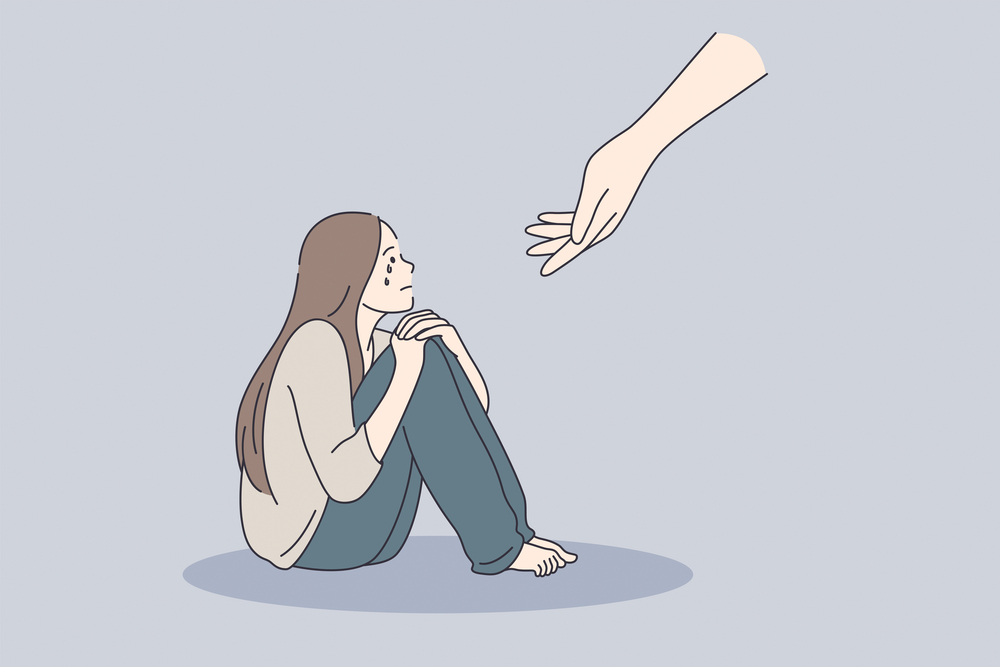
Listening and responding with empathy means as a counselor you feel what your client feels. Please also review AIHCP’s Healthcare Certifications

In this short blog we will take a closer look at the role of empathy in the therapeutic counseling relationship.  Please also review AIHCP’s Healthcare Certifications and see which ones best match your academic and professional goals.

Empathy vs Sympathy

Carl Rogers emphasized in counseling the critical importance of genuineness, empathy and unconditional positive regard.   While these may seem like fluffy and soft terms that overlook right and wrong, they are critical to counseling in helping individuals discover right and wrong without scolding, admonishing, or ridiculing.  Those in trauma or pain need a non-judgmental caring ear to listen and through that listening, foster change.  The traumatized, mentally ill, and emotional unstable face a cold world already where they are marginalized, ridiculed, and judged.  While abuse destroys human bonds, empathy can restore them.  Counseling is a therapy that is not meant to make judgements but to help individuals discover healthy and good ways to heal.  Instead of the dogmatic voice that says this is right or wrong (and it has a place), the counseling session looks to heal via listening and understanding and helping the person come to self actualization of the correct course.  The counseling room is not the pulpit, but is a healing modality that looks to guide via a different route.  Counseling understands empathy best produces change rather than lectures that only create more anger and disobedience and resistance.  Ultimately empathy in counseling can lead a client to higher self-awareness, self experience and find a true joy in connecting and continuing the communication and connection with the counselor (Cochran, 2021, p. 64-67).

According to Cochran, empathy is not a thought process (2021, p. 56).  Instead it is a natural connection with a person.  It permits the counselor to feel what the other person feels.  So when a gay man traumatically describes abuse at a young age, a counselor who is heterosexual does not see different sexual orientations, but the feeling of rejection and pain with their fellow human being.  Likewise, a Caucasian counselor, can find empathy with a African American client who discusses the trauma of being racially profiled by the police.  One does not need to share the event, or even agree with the client but they share the emotions felt by the client.  This is the key difference between empathy and sympathy.  Sympathy does not share in the feeling but it feels sorry for the person.  Sympathy is good to have for someone but in counseling it is counter productive.  Clients are not looking for someone to feel sorry for them but for someone to help them.  They are looking for someone to feel what they feel and help them move forward.  Empathy is hence walking with the person not just merely observing and offering condolences (Cochran, 2021, p. 57). Rogers states, empathy means to “sense the client’s private world as if it were your own but without ever losing the “as if” quality” (Cochran, 2021, p. 58).  Of course, this does not mean, one who is empathetic must agree with the person’s choices, life styles or past actions, but it allows the counselor to help the person at a deep level to find healing and change.

This closely ties into Unconditional Positive Regard which is another key concept of Rogers which demands counselors fully accept the client in all their complete wholeness and shower them with unconditional understanding.   Unconditional Positive Regard retains the autonomy of the client to learn how to change on their own terms. Rogers listed warmth, acceptance and prizing as three key elements of UPR.   Warmth represents the care of the client and genuine empathy.  It is the fertile soil that produces a an atmosphere of trust and disclosure.  Acceptance is the ability of the counselor without bias to accept the immediate emotions of a person in counseling-whether illogical, angry, hateful, confused or resenting (Cochran, 2021, p. 103).  Prizing involves raising the self esteem of the patient by accepting them with praise as they are but also highlighting their strengths and weaknesses in a honest and genuine way.  Again, this type of emotional connection does not mean counselors accept statements, values, or actions of a client, but it does mean the regard is sincere and grants the client a sense of trust that if they make a mistake or trip and fall emotionally, there is no condition.  When conditions are placed for approval, then the healing process becomes manufactured.  It is through this type of positive regard that a client can flourish and heal because the client knows someone has their back in the good and the bad.  This type of positive relationship in fact helps the client at an internal level look to become better intrinsically based not on reward but because it is the right thing to do.  Once a client believe it is the right path without being told, then the client begins to truly transform and change.  Through empathy, genuineness and employment of unconditional positive regard, the necessary emotional seeds can plant natural and self employed change at the guidance of a gentle counseling hand.


Displaying Empathy

Sometimes the hardest part for empathy to flourish in a counseling relationship is the counselor.  Whether lack of practicing it or lack of patience for its fruits to develop, the counselor is ultimately responsible for establishing a secure and trusting environment where difficult emotions can be felt and discussed.  One element is the fear of letting go.  Some counselors may feel the need to control and direct a session and conditionally expect certain behaviors and decisions.  They lack an empathetic skillset to confront a client with an emotional situation.   It is hence important for counselors sometimes to allow the session to develop as the client dictates and to attempt to understand the client by what is revealed.

There are a variety ways counselors can employ empathy and exhibit it in their practice.

In expressing empathy, counselors need to match emotions with tones, expressions, movements and words (Cochran, 2021., p. 79 to 80). Sometimes naming the emotion and restating it to a client can help reflection but also show empathetic listening.  This is also true when expressing empathetic confrontation which looks to indirectly help a person reflect on a statement.  When stating a statement about what the person is feeling, state in in a declarative statement, but if uncertain, express it in a tentative declarative tone that is open for correction. In these reflections, a counselor can also reflect themes in paraphrasing one’s feelings.  Themes that keep appearing in a person’s story or how one feels can be expertly restated and paraphrased to an individual to again not only show the counselor is listening but also to emphasize.  This can be done in a statement but also in an attempt to empathetically confront a particular feeling (Cochran, 2021, p. 81-82).  Empathetic confrontation eliminates the fear to allow clients to be confronted with some of their own statements.  Counselors should be prepared to be corrected at times, if they misstate what a client said, or if their tentative declaration is misspoken.  In these cases, this should not be seen as an affront but for a better opportunity to understand and help heal.  Most clients will not be offended by this but thankful the counselor is listening and trying to understand.  This can open to further and deeper exploration of the topic.  Of course, it is also good to use appropriate questions to better understand.  The questions must be natural however and  not in the probing nature that looks to pick.  This can make a client feel as if he or she is being interrogated.

Within empathetic counseling, it is important as the counselor to avoid making assessment statements or make the client feel as if he or she is being assessed. In addition, the counselor should not have a surprise hidden agenda that the counselor hopes to reveal and have the client realize.  This leads to an unnatural direction that is void of truly listening and feeling.   Counselors should also avoid doing most of the speaking and talking in these types of sessions, as well as avoid “me too” or “must feel” statements that can assume or take away from the client’s expression of feelings (Cochran, 2021, p. 82).

Counselors hence need to be able to employ empathy in multiple ways.  Compton lists numerous ways, counselors can better express empathy and utilize it in counseling.  He suggests becoming attuned with the client.  Through attunement the counselor resonates the feelings of the victim/survivor (2024, p. 181).  In addition Compton emphasizes the importance of co-regulation where the counselor is better able to help the client manage emotions.  This is accomplished through mirroring and reflecting back, modeling after the client’s tone and motions and checking in on the level of distress a victim/survivor is feeling (2024, p. 182).  The counselor enters into a posture of curiosity that portrays a genuine desire to understand the client (Compton, 2024, p. 183).  In helping with emotions, counselors can also via prizing help highlight strengths of clients and adopt a perspective that looks how those strengths helped them survive and continue to survive.

Counselors also need to practice humility with empathy.  Humility realizes that not all the right answers or skills are found within oneself but to look to the client as well as other professionals to find the needed solutions.  This leads to not becoming over defensive if one is wrong with assumption, as well as being humble before a person’s experience as well as a person’s cultural identity (Compton, 2024. p. 183-184).   Through this humility, the counselor looks to empower the victim/survivor to take an active role in healing and working with the counselor to find it.

Counselors in empathy must also display patience.  The healing process is not linear or fast.  It takes time to help someone find healing.  When in empathy, feelings are not rushed but felt as they truly are and experienced until resolution and healing is found.  During this process, empathy shares in the small victories and joys of self actualization, self worth and healing as the person transforms (Compton, 2024. p. 185).

Of course in all empathy, one finds that all important circle of trust.  Within that trust comes a no-judgement zone and unconditional positive regard.  However, trust is earned.  Individuals suffering from abuse and trauma may not trust at first and be wary of words and especially physical touch.  Through time and patience, confidentiality will be restored but again, empathy demands to feel what the moment dictates and the state of being currently within the client (Compton, 2024, p. 187).

Conclusion
Please also review AIHCP’s Healthcare certifications and see which ones meet your academic and professional goals

Empathy is critical to helping people change because it is not authoritarian or dogmatic.  Counseling is a healing modality and through empathy, one heals but also is guided through an empathetic ear with unconditional positive regard and genuineness that permits the person to see him/herself and come to conclusions that are healthy and good for his/her feeling.  Counselors must be willing to let go of control, face hard feelings, eliminate personal judgement and bias, and allow the person to learn about oneself as the sessions continue.  This does not mean the counselor can disagree internally, or not confront negative thoughts and emotions in an empathetic way, but it does does mean it gives the client a driver seat in pushing forward in self discovery, healing and a future way of living.  Counselors need to facilitate the environment for this by displaying certain skills of empathy, unconditional positive regard and genuineness as espoused by Carl Rogers to achieve these results. Ultimately empathy in every venue of care is essential.  It not just a counseling issue but also in all venues of healthcare itself.

Please also review AIHCP’s Healthcare Certifications, especially in Crisis Intervention, Grief Counseling, Christian and Spiritual Counseling and Trauma Informed Care programs.

Additional Blogs

Counseling When Trauma Emerges- Click here

Rogerian Counseling- Click here

Resource

Cochran, J & Cochran, N. (2021). “The Heart of Counseling: Practical Counseling Skills Through Therapeutic Relationships” 3rd Ed. Routledge

Compton, L & Patterson, T (2024). “Skills for Safeguarding: A Guide to Preventing Abuse and Fostering Healing in the Church” Intervarsity Press.


Additional Resources

The Role of Empathy in Effective Counselling. (2024). Mental Mastery. Access here

“Accurate Empathic Understanding: A Core Component of Client-Centered Counseling” (2024). Psychology Town. Access here

Sutton, J. (2021). “Unconditional Positive Regard: 17 Worksheets & Activities”. Positive Psychology.  Access here

Cherry, K. (2024). “Unconditional Positive Regard in Psychology”. Very Well Mind. Access here



Trauma Informed Care: When Trauma Emerges During Counseling

Trauma Informed Care highlights the reality of trauma as a universal human experience.  Whether deeply effected to the point of PTSD, long term effects or no effects at all, traumatic events do occur and leave an imprint on some individuals.   Ultimately, the these events occur but it is our experience and how it effects ourselves that determine impairment later in life.  Unfortunately, most traumatic cases, especially in abuse, never go reported and individuals live with unresolved trauma that manifests in many maladaptive ways later in life.   TIC looks to uproot trauma when identifying various symptoms that point towards it possible existence.  Hence, if one is counseling from a TIC perspective, then it is only natural that eventually trauma will re-emerge in a victim/survivor/client.

When someone discloses abuse or trauma, the counselor needs to understand how to listen, and help the victim/survivor heal. Please also review AIHCP’s Behavioral Health Certifications

Obviously basic counseling and advanced counseling skills and techniques all play a key role in helping the individual discuss these difficult events in his/her life, but there are also particular skills key to addressing trauma that are essential.  While TIC looks to search for trauma, trauma specific interventions are essential to help the person express and heal from the trauma.  In addition, how the trauma is discussed and handled within the counseling room is equally key.  In this blog, we will look at trauma, its sources, counselor reaction to the client, discussing trauma itself, and ways to better facilitate the discussions of trauma itself.

Please also review AIHCP’s Trauma Informed Care programs, as well as all of AIHCP’s Behavioral and Mental Health Programs in Grief Counseling, Crisis Intervention, Stress Management, Anger Management and Spiritual Counseling programs.

Trauma Lurks Below

We are well aware that the traumatic events are universal and 70 percent of the population will experience some type of trauma.  Of course how the trauma affects the person has numerous subjective factors based upon the person and many surrounding aspects.  Ellis points out that individuals in childhood have different levels of exposure to trauma based on their Adverse Childhood Experiences (2022).  ACE refers to these adverse childhood experiences and categorizes them as actual events but also deeper seeded social issues that act as roots to the trauma tree and its many branches and fruits.  Adverse Community Environments or roots of the problem include multiple negative social issues such as poverty, discrimination, community disruption, lack of economic mobility and opportunity, poor housing and frequent exposure to social violence.  These horrible things manifest into various possible traumatic experiences for individuals that will shape them for the rest of their lives.  This includes issues that the child might experience at a young age such as maternal depression, emotional, physical and sexual abuse, substance abuse, domestic violence, homelessness, incarceration of self or family members, divorces, physical and emotional neglect and exposure to mental illness (Ellis, 2022).

In turn, later in adolescence and life, fruits of these abuses and traumas will emerge.  Behaviors that include drug use, alcoholism, smoking, lack of physical activity and lack of work ethic.  In addition, these fruits can manifest in severe obesity, diabetes, depression, suicide attempts, STDs, heart disease, cancer, stroke and various injuries.   TIC looks to identify these warning signs and fruits of ACE and acknowledges that not every one’s life was calm, peaceful and loving.  This is not to say even the most loving home can face loss and trauma or violent crime, but it does awaken us as a while that people are just much nurture as they are nature in what they become and how their behaviors exhibit themselves.  This is why as counselors, we must show empathy even to undesired behaviors.  We are not dismissing choice, or condoning bad behaviors or life styles or even later criminal actions, but we are putting a spot light on a great systematic breakdown in society as a whole and how trauma can alter and turn so many people into persons they would never have been.  The role of a counselor when facing emerging trauma in counseling is to help the person find peace with the past, cope in the present and find hope in the future.

Shattered but Not Broken

I believe that despite horrible trauma, one can be shattered, but it does not mean one has to be permanently broken.  One will always have the scars from that trauma, one will have a far different life due to it as well, but that does not mean it breaks the person.  While some may become overwhelmed and lose themselves or become the evil itself that destroyed them, it does not have to be that way.

Individuals who suffer trauma and abuse may be shattered but through a caring counselor and support can find healing and a new self actualization

Trauma can be like the story of the comic hero Batman, who as a child witnessed the murder of his parents, only to turn that trauma and pain into a life long crusade against crime.  While a fictional character, I think still, if we look at the story of young Bruce Wayne and his traumatic experience, we can take a lesson from it and see how when trauma is properly processed, while life altering, it can bring out resiliency and growth, and an ability to find meaning.

Outside TIC mindsets, most trauma survivors who are shattered are afraid to bring up the past in counseling and rarely spontaneously disclose their trauma. (Sweeney. A, 2018).  It is hence important to understand how to help heal the broken through discussion of trauma and how to facilitate healing.  Cochran points out that all human beings are in a state of “becoming”  We are constantly changing whether into a traumatic event or out of it, we are never the same but learning how to adjust.  Who we are today are not who we were in the past but we are constantly in flux in our experiences and how we interpret them (2021, p. 8).   All individuals look however to meet a certain self actualization of self.  These self actualizations when molded in a healthy and loving trauma free environment possess healthy concepts of self image and self worth.  Trauma and abuse can destroy these images (Cochran, 2021, p. 9-15).   Cochran uses the oak tree as an example of self actualization.  While the mighty oak is the final concept of what we see as the fullest potential of an acorn, or small sapling, sometimes, those who are victims of abuse or trauma are unable to fulfill their initial abilities or design.  Like a young tree that was struck by lightening or partially uprooted, the ideal self actualization has been altered.   Unlike a tree though, human beings have far better abilities to recreate image and self actualization.  Although shattered, altered and changed, human beings through guidance and support can still grow and meet new goals and fulfill new self actualizations, albeit shatter, but not broken (Cochran, 2021, p. 11-12).

Hence, Cochran points out that as a person develops, like a tree, one can develop and grow without interruption, while others trees may experience difficult times of drought, poor soil, damage, or broken limbs.  Each life experience is different and through trauma, individuals develop different self concepts of what is regular or normal as well as what to expect of oneself.  Trauma hence can be very damaging.  It is important in TIC to find this trauma and to help the shattered find wholeness again and a new way to exist with the past.   When trauma is discovered in counseling or finally disclosed, it is hence important to know how to cultivate the discussion and navigate the difficult discussions.

The Calm in the Storm:  Counselor Qualities in Trauma Informed Care

Counselors in general need to display certain qualities with their clients but this is especially true in the case of trauma victims or trauma survivors. Karl Rogers approached all counseling in a very client based approach that emphasized complete emotional support via empathy, genuineness and unconditional positive regard.  These three qualities not only create a safe environment for disclosure but also helped create a sense of trust between counselor and victim that facilitated healing.  Robin Gobbel, LMSW, emphasizes the importance of safety and the necessity of “felt safety” within between the counselor and the victim or survivor or client.  Many individuals who are victims of trauma feel chronic “danger, danger” feelings.  Due to PTSD, certain triggers can alert the brain to the dangers that are not truly present.  The lack of the prefrontal cortex to dismiss the false alarm is not present in trauma survivors.  Hence the scent of a cologne similar to a molester, or a car backfiring in a public street can send a trauma survivor into a flight, fright or freeze sense.  Helping a person feel safe internally is hence key.  In addition to internal issues, “felt safety” also applies to the counseling room itself.  In previous blogs, we discussed the importance of agencies creating a environment that promotes a safe feeling for the individual to disclose and discuss the abuse or trauma.  They must feel private, secure and free of threat, free of retribution, or even judgement.   Physical environment can be helpful in this, but it also must be accompanied with the counselor’s ability to implement basic counseling skills, via word use, tone, body language and facial expressions.

A counselor can supply empathy, genuineness, and unconditional positive regard for the victim.

This is all best implemented through empathetic listening, genuine interest and unconditional positive regard.   Empathetic listening is not judgmental but it allows oneself to not feel what one thinks another should feel, but attempts to understand and share what one is feeling and why.  Cochran describes empathy as feeling with the client (2021, p. 79).  Empathy can be emitted by sharing the same emotions and words that describe those emotions with the client.  Empathy does not require one agreeing with the client, their beliefs, choices or actions, but it does involve walking with the client and attempting to understand all the things that make him/her feel the way he/she does.

In addition to empathy, Karl Rogers emphasized the importance of being genuine.  Rogers pointed out that the therapist is being him/herself without professional facade of being all knowing or merely a person with letters behind his/her name.  Rogers continued that the counselor needs to be genuine in the feelings of the moment and aware of those moments where feelings are expressed.  Ultimately, the therapist becomes transparent and down to earth with the client without any ulterior motives but the healing of the client.  This helps the client see that the therapist is truly there to help and more willing to open and disclose issues (Cochran, 2021, p. 132).  Ultimately, Cochran points out that all counselors if they seek to be genuine need to know oneself and express oneself.

Tying together empathy and genuineness is the key Rogerian concept of Unconditional Positive Regard for a client.  This concept is a cornerstone for counseling.  It is also sometimes a difficult concept.  It does not mean that the counselor again always agrees with beliefs, choices, or actions of a client, but it does entail an unwavering support for the client/victim/survivor that looks not for an agenda or conditional response but a gentle guidance of self development that does not demand but instead listens, nods and recommends without condition.  Studies have shown that when conditions are tied to change, change becomes far more difficult.  Unconditional Positive Regard retains the autonomy of the client to learn how to change on their own terms.

Rogers listed warmth, acceptance and prizing as three key elements of UPR.   Warmth represents the care of the client and genuine empathy.  It is the fertile soil that produces a an atmosphere of trust and disclosure.  Acceptance is the ability of the counselor without bias to accept the immediate emotions of a person in counseling-whether illogical, angry, hateful, confused or resenting (Cochran, 2021, p. 103).  In trauma, many emotions that are sputtered out are helpful in healing.  If they are diagnosed, judged or refuted, then this can stunt disclosure.  Trauma victims or survivors need a place to express their feelings anytime and anyway without judgement.  Acceptance allows the person to express without regret.  Many times, the emotions displayed can help the counselor see clues to past incidents, or even help understand the current emotional state of the person.   Cochran points out that when a person is allowed to swear, scream, express, or seem illogical without reproach, many times, they will re-evaluate their own reactions in a healthy way (2021, p. 103).   Finally, prizing is a concept of UPR that emphasizes the person as a treasure and someone special who is unique and special.  Prizing is not an overstatement or infatuation but is a sensitive way of caring and a genuine way of expressing to the client that he/she matters (Cochran, 2021. p. 104).  Prizing despite the pain and downfalls, also looks to lift the person up by highlighting the strengths of the person and helps encourage the person to healing and change. Rogers believed that UPR helps clients discover who they truly are.  He believed that self-acceptance leads to real change.  Through full expression of the spectrum of emotions, one can in a safe environment see the counselor acceptance and hence accept themselves in expressing issues and trauma (Cochran, 2021, p.109-110).

We cannot put agendas, our own judgements, moral beliefs, or expected outcomes  upon clients.  Some clients in trauma need certain environments to feel safe to heal, or they need to feel that their story has no conditions that must be met.  When counselors put agendas on the table, expect outcomes, or think they know better, then their regard becomes conditioned which is detrimental to disclosure and healing (Cochran, 2021, p. 114-116).   Many times, well trained analytic minded counselors have a difficult time displaying pragmatic solutions or just letting go of an agenda or idea and instead just listening and being present.  Hard to like clients, bad people in the prison system, moral differences, and biased initial thoughts can all play negative roles in how we show unconditional positive regard for a client (Cochran, 2021, p119-121).  It is hence important to see each client, no matter who, as a person that is there to be helped and hopefully understood.  This does not mean suggestions are guidance are not given, but it does mean, an acknowledgement of the client’s current state and an attempt to understand why.  The biggest question should not be “WHAT IS WRONG WITH YOU” but instead “WHAT HAPPNED TO YOU” (Sweeney, A. 2018).

Discussing the Trauma

The concept of trauma can be difficult to discuss.  Many clients feel embarrassed, or fear judgement or retaliation if they speak.  Others may feel weak if they express traumatic injuries.  Others may have in the past attempted to tell but where quickly dismissed.  Others may have been difficult ways expressing verbally abuse due to PTSD.  Many trauma survivors have a difficult time chronologically making sense of the story but vivid scents, sights, or touches can open the emotional part of the brain.  Hence those who experience trauma in many cases fear labeling when discussing trauma (Sweeney, A. 2018).

Learning how to discuss trauma is important in trauma informed care to avoid re-traumatization

Questions about trauma hence need to be done in a safe environment with genuineness and empathy and with a sensitivity about the story.  Questions about trauma are usually better during assessment than when in actual crisis. They can be asked within the general psychosocial history of the client to avoid a feeling of purposeful probing.  In addition, it is important to preface trauma with a normalizing comment that does not make the person feel like the exception to the rule.  The person should feel completely free not to disclose or discuss details that upset him/her (Sweeney, A, 2018).

Sweeney recommends that for those who disclose or are tentative about disclosure that it is s good thing to disclose and that the person is completely safe from the person, judgement, or labeling.  If the person does not wish, details should not be dissected from the story.  In addition, it is sometimes helpful to help the person slowly enter into the traumatic story by first discussing the initial part of the day prior and then the after feelings before diving deep into the intensity of the story.  The counselor should be aware of any changes in the person’s triggers and reactions to re-telling the story.  The counselor should discuss if this story has ever been told before and if so, how the other party reacted to the story, as well as how the past trauma affects their current life, especially if maladaptive coping is taking place.  When trauma is disclosed, particular trauma specific treatments may be need employed to help healing.  In some cases, the counselor or social worker is clinical and can supply those services, but if not, and non-clinical or pastoral in nature, the counselor will need to refer the person to an appropriately licensed, trained and trusted colleague.  Finally, following any disclosure, it is critical to check on the person’s emotional state to avoid re-traumatizing the person.  This is important because individuals could leave the session feeling less safe and return to maladaptive coping later in the day or even worse, suicidal ideation or attempts.   Follow up is key and consistent monitoring. (Sweeney, 2018).

One important note, if the trauma and abuse is current, counselors and social workers, and certain clergy pending on the nature of disclosure and state laws, except within the seal of Catholic/Orthodox confession, have the legal obligation to report abuse.

Facilitating Better Trauma Response

To respond better to the needs of those in trauma due to abuse, it is key to better facilitate responses to individuals who are dealing with past or present trauma, whether in the counseling room, or short term crisis facilities.  It is even crucial to better respond to those in trauma who are in longer term facilities, or even correctional facilities.

Individuals who suffer from trauma fear labeling, lack of control in decisions, judgement, retribution and lack of safety. Counselors and facilities need to make them feel safe

A team that responds to victims of trauma with no judgement and empathy is key but this involves dismissing older notions.  Notions that dismiss holistic biopsychosocial models for mental distress and only highlight biomedical focus can play a role in impeding healing.  Instead of merely prescribing a medication and taking a pill, alternative practices need to be supplementing with many individuals.  In addition, agencies need better exposure to social , urban, cultural and historical traumas that underline the person’s makeup.  They also need to dismiss notions that treatment involves assessment and conditional parameters for healing that involves an imbalance of power. In these cases, the caregivers have power over the person, make the decisions, and determine the outcomes. In many cases, these same types of lack of control for the abused can cause re-traumatization (Sweeney, 2018).   For instance, not granting a person a say in what they do or take, or unnecessarily constraining an individual can all be triggers to the original abuse.

Ultimately, many agencies and facilities do not have a good trauma informed care plan, as we discussed in other blogs.  In addition, they are underfunded, staff is stressed and morale may be low and the facility may staff shortages.  This leads to stressed, under trained, and confused lower staff members in dealing with patients.  In addition, many of the higher staff in counseling are themselves facing burnout, overwhelmed with paperwork or dealing with inconsistent policies or social networking that never follows through (Sweeney, 2018).  We can hence see the many challenges that facilities and agencies face but the goal and mission must still remain the same to overcome these pitfalls and introduce real healing strategies for individuals experiencing crisis, trauma and abuse.

Conclusion

When someone discloses trauma or abuse, it is a big moment in that person’s life.  Each person with their abuse story is different.  Some have other underlying issues.  Some may have been mocked or not believed, while others may be maladaptively coping.  It is imperative to reach back to each person and give them the security and dignity he/she deserves in disclosing the story.  The counselor must be empathetic, genuine and provide as Rogers calls it, Unconditional Positive Regard.  Older methods of understanding trauma and assessment and conditional plans need dismissed the counselor needs to help the person validate emotions and find constructive ways to heal.  The counselor must be well versed in how to discuss trauma related issues and be careful not only of their own burnout but also in re-traumatizing the client.  Facilities also need to reassess their own mission and policies in helping those in abuse find better solutions and healing.

Please also review AIHCP’s Trauma Informed Care programs, as well as its other multiple behavioral health certifications in grief, crisis, anger and stress management

Please also review AIHCP’s Behavioral Health Certifications, especially in Grief Counseling, Crisis Intervention and Trauma Informed Care

Additional Blogs

Attending Skills: Click here

Responding Skills: Click here

Trauma Informed Care: Click here

Resources

Cochran, J & Cochran, N. (2021). “The Heart of Counseling: Practical Counseling Skills Through Therapeutic Relationships” 3rd Ed. Routledge

Sweeny, A, et al. (2018). “A Paradigm Shift: Relationships in Trauma-Informed Mental Health Services” Cambridge University Press

Additional Resources

“Childhood Trauma & ACES”. Cleveland Clinic.  Access here

Olenick, C. (2025). “Adverse Childhood Experiences (ACEs): Examples and Effects”. WebMD.  Access here

“The Challenge of Disclosing Your Abuse”. Saprea. Access here

Schuckman, A. (2024). “Disclosing Abuse: How to Show Support and Break Stigmas”.  Nationwide Children’s. Access here

Engel, B. (2019). “Helping Adult Survivors of Child Sexual Abuse to Disclose #4”. Psychology Today.  Access here