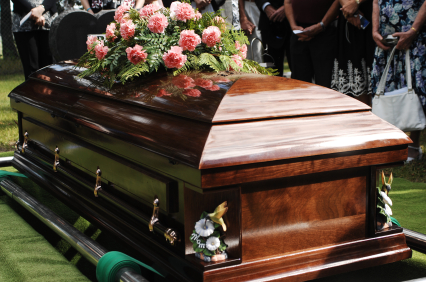
It is not only hard to know what to say or not say to someone grieving a loss but it can also be difficult to know what type of gift or card to give them. Showing you care is one of the most important ways you can show sympathy and sometimes a gift speaks volumes to someone grieving.
What is the best way to type of gift to help someone who is grieving? Please also review AIHCP’s Grief Counseling Certification
The article, “30 gifts for someone dealing with grief” by Dana Holmes looks at different gifts you can give someone who is grieving. She states,
“Current circumstances make losing a loved one even more complicated and isolating than usual. Those dealing with loss right now have the added burdens of not being able to say a proper goodbye at the hospital or to honor the deceased at an in-person memorial. We also can’t support those most directly affected by the loss in ways we might want to — with a hug or a visit. So what should we do or give to help them cope?”
Helping others through grief is the duty of any friend or family member and the gifts listed can help others. To read the entire article and list, please click here
Please also review the American Academy of Grief Counseling’s Grief Counseling Certification to see if it matches your academic and professional goals.
Such comments as “you are so strong” during grief can have well intentions but pose problems to the griever. It creates an atmosphere where strength in grief is looking strong or tough or hiding it, or that one must be strong despite grief. These ideals are not what it means to be truly strong in grief.
What does it truly mean to be strong in grief? Please also review our Grief Counseling Certification and see if it meets your academic and professional goals
Whats Your Grief Article, “What Does it Mean to Be Strong in Grief?” does an excellent job of pointing out the true strength in grief. The article reads,
“Strength in grief is acknowledging, feeling, and expressing emotion. To help people understand how broadly strength in grief can be defined, we want to ask you – what does strength in grief look and feel like to you?”
Strength in grief is accepting grief. It is doing the little things. It is being scared, vulnerable and sad but going through the process. It is important as grief counselors to realize that when helping others face the grief process. Please also review AIHCP’s Grief Counseling Certification
Grief flows into every aspect of life and the work place is no exception. It is important for employers to be able to identify grieving employees and help them. This sometimes involves time off but also an open ear to listen to any issues the employee may be experiencing. This is important for productivity and smoothness within the business but it also is the basics of a good human being. We need to see employees as people and respect their emotions. It is critical to good business but goes well beyond it.
How can employers help grieving employees? Please also review AIHCP’s Grief Counseling Certification
The article, “How To Support Employees Experiencing Grief And Loss” by Stephanie Sarkis looks at how employers can help employees grieve and have the time they need to fix issues of loss at home. She states,
“You may have employees that have lost loved ones. Compounding the grief, many were not able to attend a funeral or memorial service due to social distancing guidelines. Many people who died of Covid-19 died alone, or with medical staff holding up a phone or tablet so a patient could see their family and friends one last time.”
Please also review our Grief Counseling Certification. The certification is for qualified professionals who are looking for professional credentials to help in the area of loss and bereavement. Plese review the program and see if it meets your academic and professional goals.
Many individuals new to loss do not understand its very nature. They think grief is a pathology or grief is short term and individuals get over it. These ideals are quickly dismissed as the person realizes grief is a life long journey that helps us deal with loss. It is a reaction to loss. Loss is part of life and hence unfortunately so is grief. As a person accepts this, then their healthy reaction to grief and loss changes. The ability to understand that grief is a life long journey and that grief is not something to dismiss but to embrace is a reality that helps the person recover and adjust to the new reality.
Grief is critical to healing and adjustment. It is life long but heals. Please also review our Grief Counseling Certification and see if it meets your professional goals
The article, “Grief For Beginners: 5 Things To Know About Processing Loss” by Stephanie O’Neil looks at five key points that beginners in grief need to discover. She states,
“Psychologist William Worden developed the concept, which involves four main tasks: acceptance of the loss, processing that loss, adjusting to life without the deceased person and finding ways to maintain an enduring connection with your loved one as you continue your life.”
Grief is a long process but it brings healing if one accepts it and works through it with the correct mindset. Please also review AIHCP’s Grief Counseling Certification and see if it matches your academic and professional goals.
The article below is from Chris Haws, founder of Telegrief. Online assistance is critical for individuals facing depression during quarantine. Online assistance and appointments are also a wave of the future for many in the mental field. Chris Haws discusses the vital importance of online communication for mental health.
TELEGRIEF
One of the frequent characteristics of grieving is that people isolate and withdraw from their everyday lives. They need time to think, time to reflect and time to cry. They need to assess this new reality – a reality without that much loved spouse, partner, parent, child, sibling or friend. Some people find it easier than others and can re-engage with the world in their on time and at their own pace. In every case, the support of a professional grief counselor can be invaluable during this transition from acute, agonizing, pain to a new way of living that integrates the grief and the sorrow of the loss into an ongoing, meaningful and even joyful existence. People can and do learn that it’s OK to laugh – and love – again.
Isolation and grief are not a good mixture. Chris Haws offers online services for the isolated through Telegrief.
But what if the isolation is imposed by circumstances beyond the grief sufferer’s control? Circumstances such as the current Covid-19 pandemic that is forcing everyone to “lockdown”, “shelter in place”, and “self-isolate”? It’s tough enough for people with busy lives to lead, mouths to feed and families to raise. Throw the emotionally shattering experience of a bereavement on top of all that and the result can be devastating.
Fortunately, although hugs and literal hand holding can be comforting, the grief counselor’s principal job is to listen. And having listened, to gently guide the sufferer out of the darkness of their pain towards the brighter world in which their grief is not denied or suppressed, but is integrated into the next chapter of a purposeful and satisfying life.
And that’s why remote counseling works. Whether by phone, or using one of the new video linking technologies, counselors can still listen and interact with their clients just as effectively as they can in face to face sessions – and, paradoxically, sometimes even more comfortably. Clients can sometimes be more “themselves” when they don’t have to tidy the house or dress up before the counselor arrives, or take the bus or get in their cars to travel to a distant consulting room.
Prompted by Covid-19, but building on prior experience with an international clientele that is scattered across the country and around the world, that’s why psychologist and grief counselor Chris Haws has created “Telegrief”. Clients can interact remotely with Chris using whatever technology they choose, and the results are already proving to be remarkable. If you or someone you know are in need of counseling for a recent bereavement, then go to telegrief.com and check out what Chris Haws is offering. As he says “It’s your call”.
Chris Haws is a British born Psychologist and Counselor based in Northwest DC who specializes in bereavement and grief, substance abuse and recovery, and personal development and mindfulness. For over three decades, his writing has appeared in print, radio and TV around the world. He is the founder of “Telegrief” and can be contacted at telegrief.com
Please also review AIHCP’s Grief Counseling Certification program and see if it matches your academic and professional goals.
Grieving is an ongoing process throughout life. Some steps take one into a unhealthy direction while healthy grieving learns to accept the loss and correlate it to the meaning of the present. This does not magically mean the pain vanishes. The pain of grief will always be present. Losing someone has a steep price. With great love comes great grief when that person is removed. This is a natural reaction to loss, but this does not mean one cannot adjust, while grieving, in healthy ways.
Resiliency is a key component in grief support. Please also review our Grief Counseling Certification
One can show resilience overtime through healthy grief practices that remember the loss and pain but also celebrate the love and person. Examples can include a variety of things that include remembrance of good times, memorials, and new traditions in honors of the deceased.
The article, “What I Learned About Resilience in the Midst of Grief” by Lucy Hone looks at resiliency in grieving. She states,
“In a study investigating U.S. college students’ responses to the 9/11 terrorist attacks, Fredrickson found that certain people showed resilience. What was their secret? Experiencing positive emotions buffered resilient people against depression and was the active ingredient that helped them thrive.”
Resiliency is key after loss. It does not come easy. Some are more resilient naturally while others have better support. Ultimately, the ability to be resilient can help one find a healthier meaning in loss and be better equipped to adjust to that loss. Grief Counselors need to be able to help individuals utilize their grief in a more active and healthy fashion throughout the grieving process. This will enable the grieving to better put the loss in correlation with the present narrative of life. It will also allow the griever to express loss in a more positive fashion. Please also review our Grief Counseling Certification and see if it matches your academic and professional goals.
Most grief reactions are a result of an acute loss. Even then, most reactions are not labeled as pathological. Pathological reactions are associated with depression. Acute grief reactions can become pathological through depression but the depression has a cause, namely loss. However, chronic depression is chemical in nature. It has no true reason for the state of mind.
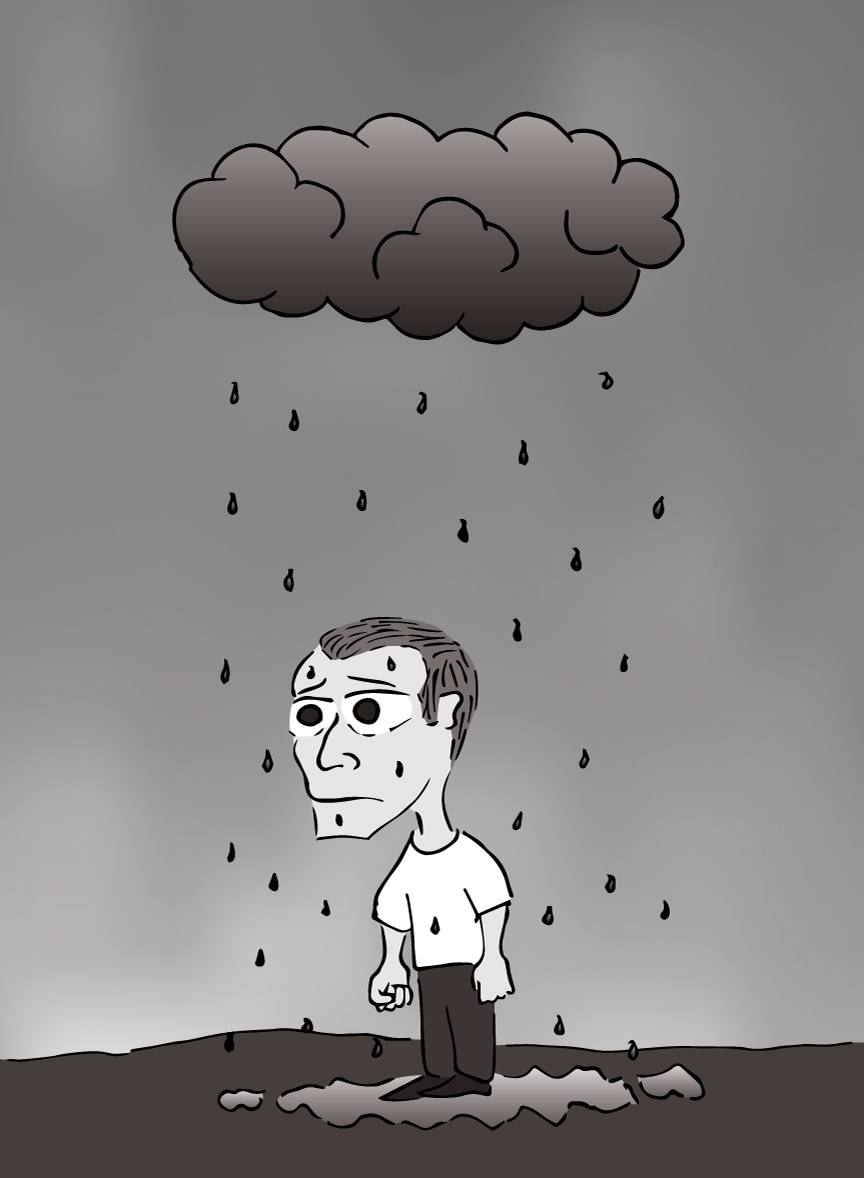
Chronic depression can make everyday seem like a cloudy dark day. Please also review our Grief Counseling Certification
Chronic depression is continual or comes and goes consistently. The person may feel bad everyday, over eat to hide emotion, possess irregular sleep patterns, or feel in general worthless. This type of state of mind requires clinical help from a licensed professional counselor. Many licensed professional counselors also possess a certification in grief counseling and even possess a more indepth knowledge of the depression
The article, “Let’s Talk About Chronic Depression” by Meirav Devash discusses many of the symptoms and reasons for chronic depression. The article states,
“People with PDD experience depressed mood for a period of two years or longer, and two or more of the additional symptoms below. Your symptoms would be distressing and affect daily functioning, and you’d never be without them for more than two months at a time.”
Men traditionally find grief as a vulnerability. From an evolutionary standpoint, men must be strong and a source of protection for the family. This physical stereotype has led to an emotional abandonment of displaying grief among many men. The right way to grieve for men has been handed down through generations with ideas that “real men do not cry”, or that crying is a sign of weakness. This “John Wayne” type persona has dominated Western thought regarding social images of men.
At an early age, boys are taught the proper method of grieving according to gender and social constructs. These constructs can be emotionally stunting for the grief process.
Men have been taught to hold in their grief and grieve alone in solace. They have been shamed when tears are shown and called weak if they displayed sadness. Many men have not been able to grieve in healthy ways hence emotionally stunted their recovery from loss.
Individuals grieve differently. Some may not wish to express emotion but to simply repress emotion based upon a stereotype can be emotionally damaging.
Instead of slogans that “real men do not cry”, many have pushed that true strength is a man who can show tears and emotion. Weeping over loss is not a female only right, but also a human right. While cultures and society may create images of how men should grieve through cultural rites or movies, men need to become that grieving and weakness and are not correlated. Grieving is a natural process that everyone endures and expressing grief makes no man any less a man than the next.
The article, “How Men Grieve” by Jackson Rainer takes a deeper look into how men grieve and social perspectives surrounding it. He states,
“Men tend to lean toward the instrumental expression of grief, orienting to emotional control, a disinclination to talk about matters of the heart, to default into solitude rather than connection and to focus on action more than talk. I fall squarely in this masculine camp.”
Men and women grieve differently. This does not mean men who cry should be seen as weak. It is important to grieve and express if one feels the need. This does not make one less of a man but allows the man to grieve in a conducive way
The article does an excellent job in explaining how men grieve instrumentally, or through physical and cognitive ways, while women are taught to grieve intuitively through emotion. While both ways are equal processes of grief, the danger arises when individual grievers are socially assigned a proper way to grieve simply based on their gender. Boys and girls are taught the right way to grieve and see sometimes bad examples of grief behavior in both women and men. These bad grief behaviors later translate to future problems for the children when they reach adulthood.
To learn more about grieving or if you would like to become a certified grief counselor, then please review AIHCP’s Grief Counseling Certification and see if it matches your academic and professional goals.
The death of a celebrity, or a national tragedy can bring society closer together. It can unite society in tears and also help others question their own reality. The levels of grief and despair vary greatly. Hence reactions vary in extremity.
Collective and social grief emerges when a a universal tragedy occurs. The epicenter of the grief reaction obviously is correlated with the connection to the person or event. Hence, when a national catastrophe occurs, those with more personal investment in the people or area will react more sincerely in a true grief reaction, while others who may be empathetic but not directly related, will experience a more indirect grief reaction.
Social grief can emerge collectively in a nation over the death of a famous person, politician or sports star. They are seen as heroes and can bring a nation together into mourning
Society as a whole will react to a loss. For example, the most recent loss of Basketball Great, Kobe Bryant is a stinging loss to many and a reality check for many others. Whenever anyone dies unexpectedly, individuals react to some extent. Some may lose little sleep due to the distance of connection, but the idea of death and its reality always stings. When the person is famous and not just a mere name, it resonates with the subconscious. Whether there is emotional investment or not, the death of someone famous reinforces the idea that death happens unexpectedly and can happen to anyone, even oneself.
This is the first and most remote reaction to the loss of a famous individual. The reminding that anyone can die at any moment. This may force one to re-evaluate their own life, relations with others, or future goals. A famous person is just not anyone in the news but a person, for better or worst, that plays a key social role.
The social role that one plays to the individual will reflect the grief reaction. Fame is a way of knowing, but it is not true knowing. Yet, even though it is not the knowing of friendship, it still creates an aspect of knowing, where that famous individual has touched the person in some way. While it is not a reciprocal process such as friendship, the reality of the famous person’s influence on others is a reality. It is an imbalance but still creates a subjective connection on the part of the fan or everyday person who witnesses this person on television. While in some cases, there can be a pathological obsession and grief over-reaction to a person one does not personally know, there is definitely a reality that denotes value of that person.
The death of the famous, may not make all grieve, but it will definitely remind all of the nature of death and fragile nature of life
And this is not obsession. Famous individuals, whether in sports, entertainment, or politics have social value. That value is what joy or status they give to one as a collective whole. A king or queen’s death represents a national death and can affect millions. Losing a sports figure, can be a great loss to a fan base that revered the player as a hero. These are not pathological reactions but true losses at different varying subjective levels.
For some though, the loss may be meaningless. If a singer dies suddenly that had no impact upon an individual, then only the reality that someone famous died resonates, but for a person who considered the singer and his or her songs to be instrumental to his or life passes, then the impact is far greater and even more personal. It is ultimately very subjective how much someone who is famous plays a part in one’s life. While it may seem silly to some, or obsessive to mourn someone you may have never met or only seen from the distance, it still does not equate to pathology but a true human connection. Again, where subjectively draws the line to a pathological grief reaction and a normal reaction is a cloudy line.
The loss of a famous person, while not personal in nature, is subjective in nature and is correlated to the role the person’s message played in the griever’s life and development
For instance, Kobe Bryant’s death has reminded everyone collectively of the fragile nature of life. His death has also brought the basketball community to tears. However, as one approaches the epicenter of the loss, proportionate grief reactions are seen more intense. The friendship Kobe had with teammates and family is obviously greater than that of a distant fan. The love between his parents, wife and children is also far more intense. Kobe is not an image to these individuals but a true reciprocal relationship. Kobe’s closest family did not lose a mere name or symbol, but a husband, father and son.
If grief reactions from fans or the national collective match the intensity of close family and friends, then one may have to consider the attachment to Kobe and the grief reaction to be obsessive and pathological. Yet, to merely admonish someone for grieving the loss of a famous individual is wrong and simply bad grief counseling. It is healthy to socially grieve a sports hero but it has to be proportionate. Grief Counselors need to identify what is healthy and not healthy in this type of social grief.
With social media discussing his death everywhere there are bound to be ignorant comments and reactions. Some will come from individuals who fear death itself and prefer to ignore it or hide it by dismissing Kobe. There will be those who downplay it and criticize others for grieving the loss. Others will dismiss Kobe and say, others should only grieve real heroes, like soldiers. These dismissive snubs and rude remarks are a result of inner issues or reactions to arise responses from others regarding Kobe’s death. They will seek to escape the story of his death and troll other social media users.
In the social media age though, this is what occurs when news happens. There is naturally an over flooding of content of which is sure to upset some. Some individuals will post and post about an event. Others within the news or light of society, will try to make memes about the death of an individual. Many are attempting to memorialize the event. Others may be over reaching and creating more drama than necessary. Hence, one will see in deaths, a rift between the over dramatic and the acrimonious. Where one will over dramatize the event, while the other downplays the death with sarcastic remarks.
While it is natural to grieve the loss of a famous individual, there can be pathological and obsessive grief reactions not correlated with the relationship with the person
Why is Kobe’s death more impactful? Why are the unknown people that die not recognized at such a dramatic and universal level? Why is the death of a soldier not mourned more universally than the death of a star? One is never dismissing the death of anyone, especially soldiers or others who may have died, with Kobe, in the tragic helicopter accident, but when famous people die, people notice. Maybe not due to importance of the person personally, or that this person did more or did less, but because famous people are known. A known individual, important or not, touches everyone. How it touches one may vary, but it nonetheless touches. A soldier’s death clearly is more impactful than a mere stranger. While the soldier is not personally known, he collectively represents our national heroes, but the impact of a famous person’s death may resonate deeper because that person is known. Whether this occurs for everyone or not depends on their military up-bringing, level of patriotism, and values. Obviously, a soldier’s death is far more important to the nation, but in regards to attachment, fame can make one feel closer.
Social grief is most intense when the death is of a famous person who is also a national hero. Here we have true objective importance to the entire nation and also the fame that allows subjective attachments to form. Please also remember to review our Grief Counseling Certification
This is probably why the death of a famous military leader, war hero, or king garnishes the most acknowledgement in society. It captures true objective importance and also the subjective relationships formed by the masses regarding the individual.
How the person touched you, even though it was never a friendship, depends on the value the person played in your life and what that person contributed socially to the nation and society, or to your own personal views and development. Hence, grief, even over someone you never met, is justified. The reaction though to not be pathological must be proportionate.
For one person, a particular singer may have created a song so important to the person’s life that it encouraged him or her on the darkest days. For another person, the magical shot Kobe hit that lifted the Lakers to another title, may have been a cherished moment with a father and son. These moments are not replaceable and play a key role in the person’s life narrative and when the person who shared in it, passes away, it creates a reaction. Famous individuals whether in a reciprocal relationship or not can sometimes unknowingly play an important part in someone’s life.
Grief Counselors must be careful not to judge those who grieve the loss of famous individuals but also must monitor appropriate grief reactions that are not a result of a unhealthy and obsessive bond. Please also review our Grief Counseling Certification program and see if it matches your academic and professional goals.
Whether pathological reactions, bitter reactions, or true sad social reactions proportionate to the death exist, there will always be reactions to the death of a famous person in any social sphere because it forces one to wrestle with the notion of death.
If you would like to learn more about Grief Counseling or would like to become certified in Grief Counseling then please review the American Academy of Grief Counseling’s certification program and see if it matches your academic and professional goals. The Grief Counseling Certification is a four year certification and open to behavioral health and healthcare professionals. The program is also open to those in ministry and care of the grieving.
On many occasions driven individuals reach an emotional dead end. They can no longer proceed forward and became mentally fatigued. This is referred to as burn out. When an individual burns out they no longer feel the drive or energy to keep doing what they had been doing. This type of burn out can be triggered by a host of things. Usually it is due to putting too much on one’s shoulders and agenda to carry. It then takes easily one thing to make the entire body crumble under the stress. Some question is this type of burnout a type of depression?
Professional burn out can occur to those who push too many boundaries. Is there a big difference between depression and burnout? Please also review our Grief Counseling Certification program
The article, “Is Burnout Actually a Form of Depression? by Grant Brenner looks at how individuals can balance work and life without dismissing the possibility of clinical depression. He states,
“The distinction between burnout and depression is blurry, distracted by impassioned debate. The World Health Organization presents depression and burnout as serious problems — one as a medical illness, and the other as the result of professional factors. Yet they are similar, and depression has been around much longer.”
It is very important to understand one’s mental, emotional and physical barriers. In acknowledging limitations, one can prevent possible burnout or depression. Please also review our Grief Counseling Certification and see if it matches your academic and professional goals.