Pet Loss Grief Counseling Article on Pet Death and Farewell

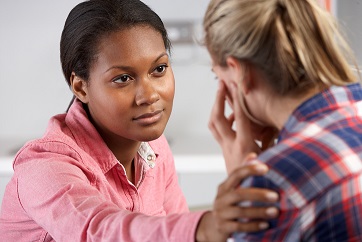
Saying farewell to a pet is a difficult thing.  It is a painful moment when you finally say goodbye to a loved one.  In saying farewell, it should be done like anyone else we love.  Rituals and traditions can help ease the pain.

Saying farewell to a pet is a critical part of the grieving process. Please also review AIHCP’s Pet Loss Grief Counseling Program


The article, “How to farewell your pet if you can’t be there when they die” by Rachel Edwards discusses how one can ease the pain of losing a pet through ritual and tradition.  She states,

“Linda Michie is a registered counsellor for people experiencing the gamut of life — including the death of pets.  She says many people feel guilty if they are not able to be with their pets at the end, thinking they should be there right to the last moment.  “I remind them that they gave their pets such a great life and that without great love there is no great loss,” she says.  Linda works with people to find a solution to not being able to be present for a pet’s death. These are her suggestions.”

To read the entire article, please click here

Please also review AIHCP’s Pet Loss Grief Counseling Program and see if it meets your academic and professional goals.


Stress Management Consulting Article on Work Addiction

Stress can be a killing force especially for individuals who work too much.  Work addiction can ruin lives and kill people young.  It is important to find a proper balance with work and leisure to avoid stress, burnout and poor health.

Research points out that those who over work, live shorter lives.  This is why it is so critical to balance life and not work oneself to the grave.

Are you overworked? Addicted to work? Please also review AIHCP’s Stress Management Consulting Program


The article, “How Work Addiction Could Be Hurting Your Career Without Your Knowledge” by Bryan Robinson discusses how addiction to work can have ill effects.  He states,

“You work compulsively and constantly day and night, holidays and weekends, regardless of the deadline. You’re a hard-driving perfectionist, your work is thorough, and your standards practically unreachable. There’s no letup and few periods of down time in your life, and leisure and recreation are rare. ”

To read the entire article, please click here

Please also review AIHCP’s Stress Management Consulting Program and see if it matches your academic and professional goals.


Anger Management Consulting Program Article on Covid Rage

Basic anger management techniques are important especially in stressed areas.  Covid-19 enraged areas over mask use is a big issue between those who wear and those who do not.  Anger and fights and sometimes death occur in these confrontations.  This is why it is so important to utilize anger management in these cases.

Managing anger is important during mask laws and Covid-19. Please also review AIHCP’s Anger Management Consulting Program


The article, “Managing Anger: Real Steps To Stop The COVID Rage” by Elizabeth Broadbent reviews how we can better control our anger.  She states,

“Managing anger means noticing and naming it in the moment, and when I see people moving into my space or not wearing a mask, I feel angry. I am personally offended. I can name it now. I don’t excuse it or hide it or justify it. I feel angry. And I also recognize that it’s okay to be angry. Anger is a feeling. We can control how we act. We can’t control how we feel.  In other words, I can name my feeling. But that feeling doesn’t give me a right to act out.”

To review the entire article, please click here

Please also review AIHCP’s Anger Management Consulting Program and see if it meets your academic and professional goals.  The program is online and qualified professionals can earn a four year certification.
Substance Abuse Counseling Program Article on Addiction and Family

Addiction can tear families apart.  It can lead to broken homes, abuse and theft.  How to approach a loved one who is addicted is a tough situation.  In some cases, the person may be a spouse, parent, sibling, or teen.  This greatly affects the dynamics of the relationship.  However, it is important to deal with the situation.

Helping family through addiction can be difficult. It can also be difficult to know where to draw the line. Please also review AIHCP’s Substance Abuse Counseling Program


The article, “Dealing with a Loved One’s Addiction” from Island Now, looks at some important aspects of dealing with a loved one who is facing addiction.  The article states,

“Addiction can be a challenging condition to deal with, especially when it concerns a loved one. The addiction process is gradual, so family members or friends rarely recognize it till it’s too late. In most cases, they subconsciously adapt to these changes till the addicted individual begins to exhibit extreme behaviors.”

To read the entire article, please click here

Please also review AIHCP’s Substance Abuse Consulting program and see if it matches your academic and professional goals.  The program is online and open to qualified professionals seeking a four year certification in Substance Abuse Counseling.


Grief Counseling Certification Program Article on Holiday Depression

Celebrating the Holidays while grieving is a difficult paradox.  It is a time of spiritual and social renewal when families come together to celebrate religious and family traditions, but it also can be a time of great pain for the grieving who have recently lost a loved one.

For many, the holidays can be a painful time because of a recent loss of a loved one


The contradiction of joy and grief in one time and space is confusing to the bereaved and can lead to a myriad of raw emotions.  Emotions of regret, guilt, anger, and intense sadness.  Memories of past holidays and the love and good times shared are very present and raw in the emotional heart.  These memories resurface for even grievers years after, but are far more present and graphic for recent grievers.

This can lead grievers during the Holidays to avoid celebration or even withdraw from family life for the season.  This is not necessarily a bad thing for a person who has lost a loved one recently.  This is especially true if the lost is within the calendar year and this is the first Holiday season without the deceased.

Many may withdrew the first Christmas from social gatherings to mourn the loss of a loved one


It is important to allow the individual to express his or her grief in solace and silence if necessary.  It is important to give the griever the space one needs to deal with the lost in one’s own way.  It would be unwise to force traditions or gatherings upon this individual.

Likewise, if a griever chooses to be around family and friends and wishes to celebrate, it is wise to gently accommodate the needs of the person with sensitivity and kindness.  Ultimately, the griever must choose the path that is best for the griever.  Nothing should be forced, refused or restricted.

The biggest thing one can do for the griever during the Holidays is to check on them and be there to listen.  Listening is the greatest gift and simply checking in.  Whether that is through a call, or by leaving a cookie trey, or a simple card.  These small gestures carry weight and can help the griever through these difficult times.  Avoidance is the worst thing anyone can do for the griever.  A balance and discretion are required to know how much to say or how much to do.

One cannot know the first Holiday season if the griever is naturally experiencing grief in its raw form or pathologically and this is why checking in and listening is so critical in helping the bereaved.  In time, the secluded bereaved may become more present during the Holidays.  They may seek other family and friends and wish to again immerse themselves in traditions, dinners and gift exchange.  Or, they may seek to find new traditions, or even wish to commemorate the deceased.

These are healthy advances in any direction.  They show a respect for the past, a continuation in the presence and hope for the future.  Old traditions may end or they may not, or new traditions will emerge after the death of the deceased, but ultimately, individuals who lose a loved one learn how to incorporate the loss of a loved one into the current and future Holidays.  No story is the same and not outcome is right or wrong.  The way Holidays are celebrated after the loss of a loved one are never the same afterwards emotionally but that does not mean they do not continue into new ways.

Holiday depression due to loss is common and everyone will experience it in life. Please also review AICHP’s Grief Counseling Certification program


Losing a loved one is traumatic any day of the year.  Whether it is during the Holidays or before, there will be emotional grief reactions.  These reactions will always exist no matter the year, but they become less intense each year.  This is not to say the pain is erased and the love vanishes, it just means that people adjust and adapt to loss and learn how to cope with it, even during the Holidays.

If you would like to learn more about the process of grief, please review AIHCP’s Grief Counseling Training Program.  Qualified professionals can apply and become certified in Grief Counseling.

Putting A Stop To High Diabetes Rates Among Health Care Workers

Blocks that spell out the word diabetes with fruit and vegetables around it. Written by Lucy Peters

There is a significantly high risk of diabetes among health care workers, with numerous studies postulating three main reasons why: unhealthy lifestyles, obesity, and physical inactivity. Current times are indicative of the importance of maintaining optimal health in this sector, since diabetes can pose a risk for worse outcomes in viral and other infections. Doctors, nurses, and other professionals often face high levels of psychosocial strain, and can be called upon to complete long work shifts – all of which can also contribute to the adoption of unhealthy lifestyle habits, such as the consumption of an unhealthy diet and sedentarism. As stated in a study by M Belingheri and colleagues, the problem is exacerbated when health care workers have other conditions such as hypertension, kidney disease, and cardiovascular disease, all of which can worsen outcomes for various diseases and conditions.

Diabetes And Work Performance

Embracing a healthy lifestyle and receiving early diagnosis for conditions like hypertension is vital for health care workers. Not only does diabetes post a risk of worse outcomes, but it also carries symptoms that can make work in a healthcare setting difficult. For instance, people with both Type 1 and Type 2 diabetes can have a type of nerve damage called diabetic neuropathy. The legs and feet are mostly affected, with symptoms including pain and numbness. Diabetic neuropathy actually affects up to 50% of people with diabetes, and when it is severe, it can interfere greatly with one’s ability to work and complete daily tasks.

Fighting Type 2 Diabetes Through A Healthy Diet

A study by O A Busari and colleagues shows that health care workers can have a significantly higher chance of developing Type 2 diabetes. In order to fight this tendency, a proactive approach that embraces a preventive lifestyle needs to be adopted. This should begin with the adoption of a Mediterranean-type diet, which comprises lean proteins, grains, healthy Omega-3 fats, and plenty of fiber from fruits and vegetables. Specific foods can help health workers achieve their goals. A study undertaken at the Chalmers Institute of Technology, for instance, has found that whole grains (be they rye, oats or wheat) have a vital role in preventing Type 2 diabetes. The researchers recommended switching white flour foods for wholegrain foods, and avoiding foods like red meat and coffee. Women should aim to consume around 70g of wholegrain foods, and men around 90g. These can be sourced from foods such as rye bread, oatmeal porridge, and crispbread.

Embracing An Active Lifestyle

A 2018 study undertaken at the University of Birmingham has shown that regular physical activity reduces the risk of diabetes. Walking, jogging and running are all linked to lower diabetes rates, but any cardiovascular workout can be equally beneficial. “About one fifth of the observed diabetes cases which developed could have been avoided if inactive individuals had engaged in World Health Organisation (WHO) recommended levels of exercise,” said researchers. Despite this fact, research by H Blake and colleagues (Predictors of physical activity and barriers to exercise in nursing and medical students, Journal of Advanced Nursing), shows that health care professionals on the whole have low levels of physical activity, with barriers including a lack of time and inconvenient schedules. Health organizations should take this matter seriously, making key changes to schedules and encouraging involvement in fitness programs by workers.

Health care workers often fail to meet exercise requirements and consume a healthy diet, which ups their risk for diabetes. Conditions such as cardiovascular disease and hypertension can worsen outcomes for workers with diabetes. A preventive stance should be taken to remove the main barriers to healthier lifestyles. These are simply a lack of time, and schedules that are unconducive to regular exercise.


Please also review AIHCP’s Holistic and Integrative Health Care Program and see if it matches your academic and professional goals.  The program in online and independent study and open to qualified professionals.

Integrative and Holistic Healthcare Specialist Program on Holistic Health and Chronic Conditions

Integrative and holistic medicine can help many individuals who suffer from chronic diseases.  A qualified healthcare professional can help navigate the person’s health plan, incorporating western medicine as well as holistic and alternative therapies.  This will ensure the medical safety of the patient and lead the patient to the proper medications and therapies.

Holistic and alternative healthcare practices can help with chronic conditions. Please also review AIHCP’s Integrative and Holistic Healthcare Specialist Program

If you would like to learn more about holistic health care and how to help others deal with chronic conditions, then please review AIHCP’s Integrative and Holistic Healthcare Specialist Program and see if it meets your goals.  Qualified healthcare professionals such as nurses and physicians are accepted into this online program.

Healthcare Life Coach Program Article on Resuming Exercise

Exercise should be part of everyday life.  When someone exercises consistently, there are changes throughout the body are beneficial.  Consistency and proper technique are important for the overall culmination of health

Getting back to shape can be difficult especially after the pandemic. Please also review AIHCP’s Health Care Life Coaching Program


The article, “How exercise changes your body after a day, a week, a month, a year” by Sophie Aubrey looks at the benefits of exercise as days and weeks and months go by, helping individuals see the transformation of overall health to the person.  She states,

“When you take a break from working out, your body shrinks muscle fibres and breaks down blood vessels in the muscles that are no longer being used. “The body is always trying to conserve as much energy as possible,” Robergs says.  It means when you return to exercise, you’re fatigued because high demand is being heaped onto your heart and lungs to increase blood flow through your contracting muscles, but your body has become less effective at doing this.”

Getting back after into shape, especially after the pandemic will present new challenges indeed.  To read the entire article, please click here

Please also review AIHCP’s Healthcare Life Coach Program.  The program is online and helps train qualified professionals in the area of healthy living and how to help others achieve that standard.


Pet Loss Grief Article on Children and Pet Loss

Children and their experience with loss usually begins with the death of a pet.  Helping a child understand the finality of death but also allowing the child to express grief is key to this learning process, albeit, as painful as it may be to the entire family.

For a child, the loss of a pet is sometimes the child’s first experience with loss. Please also review AIHCP’s Pet Loss Grief Support Program


The article, “How to deal with the death of a pet when you have kids” by Mel Ritterman looks at this difficult and painful process.  He states,

“Having to say goodbye to your dog is like losing a family member and your best friend all in one. It’s heartbreaking and so incredibly emotional. Then throw kids into the mix and it is just so much harder. How do you explain this to your children? How do you grieve when you have to be the parent? How do we explain death to kids?”

To read the entire article, please click here

Pet loss and children enter into types of loss.  One the loss of a pet and second the particular loss from the view of a child.  These things make the loss no easier and require parents and caregivers to mourn but also teach their children the nature of loss in life.

Please also review AIHCP’s Pet Loss Grief Support Program


Grief Counseling Certification Article on Leadership and Grief

Grief that transfers to work from home can be counter productive to the office or work place, but it is a natural occurrence and managers must be aware.  Managers can help limit the issue by actually addressing it and helping employees deal with grief.  Support and understanding are key elements in helping an employee function at work while dealing with grief.

Grief follows employees to work. Helping employees with grief is important. Please also review AICHP’s Grief Counseling Certification


The article, “How To Help Others Manage Grief: 16 Lessons For Business Leaders” from Forbes, looks to address the issue of helping employees deal with grief.  The article states,

“Working through feelings of grief and mourning with your team can not only improve everyone’s mental health and overall satisfaction, but can also provide valuable insights to help you become a better leader. Below, the members of Forbes Coaches Council share 16 important lessons that business leaders can learn from the principles of grief management.”

To read the entire article, please click here

Please also review AIHCP’s Grief Counseling Certification and see how it can help you learn more about grief or progress within your professional career.  Understanding grief in the work place is a critical leadership quality that needs to be utilized especially during the pandemic.