Grief Counseling Certification Article on Social Grief and the Black Community

Different cultures have different experiences with loss and grief.  African Americans and other racial minorities also face a variety of social grief especially within the last few years in regards to the value of Black Life.  It is important to understand that one treatment of grief does not fit every person and culture and race play a big role how individuals grieve and the losses they potentially face.
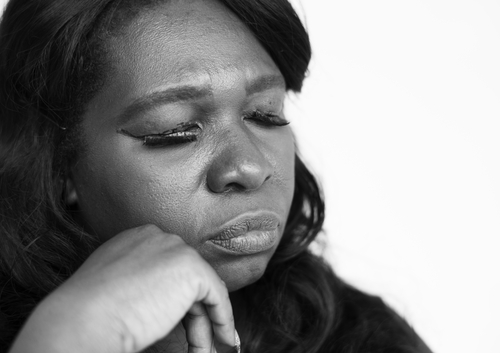
People of color experience grief from different social perspectives. Please also review AIHCP’s Grief Counseling Certification


The article, “How People of Color Experience Grief Differently” from Birmingham Times looks at the fears and losses for the black community.  The article states,

“For many people of color, the fear, exhaustion and constant grief that all come from regularly dealing with various forms of discrimination are compounded when additional trauma piles on.”

To read the entire article, please click here

People of color fear losses that other populations may not fear due to economic situations, police interaction and violence.  These losses lead to a life that is very guarded.  To understand the individual, it is hence important to understand what the race faces everyday


Please also review AIHCP’s Grief Counseling Certification and see if it matches your academic and professional goals.  The program is online and independent study and open to qualified professionals seeking a four year certification in Grief Counseling.


 

Grief Counseling Certification Article on Grief and Displacement of Emotion

It is easy to displace emotion.  When it is more convenient, or less impactful, one may become angry with someone who is not the cause of the irritation.  When grieving, it is sometimes also easier to take it out on the person presenting the bad news.  Like all defense mechanisms, they can happen at the unconscious level.

Displacement of emotion upon others can occur in grief. Please also review AIHCP’s Grief Counseling Certification


It is important to understand emotion and grieving and when helping others, to expect a displacement of emotion.  It is important to be understanding and ready to forgive when one acts emotionally during grief.

The article, “Understanding Displacement While Grieving” from Eleanor Haley and “Whats Your Grief” takes a closer look at displacement and how to deal with it as the griever and the one supporting the griever.  The article states,

“Sometimes the displacement is obvious – you know exactly when and why it is happening. Other times you just find yourself being more irritable, annoyed, or angry at the people around you, even when they have done nothing wrong. It can be complicated because often your rational-brain knows that they haven’t done anything, while your emotional-brain can’t help but lash out. ”

To read the entire article, please click here

When dealing with emotions, it can become complicated and it is important as grief counselors to know that people react differently to grief and an array of emotions can flow.  Please also review AIHCP’s Grief Counseling Certification and see if it meets your professional goals.  The program is online and independent study and open to qualified professionals seeking a four year certification in Grief Counseling.

 

Grief Counseling Certification Article on Grief and Limb Loss

Grief is a reaction to any loss.  Sometimes this loss is focused on death but injuries and loss of capabilities or limbs are also a loss that many deal with daily.  Losing a limb is tragic and is a loss that involves a long adaptation period.  Numerous secondary losses stem from the initial trauma and pain.

Loss of a limb or other body part can take a long time to recover from. Please also review AIHCP’s Grief Counseling Certification


Phantom pains can haunt one well after the initial accident, as well as emotional distress.  The inability to do walk, or hold things, or do things prior the accident haunt the individual.  Hobbies, activities and other events become cold memories of a life once was.  In addition to this, one’s own self image and self esteem can be affected.  Feeling less than whole and new forms of transportation or clothing may be required.  These changes can cause grief and in some cases depression.

It is difficult to cope with such a loss but not impossible over time.  As the grief of the loss is adjusted, one can begin to find new meaning.  This does not mean, one accepts the loss as a good thing, it just means the person has incorporated this unfortunate incident into one’s life narrative and now is looking to find new ways to exist with a disability.  Not just learning to make life easier through therapy, strengthening and new technology, but also seeing what other opportunities exist.

The article, “Limb Loss and Grief: 5 Coping Strategies for New Amputees” by Richard Console Jr takes a closer look at the grief of limb loss and how some can learn to cope.  He states,

“Why does grief often accompany an amputation? Feelings of grief can arise from any kind of meaningful loss – and the loss of a limb certainly counts. In the case of amputation, the absent body part itself isn’t the only loss you suffer. Amputation also leads to many other kinds of losses.”

To review the entire article, please click here

Please also review AIHCP’s Grief Counseling Certification and see if it matches your academic and professional goals.  The program is online and independent study and open to qualified professionals seeking a four certification as a grief counselor.

Grief Counseling Certification Article on Grief Therapies

Basic loss can be dealt with through coping and proceeding through the grieving process.  However, sometimes, grief can become complicated or more intense and require deeper aid and assistance.  Grief therapies can help an individual through loss and depression.  Grief therapies however are conducted under professional licensed counselors or psychologists.  If one is only a certified grief counselor, then they cannot delve into deeper grief pathologies, however, many licensed counselors and psychologists are also certified in grief counseling and may proceed with deeper treatments for deeper pathologies.

Some losses are so intense that the mind and heart do not heal and require deeper grief therapies. Please also review AIHCP’s Grief Counseling Certification


Grief however in itself is not a pathology and these other treatments can help those dealing with basic loss if necessary.  Some treatments in themselves involve cognitive responses to grief with reframing the loss or reinterpreting and others deal with deeper treatments in reviewing the loss and emotion.  Therapists are able to guide someone through trauma or greater loss.  Other therapies also include play therapy and art therapy for children.

The article, “Understanding Therapy for Grief and How It Can Help” from Healthline looks deeper at different grief therapies.

“It can be difficult to quantify or predict the outlook for people dealing with grief, especially since each person manages it in their own way. It’s also challenging to predict if any one treatment may work the best. Grief does not follow one particular path. Healing is unique to each individual, and the outlook for people dealing with grief looks different for each person. A therapist can play a key role in supporting the healing process by facilitating counseling sessions based on your situation.”

To read the entire article, please click here

Again, certain therapies can only be conducted by different levels of training.  Grief Counselors can usually deal with basic grief, but as grief becomes pathological or more deep therapy is needed, then higher trained professional are needed to help one through the loss.  Identifying complicated grief is key.

Please also review The American Academy of Grief Counseling and its Grief Counseling Certification and see if it it matches your academic and professional goals.  The program is online and independent study and open to qualified professionals seeking a four certification as a grief counselor.


Grief Counseling Certification Article on Art and Grief

Collective grief in history can bring inspiration later in the forms of music and art.  The symbolism  found within the art and music can bring forth masterpieces that define human culture.  In ways, art can immortalize grief, freezing it in time for future generations to understand.

Art is a way grief can expressed and symbolized. Please also review AIHCP’s Grief Counseling Certification


The article, “The art of processing our collective grief” by Oscar Holland looks at art and a museum in New York that looks how grief is being immortalized.  He states,

“Whether portraying others’ grief or revealing their own, artists are often able tap into something universal. One need not be Christian to feel Mary’s anguish in Renaissance depictions of Christ’s crucifixion; one need not have lived through the Spanish Civil War to feel the harrowing abyss at the heart of Picasso’s “Guernica” (pictured above). The torment of Edvard Munch’s “The Scream” is clear to all.”

To read the entire article, please click here

On a smaller scale, others can utilize art to express their grief.  Artwork, writing, and music are excellent ways for the right side of the brain to process grief through symbol and expression.  It can also help one understand deeper the grief they are experiencing and allow an outlet to express it.

Please also review AIHCP’s Grief Counseling Certification and see if it meets your academic and professional goals.  The program is online and independent study and open to qualified professionals seeking a four year certification in Grief Counseling.

 

Grief Counseling Certification Article on Work Depression

Work is a necessity in life.  However, it can cause unneeded stress.  Work environments that are unhealthy physically and mentally can cause stress in many employees.  Dangerous and high risk jobs, or jobs with unforgiving deadlines, or even jobs that are repetitiously boring leaving the employee with little input can all cause stress.  Furthermore, some careers or jobs can also cause what is known as work depression.  Work depression differs than work stress in that the reaction within the body and mind is a more constant state and does not release after the stressor is absent.

Are you depressed while at work? Please also review AIHCP’s Grief Counseling Certification


The article, “Work Depression: How to Take Care of Your Mental Health on the Job” from Healthline takes a closer look at work depression and its causes and how to better deal with it.  The article states,

“If you feel depressed when working, you’re not alone. Sadness, anxiety, loss of motivation, difficulty concentrating, unexplained bouts of crying, and boredom are just a small sampling of the things you may be feeling if you’re experiencing depressive symptoms at work.  Depression impacts over 17 million American adults each year.”

To read the entire article, please click here

Please also review AIHCP’s Grief Counseling Certification and see if it matches your academic and professional goals.  The program is online and independent study and open to qualified professionals seeking a four certification as a Grief Counselor.

Grief Counseling Certification Article on Pandemic and Grief

The pandemic has bore itself upon millions of people.  It is wearing on so many.  So many losses, both deeply personal but also secondary in nature, but the overall cloud upon the planet has also created a general grief.  Many individuals are feeling a general apathy due to the pandemic and that is only  natural.

Over time, the sea of grief and its grey skies during thee pandemic can seem to great to bear but there is always hope. Please also review AIHCP’s Grief Counseling Certification and help others


The article, “What you’re feeling is grief” by Nylah Burton looks at how many are having a difficult time coping and responding to so much grief.  The article states,

“These conditions, combined with the duration of the pandemic, are causing many people to struggle with the loss of their “resilience muscle,” says Sherry Cormier, a psychologist and bereavement specialist who authored the book Sweet Sorrow: Finding Enduring Wholeness after Loss and Grief. “Back in March, we had a lot of zest. We thought we could get through this and rise to the challenge. But the longer this goes on, the climb gets harder and harder,” Cormier says. “We are definitely in a mental health epidemic.”

To read the entire article, please click here

With death, personal losses, loss of income and loss of social interaction, basic coping is becoming not enough for many people.  The general cloud of apathy and mental issues that come with a pandemic are beginning to take root.

Please also review AIHCP’s Grief Counseling Certification and see if it matches your professional and academic goals.  The program is online and independent study and open to qualified professionals seeking a four year certification in Grief Counseling

Grief Counseling Certification Article on Employees and Mental Disorder

During the pandemic, many employees working remotely or even in shop are facing a multitude of changes and challenges.  Depression, anxiety and other mental disorders are may widespread than in the past.  Employers can play a huge role in identifying the symptoms and helping their employees.

Are your employees exhibiting depression or anxiety during the pandemic? Please also review AIHCP’s Grief Counseling Certification


The article, “How to spot depression and anxiety in the remote workplace and help your employees” by Erin Hartley takes a closer look at employees and depression and how employers can help.  The article states,

“While 2021 will still be a challenging year for many as the pandemic continues, and remote work will remain the norm, companies can and should take a proactive approach to spotting anxiety and depression among their employees and take measured steps to get them the help they need.”

To read the entire article, please click here

Please also review AIHCP’s Grief Counseling Certification and see if it meets your professional and academic goals.  The program is online and independent study and open to qualified professionals seeking a four year certification in Grief Counseling.

 

Grief Counseling Certification Article on Recovery from Grief?

Grief is not something that is patched up with a bandaide and left to heal.  It is not something that one recovers from ever.  Anyone who says one can recover from grief is misleading you.  Freud taught that grief is something that must be removed from the person.  The person must recover and move on from it, as if grief was a disease or pathology.  Grief however is far from a pathology but part of our human condition.  It is a result of loving someone so much that the loss creates a void forever.

Grief is something we learn to cope with throughout life. It will never go away, nor should we wish it go away for it is the price of love


Grief is not about recovery but is about adaptation and coping.  As time goes, one is able to adapt to the loss and remember the beloved with warmness, and even live with happiness, but the wound is forever present at different intensities at certain times.  This is not something one wishes to remove but something that one embraces as the price of love.  Love and grief coincide in this fallen world and if we never loved, then we would never grieve.

So there is no magic pill or recovery for grief.  It is hard work, adaptation, coping and remembering with fondness the love that existed and still exists in one’s heart.  This is not what many want to hear but it is what they need to hear.  Grief Counseling is not about healing grief but is about helping others learn to live with grief.

The article, “We Don’t Recover From Grief, and that’s Okay” from “Whats Your Grief” is an excellent reminder of how we never truly recover from grief.  The article states,

“But the grief, it’s always there, like an old injury that aches when it rains.  And though this prospect may be scary in the early days of grief, I think in time you’ll find that you wouldn’t have it any other way. Grief is an expression of love – these things grow from the same seed.  Grief becomes a part of how we love a person despite their physical absence; it helps connect us to memories of the past; it bonds us with others through our shared humanity, and it helps provide perspective on our immense capacity for finding strength and wisdom in the most difficult of times.”

To read the entire article, please click here

We learn to accept losses and move forward with them. Please also review AIHCP’s Grief Counseling Certification


Please also review the American of Academy of Grief’s Grief Counseling Certification and see if it matches your academic and professional goals.  The program is online and independent study and open to qualified professionals seeking a four year grief counseling certification


Grief Counseling Certification Article on Loss and Memories

When something or someone is gone, the mind remembers the loss.  The greater the loss, the greater the pain and the longer period to adjust.  Constant reminders exist throughout our life that do not allow us to forget the loss or person.  While this is good, while grieving, it is also painful.

Memories and little things can trigger grief. Please also review AIHCP’s Grief Counseling Certification


Sometimes, its a place, a scent, an object, a day, or an event.  They can all trigger in the mind, memories, both good and bad.  Sometimes, our subconscious will dwell on the person in dreams.  Ultimately, someone so interwoven with you, will never be forgotten nor should be forgotten.  The things that remind us of our loved one are memories of the love shared and remind us how we miss them and how much they mean to us.  They also show us the desire to see them again one day in another world.

The article, “Grief: Coping with reminders after a loss” from the Mayo Clinic looks at these reminders.  The article states,

“Certain reminders of your loved one might be inevitable, such as a visit to the loved one’s grave, the anniversary of the person’s death, holidays, birthdays or new events you know he or she would have enjoyed. Even memorial celebrations for others can trigger the pain of your own loss. Reminders can also be tied to sights, sounds and smells — and they can be unexpected. You might suddenly be flooded with emotions when you drive by the restaurant your partner loved or when you hear your child’s favorite song.”

To read the entire article, click here

Please also review AIHCP’s Grief Counseling Certification and see if it meets your academic and professional goals.  The program is online and independent study and open to qualified professionals seeking a four year certification in Grief Counseling.