
One of the things we naturally seek to avoid first in life is pain. The body’s nervous system is designed to identify injury through nerve receptors warning the brain of damage through the impulse one experiences as pain. The art of healing and medicine itself surrounds itself with the motto of “do not harm”. Pain reduction and pain relief medications are key parts of many individuals daily consumption. And even with grief counseling and pastoral care, counselors look to make a person comfortable and at peace-reducing pain. Physical pain can be acute to an injury , disease or infirmity, but it can also take forms in negation, such as the absence of comfort, food, or warmth. Hunger, coldness, or exposure can lead to great pain and discomfort. Pain is hence the burrs of life as opposed to the glows of it. Instead of the soft touch, it is the brute strike, instead of the gentle rub, it is the piercing blow-it is the unpleasant sense or feeling associated with discomfort or even possible damage to the body.

This of course applies to one type of pain, namely physical pain. The burr and sensation of this physical stimuli is but one negative experiences that one could equate as “pain”. Pain and suffering as a negation of pleasure and happiness encompasses other parts of being beyond the mere body but also can affect the mind and soul. The positive glows and sensations of love are torn away through negative burrs of isolation, separation, rejection, loss, and hate. Joy is replaced with discontent, anxiety and depression. Security can be met with fear or longing. Indeed, the pains of the mind are in many ways far worst than the pains of the body. One needs to only look at the horrendous loss experiences of a parent who loses a child, or other close losses of family and friends. The suffering tied to acute pain is temporary and tied to a wound, but the suffering tied to a mental wound, loss, death, or trauma is tied to a life time.
The temporal world to the Christian is a fallen world tied to this reality. It is because of the sin of Adam that death and suffering entered into human existence. Adam’s descendants inherited the fallen world and became prey to the desolation of “this valley of tears”. God, however, in His infinite mercy sent His only Son to redeem humanity from sin. However, in doing so, He too suffered. He suffered a life where the world knew Him not, arriving in a cold stable, to be ushered into a life of little luxuries while working tirelessly under His father as a carpenter. Yet not demanding the royal life that justice demanded, He humbled Himself and in His daily life offered Himself to God in not only discomforts, but also numerous pains and aches of daily life. He shared in a person’s daily griefs and losses. He buried His father, Joseph, and wept over the execution of His cousin, St John the Baptist, and again wept, in Scripture, over the death of Lazarus prior to rising him. These pains and sufferings could have alone redeemed humanity, but sin demanded so much more. The evil world and its inclinations would not allow Christ’s escape so easy. Instead, Christ was brutally beaten, scourge and crucified for humanity’s redemption. Yet, through this pain and suffering that so many avoid, Christ embraced. He embraced His cross, carried it and offered Himself. Christ, the Suffering Servant, redeemed humanity through suffering and served as an example to those who followed how to live a holy and good life in a fallen world. Christ told His followers to also take up their cross, but St Paul also reminds us that those who suffer with Christ, will also rise in Christ!
This is the Christian message. It is quite different than the message of the world. Where the world looks to avoid inconvenience and complain about misgivings, Christ teaches us to offer them up. Where the world teaches to reject our cross or hardships, Christ teaches us to embrace them. Where the world sees power in pride and comfort, Christ sees glory in humility and sacrifice. Ultimately, the world’s promise is empty. It may claim a recipe for pleasure but it fails to meet the needs of happiness. Everything in the world can be taken away, even our loved ones. Illusions of happiness tied to avarice and greed lead one to a false worship and bad priorities.
One may reply that such a desire to suffer is foolish and blind and quite pessimistic outlook on life, but what we will see is quite the opposite. The Christian approach to pain and suffering is not one of despair or loss but one of realistic optimism. Realistic in that it acknowledges the darkness and pains of this world, but optimistic in that through Christ, there is another reality that is perfect and free from pain and suffering. Romans 8:18 declares that our present sufferings cannot compare to the eternal glory and 1 Peter 5:10 assures us that our suffering here will be little and through Christ we will be restored. We must remember, with Christ we die, but also with Christ we rise!
Please also review AIHCP’s Christian Grief Counseling Program.
A Christian View of Suffering that is Redemptive and Finds Meaning
A secular person may find it quite silly to accept pain and suffering. He or she might also find it odd to purposely fast, or seek out discomfort. Of course, Christians do not want to suffer, nor does God wish for us to suffer, but the reality of the temporal world is that suffering and loss occurs. This is not because God is a cruel sadist, but because of sin. The free will of Adam and the discord of Lucifer play the villainous reasons for the reality of suffering. Christians do not truly seek out suffering but they accept it. They accept it because one cannot escape the reality of it but also they embrace the opportunity it affords because it helps shape and give meaning to life. Christ showed that suffering can be redemptive and for His followers to also take up their cross. Scripture states, “For unto you it is given for Christ, not only to believe in him, but also to suffer for him (Philipp 1:20). Again in Gal.2:19, “With Christ I am nailed to the cross”. St Paul exclaims “Who now rejoices in my sufferings for you, and fill up those things that are wanting of the sufferings of Christ, in my flesh, for his body, which is the church (Col. 1:24)
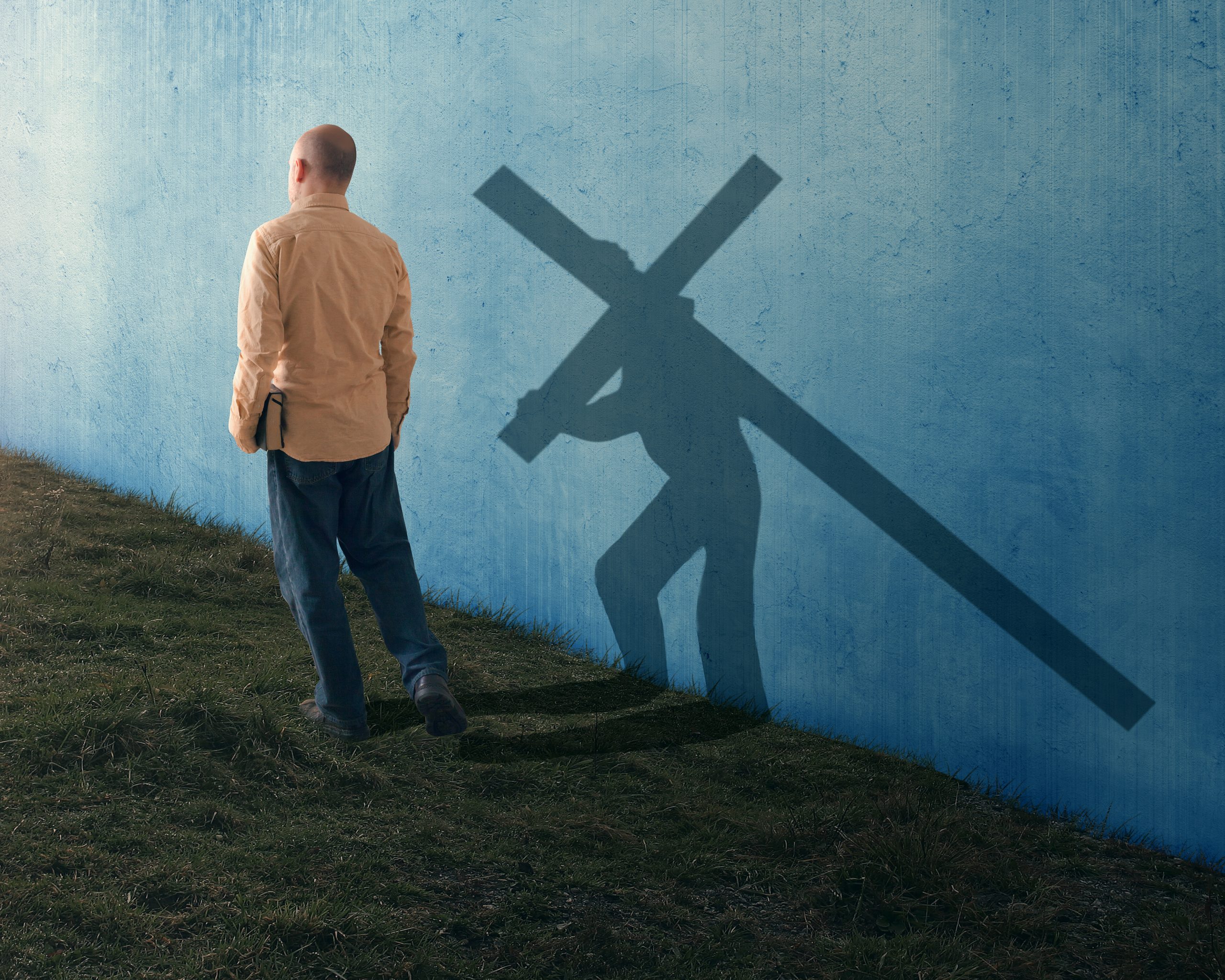
So what is the purpose of this suffering then? If Christ paid atonement for the sins of humanity, why must humanity suffer too for those sins? Again, Christ told His followers to take up their cross and the Apostles faced gruesome ends of execution in that path, so Christians too are called to be suffering pilgrims in this cold world. Christ alone paid the price of sin via the redemption, but through Baptism, Christians must access the grace and merits of Jesus’ blood to their souls through a working faith and working salvation. Faith is more than a mere assent to Christ as Savior, but faith entails fruits, for St James states, “faith without works is dead”. This in no way dares assume that one’s works or suffering merit one’s redemption and therefore salvation. A Christians sufferings and works without faith and grace are meaningless. A monk could abstain, fast and offer a multitude of discomforts but none of these actions alone without Christ have any merit to his salvation. Christ is the High Priest and sole Mediator. He is both the Priest and Victim and the source of humanity’s redemption. In this way, in taking up one’s cross, individuals must unite their works and sufferings to Christ. If one fasts, or one offers up an insult, or patiently endures criticism, or fasts, or quietly endures a physical pain, they must offer these things to Christ and tie them solely to Him to offer to the Father. When alone these gestures are meaningless and powerless, but when tied to Christ, they become salvific. They become an application of His redemption to oneself in the form of grace to oneself or others.
As St Paul points out the analogy of the Church is the Mystical Body of Christ throughout Ephesians, Colossians and Corinthians. Christ is the Head and the baptized are its Body and Members. Through this, one’s sufferings is felt throughout the Body of Christ and when directed to the Head, who is Christ, then it can be used as a key to unlock many graces earned by Christ through His redemption. One’s sufferings that are offered to Christ in this way are not part of the redemption itself, but an unlocking of it for self and others which allows one to bathe in the Blood of Christ and the merits of it. These sufferings are then not redemptive in that it subtracts from Christ’s sacrifice or adds to it, but they allow one to share in it. Christ alone paid for the debt of sin but our sufferings can allow one to share in it and also apply the merits earned by the cross. In doing so, one, as stated in Romans 12:1, is able “to present your bodies as a living sacrifice”, and as Paul also points again as a “working faith” (Gal 5:6)
Through Christ, suffering then becomes redemptive and a way to apply the mysteries and grace of the cross. Without Christ, the secular person would be correct to find the absurdity to embrace it or even seek it, but through Christ suffering is more than temporal loss and pain but a redemptive force that finds meaning alone in the death of Christ with the promise of resurrection.
This perfectly balances Christ’s lone and sufficient redemptive work but also illustrates the role working faith and suffering plays in applying that sacrifice. Unlike the heretical theology of Pelagius, we do not earn redemption, for it is a gift alone, but unlike the extremities of Luther, we are not merely passively redeemed either. The sacrifice was once and perfect and sufficient but we must seek it. Scripture is clear that this starts with the assent of faith that is followed through the work of faith. Hence all suffering we offer is not redemptive as if to add or substract from the passion of Christ or as to earn our forgiveness but it is accessing the salvation and graces earned by Christ for our sins.
Offering it Up
As stated, when suffering is united to Christ, we share in Christ’s suffering and our suffering has meaning and redemptive value for ourselves. This does not mean it replaces, or adds, or even subtracts the pain of Christ on the cross, but it allow one to share in those sufferings of Christ and unite their own sufferings to the Father through Christ. Without such a thing, these trivial inconveniences, or sufferings would be meaningless in the infinite vastness of a lifetime. However, when tied to Christ, they become applicable. They can tap into Christ’s redemption and apply its fruits to oneself or throughout the Body of Christ. In our suffering, we are in no way becoming a co-redeemer, but merely sharing what Christ has done and applying it. This gives great meaning to simple discomforts, or aches, when offered to the Father through Christ. Again Romans 12:12 states “be patient in affliction”. In addition, one can seek to atone for one’s past sins through penance and offerings to God through Christ in these sufferings. By tying our own sufferings to Christ, we can apply more fruitfully the infinite merits of Christ to our soul and partake in the great gift earned by Christ for us on the cross. Through offerings, one can burn in love for Christ on earth.

One has the great opportunity to turn a product of sin into a transforming and redemptive experience with meaning beyond this world. One can offer up one’s daily duty and all the trials and tribulations that come with it. One can unite one’s cross with Christ and find meaning in the pain and suffering. By imitating Christ and then uniting everything to Him as our sole Mediator and High Priest, one can spiritually transform the ordinary into the extraordinary.
In offering things up, the soul also cures the body. The soul reasserts its mastery over the broken bond due to the sin of Adam. The temporal body is inclined to its passions and comforts, but through offerings to God through fasting, abstaining and sufferings, one reclaims mastery over the body and teaches it discipline. One teaches the body the disciplines of control and moderation and allows the Holy Spirit to infuse and share the virtues of purity and temperance. The body learns to avoid lust, gluttony, greed and the comfort and solace of physical things and instead to seek the spiritual companionship of Christ. The body then not only offers reparation through Christ for its sins but seeks to cultivate within it a more pleasing abode for the Holy Spirit. In this way, suffering is not only redemptive but also sculpting. Through fire, the soul is purged and made clean and as the Scripture teaches, helps the body learn perseverance, need of God and hope (Romans 5:3-4)
Still many souls seek to become closer to Christ through suffering. They wish to share with Christ their sufferings as a simple offering to His altar. Like Simon of Cyrene, who was called to help carry Christ’s cross, they seek to partake and share in this suffering. Of course Simon did not redeem humanity, but he played a special role in sharing with Christ the cross, much like a server at the altar before the priest, he plays a role in preparing the sacrifice but is not the sacrifice itself. Others wish to offer simple offerings, much like St Veronica who wiped the face of Christ during the carrying of His cross- such a simple and small consolation! Yet, like a parent who accepts even the smallest and insignificant gift from a child, such acts of sweetness and love have great meaning. As a parent, so does Christ find great consolation and love when a spiritual child wishes to share with Him in His grief. While such simple consolations cannot subtract from the sufferings He endured, they can offer reparation, worship and love for what He did. While the Romans and Jews mocked Him, we can offer to Him, especially during Lent, our sufferings and consolations. By offering one’s sufferings as an act of gratitude to Christ, we like a small child, offer the smallest gift, but still a gift that our Lord greatly appreciates. In that echo of history, within that timeless sacrifice of Christ, He can hear our soothing words among the hateful jeers of the crowd, and He can sense our offering, as small as it is, as a consolation and sharing with Him.
Many saints before sought to share intimately and deeply their sufferings with Christ in this way. Some saints simply did through the most simple deeds of their daily duty, or through the quiet of an injustice, while others shared this through martyrdom and death for Christ. Some even mystically, such as St Francis of Assisi or Padre Pio shared in Christ’s suffering through the stigmata. These acts of charity and love for Christ from smallest to biggest all carry value when tied to Him. He finds immense joy when those who saved seek to offer love and reparation to Him by applying His death to one’s merit.
Conclusion
Suffering can only have meaning in the fallen world and be redemptive through Christ. Christ first set the example by not only His life but also through His cross. His redemption was complete and satisfactory for all sin, but not all people accepted this great gift for their sins. When we offer up our sufferings, alone they are meaningless, but when we offer them in union with Christ, we apply the merits earned on Calvary by Christ for our soul. In this way, random acts of the day, as well as suffering, when united with Christ, permit the soul to share in the sufferings of Christ and also apply its merits for reparation. Christian tradition teaches that one must carry his or her cross and that one who suffers with Christ will rise with Christ. This gives new meaning to suffering and its redemptive power. Christ conquered death through His resurrection and turned suffering into a redemptive quality that when tied to Him becomes a pleasing sacrifice to the Father. We can actively partake, share and apply the merits of Christ to our soul as well as offer acts of charity to the crucified Christ for such a gift. In this way, suffering has great merit to the Christian as well as granting meaning and definition to the most senseless and painful things.
Please also review AIHCP’s Christian Counseling Certification as well as its Christian Grief Counseling Program.
Additional AIHCP Blogs
Christian Suffering and Job- Access here
Christian Suffering: A Unique Theism- Access here
Faith and Loss- Access here
Additional Resources
John Paul 2 (1984). “Salvifici Doloris”. Access here
Understanding Suffering in Christian Life. Bible Hub. Access here
Pastor David. (2025). 35 Important Bible Verses About Suffering As A Christian (Explained). Bible Repository. Access here