The Impact of Indoor Environmental Conditions on Mental Health Outcomes in Clinical and Home Settings

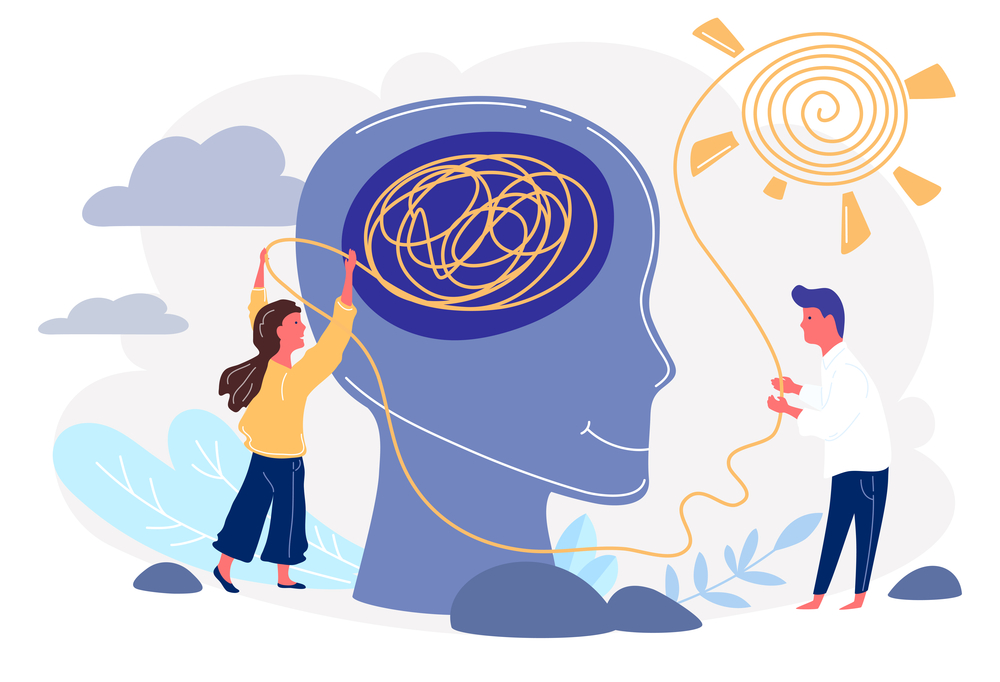
Clip art style image of a two people cleaning up a cluttered mind in a sunny outdoor environment.

Written by Harry Wolf,

Depression, anxiety, and cognitive fatigue… Such conditions are not shaped by psychosocial stressors alone. Indoor environmental conditions measurably influence neurobiology, emotional regulation, and treatment response in both clinical and residential settings. 

For professionals working in health care delivery and education, environmental quality has become a clinical variable – rather than a background detail.

Indoor Air Quality and the Risk of Depression 

Indoor air quality can affect cognitive clarity, mood stability, and overall psychiatric vulnerability. Indeed, fine particulate matter and elevated carbon dioxide concentrations are increasingly associated with measurable declines in executive function and increased depressive symptoms.

According to findings by Spain’s Instituto de Postgrado, cognitive performance is improved when indoor particle concentrations are reduced under double-blind conditions. 

For clinicians and administrators, those results suggest that untreated air-quality deficiencies may quietly undermine therapeutic engagement and cognitive resilience.

Diminished cognitive flexibility can translate into impaired engagement in psychotherapy, reduced medication adherence, and increased frustration tolerance issues. In home settings, especially among older adults, subtle declines in air quality may erode cognitive reserve.

Common contributors to compromised indoor air quality? They include:

  • Insufficient ventilation in tightly sealed buildings
  • Accumulated indoor particulates from cooking or outdoor infiltration
  • Off-gassing from building materials – and from furnishings

In larger homes and clinical settings, uneven airflow is more than just a comfort issue. When certain rooms receive less ventilation, air can become stale, temperatures fluctuate, and particles start to build up over time. Over time, these imbalances can start to affect how people feel, think, and respond especially in spaces meant for recovery, focus, or therapy

This becomes harder to manage when each room serves a different purpose. A therapy room, for example, may need a steady, quiet environment, while offices or living areas have different requirements. Relying on a single system often leads to some areas being overcooled while others are left inconsistent.

In situations like this, solutions such as Five-Zone Ductless Systems make a noticeable difference. They allow each room to be controlled independently while still running on one outdoor unit, making it easier to maintain stable air quality and temperature across the entire space without overcorrecting in certain areas.

Artificial Lighting and Depressive Symptoms 

Light exposure… As you probably know, it regulates circadian rhythms, melatonin secretion, and mood stability. Inadequate daylight or excessive artificial light at night alters neuroendocrine function in ways strongly associated with depressive symptoms.

A 2024 systematic review published by PubMed found that exposure to artificial light at night was associated with increased odds of depression, with risk rising incrementally per lux increase. 

Controlled indoor light modifications could improve depressive symptoms.

For shift-working nurses, inpatients under constant illumination, or residents in poorly daylit homes, light exposure patterns can directly influence sleep architecture. It can affect emotional regulation, as well. 

Circadian disruption may therefore complicate pharmacologic management and behavioral interventions.

Key lighting-related risk factors include:

  • Continuous overnight corridor or bedside illumination
  • Limited daylight penetration in deep-plan buildings
  • Blue light exposure late in the evening

Design responses extend beyond aesthetics. Tunable white lighting, access to natural daylight, and scheduled dimming protocols… They all help synchronize circadian rhythms. 

Environmental services teams and clinical leadership benefit from viewing lighting plans as behavioral health interventions. Illumination levels, spectral composition, and timing form part of the therapeutic milieu.

Environmental Noise and Anxiety Disorders 

Environmental noise acts as a chronic stressor – with measurable neurobiological consequences. Activation of the hypothalamic-pituitary-adrenal axis under persistent noise exposure contributes to anxiety, irritability, and sleep fragmentation.

Studies show there are reported associations between long-term environmental noise exposure and increased risk of depression, anxiety, and suicidal behavior. 

A 2025 study in Frontiers in Public Health found that higher ward noise exposure was associated with increased perioperative anxiety among hospitalized surgical patients. 

For individuals already experiencing medical uncertainty, acoustic overload compounds psychological burden. And it prolongs stress activation.

Health care workers are similarly affected. Noise exposure can potentially cause elevated stress, insomnia, and anxiety symptoms among staff. Burnout risk, clinical error potential, and reduced empathic capacity may follow sustained exposure.

Common indoor noise sources include:

  • Alarms, paging systems, and medical equipment
  • HVAC cycling and duct vibration
  • Urban traffic infiltration

Acoustic mitigation strategies require interdisciplinary coordination. Sound-absorbing ceiling tiles, alarm management protocols, and zoning of mechanical systems reduce unnecessary exposure. 

Residential environments supporting recovery from psychiatric hospitalization similarly benefit from quiet zones and sound-dampening materials.

Mental health treatment does not occur in isolation. Auditory load shapes emotional tone, concentration, and sleep continuity – in both institutional and domestic contexts.

Thermal Comfort and Mood Instability

Thermal stress… It has increasingly been linked to mental and behavioral health outcomes. Elevated indoor temperatures and high humidity levels can exacerbate irritability, aggression, and depressive symptoms.

Findings by Nature show that humid-heat exposure may substantially increase the global burden of mental and behavioral disorders – under high-emission scenarios, that is. 

Additional 2025 findings using WHO-SAGE data demonstrated stronger associations between depression risk and wet-bulb temperature. For clinicians practicing in regions with rising heat indices, environmental monitoring may therefore become part of psychiatric risk mitigation.

Thermal discomfort disrupts sleep, impairs cognitive flexibility, and increases physiologic stress load. Patients with severe mental illness may be particularly vulnerable – due to medication-related thermoregulatory effects.

Thermal risk factors often include:

  • Inconsistent cooling across multi-room facilities
  • High indoor humidity during the summer months
  • Inadequate heating in winter affecting vulnerable populations

Precision temperature control reduces physiologic strain. Zoned HVAC solutions, humidity regulation, and building envelope improvements allow clinicians and facility operators to maintain stable indoor conditions. 

Residential settings caring for older adults or individuals on psychotropic medications benefit from proactive climate management – rather than reactive adjustment.

Environmental Clutter and Sensory Overload 

Visual clutter and excessive environmental stimuli can heighten cognitive load and anxiety. Overstimulating indoor environments challenge attentional filtering mechanisms – particularly among individuals with autism spectrum conditions or acute psychiatric symptoms.

In clinical environments, chaotic visual fields can similarly increase perceived lack of control and attentional strain.

Common contributors to sensory overload? They include:

  • High-density signage and visual alerts
  • Poor storage systems leading to exposed equipment
  • Inconsistent spatial organization across rooms

Environmental simplification enhances perceived safety and predictability. Streamlined visual design, concealed storage solutions, and consistent spatial layouts reduce cognitive burden and may improve therapeutic engagement. 

Behavioral health units in particular benefit from calm visual fields that support emotional regulation.

Attention to visual order does not require sterile minimalism. Intentional organization and reduced sensory noise collectively support psychological stability in both institutional and residential settings.

Wayfinding Complexity and Cognitive Load 

Navigation within health care environments is rarely neutral. Complex layouts, inconsistent signage, and visually ambiguous corridors… They all increase cognitive load and can heighten stress responses – in both patients and staff. 

Disorientation may rapidly escalate into agitation – for individuals already experiencing anxiety, cognitive impairment, or acute psychiatric symptoms, that is. Poorly organized spatial layouts increase mental effort, elevate physiologic stress markers, and reduce perceived control. 

In places like large hospital campuses and multi-wing outpatient centers, wayfinding demands often compete with clinical stressors. Therefore, it compounds emotional strain – during already vulnerable moments.

Cognitively vulnerable populations are particularly sensitive to navigational complexity. Individuals with mild cognitive impairment, dementia, traumatic brain injury, or severe mood disorders may struggle to construct reliable mental maps of confusing environments. 

Heightened uncertainty activates vigilance systems – which can worsen anxiety. And it can reduce cooperation with care processes among patients.

Here are some common wayfinding-related stressors:

  • Inconsistent signage
  • Long, visually uniform corridors without distinguishing landmarks
  • Poor differentiation between public and restricted areas
  • Frequent spatial reconfiguration without updated orientation cues

Disorientation does not merely inconvenience patients. Staff members navigating inefficient layouts can also potentially experience cumulative cognitive fatigue – particularly in high-acuity settings where rapid response is critical. 

Design strategies that improve environmental legibility can mitigate these risks. Clear sightlines, color-coded zones, intuitive floor numbering systems, and distinct architectural landmarks reduce cognitive burden. 

Memory care units often employ simplified circulation loops and recognizable visual anchors to support orientation – demonstrating how design can function as a cognitive support tool.

Predictability and clarity within built environments reinforce psychological safety. When individuals can reliably anticipate spatial outcomes, autonomic stress activation decreases. 

For health care systems focused on trauma-informed design, wayfinding coherence represents a measurable and modifiable determinant of mental health stability.

Integrating Environmental Design Into Mental Health Strategy

Indoor environmental conditions intersect with neurobiology, behavior, and treatment response – in measurable ways. Things like air quality, lighting, acoustics, and thermal stability… They all influence mood regulation, cognitive performance, and anxiety expression across care settings.

Environmental optimization should be viewed as a systems-level intervention. Meaning? Multidisciplinary collaboration among personnel like clinicians, facility managers, architects, and mechanical engineers.

Priority actions include:

  • Continuous monitoring of air quality metrics
  • Circadian-informed lighting design 
  • Structured noise-reduction protocols 
  • Zoned climate-control systems 

Environmental assessment tools can be incorporated into quality improvement frameworks alongside infection control and patient safety benchmarks. 

Graduate programs in health care administration and clinical education increasingly address built-environment impacts as part of systems-based practice.

Mental health outcomes reflect both psychosocial and physical context. Proactive environmental design reduces preventable stressors – while reinforcing therapeutic interventions already in place.

Designing Indoor Environments That Support Mental Health Outcomes

As we have seen, indoor environmental conditions measurably influence depression risk, anxiety levels, sleep quality, and cognitive performance. So, designing environments that support optimal mental health outcomes is of the utmost importance!

Health care leaders who are evaluating facility upgrades or residential care transitions should incorporate environmental audits. Attention to ventilation, lighting schedules, acoustic control, and thermal zoning will strengthen overall mental health outcomes.

Engaging environmental upgrades as part of comprehensive care planning positions organizations to support both physiological and psychological resilience – among both patients and staff. So look at which solutions you could incorporate in relevant environments.

Was this article helpful? If so, take a look at our other informative content.


Author bio: Harry Wolf is a freelance writer. For almost a decade, he has written on topics ranging from healthcare to business leadership for multiple high-profile websites and online magazines.

References:

  • Pérez, Ainhoa, Bordallo, Alfonso, 2024, Indoor air quality improves cognitive performance, Instituto de Postgrado.

https://www.icns.es/en/news/air_quality_improves_cognitive_performance

  • Unauthored, 2025, Humid heat increases mental health risks in a warming world, Nature.

https://www.nature.com/articles/s44220-025-00548-7

  • Chen, Manman, Zhao, Yuankai, Lu, Qu, Ye, Zichen, Bai, Anying, Xie, Zhilan, Zhang, Daqian, Jiang, Yu, 2024, Artificial light at night and risk of depression: a systematic review and meta-analysis, PubMed.

https://pubmed.ncbi.nlm.nih.gov/39721676/

  • Wang, Chunliang, Su, Kai, Hu, Linming, Wu, Siqing, Zhan, Yiqiang, Yang, Chongguang, Xiang, Jianbang, 2024, Exploring the key parameters for indoor light intervention measures in promoting mental health: A systematic review, Science Direct.

https://www.sciencedirect.com/science/article/pii/S2950362024000122

  • Shen, Jie, Ma, Hui, Yang, Xiaohui, Hu, Mingcan, Tian, Jieyin, Zhang, Liting, 2025, Environmental noise and self-rated health in older surgical patients undergoing general anesthesia: a cross-sectional study of anxiety as a behavioral pathway for healthy aging, Frontiers in Public Health.

https://www.frontiersin.org/journals/public-health/articles/10.3389/fpubh.2025.1652514/full

  • Hu, Xinling, 2025, Systematic Review and Meta-Analysis of the Association between Environmental Noise Exposure and Depression and Anxiety Symptoms in Community-Dwelling Adults, National Library of Medicine.

https://pmc.ncbi.nlm.nih.gov/articles/PMC12459723/?utm_source=openai

  • Fritz, Manuela, 2025, Beyond the heat: The mental health toll of temperature and humidity in India, arXiv.

https://arxiv.org/abs/2503.08761

  • Hopcroft, Rosemary L., 2026, A Cluttered Home Causes More Stress for Women Than Men , Institute for Family Studies.

https://ifstudies.org/blog/a-cluttered-home-causes-more-stress-for-women-than-men

  • Strachan-Regan, K., Baumann, O., 2024, The impact of room shape on affective states, heartrate, and creative output, National Library of Medicine.

https://pmc.ncbi.nlm.nih.gov/articles/PMC10965811/


Please also review AIHCP’s Certification program and CE Courses see if it meets your academic and professional goals.  These programs are online and independent study and open to qualified professionals seeking a four year certification

 

Trauma Informed Care: When Trauma Emerges During Counseling

Trauma Informed Care highlights the reality of trauma as a universal human experience.  Whether deeply effected to the point of PTSD, long term effects or no effects at all, traumatic events do occur and leave an imprint on some individuals.   Ultimately, the these events occur but it is our experience and how it effects ourselves that determine impairment later in life.  Unfortunately, most traumatic cases, especially in abuse, never go reported and individuals live with unresolved trauma that manifests in many maladaptive ways later in life.   TIC looks to uproot trauma when identifying various symptoms that point towards it possible existence.  Hence, if one is counseling from a TIC perspective, then it is only natural that eventually trauma will re-emerge in a victim/survivor/client.

When someone discloses abuse or trauma, the counselor needs to understand how to listen, and help the victim/survivor heal. Please also review AIHCP’s Behavioral Health Certifications

Obviously basic counseling and advanced counseling skills and techniques all play a key role in helping the individual discuss these difficult events in his/her life, but there are also particular skills key to addressing trauma that are essential.  While TIC looks to search for trauma, trauma specific interventions are essential to help the person express and heal from the trauma.  In addition, how the trauma is discussed and handled within the counseling room is equally key.  In this blog, we will look at trauma, its sources, counselor reaction to the client, discussing trauma itself, and ways to better facilitate the discussions of trauma itself.

Please also review AIHCP’s Trauma Informed Care programs, as well as all of AIHCP’s Behavioral and Mental Health Programs in Grief Counseling, Crisis Intervention, Stress Management, Anger Management and Spiritual Counseling programs.

Trauma Lurks Below

We are well aware that the traumatic events are universal and 70 percent of the population will experience some type of trauma.  Of course how the trauma affects the person has numerous subjective factors based upon the person and many surrounding aspects.  Ellis points out that individuals in childhood have different levels of exposure to trauma based on their Adverse Childhood Experiences (2022).  ACE refers to these adverse childhood experiences and categorizes them as actual events but also deeper seeded social issues that act as roots to the trauma tree and its many branches and fruits.  Adverse Community Environments or roots of the problem include multiple negative social issues such as poverty, discrimination, community disruption, lack of economic mobility and opportunity, poor housing and frequent exposure to social violence.  These horrible things manifest into various possible traumatic experiences for individuals that will shape them for the rest of their lives.  This includes issues that the child might experience at a young age such as maternal depression, emotional, physical and sexual abuse, substance abuse, domestic violence, homelessness, incarceration of self or family members, divorces, physical and emotional neglect and exposure to mental illness (Ellis, 2022).

In turn, later in adolescence and life, fruits of these abuses and traumas will emerge.  Behaviors that include drug use, alcoholism, smoking, lack of physical activity and lack of work ethic.  In addition, these fruits can manifest in severe obesity, diabetes, depression, suicide attempts, STDs, heart disease, cancer, stroke and various injuries.   TIC looks to identify these warning signs and fruits of ACE and acknowledges that not every one’s life was calm, peaceful and loving.  This is not to say even the most loving home can face loss and trauma or violent crime, but it does awaken us as a while that people are just much nurture as they are nature in what they become and how their behaviors exhibit themselves.  This is why as counselors, we must show empathy even to undesired behaviors.  We are not dismissing choice, or condoning bad behaviors or life styles or even later criminal actions, but we are putting a spot light on a great systematic breakdown in society as a whole and how trauma can alter and turn so many people into persons they would never have been.  The role of a counselor when facing emerging trauma in counseling is to help the person find peace with the past, cope in the present and find hope in the future.

Shattered but Not Broken

I believe that despite horrible trauma, one can be shattered, but it does not mean one has to be permanently broken.  One will always have the scars from that trauma, one will have a far different life due to it as well, but that does not mean it breaks the person.  While some may become overwhelmed and lose themselves or become the evil itself that destroyed them, it does not have to be that way.

Individuals who suffer trauma and abuse may be shattered but through a caring counselor and support can find healing and a new self actualization

Trauma can be like the story of the comic hero Batman, who as a child witnessed the murder of his parents, only to turn that trauma and pain into a life long crusade against crime.  While a fictional character, I think still, if we look at the story of young Bruce Wayne and his traumatic experience, we can take a lesson from it and see how when trauma is properly processed, while life altering, it can bring out resiliency and growth, and an ability to find meaning.

Outside TIC mindsets, most trauma survivors who are shattered are afraid to bring up the past in counseling and rarely spontaneously disclose their trauma. (Sweeney. A, 2018).  It is hence important to understand how to help heal the broken through discussion of trauma and how to facilitate healing.  Cochran points out that all human beings are in a state of “becoming”  We are constantly changing whether into a traumatic event or out of it, we are never the same but learning how to adjust.  Who we are today are not who we were in the past but we are constantly in flux in our experiences and how we interpret them (2021, p. 8).   All individuals look however to meet a certain self actualization of self.  These self actualizations when molded in a healthy and loving trauma free environment possess healthy concepts of self image and self worth.  Trauma and abuse can destroy these images (Cochran, 2021, p. 9-15).   Cochran uses the oak tree as an example of self actualization.  While the mighty oak is the final concept of what we see as the fullest potential of an acorn, or small sapling, sometimes, those who are victims of abuse or trauma are unable to fulfill their initial abilities or design.  Like a young tree that was struck by lightening or partially uprooted, the ideal self actualization has been altered.   Unlike a tree though, human beings have far better abilities to recreate image and self actualization.  Although shattered, altered and changed, human beings through guidance and support can still grow and meet new goals and fulfill new self actualizations, albeit shatter, but not broken (Cochran, 2021, p. 11-12).

Hence, Cochran points out that as a person develops, like a tree, one can develop and grow without interruption, while others trees may experience difficult times of drought, poor soil, damage, or broken limbs.  Each life experience is different and through trauma, individuals develop different self concepts of what is regular or normal as well as what to expect of oneself.  Trauma hence can be very damaging.  It is important in TIC to find this trauma and to help the shattered find wholeness again and a new way to exist with the past.   When trauma is discovered in counseling or finally disclosed, it is hence important to know how to cultivate the discussion and navigate the difficult discussions.

The Calm in the Storm:  Counselor Qualities in Trauma Informed Care

Counselors in general need to display certain qualities with their clients but this is especially true in the case of trauma victims or trauma survivors. Karl Rogers approached all counseling in a very client based approach that emphasized complete emotional support via empathy, genuineness and unconditional positive regard.  These three qualities not only create a safe environment for disclosure but also helped create a sense of trust between counselor and victim that facilitated healing.  Robin Gobbel, LMSW, emphasizes the importance of safety and the necessity of “felt safety” within between the counselor and the victim or survivor or client.  Many individuals who are victims of trauma feel chronic “danger, danger” feelings.  Due to PTSD, certain triggers can alert the brain to the dangers that are not truly present.  The lack of the prefrontal cortex to dismiss the false alarm is not present in trauma survivors.  Hence the scent of a cologne similar to a molester, or a car backfiring in a public street can send a trauma survivor into a flight, fright or freeze sense.  Helping a person feel safe internally is hence key.  In addition to internal issues, “felt safety” also applies to the counseling room itself.  In previous blogs, we discussed the importance of agencies creating a environment that promotes a safe feeling for the individual to disclose and discuss the abuse or trauma.  They must feel private, secure and free of threat, free of retribution, or even judgement.   Physical environment can be helpful in this, but it also must be accompanied with the counselor’s ability to implement basic counseling skills, via word use, tone, body language and facial expressions.

A counselor can supply empathy, genuineness, and unconditional positive regard for the victim.

This is all best implemented through empathetic listening, genuine interest and unconditional positive regard.   Empathetic listening is not judgmental but it allows oneself to not feel what one thinks another should feel, but attempts to understand and share what one is feeling and why.  Cochran describes empathy as feeling with the client (2021, p. 79).  Empathy can be emitted by sharing the same emotions and words that describe those emotions with the client.  Empathy does not require one agreeing with the client, their beliefs, choices or actions, but it does involve walking with the client and attempting to understand all the things that make him/her feel the way he/she does.

In addition to empathy, Karl Rogers emphasized the importance of being genuine.  Rogers pointed out that the therapist is being him/herself without professional facade of being all knowing or merely a person with letters behind his/her name.  Rogers continued that the counselor needs to be genuine in the feelings of the moment and aware of those moments where feelings are expressed.  Ultimately, the therapist becomes transparent and down to earth with the client without any ulterior motives but the healing of the client.  This helps the client see that the therapist is truly there to help and more willing to open and disclose issues (Cochran, 2021, p. 132).  Ultimately, Cochran points out that all counselors if they seek to be genuine need to know oneself and express oneself.

Tying together empathy and genuineness is the key Rogerian concept of Unconditional Positive Regard for a client.  This concept is a cornerstone for counseling.  It is also sometimes a difficult concept.  It does not mean that the counselor again always agrees with beliefs, choices, or actions of a client, but it does entail an unwavering support for the client/victim/survivor that looks not for an agenda or conditional response but a gentle guidance of self development that does not demand but instead listens, nods and recommends without condition.  Studies have shown that when conditions are tied to change, change becomes far more difficult.  Unconditional Positive Regard retains the autonomy of the client to learn how to change on their own terms.

Rogers listed warmth, acceptance and prizing as three key elements of UPR.   Warmth represents the care of the client and genuine empathy.  It is the fertile soil that produces a an atmosphere of trust and disclosure.  Acceptance is the ability of the counselor without bias to accept the immediate emotions of a person in counseling-whether illogical, angry, hateful, confused or resenting (Cochran, 2021, p. 103).  In trauma, many emotions that are sputtered out are helpful in healing.  If they are diagnosed, judged or refuted, then this can stunt disclosure.  Trauma victims or survivors need a place to express their feelings anytime and anyway without judgement.  Acceptance allows the person to express without regret.  Many times, the emotions displayed can help the counselor see clues to past incidents, or even help understand the current emotional state of the person.   Cochran points out that when a person is allowed to swear, scream, express, or seem illogical without reproach, many times, they will re-evaluate their own reactions in a healthy way (2021, p. 103).   Finally, prizing is a concept of UPR that emphasizes the person as a treasure and someone special who is unique and special.  Prizing is not an overstatement or infatuation but is a sensitive way of caring and a genuine way of expressing to the client that he/she matters (Cochran, 2021. p. 104).  Prizing despite the pain and downfalls, also looks to lift the person up by highlighting the strengths of the person and helps encourage the person to healing and change. Rogers believed that UPR helps clients discover who they truly are.  He believed that self-acceptance leads to real change.  Through full expression of the spectrum of emotions, one can in a safe environment see the counselor acceptance and hence accept themselves in expressing issues and trauma (Cochran, 2021, p.109-110).

We cannot put agendas, our own judgements, moral beliefs, or expected outcomes  upon clients.  Some clients in trauma need certain environments to feel safe to heal, or they need to feel that their story has no conditions that must be met.  When counselors put agendas on the table, expect outcomes, or think they know better, then their regard becomes conditioned which is detrimental to disclosure and healing (Cochran, 2021, p. 114-116).   Many times, well trained analytic minded counselors have a difficult time displaying pragmatic solutions or just letting go of an agenda or idea and instead just listening and being present.  Hard to like clients, bad people in the prison system, moral differences, and biased initial thoughts can all play negative roles in how we show unconditional positive regard for a client (Cochran, 2021, p119-121).  It is hence important to see each client, no matter who, as a person that is there to be helped and hopefully understood.  This does not mean suggestions are guidance are not given, but it does mean, an acknowledgement of the client’s current state and an attempt to understand why.  The biggest question should not be “WHAT IS WRONG WITH YOU” but instead “WHAT HAPPNED TO YOU” (Sweeney, A. 2018).

Discussing the Trauma

The concept of trauma can be difficult to discuss.  Many clients feel embarrassed, or fear judgement or retaliation if they speak.  Others may feel weak if they express traumatic injuries.  Others may have in the past attempted to tell but where quickly dismissed.  Others may have been difficult ways expressing verbally abuse due to PTSD.  Many trauma survivors have a difficult time chronologically making sense of the story but vivid scents, sights, or touches can open the emotional part of the brain.  Hence those who experience trauma in many cases fear labeling when discussing trauma (Sweeney, A. 2018).

Learning how to discuss trauma is important in trauma informed care to avoid re-traumatization

Questions about trauma hence need to be done in a safe environment with genuineness and empathy and with a sensitivity about the story.  Questions about trauma are usually better during assessment than when in actual crisis. They can be asked within the general psychosocial history of the client to avoid a feeling of purposeful probing.  In addition, it is important to preface trauma with a normalizing comment that does not make the person feel like the exception to the rule.  The person should feel completely free not to disclose or discuss details that upset him/her (Sweeney, A, 2018).

Sweeney recommends that for those who disclose or are tentative about disclosure that it is s good thing to disclose and that the person is completely safe from the person, judgement, or labeling.  If the person does not wish, details should not be dissected from the story.  In addition, it is sometimes helpful to help the person slowly enter into the traumatic story by first discussing the initial part of the day prior and then the after feelings before diving deep into the intensity of the story.  The counselor should be aware of any changes in the person’s triggers and reactions to re-telling the story.  The counselor should discuss if this story has ever been told before and if so, how the other party reacted to the story, as well as how the past trauma affects their current life, especially if maladaptive coping is taking place.  When trauma is disclosed, particular trauma specific treatments may be need employed to help healing.  In some cases, the counselor or social worker is clinical and can supply those services, but if not, and non-clinical or pastoral in nature, the counselor will need to refer the person to an appropriately licensed, trained and trusted colleague.  Finally, following any disclosure, it is critical to check on the person’s emotional state to avoid re-traumatizing the person.  This is important because individuals could leave the session feeling less safe and return to maladaptive coping later in the day or even worse, suicidal ideation or attempts.   Follow up is key and consistent monitoring. (Sweeney, 2018).

One important note, if the trauma and abuse is current, counselors and social workers, and certain clergy pending on the nature of disclosure and state laws, except within the seal of Catholic/Orthodox confession, have the legal obligation to report abuse.

Facilitating Better Trauma Response

To respond better to the needs of those in trauma due to abuse, it is key to better facilitate responses to individuals who are dealing with past or present trauma, whether in the counseling room, or short term crisis facilities.  It is even crucial to better respond to those in trauma who are in longer term facilities, or even correctional facilities.

Individuals who suffer from trauma fear labeling, lack of control in decisions, judgement, retribution and lack of safety. Counselors and facilities need to make them feel safe

A team that responds to victims of trauma with no judgement and empathy is key but this involves dismissing older notions.  Notions that dismiss holistic biopsychosocial models for mental distress and only highlight biomedical focus can play a role in impeding healing.  Instead of merely prescribing a medication and taking a pill, alternative practices need to be supplementing with many individuals.  In addition, agencies need better exposure to social , urban, cultural and historical traumas that underline the person’s makeup.  They also need to dismiss notions that treatment involves assessment and conditional parameters for healing that involves an imbalance of power. In these cases, the caregivers have power over the person, make the decisions, and determine the outcomes. In many cases, these same types of lack of control for the abused can cause re-traumatization (Sweeney, 2018).   For instance, not granting a person a say in what they do or take, or unnecessarily constraining an individual can all be triggers to the original abuse.

Ultimately, many agencies and facilities do not have a good trauma informed care plan, as we discussed in other blogs.  In addition, they are underfunded, staff is stressed and morale may be low and the facility may staff shortages.  This leads to stressed, under trained, and confused lower staff members in dealing with patients.  In addition, many of the higher staff in counseling are themselves facing burnout, overwhelmed with paperwork or dealing with inconsistent policies or social networking that never follows through (Sweeney, 2018).  We can hence see the many challenges that facilities and agencies face but the goal and mission must still remain the same to overcome these pitfalls and introduce real healing strategies for individuals experiencing crisis, trauma and abuse.

Conclusion

When someone discloses trauma or abuse, it is a big moment in that person’s life.  Each person with their abuse story is different.  Some have other underlying issues.  Some may have been mocked or not believed, while others may be maladaptively coping.  It is imperative to reach back to each person and give them the security and dignity he/she deserves in disclosing the story.  The counselor must be empathetic, genuine and provide as Rogers calls it, Unconditional Positive Regard.  Older methods of understanding trauma and assessment and conditional plans need dismissed the counselor needs to help the person validate emotions and find constructive ways to heal.  The counselor must be well versed in how to discuss trauma related issues and be careful not only of their own burnout but also in re-traumatizing the client.  Facilities also need to reassess their own mission and policies in helping those in abuse find better solutions and healing.

Please also review AIHCP’s Trauma Informed Care programs, as well as its other multiple behavioral health certifications in grief, crisis, anger and stress management

Please also review AIHCP’s Behavioral Health Certifications, especially in Grief Counseling, Crisis Intervention and Trauma Informed Care

Additional Blogs

Attending Skills: Click here

Responding Skills: Click here

Trauma Informed Care: Click here

Resources

Cochran, J & Cochran, N. (2021). “The Heart of Counseling: Practical Counseling Skills Through Therapeutic Relationships” 3rd Ed. Routledge

Sweeny, A, et al. (2018). “A Paradigm Shift: Relationships in Trauma-Informed Mental Health Services” Cambridge University Press

Additional Resources

“Childhood Trauma & ACES”. Cleveland Clinic.  Access here

Olenick, C. (2025). “Adverse Childhood Experiences (ACEs): Examples and Effects”. WebMD.  Access here

“The Challenge of Disclosing Your Abuse”. Saprea. Access here

Schuckman, A. (2024). “Disclosing Abuse: How to Show Support and Break Stigmas”.  Nationwide Children’s. Access here

Engel, B. (2019). “Helping Adult Survivors of Child Sexual Abuse to Disclose #4”. Psychology Today.  Access here