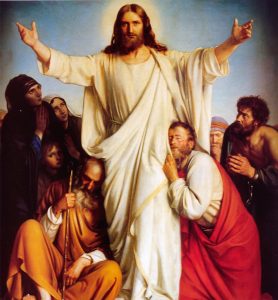
Certified Biblical Counselors Need to Emphasize the Forgivenss and Mercy of God

God’s Forgiveness Is Infinite And Counseling Should Emphasize That

“Lord forgive them for they know not what they do” echo in history as the most merciful prayer a man can give to his persecutors.  Of course, Christ was not only man, but also God.   From these words, we can conclude the mercy of Christ is beyond the depths of the sea and more infinite than the stars of the night sky.
The whole of the Trinity and within in each distinct person exists a perfect love that emits forgiveness for any who seek it.  The history of God’s forgiveness is traced through the Torah as God forgives Adam to the last days of Israel.  His forgiveness only needed to be sought to be found.
In the New Testament, the 2nd Person becomes flesh not only to love us more intimately but to redeem us from sin.  Not only does God forgive us for our sins but sacrifices himself on the cross via Christ.  This is beyond forgiving but actually suffering the offense that one forgives.
Hence it is a great insult to our Lord when one falls into the depths of despair and hides from God’s love.  Yes the shame and guilt of hurting someone we love should sadden our heart.  It should also make us feel extremely guilty that our sins have slapped Christ in the face.  Yet despair, especially that of Judas, insults the great mercy Christ has for his children.  Instead, no matter our offense, we should seek contrition and forgiveness as Peter did, weeping bitterly yet understanding the infinite depth of mercy Christ has for us.  In time, we too will be able to offer up reparation for the one we love so greatly, Jesus.
When dealing with those in despair it is important to note that these poor souls are truly saddened by their sin but their sadness prevents them from seeing the love of God.  Whether it is pride to seek forgiveness, lack of self-worth, or lack of hope in God, one must realize that the whispers of Satan are preventing them from finding reconciliation with God.  Religious counselors  should work through this psychological barrier and open the hearts of those in despair to Christ’s mercy.
In place of the deceiver’s whispers, Certified Biblical Counselors and Christian counselors should remind people of God’s great love in the story of the Prodigal Son or the mercy Christ offers in Reconciliation to those who seek his mercy and love.  The reality of God’s love is so simply yet terrifying.   As creatures, God invites us into his heavenly palace.  There we should tremble before the Creator of the Universe, yet in the same breathe, our Heavenly Creator greets us as a loving father who allows us to run and play in his Imperial Palace without fear of rebuke.  How wonderful to know that such a powerful being is also so merciful and giving!

One prayer that is extremely beneficial for those who seek mercy is the Chaplet of Mercy.  In a vision, Christ recommended that during the hour of his passion, 3 PM, that this prayer be recited by the faithful.  Christ proclaimed in this vision that he is a God of great compassion and mercy and he is most willing to bestow his mercy upon any who comes before him.   As a God that is all powerful, he is also all forgiving and as his power is unlimited, so is his forgiveness.
In the Chaplet of Mercy, this beautiful prayer is recited:
“Our Eternal Father, we offer the body and blood, soul and divinity, of Your dearly beloved Son, our Lord, Jesus Christ, in atonement for our sins and the sins of the world”.
Following this is a repetitive prayer that is recited over fifty times.  This prayer simply recycles the phrase, “For the sake of His sorrowful passion, have mercy on us and on the whole world”.
During the vision, Christ warned that during this period of time his mercy is free flowing for all, but one day he will return as a God of judgment.  He implored that we all take advantage of his great love for us.
In conclusion, I would like to share a story that I feel should overwhelm one in understanding the mercy, love and forgiveness Christ has for one.  The legend says that St Peter upon escaping the prison of Rome was fleeing the city to its outskirts when he came upon a vision of his Master, Jesus.  Christ told Peter that he needed to return to Rome and face his martyrdom.  If he did not, Christ said he himself would again be crucified for his people.  As the story concludes, Peter immediately returned to Rome and was crucified upside down since he felt unworthy to be crucified as his Master was.  Whether this apparition was legend or fact, it does portray the truth that Christ’s love is so great and his forgiveness so infinite that he would do anything for us.  In this regard, one should find greater shame in despair than in the sin that we committed.  Through this love and mercy, we in turn should seek to avoid sin at all costs.
If you are interested in the Christian Counseling program, please click here.
Mark Moran, MA, GC-C, SCC-C

Christian Fatherhood

A Christian Father Teaches and Guides His Children with Love and Patience

The beauty of Fatherhood is celebrated in June in a day of thanksgiving to all living and deceased fathers.  While some may have little memories of their father or may have not had the blessing of a good father and role model in their life, the ideals of what a father should be is clearly listed within the Christian tradition.  A father while always the disciplinary is also the protector, provider and teacher of the Christian family.  Yet within this profound vocational call, a true father does no rule with fear but respect as he gently teaches and guides his children with a tender love and patience.  With the strength and power of a lion, a Christian father also possesses the most meek and tender touch and love for his children.
The Christian father’s ultimate paradigm is St. Joseph, who protected and provided for the Holy Family.  In Christ’s early years, he was the standard and role model for the human nature of Christ to emulate and imitate.  No man has ever been called to a greater honor than St. Joseph.  It was to St. Joseph the task to mentor the young Christ in the ways of the temporal world.  While little is mentioned in Scripture of Joseph’s and Jesus’ relationship, we can with certitude believe that it was a model father and son relationship.  Of course, Joseph’s was not the biological father of Christ, but this does not take away from his fatherhood of Jesus.

Jesus’ divine Father was not the biological father of Christ either but a symbolic relation between the Father and Son found in the Holy Trinity.  Yet, again, Christian Fatherhood finds another paradigm in God the Father.  Through the analogy of  fatherhood, the love of the Creator is shown to mankind.  God the father, as father of Israel, guided, taught and loved his children.  As a father, he also on numerous times reprimanded his sinful children, but his love was so great that he would not leave his children to die but would send the 2nd Person of the Trinity and die for his own children.  Of course it was not the 1st Person who died on the cross, but since the substance of God is shared equally between Father, Son, and Holy Spirit, we can say God did die for his children on the cross.   With such love, does a father love his own children!
Jesus also taught that it is through himself that we may know the Father.  The idea of the 1st Person as a father was emphasized by Christ.  Only three times in the Old Testament is God referred as a father but in the New Testament, the 1st Person is referred to father over two-hundred times.  Jesus refers to his father as “Abba” which in Aramaic means father, or more closely translated, “daddy”.  Through this teaching, Christ wanted mankind to know that God is a father.  While God is still an omnipotent being and the creator of the universe, he still wanted people to approach God as a child.  It is truly amazing to think that Christ would reveal the great Majesty and King, as also our Father.    This did not mean we should not bow and worship the most Omnipotent One, but it does show that his love for us is so great that he sees us as children and not subjects.  This is fatherhood–authority with love.
The best way Christ illustrated the fatherhood of God over his creation was in the parable of the Prodigal Son.  Here we find an ungrateful son, who spurns his father, wastes his inheritance and begs for his father’s forgiveness.  As we all know in the story, the father embraces his son, dresses him in the finest linens, slays the fatten cow and has a great celebration that his son returned.  In this story, one can see the true love and mercy a father shows his children.  The love a father shows to his children is one embedded with power but yet also mercy.

I would like to close with one last aspect regarding the fatherhood of God but in relation to God’s fathership with Christ.  While this closing segment is less pastoral and more theological, I think it is important to understand.  While we cannot look at Christ as two separate individuals, but one person, sometimes it is good to analyze the components of Christ.  First, Christ as God is only Son in relation to the Father. Christ as a co-sharer in the divine nature, the ideal of fatherhood and sonhood is relational and analogous.  The human nature of Christ, however, is a unique situation where a created person with his own soul was fused to the 2nd Person of the Trinity.  In this regard, within the Hypostatic Union of Christ, there truly does exist a fatherhood and sonhood.  I find this very beautiful and in this way, Christ shares his father with us.
Happy Fathers day and may all fathers emulate the values of true fatherhood that is found in our God, and in St. Joseph.
If you are interested in Christian Counseling training, please click here.

Mark Moran, MA, GC-C, SCC-C

Christian Counseling Certification

What Can You Do With A Christian Counseling Certification?

As a Christian therapist, I see all sorts of people with a variety of issues in my practice. I operate out of a large church that has therapy programs available to their congregation and outside individuals. This particular church I have worked out of for over ten years. I love my work and can not imagine doing anything else. When I went to college, I majored in psychology and then obtained a christian counseling certification. This degree and certification allows me to work with Christians who for whatever reason have decided to seek out therapy. Some people may want to work on their marriage, others may have addictions, while some may have weight issues or anxiety. Whatever the situation, I always take a non-judgmental approach and use therapy along with their faith to try to help them. It really makes my day when I am told after therapy that I have saved a marriage or helped a person struggling with an addiction to see what they need to do.

Christian Spiritual Counseling: The Body’s Role in the Eschatological State of Existence

Christian Spiritual Counseling: Care and Respect of the Body

For too long the body has become a second rate citizen to the soul in the nature of man.  Is it not understood that without the body, there could be no soul?  At the moment of conception, the creation of the body is fused with the touch of God to form human nature: both body and soul.  We are not angels or pure spirit but matter and spirit; man.  Religious counseling and sermons for too long has emphasized an exaggerated importance of the soul over the body.
It is true that the soul possesses the intellect and will and proceeds to the next eschatological state before the body, but this is not a natural transition, but due to sin, death is ripping apart our nature.  In no way did God desire for body and soul to be separated.

So, the body as a Temple of the Holy Spirit, deserves more than just merely the title of a noble vessel for the soul, but an equal partner in human nature!  Some will object and say, it is better for one to lose material things for spiritual gains.  This is true.  This, however, in no way means that the body is inferior.  It merely means, due to this fallen temporal reality, spiritual things are the more important  blessings that our soul and body should seek and practice.  However, the soul and body have difficulty practicing these virtues due to the scars of sin.  The temporal fallen nature of our body is at war with the soul and the soul is at war with the body.  Ill formed wills lead the body into lustful sins and the body and its concupscient needs pressure the soul.  In the eschatological reality, body and soul will be in harmony and such things will cease to exist.

The Resurrection Proved the Equality of the Body to the Soul as an Integral Part of Human Nature

So in addition to proclaiming the body as a temple of the Holy Spirit, where do I dare assert its equality to the soul in the partnership of human nature?  The Resurrection shows that the body is as important as the soul in defining human nature.  Christ’s body was reunited with his soul after his death.  The body, however, was not limited to the temporal reality but possessed a glorified state that God originally designed and intended.  Granted the divine nature of 2nd Person gave powers never seen to a temporal body such as Christ, but after Christ’s resurrection, his body became glorified.  So glorified, that in certain instances, he was not even recognized by his own disciples.
This glorified body will be the perfect compliment to the soul and will refuse our human nature after death.  As if Adam had never fallen, we will gain the sweet reward of living a good temporal life in the eschatological era where the body and soul are in perfect harmony.
This was even again asserted beyond the Resurrection.  Christ, when he ascended into Heaven, Forty days after his Resurrection, did not merely spiritually ascend, but his soul in perfect union with his body, ascended into the Heavens and there remains with him to this day.  So, as scripture says, those who die in Christ, will also rise in Christ and our same physical bodies will share in the eternal bliss of Heaven.

Some contend that the glorified body will be different in substance.  I contend that is not true.  I contend that the same body that lived and died on this earth will also rise.  The same cells, the same organs will be revitalized in Christ but in a glorified form.  I say this with confidence because Christ himself showed Thomas the wounds of his passion after his resurrection.  It was indeed the same body but glorified.
There is much to be said about the theology of the body, Pope John Paul II wrote extensively on the subject in regards to the qualities of the glorified body and what it is capable of experiencing.  I highly recommend reading this material but would like to delve into another direction; A direction with some pastoral counseling elements on death and dying and the happiness one experiences in heaven.  Please keep in mind, these are merely theological speculations that can really never have any verification since death and heaven are the greatest mysteries.  One can only with certainty exclaim that the next reality is beyond our reason and expectations of joy.  Nevertheless, I will attempt to theorize on the moment of death and what our loved one’s experience at that moment.

From various testimonies regarding near death, many remark about the light and the love that is transmitted by God.  I would like to talk more about the state of the body since this article deals primarily with how the body and soul will refuse in the next life.  As death slowly pulls the soul from the confines of its mate and partner, the body, human nature experiences an unnatural state due to the sin of Adam.  In this state, the union of body and soul, equal partners in human nature, are separated and torn apart.  Yet in that moment of time, the soul says farewell to its friend and (hopefully) is welcomed by its creator.  The union that so many mystics attempt to only taste but a few seconds in this world and yet still imperfectly is experienced by the soul in a moment of eternity.  The Beatific Vision is given to the soul and the soul is filled with so much happiness and love that if it was a cup it would overflow with water.  In fact the soul can experience no more happiness than it does or it would cease to exist.  This alone would be substantial in itself for complete and utter happiness, but what of the body?
From a temporal reality, which we experience, there exists a linear mode where past, present and future confine our minds.In this mode of existence,  the body of the deceased has been buried and it lays in the grave awaiting the general resurrection, serving its time for the sin of Adam. Yet, as stated earlier, the soul is not the only element of human nature.  The body is not a shell as Plato would contend, but is an integral part of human nature.  Where is the body’s reward?  We know that reward will come but the body must wait, as Christ himself waited three days for his own body to reunite with the soul.  This is experienced by all temporal creatures.
Yet, from a Thomistic thought process, how can something experience fulfillment if itself is not complete?  If something does not fulfill its end then it is incomplete.  How can human nature fulfill its end if separated, even if the soul banquets in the presence of the Most Holy Trinity?  As I said, I am sure, if my theory to be explained is wrong, that the presence of God would suffice but I do believe there is more to this.
The problem lies in our conception of time.  Unlike some modern theories that attempt to imprison God in time, the reality is God exists outside of the vacuum of time.  He exists in the eternal now where past, present and future exist together.  When the soul is joined with the divine, it too shares in but a glimpse of perfect eternity.  How, I cannot explain, nor can I conjecture how existence will be like in such a vacuum of perfect bliss, but I will attempt to theorize one element.
As those we love pass away, we express our grief in tears.  We hold their hand as they let go of their last breath and gently kiss their forehead and whisper goodbye.  As their soul leaves the broken and aged body, they go to the light of Christ, to be welcomed by the Holy Trinity, the Blessed Virgin, the Angels, the saints and loss relatives of the past.  What if you were there too?

How can this be?  Well, first lets leave this limited finite thinking process of time.  Second, lets assume, the soul lives in a moment of eternity after its death with God where linear time no longer exists.  If so, the soul, while imprinted with memories of how loved ones prayed for him at his funeral or how life on earth continued after his death, would exist in a perfect now with God that is void of time. In addition to the Beatific Vision, the refusing of his nature has already taken place and everyone or everything he has ever loved is with him.  This is perfect happiness that is not limited by a tearing of one’s nature or worry of one’s loved ones who still struggling on earth.
What I am attempting to say is, while in the temporal reality, time has elapsed, the deceased has fast forwarded to a point where everything has been accomplished and his body has been restored to him in the eschatological life.  While imprinted with what has happened, the deceased experiences only the ever present (due to union with God) and shares in a whole human nature and the love of his family with no separation anxiety of body and soul or family.
While I still completely contend that it is possible the soul could exist in a linear existence even after death awaiting the end of the world to occur, I do like the possibility of after death, awakening in the abode of Christ with one’s glorified body and all one’s family (past, present and future) gently welcoming one to Heaven.
Anything is possible, but in all reality, I am sure God has something even better planned.
If you are interested in Christian Counseling Courses for Certification, please click here.
Mark Moran, MA, GC-C, SCC-C

Christian Counseling Program for Certification: Lack of Faith in the Christian Home

Lack of Faith in the Modern World: Why?

Lack of faith in the modern world has allowed agnostic and atheistic idealology to creep into the homes of many so called Christians.  Counselors will see many Christians give allegiance to many non-Christian ideals and pick and choose various Christian dogmas that best fit their tailor made faith.  These cafeteria Christians live according to their will not that of the Father’s will.   This form of lukewarm Christian is best seen at Easter or Christmas, where they emerge out of their year long slumber and wear their best suit for one Sunday.
In addition to this spiritual sloth, one can also see in the Christian Church, “Sunday” only Christians, who recite ritual and mundanely receive the Eucharist without spiritual zeal or excitement.  The remaining week is indulged in secular activities without little thought of God.
These two type of homes are a haven and breeding pool for future agnostics and atheists.  The parents, the first educators of their children, have spiritually neglected their children’s spiritual life and allowed it to become stagnant.  In some cases, the children are not even baptized.  Even if baptized, the children do not learn about the faith, pray as a family, or discuss the bible.  Their faith becomes an empty ritual.
As these children become older, they become prey to future atheists, agnostics or moral

subjectivists who prey upon the weak spiritual foundation that was set by the parents.
This lack of installation of faith is a grave sin and parents will face God with reward or punishment in the next life in regards to how they taught their children about God.  Hence, it is extremely important for Christian Counselors to encourage parents to make their family active in the life of the church.  Parents should fulfill spiritual duties and encourage prayer life at home and bring God into the home.  Sacred images in the home, family prayer, bible reading, and even weekly mass or services should become the family norm.
If you are interested in the Christian Counseling Program for certification, please review it.

Mark Moran, MA, GC-C, SCC-C

Counseling Against the Occasion of Sin

Counseling For Permanent Solutions

As is the case in all recovery from physical and addictive substances, vice and sin are no different.  A recovering sinner obsessed with a particular habitual vice has a long and hard road ahead of himself.  While the penitent has made the personal decision to change his lifestyle, he still has a rough road of change.  When Christian Counseling these individuals, one must be patient and encouraging to the efforts and trials this person will attempt to overcome.
The removal of occasions of sin are the pivotal part in helping someone gain spiritual freedom.  Satan does not wish to relinquish his control and will become noisy again in the life of the penitent.  His quiet days are over as he realizes the change of the person’s life.  Satan can no longer be quiet but will hope to disrupt the conversion process and impede virtuous practice with an array of spiritual temptations.  One who is recovering from a particular vice such as lust, must earnestly try harder to remove temptation via prayer, confession and reception of the sacraments.
However, one plays into the hands of Satan, when one purposely places himself into temptation filled situations.  Again the example of lust portrays excellent examples.  The penitent who is attempting to live a virtuous life places himself in great spiritual harm by going to bars and other lustful places, or involving himself with sexual individuals who will gladly perform sexual favors.  These occasions of sin can cause relapse or destroy the conversion process completely.
Yet as a counselor, one must show patience with their spiritual children.  As one falls, one must again get up.  As one returns with remorse, the counselor cannot condemn, but aid the person to find greater strength.  The person already realizes the  perils and dangers of his spiritual life, he does not need condemnation but charity and guidance.  Through continued prayer and good works, eventually the tide can be turned.  Keep in mind, as stated earlier, recovering from a vice is much like recovering from an addiction.  In which case, even culpability is lessened even if occasional relapse occurs.
In many instances, the penitent cannot escape the gravitational pull of the vice.  In this regard, while prayer and the sacraments strengthen the soul, one should admit the vulnerability of self and the lost nature of all souls without grace.  While overcoming temptation proves merit in battle, in may be worthwhile to pray that God removes the temptation from the person’s life.  Here the elimination of occasion of sin is imperative in the early stages of recovery.  The person’s spiritual immune system to the vice is so weakened that the smallest whisper of Satan can confuse and cause an incident of relapse.
It is important for all Christians to take into account a spiritual inventory of their life and recall all their acquaintances, places of interest and possessions that are directed away from God.  These things deviate the soul from holiness and prevent the soul from progressing spiritually.  It is even more true in the earliest stages of a soul’s spiritual renaissance that it will encounter the venomous vipers of the world that dig and pull at the soul from continuing its spiritually towards God.  St. Theresa of Avila, prudently points this out in her classic work, “The Interior Castle”. In this work,  she speaks of the illusions of the world and how they attempt to pull the soul away from its journey to God.  Only through time and closer union to God, does the soul soon break free from these parasitical vices of the world that hope to suck the grace and life of the soul.
In conclusion, I think it is prudent to bear attention to Matthew 7:6 where Scripture states not to give pearls to swine who will trample over one’s gifts, or to give to the dogs what is sacred.  Instead we are to share our lives with people who will also love us and share in the good news of Christ.  In the end, when one lives one’s faith among those who hold the faith with contempt, it is the virtuous who usually fall into sin and follow the ways of the unfaithful.
If you are interested in Christian Spiritual Counseling Courses for certification, please review the program.

Mark Moran, MA, GC-C, SCC-C

The United Nations International Pilgrm Virgin to Visit the Valley

The United Nations International Pilgrim Virgin Statue to Visit the Warren and  Youngstown Area

The United Nations International Pilgrim Virgin Statue will be visiting Northeast Ohio from August 15th to August 19th, 2012.   We encourage those within the Valley to take advantage to see this famous statue of the Blessed Mother.  Whether Protestant or Catholic, devotion to Jesus’ mother is a beautiful thing.  Many Protestants fear the veneration of images, but this is merely veneration of what the statue represents–as a photo of one’s own mother.   Also this does not include in any shape or form adoration of the statue or of Mary but merely respect.  Worship goes to God alone.
Certified Spiritual Christian counselors, ministers, priests, religious, and grass root organizers should take advantage of this visit and learn of the mysteries of Fatima.

What is Fatima?

Fatima is an approved apparition of Our Lady to the three children in 1917.  In it she expressed sorrow over the sins of the world that offend her son and the importance of prayer, especially the rosary.  She foretold that if people did not change their ways that another great war would come (WWII) and that Russia would later spread her errors across the world (Cold War).
The statue in question was sculpted by Jose Thedein at the guidance of Sister Lucia (one of the three children).  This particular statue is one of the four he sculpted and was blessed by Pope Pius XII in 1947.
This particular statue, while not as famous as her sister, the Pilgrim Virgin Statue, nonetheless has had miraculous cures associated with it.
If you desire to come and pray with us, please come and join us at the following locations.
St. Anne’s Byzantine Catholic Church (August 15th-8 AM to 11 PM.  Liturgy at 11 AM.)
St. Elizabeth Anne Seton, formerly St. James (August 16th-8:30 AM to 5 PM. Mass upon arrival)
Franciscan Friars Shrine of Our Lady ( August 17th -8 AM to 3 PM. Mass upon arrival)
St. Peter’s of the Field (August 18th- 10 AM to 6 PM.  Mass at 4 PM)
St. Columba Catherdral (August 19th-10 AM to 5 PM.  Mass at 10 AM and 4 PM)
For more information call Katie Moran of the Blue Army at 330-652-4923 or email her at ihm51@neo.rr.com

This is an excellent opportunity for people of various denominations to find common ground in veneration of their heavenly mother.  As baptized members of the Church, she is all our mother.

Mark Moran, MA-GC-C, SCC-C
Article published in 2012.

Christian Counseling Education: Charity That is Beyond Mere Romantic Love on Valentine’s Day

St Valentinus and Christian Charity Applied in Christian Counseling

St. Valentinus was an early Christian martyr who offered his whole heart and love to God above all else till even death. His death shows Christians and those who give Christian counseling that one must be willing to sacrifice everything for God.
This is the nature of the theological virtue of charity as illustrated by St. Valentinus and all Christian martyrs. Valentine’s day focuses on romantic love but Christian charity focuses on a deeper love that is infused into the soul at Baptism. This love puts God first above everything else and is the essence of one’s salvation. This love is definitely reciprocal because God so loved us that he did not only create us but sent the Second Person of the Blessed Trinity to earth to die on the cross for us.
If you are interested in Christian Counseling Education and other ideals on Christian Charity, you should review the program and see if it fits your academic or professional needs.
Mark Moran, MA, GC-C, SCC-C

The Beatitudes and Christian Counseling

Christian Counseling and The Call of Christ to Seek Perfection

Christian Counseling sesssions should direct the spiritual child to a more perfect way of existence.  This Christian attempt for perfection can be found in the Eight Beatitudes of Christ.  Christ taught these Eight states of being during one of his many sermons.
These states of being did not attempt to escape an imperfect temporal world, but identified the suffering of the fallen world, and contrasted these imperfections with the perfections of the next life.  In doing so, Christ also illustrated states of perfection that all Christians should strive despite society’s erroneous opinions that these states were inferior or signs of weakness.  The blurred vision of the material world and its fallen state seeks illusion of power, greed and might and dismisses the meek and merciful, but Christ clearly illustrates that what is an illusion of weakness is truly power in this world and the next.   He exalts the weak and admonishes the powerful.  We will now review these Christian ideals of excellence.
Blessed are the poor in spirit, for their is the Kingdom of Heaven.  This beatitude refers to the soul who seeks not materialism or looks for temporal fame or approval but meekly seeks only perfection before the sight of God.  This soul would much rather cultivate virtue and spiritual treasure than physical values.
Blessed are those who mourn, for they shall be comforted. We have in previous articles spoke in detail about those who mourn in this fallen world.  This is the one of the main purposes of counseling, to comfort the mourning.  However this also refers to those who mourn as Christ taught us to mourn.  We are all called to offer up our crosses and accept them.  In our Christian mourning, we can be an example to the world and in the next life find happiness and comfort in the beatific vision.
Blessed are the meek, for they shall inherit the earth.  This beatitude shows the upside down nature of the world.  Where Caesars, Kings, and Emperors forced their rule on the multitudes, it will inevitably be the meek who subjugate the proud in the next life.  Christ himself revealed this as he hid his divinity in the flesh of humanity.  He meekly allowed his own creation to mock him and crucify him, but in the end, it will the meek Christ that returns triumphantly to judge the universe-not the leaders who called for his crucifixion.
Blessed are those who hunger and thirst for justice, for they shall be satisfied.  Here encompasses the ideal of turning the other cheek and allowing God to deal with the evil people perpetrate against one.  God understands the injustices of this world.  When evil men go unpunished for horrible deeds.  From the smallest slight to the greatest crimes, these people will not escape the hand of God.  Whether justice is fulfilled in this world or the next, God will punish the wicked and satisfy the thirst of justice for his people.  In counseling, one must remind those filled with vengeance and anger to try to let go their hate and allow the hand of God to carry out justice.
Blessed are the merciful for they obtain mercy. If any idea was foreign to the ancient world, it was truly this phrase.  Rome was far from merciful and the idea of slaying one’s enemy and ruling with an iron fist was a universal trend.  Christ, however, demands that one show mercy to the fallen or those who have offended us.  If we do not, we ourselves shall not obtain mercy.  Christ as the perfect paradigm of Christian excellence, showed us that only mercy to others will save us in the end.  Even in the most turbulent moment in the Garden, he healed the man’s ear and admonished Peter that those who live by the sword shall die by it.

Blessed are the pure of heart for they shall see God. This is perhaps one of the most lacking elements of modern society.  Corrupted by various lustful attractions, modern society has fallen away from purity.  But beyond the mere literal ideal, this also refers to innocence.  The innocence of faith and hope and love of a child.  Jesus pointed out that one must be as a child to see and enter into heaven.  Child life faith and child life purity pleases God in contrast to skepticism and lust.
Blessed are the peacemakers for they are children of God. This beatitude reinforces much of Christ’s  ideas that hoped to complete the old law of Moses.  The transformation from an eye for an eye and a tooth for a tooth to turning one’s cheek is emphasized in this beatitude.  Peacemakers avoid anger, revenge, gossip and fully understand how to love one’s neighbor as themselves.
Blessed are those who are persecuted for justice sake, for theirs is the kingdom of heaven. This final beatitude again emphasizes the imperfections of this temporal reality and the true value of heaven.  For the purpose of Christ and his truth, we must forfeit all other things.  Whether this is through martyrdom or merely public ridicule.  We must become disciples of Christ and represent the truth and become light in the darkness of sin.  Do we stand up for what is right when it is difficult to do so?  One does not have to die for Christ to fulfill this beatitude but merely awaken and interact with the secular and sinful modern world.
I feel these beatitudes are important in counseling and when one is counseling someone with a particular problem to apply one of these beatitudes to their spiritual child’s need and situation.

If you are interested in the courses for Christian Counseling Certification or interested in Christian Education, please review the program.  Those interested in taking Christian Counseling courses can review the program.

Mark Moran, MA, GC-C, SCC-C

Christian Counseling Training: Christian Answers on Prayer and Process Theology

Christian Counseling Training: Is Prayer Useful if God Knows the Future Anyways?

Some say if God knows what will happen, then why even pray for the outcome.
These so-called academics are merely being critical since most have little faith in God or do not believe in him at all.  They merely pose a riddle for Christians to decipher-usually young college students who are not well versed in theology to defend their faith.
The reality is prayer is useful and important and relevant.  There are four purposes of prayer.  The first simply involves adoration.  The second revolves around thanksgiving and the third involves contrition.  The final element of prayer is petition.  Petition is the element where a person asks God for a particular favor.  This obviously is the least reason we should pray but ironically the one most people find themselves using prayer for.  When things are good,  many people do not think about praying to God or adoring him, but the moment a family member becomes sick or a tragedy befalls them, people begin to pray.
While God, as a loving father, does not discourage us from asking him various favors, it is important to use prayer not as a way to get things but as a tool of communication to develop and foster a better spiritual life.
With this said, some people when in crisis will pray, but their prayer is based on a sick faith that seeks contract instead of covenant.  This form of praying hopes to bargain with God for a price.  This is the exact opposite of how Christ taught us to pray in the “Our Father” and again how he set those words to example in the garden where he offered his will to the Father.
Ultimately, during petition, while we must lay out our wishes and desires, we must also conform our will to God and accept his law.  Whether suffering or crosses result, one’s prayer should be to conform to whatever is God’s end purpose for one.  God’s ultimate end is blessings of a spiritual nature and will always answer prayers that seek spiritual growth, however, physical blessings are depended upon the will of God.  Yes, a cure is wonderful, or a material gain is a blessing, but they are not the most important things in the overall existence of oneself-and in some cases, they can be false goods that can lead to one’s own eventual downfall. Christian Counselors should emphasize this point to people.

Prayer and the Future

With an understanding of prayer and its elements, we can now move forward and answer the challenge of non-believers.  To the Christian, prayer for petition does not contradict an Omniscient God who knows the future.  Just because God knows the end result of any petition or favor I may ask, it does not mean I do not play a role in that final decision, even though already preordained in the mind of God.

Christian theology and philosophy teaches that God exists outside of time.  Time is not co-eternal with God but is a creation of God at the moment the universe came into existence.  So before the clock even ticked, there was an eternal God, the Alpha and the Omega.  With this understood, time as an existence and part of our fabric of time and space, did not co-exist with the Creator with no beginning but actually started the moment God created or released the first bit of energy that would transform the universe.
Hence, if God exists outside of time, as an Eternal and All-Knowing Being, he then sees everything in an all present prism.  The moment creation started, so did God witness the end of it.  This may seem impossible to finite beings trapped in time, but is well within the understanding of God’s being.
So when someone prays, God actually sees the prayer of the person and the eventual outcome.  He can choose to apply the petition or choose his own will over ours.  In this way, there is hardly a contradiction or an idea of fate.  The reality is that people play a role in their fate even though God knows the final end; God just merely views the process and the end at the same time.

What Is Process Theology?

While on the interesting topic of time, I would like to delve into a particular philosophy which attempts to pose as Christian but is repugnant to all orthodox theology regarding God.  Process Theology pioneered by Alfred Whitehead found the problem of prayer and fate to be incompatible.  Process Theology rejected the classical metaphysic notion that God created outside of time but that God and time were co-equals because God is a being and hence must exist in a past, present and future paradigm.
Rejecting the wisdom of Aquinas and the idea that God is greater than any force, even time, the Process Theologians created a new metaphysical philosophy.  This new philosophy taught that God as a being existing in time did not know the future since it did not happen yet.  As one can see, this was totally in competition with what Scripture taught about God knowing the future.
The true mask of this heresy was exposed when it even proclaimed that God does not act in the historical and temporal reality of man but answers prayers through inner workings and inspirations.  It was clear from that moment, that Process Theology was a merely a form of Neo-Modernism with all its attempt to “demytholoize Scripture”.
Yet, these “Christians” felt they had done metaphysics a great favor.  Now, one could pray to God and sincerely ask for his aid and help.  With God being a fellow traveler in time, he did not know the outcome and could freely bestow or withdraw his graces from the situation the prayer was involved with.
Obviously, as Christians, we understand that prayer and God’s omniscience is not a contradiction but merely a lack of understanding by temporal beings.
If you are interested in taking courses in Christian Spiritual Counseling for certification, please review the program.  Our Christian Counseling Training can help prepare for you this ministry.

Mark Moran, MA, GC-C, SCC-C