
Forewarning, this blog presents adult topics regarding a sexual nature but also from a Christian perspective for purposes of Christian Counseling and Direction. As a program of AIHCP, the content regarding morality is for purposes of Christian Counseling and sexuality not official views of AIHCP. Regardless, the material presented represents a detailed and academic description of these issues and presents the various understandings of them, while maintaining a Christian mandate that requires love and respect of differing opinions regarding the subject. For those of differing morality and faith or sexual orientation, please feel invited to still review in an attempt to foster better understanding of different views.
Please also review AIHCP’s numerous spiritual based programs in Christian Counseling, Christian Spiritual Direction, general Spiritual Counseling and Spiritual Trauma Informed Care.
DSM-V-TR /Sexuality/Christian Worldview

Correlated with the free love movement of the 1960s, there has been a shift in society’s view of morality. This is not to say that sexual morality was restructured by the movement, but it did challenge the then existing social norms regarding sexuality in regards to public discourse outside the bedroom and also looked to challenge the Judeo-Christian morality that dominated these social norms. What was once labeled “sinful” or at least socially not publicly consumable became more open to the masses and questioned. In addition, society itself and its definitions of marriage, gender and appropriate sexual interaction became redefined. The DSMs also evolved with the changing perceptions. This was not just due to the cultural shift of a more open sexual morality in the public sphere, but also as science and psychology advanced, new studies and discoveries about the human brain and its development emerged which forced the DSM to re-evaluate the sexual norm. This led to various acts that were once considered a disorder to not even be listed. For instance homosexuality as a way of life became a non-disorder and an equally healthy mental and emotional way of expressing love. The DSM-IV as it evolved into the present DSM-V in 2013 also emerged with different understandings of gender identity reversing the title of Gender Identity Disorder to Gender Dysphoria. In addition, multiple paraphilias became labeled disorders only if harming others, self, or causing impairment (DSM-V-TR, 2022).
From a Christian Counseling perspective this has caused some friction. The Christian worldview is at odds with many secular and sexual actions . What is seen as a disorder also can carry the weight of sin within itself – at least with action tied to the thought. Furthermore, various paraphilia which carry negative values in Christian morality are reduced to alternative drives that if not causing harm to others or self, or causing impairment, then become not spiritual problems but only mental. This is expected to some extent since psychology is a science and should not be biased with religious belief. Sexual deviations should be listed in a scientific and non-biased way that does not reflect one religious morality over the other but it does show a shift in what was once considered a disorder. One can even speculate that some of the science itself may have become biased based upon the new social norms shaping it. These are issues that Christian Counselors must acknowledge within the DSM-V-TR and learn to properly integrate the science of the DMS-V-TR with a Christian world view when counseling in a pastoral setting.
So what is the Christian worldview on sexual morality before continuing? The Christian world view holds to an objective morality that is binding upon everyone that is based within Scripture and Christian tradition, theology and morality. It recognizes that humanity is fallen and mental illness is a result of sin (McRay, et al., 2016). It views sexuality and gender as a gift from God for purposes of reproduction, but also unifying love between husband and wife. It recognizes two sexes that are tied to only two genders. It holds that God created male and female and saw that this was good. Christian Counseling, especially integrated Christian Counseling does not reject mental illness as an ingredient for sinful actions. Furthermore, Christian Counseling does not look to judge others but to merely understand not only the morality but also the psychology of the person in helping individuals find a healthy spiritual, emotional and mental health that is tied to Christ. This means that sexual morality must coincide with one’s moral actions, despite urges, and that one must accept the commandments and follow Christ. Christian Counseling recognizes failure and sins, but it does not look to marginalize one particular group but to hold all sexual sins accountable to God. Unfortunately, many Christians condemn one group’s sins over another group’s of sins. For instance, it can appear at times that some Christian churches will single out homosexual sins or Transgender sins over the sexual sins of heterosexuals.
Due to the fall, human nature has become inclined to sexual sin. It can easily gravitate towards these sins and become engulfed with the sin of lust (McRay, et al., 2016). Not all sexual sins are deviations from the norm, but all sexual sins still nonetheless lead one away from God and corrupt His original design and intention. Christian Counseling recognizes this fall, the need of Redeemer in Christ and the need for sanctification of the Holy Spirit in everyday life. While some may not be tempted in the area of lust as others, it still remains a powerful urge that can be corrupted into deeper immorality. This is the goal of the demonic. Sadly, due to the fall of humanity, many also suffer not only from the vice of lust, but are also afflicted with mental disorder, or unnatural urges. Many of these urges are not choices but come to the person and can be stronger due to a variety of biological issues. These individuals not only face a temptation but also mental issues. In this way, Christian Counseling not only recognizes many paraphilias as mental disorders but also sins. In treating the paraphilia, it is more than just merely recognizing impairment or harm to self and others, but is also understood in a spiritual way. This spiritual focus in Christian Counseling recognizes many paraphilias as sins within themselves and unnatural to the sexual act not merely in a physical way but in a completely body, mind and soul way. It recognizes the role mental health plays in spiritual warfare with the devil and how treating many of these disorders also requires spiritual and pastoral care. In this way, the DSM-V-TR serves as tool but a tool that only brushes the top of the surface.
Paraphilias of the DSM-V-TR
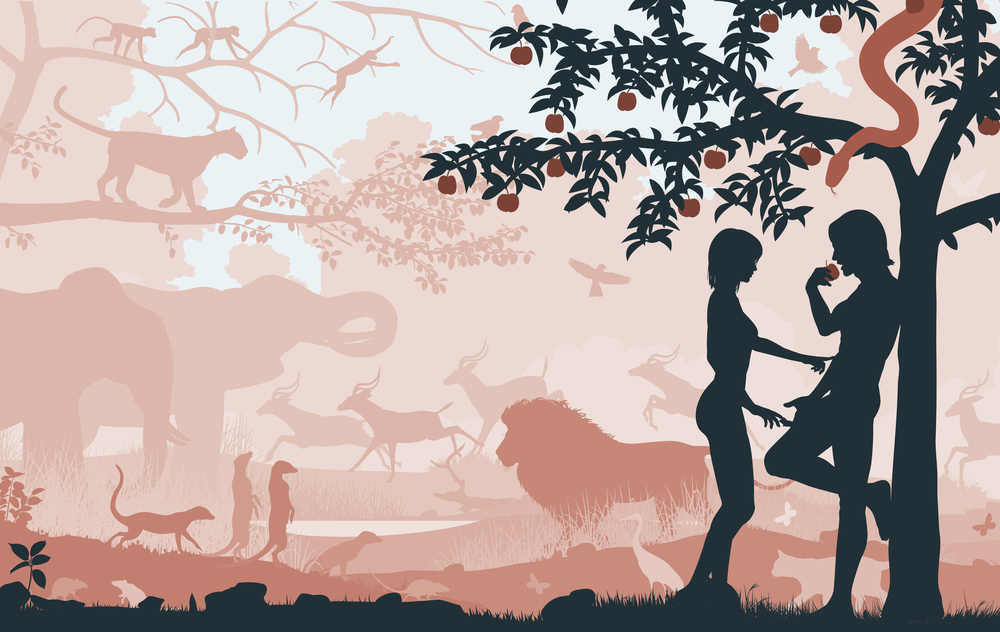
The DSM-V-TR lists many odd, as well as socially unacceptable paraphilias. In definition, the DSM-V-TR recognizes paraphilias as “any intense or persistent sexual interest other than sexual interest in genital stimulation or preparatory fondling with phenotypically normal, physically mature, consenting human partners (2022)”. According to the DSM-V-TR a disorder differs from a mere urge and thought in that the intensity is causing impairment, harm to self or others, as well as becoming the dominant of way of sexual expression over normal means. In this way, the value of morality based on right or wrong is merely replaced with these thoughts as deviation from the norm without any moral questions. Of course, one may question this distinction between thought and action when discussing pedophilia or zoophilia or necrophilia. Are the presence of these thoughts not a disorder within themselves because they are so unnatural? While acting upon a urge is far worst, the presence of these urges represent a serious problem within themselves that should not require impairment or harm of others or self to red flag it. As it stands, zoophilia (sexual intercourse with animals), necrophilia (sexual attraction or intercourse with corpses) as well as urophilia (urine) and coprophilia (feces) all find classification with the DSM-V-TR under “other specified paraphilic disorders”.
Other than the “other” list, the DSM-V-TR lists 8 paraphilias with diagnosis for disorder again to include impairment of quality of life in all areas, as well as harming oneself or others. Many of these disorders are inherently tied to harm of others, while others can be merely addictive in nature. Interestingly enough, pornography is not even listed as an addiction, much less a deviation although it is gateway to many of these disorders and can become a type of disorder if it inhibits social and professional activities.
Voyeurstic Disorder
This involves an intense and recurrent interest and sexual arousal over a 6 month period of observing other naked people or watching them engage in sex without their consent. The person must be at least 18 to differentiate between adolescent curiosity versus a full blown disorder. For diagnosis as disorder it requires action taken on these urges and if these fantasies or actions lead to significant distress or impairment in social, occupational or important areas of functioning (DSM-V-TR, 2022).
Exhibitionist Disorder
This involves intense or recurrent sexual arousal over a 6 month period regarding exposing one’s genitals to an unexpecting person. Specifiers include the target audience as children only, adults only, or both (DSM-V-TR, 2022).
Frotteuristic Disorder
This involves intense or recurrent sexual arousal over a 6 month period from touching or rubbing up against unexpecting and nonconsenting individuals (DSM-V-TR, 2022).
Sexual Masochism Disorder
This involves intense and recurrent sexual arousal over a 6 month period from being humiliated, beaten, bound, and made to suffer. It can have a specifier tied to strangling or asphyxiophilia (DSM-V-TR, 2022).
Sexual Sadism Disorder
This involves intense and recurrent sexual arousal over a 6 month period in the suffering or causing of suffering in another human person. This disorder is tied to bondage-domination-sado masochism where two disorders interact in bondage. The sadism in this particular case is not ruled as a disorder if with a consenting adult. However, sadists are tied to sexual crimes and rape, albeit, most rapes are still tied to control and authority than mere pleasure of others pain (DSM-V-TR, 2022).
Pedophilic Disorder
This involves intense and recurrent sexual arousal over a 6 month period with prepubescent children under the age of 13 years. Specifiers include those who are attracted to only children, or both children and adults, as well as those attracted to only males, females or both (DSM-V-TR, 2022). Obviously this disorder, like sadism also carries legal and criminal prosecution, beyond just being a disorder, much less within Christian theology a horrible sin.
Fetishistic Disorder
This involves intense and recurrent sexual arousal over a 6 month period with objects, or nonliving things with a high focus on non-genital body parts (DSM-V-TR, 2022).
Transvestic Disorder
This involves intense and recurrent sexual arousal over a 6 month period from crossdressing (DSM-V-TR, 2022).
All of these disorders above relate to sexual deviations from the social norm. In this way, psychology does not necessarily give to them a moral value. Instead psychology looks at impairment, harm to self and harm to self and others. This does not mean that these thoughts in themselves are not dangerous and sinful. In addition, many of these disorders can become addictive. Starting with the smallest thing, pornography can open a window of deviations which hamper a person’s social functioning. Individuals then become slaves to their passion of lust and it begins to dominate the person. From a Christian perspective, this is the goal of the demonic. The goal is to corrupt, mock and displace sexuality with crude and disgusting acts and use human beings as the tool leading them farther away from God and deeper into addictive and dark practices. These actions look for pleasure and gratification as the primary purpose of sexuality. However, the norm of sexual expression or attraction ceases to arouse, so one slowly goes deeper and deeper into corruption. This not only dismisses the original intent of the conjugal act, but it also reduces people to things and objects to find pleasure. Whether consenting or not, it still represents a a deep corruption (McRay,et al. 2016).
Mental health can biological factors can play a role in the deviations, but also trauma, sexual abuse, and mistreatment in one’s youth. Others never learn about sexuality or how to properly express it. Not surprisingly, many of the differential diagnoses of these actions are also tied to impulse control disorders as well anti-social personality disorders (DSM-V-TR, 2022).
Gender Dysphoria
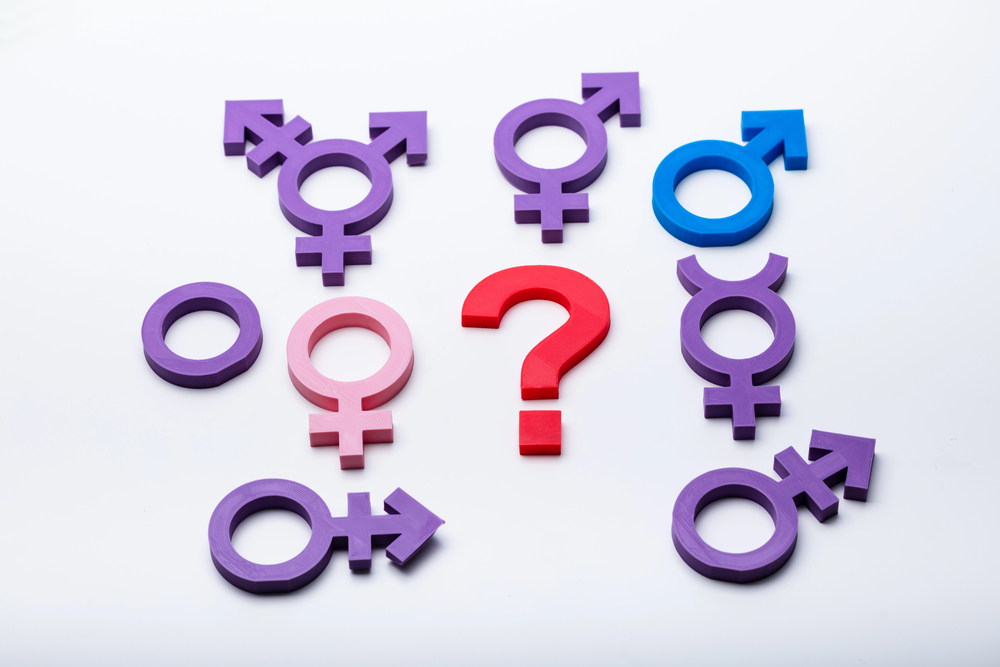
As sexual orientation and gender idealogy became more prominent within the social norms of modern society, the DSM-V responded as well with less emphasis of any mental defect in regards to gender identity, much like previous versions adjusted to mental diagnosis of same sex attraction. The current trend is to one day even remove gender dysphoria as it did prior with homosexuality from the manual, but many lament if diagnostics do not remain, then this may affect gender altering elective surgeries for purposes of medical insurance and payment.
As it stands gender dysphoria in itself does not point towards a disorder but only when impairment, anxiety, depression and suffering result from it due to a lack of congruence between assigned sex at birth and chosen gender (DSM-V-TR, 2022). Due to this, the DSM-V carefully redefines sex and gender. Sex is defined as biological and physical manifestations of male or female. It is also referred to as the birth assigned gender or assigned sex. Gender, according to the DSM-V denotes the social, cultural and public role a person chooses as a boy or girl (2022). When someone does not adhere to the assigned birth they are said to be gender atypical, gender nonconforming, gender diverse, or gender variant (DSM-V-TR, 2022). One’s gender identity is what one adheres to, which can be male or female, or even gender fluid which is neither male nor female. Transgender refers to a broad spectrum of individuals whose identity is different than their assigned sex at birth. However, only if incongruence and distress occur, does the DSM-V-TR list it as a disorder within itself (2022). A transsexual is a person who has undergone surgery altering procedures to their physical/biological appearance as male or female.
The DSM-V-TR points out that gender dysphoria can be both experienced in children but also with adolescents and adults. In its diagnosis, the DSM-V-TR lists the following as criteria for children and adults. For both groups, the first criteria requires a marked incongruence between ones expressed gender and assigned gender at birth for a period over 6 months. In children, the manifestations include.
- strong desire to be the other gender
- with boys, crossdressing
- strong preference for cross gender roles in play and make believe
- strong preference for toys of the opposite sex
- strong preference for playmates of the other gender
- rejection of toys associated with opposite sex
- strong dislike of one’s anatomy
- strong desire to possess characteristics of the other sex
Within adults
- marked incongruence with assigned sex
- strong desire to rid oneself of one’s primary and secondary sex characteristics
- strong desire for sexual characteristics of other sex
- strong desire to be the other gender
- strong desire to be treated like the other gender
- strong conviction that one has the feelings or reactions of the other sex
Specifiers include if one was born with a sexual abnormality or congenital defect such as adrenogenital disorder, adrenal hyperplasia or androgen insensitivity. For these individuals, there is less mental perception but a reality that one was physically born with varying degrees of both genitals. Many within this category of DSDs require immediate medical intervention and surgery when sex is assigned at birth (DSM-V-TR, 2022). This often results in some type of gender dysphoria in what gender they align with.
It is extremely important to show intense care for especially children who express these symptoms in life. Many in teen years are going through changes that may be only temporary, or dealing with a body dysmorphic disorder. Some, in the case of girls, may just be the classical tomboy. Hence from a purely secular perspective, any major operations or assignments should be withheld until adulthood. In addition, from a Christian perspective, it is important to help children understand their gender and work with them. For many, Gender Affirming Therapy can help individuals come to congruity with their gender and sex (McRay, et al., 2022). While this group represents a very small percentage of the population, their inner turmoil is real. Empathy and nonjudgement are critical. These are not choices but true inner turmoil. Christianity teaches that this inner turmoil is a result of sin but the disgust with one’s body can also be demonic in origin. Satan wishes for humanity to hate itself from the original design of the Creator.
Etiology and Treatment
Moral decisions about sexuality are very personal. They touch not only the mental aspect of oneself but also the very spiritual. When spiritual understanding of sexual issues are disconnected from the mental, it can cause a deeper misunderstanding of the sexual paraphilias. From a purely mental and biological perspective, trauma, abuse, anxiety, and sexual experiences as child or teen can play a big role in not only sexual paraphilias but also sexual disorders. Experts also agree that psychosocial factors play a large role in paraphilia as well as sexual dysfunctions that stem from poor communication skills and inabilities to form meaningful relationships (McRay, et al., 2016). Rape victims obviously can have trauma that is innately tied to the conjugal act. Others may have experiences with conjugal sex at an early age which misshaped their future experiences. This can lead to a variety of inabilities to sexually function. These types of sexual disorders are also listed in the DSM-V. They lead to physiological issues that affect sexual performance, or also negatively affect sexual arousal or even sexual interest.
However, the darker deviations while also tied to past trauma or events, or even some biological markers within the brain have spiritual origins. This is where the DSM-V-TR as a tool has reached its limit to help. The darker issues of sexual deviations are tied to sin, lust, vice and addiction. They can transform into deeper issues if not met on the spiritual battlefield. Christian Counselors need to be aware of the mental issues behind them but they must also understand how these mental issues are utilized by the enemy to distort the moral fabric of a person’s soul in regards to a host of immoral sexual actions. Lust is a distortion of love. Lust rejects temperance. Lust corrupts the heart to see God. It is of no wonder then that this capital sin is employed so frequently by the enemy to lead the soul away from true happiness and true design. Lust ultimately leads to addictions that become more demanding and more perverse until the person loses sight of control and respect of one’s body and others.
Treatments usually only include treating the symptoms of anxiety or depression or the past trauma associated. More dangerous and predatory in nature paraphilias sometimes require peer groups and also legal intervention. Those seeking to avoid dangerous sexual behavior need to remove themselves from places that facilitate their urges. Isolating from stimuli is key. This could involve for a pedophile staying away from a school area, or one to avoid strip clubs, or drink, or even the internet and porn. Changing behaviors and breaking addictions may require behavioral and cognitive therapies and token systems. Positive reinforcements. From a psychoanalytical school, it would involve understanding one’s childhood and why these sexual issues are manifesting. Christian Counseling can present a blue print of right versus wrong with emphasis on prayer, penance and the formation of virtue. Virtue of purity and habit takes time but with patience and prayer, God’s grace can transform and help one carry one’s cross.
Conclusion
The four D’s of mental health regarding danger, distress, dysfunction and deviation play a large role in defining disorder (McRay, et al. 2016). These are based on standards. Obviously Christian standards will differ from secular standards and create friction between the label of sin. However, the DSM-V-TR still recognizes the distress sexual paraphilias and even gender dysphoria can cause. In this Christian Counselors and secular counselors can agree. This distress robs the person of peace and the sense of being loved. This is why it is so important to never judge but also try to help individuals who suffer from such deviations. While one is tied to ones choices and legal consequences, many of these feelings flow through these individuals creating difficulties in life. Christian Counselors are called to help individuals in distress but also to align oneself with the commandments and God.
Please also review AIHCP’s Christian Counseling Certification
References
American Psychiatric Association. (2022). Diagnostic and statistical manual of mental disorder” DSM-5-TR (5th ed., text revision). American Psychiatric Association Publishing.
McRay, B.W., Yarhouse, M.A., Butman, R.E., & Kiple, C. (2016). Modern psychopathologies: A comprehensive Christian appraisal. (2nd, ed.) IVP Academic
Additional AIHCP Blogs
Christian Morality and Sexuality: Access here
Additional Resources
Paraphilias. WebMD. Access here
15 Most Common Paraphilias. Psychology for Mental Health. Access here
Paraphilic Disorders. APA. Access here
Signs and Types of Paraphilic Disorders. VeryWellMind. Access here