Christian Counseling Certification Video on Spiritual Discernment

Knowing what God wants you to do in life or even making basic decisions in moral life are important to discipleship.  Christians need to hear God and follow His will but it is not always clear.  Fortunately, Christians throughout the ages have laid groundwork in defining right and wrong, or proper paths.

Please also review AIHCP’s Christian Counseling Certification and see if it meets your academic and professional goals.  The program is online and independent study and open to qualified professionals.


Please review the video below on Spiritual Discernment

Christian Counseling Certification Article on Meditation Is More Than Health

Eastern Meditation stripped of its religious connotations has numerous health benefits but to substitute this type of meditation for Christian meditation in regards to spiritual life is an error.  For purposes of physical health, breathing and various positions void of religious intent have health benefits, but for spiritual benefits, one must turn to the classical Christian meditation that looks not for relaxation but spiritual connection with God through the Scripture and Christ.

Christian meditation is Christo-centric and finds its basis in God’s presence through the quiet of Scripture and Christ.  Christ leads one to the Father and helps one reflect on one’s spiritual life with God.  Deeper contemplation can lead to deeper unions with God but all leads one back to the current world and its current situation instead of attempting to escape it.


Christian meditation is about a closer union with God. Please also review AIHCP’s Christian Counseling Certification


Meditation is prayer and it is important that Christians remember this and not allow secular definitions of it to water its true nature down.  The purpose is not to merely refresh the mind, de-stress, or find calm, but to connect with God.

The article, “Meditation Isn’t Mere Therapy — It’s a Living Relationship With Almighty God” by Anna Abbott reminds us of the true spiritual and prayerful nature of meditation.  She states,

“In the case of Christian meditation, it is an active quest to live the life of Christ, which was anything but passive. Our Lord sought baptism from his cousin to begin his life of teaching. He called the Twelve Apostles. He actively healed, preached and performed miracles. He repeatedly told Sts. Peter, James and John that the endpoint of his mission was crucifixion, death and resurrection. He endured heroically, not passively. His mission is the foundational “quest.”

To read the entire article, please click here

Going beyond this secular definition of meditation and realizing this active quest to find God is key in Christian meditation.  Christian meditation is not to escape the world but to understand it with all its suffering and distraught but to Christianize it.  Meditation brings the Christian closer to God to deal with the issues of the world.  In this way, Christian meditation is far more different than secular notions of meditation that find there roots in Eastern themes.

While these techniques have physical health value they cannot replace spiritual meditation.   Also bear in mind as Christians, these techniques themselves need to be utilized carefully since their ultimate design is based to create mental states that are associated with Eastern theology which is far from Christian.  The ultimate end of Christian meditation is union with God, not to become a god.

Please also review AIHCP’s Christian Counseling Certification and see if it matches one’s academic and professional goals.  The program is online and independent study and open to qualified professionals seeking a four year certification as a Christian Counselor.
Christian Counseling Certification Article on Mentoring

Making disciples of all nations and fulfilling Christ’s mandate involves sometimes more than preaching but also sometimes working with others and helping develop their spirituality.  Individuals in positions of authority or experience sometimes find themselves helping others perfect their trade.  This is not only true of the professional world, but also within the spiritual world.  Numerous pastors, elders and spiritually developed Christians help others find Christ and also to grow in Christ.

Mentorship hence is a vital role within the Church.  It involves the Spiritual Works of Mercy that include instructing the ignorant, admonishing the sinful, counseling the doubtful and praying for their development.  Spiritual parents play large roles in this development.  Whether a pastor, minister, spiritual advisor, mentor or God parent, one is thrust into a spiritual position to help their spiritual children grow in Christ.  This spiritual promise is an important one that comes from God.  It is a very solemn duty to to not only guide but teach by good example.


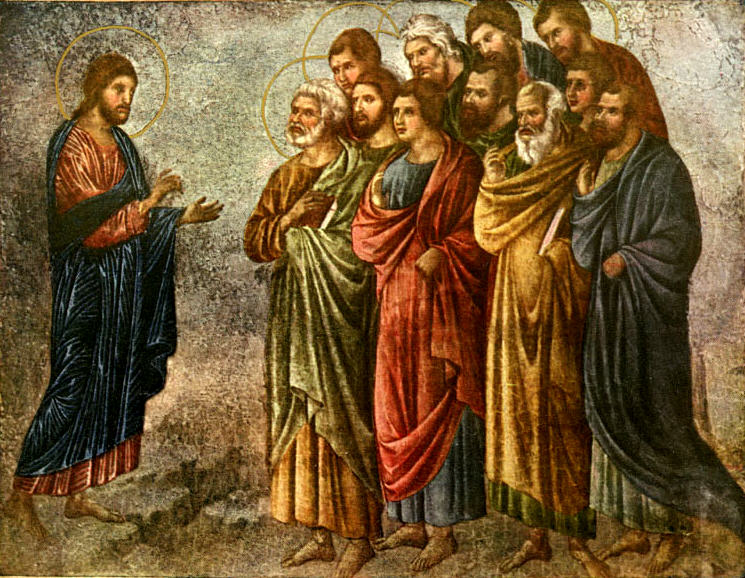
Christ selected 12 Apostles to proclaim the Gospel. Spiritual Mentorship follows the paradigm of Christ in selecting and cultivating spiritual growth


This is why it is so scandalous when Church authority is abused.   When trust in authority is broken, many can be lost to the faith.  Many lash out against the faith.  Sexual abuse, corruption and bad example are all great sins before God and those in authority who mentor and teach the young, will answer in the most harsh ways.   It is important to shower one’s spiritual children with guidance and charity of the Holy Spirit through example and teaching.

Many look to the Paul Timothy relationship.  In it, St Paul guides St Timothy through the process of instruction and guidance.  St Paul educates but also encourages St Timothy in his spiritual formation.  Like St Paul, spiritual mentors are called to help cultivate religious vocations through example, teaching and encouragement. A spiritual mentor is a teacher, a coach,  and a counselor to his spiritual child and can help cultivate vocation through these positions of authority.

In doing so, like Christ, they give to their disciples a service of servanthood, as Christ did to the twelve but also an accountability.  An accountability to be spiritually present in their lives.  Also in any relationship their must be boundaries.  Overt dependency upon each other can cause damage to the growth of the spiritual child, as well as the spiritual parent.  The spiritual parent may also fear to let their spiritual child go.  So it is important to have important boundaries that are rooted firmly in Christ and faith.  It is hence important to discuss spiritual expectations and moral behavior in life, and when needed, the acknowledgement to seek outside help when needed.

It is also important to follow the Jesus Model.  Larry Kreider speaks about this model as a key way to help mentor and spiritually form young Christians.

Jesus just did not send out his disciples to the world without training or knowledge.  He chose them intentionally and took time to know them and cultivate their talents.  He taught not only by His words, but also by example.  The disciples learned the power of Christ on earth through His miracles and sermons.  In turn, Christ prepared them to proclaim the Gospel, but it was only until the Holy Spirit came upon them were they truly prepared.

He chose simply individuals.  He did not choose the rich or powerful but simple fisherman, Peter, James and John.  He chose a tax collector in Matthew, as well as numerous other outcasts.  He chose Andrew, Philip, James the Less, Simon, Bartholomew, and knowing those who would doubt Him, in Thomas, and those who would deny Him, in Judas.  Yet Christ, still accepted them all in their imperfections and status.  He gave them His full attention and charity and took them in as His own spiritual children.

Spiritual Mentors will also follow this model of Christ.  They will look to help develop the spirituality of the least of their brethren and allow their spiritual talents to become tools for the Church.  Like Christ, mentors need to initiate and take the first steps to help develop their spiritual children’s gifts.  They can reveal to them the good news of the Gospel and inspire in them a sense of awe regarding God. Through example and good deeds, they can inspire them.

They must also continue to build and cultivate the seed of faith within their spiritual children.  They must encourage spiritual life, reading of scripture, attendance of Church, and working within it.  They must cultivate that potential and push the faith into action.

Finally, eventually as Christ released the twelve, a mentor must be ready to release their spiritual children.  This does not mean, he or she abandons them or no longer offers his or her ear, but it does mean they trust in the abilities and faith of their children to spread the Gospel and themselves become spiritual parents.  The apostles went to the corners of the world and carried out their Master’s command even unto death.


We can help our spiritual children and help them grow in faith. Please also review AIHCP’s Christian Counseling Certification


If God is calling one to spiritual parenthood or to be a spiritual advisor, it is important to allow the Holy Spirit to guide it.  Prayer and fasting and discernment are extremely important.  One should not let insecurities or fear prevent one from fulfilling one’s duty to the Church.  The call to spiritual mentoring dismisses fear and insecurities, as well as ignorance, or apathy, or even impatience when one does not meet one’s standards.   It is a vocational call and it is a special relationship.

If you would like to learn more about AIHCP’s  Christian Counseling  Certification or would like to become a certified Christian Counselor to aid in your own spiritual mentorship of others, then please review the program and see if it meets your professional academic and spiritual goals.  The program is online and independent study and open to qualified professionals seeking a four year certification in Christian Counseling.


Christian Counseling Program Article on the Four Gospels


This is a quick crash course in textual review of the Gospels and where they came from.  Obviously, we all know they came from the Holy Spirit’s inspiration, who inspired human beings in the collecting various of stories and also directly inspiring the writers themselves, whether the writers were direct witnesses or collectors of the information.  Despite this inspiration, there still was a massive human cooperation with God that gave us the collection of the Four Gospels.  It is important as Christian Counselors, ministers, priests, and chaplains to have a good foundation in what the Gospels are and where they came from.

Preaching the Gospel is a standard phrase for those in ministry but what are the Gospels themselves?  Obviously the term to preach the Gospel extends beyond just the teachings found in the Four Gospels but are expounded throughout the entire Bible, but the ideal of the Gospel, the story of Jesus Christ and what He meant for salvation is the core concept found in the Gospels.  The previous books prepare the Christian for the encounter with Christ as found in the Gospels, while the Epistles explain them in greater detail.

The Four Gospels are Matthew, Mark, Luke and John. They form the basis for inspired writings on the life of Christ and the story of salvation


Hence the message of the Gospel is that Jesus Christ is both God and man and came to Earth to redeem humanity from the sin of Adam.  In Christ, everything is made perfect.  In Christ, is the perfect sacrifice and bridge to God.  Without Christ, no salvation is possible and it is essential to accept Christ via Baptism to apply the blood of His redemption on the cross.   This is why it is was so critical a command to preach this message to all corners of the world.

The Gospels hence paint a picture of who Christ is and why He came.  They form the cornerstone of Christ’s teaching and set the basis for the Church.  It was hence critical for the Church to enshrine them as part of the foundational structures of the faith and all Christian theology.   The Four Gospels of Matthew, Mark. Luke and John were all formally written before the end of the 1st century.  In fact, most findings dictate that the Epistles of Paul outdate the Gospels.  It shows that the ideas of the Gospels had not been written yet by their namesakes, or at least collected together into one volume after the preaching of Paul.   Historic and literary criticisms of the text show that Mark was the first book written of the Four Gospels and Mark’s Gospel collected data from various sources.  These sources are known as the Que source which had accumulated various stories about the life of Christ handed down verbally and also in some cases documented.  Unfortunately, this common source of data about Christ has never been collected but the very fact most Gospels share common stories, illustrates a common source regarding the life of Christ as handed down by the Apostles.

The Gospels were stories of Christ that were collected from eye witness accounts or contain parts written directly as witnessed by the observer.  Historical authorship traditionally is applied to the namesakes of the Gospels themselves, the Apostles John and Matthew and the Disciples Mark and Luke.   Some contend that these historic figures only are of the name of the book and not the actual author or redactor.  Others contend that the eye witnesses themselves wrote the book.  Hence in John and Matthew, we see apostles who witnessed the life of Christ.  While Mark and Luke would have depended more on eye witness accounts as well as other source materials.

Despite only having only Four Gospels, the Church existed within the first three centuries under persecution and it would not be until the Fourth Century that it was able to canonize the books as inspired.  Many other books were classified as uninspired and left out of the canon.  Such books as the Gospel of Thomas or the Infancy Narratives were considered non canonical.   Some other books were considered heretical while others were considered pious but not inspired.

Hence the Church canonized the New Testament and accepted only the four we see today.  The first three are referred to as the Synoptic Gospels, while the Gospel of John stands on its own as a unique Gospel that has a higher Christological value.  While all the Gospels show Christ is both God and Man, the Gospel of John emphasizes the Divinity of Christ at a higher level.  This differences in emphasis is important to the whole story of Christ.

The Gospels were written by men who were inspired by the Holy Spirit. It was a divine and human endeavor that worked side by side in giving us the life of Christ.  Textual criticism and authorship debates should not be seen as a way to lessen the Divine Source of  Scripture but to understand the human element and how it was constructed and compiled under the guidance of the Holy Spirit


The Synoptic Gospels while sharing similarities, nonetheless also differ in audience.   Matthew’s audience is more towards the Jewish population.  Matthew wished to show how Jesus was a good Jew and came not to destroy the Law but to fulfill it, while Luke engages more with the Greek world, showing that Christ has also come to save  all of humanity, not just the Jewish people.  If these namesakes of these Gospels are indeed the historical individuals, then Matthew would have an indepth knowledge of Christ as well as the Jewish law.   Luke who writes much on the infancy of Christ, according to tradition, also knew the Virgin Mary well and is said to have written the first icon of the Mother of God.  This would tie to the indepth amount of the infancy stories found in Luke.

Regardless, the Gospels are written and inspired and share their namesakes actual hand or spirit.  The accounts compliment and supplement each other.  Where others look to find contradictions or minor variations, the Church sees the many stories of Christ and their diversity shared in the Gospels.  In fact, as John points out, not even all the books of the world could contain the many stories of Christ.  The Church is grateful to possess four accurate accounts that supplement different audiences but share the same inspired story of Christ, God and Man, and also Redeemer for all audiences.

While various criticisms exist for Scripture, they should not be seen as critiques but instead research into the history, literary aim, and textual development to better understand the individual book.  These are important tools that if used reverently can be used to help us better appreciate the Word of God and message of salvation.

Please also review AIHCP’s Christian Counseling Certification and see if it matches your academic and professional goals


The stories and accounts are reliable because one can see the full story of Christ find form.  While only in oral form for the longest time, they found parchment and permanency through the Holy Spirit and His divinely inspired writers.  These same witnesses would later forfeit their lives for the stories found in to cement their authenticity with their own blood.

This is why we believe and this is why we share the Four Gospels.

Please also review AIHCP’s Christian Counseling Certification and see if it matches your academic and professional goals.


Christian Counseling Certification Article on Ignatian Spirituality and Loss

Ignatian spirituality is an excellent way of experiencing God and prayer in one’s daily life.  In essence it is very intellectual and Christo-centric.  Christ is the center of all and service is essential to the church and community.  Meditation within the tradition is also Christo-centric and focuses on visualization on the life of Christ.  This focus on Christ helps many through various therapies, especially in grief.  The steps within Ignatian review of conscience can be important in helping individuals analyze their life itself

Ignatian spirituality makes one look deeper at self. It can help with various cognitive therapies through this exercise. Please also review AIHCP’s Christian Counseling Certification


The article, “How Ignatian spirituality enhanced my cognitive behavioral therapy” by Sue Do looks closer at the cognitive benefits of Ignatian spirituality and meditation on recovering from loss and grief.  The article states,

“In the five steps of the Examen prayer of St. Ignatius, I found the “reviewing of my day” to be a crucial part of my resilience and recovery. Facing my struggles and talking about it to God through journaling is similar to confronting my distorted thoughts in cognitive behavioral therapy techniques. Positive affirmations are similar to the awareness of one’s needs and asking for graces in Ignatian spirituality.”

To read the entire article, please click here

Ignatian spirituality is a very disciplined and precise spirituality that looks to find Christ but also helps to better oneself in deeper analyzation to find weakness within the soul.  His exercises and meditation all help lead to a stronger Christian life

Please also review AIHCP’s Christian Counseling Certification and see if it matches your academic and professional goals.  The program is online and independent study and open to qualified professionals seeking a four year certification as a Christian Counselor.
 

Christian Spiritual Counseling Certification Article on St Ignatius and Discernment

Discernment is an important process in every Christian’s life.  This is the case not only in calls to vocation but also decisions that affect daily life.  Understanding good and evil and properly diagnosing proper choices in life help the Christian navigate the troubled waters of temporal existence.

Discernment requires prayer, patience , moral fortitude and wisdom. It involves accepting the will of God and offering your decision to God for blessing. Please also review AIHCP’s Christian Counseling Certification


Vocation is more than just one’s eventual role in life but also one’s daily duty and position everyday in life.  It is important to continually strive to fulfill one’s daily duty and help others find their role.  Discernment and guidance are key in these choices.  Proper discernment is based in prayer and imitation of Christ in fulfilling God’s will.  However, even with prayer, we can sometimes doubt.  Learning how to discern and dissect moral decisions can be more difficult than it appears.  Sometimes it takes time to finally find God’s will and answer to you.

The article, “WHAT IS IGNATIAN DISCERNMENT?” by Rev. Doug Leonhardt, S.J. looks at how St Ignatius Loyola utilized prayer, meditation and logical thinking based in philosophy and morality to come to discernment conclusions.  The article states,

“Pondering and noticing interior movements of attraction and heaviness are at the heart of Ignatian discernment. Discernment involves prayer and weighing facts and feelings about the several good choices which ultimately leads to a choice about what is the best fit for an individual. In the traditional language of Christianity, good Christians try to find the will of God for their lives. They look for signs but often when no clear signs are given, they make a decision and then ask God to bless it. ”

To read the entire article, please click here

Discernment in choice, path, endeavor and even regarding spirits and people are important parts in Christian spirituality.  It is important to learn how to form a strong Christian moral compass that helps guide one’s conscience.  Through wisdom granted by the Holy Spirit and an offering of all one does to God, one can be more confident that the right choice or feeling will eventually emerge.

Please also review AIHCP’s Christian Counseling Certification and see if it meets your academic and professional goals.  The program is online and independent study and open to qualified professionals seeking a four year certification in Christian Counseling.


Christian Counseling Certification Article on the Heresy of Arianism

The early Church faced many misconceptions about Jesus Christ.  Some believed Jesus’ body was a shell to the Divine Logos without a human soul.  Others thought Jesus was not true body at all but a phantasm of light.  Still others thought Jesus’ human nature and divine nature were so entangled that neither retained a true liberty from each other and were in fact fused into one mixture.  Others distinguished Jesus’ nature so much that there was no true unity but a loose union of two separate natures.

Arius denied the divinity of Jesus Christ and lessened him to the first creation of the Father. Please also review AIHCP’s Christian Counseling Certification


One of the earliest though was Arianism which denied the co-eternal nature of the Son with the Father.  This heresy was perpetrated by the hesiarch Arius in the 4th century.  His heresy was condemned at the Council of Nicaea at 325 AD as well again at Constantinople in 381 AD.  Of course proper and orthodox theology teaches that Jesus is one person with two natures in harmony being both fully God via the Second Person and fully human through Jesus of Nazareth.

The article, “What Is Arianism and Are You Accidentally Committing This Heresy?” by Alyssa Roat gives a very detailed account of Arianism and is a good resource for those seeking to understand it better.  She states,

“Many centuries ago, a man named Arius stirred major controversy in the church with his claim: Jesus Christ was created and finite, not of equal divinity with the Father. This became known as the heresy of Arianism. However, repudiation and rejection of his claim did not come easily. Even today, we may find ourselves falling into Arianism.”

To read the entire article, please click here

Please also review AIHCP’s Christian Counseling Certification and see if it matches your academic and professional goals.  The program is online and independent study and open to qualified professionals in ministry who are seeking a four year certification in Christian Counseling.

Christian Counseling Certification Article on Spiritual Direction

Spiritual direction is key to Christian formation.  Individuals no matter the age require guidance in morality, coping, spirituality, and challenges.  A spiritual director is usually clergy, but some can also be lay people who become a spiritual father or mother to you.   Their guidance is important in every phase of life as the Christian grows in the faith.   If you do not have a spiritual director, it is wise to find one.  It is not something that one randomly chooses, but something the Holy Spirit guides one to.  The mentor and the learner find each other.

All Christians need spiritual direction. Please also review AIHCP’s Christian Counseling Certification


Usually a spiritual director has knowledge of your life and past.  He or she is able to guide one through troubles because of this knowledge because of this unique knowledge.  This is why randomly choosing someone and expecting them to know you will not produce the best results.  It is something that is not forced but naturally found due to mutual spiritual attraction of need.    If one becomes a member of a church, or one meets a new pastor, it is not prudent to choose this new person you work with as your spiritual advisor.  There should be a natural divide.  This is why priests or pastors do not at times have spiritual directors who are common to their work unless the bond is far older before they met professionally or in ministry.  Of course, a spiritual bond may develop but if no spiritual bond is present, this person should not be one’s spiritual director.

So in essence, a spiritual director has a bond with you but also is equipped with the wisdom to help you develop in the faith and face problems.  They should not be random persons you meet merely due to their position as a priest or pastor.  With Christianity, this mentor can be a elder, or a trusted friend within the faith, or also a long known pastor, or in Catholicism, a priest who also hears one’s confession but also knows you and has a spiritual bond.

Merely talking to someone about your issues does not make one your spiritual director, but it is a reciprocal spiritual bond to help spiritual parent and spiritual child grow.

The article, “Spiritual direction: What is it, who needs it, and why?” by Mary Farrow looks at why Christians need a spiritual director and the importance of spiritual direction.  She states,

“Spiritual direction instead focuses on a relationship with God, Cleveland said, which is “not a problem to be solved, but something to be discovered and deepened and celebrated. A lot of times people are looking for something else…so sometimes we have to really reorient someone’s thinking – are you looking to deepen your relationship with God through prayer and discernment?”

To read the entire article, please click here

Hence spiritual direction is more than confessing sins or seeking God’s forgiveness but is a process of spiritual growth.  It involves discernment and other ways to help a person progress spiritually through the world.

If you would like to learn more about Spiritual Mentorship and Spiritual Direction, please review AIHCP’s Christian Counseling Certification.  The program is online and open to qualified professionals seeking a four year certification is Christian Counseling.


Christian Counseling Certification Program Article on Prayer and Pandemic

A nice look about people of different faiths and how they manage during the pandemic to prayer together while apart.  The pandemic has restricted some religious public worship and has limited other ways we can come together, but we can still pray and we can still pray for each other.  With social distancing, we can also within the various religious traditions still come together in safely despite the dangers.

Prayer and spirituality are important during times when we cannot socially gather in worship. Please also review AICHP’s Christian Counseling Certification


The article, “Staying Apart but Praying Together” by James Estrin looks at how religious groups are remaining spiritual and strong despite covid.  He states,

“The sanctuary at The Jewish Center accommodates more than 500 people but only 60 are now allowed inside at a time. Attendees must preregister online, answer a coronavirus exposure survey and have their temperature taken at the door. When weather permits, shortened services are held outside on the rooftop.”

The article covers other faiths as well.  To read the entire article, please click here

Despite shutdowns, or restrictions, the faith remains strong during the pandemic and people will find a way to pray to God, whether privately or in public via safe measures.  God does not wish his creation to test him but to respect the safety measures for all.  This does not make one’s faith less but makes one logical.  God can protect us from any plague, but we cannot as his creation test him and do foolish things that promote its spread.

Please also review AIHCP’s Christian Counseling Certification Program

Christian Counseling Training Program Article on Silent Prayer and Lent

Lent is an excellent time for Christians to find a spiritual retreat.  A retreat from the loud and noisy material world.  Lent allows the Christian the time to self reflect and re prioritize things in life.  Many utilize Lent as a time to give something up but learning to rediscover one’s Christian life is the primary point of Lent.   Lent gives one the opportunity to rediscover one’s cross and to follow Christ to Calvary and later rise with him.

Lent can help Christians refind their spiritual journey. Please also review our Christian Counseling Training Program and see if it meets your goals


Silent prayer can play a large role in helping Christians find their spiritual nature.  Silent prayer can help one hear the voice of God and help the soul find a deeper connection.  Silent prayer removes one from the noise of materialism and realigns the soul properly to its primary end which is God.

The article, “Lent: Silent prayer in a noisy digital world” b y Sr Nancy Ussellmann looks at the value of silent prayer and its place during Lent.  She states,

“Lent offers us a time to take stock of our lives, question our motivations, examine our relationships and pray more attentively, opening ourselves to God’s actions in our lives. The ashes on our face remind us that we are not gods, we will not live forever and this life has a purpose.”

To read the entire article, please click here

Lent is a critical time for sacrifice but also self reflection and spiritual growth.  Silent prayer and Christian meditation can play a large role in helping one grow one’s faith and re-connection with God.  It allows one to rediscover their Christian vocation and refocus on what matters most in life.

Please also review our Christian Counseling Training Program and see if it matches your academic and professional goals.