Spiritual Direction and Guidance in Prayer Life

As St Teresa of Avila states, a soul that does not pray is likened to a body that is limbless. The importance of prayer is central to life itself.  One can use any physical analogy, as oxygen, or the heart, and none still compare to illustrate the importance of prayer to the soul and life itself.   Through grace, gained through the death of Christ on the cross, communication with God was restored.  The price of sin was paid in full.   Through the great price of each soul, souls could again via application of Christ’s Blood which earned for humanity the gift of grace, again possess a parental relationship with God.  Fueled through sanctifying grace and the removal of Original Sin, a soul bought by Christ, could again commune with God in an effective and purposeful way.
Prayer is essential for spiritual life. Please review AIHCP’s Christian Counseling as well as Spiritual Direction Program

Hence, prayer is communication and participation in the Divine while on Earth.  As creatures, justice demands prayer to God.  One is to know and serve God through adoration, contrition and thanksgiving, and petition, but through the virtue of charity, one not only serves and worships out of justice, but also prays out of love.  God has elevated humanity from mere creatures but to also images of His own likeness in which one can share in His Divine Life.  Prayer opens this door and should beyond its mechanical functions of proper worship be also a conduit of love.  This love is that of a child for his parent!

When the soul becomes deeper in love with God, prayer then becomes more profound and connected to God.  Spiritual Directors should help and teach their spiritual children how not only to pray and its purposes, but also how to develop and foster a deeper and real relationship with Jesus Christ.

Please also review AIHCP’s Christian Counseling Program but also its Spiritual Direction program.

Jesus Taught Us How to Pray

Jesus told His followers that the Father and He are one and no one can go to the Father but through Him.  He also taught His followers the “Our Father” which encompasses the core values of adoration, contrition, thanksgiving and petition.   This is purely the most basic and mechanical structure of prayer but it lays the ground work and reasons of it.  Through the simple words of the “Our Father” our Lord leads one to deeper mysteries of prayer that are essential for spiritual development.

Types of Prayer

Prayer entails adoration, contrition, thanksgiving and petition.  Most likely, one of these four elements will play a role in one’s prayer at a particular point in life.  All are essential.  Christ teaches that one must love God with one’s whole heart, mind and soul.  He also teaches one must seek forgiveness as well as be thankful for what the Father has granted.  In addition, He reminds one to ask the Father for what is good and what one needs.  In one way or the other, one’s prayers have centered around these themes.
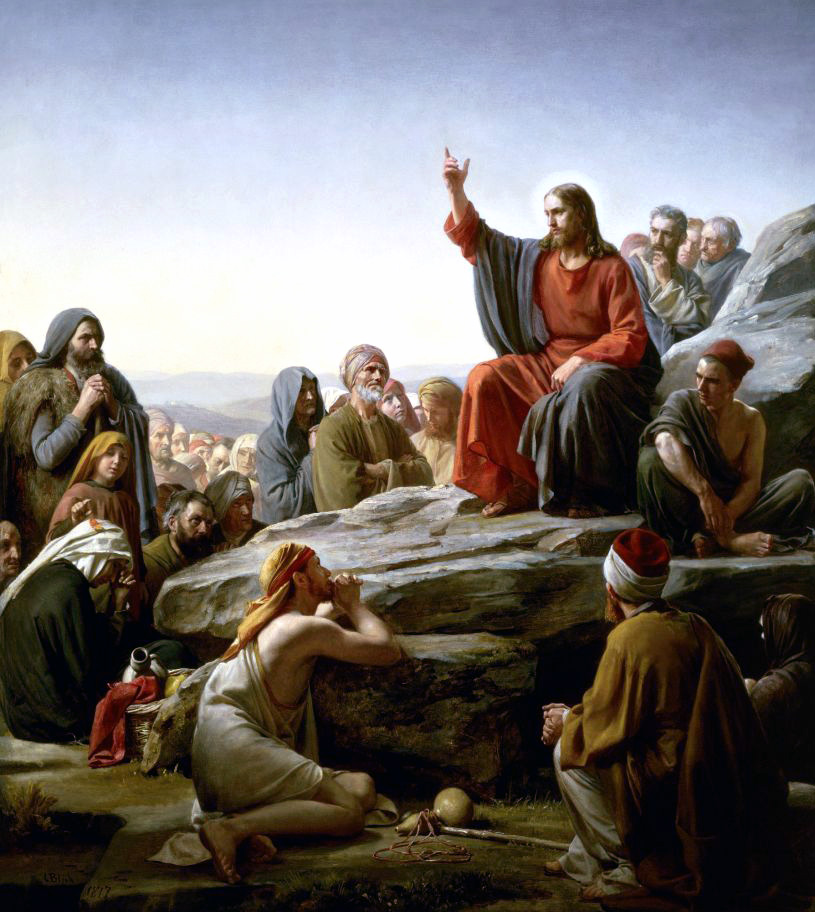
 

Christ taught us how to pray throughout His ministry

Vocal prayer can be singular or communal.  Worship must be balanced.  Spiritual and religious are complimentary concepts not competing ideals.  One who is religious partakes in communal and ritualistic prayers, such as Sunday worship, or Mass, or communal prayer gatherings.   One who is spiritual endears oneself to Scripture, daily and morning offerings, rosary, or other meditations.  One who is only religious lacks spiritual growth but only visual status.  Like the Pharisees, they are dead inside.  One who is only spiritual embarks on their OWN journey and OWN dogma and disengages from the Mystical Body of Christ.  Humility and obedience demand more.  So, like two lungs, prayer life must be religious and spiritual, communal and singular.  One must have a personal and communal life with God to function fully as a member of the Mystical Body of Christ.  It is important then to balance these two elements of spiritual life.

Within personal prayer, there are many ways to speak to God.  One can use pre-ordained prayers of trusted tradition, but they must not just be words recited but words felt.  One can also use one’s own words to express worship, thanksgiving, petition and contrition to God.  In fact, speaking to God, as if speaking to someone in a room, but of course with the respect God deserves, is a powerful way to form a strong relationship with God.  God should be so close to oneself, that one should speak to Him throughout the day about occurrences and issues.

Mental prayer is an essential aspect of spiritual life.  Mental prayer is conscious choice to engage God in the quiet of the mind.  Some religious propose postures of kneeling, or upright posture to avoid drowsiness, others support ideas of comfort, especially if one is seeking to fall asleep in the arms of God.  Depending on the situation, body posture can determine alertness and ability to focus on the conversation with God.  St Teresa of Avila refers to this as Prayer of Recollection because the soul is putting itself together as it enters deep within itself to speak with God.  This prayer is deeply personal and open.  It involves visualizing being with Jesus and speaking with Him in an intimate and real way.  This is an active prayer though which involves the activation of the will to seek out God.  The feelings of joy or peace that result are graces and consolations bestowed upon the soul by God, but it is the soul, especially in its early stages of spiritual development, seeking out the union with God.  This is not to say God was not always available, but in many ways, one’s spiritual anchors tied to the world, muddy or dampen one’s soul and its ability to hear and receive grace.  By seeking out God, this type of mental prayer grounds oneself and opens oneself to many graces.

Tied to the mental faculties but different in direction is meditative prayer.  Also known as contemplative prayer, meditation or visual imagination of an event of the life of Christ excites the soul to dwell on upon the mysteries and extract from it deeper meaning.  Many meditative prayers find their source in reading Scripture, or focusing on a sacred image or symbol.  The mind then reflects on the event and focuses on finding meaning of the event to oneself.  The mind completely opens itself to the Holy Spirit to guide it through the meditation to find the truth of the mystery.  This is very different from Eastern Meditation which looks to become divine or find unity in the divine, but this seeks to participate with the divine.

It is common for meditation, like its Eastern counterpart, to also find a place of quiet and relaxation.  Thomas Merton explored many of these Eastern strategies in an attempt to utilize some of the practices to meet Christian ends.  This resulted in a mixed reactions from different circles of Christianity which saw some of the Eastern practices in themselves detrimental to Christian beliefs, while others saw the exercises as universal human ways to prepare the mind and body for spiritual realities.  Such exercises as breathing seem to be neutral and safe when applied with Christian ends and they are supported by medical science as ways of initiating the parasympathetic nervous system.  The key in Christian meditation is not to escape the body or become divine but instead to commune with God.  Quiet places, relaxed mindsets, and guided prayer can lead someone within the Christian tradition to these realities.  It is important that meditation is based on Christ and guided through Christ and opened to the Holy Spirit.

While there is a lot of physical and physiological benefits of Eastern techniques to prepare the body for meditation, the Christian tradition has numerous techniques to excite the soul and prepare the mind for communication with God.  St Ignatius Loyola in his Spiritual Exercises encourages individuals to focus on the life of Christ and to choose events within it found in Scripture.  He invites one to activate the senses of sight, taste, smell, touch and hearing in all meditations.  He opens with preludes of thoughts to imagine about Christ.  He then presents one’s imagination to create within in the mind the entire set of the story itself.  From the weather, to the buildings, to the sounds of the time, to the actual touch of the ground itself.  He asks one to imagine in various preludes Our Lord teaching, or preaching, or healing and imagine oneself as a bystander watching and even maybe interacting.  Afterwards, one can even engage Christ in this meditation and it can develop more into a mental prayer of discourse.  Since Jesus is also divine, He senses our prayers and questions throughout history to that very moment.  So one can speak to Him there, or in one’s own present monologue.  This echo of prayer through time is possible because Christ is divine and not subject to temporal time itself.

So, far we have only spoken of prayers that are actualized through oneself.  These prayers are invoked by oneself and initiated by oneself to God.  God’s response can at times be overwhelming via consolations or one may simply feel peace.  Other times, one may fall asleep to the peace of God.  These are all from the sensory standpoint, natural in sensation.  They do not encompass supernatural overtones beyond the norms of supernatural and natural connection.   St Teresa of Avila compares this type of active recollection with the analogy of water.  Water representing the source of grace and God Himself is felt in prayer but through active recollection it is sought and migrated.  St Teresa compares it to a aqueduct that transports water from the source.  The water is artificially transported through manual intent but it arrives nonetheless, but there is a difference between experiencing the source as is without effort.  In this type of prayer, Avila refers to passive recollection and also the Prayer of the Quiet.  In this, God for His own purposes or designs, chooses freely to give this grace and gift to a soul through no effort on its own.  A stunning grace or consolation may appear to the soul where the soul finds the peace of God in its genuine form without effort.  In this, Avila states the soul should merely be receptive and thankful for such an act of love.  It illustrates that the soul is removing many of its blinders and has opened itself to such divine favors.

This, however, remains a natural within physical ramifications.  Avila points out that there are beyond more intense and higher forms of prayer and religious experience that are far more mystical and wonderous for the soul.  She points out the Prayer of Union is a type of prayer that again is passive and mystical where God elevates the soul to such a state of happiness with His presence that the body loses consciousness and the soul is free of the bodily senses.  Only the presence of God endures.  This can last for few minutes to even longer periods of time.  This gift from the Creator to the soul is an extreme gift of insight and love for a soul that has opened its will to God.  As one becomes closer to God, the mystical experiences become more intense but so does the crosses and sufferings of life.  Avila points out that with such gifts comes a greater longing to be with God and a more willingness to suffer for Him.


Issues in Prayer Life

Early Phases

Prayer at is basic level captures the act of worship but so many times it is seen as a choir or requirement.  It becomes a checklist of things that need done in a given day.  Many beautiful prayers become repetitious mantras instead of meaningful conversation with God.   Prayer also becomes a time of need.  When something bad occurs, individuals run to God with sometimes necessary concerns but also trifle things.   Of course, one should not dismiss the return to God in dire times.  This shows acknowledgement of God and His power, but it also portrays a selfish spiritual life and one that neglects a living relationship with God.  Also, one can see prayer as a contract instead of a covenant.   Individuals believe prayers that if not answered mean God does not care, or they did not pray well enough, or that God is not a God of love.   Instead, prayer should be one of covenant where the soul walks with God through tribulations and joys alike, seeking resolution but also accepting the cross and the graces needed to endure it.  Prayer is then not a magic cheat code or mantra but a communication with God that is about relationship and covenant due to not only justice but also love itself.  It is not something performed ritualistic becomes one has to do it, or because one needs something, but it is the life source of the soul in daily communication with the Creator and Father.

Many souls in their spiritual development face temptations and occasions of sin that call them back to the world.

Those on the peripheries of spiritual development have such illusions of prayer.  They are easily distracted by lies of the world.  They are hypnotized by occasions of sin, the needs of the flesh, and noises of secular concern.  Their prayer life is superficial at best.  For many, their faith is cultural identity.  One attends service or Mass on Sunday out of ritual and culture, not so much an act of love to God.  Some may not even attend regularly but only during holidays!  Prayers to them are in times of need or random acts of clarity that fade with new physical distractions.  Are these individuals evil?  By no means!  Many are good people but they are not directed to the higher priorities.  They may very well believe in God and the commandments but they have become stuck in the mud and progress in spiritual life has become stagnant.  Still, God has a way of shaking the soul and calling it to Him.  Spiritual Advisors and directors can help highlight this awakening and guide individuals from naive and spiritual immature assumptions about God and prayer and use these incidents as a way to cultivate a true relationship with God.

The soul that ventures into true prayer life still faces numerous issues.  The calls of the world are strong still.  Occasions of sin, old habits, and temporal desires still remain strong.  The devil does not release souls so easy.  The soul will be tempted and turned back to the noise but progress is key.  Encouragement, patience, and goals remain essential for this soul.  Much like a physical trainer, the spiritual director must expect setbacks.  Those who begin to train physically or diet have many set backs.  It is hard to retrain mindsets and replace old habits with positive coping.  Like addition, or bad diet, the brain has numerous neuro pathways that are set for default in times of stress, trauma, or triggers.  So, the soul that is experiencing new prayer and spiritual renewal faces the tugs of the world and bad habits.  These triggers should be expected.  Within training of the soul, goals should be realistic in prayer life, encouragement frequent, and progress modest but continual.  Setbacks should not be seen with despair but as opportunity to make better.  In this delicate early phase, the soul teeters back and forth between the cold lies of the world and warm truth of God.  Through grace, guidance and continual effort, new habits can be formed, virtues can replace vices, and a deeper understanding of prayer can ensure for the soul.

Later Phases and Complications

As anyone becomes more skilled in a process or shows progress, one naturally becomes proud of ones success.  In a diet, one becomes more confident and happy with how one looks as weight goals manifest in better clothing fits and reflections in the mirror.  As someone progresses in weight room training, one becomes more enamored with one’s growing physique and muscular definition.  In itself, this is not bad.  Self esteem and self concept is key in psychology and counseling for a healthy emotional self.  However, like so many times in psychology, subjective image and happiness can be the only goal for self satisfaction.  It is crucial to balance one’s own pride in improvement with humility and concern for others.  It needs to be evaluated not only in one’s own success but also in honoring the body that God has given as a temple of the Holy Spirit.  So both are important.  One should find sense of pride in improvement but not inherit the vice of pride in character.  This can be a tricky balancing act and is even more tricky in spiritual prayer life.

As the soul becomes more focused on God and more conscious of not offending Him, it can sometimes see itself as “better” than others, or even esteem itself.  This contradicts the gift of grace.  One works through faith, but one does not earn merit without the grace of the Holy Spirit gained by Christ at the cross.  Humility is key to maintain in this phase of spiritual development.  St Vincent De Paul emphasized the power of humility.  He pointed out that humility is something the devil cannot comprehend nor defend himself against.  This is why Mary was such a powerful adversary to him.  Her humility despite her grace stifled him and rebuked his very existence.  Christ teaches as well that the first shall be last and the last shall be first in heaven.  Humility is hence crucial when making gains.  As Mary declared to Gabriel, “my soul magnifies the Lord”.  One must then as one becomes more proficient in the habit of virtue, its cultivation and prayer life, reflect all glory and good to God.  These are the fruits of the Holy Spirit flowering within the soul allowing God’s inner presence of it to manifest, not the works of a broken nature.

Another later complication within prayer life includes the times of aridity or lack the emotional presences and joys experienced in prayer life.  Avila emphasized that not all prayer life is full of consolations, feelings of peace and joy, but many times, an aridity emerges, where the soul may not feel God’s presence.  Instead the soul feels as if the prayers are not heard, or as if the prayers are not good enough, or if the person is unworthy of God’s love.  This possible turn to despair or even return to physical distractions can attempts of the devil to test the soul.  It can also be a trial granted by God to teach the soul its needed humility and also purpose.  Yes, as children one should expect parental graces all the time, but one must also look at God as Creator and oneself as sinner.  To pray to receive consolations and good feelings, denies the very nature of justice and adoration to God for the sole purpose of His glory.  In love, one loves not for return, but for the very nature of the object itself.  Aridity teaches the soul to love without return, to humble itself before God, and to help it acknowledge how precious the presence of God is and how terrible sin separates the soul from God.
Many souls in later spiritual life face trials of desolation and aridity which God uses as ways to bring them closer and more dependent upon Him

Spiritual Directors can play a steadying force for souls who deal with aridity.  They can emphasize humility but also obedience to God’s will.  Many souls at this relationship level with God still are very connected to the world.  In fact, most of us are!  We have temporal needs and duties, but sometimes these temporal needs and duties can complicate a relationship with God when they become disordered or not properly prioritized.   Uniting one’s will with God realizes that prayer is a covenant and not only the consolations and blessings are part of the divine plan, but also one’s aridity, sufferings and crosses are also part of God’s will.  Christ told His followers, to take up their cross and to follow Him.  He accepted the Father’s will unto death in the garden.  Souls are expected no less to unite their wills with God and to carry their crosses.   In becoming closer to God, one must then find humility, obedience and acceptance of God’s will and understand that suffering and love of God is what matters most.

For Avila, life involved a convent, but for many individuals life involves a busy world where contemplation is not always an option.  Individuals can become distracted by deadlines, work schedules, family drama or emergencies, or basic temporal cares of the body.  Christ Himself lived such a life for 30 years.  He worked as a carpenter under St Joseph’s guidance.  He helped support His mother, Mary, and they dealt with daily struggles of debts, choirs and finding food on the table.  So how can a person advance spiritually in prayer, contemplation, and communion with God in a world that is so noisy at best, and at worst, tied to numerous occasions of sins, or as Avila describes “small reptile” scurrying along the floor?

First and foremost, everything ties in prayer to uniting one’s will to God.  As Christ said in the garden, “Let thy will be done”.  This was a difficult thing considering within the prayer, Christ asked for the cup of death to be passed on but He submitted.  Individuals too must submit their will despite their requests and by uniting one’s will, God’s plan unfolds.  Whatever state of being one is in, when one finally surrenders to God, things begin to fall into motion.  One may very well be surprised as well to see certain aspects of one’s life vocation fall into place into a greater plan as well with other pieces of the puzzle coming together.

Through submission of one’s will, the day becomes God’s day.  One then is open to offer up these daily tasks which can become distractions into living prayers.   Scripture teaches one to unite one’s sufferings and cross to Christ.  When one unites one’s temporal duties to God, they become spiritual prayers.  St Theresa the Little Flower, not to be confused with Avila, offered the most simple duties to God, such as sweeping the floor.  While many individuals feel the need to do great penances (which is good),  many forget the little things.  The little things are not in one’s control.  The little things are imposed and are not chosen.  When they are offered to God, they become a prayer.  Whether it is working a late shift, enduring a manager’s criticism, or doing the laundry when tired, the little things when given to Christ and shared in His passion, become not works of personal merit, but works of grace through Christ.  Daily offerings give each day, every joy, success, trial, tribulation or cross to Christ in advance and turn what would normally be a daily distraction into daily prayer.  It formulates humility, obedience, and keeps oneself focused on God.  Spiritual Directors should advocate within their spiritual children the necessity of the Daily Offering in all prayer life.

Prayer Cultivates Many Things

We discussed how critical prayer is to the life force of the soul.  It is in injection of God’s grace into the soul.  While it is only one of the many elements of communication with God and how grace is afforded to the soul, primarily actual graces, it serves as a function as critical as breathing in everyday life.  While other life giving graces are gained at Baptism and other spiritually nutritional graces granted for different sacramental needs such as in reconciliation, or Eucharist, daily prayer is the constant breathing and cycling of those graces throughout the self.  Through constant prayer, one’s primary end is always in sight.  It maintains that focus and spiritual exercise to keep the spiritual faculties sharp.  It helps cultivate virtues in daily life and directs the soul towards higher things.  It keeps the soul on the righteous road avoiding sideshows and distractions that can lead to spiritual ruin. When the soul is contact with God, it is able to see more clearly, act more purely, and perform its duties more perfectly.  Like making one’s bed in the morning, it sets the standard for the day.  Prayer organizes the soul and attunes it, so as to enable rest of the mind’s faculties to become more focused and aligned with the winds and storms of the day.  When one is spiritual set, one becomes mentally set.

With so many spiritual benefits that pour into one’s daily life, one cannot dismiss the necessity of prayer.  A new cultural phrase has emerges, as seen with Mark Wahlberg- He asks the question Are you prayed up?”  Like food for the body, make sure the answer is always yes!

Conclusion

Please also review AIHCP’s Christian Counseling and also Spiritual Direction Program

We have reviewed what prayer is, its aim, types of prayers and issues involving spiritual progression at early and later phases.  We have sought direction through the teachings of Christ Himself, Scripture, and the value of mystical saints who elevated their prayer life with constant devotion to Christ and faith in the Holy Spirit.  Spiritual Directors can help souls find prayer, maintain it, and set realistic goals in prayer life.  However it is important to note that the battle for spiritual life is one tied to mental issues, as well as physical issues.  Bad habits, traumas, occasions of sins, and old ways of thinking can become roadblocks.  Even later in spiritual life, the devil can turn confidence to pride.  So one must forever remain humble and obedient to God’s will and remain dependent on God’s grace.  This is not about our prayers but how God transforms our imperfect communication into something beautiful through His grace.

Please also review AIHCP’s Christian Counseling Certification, as well as Spiritual Direction Program.

Additional Blogs

Spiritual Suffering.  Access here

Spiritual Vocation.  Access here

Early Issues in Spiritual Direction. Access here

References

St Teresa of Avila.  Interior Castle

St Ignatius of Loyola. Spiritual Exercises

Additional Resources

Mulcahy, T. “THE SOUL’S JOURNEY TO GOD: A CONCISE SUMMARY OF SAINT TERESA OF AVILA’S INTERIOR CASTLE”. Catholic Strength.  Access here

Ways to Build a Stronger Prayer Life. Bible Hub.  Access here

A Life Of Prayer (What It Is and How To Actually Do It). (2024). Daily Effective Prayer.  Access here


Christian Spiritual Direction: Vocation and Discernment

All human beings are called to know, love and serve God.  This is a Divine mandate that answers to the virtue of justice.  Within justice, the amount of what is due is given to the other.  In the case of God, His creation owes to Him worship and service, but God in His infinite love and mercy, has not only made us His creation but also His children.  By making us in His own image and likeness, He has called us into a real spiritual dialogue and relationship with Him.  Through grace, He has elevated us to the underserved titles of “sons and daughters”.

Discernment is key in discovering and uniting oneself to God’s will and God’s particular calling and vocation

Through free will, God gives us the choice to exist in this state of happiness or to choose our own happiness.  Like the demons before, many individuals reject this offer and use their gift of free will to their damnation.  Instead of knowing, loving and serving God, they choose to know the world, love oneself and serve indirectly Satan.  They walk away from the banner of Christ and instead choose the quick and easy road of immediate pleasure and vice that destroys the soul.

Each person beyond the basis of justice to know, love and serve the Lord, has unique a vocation or particular calling that is beyond our universal call to know, love and serve God.  There are different types of callings and vocations within life that compliment one’s universal calling.  One fulfills vocation when one offers to Christ all actions, no matter how mundane, and through God’s grace turns the ordinary events of the day into extraordinary events by tying them to Christ as one’s High Priest.  Every decision in one way or another is a decision that leads one to our ultimate end which is God.  In this blog, we will discuss vocations that are general as well as the existential vocation of one’s life and how to better think about, prepare and undertake it.

Spiritual Advisors and Directors are excellent resources to help souls discover their unique path.  All souls have a general path that we share through the Church, but we each have special unique trails we can discover through discernment and prayer..  Spiritual Advisors can help souls find these paths and trails and shine light on God’s direction.  Please also review AIHCP’s Christian Counseling Certification as well as AIHCP’s Spiritual Direction Program.

VOCATION

We all have a vocation.  Christ told the apostles, to pick up their cross and to follow Him.  As Christians, we are to know, love and serve God.  We are to manifest within our lives the light of Christ to the world.  This is our universal vocation.  All things we do must either contribute to this, or at least remain neutral and non-detrimental to that function.  While spiritually, our vocation to spiritual life is central, we must also fulfill our relational vocations to others.  Those in ministry have unique relations as well as those who are married or single.  All callings are important and equal when they meet the call of Christ. Our spiritual calling is the highest call of our vocation and this is met through prayer and love of God and neighbor.

As temporal beings, we have many other needs and hence vocational obligations.  As stated these temporal things are important to our existence.  They must either contribute to our spiritual end, or at least remain neutral and non-hindering to that end.  In this way, one’s profession can be seen as a vocation.  A father or mother who works long hours to support the children is fulfilling a parental vocation but also a professional one to afford basic care, food, shelter and clothing, as well as service to the employer.  Hence any duties in themselves can become daily vocations.   Any relationships that need to be cared or tended can also become a daily vocation.   Like St Joseph, we offer these daily duties as a worker, father, or spouse to God.  Like St. Theresa the Little Flower, we turn the most mundane act of sweeping the convent floors as duties we perform for the glory of God.  We hence fulfill our daily duty and vocation and transform something so mundane and ordinary into something extraordinary when we do them with excellence and love of God.  These daily events then themselves become prayers to God.

Beyond our universal vocation to know, love and serve God, we also have particular callings and vocations to ministry, the priesthood, married life, or a holy singlehood

Some events in the day can be distractions to salvation. Events that steal from our primary vocation and end which is God, as well as take energy, time and emotion from our core duties are distractions and illusions of the world.  These distractions hope to push us away from our duties to God, self and family.  In discernment, when we engage in activities we must diagnose them in accordance with our primary end, our daily duties and responsibilities.   Do these actions deviate from our end?  Are they inherently sinful in themselves?  Are they only an occasion to sin?  Are they taking time away from family and God?

St Ignatius in his Spiritual Exercises makes it very simple when making an election or choice in life about doing or not doing something.  He suggest imaging standing before the throne of God on judgement day and calculating if the event or decision is helpful towards one’s salvation or detrimental.  He also asks us to examine our conscience in any decision as well the action.  What are the fruits of the action?  What can occur that is good versus bad?  Does it correlate with the laws of God?  Does the means equate our true end with God, or does the event itself become its own end?

Whenever making a choice or life decision, one must contemplate, seek counsel, and pray.  Many callings need thoroughly contemplated.  Of course the first and foremost sign is does it meet our final end?  Many things can meet this criteria but one must continue to contemplate further to see if this particular and exact choice or decision is meant for someone.  For those, usually three callings emerge.  The first, ministry, the second marriage, and the final single life.  All three vocational callings demand the universal vocation of all humanity but each one has its own unique place in the Mystical Body of Christ.  It is important to ensure that these callings and states are not one’s true end, but are means to fulling that end.

For example, marriage, or the religious life are equally beautiful callings but they themselves must not represent the end and culminating aspect of one’s life.  Instead they should represent means that help one reach their own end in unison with God’s will.  So, if the decision or calling in itself is good and aligns with humanity’s final end, one must begin to discern if it is indeed the calling and way God hopes to utilize us.

This involves not only prayer and counsel, but also evaluation of one’s own will.  Recall, the rich man in the Gospel had done everything he was supposed to do but one thing.  When Christ asked him to give up all he had and to follow Him, this troubled the man deeply.  So many are called but few are chosen because of our own free will.  Many times, even not at the cost of sin, our wills do not align with God in a preferred state in life.  God does not wish to force us any particular calling, but He does know what we are best suited for and what would give the greatest fulness to us..  We have been equipped with particular spiritual talents to meet the call of God, so when we submit our will to God, we then are ready to move more peacefully and perfectly in this life.

Take into account Mary.  She never questioned God.  She said to let it be done according to the will of God.  St Joseph as well without hesitation took Mary as his wife and raised the Christ child.  In all cases, individuals united their will to the will of God.  If one is to truly find their vocation, then one must submit oneself to the will of God in  humility and obedience.  For those that are willing to submit to God, this is good news, but it still represents a difficult decision in discerning.  Unfortunately God is not always loud and clear.

Hearing God

We have spoken about living a life first that fulfills one’s general vocation of knowing, loving and serving God.  We have also spoke about the importance of fulfilling our daily duty in humility and obedience to God.  That same humility and obedience should carry to the fulfillment of His will and service to Him within our particular calling..  Yet hearing and discerning can sometimes be difficult.

The noises of the world can sometimes drown out God’s voice.  We need to direct ourselves in prayer and meditation and seek counsel as needed but there are a few inherent signs of a particular calling (and when I say calling, I mean any calling, marriage, singlehood, monastic life, or priesthood).  Being first and primary a disciple of Christ, there are certain signs the Holy Spirit showers us with.  Sometimes, we may feel these signs and interior voices through the sacraments or the reading of Scripture, or while doing penance, or working with the poor.  Other times, indirect statements from strangers, or signs throughout the day can redirect one to the manifestation God is trying to display.

Prayer and meditation help us to more clearly hear the voice of the Lord in everyday life

In addition to signs and coincidences, our own inner self plays a key role.  We naturally gravitate towards what God has deemed for us.   If we feel a strong connection to a family with children, then our vocation could very well be the married life, or if we see and feel the grace of a minister or priest who proclaims the Gospel, this may be a inward desire towards that.  In addition, our skill, talents and spiritual charisms are many times tied to the vocation or calling that God desires for us.   Someone well trained in theology may very well be prepared to preach the Gospel at some level, lay or clerical, or may be called for higher levels of Church administration.   Those blessed with leadership skills, communicative skills, and higher academic achievement in studies may have a calling within Christ’s Church to lead.  Others may be more introvert but spiritual and feel a calling to a more private life with God in a monastery.  Others may have a calling to love another person and to share in the creation of new lives.  In this calling, they possess the qualities for partnership and compassion, while someone with a ministry or single life calling may naturally be more inclined to a life that is solitary.

God sometimes also pushes one to one’s particular vocation through the presence of need.  When someone sees the lack of religious or short handed churches, or less care for the poor, or less advocates for the weak and sick, then these are ways God instills into the soul a yearning to act.  These calls to action can feel very personal and one may have a strong passion residing inside to meet that need.

So while God can awaken us the way he did with Saul via an intense vision and conversion, He usually respects our free will and subtly turns so we need to be  attentive and listening.  It involves our humility and obedience to Him and most importantly our love for God.  We need to put God first and live a life that is based on decisions that reflect God and His laws.  When our conscience is well formed and sound, it can guide us to a position to truly discern and hear God.

St Ignatius again points out that messages from God, direct or indirect, reflect our holy end.  Discernment that leads to selfish ends, or immoral pursuits, or the production of bad fruits, are not from God.  So it is important to discern the nature of the election or decision, the objective reality of the choice and its consequences and to place it in subjugation to the laws of God.  Then and only then can we see beyond our universal end and see what is also our particular end.

Finding Peace in the Anxiety

Giving our day to God is the first step in finding peace and removing anxiety.  When the soul attaches it’s will to the Father, then it fears less.  It sees the bumps and discomforts of life, but sees them as happy crosses to suffer for.  The soul indeed soon discovers that God always has a plan.  So while one worries about one’s career, or if they should marry, or enter the religious life, or if they feel ambivalent in their social life’s decisions with their religious beliefs and unsure where to go, if we simply give God each day, then we can find some peace and direction.

Anxiety comes from the evil one.  It comes from association with things of the enemy.  St Ignatius points out two standards.  The standard of Christ and His banner, or the standard of Satan which is of this world.  When consciously or even indirectly choose things that are bad and of Satan’s banner, the fruit will produce.  The temptations and lies of this world associated with certain callings can never give true clarity, happiness and peace.  Only placement in Christ can our true ultimate end be met.  We may experience natural tremors in this life.  We may suffer our daily crosses, but these types of anxieties are far different when aligned with Christ.

Following the will of God brings peace and joy and good fruits. Yet so many fear tying their will to God over their own. This is what causes anxiety and pain

To remain within the standard of Christ and discover our particular calling one must turn to prayer.  Prayers to the Holy Spirit for wisdom, understanding and knowledge, and for the virtue of fortitude and temperance in daily dealings can help a person face each day with the necessary grace and guidance from God.  God desires peace and calmness in our life.  He understands that we exist in a fallen world and bad things can occur, but He is willing to walk with us and guide us.  He also helps us to avoid the temporal noises that are detrimental to our calling.   The devil utilizes the noises of anxiety and insecurity mixed with multiple detours that take from the time God deserves–hence these virtues serve as important protections.  In our daily life,  we must make the ordinary become extraordinary by giving to God each task.    As each day becomes a prayer, then one becomes more open to the grand plan of one’s life.  Each day given to God leads to the next which builds upon each other until in reveals the beauty of God’s plan.   This should remove anxiety because God loves us.  He loves us and wishes for us to be happy.  He also grants us numerous choices in our independence.  God wants our love and respects our choices in this life.  However, there will always be a inner movement towards what the soul was designed for and how blessed are individuals who answer the call that God ordained for them.

The quickest way to eventual find one’s unique calling and avoid the noises of Satan and the world is unifying one’s will to God.  When our will becomes one with God, then our decisions align regarding daily duties, as well as long term callings.  Each day, one should unite their will to God.  This is not subjugation or control but a passive release to become aligned with God.  God’s will is not one of pain and suffering, those things spar from the world, sin, our choices and Satan.  God’s will is for our peace and wholeness with Him.  When we unite our wills His, we show humility and obedience, as Mary and Joseph showed to God’s plan.  When these wills meet, not only will we discover our long term calling, but God will also guide us through our daily duties with better clarity and peace.  Even when loss, suffering and hardships occur, the soul that unites wills with God, will find consolation and direction.   God’s will is ultimately joy not control.   It is the map to one’s salvation as well as to one’s individual calling.  It seeks to direct us so we can have peace and love.  It should not be seen as a sentence to serve but a partnership that is for our own best interest.  When we choose the standard of Satan, we choose us, we choose the world, we choose things that are detrimental to spiritual growth and peace.  The moment the soul surrenders and trusts God over self, then daily duties and overall callings will manifest with graces equipped to help one face all crosses and obstacles and most importantly, to find peace in life.

In the meantime, if one is discerning marriage, or priesthood, continue to pray for guidance but do not allow thoughts of the future that are far away to cloud the present day.  The present day is rich with opportunities to please God and fulfill our daily vocation.  When individuals focus and allow anxiety to haunt them in regards to their future, they sometimes miss the moments before them.  The vocation of the present is just as important as the vocation of the future.  Today itself is a prayer and opportunity to know love and serve God.  It will build habits that may enable us one day to fulfill that calling more perfectly.   As Padre Pio rightfully saw, spiritual development is a motion of growing closer to God overtime.  The stagnant soul is unable to grow, or feel, or love, but the soul that is in process, even if far away from the finish line, is moving towards his or her ultimate end.  This is important to remember in monitoring spiritual anxiety as well as contemplating one’s vocation.

Conclusion

Please also review AIHCP’s Spiritual Director Program as well as its Christian Counseling Program

A vocation and a special calling beyond our daily life is exciting.   We should not fear it or become obsessed and anxious over it.  God loves us in the moment and we must remember that.  We need to tie our will to God so we can better fulfill that vocation.  God’s choices for us are for all well being in all facets, while the standard of Satan and self leads to illusions of happiness which cause anxiety, anger and depression.  We do not wish to be as Jonah fleeing God’s will.  We know as he fled Nineveh, he was swallowed by a large fish, only to be released 3 days later.  So we cannot flee our vocation, but we must realize beyond our duty to know, love and serve God, that we are also called in a special way with special talents to grow the Church and Christ’s Mystical Body on Earth.  We need to be receptive of this, know how to discern it, and how to listen and respond to it.  This involves unifying one’s own will and desires with God and trusting the path that God has plotted for us.

In the meantime, pray everyday for grace to fulfill daily duties with excellence but also illumination to truly understand one’s calling.  Please also review AIHCP’s Christian Counseling Certification as well as its Spiritual Direction Program

Additional Blogs

Early Issues in Spiritual Direction.  Access here

Spiritual Discernment: Access here

Spiritual Desolation: Access here

Crisis and Doubt in Faith.  Access here

Additional Resources

Vocations. Ignatian Spirituality.  Access here

Chapman, A. “5 Examples of Vocation in the Bible (And Lessons to Learn from the Stories)”.  Access here

Mosseau, J. “How to Discern Your Vocation [+ Tips for Discerning Religious Life]”. University of San Diego.  Access here

Early Issues in Spiritual Advising

A soul that has finally turned inward to the reality of existence and its purpose has taken a big first step.  The intellect and will has finally identified the empty promises of the world.  It has acknowledged the existential void that only materialism, lust, and drugs promise.  The soul has finally realized that this temporal world is far from perfect and can never grant one’s complete needs, much less quench the thirst for meaning.

The soul in this state has acknowledged the reality that something is very wrong in the temporal realm and that something is truly messing.  The sounds, sights and scents of the world have become like a child’s toy or a rattle that entertains the infant that one as an adult has overgrown.  One’s spiritual sight recognizes the empty lies and temporary function of these realities.   Maybe this movement is due to a loss, or a disease, or merely the depression of life that seems to never offer that perfect solution.  Driven by dopamine experiences, the soul realizes that its overall mood after the excitement is quite alone and unfulfilled.  There needs to meaning attached to life.  There needs to be a meaning beyond the loud noises and excitement that fades so quickly in the morning dawn.

Spiritual directors are like life coaches but for the soul. Please also review AIHCP’s Christian Counseling Program as well as its Spiritual Director Program

In essence, the soul is awakening from the matrix of temporal life.  It is hearing, albeit faint, the whisper of Christ and the need of grace.   Whether through someone’s prayer, or a slight brush with the divine, or spiritual movement, the Holy Spirit is gently calling the soul away from its errors, its imperfections and its follies.  It offers the soul something lasting, something real and something that will help one fulfill one’s true end and vocation in this life.

Please also review AIHCP’s Spiritual Direction Certification or also its Christian Counseling Certification.  A Spiritual Director is different from a Christian Counselor.  Spiritual Direction is almost as Life Coaching for the body.   It entails not necessarily facing a particular problem but oversees the process of the soul towards God.  It helps remove spiritual traps and help the soul become closer to God through goals and spiritual exercises.  The Spiritual Director is usually a priest or minister but can also be someone of a educated level and spiritual closeness to God.  A Spiritual Director also knows the person’s spiritual life and has the ability to offer insight.

The Conversion and Movement Towards Change

Habits, whether virtuous or viceful, do not change overnight.   A person’s neuro pathways form trodden trails that are set as a person’s default system still have control.  Even when a soul becomes awakening and seeks exciting and monumental changes, one many times experiences lapses.  Whether this be a sinful vice, a drug addiction, or one’s daily routines, it takes discipline and accepting the grace of the Holy Spirit to begin upon the route of change.

Counselors, even more so than spiritual advisors, encounter the desire of their clients to change.  This change may be due to something that has occurred, or a spiritual distress, or close moment of death, but despite all good intentions, change itself is an arduous journey.  For example, a person on Jan 1st, proclaims a new life and healthy body via diet and attendance at the gym.   While this goal is noble and good, many see it fade overtime.  The individual overtakes too big a change, or does not foresee the difficulties and obstacles.  The person may be tempted of past neuro-wired behaviors that push one back to a default.  For instance, the late night snacks, or the extra nap after work, or the desire to escape a particular vice of swearing that has overtaken the person, are not magical and miraculous changes.  These changes are rare and the Saul to Paul moment is not the paradigm to follow.  In most cases, one’s free will must seek that change and go forward with it.   Through discipline and fortitude, one continues to rewire the subconscious of bad habits through reward and punishment, as well as repetition.  Beyond forming new habits or virtues, repetition leads to altering the conscious mind to a new default mode.  This type of change requires accountability, repetition, and a firm amendment.

These changes again are not instant and lapses occur.  These lapses sometimes can be the final call to retreat for a person.  The person is overcome by the change, finds shame and guilt in lack of progress or in failure, and returns to the original default mode of physical or spiritually unhealthy habits.  While some can fall to one knee and arise the next, many have various anxiety or depression issues or lack of family support that all but guarantee relapse.

Spiritual directors help guide one’s spiritual direction to God while helping one through all the spiritual troubles

This is why as Christians, and especially mentors and directors to other Christians,  one must not only identify spiritual malady but also become a coach or counselor who helps individuals meet goals.  Like any counselor, plans are created for new goals and ways of life.  A coach or dietician may help a player or client develop a way to facilitate change but with a tiered goal approach that rewards the person for stepping stone achievements that are well before the finish line.  Through this guidance, the director can help a person formulate a change in one’s life who faces a particular vice.  The director expects one to fall, or take a step back, but nevertheless, inspires the person to push forward.

It would be prudent to note that despite all one’s efforts and works that lead to salvation cannot be earned.  Unlike the heretic Pelagius, one cannot imitate Christ and become truly holy and enter salvation without grace.  Even the greatest saint due to a few sins is not worthy to stand before the most Divine, but through Christ’s death on the cross, the grace of the Holy Spirit and the numerous sacramental graces given to God’s people, the soul has hope.  Grace brings salvation and through opening our eyes but also giving one the ability to cooperate with God in attaining salvation.   Thinking one can work out one’s own salvation, or for that matter  the opposite which assumes a simple declaration of faith suffices errors theologically.  Salvation and change is through the grace and gift of faith but that is merely the starting point.  Grace ensures that faith is a working faith.  One where the soul cooperates with the graces that God has showered upon him or her, to facilitate change.  That change may have psychological or mental road blocks of habit, but through the grace of the Holy Spirit and cooperation of that grace, then faith becomes a working faith carved through the desire of love of God.

Directors help the individual cultivate the spiritual change and remain as personal coaches who help the soul utilize the grace to produce fruits within the person.  This ensures that the spiritual advisor is more than a religious dogmatist, but one who also is pastoral in  nature and helpful in introducing and sustaining the person to that change.

Challenges to Change and Early Roadblocks

As a spiritual advisor, one is not to judge, but to aid.  One understands that the transformation taking place is the grace of Holy Spirit which utilizes the spirituality of the director and the desire of the person to work towards a better spiritual life.  Namely, a life that seeks to know, love and serve God in this world.  When one places God as his or her ultimate end and ties one’s will to the desires of God, then true change can occur.  The grace of the Holy Spirit can begin to excite the soul beyond its prior programming.   The soul turns to more spiritual concepts and ideals, as well as enters into a more Christo-centric life style.  The soul begins to rewire neuropathways with bad default modes that easily scurry back to the world and its lies.  The new pathways recognize other ways to do things through the the habit of virtue over the habit of vice.

Teaching the soul patience, humility and obedience are key elements in helping the soul continue in its journey to a better relationship with God but make no mistake, the evil one and his many legions of demons find great discomfort in conversion.  Spiritual warfare will intensify as the soul becomes closer to God.  What once was under the control of the demonic now has escaped his hold of vice.

St Teresa of Avila in her classic, the “Interior Castle” speaks of the soul who has first acknowledged this awakening to God but points out in this first encounter or first mansion of the soul. the soul is very exposed.  While the soul has made a crucial declaration to God, it still faces numerous hardships associated with the new change.   If it was not already difficult to alter neuro pathways for better habits, one is still bombarded with the physical senses and whispers of the devil.  St Teresa refers to this occasions of sin as “reptiles” in the first room that run freely in and out.  These “reptiles” represent worldly desires that serve as distractions to the newly converted soul.   Reminders of the past that can include a scent, or a place, or a substance.  The devil attempts to distract the soul again to these “childhood rattles”.   He knows the soul is still very susceptible to its callings and can utilize dreams, or events to persuade the soul to do something one last time, or that the soul is overreacting in its change towards God.  The occasion of sin is a true stumbling block for many.  While some may stand back up, confess and become more resolute, many in this early mansion or relationship phase with God, can easily fall back into the previous life.  Whether its a physical addiction, or a vice, the area of comfort and default still remains powerful and, in many cases, the devil just merely needs to present something to the struggling soul.

There are many early roadblocks for a soul turning towards God

This is why when someone in the early phases of religious conversion emerges, they are still surrounded and may even be fond of certain activities.   Whether it porn from the cell phone, or gluttony with a dessert, or an addictive substance, the desire to utilize these things remain strong urges.  This is why the soul must flee those occasions of sin.  One should not attempt to challenge it or expose oneself to rediscover new strength, but as many saints have proclaimed, to flee without reserve and cast oneself into the lap of Christ for protection.

As a spiritual director, these souls do not deserve harsh judgement but instead mercy and understanding.  It is important to not permit the evil one to cast guilt and shame to such a level as to prevent one from getting back up again.  While guilt is good in identifying wrong, it can become toxic and lead to shame which makes the soul feel unworthy of God’s infinite mercy.  It leads to a new sin which is despair.  This is the reality of those within its first relationship level with God.  It is a back and forth motion of serving two masters.

St Ignatius in his exercises also points out that like a sick man who goes to the physician, will the person completely reject the medicine?  Many souls never return or take their spiritual medicine, but instead remain trapped in the deep mud of the temporal world.  They continue to be blinded and fooled by the illusions of this world.  St Ignatius points out that the spiritual sick may have desire to become better but this is in desire only for it forfeits the necessary steps to become more healthy.  Hence in spiritual direction, these early souls need encouragement, daily prayer, and repetition of new habits to replace the sinful or unhealthy default.  This involves a patient director but also a patient counselor who continues to work with the person despite setbacks.

St Teresa of Avila listed in total, 7 mansions of relation with God.  Most persons never make it out of the third level, much less the first two levels of awakening.  So let us briefly continue to take a look at the evolution of the soul that is energized by Holy Spirit to desire the greater good.  Individuals within the second level of relation have a greater intent to do what is right but like their counterparts are still distracted by the world.  They, however, are more aware of God’s call and do not become deaf or as easily confused.  They have the desire and push beyond it in certain good habits, but they are still very much exposed to the howls of the evil one.  While their religious consistency is greater, they still have many bad habits that need to be removed from their life.

Spiritual Directors may see a more intensified attempt to please God, but will see moments of release and failure.  Yet, these individuals are not as quick to dismiss the laws of God as not existent.  They accept the laws, but have difficulty sometimes keeping them.  Many of them may go to confession with the same sin but again committed, but unlike others, they feel the need to again rise when they fall.  It takes more than a sin to shake their faith but larger incidents.  Maybe a death in the family can cause bitterness to God.  They may very well see their new found spiritual awakening as a contract not a covenant.  In this they expect their good behavior to be rewarded.  When rewards or feelings of closeness to God never manifest, they can easily slip back into the first mansion.  Many have a poor understanding of the deeper mysteries of faith and can be lead astray despite their acknowledgement of Christ.

Those souls who enter the third level, or third mansion are still very young in their spiritual development.  While they have developed some basic virtues, and look to avoid sin, they have their own unique battles.  Their worldly needs are not always met with prayer and Christ first.  They many times find to balance the world with Christ.  They may not entertain more serious sin in the world but they still are very much provoked by it at times.

Their spiritual interior life has increased and their consistent devotion is becoming more habit like, but the devil will re-devise others ways to weaken these souls.  St Teresa of Avila warns that these souls can become victims of pride, become judgmental, and became also distressed upon bad events, or lack of consolations or good feelings of God’s presence.  In regards to pride, souls who are “doing the right thing” much like the rich man who asked Jesus what he must do to gain eternal life, find themselves in an impasse.  The pride whispers that they are holy and good because they pray everyday and attend service on Sunday.  They fail to see that their works are not their own but the work of the Holy Spirit.  In regards to others, they may begin to lecture others on how well spirituality and prayer works for them.  This may have a base of charity in it but for many it is pride in their decisions.  Some may also develop into those as the Pharisees, where the faith becomes more stuck than progressing because the soul feels it is doing everything right and can do no more.  In addition, the overt zeal of their conversion pushes them to more mechanical prayer and not personal prayer.  They can become more concerned with appearance.  For those who properly enter this phase, there must remain a humility and obedience.  One must continually pray for grace and center oneself on Christ and never permit oneself to see themselves as “holy”.  They need to show obedience to Christ and have a pure charity for one’s neighbor.  Instead of seeing relationship with God as contractual, they need to see it a covenant.   Those at this level of religious maturity should understand suffering, repentance, and continued vigilance are crucial as one becomes closer to God.   Whether secular or religious, individuals still face the world.  God’s grace and a good relationship helps one better see this world.  It helps one see the good and the bad and what to associate with, but God’s grace also seeks to transform oneself as one prepares for one’s final end.  This is why St. Ignatius so commonly points out choices .  An election or choice must have God at its end.  Any means to that end must be free from sin and proclaim God’s glory.  Learning to choose wisely is key in this phase of relationship with God.  One needs to continue to plan accordingly with that ultimate end in mind.

Giving to God one’s daily duty helps to fortify the soul and its ability to meet the proper goals and ends. As temporal beings, one cannot also remain in contact with God.  One has temporal duties which God does not chastise.  Christ Himself was a carpenter and had temporal duties.   The daily duty at every morning offers these tasks to God through Christ.  By united daily duties and task as well as sufferings, one gives to God one’s entire self.   This helps one meet goals and ends, while tying them to God’s will.  This is the core focus of covenant.  Christ walks with us everyday–in the good and the bad.   Through such a close relationship, one is better to have better elections of what to do or not do, as well as discernment regarding good endeavors and bad ones.

Prayer and Guidance

A good spiritual director based off the Paul-Timothy model can play a big role aiding one towards a closer relationship with Christ

Those in a deeper contemplative life also face their own inner demons.  A soul that enters into a deeper relationship such as the 4th and 5th levels or mansions face different issues.  St Teresa of Avila notates that beyond pride, there can also exist spiritual discontent, as well as despair in aridity as well as fear of failure.   The devil crafts all temptation plans based on the person.  Instead of outward assaults or occasions of sin that seem to bear the person no harm, he can start to dig at the soul’s relationship with God.  Is it as good as one wanted?  Does one feel ripped off?  Does one feel God abandoned them in desolation?  The devil will play on these insecurities to lessen the connection with God.

These souls may find discontent in their prayer life.  They may feel no presence, or they may feel despair or that they are not good enough.   Desolation and aridity are common, according to St Teresa of Avila. Whether it is the state of the soul or God’s will, sometimes it is harder to find tears, or emotion in prayer.  It can also become barren, as if Christ is not there.  This can serve as a test of the soul’s resolve, or also show the soul how much it needs God.  It can also aid the soul in understanding that God, as Creator, owes one nothing. Yet, His love is always present, even if not experienced each time. According to Avila, the soul needs sometimes to experience these states of aridity but to pray all the more strongly as a gift to God and as reparation for sins.

Many souls in prayer life also can become mechanical and lack meditation.  While the words are said, the mind wanders.  Avila realized that the broken human soul is weak.  When our mind wanders, one can again re-center, but one should not be cruel with oneself if it does occasionally wander.  Instead, brush it off and return to the prayer.   The words themselves still have come from one’s lips and mind.   Padre Pio encourages the soul to pray with sincerity but also warns of souls who become static in these later states.  Prayer becomes ritual instead of conversation.  The soul is no longer moving closer to God but is trapped in ritual of service or prayer.  Padre Pio believed that such states of a stagnant soul can be as a dangerous as a soul with no relationship.  Padre Pio believed that constant motion towards God is key no matter the spiritual level.  Is the soul growing?  Spiritual Directors need to assess the health of the prayer life and understand the inner motions of the soul itself.

In addition, some souls strive for perfection but again lose focus of the power of grace to transform.  It is not one’s deeds or works that can save oneself or bring one closer to perfection, but God’s grace.  The works of charity and love and prayer are fruits of that grace and a manifestation of working through faith via love.  So perfectionism is not something even the greatest saint can gain.  Individuals need to focus more so on love of Christ and allow that to take them to where they need to be.  Simple acts of love transform the soul and allows the Holy Spirit to perfect it in its final state in paradise.  Ones perfection is only through Christ.  The sooner one learns this complete dependence, the sooner one will have a more rewarding prayer life.  One cannot earn holiness, but only partake in it.

This is why it is wrong to be difficult with oneself during difficult times in prayer.  It permits despair and fear.  However, the moment one realizes that all sins are forgiven and covered through the Blood of Christ, one can find reassurance that the path is a noble one but one of cooperation with grace.  One should rightfully despise sin and attempt to avoid it at all costs, but one cannot allow pride or despair to undo the goodness.  Some souls hence experience dread because they lose focus on the mercy of God.  They analyze their prayer life.  They become scrupulous over the most minor of things and torment themselves without faith in Christ who loves them.   Directors need to be aware of these types of internal struggles of the soul who is attempting to become closer to God.  The director needs to understand times of spiritual aridity and lack of consolation in prayer.  The directors needs to help guide the soul away from self doubt, harshness in little things, and discontent.  Some souls may need reprimand, but others definitely require patience and mercy.  The soul who enters into deeper prayer and meditation is still very open to demonic attack which will impose within it these levels of pride, or levels of despair, or levels of fear.  This is why charity, humility and obedience are crucial for this level of spiritual development.

Conclusion

Please also review AIHCP’s Christian Counseling as well as Spiritual Direction programs

Spiritual life is an awakening.  Spiritual Directors can help guide souls through the phases of a relationship with God.  Whether the soul is first becoming awake, or a soul who is more seasoned with a relationship with Christ, they both face unique challenges at different levels of their spiritual development.  Some souls will face constant temptations or occasions of sin associated with the world and the bad habits they are hoping to leave.  Other souls will face more advanced issues in connecting with God.  At every level, Satan has a designed temptation to weaken union with God.  Spiritual Directors help souls in all states of development.  They help them in choice, discernment, spiritual warfare, and enhancement in spiritual life with God.   However, beyond just teaching, they also guide and coach the soul to reach its most highest level of perfection.  Within all of this movement, the director must point to God as the source and grace of one’s transformation.  While one cooperates with one’s salvation, one cannot save oneself but must submit oneself to Christ and the grace of the Holy Spirit to help one become changed.

Please also review AIHCP’s Christian Counseling Program as well as its Spiritual Direction Program

Other AIHCP Blogs

Spiritual Discernment: Access here

Spiritual Desolation: Access here

Crisis and Doubt in Faith.  Access here

Other sources

Consider reading St Teresa “Interior Castle” as well as St Ignatius “Spiritual Exercises”

“St. Teresa of Avila”. Daily Readings; Catholic Online.  Access here

Practical Steps to Discernment. Bible Hub.  Access here

“The Interior Castle”: A Spiritual Masterpiece by St. Teresa of Avila. Catholic Heroes.  Access here