
Stress induced responses are the same responses experienced with trauma. When stressors strike, the human body responds, but unfortunately, the human body does not respond to all stress the same and the autonomous nervous system activates the sympathetic branch to induce fight or flight responses which carries the price of pumping nor-epinephrine and epinephrine (also adrenalines) with cortisol into the body. This takes blood away from the core of the body and pumps it into the limbs for action. In addition, the human body’s blood pressure and heart rates increase to assist in the survival response. Inside the brain, the amygdala becomes more active, while the prefrontal cortex becomes less active. Less thinking, conserving energy and promoting a primal and instinctive ability at a more physical level are all the results of this activation. While in occasional and short spurts, this is not dangerous but when the body enters in a chronic or consistent state, then long term issues arise. The body is not intended to remain in survival mode, the survival mechanisms of fight, flight, freeze, fawn or fade are healthy responses in the moment but can become detrimental long term.
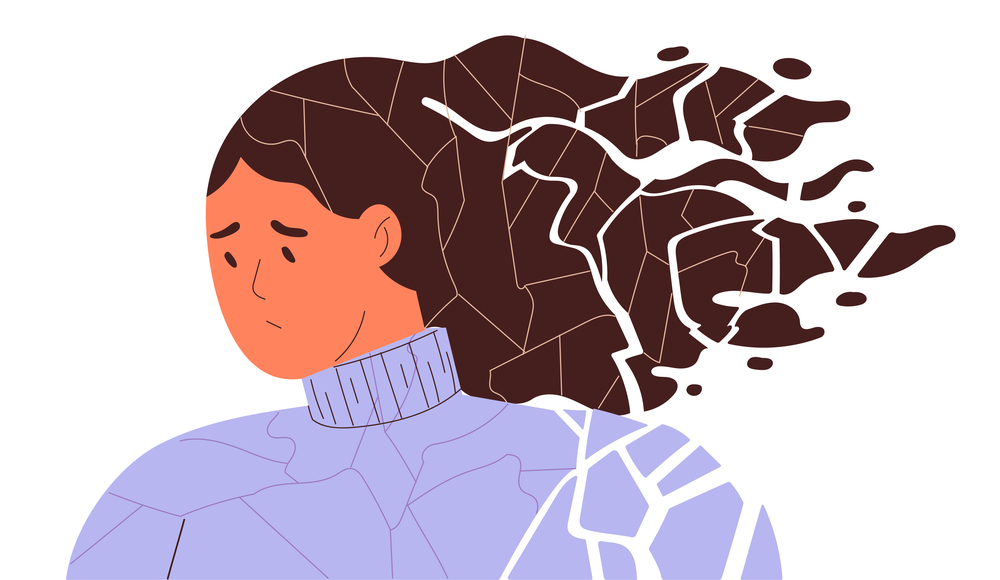
Hence long term stress is very dangerous to over health, but what about long term trauma? Since they both induce the same reactions, the body not only consistently enters into unhealthy physical states with constant trauma but becomes subject to the consistent presence of survival mechanisms that become the new reset. The body rarely returns to a state of homostasis and attempts to learn how to adjust and change to ever present but non-existent threat that the brain perceives. Contreras refers to this as allostasis where the body constantly adjusts to the changes of stressful present trauma or stability through change(2024, p. 195). When the prolonged stress or trauma reaches an overflow to the allostatic load, then the system breaks down and the body gives into a trauma disorder. According to Contreras, C-PTSD is a type of prolonged stress and chronic trauma that dysfunctions the ANS through a prolonged cumulative burden of allostatic changes that eventually results in overload of the system (2024, p. 198)
PTSD vs C-PTSD
There is no diagnosis in the current DSM-5 for C-PTSD but there are characteristics that separate it from PTSD itself. PTSD according to the DSM-5 is a disorder that follows an event or extreme event that is life threatening and horrific that negatively effects the ANS placing the person in a constant state of survival mode (Contreras, 2024, p. 198). Like stress, trauma effects individuals differently, so some individuals will develop PTSD while others will not. Initial survival responses that manifested during the traumatic event, return as survival strategies and overtake the person and create a new and pathological way of life that is in constant danger from threats that resemble or may not even be present to the initial trauma. So for many, fight or flight and other survival mechanisms and responses become a permanent part of one’s life. C-PTSD was coined by Judith Herman to explain the higher severity beyond basic PTSD to those who existed in a constant state of survival mode and long-term traumatization. Due to these overactive survival responses becoming the new baseline, individuals with PTSD as well as C-PTSD experience emotional dysregulation due to hyper arousal and hypo arousal states induced by the sympathetic or parasympathetic nervous systems.
In reviewing C-PTSD, all of these criteria are met, but in addition, the person experiences more severe emotional regulation, as well as low self esteem and lost world view and difficulties maintaining relationships (Contreras, 2024, p., 198). Some even contend, that this resembles a type of borderline personality disorder or at least sharing a similar pathological umbrella. Unlike PTSD, which involves a singular event, C-PTSD is a prolonged series of traumatic experiences that build up over time. Individuals who are exposed to sex trafficking, genocide, child abuse, torture, war and prolonged and repeated emotional, physical or sexual abuse can this disorder. Children with multiple adverse childhood events (ACE) are also more closely subject to C-PTSD. What makes it particularly harder to treat is that there is no one date or source that broke the allostatic load. Unlike a cut or physical wound that has a definitive mark, C-PTSD is more likened to a wound that is constantly scratched over and over. This repeated damage does not permit any wound to heal and instead it festers until it reaches overload. Obviously an individual in a constant state of trauma and prolonged stress can suffer internal injuries to the body from the endocrine system and its lasting effects due to higher blood pressure, but it also can harm the hippocampus and in younger children affect proper development of the prefrontal cortex.
Different individuals may respond differently due to existing in constant survival mode. Survival mechanisms become survival states that have numerous behavioral responses. From the initial survival response of freeze, one in chronic trauma may enter into a mode of lock where the individual tries to adjust the adverse situation by accepting the worst and hoping for the best despite the innate desire to fight back. Some move from fawn into a complete appeasing strategy. others with fight, become aggressive socially to try to regain some control. Flight becomes escape and avoidance of certain scenarios to diminish the abuse or trauma. Some in this mode may turn to substances or sex or gambling to escape. With tonic immobility or collapse immobility, one sees a parasympathetic dominant strategy of submit and fade. An individual in these cases portrays dissociation and becomes disengaged. When these survival mechanisms become survival strategies, homostasis becomes an impossible goal and almost a new personality emerges as the person looks to cope. The individual can have poor self esteem, lose meaning, become detached, lose emotional regulation and have a difficult time maintaining relationships with others.
Conclusion
When understanding trauma and PTSD, one must understand that the event, experience and effects all play out different within the subjective nature of the person. Regardless, when a stressor or traumatic life event does occur, survival mechanisms occur. These mechanisms are healthy in themselves and help the brain and body to respond to a potential threat. Many are able to regain homostasis over a couple weeks or months, but others develop a trauma disorder such as PTSD which keeps the body in a perpetual state of trauma response that is no longer present. In cases of complexity due to ambiguity of an exact event but chronic abuse, the human body can eventually overload and exhibit a new way of existing in regards to C-PTSD. The wound is more complex because it festered over a long period of time with no clear delineator of what caused the trauma. The mere existence of a constant trauma and multiple events creates the more severe reaction.
Helping individuals heal from C-PTSD obviously involves more intense and longer psychotherapy than traditional PTSD. Herman suggested a three phase treatment which included safety and stabilization, trauma processing and integration and rehabilitation. In addition, various therapies such as emotional regulation, grounding, EMDR and attachment focused interventions look to help the person process the trauma but also learn to regulate the symptoms and help the person reach homostasis.
Please also review AIHCP’s Trauma Informed Care program as well as its numerous behavioral health and healthcare certifications
Additional Blog: Grooming. Access here
Resource
Contreras, A. (2024). Traumatization and Its Aftermath: A Systematic Approach to Understanding and Treating Trauma Disorders”
Additional Resources
Tull, M (2025). “How Complex PTSD (C-PTSD) Differs from PTSD”. Very Well Health. Access here
Complex Trauma (Complex PTSD) (2025). Psychotraumatology. Access here
Wiginton, K. (2024). “Complex PTSD and Its Symptoms” WebMD. Access here
“Complex PTSD” Psychology Today. Access here