
How Memory Care Techniques Help Seniors With Dementia at Home

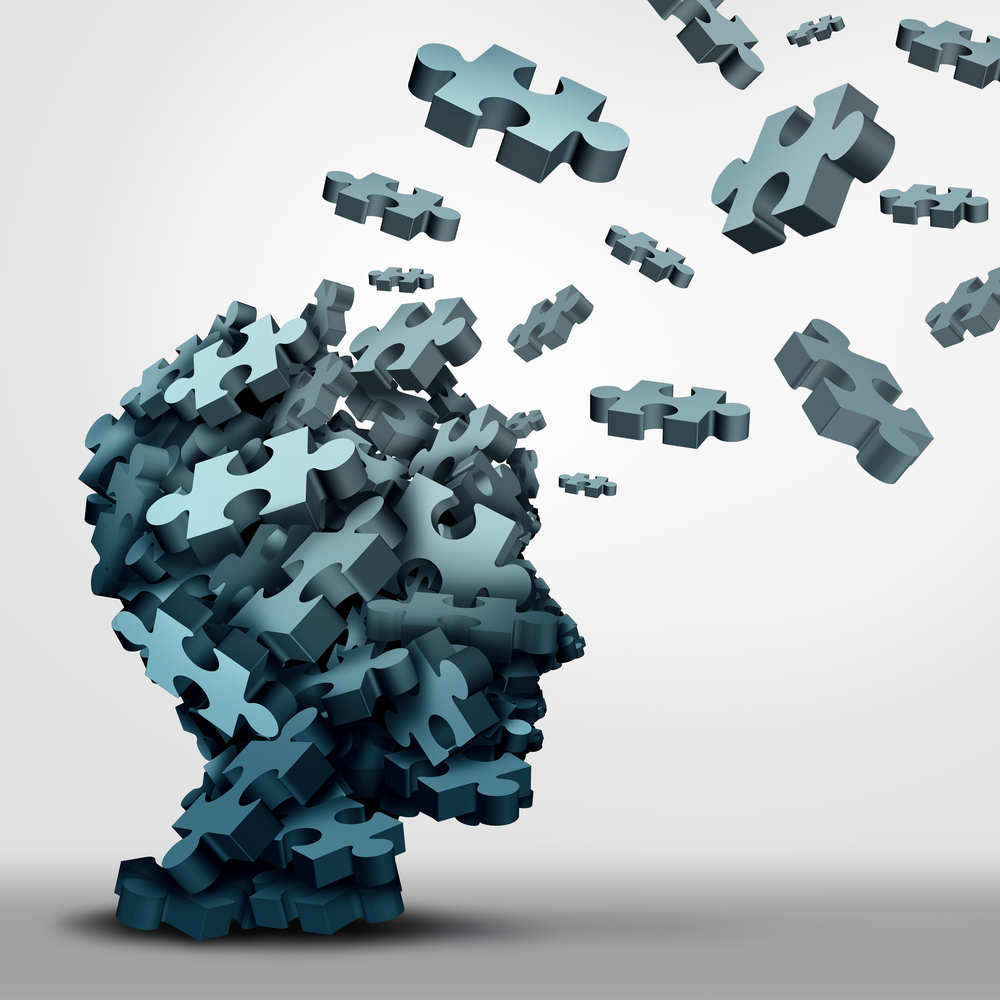
A puzzle in the shape of a head losing pieces

Written by Agwalogu Bob,

Watching a senior struggle with dementia is one of the hardest things anyone can experience. It’s not just the memory loss. It’s also the loss of the “little things” that make a person feel like themselves.

For many families, the first instinct is to keep them at home. And it’s actually happening quite a lot these days. According to recent studies, more and more people with dementia are opting to live at home and receive care there rather than enter a nursing home.

For healthcare professionals and caregivers guiding families through home care systems like this, the goal is to make every moment feel safe and familiar for the patient. And doing so requires a different playbook from what’s used in facilities.

This is where memory care techniques can help. These are simple strategies designed to help caregivers care for seniors with dementia in their own homes, effectively, and without chaos.

This article discusses some of these techniques and how they can actually help.

The Challenge of Caring for Dementia at Home

Caring for someone with dementia is one of the most demanding roles in all of healthcare.

The pressure may not look like much for someone looking in from the outside, but it shows up in real numbers:

  • About 70% of caregivers say coordinating care is stressful
  • More than half struggle to navigate the healthcare system
  • Nearly 40% experience depression at some point during the caregiving journey

Beyond all that, there’s a specific kind of challenge that caregivers describe called sundowning. A senior with dementia might be calm and cooperative in the morning, then agitated and confused by the afternoon and evening. This unpredictability can even affect everyday activities, so that tasks that seemed manageable last week are impossible this week.

It is exactly for reasons like these that dementia-specific memory care techniques matter. They make senior care a lot more manageable.

How Dementia-Specific Memory Care Techniques Help

Non-pharmacological dementia care has grown a lot in the past decade. As Stay at Home Homecare points out, meeting the needs of someone with dementia requires a special approach. That’s what dementia-specific memory care is all about.

Below are some of the techniques that consistently make a real difference.

Reminiscence Therapy

Reminiscence therapy is one of the dementia-specific memory care techniques that gives caregivers the most results. Why? Because it taps into long-term memory, which is something dementia doesn’t erase totally.

The idea is to encourage seniors to recall their past. This means old jobs, family traditions, favorite songs, and places they’ve lived, and more. But it’s not just about nostalgia. Reminiscence therapy is actually known to improve cognitive function, depression, and quality of life among people with cognitive impairment.

The beauty of reminiscence therapy is that there’s no pressure to remember. For many people in this condition, what happened 50 years ago is often more easily accessible than what happened 50 minutes ago.

Sensory Activities

Dementia can make a person feel “untethered.” But sensory activities using sight, smell, touch, and sound can help people suffering from dementia get back in the moment.

So, what does this look like in practice?

Things like:

  • Folding warm laundry
  • Smelling familiar scents
  • Listening to favorite music
  • Handling objects tied to a former hobby or career

And it works, too. Research published in the Journal of the Chinese Academy of Medical Sciences actually confirms that sensory stimulation is a safe and effective non-pharmacological approach to reaching people when other doors are closed. In fact, it’s safe to say that sensory-based engagement is one of the few effective bridges between caregiver and patient.

Structured Routine

Ambiguity is the enemy of dementia care. If every day is a surprise, every day is scary. A structured routine provides a “rhythm” that the body remembers even if the mind forgets. 

This structured routine isn’t about rigidity. It’s about reducing the cognitive effort on the part of patients to figure out what comes next.

Structured routines work best when the day follows a steady pattern. Every aspect of the day, from waking up to mealtimes, bathing and grooming, rest, and even daily walks, should as much as possible be as regular as clockwork.

This “no-surprise” routine lowers the anxiety that many people suffering from dementia face.

Visual Cues and Labels

One of the most underused but practical tools in home memory care is environmental modification, in this case, placing visual cues and labels all over the house. 

Modifications like labels on cabinets and drawers, color-coded bathroom items, arrows pointing toward the toilet, and a whiteboard near the kitchen with the day’s schedule written in large print can reduce the cognitive load on a person with dementia.

The idea here is to prevent the brain from struggling to recall certain things by providing external cues and prompts. For example, a senior struggling with dementia who can’t remember where the cups are kept at home will definitely walk confidently toward a cabinet that has a picture of a cup on it.

Validation Communication

When someone with dementia is anxious or confused, correcting them can sometimes do more harm than good. The goal of the validation communication technique is to respect the person’s feelings, whether their memories are accurate or not.

For example, if a senior insists their mother is coming to visit, and maybe their mother passed years ago, arguing that point will only make matters worse. Instead, a better response will be: “Tell me about your mother. What was she like?”

This kind of communication can do a lot of good for someone struggling with dementia at home.

In clinical settings, assessment tools such as the Profiling Communication Ability in Dementia (P-CAD) have been developed to help clinicians better understand communication strengths and challenges in people living with dementia.

Encourage “Failure-Free” Activities

The goal of this memory care technique for seniors with dementia at home is to avoid situations with a clear “right” or “wrong” answer. Deciding between right and wrong can be mentally taxing for seniors with dementia. 

The idea here is for caregivers and healthcare practitioners managing aging-at-home patients to stick to failure-free activities. 

Sorting buttons by color? Great. Wiping down the kitchen table? Perfect. Watering plants? Yes. These activities have a beginning, a middle, and an end. They provide a sense of accomplishment without the pressure to “win” or be “right”. 

The goal is engagement, not accuracy.

Making Every Day Memorable

Approximately one in five people living with dementia worldwide receives little to no care support. This fact highlights the urgent need for practical strategies that caregivers can use at home, some of which we’ve highlighted here.

For healthcare professionals and caregivers supporting seniors at home, these evidence-based dementia care strategies are designed to improve the quality of life for the person in their care. And they work, too.

The goal isn’t to reverse dementia. That may not yet be possible. The goal is to make each day as meaningful as it can be.


Author Bio:

Agwalogu Bob holds a Bachelor’s degree in Economics and has been crafting high-performance content since 2017. 

He has worked with some of the world’s leading content agencies in the UK, Ukraine, India, and Nigeria, producing engaging copy in the SaaS, finance, tech, health and fitness, and lifestyle niches.

When he’s not working on a project, you’ll likely find him trawling the internet for funny memes. You can connect with Bob on LinkedIn or via The List Hub.


Please also review AIHCP’s Health Care Manager Certification program and see if it meets your academic and professional goals.  These programs are online and independent study and open to qualified professionals seeking a four year certification

Memory and Grief

Memory

As sentient beings, the human person is composed of past and present events that construe identity.  Without a process to recall who one was, then one loses the sense of self.  While metaphysically, the wholeness of the individual still exists, the physiological ability to recount past events due to dementia or brain damage can play a detriment to the past self.  The process of retaining the past and what has been learned is referred to as memory.

Emotion, grief and loss are powerful agents in memory. Please also review AIHCP’s Grief Counseling Certification


Memory is critical to existence of any organism.  The memories can be explicit or implicit.  Both are extremely important.   Explicit memories refer to one’s conscious memories that are retrieved with effort.  They include semantic and episodic events.  Semantic refers to factual knowledge, while episodic refers to events.   The implicit memory is automatic and can recall more primitive and conditioned responses without effort to recall.  These include space and time, motor and cognitive skills and natural reactions learned from classical conditioning.   Explicit memories are short term stored in the Hippocampus and long term stored in the cortex, while implicit memories are stored in the more primitive areas of the brain in the Cerebellum and Basal ganglia. These types of memories permit one to live day to day knowing one’s conscious past self as well one’s automatic responses and skills that are imbedded within one’s subconscious.

When an event occurs, our senses interpret the data and the brain encodes, stores and when needed later, retrieves.   The neurons in the brain form various interconnections and physiologically capture the abstract thought.  In this amazing transfer of abstract to material, memories are kept.    Some information is stored temporary in short term memory but more important life events are stored in long term memory.  Obviously, the more important the event, the more long lasting the memory.  In fact, in intense, traumatic, or critically important moments, the emotional part of the brain and the Amygdala reacts to an event.  The body produces more glucose for better brain activity and the event and subsequent memory has a far strong imprint upon the person.

In the case of severe trauma, a smaller percentage of the population is unable to store the memory properly and it becomes fragmented and unable to store to the point where it is not properly integrated first with the Hippocampus and then later with the cortex hence resulting in PTSD.  The fragmented memory hence becomes a haunting event that is triggered via sound, scent and place and can manifest in flash backs or nightmares and night terrors.

Memory and Loss

Obviously, some of the most intense memories are loss.  When someone a loved one passes away, the vivid nature of the memory is more strong due to the emotional connection and the reaction of the Amygdala to the situation.  This leaves a very vivid memory.   One can relate to the most detailed accounts of an emotional event, to the event itself, but also side details of the what one felt at the moment, the surrounding environment and people present, while other past memories not emotionally charged or almost completely forgotten and if remembered only in a foggy way.  The emotion involved in losing someone charges the brain so much that the memory remains very strong.  In fact, the neural networking between neurons is much stronger in an emotional memory.

This is good and “bad”.  It is good because it is a critical moment in one’s life but it is “bad” because it causes more pain when retrieving it.  Obviously, I put “bad” in quotations only because of the distress associated with the retrieval but very few would ever trade an emotional memory of such critical importance no matter how sad.  Hence when recovering from a loss, the memory remains vivid and strong and can be retrieved consciously but also through automatic functioning via scent, sound or place.   In many ways, the brain does not wish to forget the event and this is why the more intense the attachment, the more intense the loss reaction.  The brain clearly understands love and attachment and it holds very dear the memory of that attachment and has evolutionary designs to ensure the connection beyond the event.

The Amygdala signals emotional reaction associated with a loss hence creating a stronger imprint on the brain’s memory of the loss. This is why the memory remains strong and with someone going through grief and loss


While some memories may hurt, many during the grieving process fear the loss of these memories.  While memories of loss are painful, they connect one to the lost loved one.  The fear of losing those memories is like losing the person again.  Sometimes, individuals will fear even losing the memory of loved one’s face, smile or voice.  Fortunately, the strong neural networking for important events allows one to hold tight to the treasured memories of a loved one.  Even after reconsolidation, when memory is retrieved and reviewed again with the possibility of altering before being stored again, is less likely in a intense traumatic or eventful memory.

While memory is still not perfect due to injury, or forgetfulness over time, many individuals who lose a loved one are encouraged to memorialize the loss.  This is not only critical in acknowleding the loss and also celebrating the relationship in a healthy coping way, but it also permits one to submit additional records beyond one’s memory.  A written log in a journal, pictures, or a tribute of some type all strengthen memory of the deceased and ensure a written record of one’s loss.

In addition, sleep and dreams at a subconscious level maintain memory.  During sleep many things are encoded into the longer term memory.  In dreams, information is processed but also neural networks are strengthened.  Unfortunately, traumatic events are also relived albeit in symbolic form.  The loss of a loved one is remembered in dreams as the brain recollects the emotional event. While most dreams of a deceased loved one are merely the working of the brain while one sleeps, many contend that in dreams the loved one comes to them in a spiritual way due to the subconscious state of the mind.  Many religious and spiritual views contend that dreaming is not only remembering but also a way the deceased can communicate.  While empirically this is not possible to test, those of faith maintain these experiences.   Science in this case cannot negate or confirm, hence one is left to faith and one’s own subjective experience and belief.

Conclusion

Memories are critical to self.  The most important memories and life events are fortunately emotionally charged and hard to forget.  This plays a major role in how one processes grief and learns to adjust to the loss itself.

Please also review AIHCP’s Grief Counseling Certification and see if it meets your academic and professional goals


Please also review AIHCP’s Grief Counseling Certification and see if it matches your academic and professional goals.  The program is online and independent study and open to qualified professionals seeking a four year certification in Grief Counseling.

Reference

“Exploring Psychology”.  Myers and DeWall. (2019).  Worth Publishers, New York.

Additional Resources

“Healing Your Brain After Loss: How Grief Rewires the Brain”. (2021) The American Brain Foundation.  Access here

“What Does Grief Do to Your Brain?”. Pedersen, T. (2022). Psychology Today.  Access here

“GOOD GRIEF: HOW MOURNING CAN AFFECT YOUR MEMORY”. Lundstrom, J.  SimpleSmartScience. Access here

“Emotions Can Affect Your Memory — Here’s Why and How to Handle It”. Swaim, E. (2022). Healthline. Access here