When Grief Questions Existence

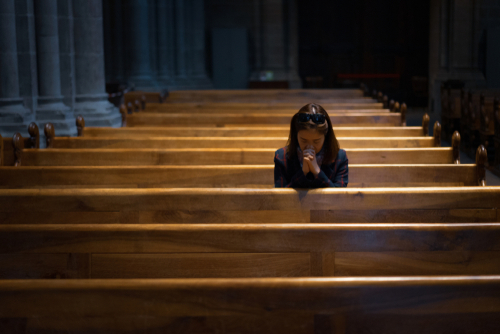
Grief in its deepest times can force us to question our very existence.  We can question why and how one’s life has lost so much.   We can question if there is a God, or a divine being.  We can question our own moral code and way of living.  Grief has the strongest ability to shake one to his or her very core.

Existentialism has for years questioned the how and why of existence.  It has mourned over the fear of what is beyond the grave and what truly matters in this life.  When torn by grief, many Christians may look feel this philosophy and its emptiness matches their current emotional state.  The thought of nothingness and the fact that acts of loss or violence are merely random can in some ways maybe soothe the conflict within.  The conflict that sees a contradiction between evil acts and a good God.

Grief can utter our existential outlook on life. We need to turn to Christ for guidance. Please also review our Christian Counseling Program


The temptation of existentialism to create one’s own code of existence and live by it alone may be strong in grief.  It may be a way to get back at God and to create one’s own subjective reality based on one’s own existence.  Or as existentialists proclaim, to bravely put aside pre-ordained moral paradigms and to venture into the unknown and to bravely create one’s own existence.   It may seem attractive to dismiss all cares when in the pit of despair.

However, God is a loving father.  He knows our grief.  His Son, Jesus Christ, and his holy Mother Mary, all experienced this deep grief.  Christ on the cross even in his deepest agony, questioned the Father, and mournfully cried out, ” My God, my God, why have you forsaken Me”.

We all come across grief and its darkness.  We face the existential question and all the unknowns behind it.  We question how evil can exist while a good God rules, and we can question why God would “punish” a loyal servant.  We can mourn like Job but ultimately like Job not allow our own emptiness to lead us astray.   We can follow in Jesus, who while mourning and isolated, still remained loyal to the father.

Grief disrupts life.  It disrupts the very existence of our day to day plans.  One needs to be able to understand how to incorporate grief and loss into one’s existential narrative without dismissing God or his plan.  It is the most difficult cross but one Christ himself did not deny himself.  He should serve as our example when we fall into the depth of agony and loss.

Tests can be difficult times.  Grief is a test.  Grief is a time when our loyalty to God can be tested at the highest level.  We can question our existence or give it to God.  It is ultimately our choice.

Please also review our Christian Counseling Program as well as our Christian Grief Counseling Program and see if they meet your academic and professional goals.  The programs are online and are open to qualified professionals who look to share the teachings of Christ in a counseling setting.


Christian Counseling Certification on the Joy of Receiving

Please also review our Christian Counseling Certification

The title of this blog, the “Joy of Receiving” may surprise a few at first but the role a Christian plays in accepting something is as important in the role they play in giving.   We have heard the phrase, “it is truly better to give than to receive” but like all reciprocal relationships, there needs to a proper balance.

If one only takes, then obviously one can detect a clear selfish individual who preys upon the generosity of others.   If one only takes, then they are unable to share, or help others in life.  These individuals tend to be more materialistic and greed filled.  They feel no need to share their talents, or share their gifts to others.  They care very little for the poor or others in need.  The thought of making someone’s else day a better day through a simple generous gesture is beyond their comprehension.  Ultimately, they are unable to experience the reciprocity of love because they only take.    I feel many of the Biblical warnings of greed and selfishness address their spiritual deficiencies.

And yet upon the opposite spectrum, while the Christian who only gives truly sees the more spiritual path, they must also learn to occasionally take with joy as well.  If they do not learn to accept or take, then first, how can they ever accept the greatest gift of all, redemption?  Jesus Christ gave us the ultimate gift through his death and we must accept this gift without hesitation if we are to have salvation.

In this reality, love is a reciprocal act.  It is not poached through greed or selfishness but mutual self-giving.  Love is a reciprocal action of mutual giving and receiving.  In this reality, a Christian must not only give, but also be able to receive.  This is critical to understand if one is to understand love and its relational status.

Love is recipocal and involves giving but also receiving for it to be able to function

Those who tend to the extreme of only giving, fail to experience the love of being accepted, being loved and given something special, but they also fail to allow others to experience the same joy of giving they experience.  Sometimes even the saintly fail in this category.  They are very dismissive to receive from another out of an over religious zeal of unworthiness.  At the other extreme, some may feel the obligation to give and give out of a sense of duty and when that duty is challenged, their pride is hurt.

Jesus taught us the opposite.  He gave completely but when the times came, he permitted others the joy of giving.  We see this clearly when the women at the house cleaned his feet with the most previous oils.  We also see it at his birth, when the Magi brought the three precious gifts.

As Christians, we must have a balanced spiritual life.  We must give as Christ gave, but we must also allow others to experience the joy of giving as well.  This means letting go of possible pride, or false unworthiness and accept gifts with Christian joy.  In doing so, we balance the reciprocity of love and allow others to experience the gift of giving itself.   We must learn to accept gifts, the way we accept Christ’s ultimate gift on the cross with love.  In doing so, we will better be able to share in the reciprocity of love that is both giving and accepting.

Please also review the Christian Counseling Certification Program and see if it matches your academic and professional goals.


Christian Counseling Program Article on Witchcraft and Hexes

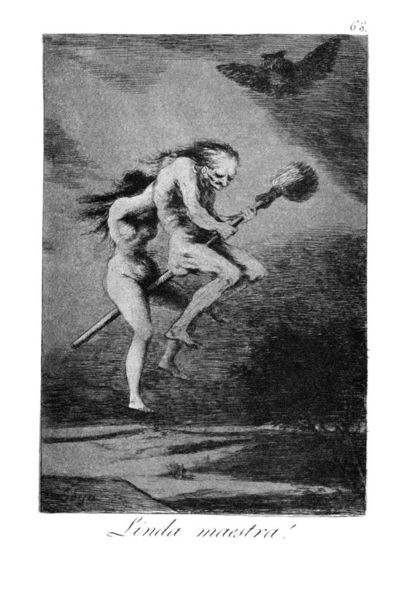
Hexes and curses are a reality that many Christians overlook.  The ability to have a hex put on oneself can happen.   Christians can protect themselves with prayer, sacramentals and a close devotion to Christ, Mary and the saints.

The reality of witchcraft and hexes are real. Please also review our Christian Counseling Program

The article, “Hexes and Curses Reveal Need for Spiritual Vigilance” by Patti Armstrong states,

“Of late, the war between good and evil has made news as the veil is pulled back, revealing who the players are and their intent. This, we just witnessed with a call to curse and cause harm to the newest Supreme Court Justice. The three-hour, event to “Ritual to Hex Brett Kavanaugh” took place Oct. 20 at Catland Books in Brooklyn, New York. They scheduled another one for Nov. 3.”

To read the entire article, please click here

Hence, it is important to remember that Christians must always remain vigilant in their spiritual hygiene in protecting oneself from the evils of the occult and witchcraft.   Please also review our Christian Counseling Program and see if it matches your academic and professional needs.

Christian Spiritual Counseling Program Article on Kempis Quotes

Good article on Thomas Kempis and many of his spiritual writings.  This article lists 11 of his famous quotes.  Kempis was very devout.  He had much insight into Christian meditation and how to find solace with God.   He was also a very staunch defender against corruption of medieval church and wrote the famous text, Imitation of Christ.   Please also review our Christian Spiritual Counseling Program by clicking here and see if it matches your academic and professional needs.

The article, Thomas à Kempis: 11 quotes from a great spiritual writer,  states,

“Today is the feast day of Thomas à Kempis (1379-1471) in the Episcopal Church’s calendar.

The German-Dutch spiritual writer was a member of a strict religious community that reacted against the corruption of the medieval church. He lived quietly, spending his time in prayer, writing and copying – Thomas copied the whole Bible four times, one of them still preserved at Darmstadt in Germany.”

To read the quotes, please click here

Also please review our Christian Counseling Program and see if it matches your academic and professional needs.

Christian Counseling Program Article on Preaching

Good article on the importance of preaching and how it can help spread spirituality to many. Please also review our Christian Counseling Program 

The article, Preaching important for spiritual growth, by Joseph Shepley states,

“Preach the Gospel, and if necessary, use words.” Attributed to St. Francis of Assisi, this oft-quipped admonition reminds us to practice what we preach.

For those called to the Christian ministry, preaching is foundational to worship. From their earliest days, following the example of Jesus, Christian faith leaders have devoted themselves to the public reading of scripture, and to preaching.”

To read the entire article, please click here

Please also review our Christian Counseling Program and see if it matches your academic and professional needs,.

Christian Counseling Program Article on Spiritual Desolation

In our Christian faith, it is not uncommon to go through dry spiritual phases of our life.  In these phases we experience doubt, lack of spiritual fire and enthusiasm, as well as in some cases, spiritual neglect.   We refer to these times as periods of desolation.

The desert fathers, St Teresa of Avila, as well as St Ignatius Loyola, all refer to these periods of times where the heart does not feel the response of the divine and feels, as Christ did on the cross, all but forsaken.  We also see it in the story of Job, where Job appears to have lost everything until the Lord repays him sevenfold for his miseries.

How we perceive and navigate these troubled spiritual waters of desolation are key to our Christian Spiritual Life.  We must see them as crosses and challenges to our faith that will only make us stronger and help us arise from our desolation into a divine consolation far greater than we could ever imagine.

One of the first key fruits of desolation is humility.  While Christ has become our brother in flesh, we must still realize our unworthiness of such divine friendship.   Desolation helps remind us of our sinful nature and the steps we must take to become worthy of divine presence.  It is our sin nature that prevents divine consolation and it is what separate us, not the divine who is still knocking desperately for us to hear.

Second, it strengthens our reliance upon God.  It tests our faith and forces us to realize how weak and fragile we truly are when the sweet voice of the divine is hard to hear or find shelter in.  When the return of the divine presence is felt and manifested, we truly realize the gift we have and also understand how like a loving parent, God was there the whole time, but helping us learn.

Third, the sweet and blessed doubt of our faith during desolation is not a sin, but can be actually a reaffirmation of our faith.  Like Thomas, who doubted and needed to see, we sometimes need a tangible presence.  During such desolation, we do not reject God, but are tormented by his absence and hence demand his presence.   We cannot control the divine, but if we are truly children and he is truly our Father, then asking for his grace is when in doubt is far from a sin, but a blessed thing; Again forcing us to realize our dependence upon him.

Like Thomas, we want to believe, we want to see!  But, we must also realize the words of our Lord that those who have not seen yet still believe, truly are blessed.  In our pursuit of God, when lost in our desolation, we see our greatest display of faith, which is fueled by the virtue of hope to know that God will return and supply his presence in sacred consolation.

We can also learn so much from Christ during his own desolation on earth, when he took upon the nature of a slave to redeem us.  We can see his triumph over all desolation during the temptation, in the garden and on the cross.  He should be our paradigm and inspiration

If you would like to learn more about Christian spirituality or would like to be better equipped to help your spiritual children, please review the Christian Counseling Program and see if it matches your academic and professional needs.


Original or Ancestral Sin: In Today’s Church, Is There A Difference Anymore?

Our fall from grace through the sin of Adam and its ramifications upon human nature is a difficult subject between East and West; One that should not be today but one that remains due to semantics and past ideologies and presumptions.

One can trace the divide to St Augustine and his teaching on Original Sin.   This Western term to explain our fall, teaches that we inherit the sin of Adam and the personal guilt associated with it.  It also teaches, as East and West both agree, the inherited consequences of sin via death, suffering and concupiscence.

The issue of inherited guilt would remain a sticking point for the East.  The East and the Eastern Fathers had never elaborated into detail how the sin of Adam affected human nature beyond its consequences but only saw these questions arise when Augustine debated Pelagius over the condition of human nature after Adam’s fall.

Pelagius contended that human nature was unaffected and that since being unaffected could make good moral choices without the aid of grace.   This was obviously something both East and West condemned as heretical for grace is essential for any good action.   However, the idea of man being born without an inherited guilt pushed the issue between Augustine and Pelagius.  Augustine would contend that man is born with an inherited sin of Adam and that man’s nature is totally corrupted.

The ideal that man was born with this sin and infused with the guilt of the first parents stemmed from Augustine’s improper translation of Scripture.  Using texts that improperly translated in Adam instead of because of Adam, Augustine more fiercely pushed the ideal of a stain of sin on the soul that proposed personal guilt for all generations.

The Eastern idea of Ancestral sin never presupposed an idea of guilt, but only consequence;  Namely death.   Through the sin of Adam, the consequences of his sin affected all of humanity, bringing death, suffering and an inclination to sin into the world.

The West would continue in its teaching on personal guilt of Adam which would lead it down a disastrous path of theological extremes trying to balance God’s justice and love with unbaptized infants who die prematurely.   The East was spared this theological nonsense.

The Western schools of thought would balance and counterbalance between ideas of condemnation of unbaptized infants to lesser punishments of Limbo.  Baptism of Desire, a legitimate doctrine, would also be used as a tool to help counter this idea of original guilt and stain, but ultimately, as seen in the Western Church’s catechism, the idea of original guilt was disregarded in present days.

This imbalance of doctrine did not just affect the West, but also negatively affected the East.  The East with its suspicion of the legalistic West, would deny the legitimacy of the Immaculate Conception, basing its objections that Mary did not need conceived without of sin because no personal guilt exists.  The East saw the Immaculate Conception as a natural development from Augustine’s erroneous extremes.

The East mused that if Mary died, then she too felt the full effects of Ancestral sin as any person ever born.  Of course, the East held to the traditional belief that Mary never personally sinned, as the West but the error of denying her this special grace is equally erroneous on the part of the East.

Whether one calls it Ancestral or Original, whether this sin of Adam stains or merely affects our nature like a disease, the ideal of Mary, as well as Christ, spared from its effects is critical to redemption theology.

This is where Eastern theology fails to make proper distinction between pre-fall and post-fall natures of Adam.  Adam was neither mortal or immortal in the Garden, but his nature was spared the effects of concupiscence.  After the fall, his nature was not destroyed as Augustine and many in the West contended, but only damaged with all the traits of historical man after the fall.  Yet Mary, as a perfect analogous partner to Eve, as well as Christ to Adam, must possess a pre-fall nature.

Furthermore, Mary , as the source of the Incarnation, must be a perfect tabernacle, spared the corruption and consequences of the sin of Adam.  Whether consequential or stained, she must be through a special grace of the Holy Spirit, spared the consequences of Adam.

The East may contend, then why did Mary die?  The Dormition of our Lady is the gentle sleep.  Immediately following, her body and soul assumed into Heaven.  Is this the death we all face?  Definitely not!  Furthermore private revelation speaks of Mary’s choice to fall into gentle sleep because she felt if her Son was to face death, how could she not also face it herself?

I think this clearly points out the pitfalls of both the East and West in it there past definitions of Original and Ancestral Sin.

As it stands, is it now only a matter of semantics?  Both traditions believe Adam fell from grace and sin and death entered into the world.  Both traditions believe that human nature was somehow affected by this fall.  Both traditions believe in the necessity of Christ’s redemptive sacrifice on the cross on remedy the fall of Adam and finally both traditions believe in the necessity of Baptism to remove sin, become sanctified and to enter into the Church.

As it also stands, the West accepts the fact that the sin of Adam is not a personal sin and ideas of Limbo have gone out the door.

So what prevents agreement?  Is it past teachings of the West and East and the prideful argument of who is right or who was wrong?  These things are now irrelevant as we look at what each tradition believes today.  Simply put, the sin of Adam affected all of humanity, crippling human nature and inclining it to sin.

What else is there to be said?  Is it pride between East and West?

I contend there is pride but it is also semantics and  the long separation between them.

How the idea is expressed and understood over the centuries has created the myth that a difference exists still to this day, but if we read what others are saying in their own theological systems, we discover there is no difference.  Yet separation prevents the two schools of thought from interacting and sharing and dialoging the confused language.  This division and separation keep parties away and allows parties to preach outdated concepts about each other that leads to misconceptions about one another.

This is also true of Lutheran and Western Catholics who for ages felt the ideas of good works and justification by faith alone were at odds with each other because of how Martin Luther taught it for centuries.  Yet, what we discover through dialogue is that the extreme views proposed are no longer felt between each party.  The same is true in the case of Original Sin and Ancestral Sin.

Both carry an image of the other party that is not felt by the actual party themselves.

It is time to remove past pride and prejudices that lead to modern day confusion over what the East or West believe regarding Adam’s sin.  Instead, dialogue needs to develop that looks past semantics or a certain tradition’s inherited language of thought.  Instead, we must probe into what the tradition believes.

If this is done correctly, I believe we will realize that the East and West today believe the same thing, or so close, that it is no longer an issue of heresy but a permissible difference within the range of orthodoxy and truth.  For in the end, these are mysteries that we cannot comprehend.

Satan’s schism between the true Church of Christ has caused this division.  Both East and West share in the true faith yet are separated by pride.  It is time to end that.


Please also review our Christian Counseling Program.



Christian Counseling Program: Petrine Relationship Further Explored

Relationships are key to our survival.  As a communal creature, we need relationships of all types.   Our most important relationship is our spiritual relationship with Christ.   Yet, like children, we find ourselves many times on the taking end of our relationship with Christ.  Our love while present, many times fails to meet the standards of a healthy relationship.  We possess a “me, me, me first” type attitude, putting Christ second.

Love is patient.  This is a key ingredient we hear many times about love.  It does not seek to force itself upon the beloved, but patiently waits.  It also continues to give while waiting.   This is the love Christ has in his relationship with us.  It is the type of love he showers upon us every passing minute of our lives.

What type of relationship do we have with Christ?  In all reality, we probably have an imperfect one because our human nature is broken.  Yet again, Christ’s love is patient.   I think many of us have a Petrine relationship with Christ.   In a past blog, the idea of a Petrine relationship was explored.

The idea of a Petrine relationship was described as in the following: “We have a fire for Christ.  We love him and say we will do anything–and probably mean it at the time of saying it!  But it is so difficult to carry through.  Our broken human nature, our fears and the temptations of the world sometimes push us away and we lose focus–much like Peter did when he stood before our Lord on the water.   However, unlike others who despaired, like Judas, Peter never gave up.  Even after denial, he wept bitterly and became a better man and Christian.   How many times do we see this same pattern in our own life?   While many of us would like to see ourselves like John, steadfast and devout, most of us are more like Peter.  We have a strong love for the Lord but sometimes fail.”

This adequately sums up many Christians lives, especially during our younger years as our broken human nature strives for Christian excellence, but always seems to fall short in fulfilling our end of the relationship with Christ.  We will talk with great confidence like Peter, declaring our steadfast fidelity, but as Peter did, seem to fail when tested.  Did not Peter declare he would never fail Christ, but in the end, ultimately deny him three times?   Did not Peter strike the temple guard with the sword, only to minutes later flee the garden?

Peter is the ultimate example of our broken human nature.   Wishing to please our Lord but falling many times.  Peter is first and only to jump into the sea to welcome Christ, but after doing so, quickly loses focus and begins to sink without the Lord.   We can see why Christ loved him so much.   He is clearly in his younger years a child that expresses so much love but like a child does not understand what a true relationship entails.


After our Lord’s resurrection, Jesus asked Peter three times if he loved him.  In the old Greek, Jesus is asking for “agape”, an all giving love, but Peter each time offers “philia” or deep friendship.  Jesus finally after three times accepts what Peter can give at that moment.  This is what I meant when I said Christ’s love is patient.  He takes what we can give at a certain moment, knowing that as the sword is tested by the fire and one day our love will become stronger.

We need to strengthen our love.   Our relationship with Christ cannot continue to be an infantile Petrine relationship, but must mature into an adult Petrine relationship.  Peter grew.  So must us.  He transformed from a simple fisherman with a childlike love for Christ into a fearless apostle.  An apostle who did not only express love for Christ with his words, but expressed his love in a giving relationship with his actions.   Actions that would eventually lead to his own crucifixion.

Like Peter, we need to take the next step where we give Christ a more meaningful relationship that does not express itself only in words but also actions.   Whether by overcoming a sinful habit, or spiritually growing closer in union through sacrifice or denial, we must eventually transform our faith from a simple fisherman to that of an apostle.

In the meantime, love is patient.  Christ takes what we can give, but he wants so much more!  And he deserves it!

Please find time to review our Christian Counseling Program and see if it matches your academic and professional needs.


Mark Moran, MA

Christ was not a divine ecologist: Opposing view

Roman Catholic Church risks becoming the very NGO Pope Francis has condemned, writes Steve Skojec, founding publisher of OnePeterFive.com, a journal about Catholic theology, tradition and culture.

Sourced through Scoop.it from: www.usatoday.com

Great article.  The Pope obviously believes in the spiritual message of Christ, but many of his emphasis lies in the social.  This is not contrary to Christian doctrine, but something if divorced from spiritual doctrine becomes useless.  I do not feel the Pope is pushing a social agenda void of spiritual life of Christ and morality that Christ teaches, but he definitely needs to emphasize it more.  Regardless if he believes it, when one emphasizes only social issues then the other message can be loss and this is critical for him not to forget.

Issues surrounding morality and the stopping of abortion should be more central or at least proportionately represented by the pontiff in his speeches

Please review our Christian Counseling Program

#christaincounselingprogram

Do Adults Really Have to Honor and Obey Their Parents?

When it comes to getting married, how important is the support of my parents? Should I wait for them to “come around” before tying the knot?

Sourced through Scoop.it from: www.crosswalk.com

When we become mature adults, honoring thy parents becomes less blind obedience but more respect and honor.  Helping them, caring for them and respecting them even when we disagree.  As adults with our own relationships, we must weigh on ourselves and the word of God

This is not to say parents do not have valid and good advice, but ultimately they must trust they have raised their children right.  U

This article looks at respecting parents but also dealing with one’s own personal life decisions

Please review our Christian Counseling Program

#christiancounselingprogram