
For many counselors, psychodynamic and psychoanalytic schools of thought are considered outdated and less used. While many good fruits came from Sigmund Freud and his theories, as a singular and closed system, it fails to meet many of the demands needed in modern psychology. This short blog will take a look at some of the good aspects of psychoanalytic theory and some of the bad and suggest how useful or not useful it may be for clinical counseling, as well as a pastoral counseling.
Please also review AIHCP’s various behavioral and healthcare certifications, as well as its Grief Counseling Program and also Christian Counseling Program
Basics of Psychodynamic and Psychoanalytic
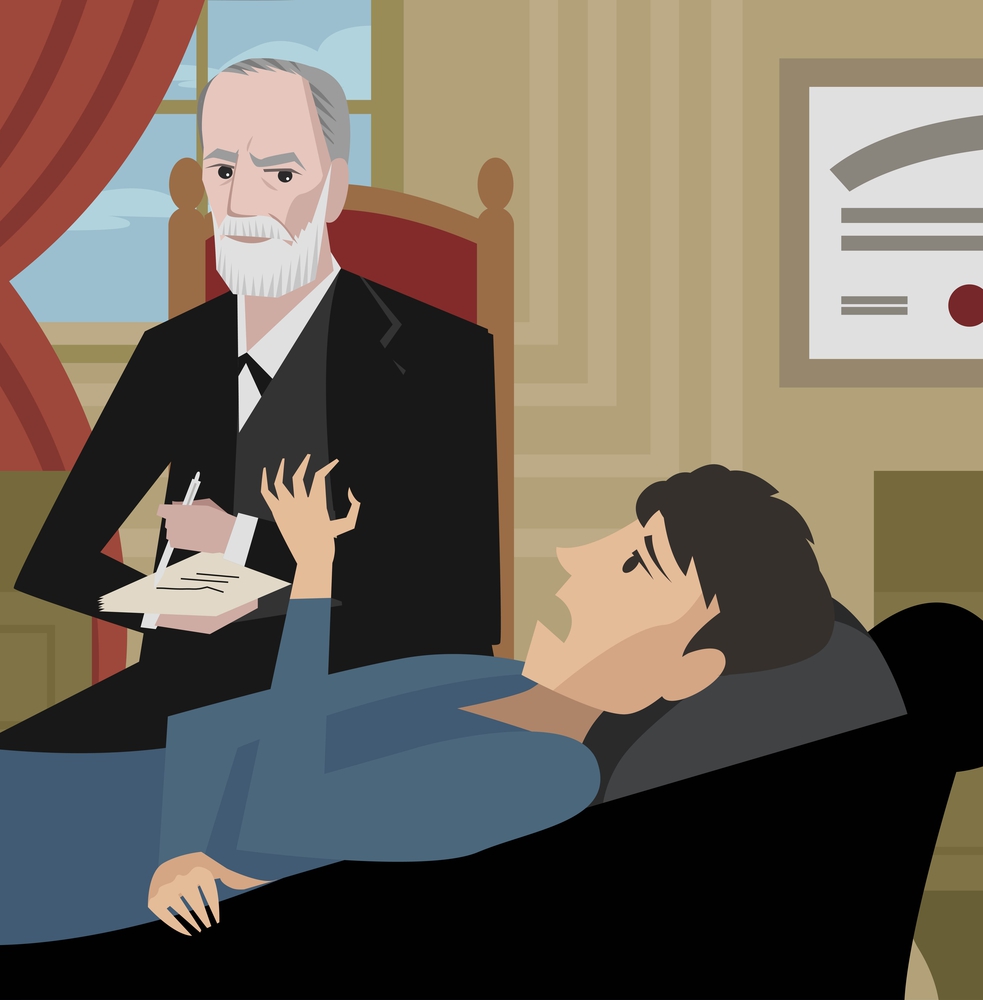
Freud as a medical professional saw most problems from a pathological level of care, instead of a wellness approach to care. Unlike modern psychology, his thought looked more inwards to the subconscious mind and early childhood development. Due to biology and upbringing within the first six years, a person’s personality was determined early, instead of focusing more on a person’s choices later in life, as well as other social and environmental factors leading to personality. In essence, psychoanalytic and psychodynamic is a talk therapy with big emphasis in discussing the past, unlocking the unconscious and finding balance in life.
Within Freud’s system of thought existed the ID, Ego, and Superego. These classical terms are well known to even the least exposed person to psychology and counseling. It is no doubt that one has heard these terms throughout life. In Freudian psychology, the ID is humanity’s inner instincts and drives, such as life instincts of life and sexual energy and death instincts of death and aggression. The Ego dealt more with persons inner self or mind and its relation to the outside world and the Superego was a person’s connection to a code outside of itself, such as customs, laws, morality and conscience (Tan 2022). When these three parts of existence became unbalanced, then pathology was the end result in various forms of anxiety, depression or other more serious mental defects.
Since most issues are at the unconscious level, Freud believed in long term and in-depth counseling that interpreted the person’s subconscious and helped the person face those subconscious issues in a conscious confrontation. By awakening the unconscious and confronting it by bringing the subconscious material to the conscious spotlight, Freud looked to help individuals find peace and reconciliation with who they were and how to adjust.
In doing so, Freud believed the counselor was an interpreter and guide, not a coach or soul helper. Freud believed the counselor must be as neutral as possible and become a listener. This anonymous nature was better created by having a person lay on a couch or sofa out of sightline from the therapist. This led to the next step of free association where the client was encouraged to discuss whatever immediately came to one’s subconscious, in which the therapist would then interpret and when necessary ask necessary questions. In helping the process, the therapist can also utilize dream interpretation as a way to understand the deeper meanings of the subconscious. In addition, the therapist would help the client deal with any resistance to the blocking of the subconscious as to ensure the person is able to face it and understand it better. As the relationship develops, psychodynamic therapists look to interpret and better help through transference in which the client subconsciously begins to relate to the therapist as a parental figure ( Tan 2022).
Finally, Freud greatly depended upon his analysis of one’s stages of life which he tied to human sexuality. The oral, anal, phalic, latency and genital stages of sexual development all played key roles in a person’s psychological and mental development with the body in regards to healthy and unhealthy relationships with parental figures and later adult relationships (Tan 2022).
Utilization Today

Today, there are very few pure psychodynamic therapists who utilize purely only Freudian methodologies. According to Tan, 3 percent of clinical psychologists, percent of counseling psychologists, 5 percent of social workers and 2 percent of counselors consider themselves purely psychodynamic in practice (2022, p. 59). Many modern psychologists or counselors may utilize some aspects of it, or borrow some terms, but most depend more on more patient centered models that incorporate other social factors into the clients life.
From a beneficial standpoint, Freud’s theories do express the importance of the subconscious mind that is a key element of all psychology, especially in regards to the early phases of life and trauma. Freud’s defense mechanisms also illustrate many of humanity’s natural ways to try to avoid pain, suffering, guilt, or responsibility.
From a negative standpoint, Freud’s view of human nature is very pessimistic, as well as deterministic. This can be at odds with more modern patient based models that look to promote healthy change and focus on wellness instead of complete pathology, as well as other motivational drives beyond the sexual (Tan 2022, p. 54). In addition from a grief study perspective, Freud’s view that grief is an imbalance and a pathology itself, does not fall into line with basic bereavement science. Obviously, for the spiritual counselor or those of various faiths, Freud’s atheistic views dismissed spirituality. All recent studies show the important factors faith and spirituality play in a person’s healing process.
Tan also points out that many of Freud’s theories are not easily translated into a testable hypothesis (2022, p. 55). In addition, Tan lists the long and expensive nature of psychoanalytic therapy since it rarely can be completed within a few months, much less a year due to its intensity. Some patients can also become annoyed and the distance and anonymity of the counselor in such a sterile environment. For many, this does not translate well into pastoral counseling settings which demands empathy display in counseling (Tan 2022).
While psychodynamic and psychoanalytic therapy has been seen as a successful method for some, it still lacks empirical controlled and uncontrolled tests to fully testify to its effectiveness. Nonetheless, it is still seen as a empirically useful method of therapy with good results since its conception (TAN 2022).
Ultimately, it comes down to the style that works best for the client and the type of counseling relationship and beliefs the client holds.
Conclusion

While few utilize psychodynamic and psychoanalytic in professional counseling, it still is an effective method for some. This school of counseling has many beneficial concepts and tools that can be employed by a counselor, but for many, it is not the primary school utilized. Instead many borrow certain concepts and use as needed in their professional careers with clients. This does not diminish the shadow of Sigmund Freud’s stamp on modern psychology. He clearly took psychology from a more soul helping endeavor in pastoral settings to a more academic and medical format. While some of this was good, some of it left out centuries of past wisdom seen from the Church and other pastoral traditions. It also neglected some of the basic ideals of a more client centered care with other factors at play seen with Alfred Adler and later Carl Rogers.
Please also review AIHCP’s Christian Counseling Certification, as well as its Grief Counseling program. AIHCP offers also a wide variety of other healthcare certifications
ADDITIONAL AIHCP BLOG
Freudian Self Defense Mechanisms- Access here
References
Tan, S-Y. (2022). Counseling and psychotherapy: a Christian perspective. (2nd Edition). Baker Academic, a division of the Baker Publishing Group.
Additional Resources
Cherry, K. (2025). Sigmund Freud’s Life, Theories, and Influence. VeryWellMind. Access here
Cherry, K. (2025). What Is Psychoanalytic Therapy?. VeryWellMind. Access here
McCleod, S. (2024). Sigmund Freud’s Theories & Contribution to Psychology. Psychology Today. Access here
Psychoanalytic and Psychodynamic Psychology (2022). APA. Access here