
Prayer life is choice and a consistent habit of communicating with God. Despite all the philosophies, it is quite simply talking to God daily, as our Creator, Redeemer, Sanctifier, Father, King, Master and Lord. It is demanded by the virtue of justice to owe God prayer but it is elevated when offered in pure love and desire. Closer union to God though is difficult in a fallen and temporal world and one’s own broken nature. These difficulties blind human nature to illusionary goods and frustrate the will to choose God over self. These restraints can make the simple desire to be closer to God far more difficult.
In this blog, we will discuss some mystical concepts regarding union with God, guidance from the saints, and how to grow closer despite one’s own inner failings. Ultimately, grace is the key. One cannot approach God without His grace and one’s self denial and submission to God’s plan. Please also review AIHCP’s Christian Counseling Certification, as well as AIHCP’s Christian Spiritual Direction program.
Union with God on Earth: Is It Possible?
Union with God at a temporal level is possible but there exist numerous limitations due to the humanity’s temporal construct in a fallen world. The Beatific Vision is the ultimate union with God. It is beyond talking to God but experiencing God Himself in the Trinity. All of God is revealed and all of God is accepted. One sees self as God sees and experiences the infinite love. The experiences no longings of loss when tied in the Beatific Vision and experiences ultimate love. The soul is tied to God and all of God’s creation. Unlike Eastern religions, the soul does not lose identity or creature does not become creator but the soul retains its identity while being fully immersed into the inner life of God. This experience is for the elect, the saved, and those who choose God. It was given to the angels prior and is a gift from God to humanity that is made possible via the death and resurrection of Christ. The Beatific Vision and salvation cannot be earned but only given. This does not mean one does not cooperate with grace and work towards this ultimate reward, but it does force one to realize that this journey to heaven is not based on one’s worthiness but solely on God’s love, mercy and justice.
Experiences with God on Earth

The Beatific Vision itself would shatter a temporal shell of one’s current existence. If one were to experience the delight, joy and love found in the Beatific Vision while still in temporal form, the body and soul would be overwhelmed and once it was taken away, the soul would become despaired and loss of losing such a wonderous connection. After experiencing one’s purpose, one’s ultimate end and desire, the rest of the world would become meaningless. It would expose the illusion created by the enemy and lift the curtain where the wizard orchestrates his illusions to the masses. Yet, there are still ways union with God, on a far lesser scale are possible and beneficial to one’s spiritual development.
St Teresa of Avila in her classic, the Interior Castle, speaks of various mansions or levels of development that work towards God. In this, exist 7 mansions consisting of purgative stages, illuminative stages and unitive stages. Purgative stages are essential in all unions with God because they burn away the love of self and remove the false idols and distractions that restrict one’s access to God. Purgative stages involve self analysis of one’s existence, rejection of sin and vice, denial of self, acceptance of God’s will and re-orientation towards God. Illumination phases include growing in love with God. By dismissing the excessive material drives and needs and truly understanding the matrix one is living under, one is able to become illuminated to the truth and the “real world”. One becomes more aware of spiritual combat, the metaphysical realities that drive oneself and the what one’s owes God and how love must be the driving force towards that union. Illumination allows one to see God in everything and understand His divine plan. Finally, unitive stages, prepare one for the next life. Few find such connection with God in this life, where a spiritual engagement and eventual spiritual marriage occur with God in this life. The mystics poetically describe this union as a engagement and marriage for purposes of love and fidelity to God and the intimate experience they share with God on earth. This union with God however in its temporal form is never complete but ironically in charity has always pushed the saint or mystic back into the world to serve God. This union involves sharing crosses with one’s Divine spouse and calls for a deeper suffering in this world despite the heavenly rewards (Castle, & MOFAS DIAMOND, 1989).

In these deeper unions, many mystics and saints have experienced heavenly phenomenon. Some have experienced intense states of ecstasy, others levitation, others knowledge of others, or prophesy. Avila refers to such deep states as the prayer of union and prayer of the quiet where individuals experience the source of divine life in a far more direct way than other spiritual experiences. She compares it to as if a source of water. In deep prayer, the grace of God, like water, travels from the source via an aqueduct to the soul. In deeper union, the soul experiences the source without any mechanical means. The soul is frequently in union with God and this union is a gift. While one’s purity and holiness opens oneself to this available love of God for all, few are able to accept the crosses, or appreciate the graces present to experience such union. It is clearly understood that such gifts are never earned. The saints and mystics readily proclaim their unworthiness of such gifts and their own brokenness. This truthful admittance should not cause fear in our souls which are far less advanced, but should at least cause some concern in how we live our own lives. If such beautiful souls can receive this gift but be ultimately unworthy of it, what state is our own souls, myself included? (Dubay, 2009).
These supernatural gifts, deeper unions, visions or preternatural experiences should never be the goal in spiritual life. First, they are not owed to anyone, much less even the mystics and saints. They are a free gift. One may be as bold to ask a child, but to expect them or demand them is contrary to justice and one’s own fallen state. One must approach God sometimes as a Father, but sometimes, one’s approach must also include reverence and awe of the Ultimate Reality. This is why Avila and St John of the Cross warned Christians and monastics of their age to cease seeking sensational experiences but to focus on humility and merely seeking company with God. When seeking the sensational, one tests God and one turns prayer into contract instead of covenant. One is expecting what one wants instead of what God wants. It also leads to pride and vulnerability to the illusions of the evil one who will gladly appear as an angel of light to deceive.
Instead, one must seek God in the natural reality of the temporal existence. God’s power and transcendence can overcome one’s senses and interact with our mind, body and physiology without preternatural occurrence. While one may seek warm feelings, they must never be the end purpose. In one’s aridity, one is tested and one finds love of God for His sole purpose, not one’s inner feelings and needs. God will reward such souls who seek Him for Him only but when one does not attempt to manipulate how one wishes God to make them feel in prayer. When one attempts to control the narrative in prayer, one forfeits God’s will for one’s own will.
So the purpose of prayer is to become closer to God. As one becomes closer to God, one naturally develops a distaste for sin and worldly behavior and is illuminated to reality. In this prayer, one does not seek exciting supernatural or mystical visions but simply seeks to love God. However, God utilizes one’s temporal facilities to communicate. It is true, God can speak to our senses directly or appear, but these rare cases are not the norm. Whether it is not meant for oneself, or not God’s providence, one cannot say, but one must be willing to find God within our natural faculties and learn how He whispers to us.
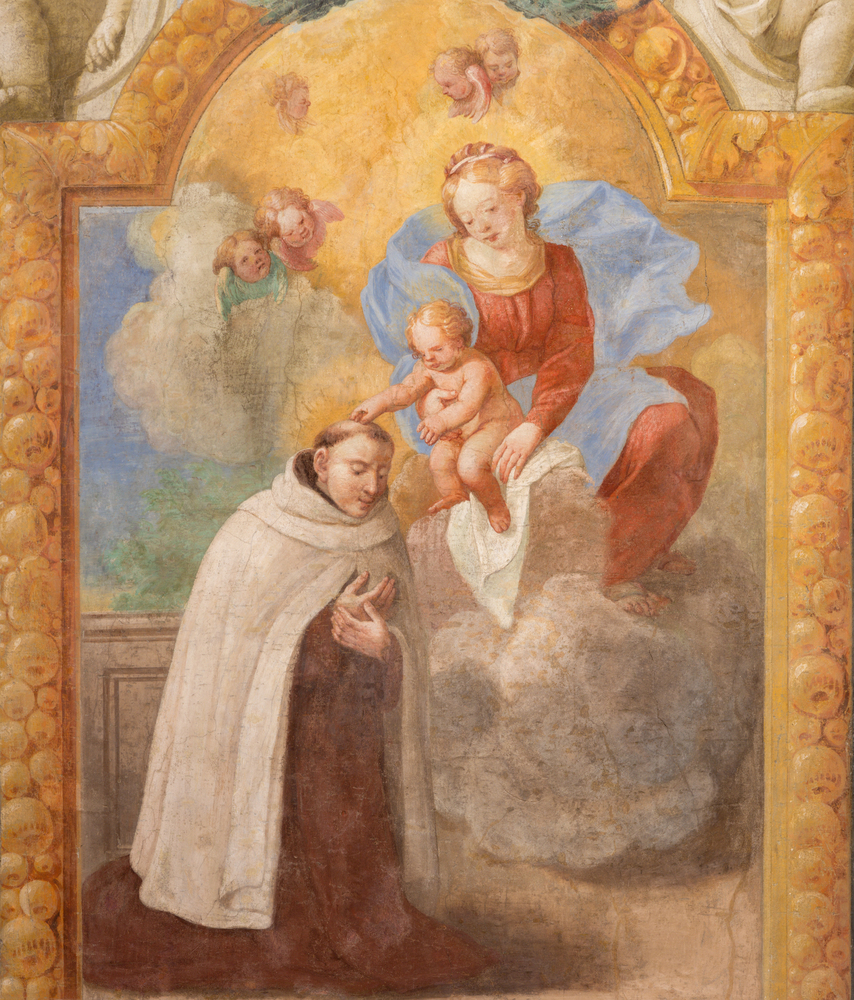
St John of the Cross is most helpful in aiding individuals “hear” God beyond the rare but possible Paul conversion or mystical experience of the saints. St. John of the Cross points to three types of encounters which include direct, silent and transformative. In his, The Ascent to Mt Carmel, he also speaks of three types of locutions we receive from God during prayer. The first locution is referred to as Successive Locutions. In this, internal words or thoughts are received during contemplative prayer. These words or thoughts may originate from God, intellect or self, or via deception. Their validity is tested through the goodness of fruits that flow from them. In some ways, if from God, they are reinterpreted by own internal processing of them via the brain and mind. The second locution is referred to Formal Locutions. St. John of the Cross refers to these as distinct internal words or thoughts independent of one’s external senses but provide direction. If from an evil source, again the fruits become rotten and dominated by pride. Finally, St John of the Cross identifies Substantial Locutions which are direct and powerful commands from God that are received passively by the intellect and will of the soul. They clearly cannot be fabricated or originated from self or demonic sources. Again all three of these vary in certainty and involve discernment upon varying degrees, but they all respect and flow from within the temporal physiology of the brain and mind that encompass the soul. For many, after discernment, they remain the most important ways we communicate and have union with God. Sometimes these locutions correspond with external signs through others inspired by the Spirit, or events or God’s will gently guiding one to the ultimate task God has assigned (Steuart, 2026).
Spiritual Direction in Achieving Closer Union
Helping individuals in Christian Spiritual Direction achieve closer union to God involves identifying first the phase and state of the soul. Is the soul in a purgative, illuminative or unitive phase? Every individual at each phase will also experience their own unique strengths and weaknesses. The importance is to gently guide the soul to God’s will and find submission to it. It is only then that the soul can begin to hear God beyond the noises of self. As the angels before humanity, one must assigns task in life completely and without hesitation or complaint. Easier said and done! And this requires fasting and discipline itself! One must also learn to accept one’s daily duty and tie to Christ’s sacrifice on the cross. One needs to make a morning offering for sins and find God throughout the day during troubles as well as joys. Becoming closer to God means becomes sensitized to the noises and sins of the world and one’s conscience becomes more tender to wrong. It includes balancing wants and needs of temporal goods and social constraints with spiritual demands. It involves finding the peace and calm that is a fruit of this union. One surrenders the past and releases anxiety and worry about the future and focuses on God today in the present. One permits this union to permeate the being to self surrender. A good day is not if it went to one’s plan but if it went to God’s plan if oneself served God’s intended purpose for that day. Fortunately, in the present, that usually involves fulfilling one’s current duties and carrying one’s current crosses, until God reveals the larger plans that grow from that daily walk (Moore, 2013).
Through these acts, God becomes part of our day. By being part of day, a natural closer friendship develops. That friendship provides deeper insights and more peace and calm as one continues to grow closer to God. I would like to use the analogy of the sun to explain this closer union. Like a plant that has been deprived of sunlight, if suddenly exposed, the sun can bleach it and harm it. It must gradually experience light to grow and become strong enough for direct sunlight. The soul too cannot fully comprehend the powerful presence of God. Closer union to God, is like exercise and requires spiritual exercise. It requires growing in God so that one can properly experience God as a gift and gradually become closer and closer. To return to the analogy of the sun, if the sun were to be taken as the Beatific Vision, in its most grandeur it would consume earth itself. One cannot even stare into sun from Earth despite it being millions of miles away. Our conception and union with God is hence limited in our temporal experience. The Beatific Vision is far grander than the sun, much less the all the suns that comprise the known and unknown universe. Hence in this life, our union to God is limited due to our own frailness but if one lives a good life, the exposure to God in the temporal will prepare us for the eschatological state of the Beatific Vision. This should excite us to better know, love and serve Him here and to enjoy whatever gifts of union He bestows upon us.
Of final note and I think not only a personal struggle but also a universal one for others is how to balance life with time with God without feeling they are putting God second or ignoring God. The spiritual life and union with God is not intended to strip one of social events and entertainment. It does however propose a proper balance. We live in a temporal society and have to meet basic needs of survival. We work, study, socialize and perform tasks. This is where offering all tasks to God through Jesus Christ that the ordinary duties and actions of the day can become spiritualized and become meaningful in our journey with God. We must remember that in our temporal bodies, we cannot constantly worship or focus on God, so we offer those things to Him beforehand. Jesus, Himself, understood rest, socialization and work before His own public ministry. So, definitely, secular life is important and will vary depending on our various states and obligations in life but they all must be offered to God. If, one feels their secularization and other duties is taking away from God and one’s primary purpose to know, love or serve God then that secularization is a distraction and needs to be reframed or modified. In addition, one should consider how these social atmospheres give glory to God. If these social atmospheres are not Godly, a more sensitive soul will sense it. However, one can easily be distracted or persuaded into sinful moments when one lowers one’s guard into activities in social settings that deviate from God or make God second or religious duties postponed. One must be aware of the spiritual energy of the event. Ultimately, it is OK to balance life and secular activities with the particular state of spiritual life. These levels will vary based on religious status, but they should be cherished and enjoyed and seen as part of life. Find time to offer to God those times as well as when on the move, a time to interpose a short prayer. In this way, our social life is shared with God and we will enjoy those times without putting God second. The secular life of singleness or even marriage places us both in spirituality and the physical world. Unlike religious life, secular vocations or marriage require far more commitment to secular activities. If we properly attune ourselves to God, He can walk with us in every step. We can partake in the world without being owned by it. We can strive to give back the world to God despite Satan’s social presence.
Good and bad examples of maintaining a spiritual life with a secular life
Example: Tony enjoys baseball. He goes to many baseball games. However, on Sunday, Tony went to a playoff game and missed Mass or service due to it. He has placed God second. The social event is good in itself but became sinful when it became a god over one’s duty to God.
Example: Mary on her way to a Halloween party on Saturday night, prayed the rosary and asked God to bless her time and keep it safe and sinless. She enjoyed her time at the party and partook in the fun festivities keeping holy herself and her expressions. She did not stay late and made services the next day.
Example: Joe feels guilty that he is enjoying socialization with his friends at a bachelor party. He sees drinking around him, but he is maintaining himself to one or two drinks, as well as behaving in a moral fashion. However, he senses the worldly atmosphere due to his closeness with God. He does not feel superior than anyone there but he is more aware of the evil one’s presence in over indulgence. He remains moral in all discourse and leaves early. He was submitted to an occasion of sin but by God’s grace served as a moral example.
Example: Jerry has to work all day. He offers this cross to God as a prayer through the intercession of Christ to be offered and made beautiful to God. He offers his work to God.
Example: Michael is going to the gym. He offers his time working out as a prayer of thanksgiving for good health and properly maintaining his body as a Temple of the Holy Spirit. He prays for humility in God over vanity of the body but still finds a healthy pride in his health as a gift from God.
Example: Sara spends the whole night on her cell phone reading news, social posts, and watching videos. She however neglects time to God before bed. Instead of limiting the time on the phone, she has over indulged and created an imbalance in which the evil one utilized to distract her.
Example: Michelle spent the weekend putting up a Christmas tree, shopping for gifts and even putting up a decorative snowman in her front yard. She still managed though to prioritize Sunday service, meditate on Christ’s birth and share her faith.
Example: John used to swear frequently. Now, when tempted with anger, he offers it to God and asks for God’s love. He states, “Jesus, I trust in you!” when dealing with a daily issue. He has invited Divine Presence into his daily duties and events and has acknowledged his weakness while allowing God to provide peace and calm in all trials. He walks with God through every incident of the day.
Example: Brother Will wishes he could stay in contemplation all day within his cell. His superiors have assigned him to kitchen duty. Brother Will submits his will to authority and God. He makes the cooking and washing of dishes his prayer to God.
Example: Mark has many duties to complete at home, but a friend calls needing spiritual advice. Mark takes the time to listen and console. Mark has answered the unexpected call of God to help another in need through Spiritual Works of Mercy. Through aid of neighbor, his union with God becomes stronger despite what he thought needed done that day.
Example: Susan is involved in politics. She becomes more excited over politics than her faith. Through her time and actions, she gives more time to trying to change the world through political activism than prayer. Her faith is acknowledged, but her prayer life is non existent. In this way, something that is good has become a poison to her soul. She could participate in politics and still have a close relationship with God, if she understood the temporary nature of the world compared to eternal life of Heaven. If she understood Christ’s command to give unto Caesar and to give unto God what is due. Susan can instead bring moral values into politics and maintain a strong prayer life while not compromising her faith for political gain.
These examples illustrate life in various states of union with God and how while in the temporal world, things can distract but if we focus on God, we can turn them into prayers and balance our life with them.
Conclusion

Union with God is limited in this life but it is imperative to cultivate in daily life. Union and special graces are gifts and cannot be earned but we should cooperate with grace and seek a closer union with God. Union involves purgative, illuminative, and unitive phases. While preternatural events can occur in union, they are rare and should not be sought out. Instead we should seek God within our temporal faculties. St. Teresa of Avila and St John of the Cross all expound on these mysteries. Ultimately one must submit to God’s will, accept one’s assigned task, offer one’s day and seek to know, love and serve God in this life. The Beatific Vision itself is too powerful to experience in the fallen state, so we must seek lesser forms of union until our heavenly reward.
Please also review AIHCP’s Christian Spiritual Direction Program as well as its Christian Counseling Program.
Other AIHCP Blogs
Ignatian Discernment. Click here
Christian Pain and Suffering. Click here
Resources
-
Castle, I. & MOFAS DIAMOND. (1989). by St. Teresa of Avila. Catholicapologetics.Info. http://www.catholicapologetics.info/library/onlinelibrary/INTERIOR.DOChttp://www.catholicapologetics.info/library/onlinelibrary/INTERIOR.DOC
- Dubay, T. (2009). Fire Within: Teresa of Avila, John of the Cross and the Gospel on Prayer. Books.Google.Com. https://books.google.com/books?hl=en&lr=&id=zdEwDwAAQBAJ&oi=fnd&pg=PP13&dq=teresa+of+avila+prayer+of+union+and+prayer+of+quiet&ots=iBxpUezKD8&sig=8bBydhViQTQGTaiG5Rs7gpDlwO4
- Moore, J. (2013). Adolescent spiritual development: Stages and strategies. Api.Taylorfrancis.Com. https://api.taylorfrancis.com/content/chapters/edit/download?identifierName=doi&identifierValue=10.4324/9781410603784-29&type=chapterpdfhttps://api.taylorfrancis.com/content/chapters/edit/download?identifierName=doi&identifierValue=10.4324/97814106037
- Steuart, R. (2006). The Mystical Doctrine of St. John of the Cross. Books.Google.Com. https://books.google.com/books?hl=en&lr=&id=okosgmeLYH8C&oi=fnd&pg=PR5&dq=john+of+the+cross+locutions+discernment+ascent+of+mount+carmel&ots=3xFzJlMuel&sig=CxNPNpLsZFoB_AtlP1INlElFvy4 https://books.google.com/books?hl=en&lr=&id=okosgmeLYH8C&oi=fnd&pg=PR5&dq=john+of+the+cross+locutions+dis