
When one considers the classical image of mental illness, psychosis, hallucinations and delusions are the first to come to mind. This can create frightening images or archetypes, or remind individuals of the old asylums of the late 19th and early 20th centuries. While some of the symptoms of psychosis and schizophrenia can be odd and frightening to some, the reality is most are individuals who are suffering and trying to survive. 1 in 100 individuals suffer from schizophrenia and if exists within family history , the chances of inheriting the gene that activates it rises (McRay, et al., 2016). With that in mind, more individuals than one would think suffer at some level within the spectrum of Schizophrenia and psychosis related disorders. This blog will review the DSM-V-TR and its diagnosis of Schizophrenia as well as related disorders.
Please also review AIHCP’s Healthcare Certifications for behavioral health professionals, as well as nurses and other healthcare professionals.
Etiology Behind Psychosis and Schizophrenia
Psychosis itself can occur within any hallucinating drug, substance or meditation. Those with the genetic predisposition can activate it in life by use of drugs, or enduring various stressors (McRay, et al., 2016). The disorders have no gender bias and usually occur late in adolescence or early adulthood (Barlow, et al., 2023). The first phase consists premorbid conditions of cognitive and social impairments, followed by the prodromal phase which exhibits minor psychotic like behaviors for 1 to 2 years. It can take up to 10 years for one to fully manifest positive and negative symptoms with the deterioration continuing without treatment (Barlow, et al., 2023).
Since Schizophrenia is highly connected to family history, various neurological defects are apparent, including larger ventricles, as well as higher levels of the neurotransmitter dopamine (Barlow, et al., 2023). For some, the use of drugs, as well as stressors can play a role in activating it. Finally, fetal exposition to viral infection and different pregnancy complications can play a role (Barlow, et al., 2023).
Schizophrenia Spectrum
There is not merely one type of psychosis, but a full spectrum that illustrates Schizophrenia and psychosis and how it manifests differently at various degrees and durations. The DSM-V-TR lists the spectrum as consisting of Delusional Disorder, Brief Psychotic Disorder, Schizophreniform Disorder, Schizophrenia, Schizoaffective Disorder, and Psychotic Disorder due to Substance or Medication induced. Schizotypal Disorder is briefly listed but categorized within personality disorders (DSM-V-TR, 2022).
Within all of these disorders to some extent or level certain symptoms manifest in extremity, duration or presence that are key in differentiating one disorder from another, but within that group of symptoms are clear signs that point to some type of psychosis. Within the nature of psychosis delusions, hallucinations, negative symptoms and disordered speech and thought are key divisions of psychosis.
Delusions
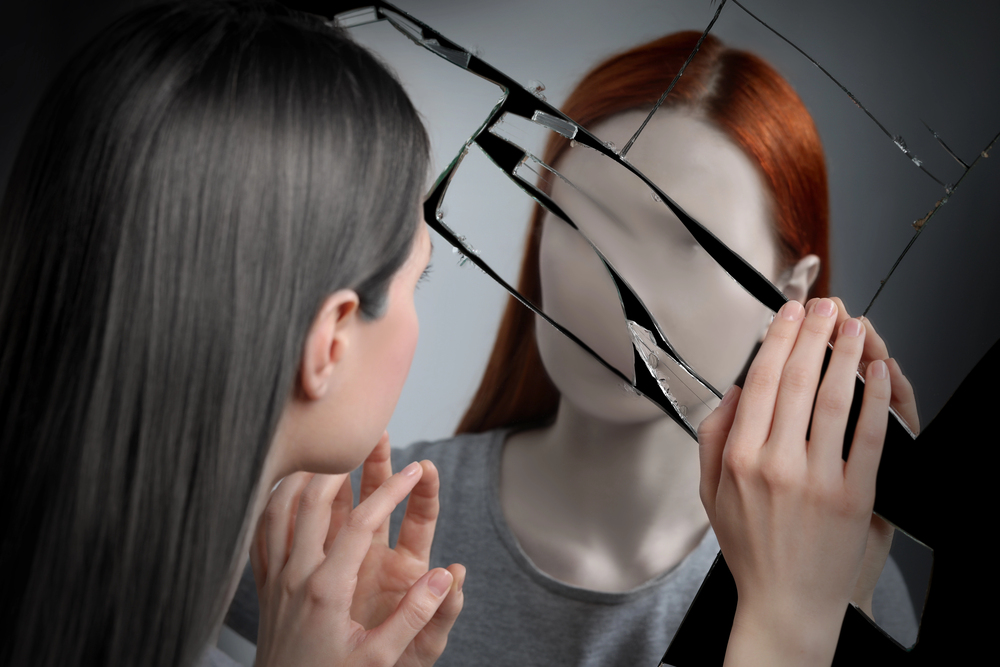
Delusions are a disorder of thought content (Barlow, et al., 2023). The DSM-V-TR adds that delusions are unable to change or be altered even if conflicting evidence against them is supplied to the person (2023). Persecutory delusions are beliefs that an individual is being persecuted, or that one is going be harmed or harassed by a group. Individuals who feel the CIA or FBI is hunting them is a prime example of this type of delusion. Referential delusions are when the individual believes that certain benign cues, gestures, or comments are directed at them. Grandiose delusions refer to delusions that entail the person thinking he or she is someone famous or has individual powers not possessed. Erotomanic delusions entail belief that someone is in love with them, even someone famous. Nihilistic delusions are strong convictions that a catastrophe will occur and finally Somatic delusions are fears regarding health and organ functioing (DSM-V-TR, 2023). Furthermore delusions are considered bizarre if the delusion falls out of the category of even possible, such as aliens inserting a chip in someone’s head (DSM-V-TR, 2023). It is important to differentiate strongly held beliefs or convictions from delusions as well as culturally based ideals that may seem odd to others.
Hallucinations
Hallucinations are perception like experiences that occur without external stimulus (DSM-V-TR, 2023). They can be auditory or visual and must occur within the range of normal experiences. The most common hallucination in Schizophrenia is auditory. Interesting to note, that when individuals experience auditory hallucinations, it the area of the brain associated with speech or Broca’s area that has been shown in experiments to activate instead of the hearing area known as Wernicke’s area. This is because the voices are actually coming from own’s speech area and not from a true external auditory source (Barlow, et. al. 2023).

Those from other cultures or religious traditions, especially within mysticism, are not always considered to be hallucinating. The DSM-V-TR clearly specifies that these cases need to be evaluated differently than a pure disorder (2023). Apparitions and voices of a deity should be evaluated to rule out any mental defect but in some cases no defect exists. Sometimes, a religious experience can possess qualities of a hallucination but the information or message is foreign from the person. Other times, religious experiences can affect the five senses themselves and are not hallucinations. It is important for any spiritual message to sometimes undergo rigid investigation to understand if it is from within a person or if filtered into the person through a spiritual source. Ultimately, how one views these experiences will pend on if one is an atheist or a believer in the spiritual realm. Regardless, they deserve special differential treatment in diagnosis than pure hallucinations before denying it or labeling one with a disorder.
Disorganized Thinking, Speech and Abnormal Motor Control
It is common with psychosis and schizophrenia for many odd cognitive thoughts, reactions, and word salads to emerge within the individual. This is part of the disorder and inability to process thoughts and reality. The DSM-V-TR lists a variety of disorganized thinking and speech symptoms, including derailment or loose association where the person switches without logic from topic to topic, or tangentialtions that illustrate completely unrelated answers to questions. In addition, incoherence can reach such a state where a word salad manifests where the train of thought is impossible to follow (2023). In other cases, inappropriate affect can emerge in which the person’s emotional responses do not match the question or situation (Barlow, et. al., 2022).
In regards to motor control, some individuals display catotonia or decreased ability to react to stimuli. It can also manifest in incomplete or no verbal responses such as stupor or mutism. It is important to note that catatonia symptoms while related to schizophrenia exist, they can also exist in other disorders as well (DSM-V-TR, 2023).
Negative Symptoms

Positive symptoms such as hallucinations and delusions are directly manifested in psychosis and schizophrenia, but there are also passive or negative symptoms. Among them are avolition, alogia, anhedonia, asociality, and affective flattening (Barlow, et al., 2022). Avolition deals with inability or interest to partake in daily tasks. Alogia refers to the absence of speech. Anhedonia refers to the indifference to pleasure or activities that are a source of pleasure. Asociality refers to withdraw and lack of interest of social interaction. Finally, affective flattening is a lack of emotional response or a flat affect to questions or a situation (Barlow, et al., 2022).
Diagnosis Criteria of Schizophrenia Spectrum
Delusional Disorder
This disorder requires the presence of at least one type of delusion for the persistence of one month and the delusions must cause social impairments but do not appear as bizarre or as odd of those exhibiting schizophrenia. These delusions are not due to drugs, substance or other medications and finally, Hallucinations, negative symptoms and disorganization is rare and any form of catatonia rules out this diagnosis (DSM-V-TR, 2022).
Brief Psychotic Disorder

A brief psychotic disorder exhibits the positive symptoms and is not described by other mental health issues such as major depression or bi-polar. It lasts a minimum of 1 day to 1 full month and then a full return to premorbid level of functioning (DSM-V-TR, 2022).
Schizophreniform
This disorder possesses all the positive and negative symptoms of schizophrenia but its duration is its key attribute. It manifests from 1 month to 6 months (DSM-V-TR, 2022). It is also not attributed to any other mood disorders or drugs, substances or medications.
Schizophrenia
Schizophrenia requires 2 of the following during a period exceeding 1 month.
1.delusions
2. hallucinations
3. disorganized speech
4. grossly disorganized behavior
5. negative symptoms.
Of the above conditions, one must be from delusions, hallucinations or disorganized speech.
In addition to these core psychosis symptoms, there must be significant impairment and functioning with work, social interaction and self care. These signs must persist beyond 6 months. In addition, major depressive disorder and bi-polar disorder must be ruled out. Finally, the disorder must not be due to any drug, substance or medicine. (DSM-V-TR, 2022).
Schizoaffective Disorder
This disorder exhibits psychotic symptoms for a 6 month period while also enduring bi-polar or major depressive disorder must be present through the majority of the schizoaffective disorder. It can be specified as bipolar, depressive or catatonia (DSM-V-TR, 2022).
Treatment of Psychosis and Schizophrenia Spectrum
Treatment remains very difficult for many because of the numerous side effects, lack of family and social support, and the damaging effects of the illness for self care but it can help alleviate symptoms and help some individuals live normal lives.

Medically, since the 1950s, anti-psychotics have proven to be a powerful tool in helping individuals with psychosis and schizophrenia. Also, referred to as neuroleptics, these drugs are dopamine antagonists that reduce the production of dopamine (Barlow, et al., 2022). While helping many individuals who suffer from schizophrenia, the medications can also cause numerous side effects from weight gain to fatigue. Uniquely to schizophrenia, the lowering of dopamine can cause tremor like symptoms similar to Parkinson disease. Ironically, individuals who take medications to increase dopamine for Parkinson disease can experience schizophrenic like hallucinations (Barlow, et. al., 2022).
In addition to anti-psychotics, interventions are key in helping individuals face their delusions and social struggles. Psychotherapy can help individuals understand their way of thinking, as well as provide tools and skills to achieve goals in life while facing the struggles associated with the disorder. In addition, symptom management is essential in identifying warning signs of potential flare ups and when to seek assistance. Social and family assistance is key to helping individuals find their way. Those facing these issues must also always refrain from drugs and alcohol due to their condition of possible psychosis but also due to the nature of the medications they are prescribed (Barlow, et al., 2022). Essentially, it involves not only accepting and discovering that one has this mental disorder but adjusting to a new way of life to manage the symptoms and promote health. Barlow points out that treatment plans should be integrative and include collaborative psychopharmacology, community treatment access, family psychoeducation, supportive employment and illness management skills (2023).
Conclusion
Psychosis while odd and sometimes scary affects many people. Hallucinations, delusions, disorganized speech and negative symptoms are the key groupings of symptoms that manifiest with psychosis. Understanding why it happens and identifying the signs is important in controlling it. It is essential to diagnose and treat before it derails a person’s social, academic, family and professional life. Unfortunately, due to social support, life style change, medicine side effects, and extreme of impairment, many never receive the full help they need. This leads to many be left to fend for themselves as they become more disconnected from reality. Many find themselves homeless, unemployed and in and out of the prison system without proper care.
Please also review AIHCP’s Behavioral Health Certifications for healthcare professionals.
Additional Blogs
Stress and Trauma Disorders: Access here
Anxiety Disorders: Access here
Mood Disorders: Access here
References
American Psychiatric Association. (2022). Diagnostic and statistical manual of mental disorder” DSM-5-TR (5th ed., text revision). American Psychiatric Association Publishing.
Barlow, D.H., Durand, V.M., & Hofmann, S.G. (2023). Psychopathology. An integrative approach to mental disorder (9th ed.). Cengage Learning
McRay, B.W., Yarhouse, M.A., Butman, R.E., & Kiple, C. (2016). Modern psychopathologies: A comprehensive Christian appraisal. (2nd, ed.) IVP Academic
Additional Resources
Gregory, S. (2026). “Understanding care and treatments for schizophrenia”. Mayo Clinic. Access here
Schizophrenia (2025). Cleveland Clinic. Access here
Carey, E. (2024). Psychosis. Healthline. Access here
Psychosis: Causes, Symptoms, and Treatment. WebMed. Access here