
Behavioral Psychology is a branch of counseling and techniques that emphasize the direct role social experiences and learning play a role in behavior. Cognitive Behavioral Therapy is an offshoot from it. Behavior Therapy focuses on how current behaviors are affected through previous learning experiences and how they shaped the current behavior. Behavior Therapy is concerned less with the subconscious and how it played a role in one’s current behavior but more so how past experiences, learning, and how classical and operant conditioning formed one’s individual behavior. Like many schools of thought, it adheres to a strict conceptual model for its approach but for many therapists, it is integrated with other schools of thought to meet the needs of the client. Among the many psychological schools, Behavior Therapy is the most empirically based approaches despite its limitations if used as the only lens to examine human behavior. It perspective is a critical piece of understanding individuals and helping them find productive change and healing. For that reason, it and many of its techniques are widely applied with other Psychoanalytic and Rogerian therapies.

Please also review AIHCP’s Behavioral Health Certifications, including Grief Counseling, Crisis Counseling, Trauma Informed Care, Anger Management, Stress Management, as well as Spiritual Counseling and Christian Counseling.
Behavioral Therapy
Behavioral Therapy emerged in the Mid 20th Century and continues to adapt and add key components from the original thought. Key pioneers and founders of Behavioral Therapy include Joseph Wolpe, Hans Eysenck, B.F. Skinner, Arnold Lazarus, Albert Bandura and David Meichenbaum (Tan, 2022). Traditional Behavior Therapy is based on behavior being conditioned by one’s learning and social environment. Classical conditioning as well as operant conditioning play large roles in how behavior evolves within a person.
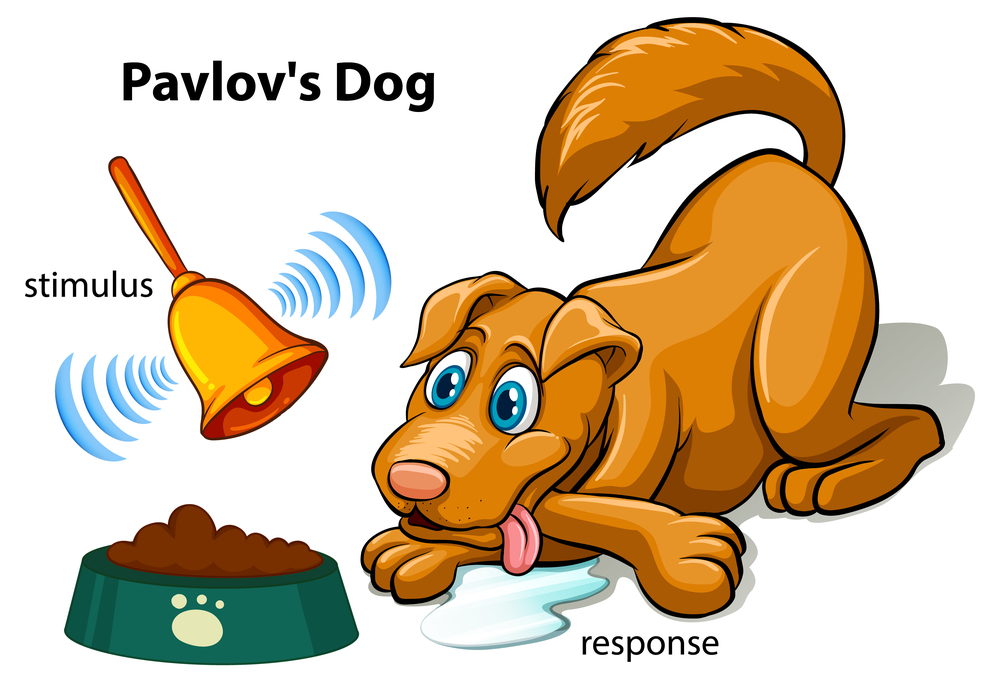
Classical conditioning is based off IvanPavlov and his studies on canine responses to stimuli. In classical conditioning, the dog salivates in response to the treat or food. The salivation is referred to the unconditioned response or natural response to the food or unconditioned stimuli. The UCR to the UCS is a natural response to something that occurs subconsciously within any living creature. Pavlov however incorporated a conditioned stimuli next to the unconditioned stimuli to help provoke a conditioned response. He added the ringing of a bell during dinner time for the dogs. The dogs continued to salivate and eat due to the food, but later when the food was removed, the ringing of the bell still conditioned a response of salivating. A CR emerged due to the CS. This illustrated that living things can be conditioned and behavior changed at neural level over time.
Operant conditioning also played a role for Wolpe, Skinner and other early behavioral therapists. Operant conditioning looks to alter behavior through consequences. Behaviors that are reinforced with pleasant stimuli or reward, or even the absence of negative stimuli constitute positive/negative reinforcement of it. These consequences look to maintain or increase a certain behavior. Behaviors that are met with punishment and negative stimuli look to eliminate or reduce a certain behavior (Tan, 2022).
Behavior modification became a key component in changing a person way of thinking and acting. Skinner even took this a step farther than most and indicated that all behavioral events and modifications determine what a person will or shall do, even to the extent of denying free will (Tan, 2022). Obviously, this was an extreme outlook and narrows human behavior only to present stimuli and events without considering the numerous other things at play. Nonetheless, one cannot deny the profound effect environment and stimuli plays within the role of behavior and decision making.
As the school of thought developed, cognitive and other elements would become important tenets in Behavior Therapy.
Techniques and Therapies
Behavioral Therapy employs a broad range of techniques and therapies. First and foremost, the therapist is more so in control than in Rogerian therapies and other Person-Centered Therapies. The therapist takes a central role. The client proposes the “what” while the therapist presents the “how”. Hence, there is far less concern with the therapist-client relationship. Although not disregarded, especially when integrated, the emphasis of healing and change is more so in the techniques and the now instead of focusing on a relationship or probing into the past.
To help understand the client, behavioral assessment is the first and key stage in helping the client. This involves targeting the “what” of the problem and identifying symptoms and problems of the client (Tan, 2022). Counselors propose operant conditioning as a key element of change. They utilize positive and negative forms of reinforcement to help the client change. Some cases involve complete extinction of any positive or negative. If dealing with a child’s temper tantrum, extinction would be utilized as a way to completely to ignore the outburst and when the child is again calm to implement positive reinforcement. Punishment or aversive control can also be utilized to produce change. Positive punishment adds an adverse stimulus, while negative punishment removes something positive. A child may be forced to do a choir or with positive punishment associated with undesired behavior, while negative may involve grounding a child or taking away a privilege. In some cases though, punishment and extinction can also cause unwanted desires in anger and aggression. Because of this, positive reinforcement is seen as the best psychological tool in promoting healthy change (Tan, 2022).
Another technique utilized in Behavior Therapy is Token Economies. This technique is a positive reinforcing strategy based on reward of token which has a symbolic value for something that can earned through good behavior. This is a common technique used in schools which keep track of desired performance and behavior with recognition and reward.
Modeling represents another utilized strategy to help foster change. In modeling, the client observes another person’s behavior and the consequences surrounding it. Bandura listed certain ways modeling can be utilized in changing behavior. He first emphasized teaching which includes simple observation and application of the model. Second, in therapy, prompting involves the client performing a certain behavior that was observed. Motivating a client through modeling involves focus on the reward of the other person and hence motivating the client to replicate the behavior. Reducing anxiety involves watching the model perform an anxious deed to be replicated by the client. Maybe this involves the model dealing with something that is a phobia for the client. Finally, live modeling involves replicating the behavior or acting it out in therapy under the guidance of the counselor (Tan, 2022).
In addition, Behavior therapies also look to incorporate certain social skill and assertiveness training. In this, the therapist helps the client understand their current behavior and why he or she responds in certain situations and how to respond differently, utilizing a variety of modeling and rehearsal techniques. In this way, Behavior Therapy works closely with a variety of management techniques to work on behaviors that need changed, included areas of anger, assertiveness, as well as stress management. In addition, the counselor looks to help the client meet goals and self directed change. Bandura believed strongly in the self efficacy of a client to successfully implement change in one’s life (Tan, 2022). In meeting goals, self talk and other cognitive ways to help someone through a situation is encouraged. Meichenbaum employed stress inoculation training, as a type of exposure therapy to stress itself and how one responds to stress. This CBM (Cognitive Behavior Modification) was also utilized by the military to help soldiers in stressful situations (Tan, 2022).

Behavior Therapy also focuses heavily on relation strategies which serve to relax the central nervous system and the reactions to stress and distress. They employ a wide variety of exercises involving breathing, guided meditation and progressive muscle relation to face and deal with stress, emotions and trauma (Tan, 2022). Mindfulness is also employed in a variety of stress management strategies.
Another key tool used in Behavior Therapy involves systematic desensitization. Wolpe believed that exposures to phobias or traumas can help an individual modify current behavioral reactions and recircuit reactions to them. Utilizing the SUD scale (Subjective Units of Discomfort), the therapist gradually exposes the client to a phobia or issue. For example, a person who fears a spider will be begin to be introduced to issues surrounding the spider with the therapist documenting the SUD scale input between 1 to 100 with 100 being the most anxious. Minimal dosing with the word, moves forward to a picture, then it progresses to dead specimens to alive specimens to eventual complete exposure and touching (Tan, 2022). Wolpe referred to this as counterconditioning a certain behavioral response with a new and healthy response. Other forms are more intense. Flooding involves exposure without the feared stimuli or its consequences but at a higher maximum level. One modern utilization of this is EMDR (Eye Movement Desensitization Reprocessing). This technique has gained popularity in therapies facing trauma and has proved to be effective way for many clients to face trauma and phobias itself (Tan, 2022).
Moving Forward
Behavior Therapy has evolved to include many multi-dimensional aspects, included mindfulness as well as cognitive therapies. It is a very successful type of therapy but like all therapies when utilized singularly, it can miss important aspects of healing regarding the past, or unresolved memories. Yet despite this, it still possesses a comprehensive approach to multiple issues. It helps the person gain autonomy and confidence through goals and freedom to reset one’s mindset to produce new desired behaviors.
Please also review AIHCP’s Healthcare Certification Programs and see if they meet your academic and professional goals.
Other AIHCP Blogs
Patient Centered Therapy: Access here
Existential Therapy: Access here
Reference
Tan, S-Y. (2022). Counseling and psychology: A Christian perspective (2nd Edition). Baker Academic.
Additional Resources
Cherry, K. (2025). “How Behavioral Therapy Works”. Very Well Mind. Access here
Gillette, H. (2025). “Your Guide to Understanding Behavioral Therapy”. PsychCentral. Access here
“Joseph Wolpe’s Contributions to Psychology: Pioneering Behavioral Therapy” (2024). Neurolaunch. Access here