
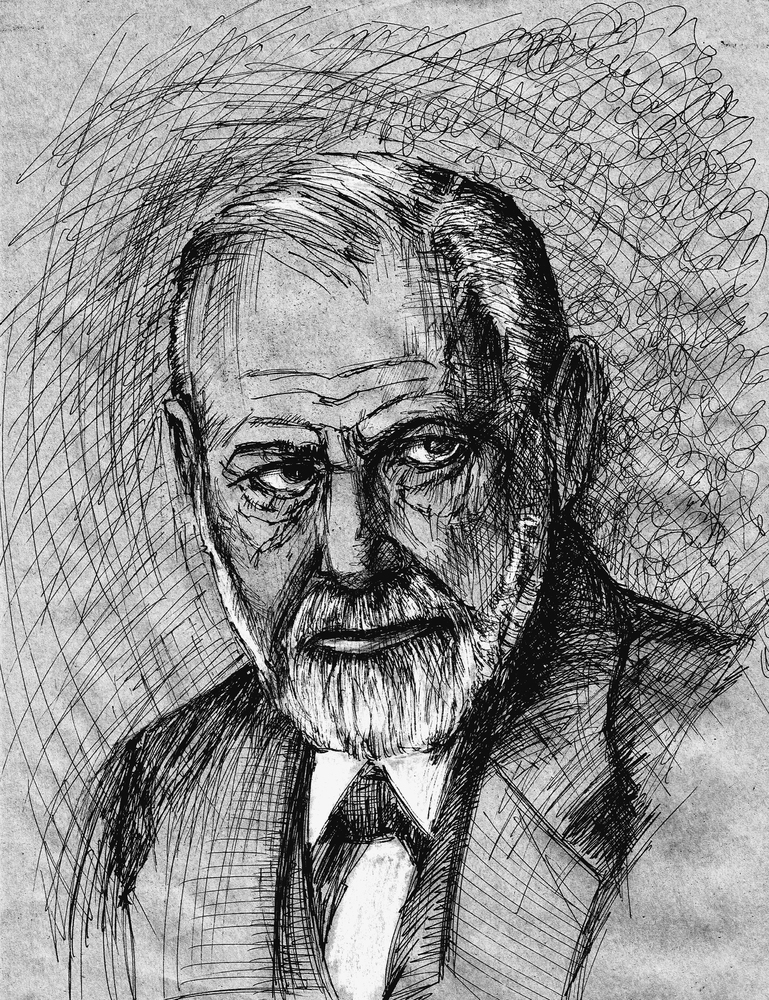
Despite numerous modern objections to various aspects of Freud and psychoanalytic theory and counseling, Sigmund Freud nonetheless gave psychology many beneficial concepts that can be borrowed from his school of thought and utilized to help one understand human nature. Among one of these useful tools are Freud’s defense mechanisms of the ego. To recall, Freud considered the makeup of the human mind to consist of the id, ego, and superego. The id referred to humanity’s natural inclinations and instinctive drives, the ego was in essence the executive drive behind the self and the interaction with the outside world and the superego was humanity’s alteration of self to customs, social patterns and inherited morality. When these three were at odds with each other or in imbalance, then psychological discomfort resulted. This short blog will look at these Freudian defense mechanisms.
Please also review AIHCP’s numerous behavioral and healthcare certifications.
Facing Anxiety and Defense Mechanisms
When dealing with anxiety, or distress, the ego, according to Freud, would attempt to cope with the issues, but sometimes in an unhealthy way through defense systems (Tan 2011, p. 41). Freud stated that in particular, neurotic or moral anxiety caused most individuals to look to defend their actions or views. Neurotic anxiety referred to one’s own fears of being overwhelmed by one’s own desires and drives, while moral anxiety was the fear of being at odds with one’s conscience (Tan 2011, p. 41). Since many individuals’ actions are at odds with their beliefs, then naturally, individuals look to find a way to exist creating a cognitive dissonance. In therapy, it is important to identify these defense mechanisms since they prevent the truth of the matter or the reality of the situation.
Repression
Freud considered repression to the most fundamental and important defense mechanism (Tan 2011, p. 41). At the subconscious level, Freud believed that individuals within their first formative years could repress and block out past and painful memories. Many of these subconscious memories would be lost to consciousness but could only be retraced through therapy or dream work. In addition to these memories, emotions tied to them could also be repressed but remain boiling within one’s subconscious. This involuntary type of defense mechanism helped the person find peace but still left unresolved issues that could fester in one’s later life if not faced.
Denial

Denial is a common defense mechanism and even one of the first responses in grief. Denial looks to push away the horrid reality and to pretend it does not exist. In grief, denial is temporary, but for some denial can become a very dangerous thing as it festers. For instance, if one is diagnosed with a disease, one may live in a state of denial for a very long time, or if one refuses to accept the consequences of bad habits, one can continue down a unhealthy path.
Displacement
Displacement is a common mechanism that is quite unfair to others. Instead of coping with the issue directly or facing the person causing it, one displaces the confrontation and frustration onto an easier substitute. For instance a man who returns home from work, may instead yell at his spouse or children. It is very common for individuals with high level stress to displace the stress source onto someone else. This can cause great turmoil at home or with family and friends for individuals who are unable to channel their frustration into the proper source.
Sublimation
In a very similar way, the stressed person may aim their frustration or energy into other things or projects instead of facing the primary stress itself. This is far better than blaming a person for one’s own issues, but this defense mechanism nonetheless re allocates the problem to something else without finding resolution. In the end, the person at least temporarily is defended from the stress but it remains waiting later.
Reaction Formation
Ironically, some individuals ignore the intense feeling they experience by acting out the exact opposite emotional reaction in a hope of controlling the situation. Instead of confronting a person one dislikes, one instead over exaggerates the response of kindness. While this may seem nice, it is nonetheless toxic as it builds up resentment because the stress or emotion is not being acknowledged or the issue is not being resolved.
Projection
This defense mechanism is very toxic because it places one’s own impulses or behaviors on another person. This permits the person to blame others and to defend oneself from one’s own judgement and consequence. This can occur when a boy hates his father because he believes his father hates him (Tan 2011, p. 42). In essence, projection permits the person to escape the emotion by placing it on the other person.
Rationalization
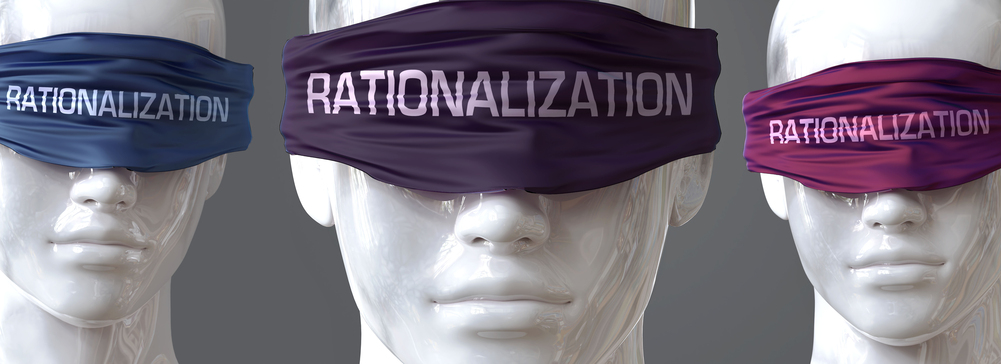
Sometimes when something bad happens, individuals try to convince themselves that what occurred is not that bad after all. This false attempt to find a silver lining does not permit the person to grieve the situation from a truthful perspective. Because of this, the person then misses the opportunity to face the issue as well as to learn from it. This is why especially in grief counseling, it is important to acknowledge the reality of the situation. It is OK to feel something went wrong and to feel bad about it, but sometimes subconscious defense mechanisms try to derail this process for temporary relief.
Regression
When things go wrong, sometimes people fall back. If something is terrible instead of facing it, sometimes people may feel the need to hide or not confront and return to more childlike behaviors or even immature behaviors. In children, this is even more common and visible in behavior, such as bed wetting, or other thumb sucking.
Intellectualism
Sometimes individuals may try to theorize or philosophize a bad event instead of focusing on the emotions themselves. This defense mechanism again looks to keep the painful emotion away through rational thought about the situation. This mechanism like many others is only prolonging the issue. In grief counseling, it is detrimental to bury emotion and not acknowledge it. One cannot avoid what needs to be faced.
Identification
Sometimes, the cross or problem is so big, that one feels oneself is not equipped to face it. In this regard, they identify with other people who have successful faced these issues. While this can be good, it can also be bad when one begins to emulate the other person at a pathological level. It is fine to see how others handled problems, but ultimately our problems are unique to us and we must sometimes walk the road alone and figure it out for ourselves.
Conclusion

In society and counseling, one can see many of these defense mechanisms. It may be with a client or a relative or friend, but these are common place issues. In grief counseling, many of these issues shuffle the current emotion away to find temporary relief. Sometimes, in the moment this may be necessary, but as time goes on, these defense mechanisms can lead to pathological grief and stress reactions. The mind hopes to spare the body as much emotional pain as possible, but sometimes, we need to face pain and suffering so that we can completely heal.
Please also review AIHCP’s Grief Counseling Certification as well as its many healthcare certifications.
Additional Blogs
Shame, Fear and Guilt in Trauma Counseling: Click here
Reference
Tan, S.-Y. (2022). Counseling and Psychotherapy: a Christian Perspective (2nd edition) Baker Academic, a division of Baker Publishing Group
Additional Resources
Cherry, K. (2025). 20 Defense Mechanisms We Use to Protect Ourselves. VeryWellMind. Access here
McCleod, S. (2024). Defense Mechanisms In Psychology Explained (+ Examples). Simply Psychology. Access here
Defense Mechanisms. Psychology Today. Access here
Pass, JC. (2023). An Exploration of Freudian Defence Mechanisms. Simply Put Psych. Access here