
CBT is one a tested and effected therapy for many basic mental issues that people face. It is utilized by numerous counselors for numerous cases of depression, anxiety, and other impulse issue related disorders. This blog continues from the behavioral therapy blog from AIHCP and focuses more on the cognitive element and second wave of behavioral therapy. Please also review AIHCP’s numerous behavioral healthcare certifications in grief counseling, stress management, anger management and crisis intervention.
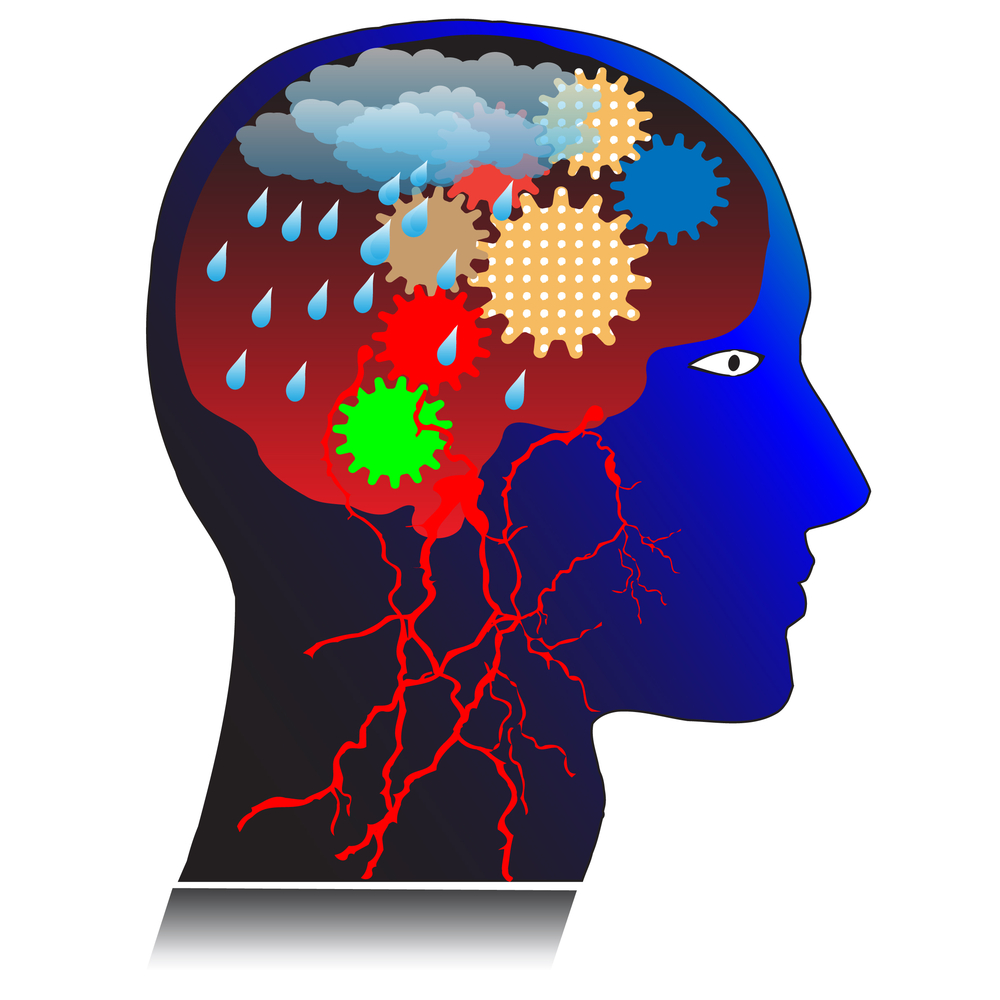
What is CBT?
Cognitive Behavioral Therapy or CBT is part of the second wave of behavioral therapy. It retains many of the core behavioral therapy characteristics that recognizes who we are due to behavioral formation but emphasizes the importance of cognitive aspects that reflect feelings and subsequent behaviors. According to Tan, CBT remains faithful to behavioral therapies various modifications but incorporates the cognitive processes associated with it (2022). The primary founds of cognitive behavioral approaches are Aaron Beck of CT, Albert Ellis of CBT and Donald Meichenbaum of stress inoculation trainding (SIT) (Tan, 2022).
According to Ellis, the root of most emotional problems stems from irrational beliefs and thinking. The purpose of cognitive behavior therapy is to alter irrational beliefs to alter negative feelings and that produce negative outcomes and behaviors. CBT has three primary phases of help for a client. The first involves cognitive restructuring or changing maladaptive or dysfunctional thinking, secondly equipping the client with coping skills to handle stressful situations and finally help the client acquire problem solving skills to explore options and solutions to issues (Tan, 2022).
Unlike radical behavioral therapies that bind the person to their environment which produces behavior, CBT does not deny the free will of the person’s behavioral development but ties it more closely to the influence of thought on the mind (Tan, 2022). Some of the key basic theoretical principles of CBT include a neutral human nature that is neither good or bad, much like BT, but also emphasizes that the human organism primarily responds to cognitive representations of one’s environment than to the environment itself. In addition, CBT views the thoughts, feelings and behaviors of a person to be all causally interrelated and connected. Due to this, attitudes, expectations and attributes and other cognitive activities are essential clues to understanding ones psychopathological behavior. CBT therapies envelop testing and empirical verification to better assist the client in reliable strategies and healing modalities to overcome these pathologies. Through this healing process, CBT recognizes the behavioral therapist as a educator and diagnostician who identifies the pathology within the client and helps the client design new experiences and thoughts to remove the dysfunctional cognition and abnormal behavioral reactions (Tan, 2022).
Cognitive Distortions
Cognitive distortions or how people think play a key role in how one feels and reacting poorly to life situations. Many automatic thoughts in childhood create basic assumptions about life which lead to maladaptive schemas that lead to bad behaviors (Tan, 2022). Beck believed that many of these cognitive distortions created these issues. Beck listed 6 types of cognitive distortions.
- Arbitrary Inference-making a conclusion without significant evidence
- Selective Abstraction-a conclusion based on details taken out of context while ignoring other relevant information
- Overgeneralization- applying a general rule to all situations not necessarily related
- Magnification or Minimization-perceiving an event as greater or less than it really is
- Personalization-relating a causal event as correlated to oneself when the event is not related to oneself
- Dichotomous thinking- viewing things in one or two extremes as complete success or complete failure
Tan lists various examples tied to these cognitive distortions. When making a conclusion without evidence can be likened to a mother believing she is a horrible mother because dinner was not on time due to working a long job. An example of selective abstraction would be a person who becomes jealous of a girl friend speaking to a man, but not knowing the man she is speaking to is her cousin. Overgeneralizing can be likened to a man who is turned down by a woman and then believing that all women will turn him down. In regards to magnifying or minimizing, a person who may believe if he or she fails this exam, the world will end and one’s life will be over. Personalization examples include someone who feels slighted by another and not concluding that the other person may have not meant anything by it or not even noticed it. Dichotomous thinking can be compared to someone thinking if they fail to get the position or job, then one is a complete and total failure as a person (Tan, 2022).
Ellis also added critical elements to understanding cognitive distortions. General irrational beliefs about life itself can lead to irrational reactions. Among the irrational beliefs that Ellis listed were (Tan, 2022)
- The necessity of close to universal acceptance or love
- The erroneous correlation of worth tied to competence and adequacy
- Wicked people should always be punished
- It is a terrible reality if things are not as a person wants them to be
- A person cannot control one’s own happiness but is subject to the circumstances of life
- Dangerous and fearsome things must constantly be thought about and avoided
- Avoidance of uneasy difficulties as a life plan instead of facing them
- A person should be dependent upon others
- The past makes one who one is and there is no escaping that past
- Other people’s problems should be a burden upon oneself
- The correct solution to each problem must be discovered to avoid chao
In addition, Ellis hoped to remove the controlling thoughts that include the words “must”, “should”, or “have to” (Tan, 2022). CBT, or also rational emotion behavioral therapy (REBT) goes farther than CB of Beck and more strongly challenges the beliefs of the client, as well as differentiating between negative healthy emotions such as sadness and frustration as compared to unhealthy negative emotions such as depression and hostility (Tan, 2022).
Cognitive Techniques
There are variety of techniques at play within the mental toolbox for cognitive therapists.

CB
Beck employed a variety of techniques within cognitive behavioral therapy. Beck would utilize the technique of idiosyncratic meaning to ask clients to utilize words to describe their thoughts and feelings. The counselor then analyzes the words and questions the client on why particular words are being used to describe oneself. Reattribution is a technique which forces clients to think of other reasons why something occurred. Commonly the counselor will ask one if there “is another way to look at this?” The counselor can also use rational responding as a technique which analyzes the evidence for or against something, what is more reasonable an explanation, limiting the extreme response of the person, and finding better ways to cope with the problem. Counselors or therapists can also utilize examining options and alternatives as a strategy to brainstorm other solutions. The counselor can use decatastrophizing as a way to illustrate how the client is blowing things out of proportion. CB therapists also utilize fantasized consequences which examines the supposed consequences of a situation to expose the irrationality of it. Closely related is the technique of exaggeration or paradox in which the client is asked to verbalize all fears and consequences to the utmost extreme. Upon reaching this height, the counselor then carefully walks the client back down to a more reasonable conclusion. Obviously, this type of therapy should be used with care for some clients with particular past traumas. Counselors also can try the technique of scaling to reduce the all or nothing feelings of a person. This involves numbering the issue on a scale of 1 to 100 to help the client truly understand the significance of something. Self talk is an important skill and technique as well that helps the client internally speak to oneself when confronted with the particular issue of control. An interior monologue of planned and self rehearsed responses to a given situation and then utilized. Thought stopping is yet another technique to help clients where the client is given control of maladaptive thoughts through the command of stop, or through distracting oneself from the thought itself. In addition to disruptive thoughts, counselors can help clients learn labeling of distortions in which the client is taught to identify the irrational and properly label it for what it is. Essential to this and many other techniques is the use of homework for clients. Clients can journal or in some cases put themselves in certain situations and practice these skills (Tan, 2022).
CBT/REBT
Ellis also employed a variety of techniques building upon Beck’s ideas to help individuals manage and control irrational thoughts and behaviors. Ellis helped clients learn the technique of disputing irrational beliefs as a way to face them. Ellis employed this foundational technique with the ABC model. A stands for the activation of the event or situation encountered, B stood for the beliefs that are usually irrationally tied to the event, and C stood for the consequences of those beliefs. Ellis would help individuals understand all three aspects of this to understand every step of the irritational episode and how to better dissect it (Tan, 2022). Ellis also utilized the concept of homework and applied it to the ABC model by asking clients to keep a journal at home in which the steps of ABC evolve also into DE, in which the client in journal form disputes the irrational belief of the day and to note the unhealthy effects. Ellis also emphasized a changing in language. He especially dismissed demanding language that involve “must”. In addition, Ellis was a big believer in psychoeducation as a way for individuals to understand themselves, and to apply what they learned in teaching others.
Beyond cognitive tools, Ellis also employed a variety of emotional tools to help understand one’s irrational thoughts. Emotionally, Ellis believed in the importance of unconditional self acceptance and the critical part the counselor played in conveying this to the client. Although no way as dependent as person centered therapy and the therapeutic relationship, CB and CBT does recognize the important role a counselor plays in helping guide the client. In such way, emotional support is important and various therapies can be utilized to help emotional healing. Rational emotional therapy teaches clients how to use mental imagery to visualize certain behaviors and thinking. Clients are encouraged to visualize negative emotional experiences and how to work through them. Emotionally, Ellis also believed that poking fun through humor was important. The use of humor technique utilizes humor as a tool to attack irrational thought. With emotion, self talk is also taken to a higher level, where the person moves from quiet internal discourse to verbally loud raised voice to dismiss the irrational thought. This is also accomplished in role playing between the counselor and client, where the counselor allows the client to rehearse something is emotionally upsetting (Tan, 2022). Many behavioral techniques include also tested behavioral techniques that are tied to operant conditioning, modification strategies, social skill training, relaxation trainings, stress management, and system desensitization (Tan, 2022).
Conclusion
Cognitive Behavioral (CB, CBT, REBT) are all byproducts of behavioral therapy but extend within its second wave to a more cognitive based approach. It is one of the most empirically based systems in psychology and is equally effective in treating numerous pathologies as most time tested strategies. It does not focus as much on the past as psychoanalytic theories but more so on the present and finding solution within the present. In addition, while it does stress more importance of the therapeutic relationship than psycho analytic, it does not go as far as person centered therapies. In its essence it sees humanity as neutral while other religious views portray humanity as broken but overall good.

Please also review AIHCP’s Healthcare Certifications and see if they meet one’s academic and professional goals. AIHCP offers a variety of certifications in the behavioral fields. It is critical to remember that CBT, as all therapies, are reserved for only licensed professional counselors, social workers, psychologists or psychiatrists that a certified in CBT. AIHCP’s certifications can be utilized by clinical professionals as well as non-clinical professionals but AIHCP does not offer any certifications in CBT but these are reserved for various organizations with board approvals. If interested in applying CBT to one’s practice, one needs to be first licensed and also certified within that field. This does not mean certain tools and aspects of it cannot be utilized for non-pathological cases in the pastoral setting, but not as a therapy itself.
Additional AIHCP Blogs
Behavioral Therapy: Access here
Person Centered Counseling. Access here
Existential Counseling. Access here
Jungian Psychology. Access here
Reference
Tan, S-Y. (2022). Counseling and psychology: A Christian perspective (2nd Edition). Baker Academic.
Other Resources
Dr Aaron T Beck. CBT Institute. Access here
Cherry, K. (2026). Albert Ellis Biography. VeryWellMind. Access here
Cognitive Behavioral Therapy. Mayo Clinic. Access here
Mcleod, S. (2023). “Cognitive Behavioral Therapy (CBT)”. SimplyPsychology. Access here