
As St Teresa of Avila states, a soul that does not pray is likened to a body that is limbless. The importance of prayer is central to life itself. One can use any physical analogy, as oxygen, or the heart, and none still compare to illustrate the importance of prayer to the soul and life itself. Through grace, gained through the death of Christ on the cross, communication with God was restored. The price of sin was paid in full. Through the great price of each soul, souls could again via application of Christ’s Blood which earned for humanity the gift of grace, again possess a parental relationship with God. Fueled through sanctifying grace and the removal of Original Sin, a soul bought by Christ, could again commune with God in an effective and purposeful way.
Hence, prayer is communication and participation in the Divine while on Earth. As creatures, justice demands prayer to God. One is to know and serve God through adoration, contrition and thanksgiving, and petition, but through the virtue of charity, one not only serves and worships out of justice, but also prays out of love. God has elevated humanity from mere creatures but to also images of His own likeness in which one can share in His Divine Life. Prayer opens this door and should beyond its mechanical functions of proper worship be also a conduit of love. This love is that of a child for his parent!
When the soul becomes deeper in love with God, prayer then becomes more profound and connected to God. Spiritual Directors should help and teach their spiritual children how not only to pray and its purposes, but also how to develop and foster a deeper and real relationship with Jesus Christ.
Please also review AIHCP’s Christian Counseling Program but also its Spiritual Direction program.
Jesus Taught Us How to Pray
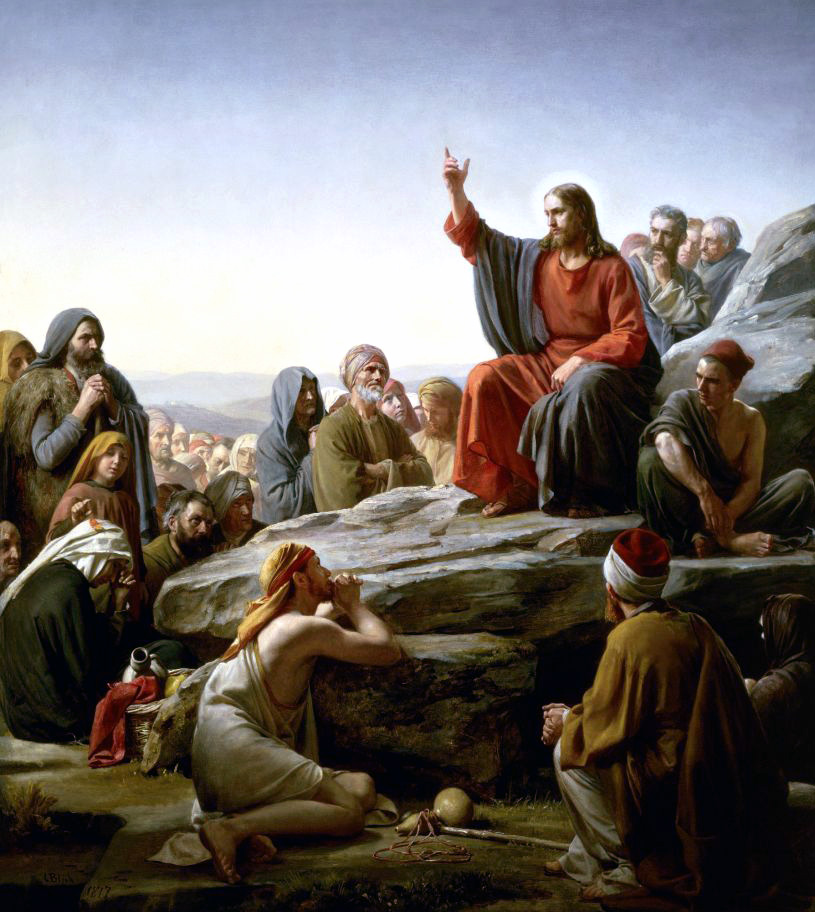
Jesus told His followers that the Father and He are one and no one can go to the Father but through Him. He also taught His followers the “Our Father” which encompasses the core values of adoration, contrition, thanksgiving and petition. This is purely the most basic and mechanical structure of prayer but it lays the ground work and reasons of it. Through the simple words of the “Our Father” our Lord leads one to deeper mysteries of prayer that are essential for spiritual development.
Types of Prayer
Prayer entails adoration, contrition, thanksgiving and petition. Most likely, one of these four elements will play a role in one’s prayer at a particular point in life. All are essential. Christ teaches that one must love God with one’s whole heart, mind and soul. He also teaches one must seek forgiveness as well as be thankful for what the Father has granted. In addition, He reminds one to ask the Father for what is good and what one needs. In one way or the other, one’s prayers have centered around these themes.
Vocal prayer can be singular or communal. Worship must be balanced. Spiritual and religious are complimentary concepts not competing ideals. One who is religious partakes in communal and ritualistic prayers, such as Sunday worship, or Mass, or communal prayer gatherings. One who is spiritual endears oneself to Scripture, daily and morning offerings, rosary, or other meditations. One who is only religious lacks spiritual growth but only visual status. Like the Pharisees, they are dead inside. One who is only spiritual embarks on their OWN journey and OWN dogma and disengages from the Mystical Body of Christ. Humility and obedience demand more. So, like two lungs, prayer life must be religious and spiritual, communal and singular. One must have a personal and communal life with God to function fully as a member of the Mystical Body of Christ. It is important then to balance these two elements of spiritual life.
Within personal prayer, there are many ways to speak to God. One can use pre-ordained prayers of trusted tradition, but they must not just be words recited but words felt. One can also use one’s own words to express worship, thanksgiving, petition and contrition to God. In fact, speaking to God, as if speaking to someone in a room, but of course with the respect God deserves, is a powerful way to form a strong relationship with God. God should be so close to oneself, that one should speak to Him throughout the day about occurrences and issues.
Mental prayer is an essential aspect of spiritual life. Mental prayer is conscious choice to engage God in the quiet of the mind. Some religious propose postures of kneeling, or upright posture to avoid drowsiness, others support ideas of comfort, especially if one is seeking to fall asleep in the arms of God. Depending on the situation, body posture can determine alertness and ability to focus on the conversation with God. St Teresa of Avila refers to this as Prayer of Recollection because the soul is putting itself together as it enters deep within itself to speak with God. This prayer is deeply personal and open. It involves visualizing being with Jesus and speaking with Him in an intimate and real way. This is an active prayer though which involves the activation of the will to seek out God. The feelings of joy or peace that result are graces and consolations bestowed upon the soul by God, but it is the soul, especially in its early stages of spiritual development, seeking out the union with God. This is not to say God was not always available, but in many ways, one’s spiritual anchors tied to the world, muddy or dampen one’s soul and its ability to hear and receive grace. By seeking out God, this type of mental prayer grounds oneself and opens oneself to many graces.
Tied to the mental faculties but different in direction is meditative prayer. Also known as contemplative prayer, meditation or visual imagination of an event of the life of Christ excites the soul to dwell on upon the mysteries and extract from it deeper meaning. Many meditative prayers find their source in reading Scripture, or focusing on a sacred image or symbol. The mind then reflects on the event and focuses on finding meaning of the event to oneself. The mind completely opens itself to the Holy Spirit to guide it through the meditation to find the truth of the mystery. This is very different from Eastern Meditation which looks to become divine or find unity in the divine, but this seeks to participate with the divine.
It is common for meditation, like its Eastern counterpart, to also find a place of quiet and relaxation. Thomas Merton explored many of these Eastern strategies in an attempt to utilize some of the practices to meet Christian ends. This resulted in a mixed reactions from different circles of Christianity which saw some of the Eastern practices in themselves detrimental to Christian beliefs, while others saw the exercises as universal human ways to prepare the mind and body for spiritual realities. Such exercises as breathing seem to be neutral and safe when applied with Christian ends and they are supported by medical science as ways of initiating the parasympathetic nervous system. The key in Christian meditation is not to escape the body or become divine but instead to commune with God. Quiet places, relaxed mindsets, and guided prayer can lead someone within the Christian tradition to these realities. It is important that meditation is based on Christ and guided through Christ and opened to the Holy Spirit.
While there is a lot of physical and physiological benefits of Eastern techniques to prepare the body for meditation, the Christian tradition has numerous techniques to excite the soul and prepare the mind for communication with God. St Ignatius Loyola in his Spiritual Exercises encourages individuals to focus on the life of Christ and to choose events within it found in Scripture. He invites one to activate the senses of sight, taste, smell, touch and hearing in all meditations. He opens with preludes of thoughts to imagine about Christ. He then presents one’s imagination to create within in the mind the entire set of the story itself. From the weather, to the buildings, to the sounds of the time, to the actual touch of the ground itself. He asks one to imagine in various preludes Our Lord teaching, or preaching, or healing and imagine oneself as a bystander watching and even maybe interacting. Afterwards, one can even engage Christ in this meditation and it can develop more into a mental prayer of discourse. Since Jesus is also divine, He senses our prayers and questions throughout history to that very moment. So one can speak to Him there, or in one’s own present monologue. This echo of prayer through time is possible because Christ is divine and not subject to temporal time itself.
So, far we have only spoken of prayers that are actualized through oneself. These prayers are invoked by oneself and initiated by oneself to God. God’s response can at times be overwhelming via consolations or one may simply feel peace. Other times, one may fall asleep to the peace of God. These are all from the sensory standpoint, natural in sensation. They do not encompass supernatural overtones beyond the norms of supernatural and natural connection. St Teresa of Avila compares this type of active recollection with the analogy of water. Water representing the source of grace and God Himself is felt in prayer but through active recollection it is sought and migrated. St Teresa compares it to a aqueduct that transports water from the source. The water is artificially transported through manual intent but it arrives nonetheless, but there is a difference between experiencing the source as is without effort. In this type of prayer, Avila refers to passive recollection and also the Prayer of the Quiet. In this, God for His own purposes or designs, chooses freely to give this grace and gift to a soul through no effort on its own. A stunning grace or consolation may appear to the soul where the soul finds the peace of God in its genuine form without effort. In this, Avila states the soul should merely be receptive and thankful for such an act of love. It illustrates that the soul is removing many of its blinders and has opened itself to such divine favors.
This, however, remains a natural within physical ramifications. Avila points out that there are beyond more intense and higher forms of prayer and religious experience that are far more mystical and wonderous for the soul. She points out the Prayer of Union is a type of prayer that again is passive and mystical where God elevates the soul to such a state of happiness with His presence that the body loses consciousness and the soul is free of the bodily senses. Only the presence of God endures. This can last for few minutes to even longer periods of time. This gift from the Creator to the soul is an extreme gift of insight and love for a soul that has opened its will to God. As one becomes closer to God, the mystical experiences become more intense but so does the crosses and sufferings of life. Avila points out that with such gifts comes a greater longing to be with God and a more willingness to suffer for Him.
Issues in Prayer Life
Early Phases
Prayer at is basic level captures the act of worship but so many times it is seen as a choir or requirement. It becomes a checklist of things that need done in a given day. Many beautiful prayers become repetitious mantras instead of meaningful conversation with God. Prayer also becomes a time of need. When something bad occurs, individuals run to God with sometimes necessary concerns but also trifle things. Of course, one should not dismiss the return to God in dire times. This shows acknowledgement of God and His power, but it also portrays a selfish spiritual life and one that neglects a living relationship with God. Also, one can see prayer as a contract instead of a covenant. Individuals believe prayers that if not answered mean God does not care, or they did not pray well enough, or that God is not a God of love. Instead, prayer should be one of covenant where the soul walks with God through tribulations and joys alike, seeking resolution but also accepting the cross and the graces needed to endure it. Prayer is then not a magic cheat code or mantra but a communication with God that is about relationship and covenant due to not only justice but also love itself. It is not something performed ritualistic becomes one has to do it, or because one needs something, but it is the life source of the soul in daily communication with the Creator and Father.

Those on the peripheries of spiritual development have such illusions of prayer. They are easily distracted by lies of the world. They are hypnotized by occasions of sin, the needs of the flesh, and noises of secular concern. Their prayer life is superficial at best. For many, their faith is cultural identity. One attends service or Mass on Sunday out of ritual and culture, not so much an act of love to God. Some may not even attend regularly but only during holidays! Prayers to them are in times of need or random acts of clarity that fade with new physical distractions. Are these individuals evil? By no means! Many are good people but they are not directed to the higher priorities. They may very well believe in God and the commandments but they have become stuck in the mud and progress in spiritual life has become stagnant. Still, God has a way of shaking the soul and calling it to Him. Spiritual Advisors and directors can help highlight this awakening and guide individuals from naive and spiritual immature assumptions about God and prayer and use these incidents as a way to cultivate a true relationship with God.
The soul that ventures into true prayer life still faces numerous issues. The calls of the world are strong still. Occasions of sin, old habits, and temporal desires still remain strong. The devil does not release souls so easy. The soul will be tempted and turned back to the noise but progress is key. Encouragement, patience, and goals remain essential for this soul. Much like a physical trainer, the spiritual director must expect setbacks. Those who begin to train physically or diet have many set backs. It is hard to retrain mindsets and replace old habits with positive coping. Like addition, or bad diet, the brain has numerous neuro pathways that are set for default in times of stress, trauma, or triggers. So, the soul that is experiencing new prayer and spiritual renewal faces the tugs of the world and bad habits. These triggers should be expected. Within training of the soul, goals should be realistic in prayer life, encouragement frequent, and progress modest but continual. Setbacks should not be seen with despair but as opportunity to make better. In this delicate early phase, the soul teeters back and forth between the cold lies of the world and warm truth of God. Through grace, guidance and continual effort, new habits can be formed, virtues can replace vices, and a deeper understanding of prayer can ensure for the soul.
Later Phases and Complications
As anyone becomes more skilled in a process or shows progress, one naturally becomes proud of ones success. In a diet, one becomes more confident and happy with how one looks as weight goals manifest in better clothing fits and reflections in the mirror. As someone progresses in weight room training, one becomes more enamored with one’s growing physique and muscular definition. In itself, this is not bad. Self esteem and self concept is key in psychology and counseling for a healthy emotional self. However, like so many times in psychology, subjective image and happiness can be the only goal for self satisfaction. It is crucial to balance one’s own pride in improvement with humility and concern for others. It needs to be evaluated not only in one’s own success but also in honoring the body that God has given as a temple of the Holy Spirit. So both are important. One should find sense of pride in improvement but not inherit the vice of pride in character. This can be a tricky balancing act and is even more tricky in spiritual prayer life.
As the soul becomes more focused on God and more conscious of not offending Him, it can sometimes see itself as “better” than others, or even esteem itself. This contradicts the gift of grace. One works through faith, but one does not earn merit without the grace of the Holy Spirit gained by Christ at the cross. Humility is key to maintain in this phase of spiritual development. St Vincent De Paul emphasized the power of humility. He pointed out that humility is something the devil cannot comprehend nor defend himself against. This is why Mary was such a powerful adversary to him. Her humility despite her grace stifled him and rebuked his very existence. Christ teaches as well that the first shall be last and the last shall be first in heaven. Humility is hence crucial when making gains. As Mary declared to Gabriel, “my soul magnifies the Lord”. One must then as one becomes more proficient in the habit of virtue, its cultivation and prayer life, reflect all glory and good to God. These are the fruits of the Holy Spirit flowering within the soul allowing God’s inner presence of it to manifest, not the works of a broken nature.
Another later complication within prayer life includes the times of aridity or lack the emotional presences and joys experienced in prayer life. Avila emphasized that not all prayer life is full of consolations, feelings of peace and joy, but many times, an aridity emerges, where the soul may not feel God’s presence. Instead the soul feels as if the prayers are not heard, or as if the prayers are not good enough, or if the person is unworthy of God’s love. This possible turn to despair or even return to physical distractions can attempts of the devil to test the soul. It can also be a trial granted by God to teach the soul its needed humility and also purpose. Yes, as children one should expect parental graces all the time, but one must also look at God as Creator and oneself as sinner. To pray to receive consolations and good feelings, denies the very nature of justice and adoration to God for the sole purpose of His glory. In love, one loves not for return, but for the very nature of the object itself. Aridity teaches the soul to love without return, to humble itself before God, and to help it acknowledge how precious the presence of God is and how terrible sin separates the soul from God.
Spiritual Directors can play a steadying force for souls who deal with aridity. They can emphasize humility but also obedience to God’s will. Many souls at this relationship level with God still are very connected to the world. In fact, most of us are! We have temporal needs and duties, but sometimes these temporal needs and duties can complicate a relationship with God when they become disordered or not properly prioritized. Uniting one’s will with God realizes that prayer is a covenant and not only the consolations and blessings are part of the divine plan, but also one’s aridity, sufferings and crosses are also part of God’s will. Christ told His followers, to take up their cross and to follow Him. He accepted the Father’s will unto death in the garden. Souls are expected no less to unite their wills with God and to carry their crosses. In becoming closer to God, one must then find humility, obedience and acceptance of God’s will and understand that suffering and love of God is what matters most.
For Avila, life involved a convent, but for many individuals life involves a busy world where contemplation is not always an option. Individuals can become distracted by deadlines, work schedules, family drama or emergencies, or basic temporal cares of the body. Christ Himself lived such a life for 30 years. He worked as a carpenter under St Joseph’s guidance. He helped support His mother, Mary, and they dealt with daily struggles of debts, choirs and finding food on the table. So how can a person advance spiritually in prayer, contemplation, and communion with God in a world that is so noisy at best, and at worst, tied to numerous occasions of sins, or as Avila describes “small reptile” scurrying along the floor?
First and foremost, everything ties in prayer to uniting one’s will to God. As Christ said in the garden, “Let thy will be done”. This was a difficult thing considering within the prayer, Christ asked for the cup of death to be passed on but He submitted. Individuals too must submit their will despite their requests and by uniting one’s will, God’s plan unfolds. Whatever state of being one is in, when one finally surrenders to God, things begin to fall into motion. One may very well be surprised as well to see certain aspects of one’s life vocation fall into place into a greater plan as well with other pieces of the puzzle coming together.
Through submission of one’s will, the day becomes God’s day. One then is open to offer up these daily tasks which can become distractions into living prayers. Scripture teaches one to unite one’s sufferings and cross to Christ. When one unites one’s temporal duties to God, they become spiritual prayers. St Theresa the Little Flower, not to be confused with Avila, offered the most simple duties to God, such as sweeping the floor. While many individuals feel the need to do great penances (which is good), many forget the little things. The little things are not in one’s control. The little things are imposed and are not chosen. When they are offered to God, they become a prayer. Whether it is working a late shift, enduring a manager’s criticism, or doing the laundry when tired, the little things when given to Christ and shared in His passion, become not works of personal merit, but works of grace through Christ. Daily offerings give each day, every joy, success, trial, tribulation or cross to Christ in advance and turn what would normally be a daily distraction into daily prayer. It formulates humility, obedience, and keeps oneself focused on God. Spiritual Directors should advocate within their spiritual children the necessity of the Daily Offering in all prayer life.
Prayer Cultivates Many Things
We discussed how critical prayer is to the life force of the soul. It is in injection of God’s grace into the soul. While it is only one of the many elements of communication with God and how grace is afforded to the soul, primarily actual graces, it serves as a function as critical as breathing in everyday life. While other life giving graces are gained at Baptism and other spiritually nutritional graces granted for different sacramental needs such as in reconciliation, or Eucharist, daily prayer is the constant breathing and cycling of those graces throughout the self. Through constant prayer, one’s primary end is always in sight. It maintains that focus and spiritual exercise to keep the spiritual faculties sharp. It helps cultivate virtues in daily life and directs the soul towards higher things. It keeps the soul on the righteous road avoiding sideshows and distractions that can lead to spiritual ruin. When the soul is contact with God, it is able to see more clearly, act more purely, and perform its duties more perfectly. Like making one’s bed in the morning, it sets the standard for the day. Prayer organizes the soul and attunes it, so as to enable rest of the mind’s faculties to become more focused and aligned with the winds and storms of the day. When one is spiritual set, one becomes mentally set.
With so many spiritual benefits that pour into one’s daily life, one cannot dismiss the necessity of prayer. A new cultural phrase has emerges, as seen with Mark Wahlberg- He asks the question “Are you prayed up?” Like food for the body, make sure the answer is always yes!
Conclusion
We have reviewed what prayer is, its aim, types of prayers and issues involving spiritual progression at early and later phases. We have sought direction through the teachings of Christ Himself, Scripture, and the value of mystical saints who elevated their prayer life with constant devotion to Christ and faith in the Holy Spirit. Spiritual Directors can help souls find prayer, maintain it, and set realistic goals in prayer life. However it is important to note that the battle for spiritual life is one tied to mental issues, as well as physical issues. Bad habits, traumas, occasions of sins, and old ways of thinking can become roadblocks. Even later in spiritual life, the devil can turn confidence to pride. So one must forever remain humble and obedient to God’s will and remain dependent on God’s grace. This is not about our prayers but how God transforms our imperfect communication into something beautiful through His grace.
Please also review AIHCP’s Christian Counseling Certification, as well as Spiritual Direction Program.
Additional Blogs
Spiritual Suffering. Access here
Spiritual Vocation. Access here
Early Issues in Spiritual Direction. Access here
References
St Teresa of Avila. Interior Castle
St Ignatius of Loyola. Spiritual Exercises
Additional Resources
Mulcahy, T. “THE SOUL’S JOURNEY TO GOD: A CONCISE SUMMARY OF SAINT TERESA OF AVILA’S INTERIOR CASTLE”. Catholic Strength. Access here
Ways to Build a Stronger Prayer Life. Bible Hub. Access here
A Life Of Prayer (What It Is and How To Actually Do It). (2024). Daily Effective Prayer. Access here