
What is the human soul? Many mistakenly equate a human soul as angelic. As if after death, one can gain his or her wings. While clearly spiritual, the human soul is not angelic in nature but is human in nature. The human soul while spiritual and possessing metaphysical properties is still nonetheless a unique spiritual entity different than other spiritual entities. While scientifically we cannot take the soul out of the box and analyze, observe, and dissect it’s physiology, we can through divine revelation, Thomistic philosophy and the science of neurobiology gain a good understanding of its existence and effects seen throughout the body. This short blog will define the nature of a human soul, its inner physiology and how it connects to the body and needs the body.

Please also review AIHCP’s Christian Counseling Certification.
The Human Soul: A Unique Spirit
It is important first to have a strong understanding of the human soul and its qualities and what makes it unique compared to other metaphysical creations. The human soul while metaphysical or beyond physical measurement is nonetheless designed to exist within the body and flesh. Unlike the philosophy of Neo-Platonism and other Eastern traditions that see the body as a prison of the soul, or as the soul’s evil counterpart as found in Manichaeism, Christianity sees the union of body and soul as crucial criteria for what makes human nature. Hence, the human soul and the human body are tied together intrinsically as co-parts unique and crucial for the definition of human nature. The metaphysical aspect of human nature is the soul but the soul was never designed to exist outside the body.
Contrary, angelic natures are pure spirit. The angelic spirit is designed to exist without a body, while the human person’s spirit is designed to exist in perfect harmony with the body. Does this mean the soul is drastically different than an angelic spirit? At least within the fallen and temporal realm, there is a difference between the human soul and angelic spirit’s abilities. The angelic nature has far greater intelligence and being free from temporal matter is able to exist every where and be anywhere at moments thought. On the contrary, the human soul, while also made of the same energy and metaphysical “stuff” is limited to the constraints of the body due to the fallen nature of Adam.
Prior to Adam’s fall, the body and soul were in complete harmony with each other. The body was free from death and disease, while the soul was completely compatible with the brain in controlling passions, understanding reality, and processing information. The knowledge and freedoms of pre fall humanity, as seen in Adam and Eve, were the final designs and gifts by God bestowed upon humanity. Due to sin, these gifts were stripped and with the emergence of death into the world resulted in discord struck between the body and soul. No longer could the soul control the urges of the broken body, nor access the unlimited knowledge stored in the brain.
So, I feel it is very important when defining the human soul to always illustrate and emphasize that is was always intended to exist with the body in its human nature’s pre-fall form, but with Adam, and Original sin, the soul and body both staggered in mutual discord into the temporal world of sin and death. The resulting price of sin–death—would ironically tear the soul from the body. This unnatural state, although we identify it as quite natural in this fallen world, separates the soul from the body, exposing it to a temporary state of incompleteness. Without the body, the soul still exists. It still manifests its spiritual identity, memories, and abilities to understand, but without the body, it is trapped in a unnatural state of death. Only till the body is fully resurrected as promised in Scripture, can the soul and body again find completeness in the eschatological state of the next life.
Thomistic Philosophy and the Soul
The human being is created in the image and likeness of God. The part of human nature that captures this image and likeness is via the soul. The soul, like God, is a metaphysical being, void of body or shape or measurement, but as energy it exists. While science nor metaphysics can give a clear and articulate physiology and dissection of the parts of the soul, we know more of its essence by its effects. St Thomas Aquinas divided the soul into both the intellect and the will. The intellect of the soul encompasses reason and thinking, while the Will encompassed desire, need and wants. Within this, one can find the formation of the human conscience which exists within the soul. A properly formed conscience is a soul that has a intellect grounded in good and sound moral teaching and a Will that seeks to carry out those teachings and deeds. Obviously, the human soul is not infinitely intelligent like God, or finitely far more intelligent as an angelic nature, but the human soul, even its in temporal and post-fall nature, still has capabilities to function within a limited range of intelligence and capabilities to choose good or evil. The ability to think beyond one’s own existence and dwell upon it and to choose freely is what makes humanity made in God’s image.
St Thomas defined these two elements as key components of the soul. He also listed the various appetites that exist within the Will. The Will, while in the temporal realm is hindered to do good, is nonetheless still “good” since God created it, hence it always seek what it perceives as the general good even if subjectively it may choose something that is not good. Aquinas referred to the what the intellect sees and what the will desires as appetites within the soul. The Concupiscible appetite refers to our sensory needs that moves one to pleasant or unpleasant things. Passions found within this appetite include love, desire, joy, hatred, sadness, and aversion. Unfortunately due to humanity’s fall, one’s appetite to good and evil has been blurred and many things that the appetite may consider good or lovely can in fact be things the soul should disregard. The sound and good conscience helps identify for the disordered appetite what is truly pleasant or unpleasant, but the disorder due to sin still can lead the soul astray when it desires something. In addition, Aquinas pointed out that when these basic desires are challenged, then the irascible appetite is initiated which deals with the emotions of hope, fear, anger, despair or courage in dealing with these obstacles. This appetite helps the soul meet the more difficult good or evil that the Will seeks to find.
Also within this philosophy, the soul can vary from other souls based on virtue or vice. Habits of the soul that produce good or evil is based on virtues and vice. A soul that has a habitual practice that is good is aligned with virtue, while a soul that has habitual practice that is bad is aligned with vice.
The Interaction with the Body and Neurobiology
Many atheistic neurobiologists upon the dawn of neurobiology felt they had finally found the soul in the brain. What was once credited to the soul could now be proven within the material and biological brain removing the need for the metaphysical soul. They felt science had finally found the soul, removing the need for some metaphysical myth to describe the intangible processes of the brain. To these individuals, everything once attributed to the soul as memory or emotion could be found within the machinery of the human brain. Memories could now be finally mapped and coded, while emotions could be narrowed merely to the processes within the brain. Even Freud attempted to map the soul with the concept of the Id, ego and superego.
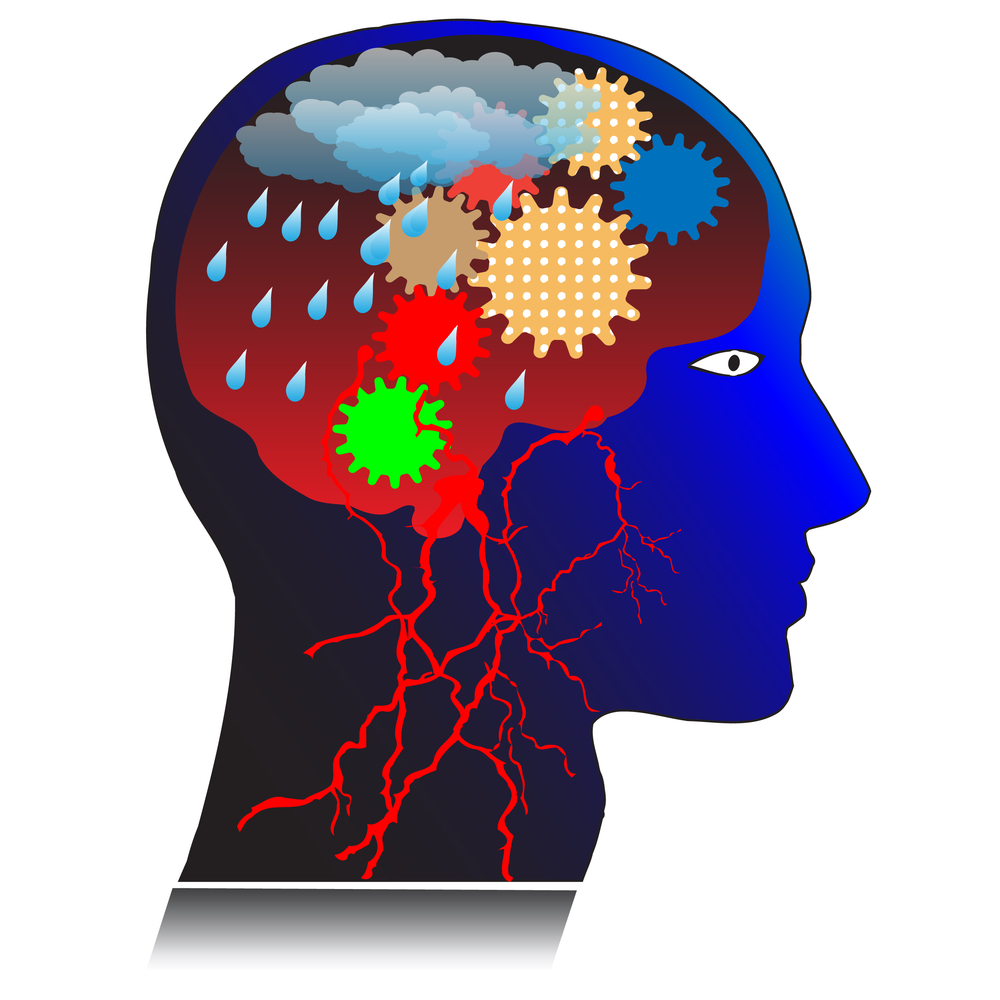
Yet, as we have pointed out, the human soul is quite different than the angelic spirit. The human soul needs the body to be fully human. It is of no surprise that the advances of neurobiology show how the power of the brain complements and works with the soul making one fully human. The brain is not the soul but it is merely the metaphysical and physical organ that walks between the realm of the physical and the realm of the metaphysical in one place. So, the brain is not the soul, but it is the effects of the soul manifested. It is a tool that allows both a physical and a metaphysical being to exist.
Neurons within the brain permit the mysterious function where neurotransmitters, chemicals, and thought processes connect from one piece of the brain to the next. This large network of neurons and organs within the brain permit thought and emotion to be felt and expressed. Since the soul is in the body and one with it, it requires, especially in our fallen state, one’s senses to take information. Classical Christian epistemology teaches that all knowledge of one’s physical surroundings is taken in through the senses. The five senses feed the brain the required information to understand one’s surroundings and needs. Without this, the soul, in its current fallen state, cannot receive information. The brain then serves the soul as a way to understand one’s surroundings but also how to process information. The brain encodes, stores, consolidates and allows for retrieval all memories of the person. This storage can fall into short term memories as well as long term memories. Some may be explicit memories that are actively thought about, or others may be implicitly taken in and recorded. Some of these memories may be episodic or semantic, regarding an event or factual knowledge. Through neuropathways, memories and thoughts are paved chemically to form memory itself. It is amazing how a thought, an intangible and metaphysical concept, can be physically stored and coded into the brain through various chemical reactions and neuropathways.
It is then not the brain that is the soul, but it is the metaphysical and physical organ that serves as the bridge between the soul and body within the human nature.
In looking at the parts of the brain, we can find many important parts that help the soul exist in a temporal reality, while also allowing it to express itself in the same reality. The brain is made of three parts, the reptilian, paleo-mammalian, and the neo-mammalian. This concept of a triune brain deals with our most primitive human development from mere creatures to eventual sentient beings. The reptilian part of the brain correlates with the brain stem and humanity’s basic instinctive needs and involuntary functions. The paleo-mammalian is comprised of humanity’s emotional center or the limbic system comprised of the amygdala, hippocampus and parts of the prefrontal cortex, while the neo-mammalian is strictly composed of the pre frontal cortex and the thinking parts of the brain. Ironically, it is the abilities of the pre frontal cortex that deal with human nature’s ability to be sentient. In essence, without the prefrontal cortex, the human soul could not exist in the human body. While animals have a type of soul and animation, only the human body and its brain has the capacity for the designs and needs of a soul that is created in God’s image and likeness. Our brain is built for our soul.
The brain as a metaphysical tool also helps the soul intake information and express itself. The amygdala within the limbic system is tied intensely to emotion. When struck with fight or flight, the amygdala becomes over activated and is extra sensitive to storing emotional charged memories. Likewise the hippocampus plays a key role in short term memory and processing those memories for longer term storage which takes place in the pre frontal cortex. Eventually certain short term memories are deleted, while long term memories are stored. Ironically, due to fallen nature, the full capacity of the brain is sometimes never met, and the soul can lose memories due to brain damage. Memories are stored throughout the hippocampus and pre frontal cortex with more charged memories tied to the amygdala, but these memories can become lost, or even reformatted during retrieval. Does this mean the soul is dependent upon the brain for memories? Within human nature’s current state, the soul is totally dependent upon the storage found in the brain for memory. If part of that brain dies, then that part of the memory is lost, however, after death, the soul is able to retain all memories it experienced on earth. The memory may have died in the temporal reality for the soul to retrieve, but the soul after death is able to recollect all information it ever gathered and when reunited with the glorified body will have a brain that is unrestrained by the fall of Adam but instead able to work with the soul and recount without effort all information necessary.
As well as memory, the brain in the temporal realm plays a key part in the ability for the soul to process information. The pre frontal cortex plays the most important role in executive functioning. It is most symbolic with the intellect of the soul but also the Will of the soul. This where thought is processed, decisions are considered and executed and where morality is judged. Obviously, the development of the pre frontal cortex is critical for proper decision making and moral judgements. Those with less developed pre frontal cortexes have impulse issues and less ability to rationally think. This is just another reminder of how the body and soul, through the sin of Adam, has difficulty working together in the fallen state. Before the fall, Adam’s pre frontal cortex was perfect and the full capability of the brain was manifested in complete obedience to the soul, but after the fall, humanity’s intelligence faded as the divide became more apparent between body and soul. Because of this, the soul cannot have complete mastery of the brain to remember everything, or to soar to great heights of intellectual advancement. Science has proven that humanity uses a low percentage of it total brain. What this tells a Christian is that the brain once could do far much more but something happened. What happened was sin and the fall which caused discord between the soul and body.
The Soul without the Body
While unnatural to human nature, the soul temporarily due to sin and the fall exists without the body via death. This point of existence in death tears apart one’s human nature. Unlike angelic spirits that are complete with a body, the soul temporarily is stripped of its counterpart. Let us speculate about what happens.
In Christian theology, the soul is judged before God and given sentence to Heaven, Hell, or in some Christian thought, Purgatory. While Purgatory is hotly debated between Protestant and Catholic schools of thought, we will employ the idea for purposes of this blog. We know as Christians that as Christ’s Body resurrected, so will our bodies. So whatever temporary separation of body and soul occurs, eventually the DNA of the body will be re-manifested and fused together with the soul. As we die in Christ, we also will rise in Christ. There is speculation that how we experience time will differ in the after life and the soul following judgement will be rejoined to the body in an instant, while time on earth resumes at its slow glacier pace. The idea of time being experienced at different levels is well known and even seen in the temporal world base on the role gravity plays on how we experience time. So it is fair to assume time and its experience is quite different in the after life. It is presumable to believe that the time experienced after death and the reunification of it to the body will seem fast if not instant for those entering into Heaven. As for those who choose Hell, this experience may be quite different, and it may also be quite terrifying awaiting the body to join the soul in eternal torment. As for the notion of Purgatory, the pain of separation of soul and body could be experienced until the soul is ready to be with God. This pushes the notion of souls on earth who need prayers — or ghosts. The concept of a ghost in Christianity is not far fetched and this would clearly be a human soul who has yet to reunite with its body after the General Resurrection and who remains on earth purging itself. I could not think of a more incomplete and agonizing existence, less Hell itself, than to be void of one’s full human potential of both soul and body unified. This is why many Christian traditions pray for both the living and the dead for Christ’s grace to be upon them.
Conclusion
In this blog, for purpose of Christian Counseling education, we discussed the unique nature of the human soul as opposed to other spiritual beings. Most importantly, we identified the importance of both the body and soul being united to fulfill the dignity of human nature. We discussed how death tears this nature apart due to sin but also how through the general resurrection, Christ will restore our nature fully. We also discussed the philosophical nature of the human soul, as well as its integration with the brain and neurobiology and how the brain plays a process in emotion, memory, as well as cognitive and executive functioning. We defined clearly that the brain is not the soul but instead a physical and metaphysical organ that ties the body and soul together. It more so shows the effects of the soul instead of actually being the soul. We also discussed how the human body even though complete still is in discord as a result of sin and how the brain and body struggles with the soul to meet our full potential as well as abilities–abilities that will only be granted back to the eschatological body and soul after death.
Please also review AIHCP’s Christian Counseling Certification Program.
Other Blogs: Brain and Soul. Click here
Additional Resources
Soul Brain Connection (2024). Neurolaunch. Access here
Pang, D. (2023). “Ancient Concepts of the Mind, Brain (and Soul)”. Psychology Today. Access here
Mind vs. Soul. This Vs That. Access here
Rey, D. (2025). The soul and personal identity. Britanica. Access here